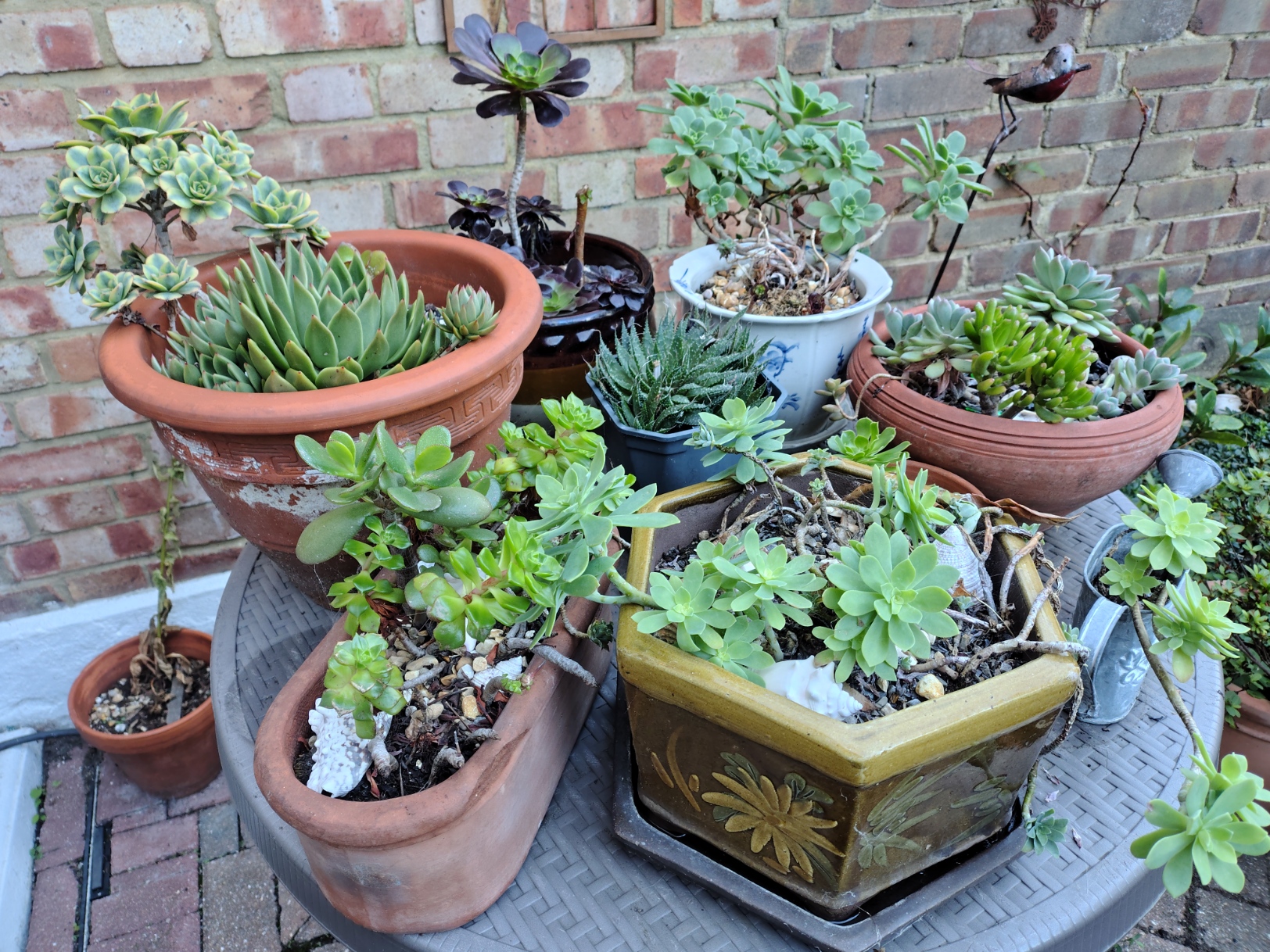
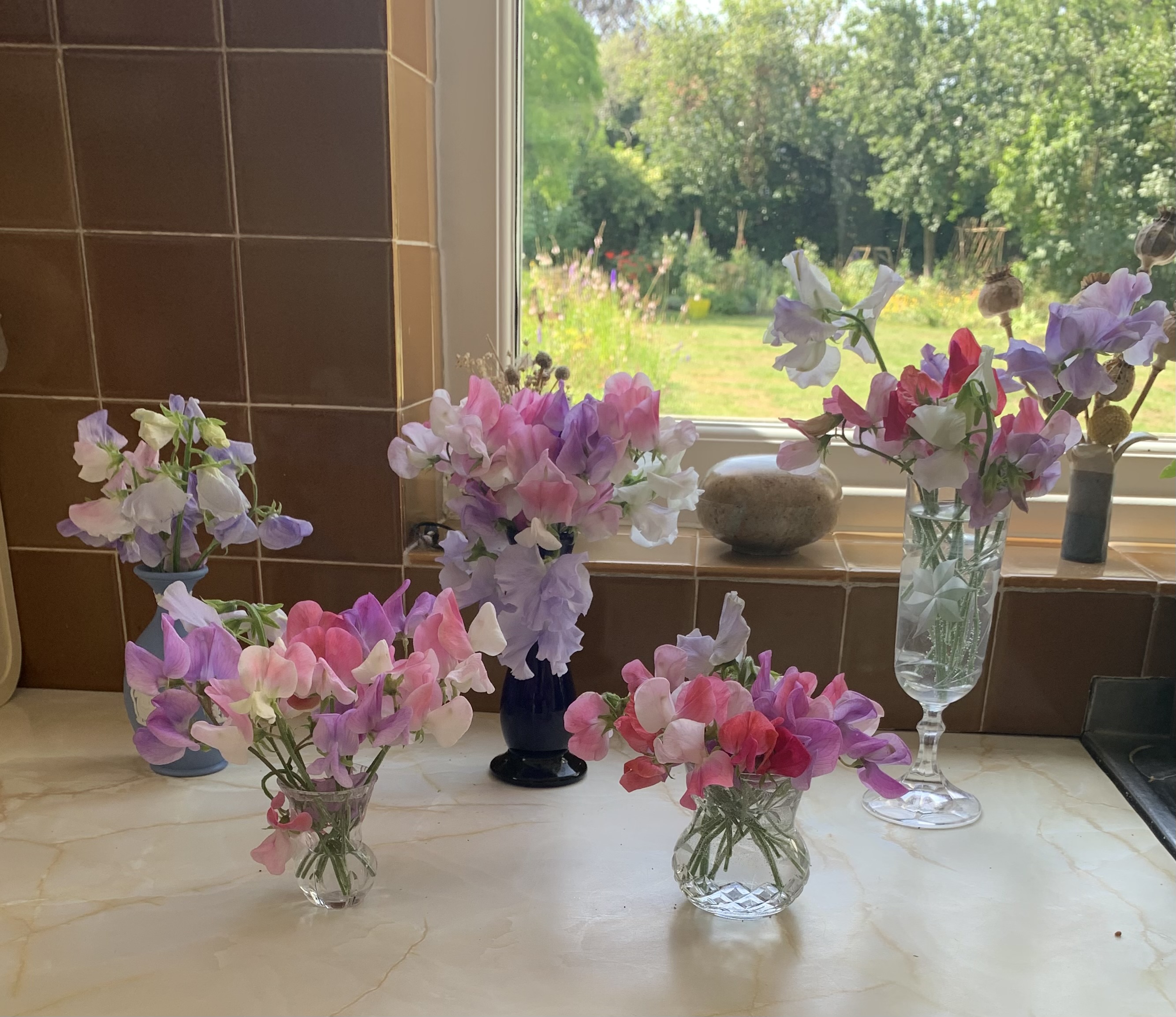
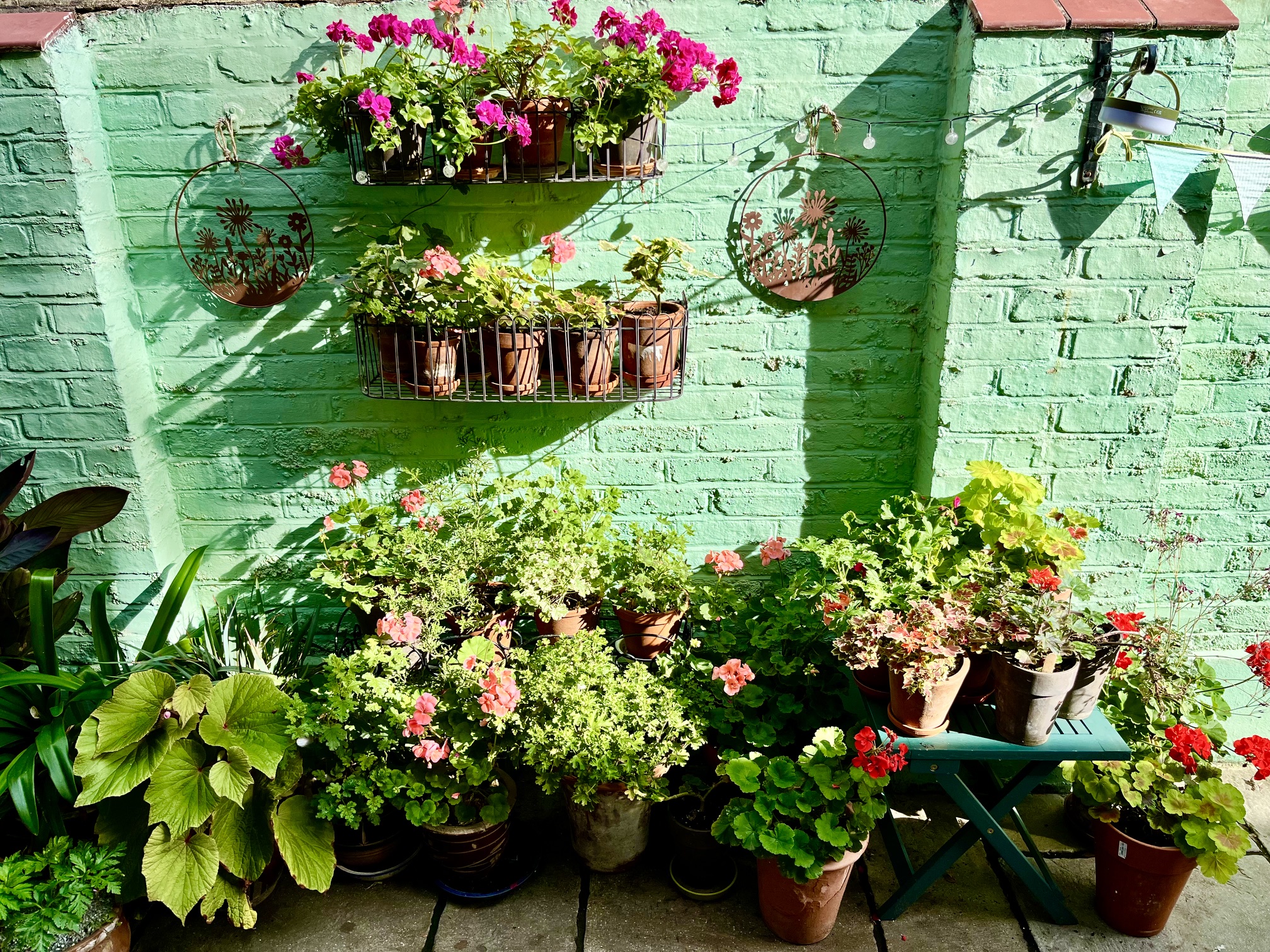
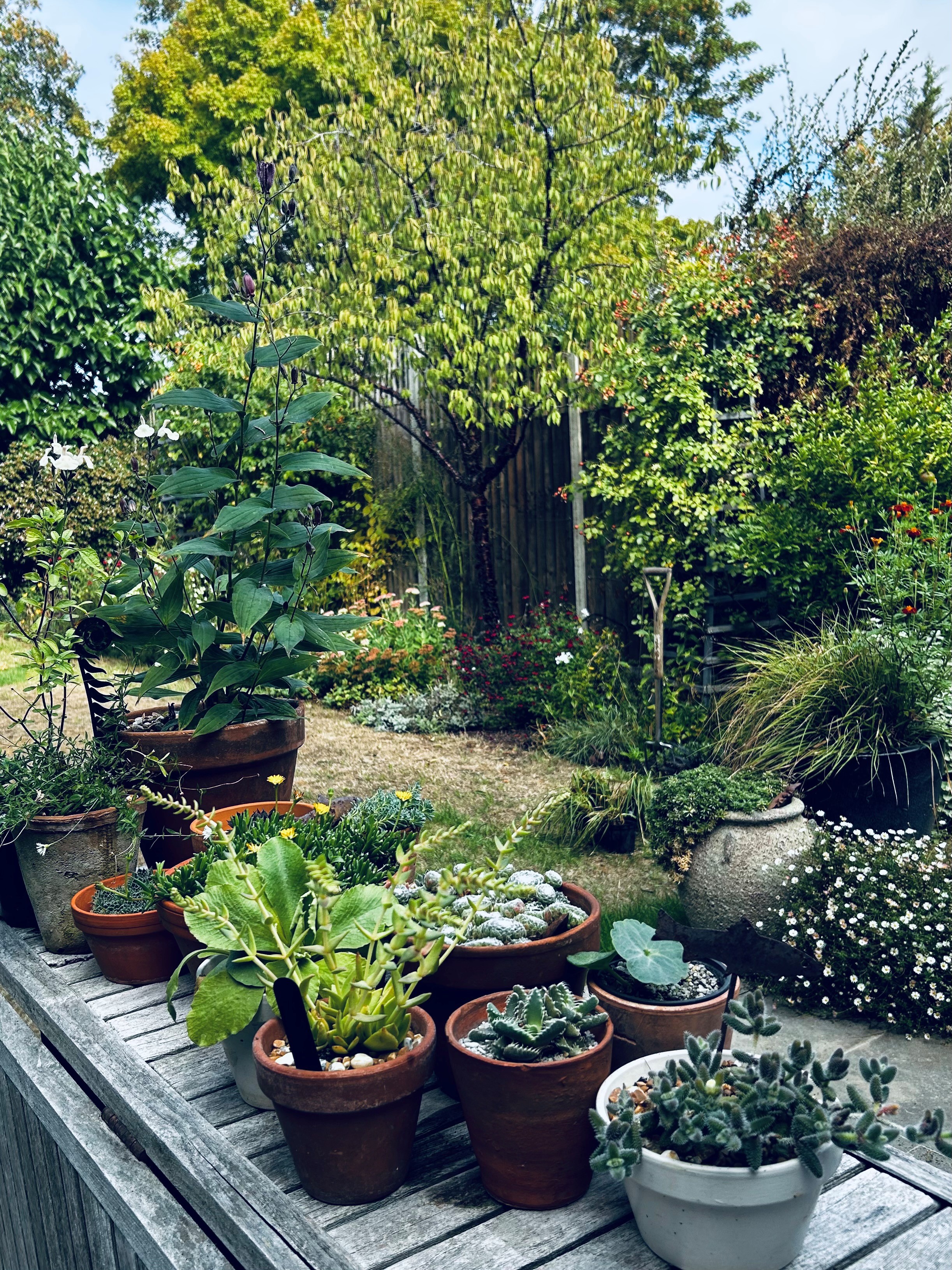
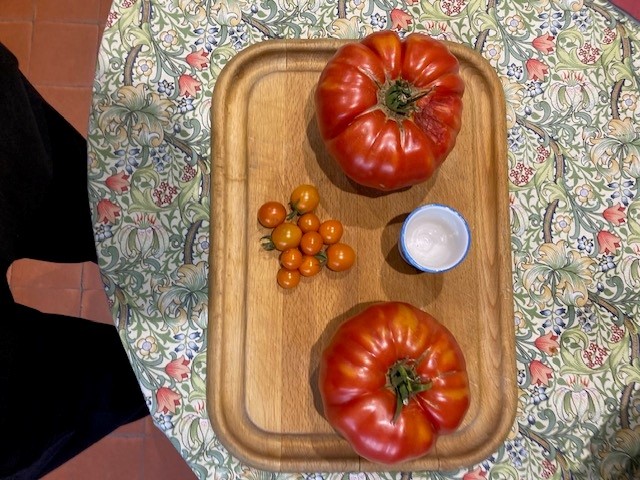
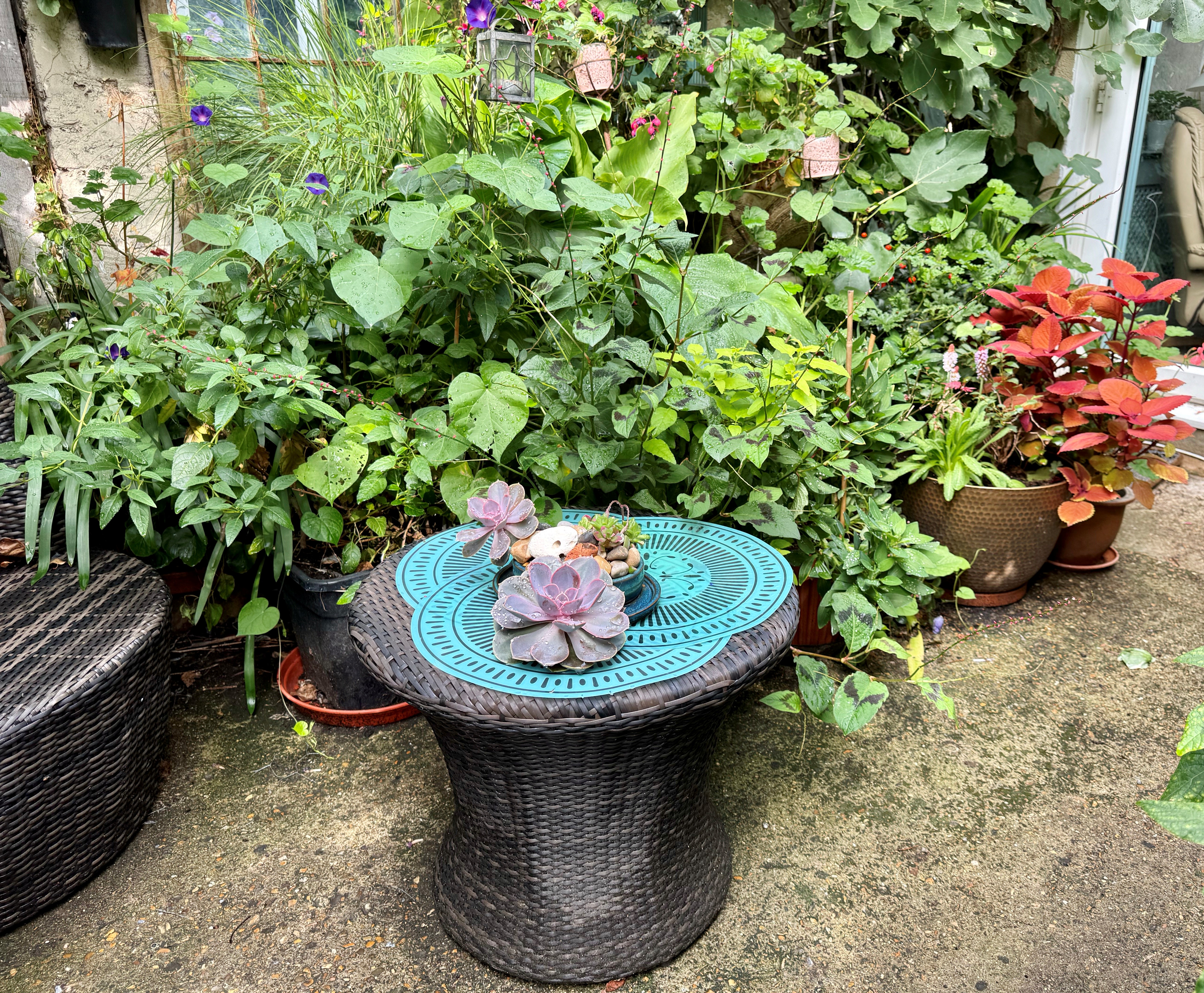
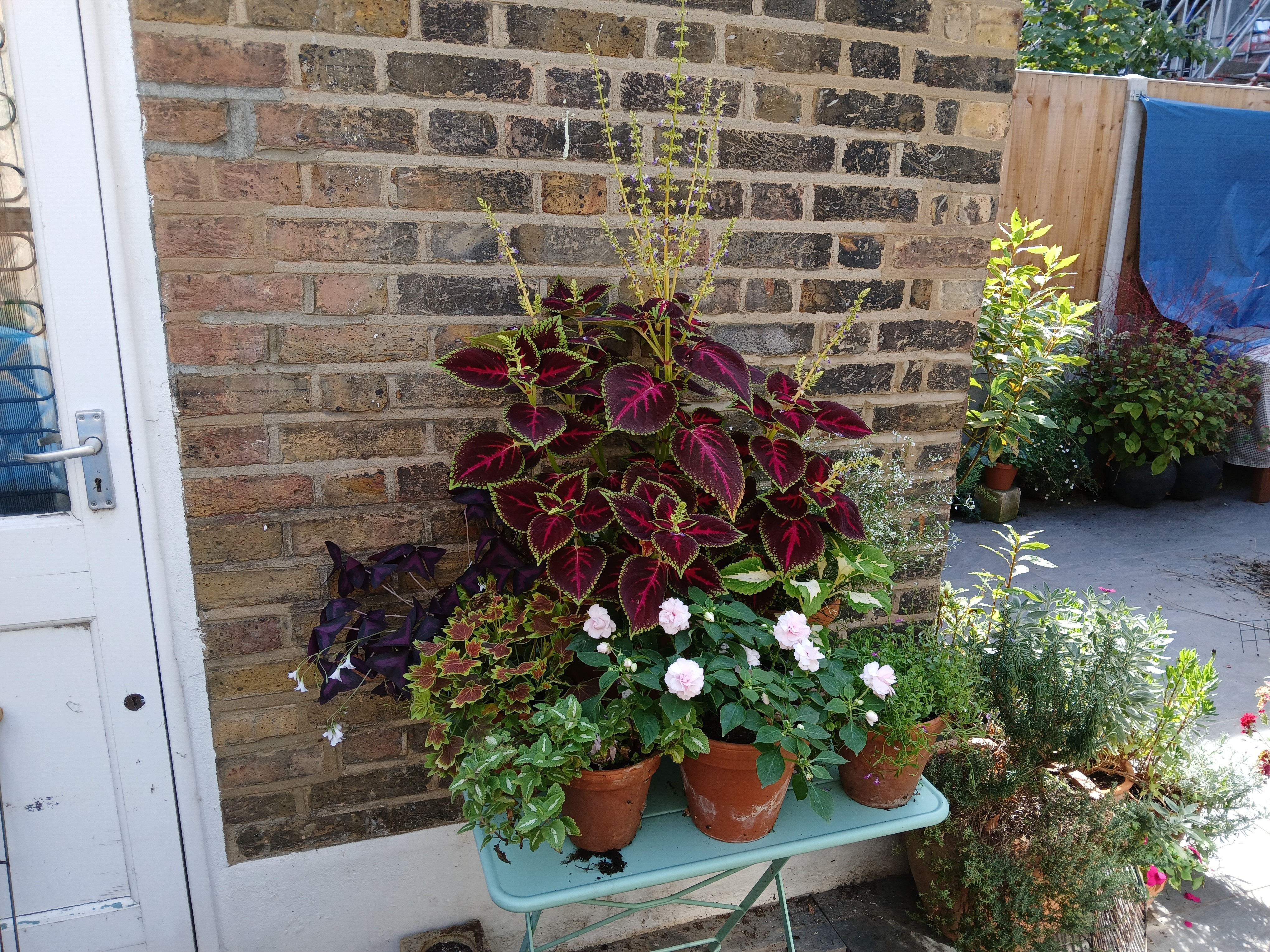
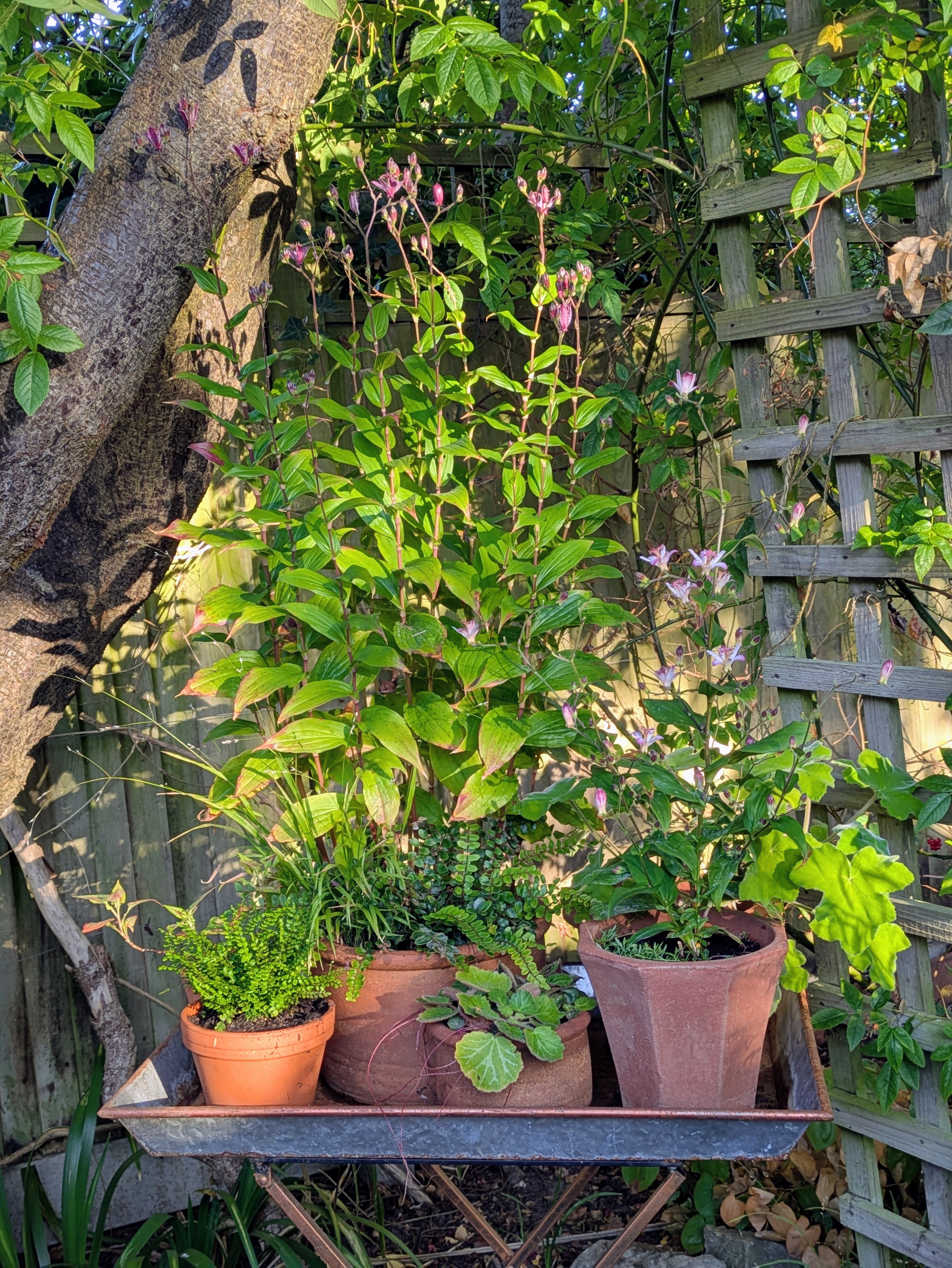
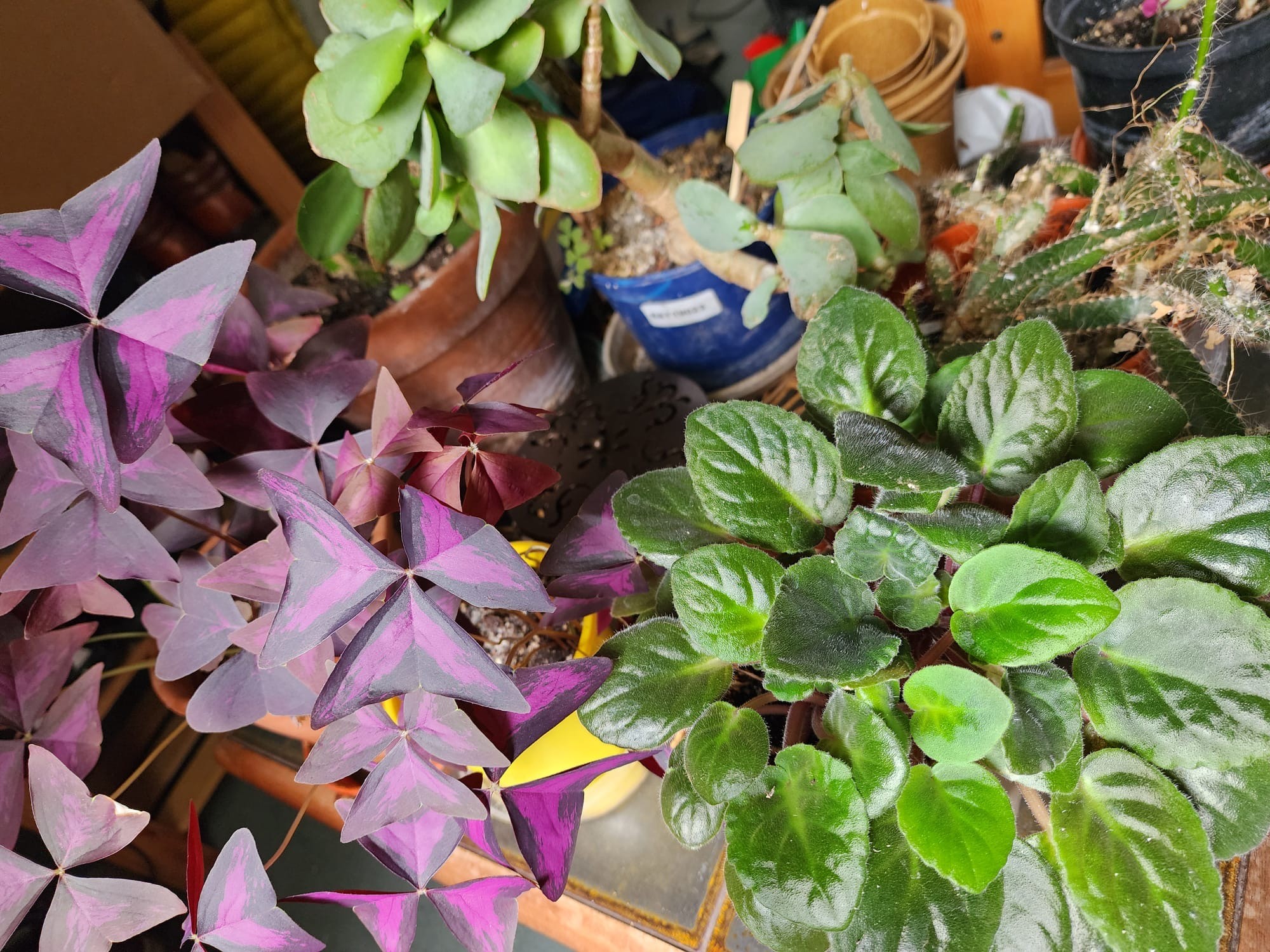
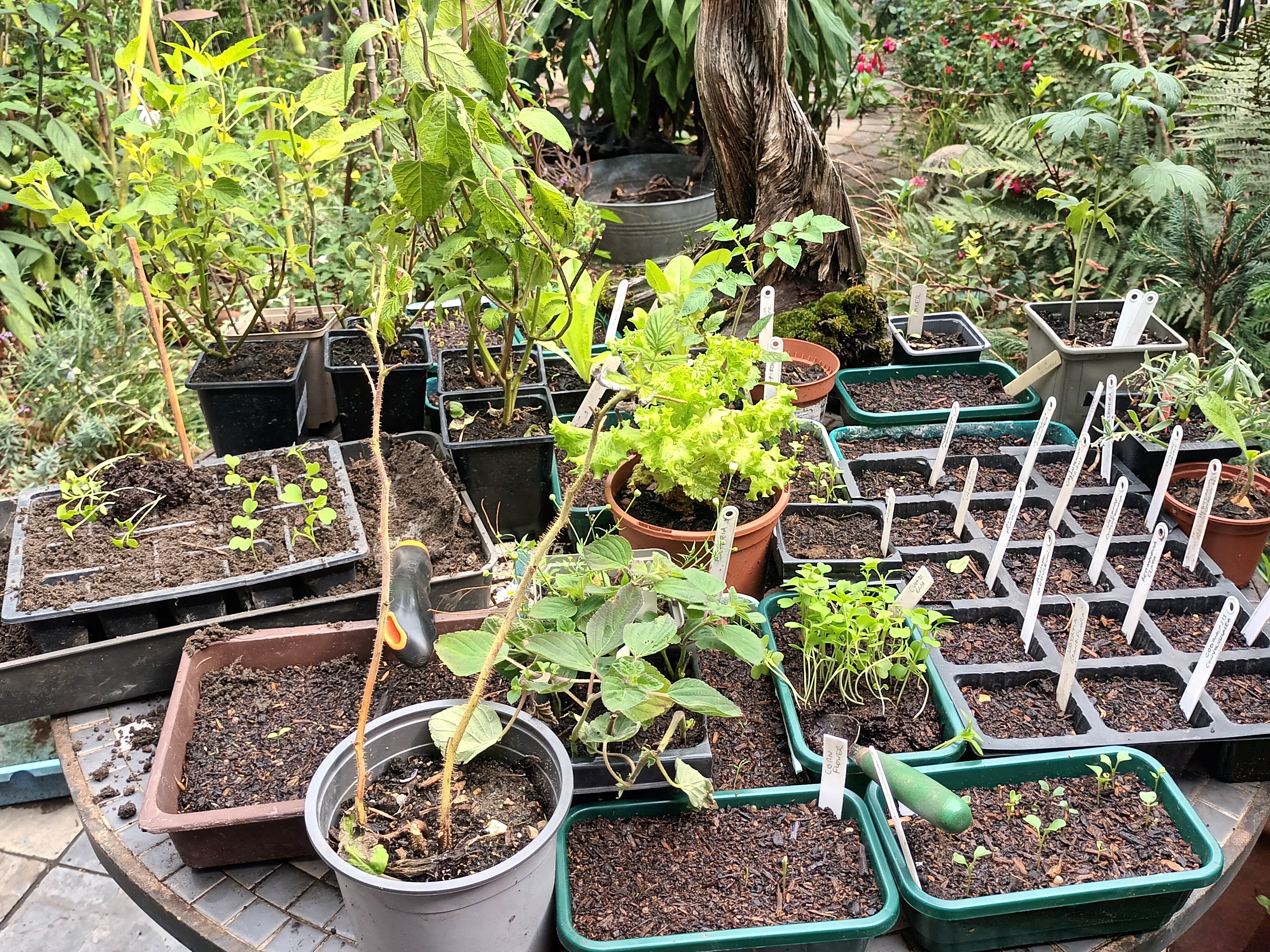
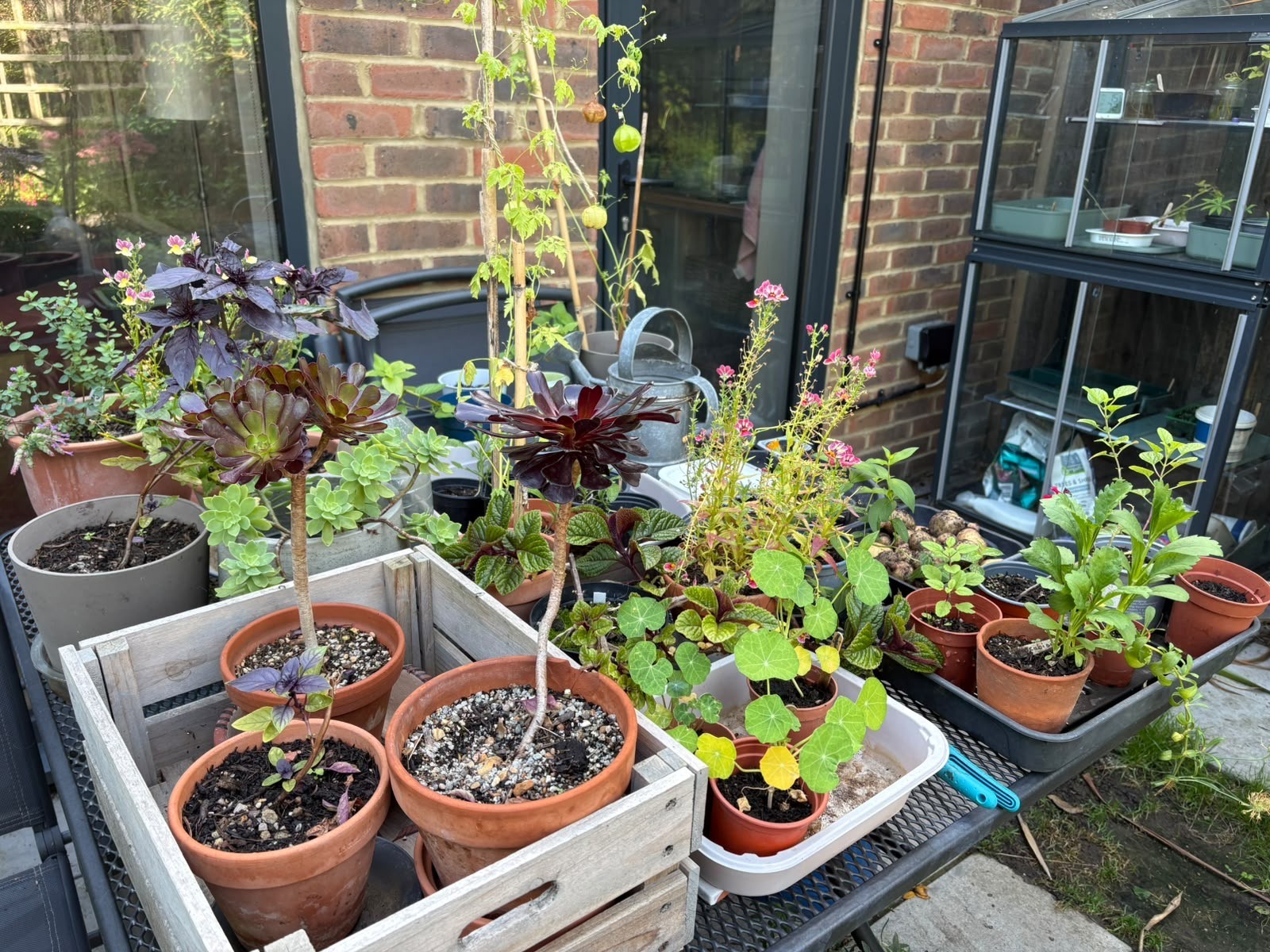
Class 15 (‘photograph of a display of plants on a table’) in our recent Flower, Fruit and Vegetable Show revealed a lovely variety of interpretations again this year (see last year’s tables for further inspiration). All are expressions of nature’s bounty, whether displaying the fruits – and flowers – of the summer’s labours or the exciting potential of seeds and cuttings. Indoors or outdoors, many choose to display tender plants in containers, enabling easy frost-protection later in the year.
1. To be honest we know at the moment with the drought and the heat this column will be about the few things you can do to keep things alive. I am sure we will all have losses along the way, but remember all is not lost and will mean new planting opportunities for next year.
Impromptu mulch after watering
2. If you have weeds growing (even they are struggling at the moment!), pull out and place around plants to help hold the moisture in the soil. Make sure the weeds haven’t gone to seed and, if they have, pull the seedheads off and dispose of them.
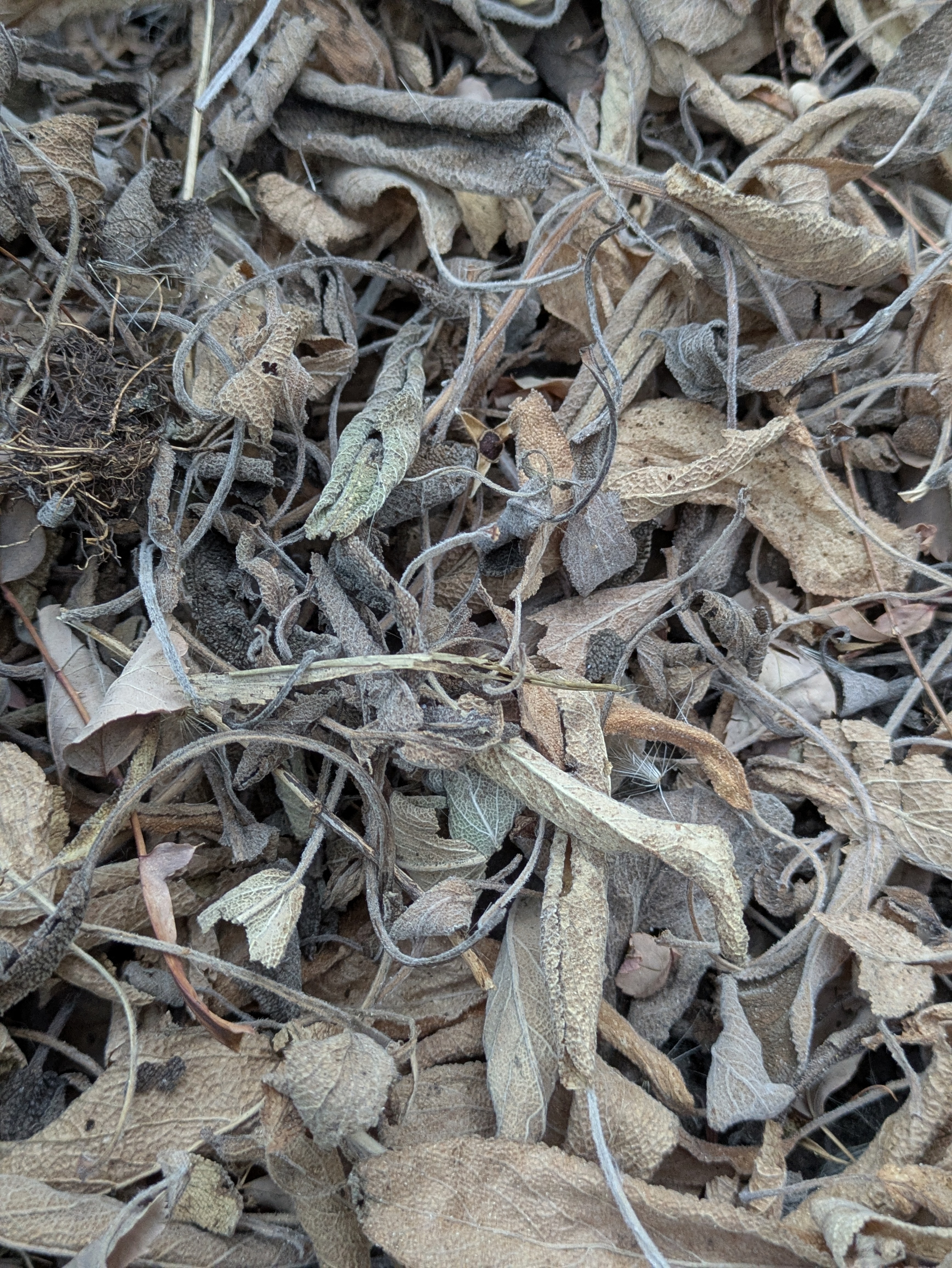
3. Mulch the soil with anything you have to hand: your own compost, fallen leaves (as there seem to be so many) but make sure the soil is damp first so you can help lock in the moisture.
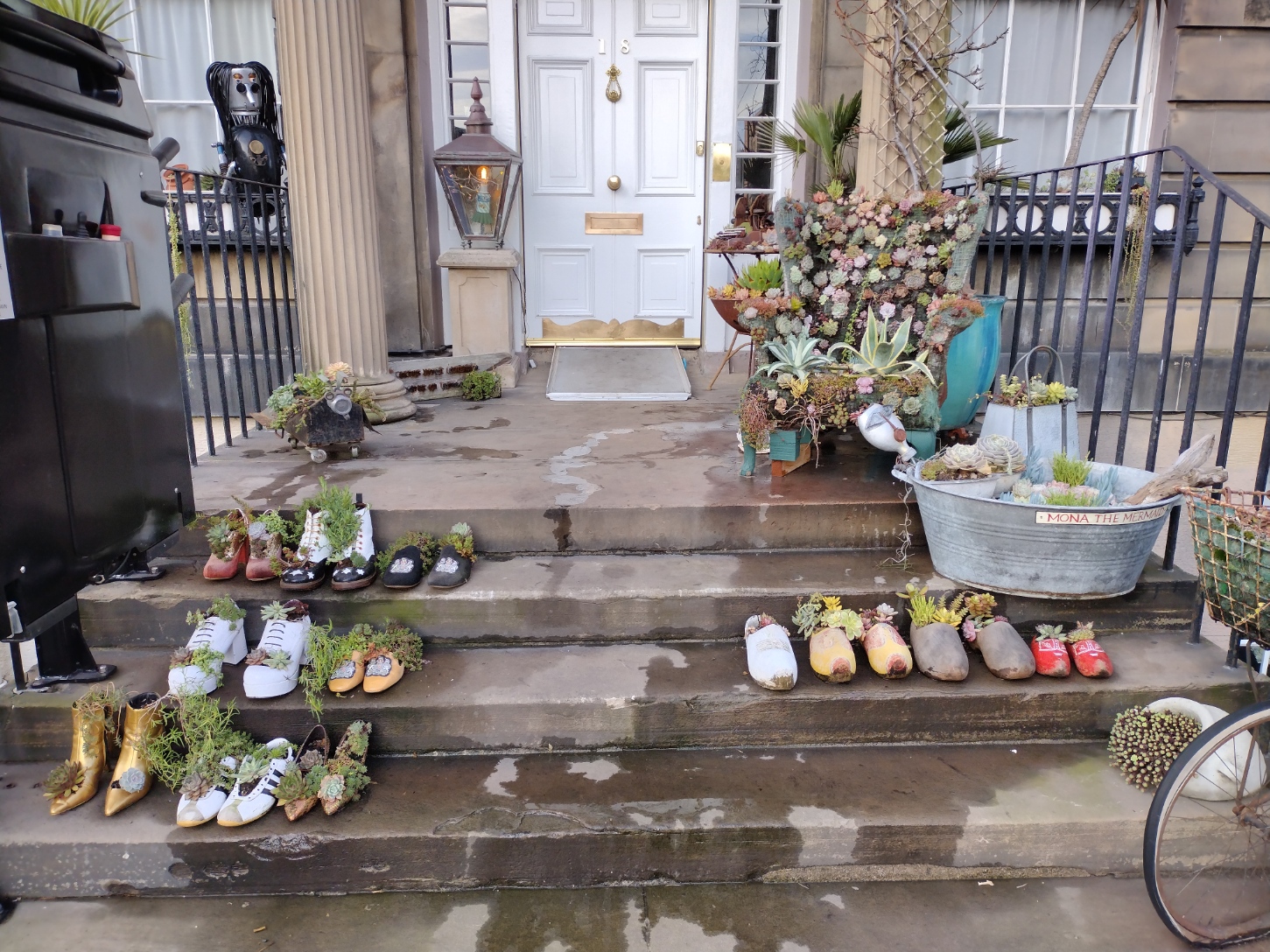
I spent a weekend this February in Edinburgh, and came across this interesting doorstep display on my travels around the city. Some new ideas for displaying your succulents …!
I also visited the Royal Botanic Garden. The morning I visited was bright, cold and calm, in stark contrast to the previous weekend when the garden had been ravaged by storm Eowyn. The sad remains of the garden’s tallest tree – a 166 year-old conifer – were clear to see.
The sun was shining and the sky a bright blue but the frost remained in the shadier parts of the beds and the Rhododendrons had bowed their leaves to protect themselves from the cold. But they were also covered in buds, waiting to burst forth in a few weeks time.
Trying to select photos to use from a visit to Beth Chatto’s garden is not easy! All aspects of this Essex garden are stunning and there are numerous ‘take homes’ from a visit. The cluster of pots around a wooden bench is easy to replicate, with its mixture of plectranthus, fuschia, a small but perfect blechium, pelargonium ‘Vancouver centennial’ (keep a lookout for this at our plant sales – it was our ex-Chair Jillian Smith who originally provided a steady supply) and a charmingly named begonia, ‘Beth’s Houseplant’.
Of course, the dry garden is stunning with gaura, various grasses and verbenas (Bonariensis, hastata and ‘Bampton’) dominating the display in mid-August. Stipa gigantea and verbascums add height and Althaea cannabina has seeded itself generously. The blue of Catanche caerulea looked startlingly beautiful in one corner. This area of the garden is always a useful guide to what will manage with little water and good drainage.
Dr John Hughes, an RHS judge and a long term friend of CABAHS, gave an entertaining and informative talk on Tresco Abbey Gardens in the Isles of Scilly, situated just 28 miles off the coast of Cornwall. Benefiting from the Gulf Stream and Atlantic Drift, it has a mild climate and the magnificent garden is full of exotic and glorious plants from every Mediterranean garden zone, including South Africa, Australia, New Zealand and Chile. It has been called a ‘Kew without the glass’. It is also home to a range of fauna including the red squirrel.
Augustus Smith, the founder of the garden, bought the island from the Duchy of Cornwall in 1830 and it has been in his family, who have remained keen horticulturalists, ever since – though all the land, except the garden and house which he had built on it, was given back to the Duchy in 1922. The seventeen acre garden has been designed around a ruined Benedictine Abbey and within a sympathetic hard core of paths and arches, including statues supplied by the latest owner.
Val & Harry have sent in this selection of their Autumn stars. They have a wonderful stripy Tagetes patula ” Jolly Jester” in their border. Harry says it germinates like mustard & cress and grows to 75cm-1m. It looks stand-out!
Last of the summer annuals, including stripy Tagetes
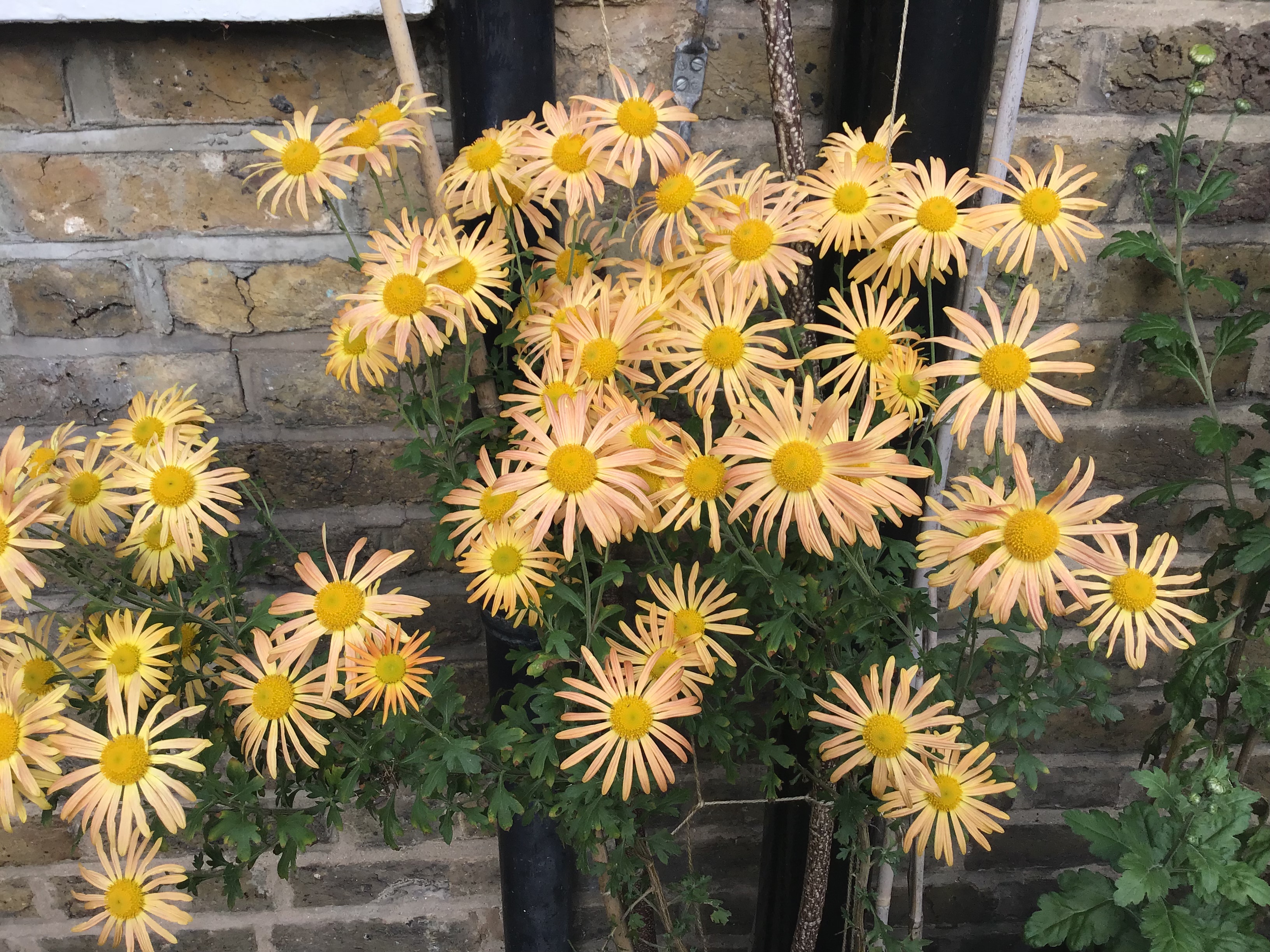
Korean chrysanthemum “Mary Stoker”
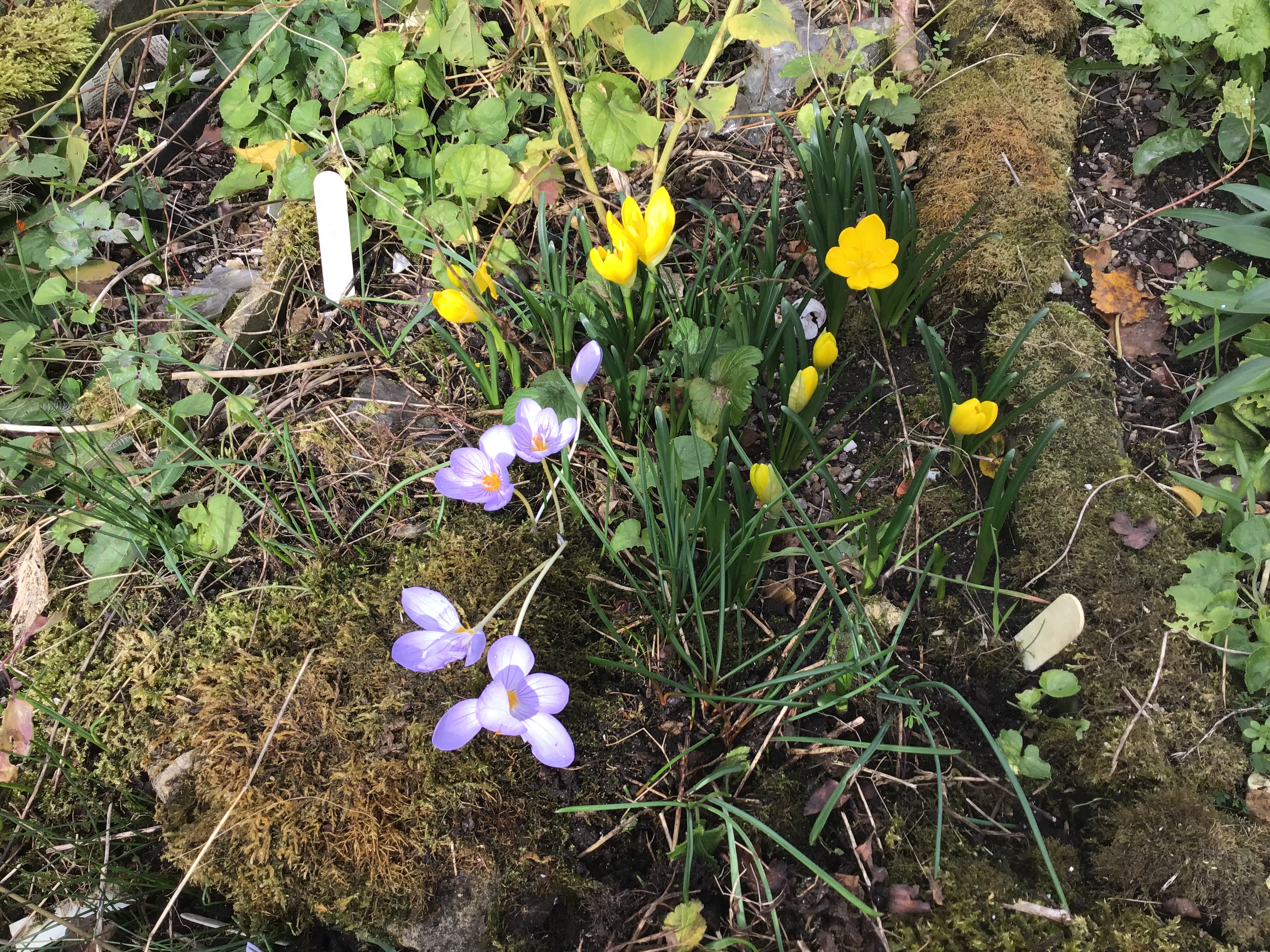
Crocus speciosus and Sternbergia lutea
Val and Harry’s perennial border
Here is Jillian’s garden, she has a lovely display of cyclamen in her borders, some of the corms are the size of saucers!
The succulent display in Jillian’s greenhouse is looking good:
Here is Marian’s dewy autumnal rose:
Show those Autumn colours! This is Kathy’s Blueberry “Goldtraube”, what a waste to have this in the soft fruit bed, it should be on full view in a border. All the books say it needs acid soil or to be in a pot of ericaceous compost, but it fruits and thrives very happily in normal soil with a watering can of Sequestrene a couple of times a year.