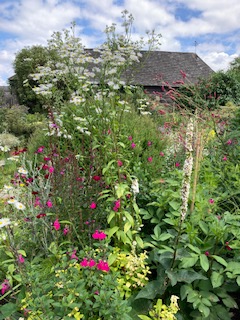
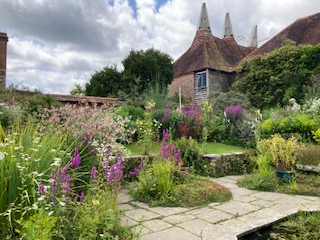
1. Maybe in this challenging weather the best thing you can do is mulch the soil (after watering, so that the soil is moist and the mulch will retain that moisture). If you pull out weeds leave them on the surface to keep roots cool, use grass clippings if you have them but making sure to keep away from stems of plants.
2. To save water just water around the roots of plants by removing roses on watering cans and spray attachments on hoses.
[This post contains lots of photographs, just click on the photos to see a larger version. There are so many plants that we haven’t named them all (we don’t necessarily know every cultivar), but feel free to ask about them in the comments and we’ll do our best to answer!]
On the first day of July more than 50 CABAHS members and a few guests set off from Charlton House bright and early for a trip to RHS Hyde Hall in Essex.
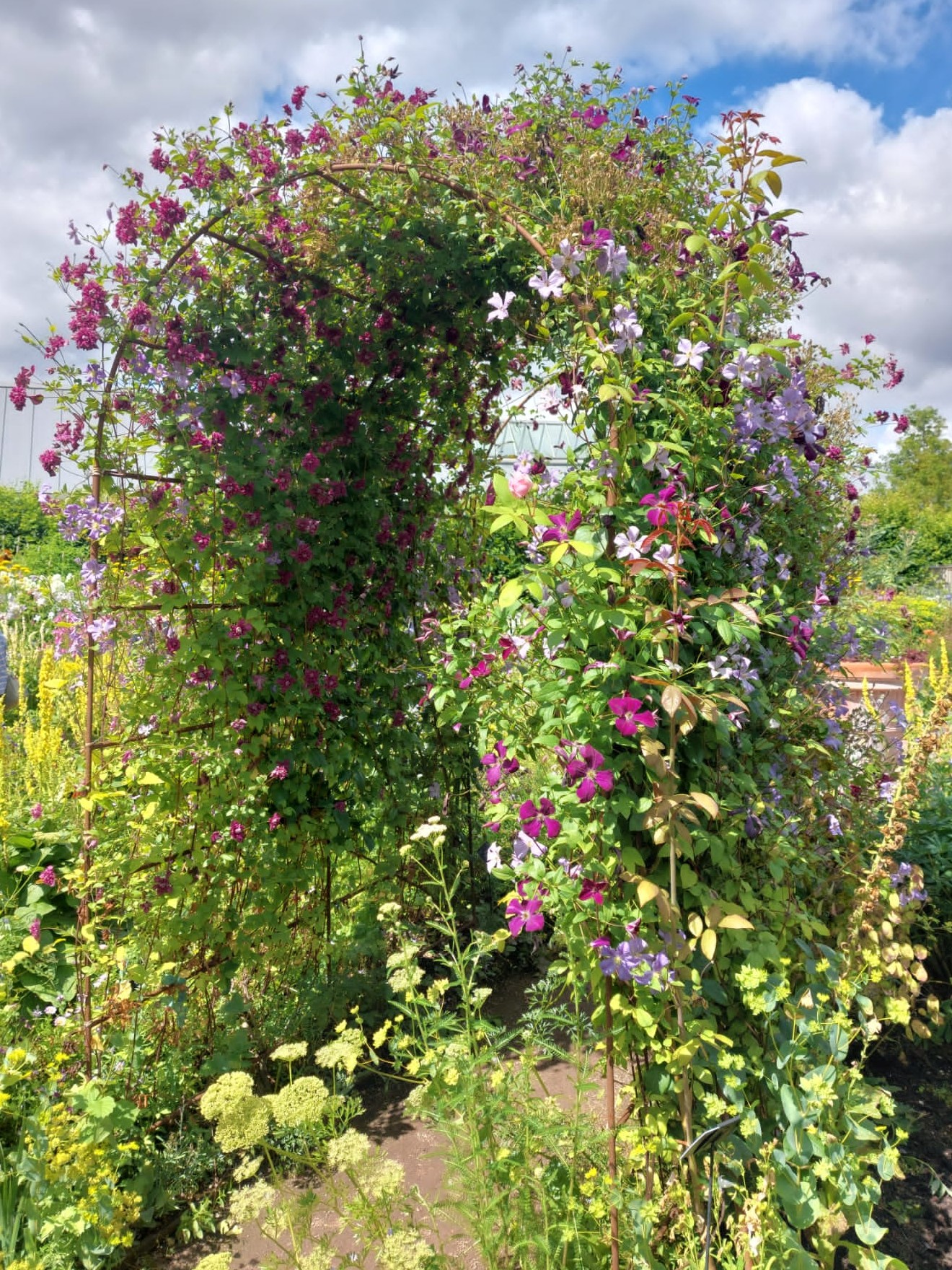
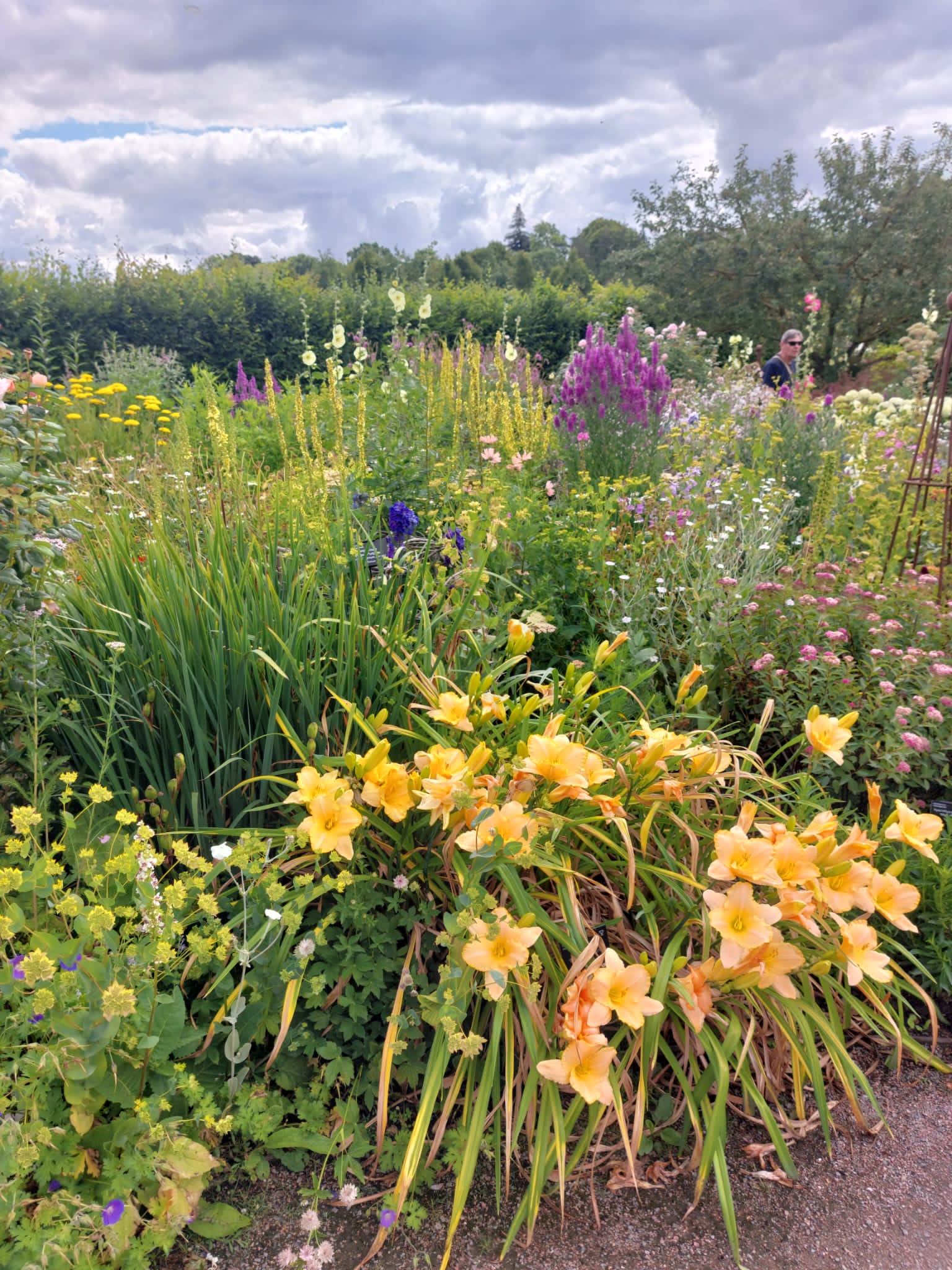
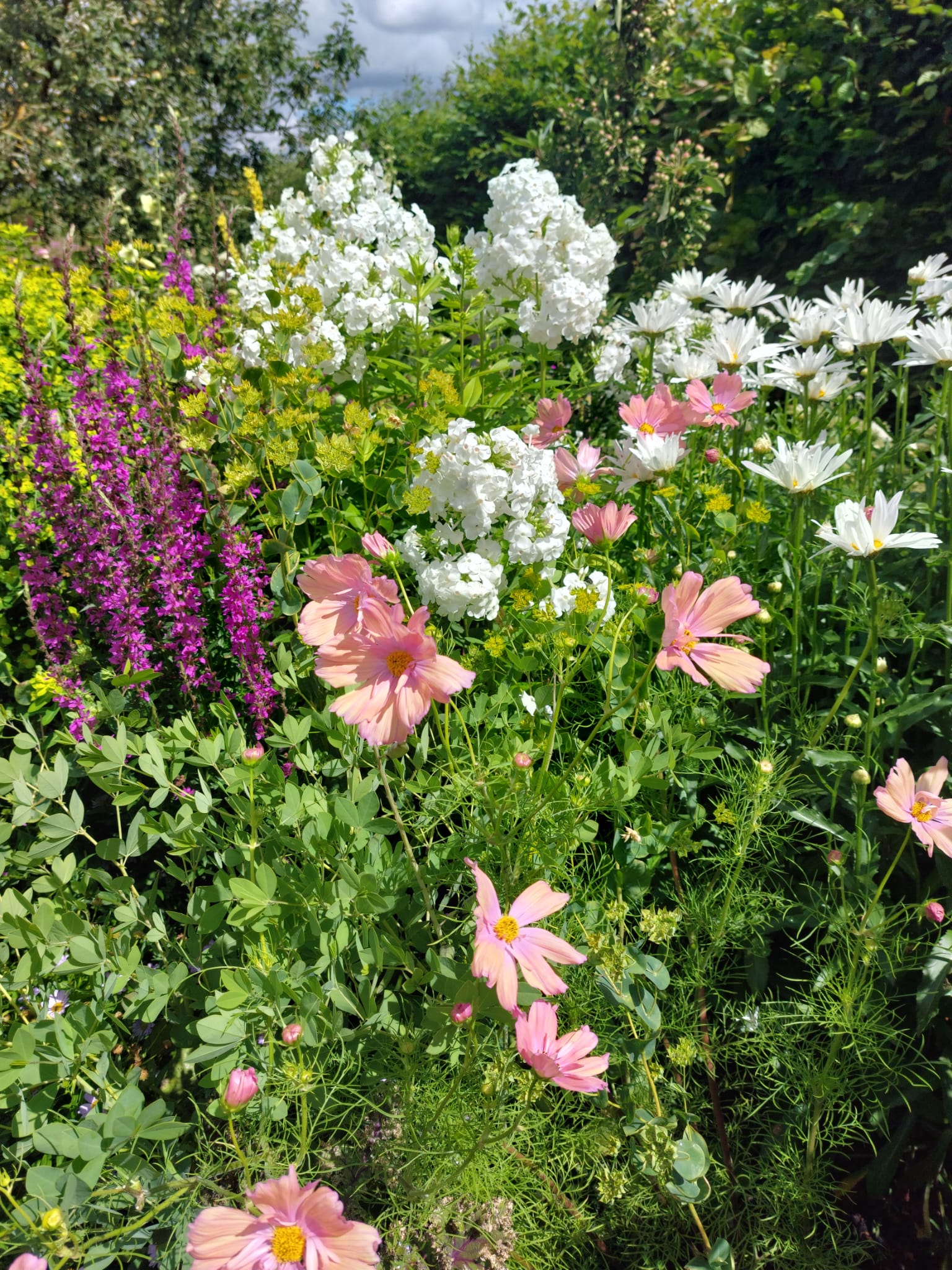
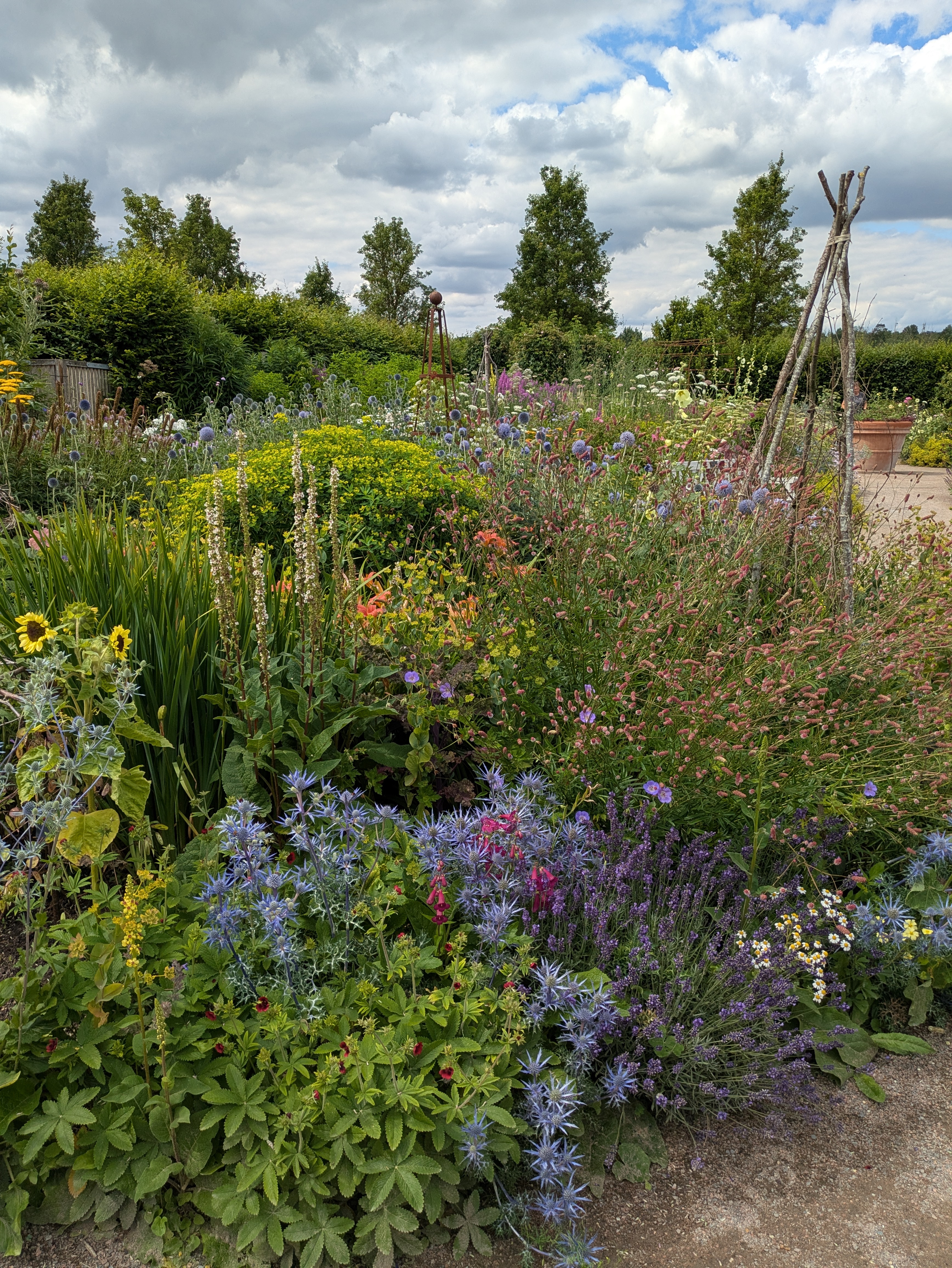
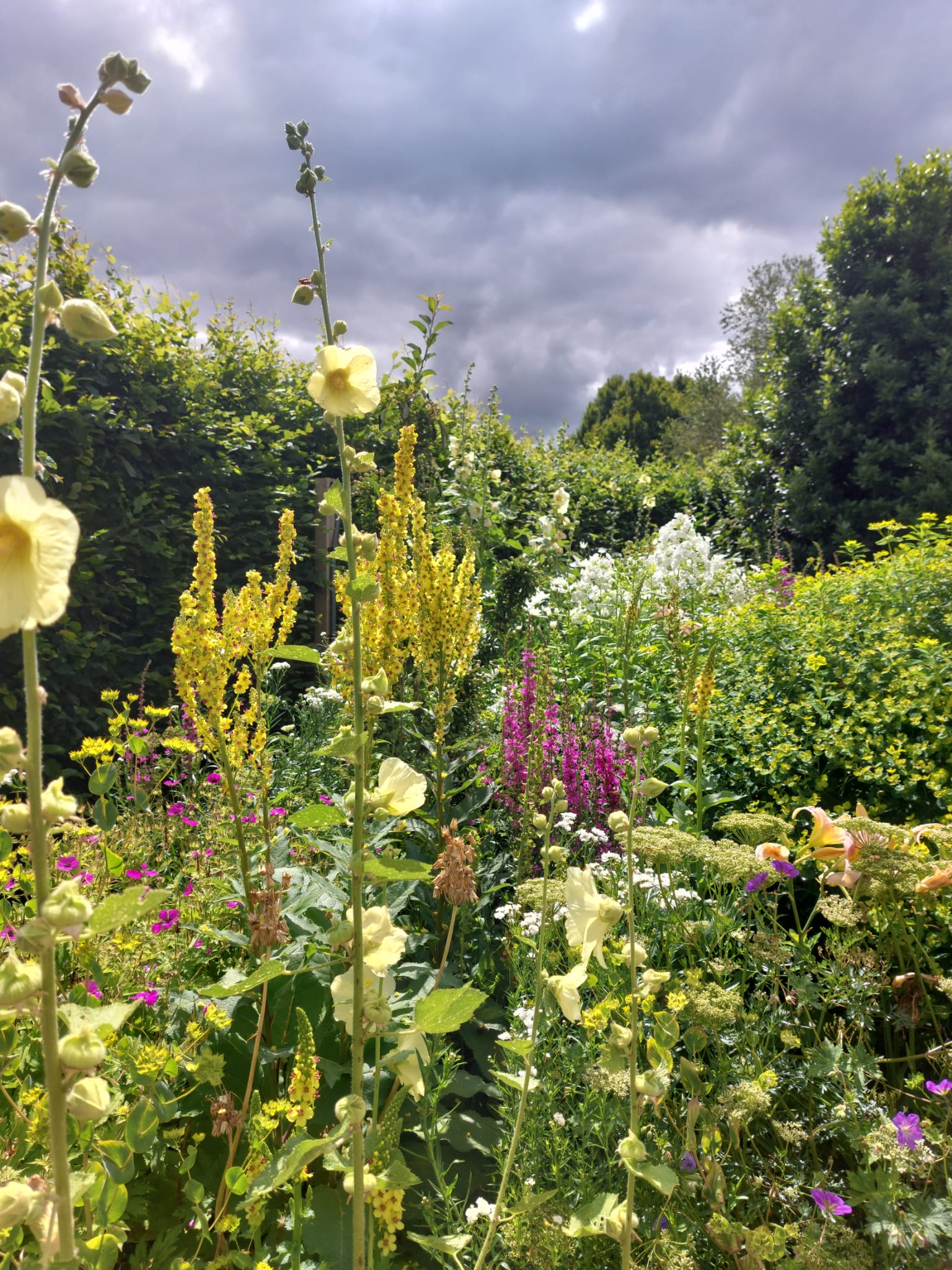
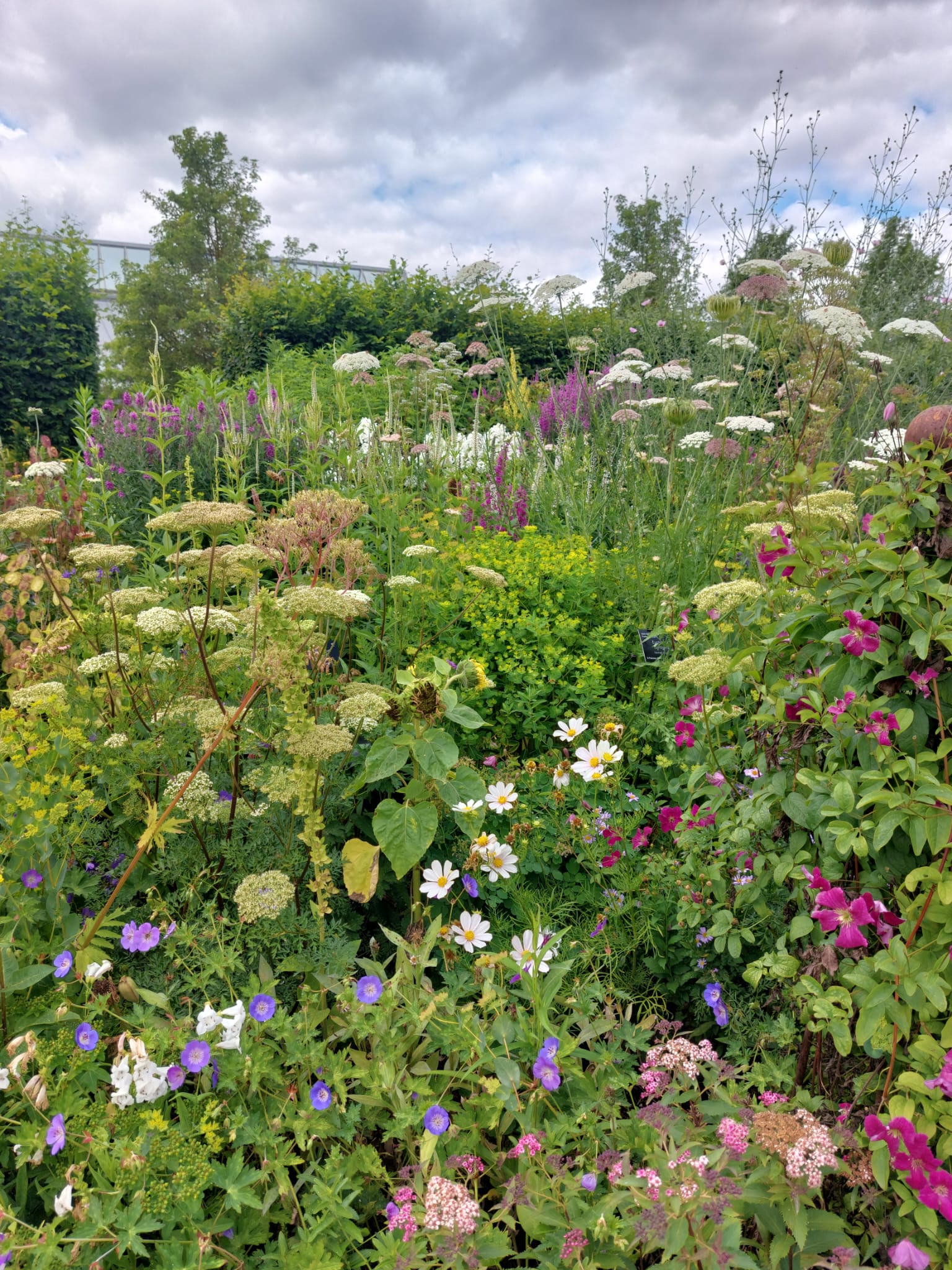
As we arrived, a staff member advised us not to miss the Cottage Garden near the entrance. They were not wrong – the garden was as exuberant as I’ve ever seen it, with bursts of height and colour expressed in some beautifully grown species such as Clematis, hollyhocks, Dierama and Zinnia.
Fresh off a flight from America, Fergus Garrett addressed approximately 300 people seated on hay bales in the Plant Fair Field, in one of the regular Friends events held at Great Dixter. He had returned that morning from a 20 day stay, lecturing and touring, with some of the stay devoted to Chanticleer. Fergus drew comparisons between the gardening practice there and at Great Dixter. At Chanticleer they artificially oxygenate their compost heaps to accelerate the process, whereas at Dixter these are left to decompose naturally. He also drew attention to how little water is used at Dixter – at most, the Long Border has been watered three times this year – but at Chanticleer watering is a regular feature of garden maintenance.
On a very hot Friday in July we set off on a CABAHS coach trip to Saffron Waldon in Essex, to visit Audley End House and Gardens.
The Audley End site was originally a Benedictine monastery, but following the Dissolution of the Monasteries the land was acquired by Thomas Howard, 1st Earl of Suffolk between 1604 and 1612, who built a very grand house on the site on a par with a royal palace. It has been altered and added to throughout the years, and the grounds were originally designed by Launcelot ‘Capability’ Brown in the usual parkland style of the time, together with a temple in the distance.
Our group decided to visit the Parterre first at the side of the house. There were beautifully shaped beds and lovely planting just humming with bees, hoverflies and butterflies. Plants included lavenders, Nepeta, day lilies and Phlomis which were being watered in the very hot sun.
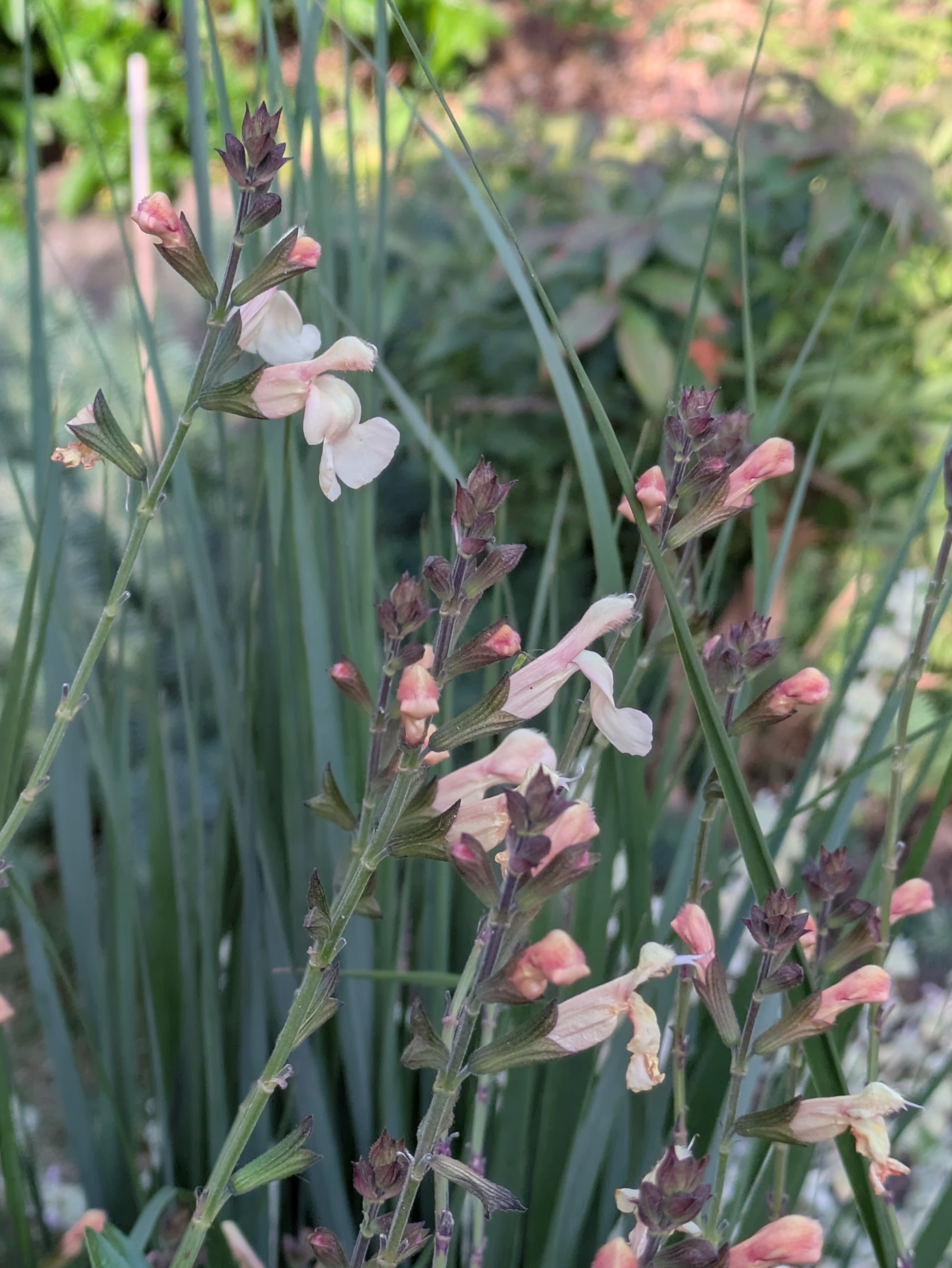
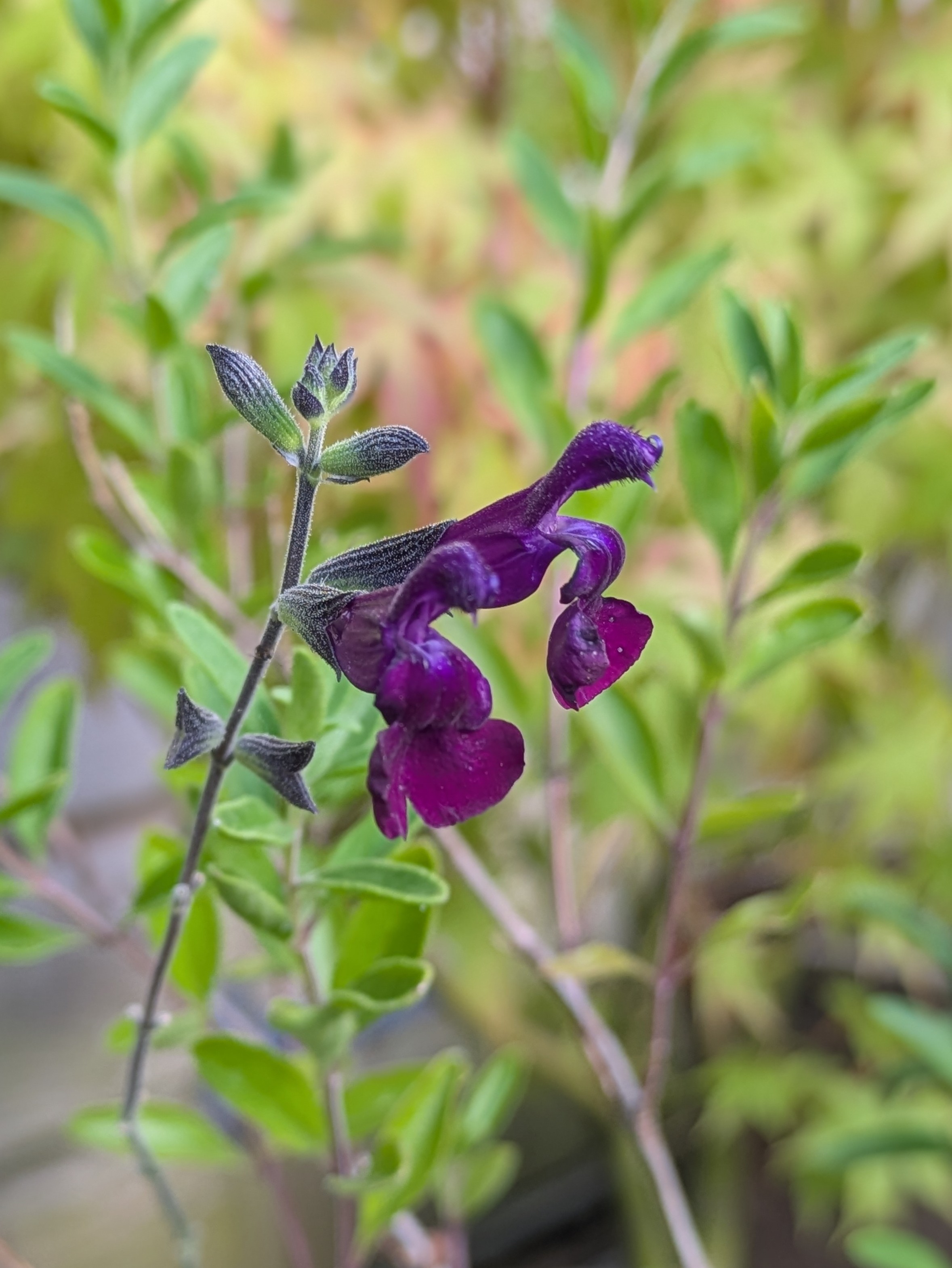
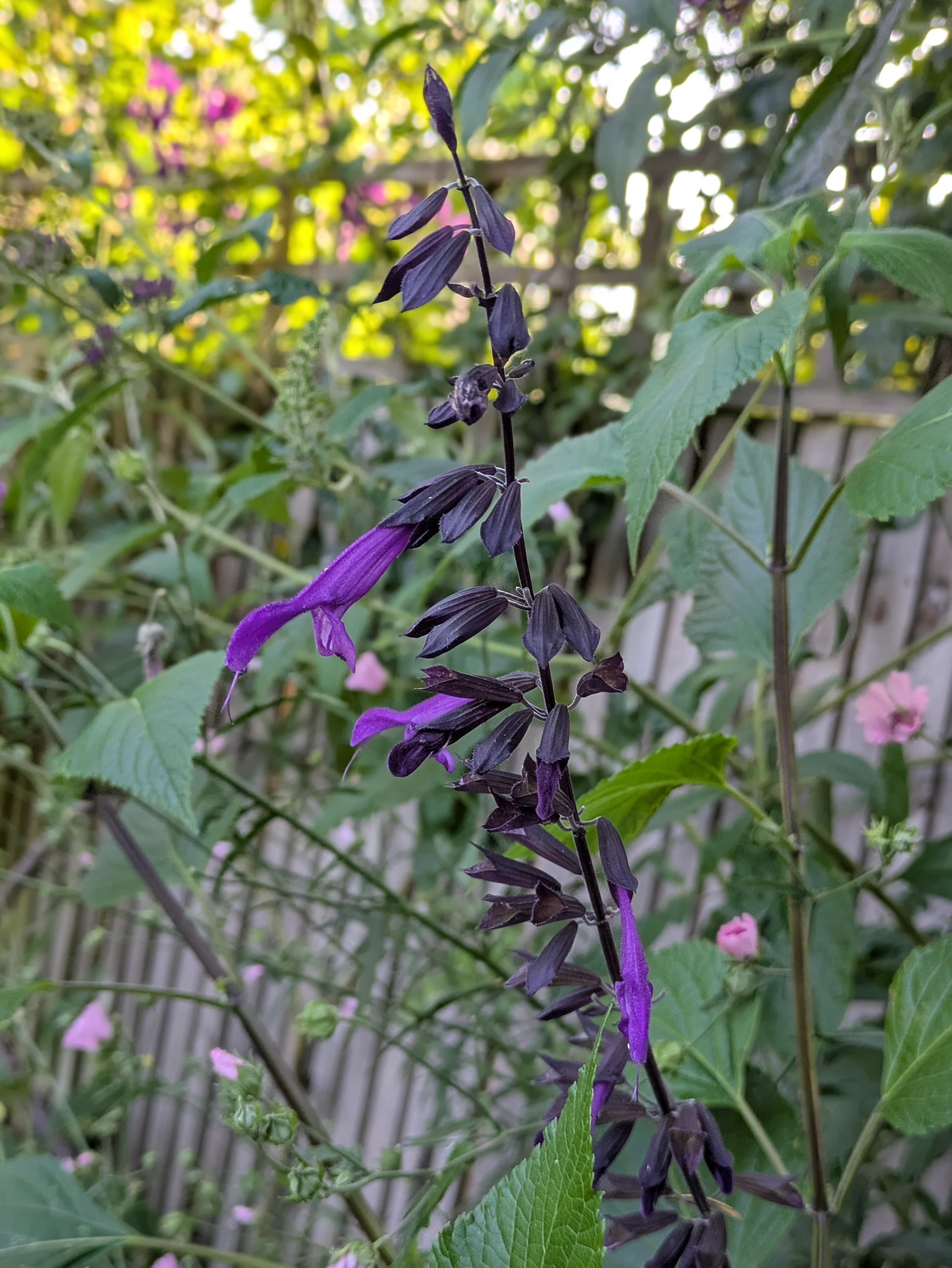
My garden is looking past its best now, as the heat-waves and lack of rain having taken their toll, but these three plants are looking stunning and all worthy of the status of Plant of Month for July 2025.
Although at its peak in July, this has been out since May and is one of the longest-flowering plants in the Old Pond Garden. At the moment we really love it for it’s drought tolerance – no need to water this one! It has dainty, tubular flowers which insects with long tongues like bumblebees can enjoy, and it provides both pollen and nectar for visiting insects. Prefers a sunny spot but will do well in part shade too, so you can spot it in several of the beds. It is a semi-evergreen, only losing it’s leaves in the very depths of winter.
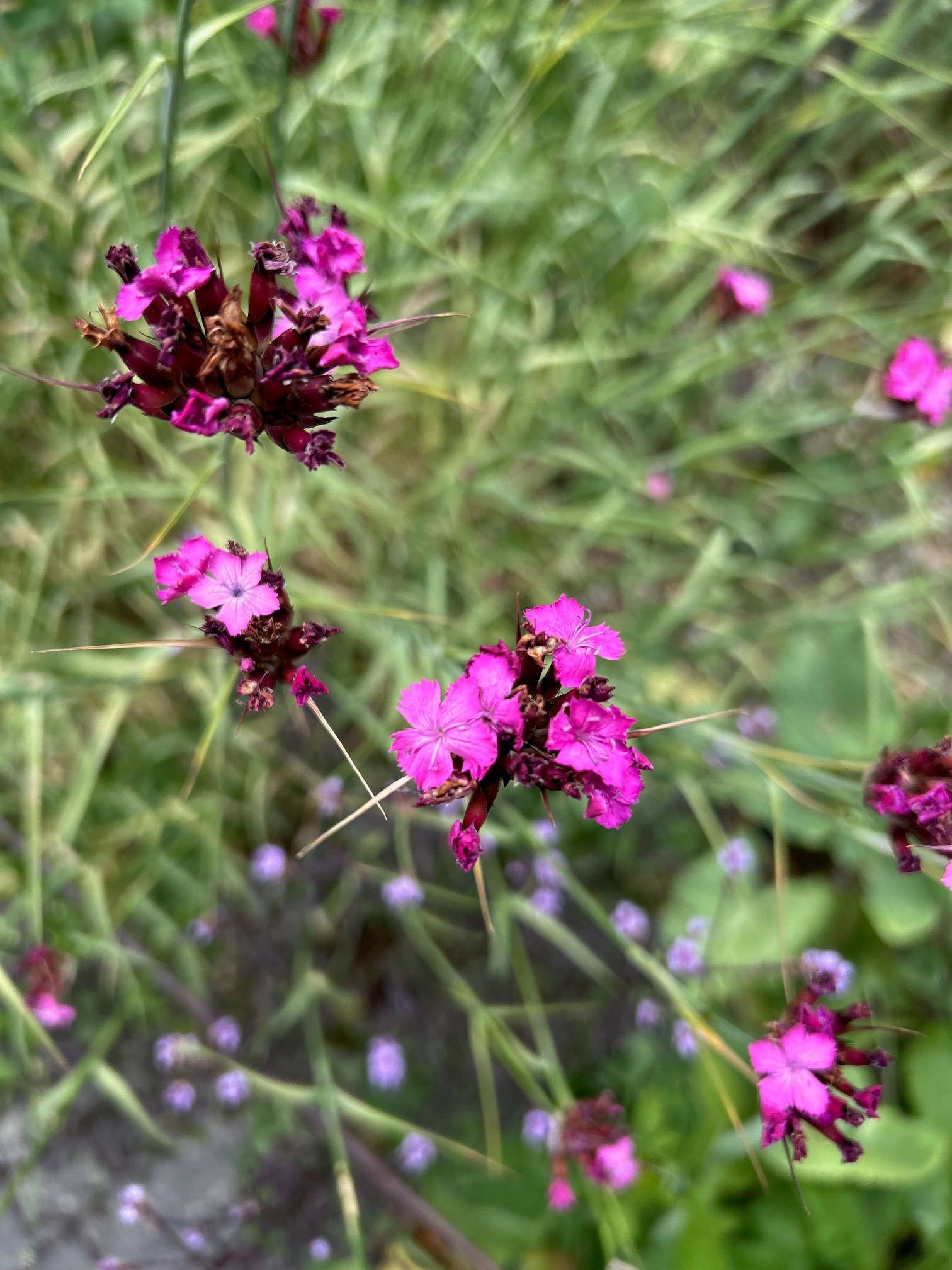
Dianthus carthusianorum – Carthusian Pink
Another lovely drought-tolerant plant that we don’t have to water! It must be in full sun to flower well, so it just loves the gravel garden in the central bed of the Old Pond Garden. It’s a perennial, forming bigger clumps each year and giving that great “pop” of colour. A gentle self-seeder and long season in flower.
Christopher Lloyd loved colour, and as I stand on the upper pathway of the Sunk Garden, here at Great Dixter, I notice the pops of colour from the spires of pink-purple Lythrum and terracotta-orange Crocosmia all around me.
Designed by Nathaniel Lloyd, Christopher Lloyd’s father, after WW1, this south-facing and sheltered sunken garden is enclosed by two barns, a magnificent yew hedge and a wall on the southern boundary, thus creating its own micro-climate and the plants love it!
John Anderson has a very distinguished horticultural career. Trained at Kew, he has been head gardener at a range of famous gardens, and his contribution to horticulture was recognised in the award of the RHS Veitch Memorial Medal. In 2016, he became Keeper of Windsor Great Park Gardens, part of the Royal Estate, and managed by the Crown Estate.
It was a particularly interesting and informative talk. The gardens are unusual, situated as they are in a Royal Estate of 8000 acres, and Windsor Castle being a world tourist attraction. Yet the gardens and their management are less well known to the public. John Anderson showed a range of photographs of the gardens, described their history and development over the decades, and the challenges they now present.
The challenges include managing people whether they are tourists, cyclists or picnickers; dealing with vandalism and littering; and protecting its historic landscapes. Also the problems of climate change: evidenced in its Long Walk tree avenue, at over two miles the longest in Britain, where elm and horse chestnut were succumbing to disease, to be replaced by more resistant species such as ginkgo (Maidenhair) trees.
If you went down to the park yesterday, we hope you had a big surprise, for all the ‘bears’ were gathering there together because.. of the Teddy Bear Hunt!
Where?Over there..Over here..
Thank you to all who came and donated or supported this fun event, and to all the (over 100) children who found the ten hidden Teddies and worked out the name of the Charlton House Teddy to get their treat. (It had to be Newton Bear of course, named after Sir Adam Newton, who built Charlton House). But what a huge range of ‘teddy’ soft toys came along for their photo-opportunity! (please post your pictures to #charltonhouseteddy).
Getting Teddy ready for his shoot
And of course huge thanks to our volunteer/resident Artist who made the “Ted Head”, a brilliant attraction for both young and old!
The promised lovely weather was marred by a short rain-burst in the middle of the day to freshen everything up and make the picnic-ers dive for the Old Library, but it was only for 5 minutes and everyone came out again. We are so well used to it this year! The day was not only for the children, the gardens were looking particularly fine, with 35 different flowers in bloom.
A successful day and a lovely community event with collaboration between the Royal Greenwich Heritage Trust, the Garden Volunteers, Charlton Library, Charlton Toy Library and Frilly’s cafe. Thank you!
If you go down to the Old Pond Garden this Saturday, you’re sure of a big surprise. For every teddy that ever there was, will gather there together because, today’s the biggest floral count ever!
If you have ever wondered which month is the most floriferous in the Old Pond Garden, I’m guessing it’s July. We are expecting lots of visitors this Saturday July 20th, 11-3, for the Teddy Bears Picnic, and they are in for a treat (as well as a picnic) as we have counted over 30 plants out in full flower. Can you spot them all? We will have an info board out so you can match names and flowers, while the kids are charging about finding the hidden Teddies. Works for all ages.
The Teddy Bear trail will be in the Old Pond Garden and there will be lots of photo-ops for you and your teddy with the lovely garden backdrop. See you there, better come in disguise!