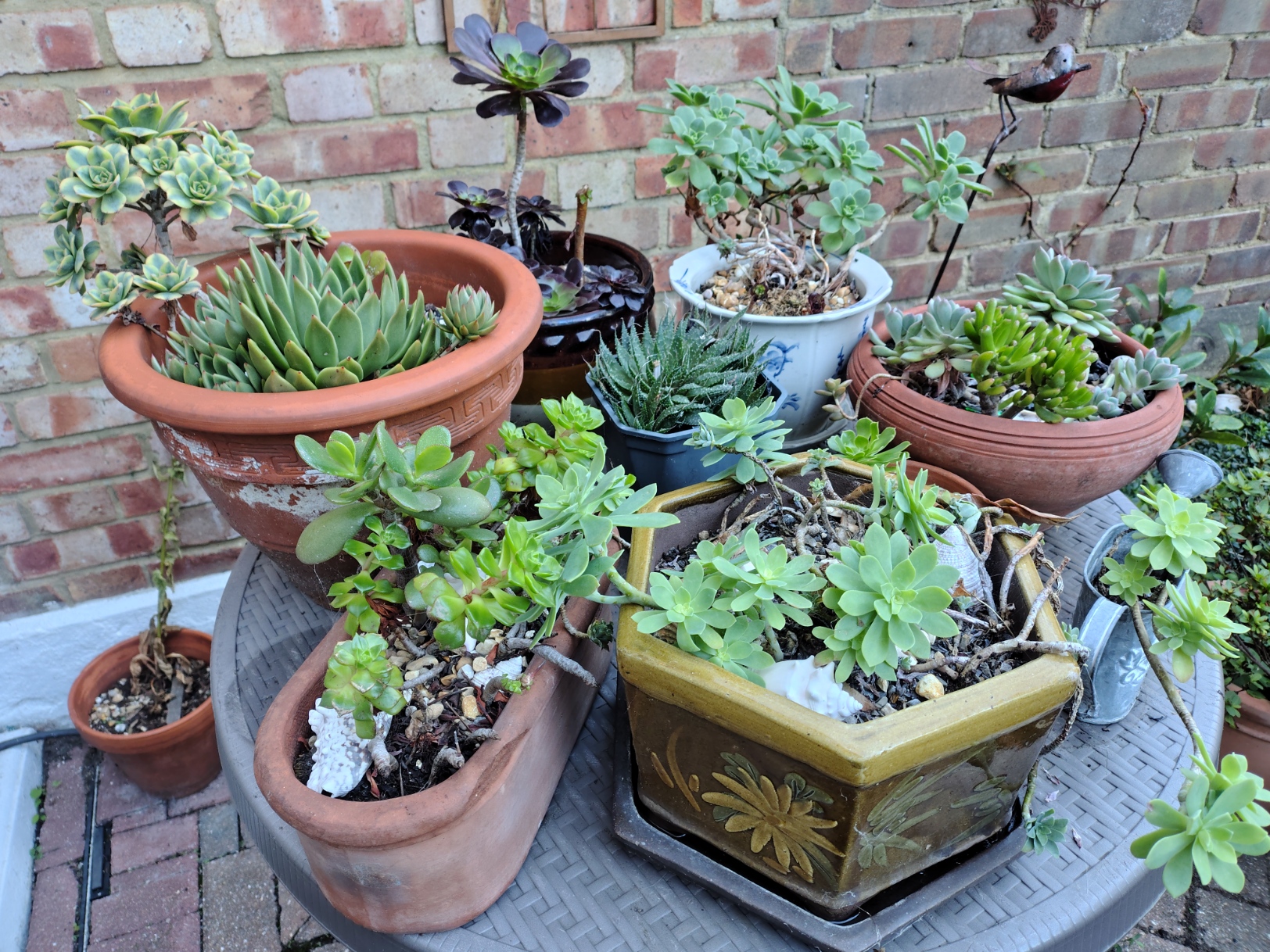
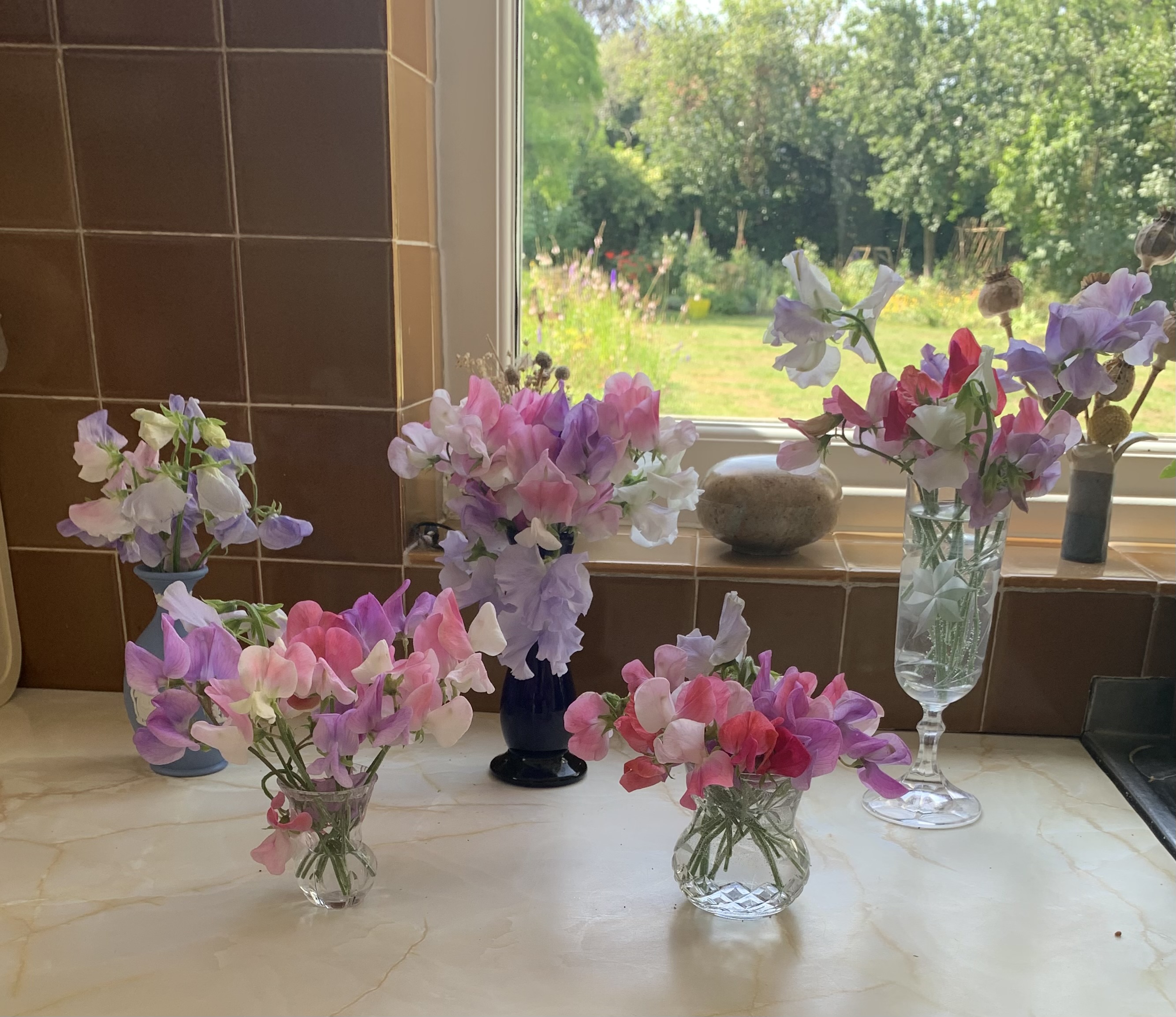
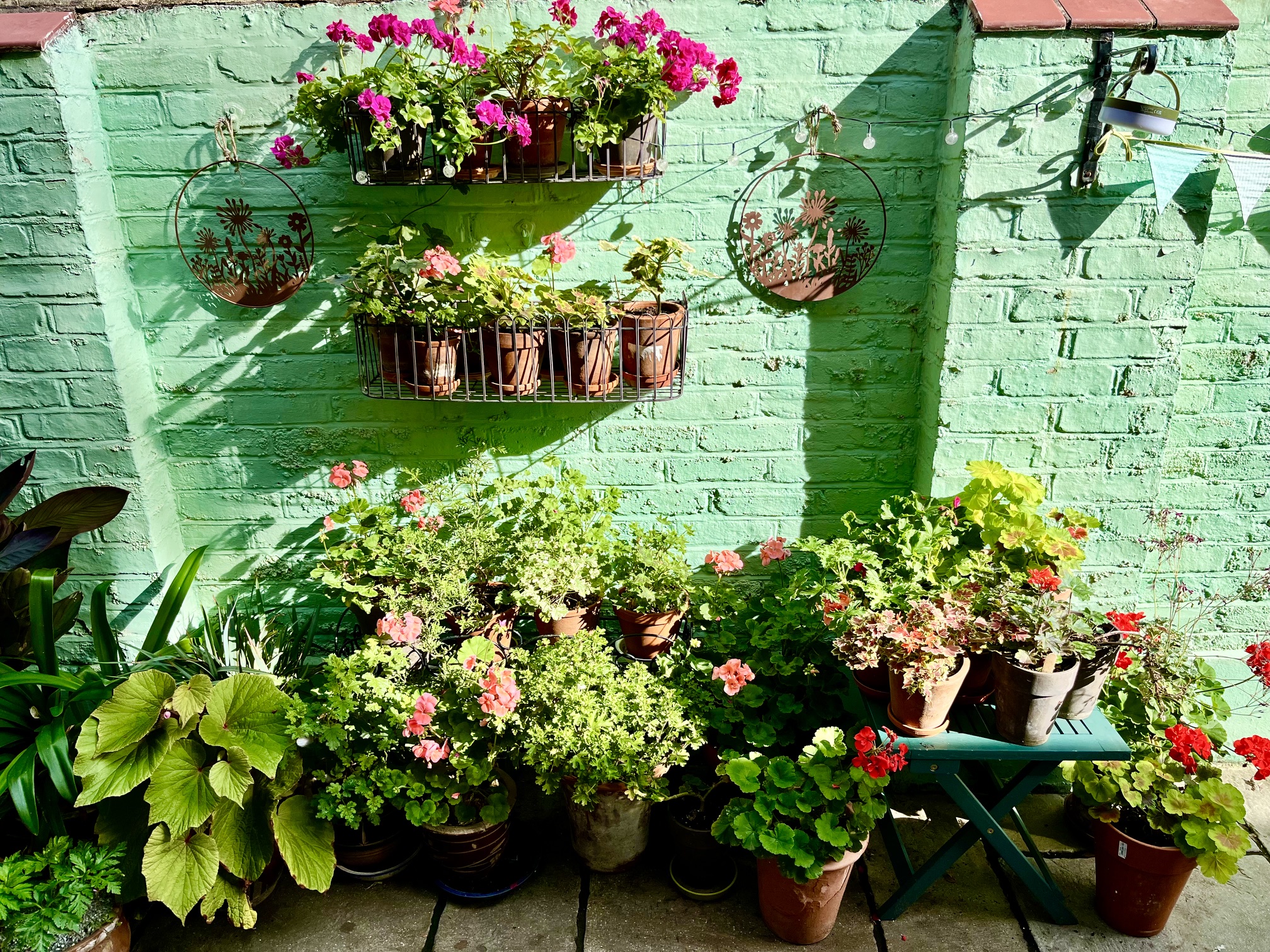
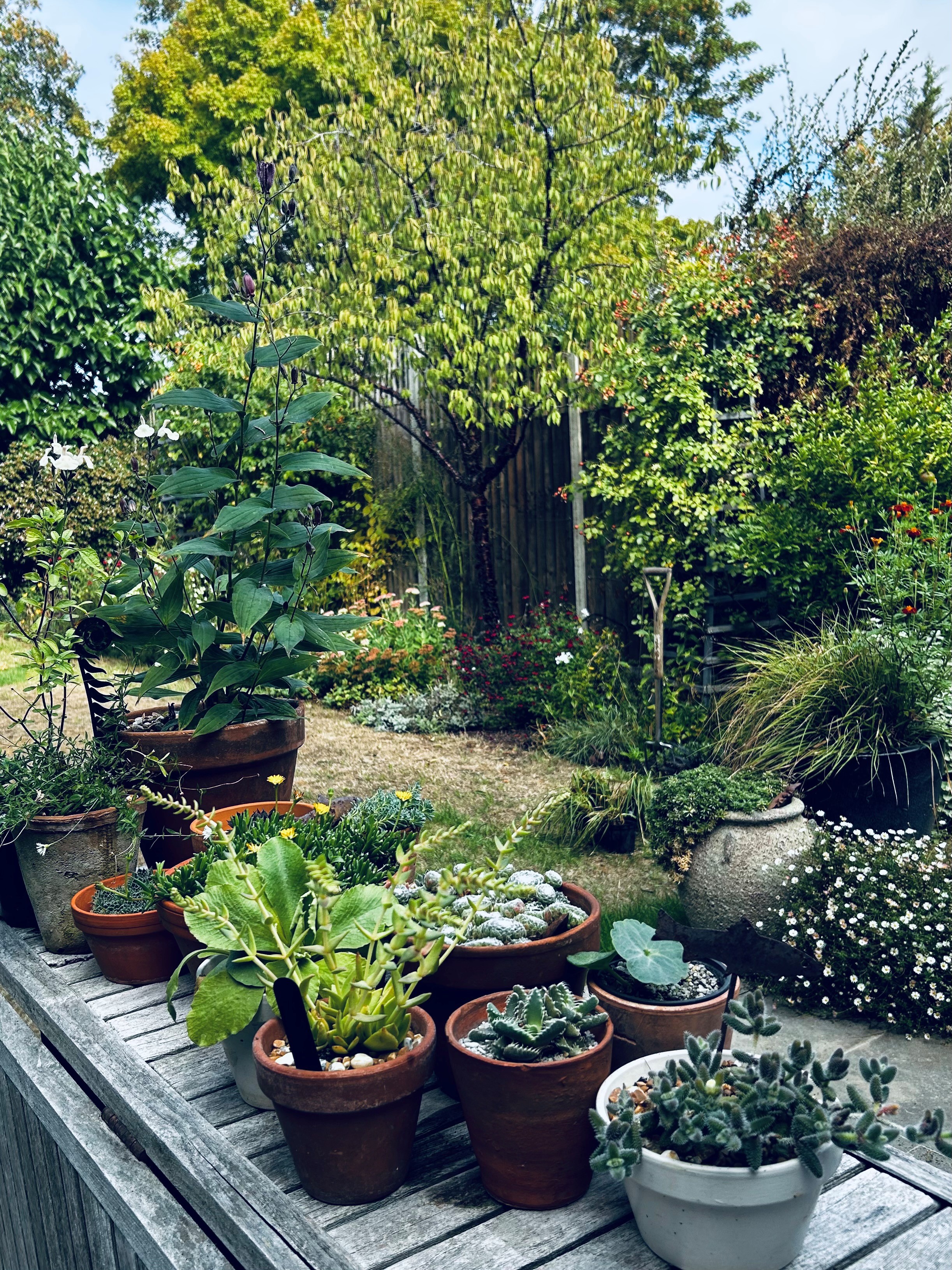
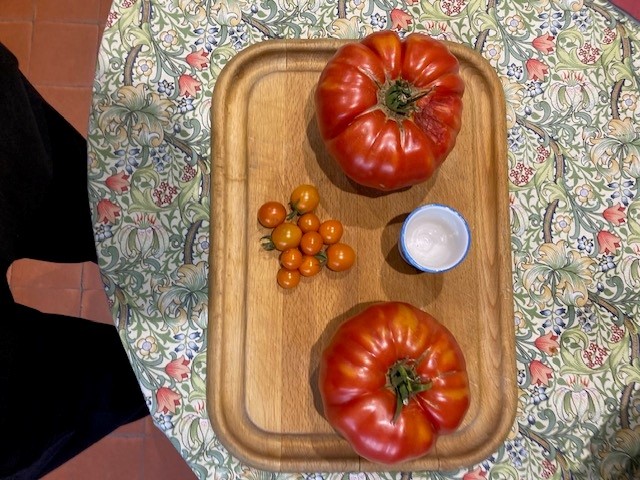
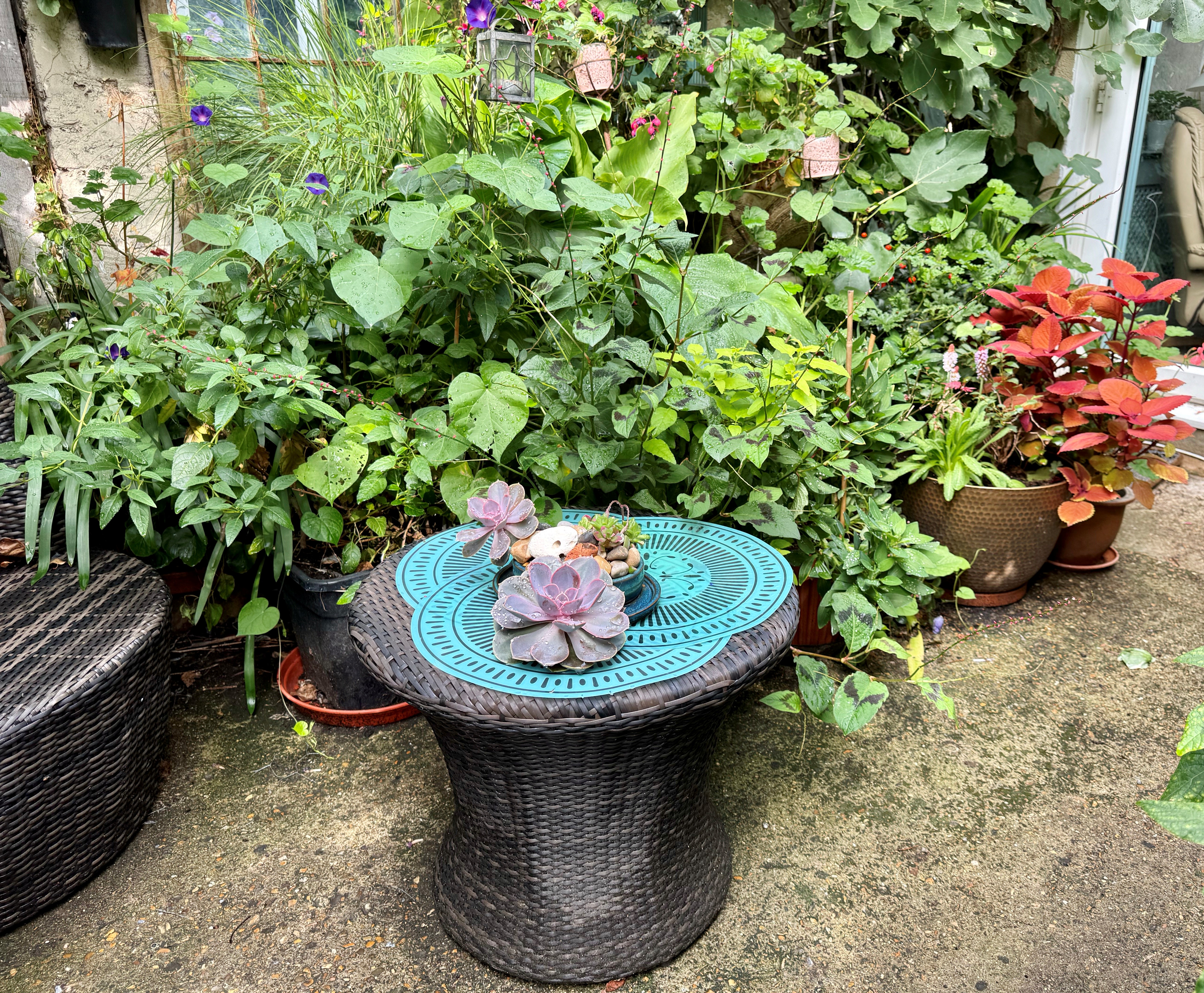
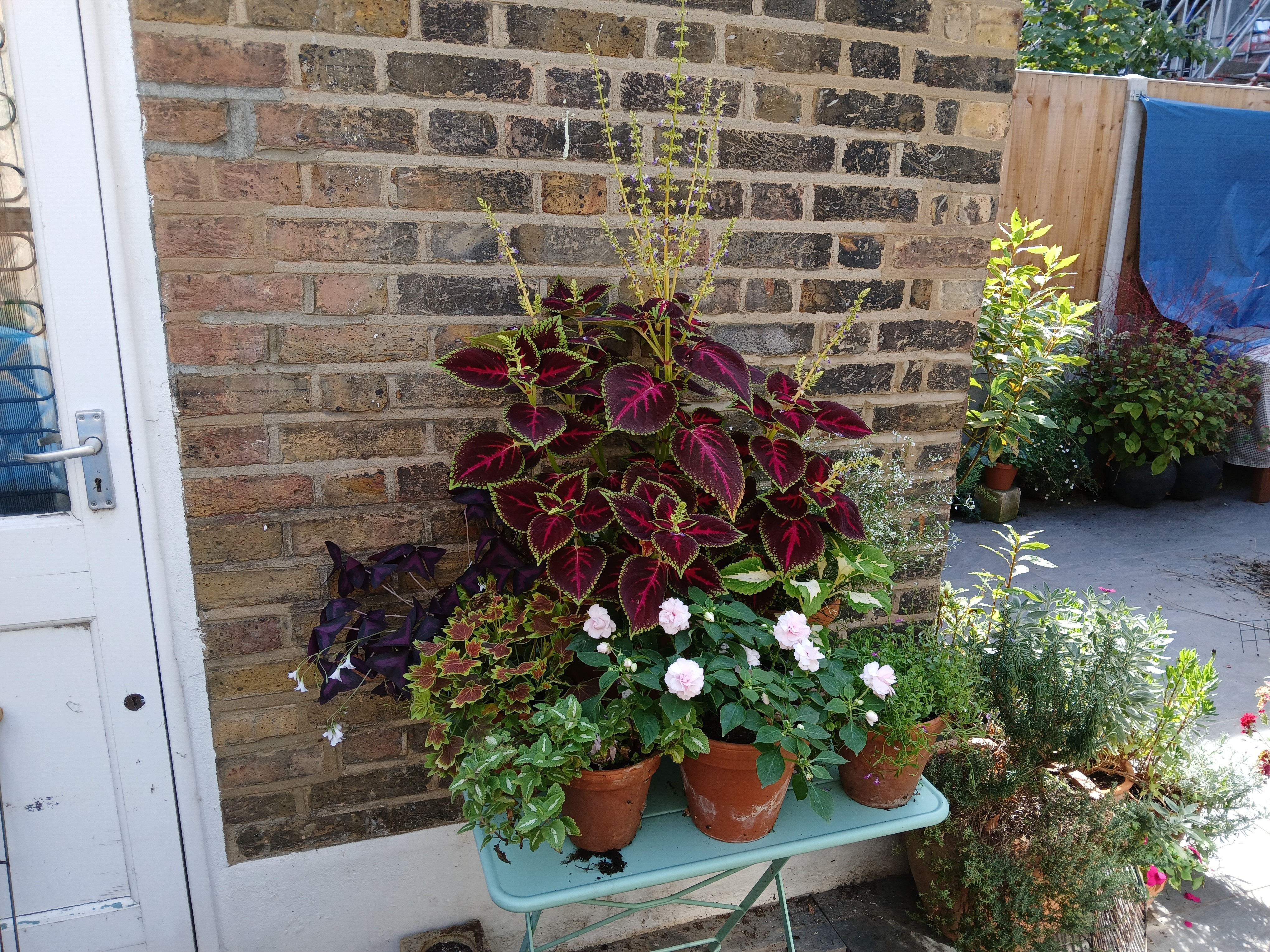
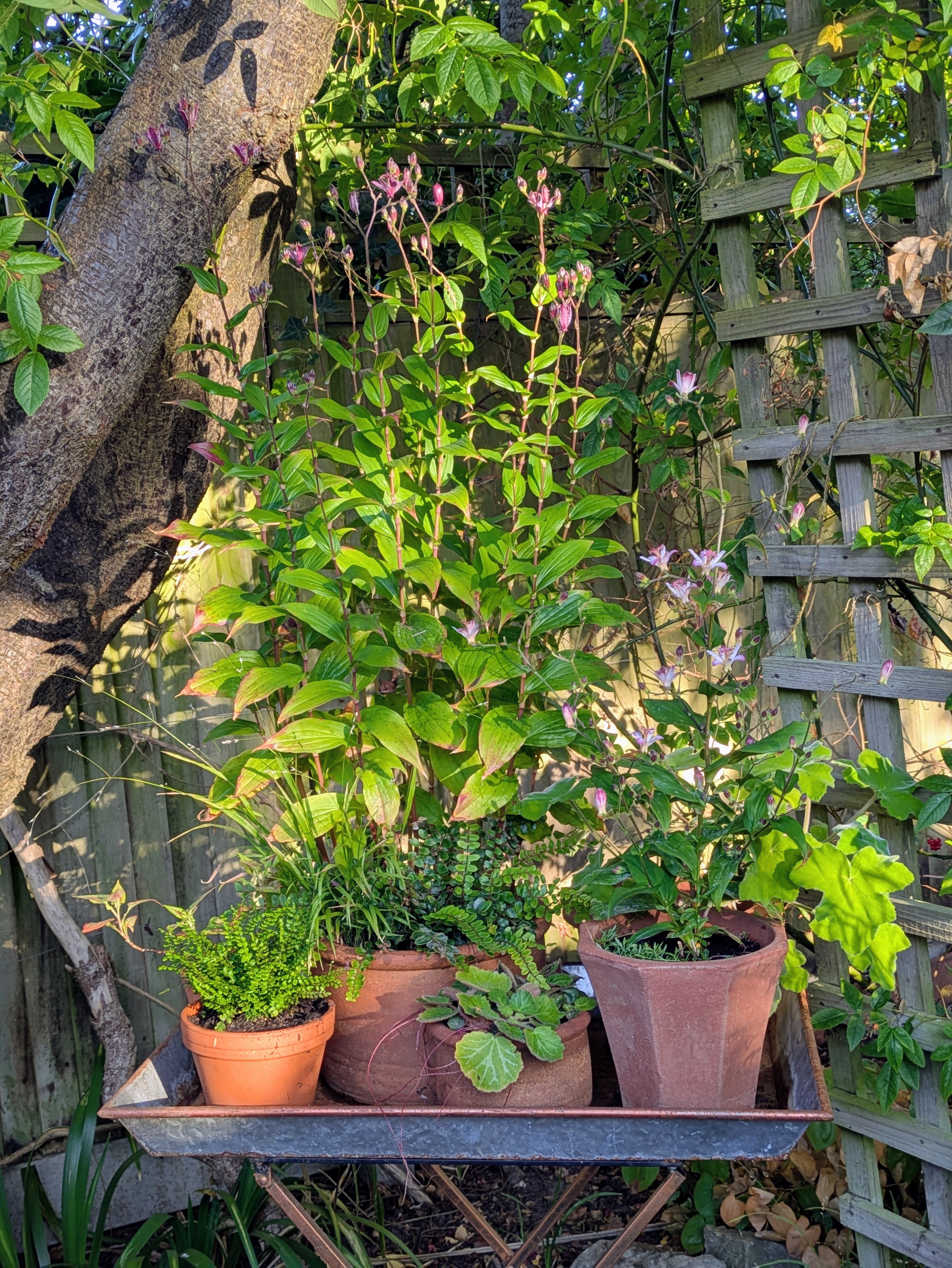
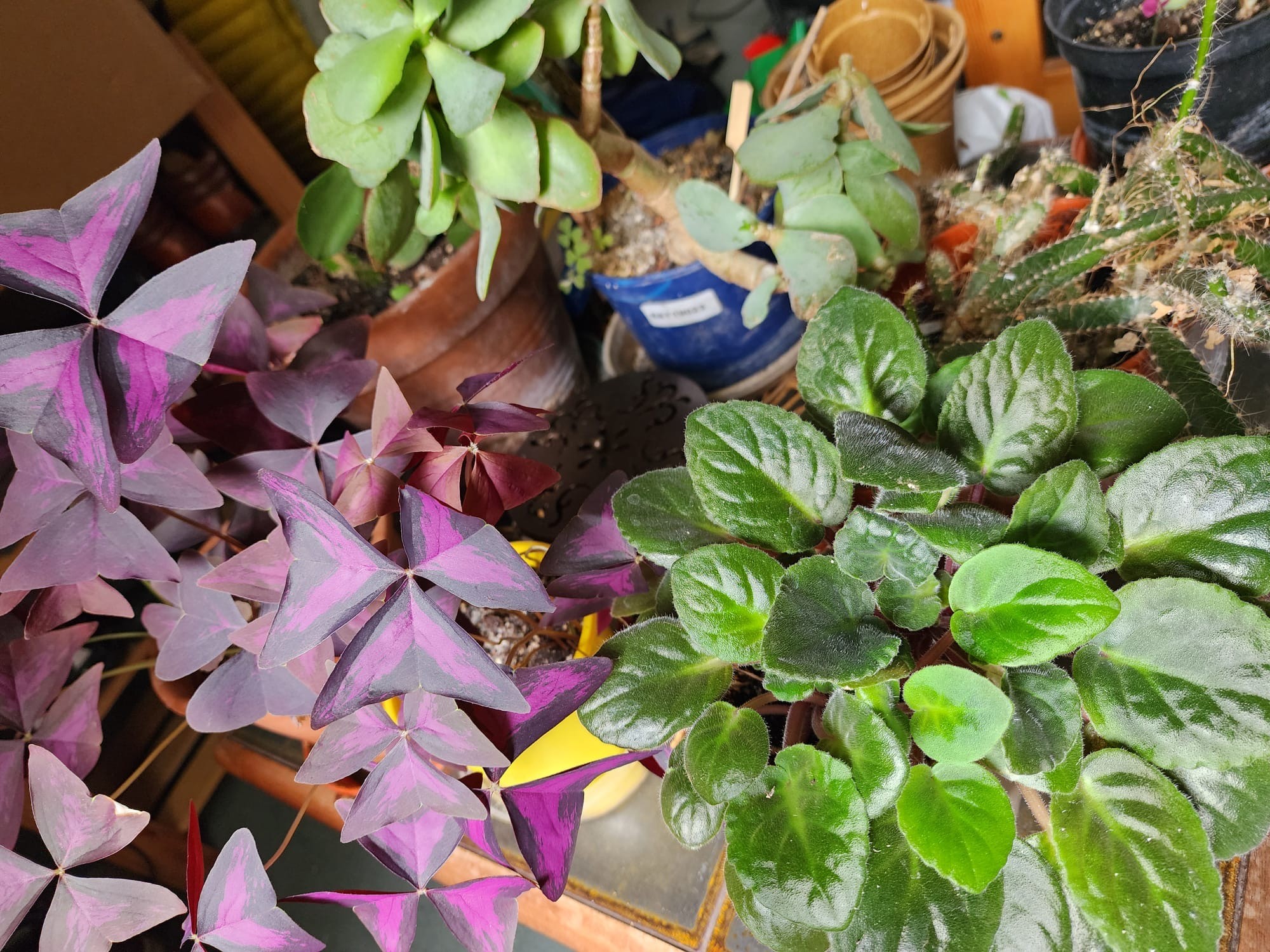
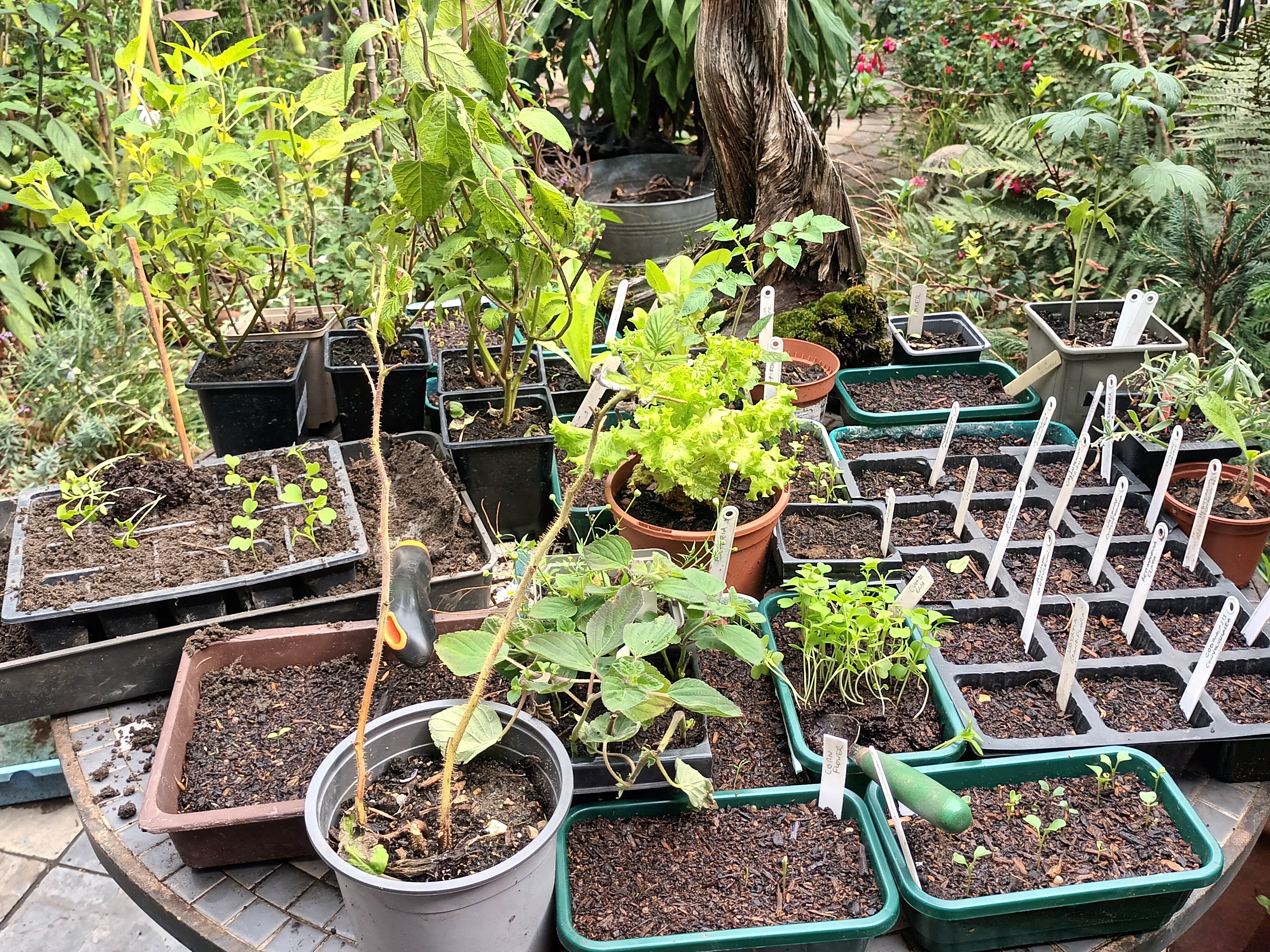
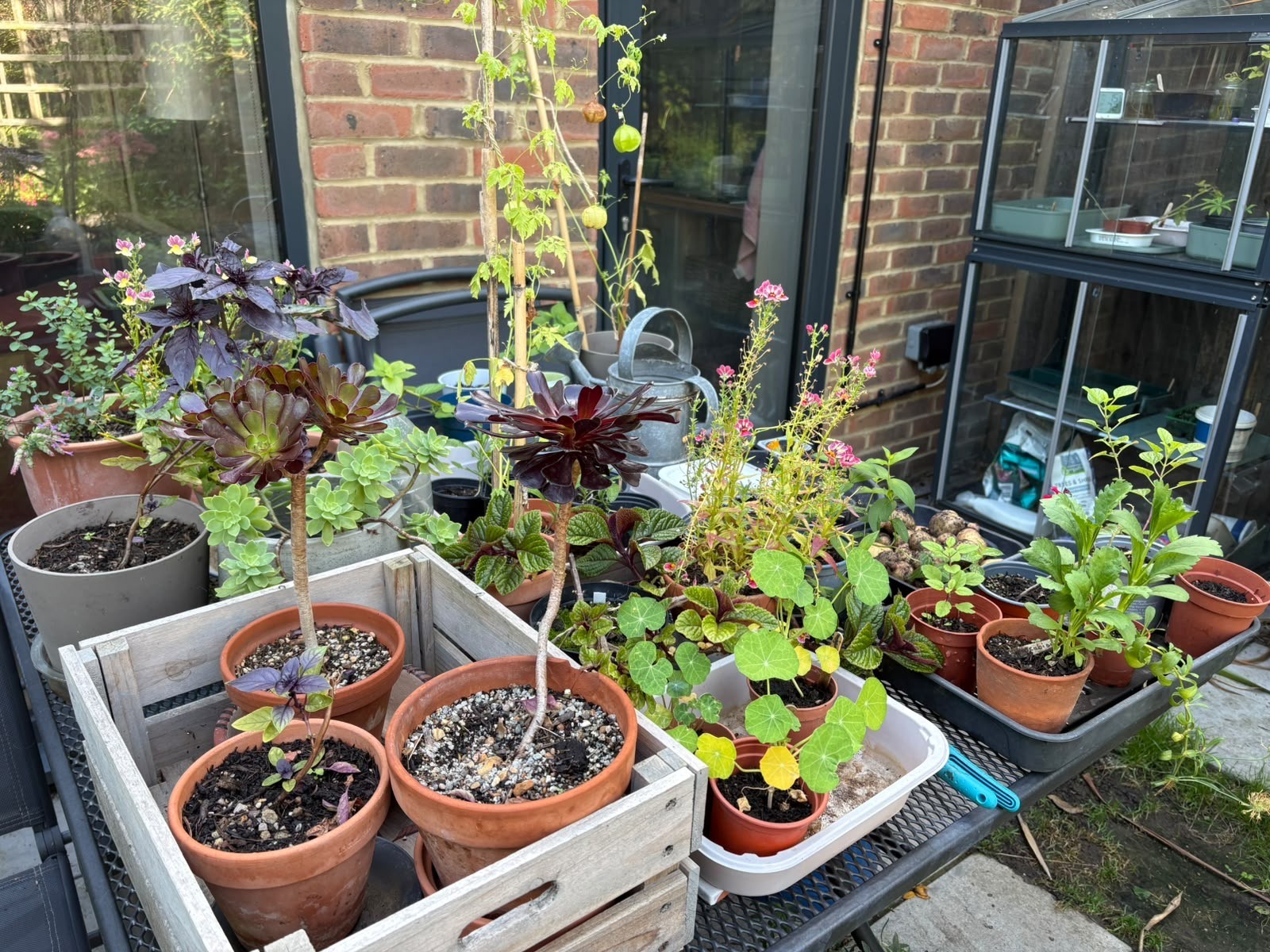
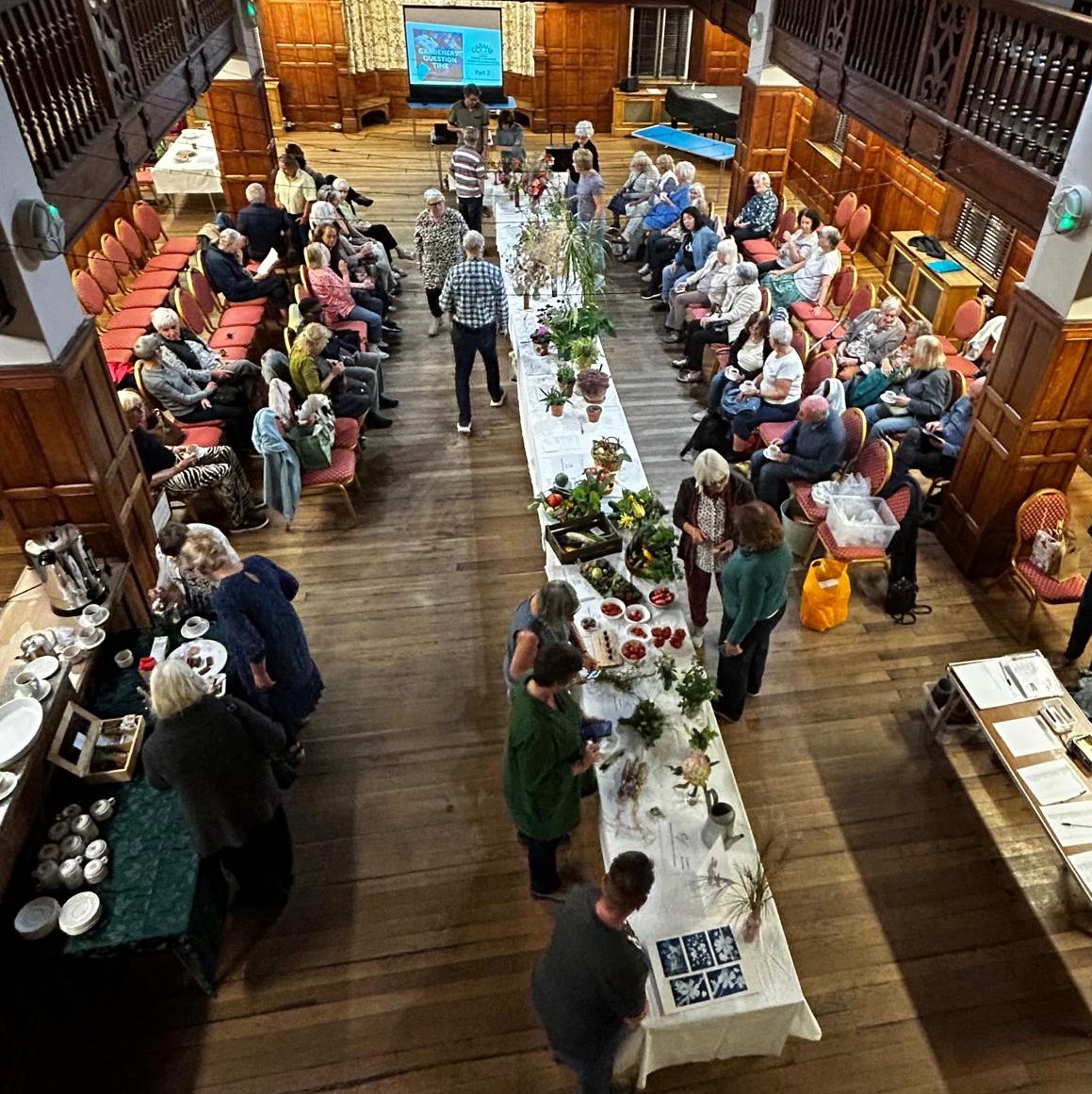
Class 15 (‘photograph of a display of plants on a table’) in our recent Flower, Fruit and Vegetable Show revealed a lovely variety of interpretations again this year (see last year’s tables for further inspiration). All are expressions of nature’s bounty, whether displaying the fruits – and flowers – of the summer’s labours or the exciting potential of seeds and cuttings. Indoors or outdoors, many choose to display tender plants in containers, enabling easy frost-protection later in the year.
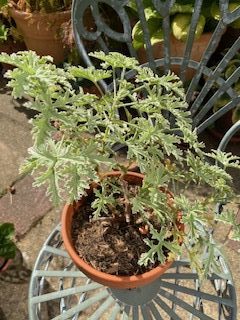
Every home should have at least one Pelargonium and, once you have one, you will most definitely want more. There is something so uplifting when seeing a Pelargonium in a pot, whether it’s flowering or not. Some can flower from early spring until the early frosts, but September, to my mind, is the month when many come into their own, generally sending out multiple flowering shoots to delight the eye. But they are all regarded as tender and should be brought indoors before the first frost of the season.
The following plants are in Vija’s garden, enjoying the present sunshine, amongst her table displays.
The 2026 Autumn ‘Flower, Fruit and Vegetable Show’ was held on Monday 21 September in the Old Library at Charlton House.
CABAHS Autumn 2026 Show gets underway
This is a photo-heavy post so some will display quite small – just click on the images to see at full size.
This year, after such extreme drought and high temperatures, the committee was concerned that entries might be few and far between. Of course, these fears were unfounded as the members came up trumps again, showing entries rich in variety, creativity, colour and quality. In fact, resident potato-weigher Hugh said that there were more entries to the potato competition than ever before. There were slightly fewer entries in total than last year, though that fact was not evident in the bounteous appearance of the tables, and might simply be down to a few of our veteran showers being unavoidably absent.
Get more Dahlia flowers by regular deadheading, make comfrey tea plant food, and learn from Beth Chatto’s dry garden
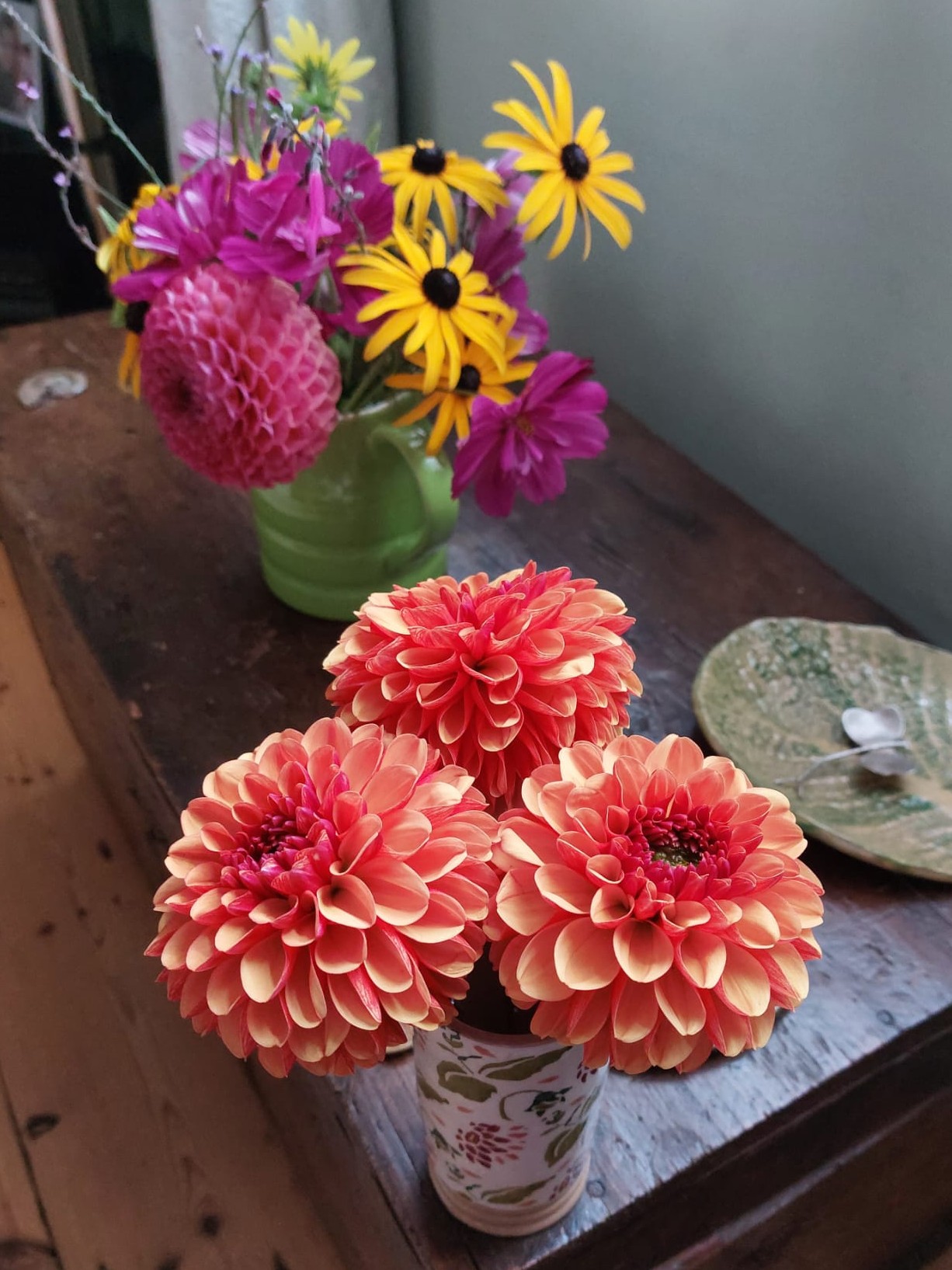
1. Keep cutting or dead heading your Dahlias to keep the flowers coming, hopefully into October. Give them a weekly feed too.
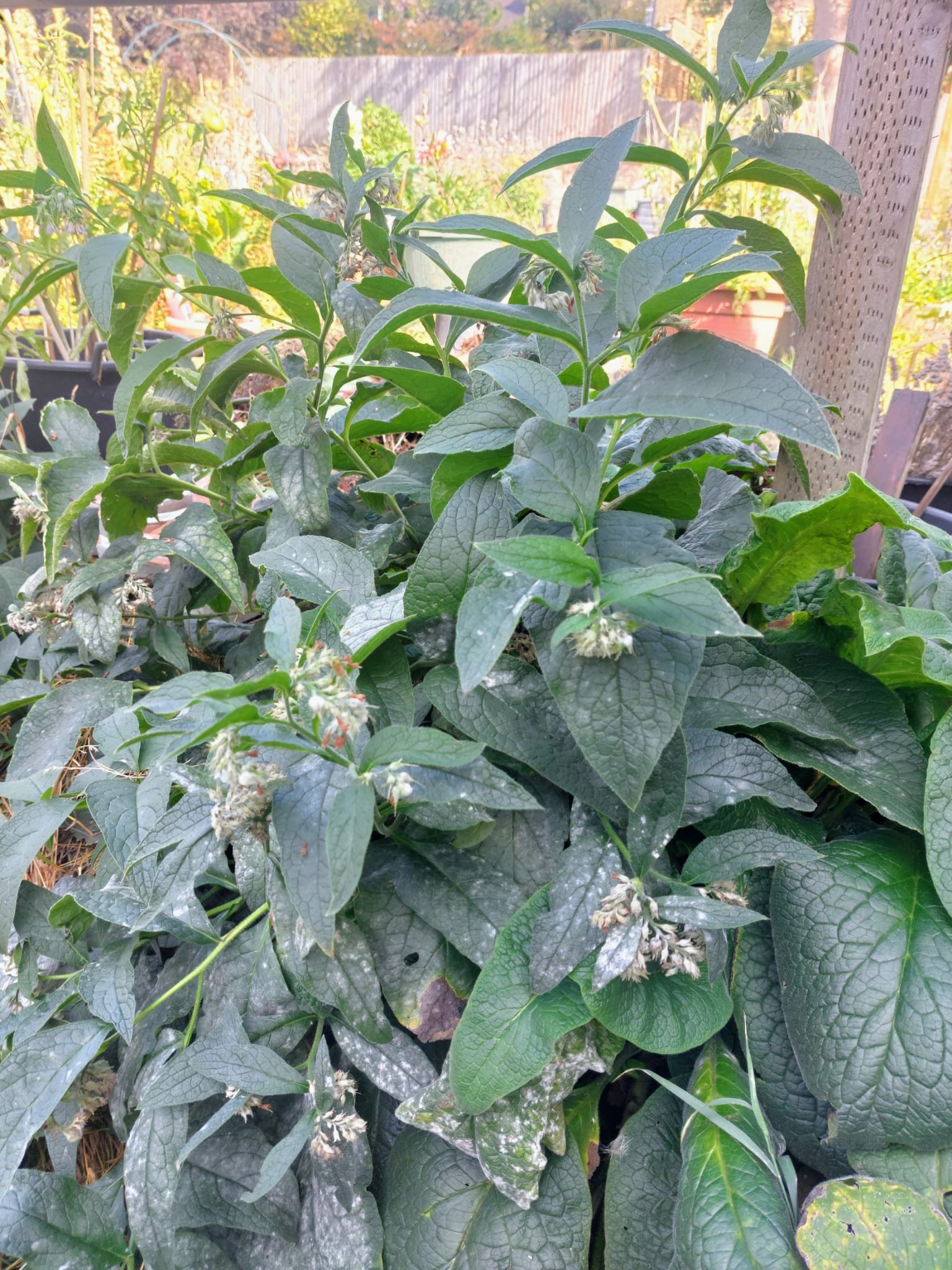
2. It’s not too late to make some comfrey tea to feed your plants and veg. Just cut up handfuls of leaves and leave in a bucket with some water and a weight to hold it down. Try to cover the bucket as the smell is very unpleasant, then dilute 1/10 in water and aim at the base of plants you are trying to keep going.
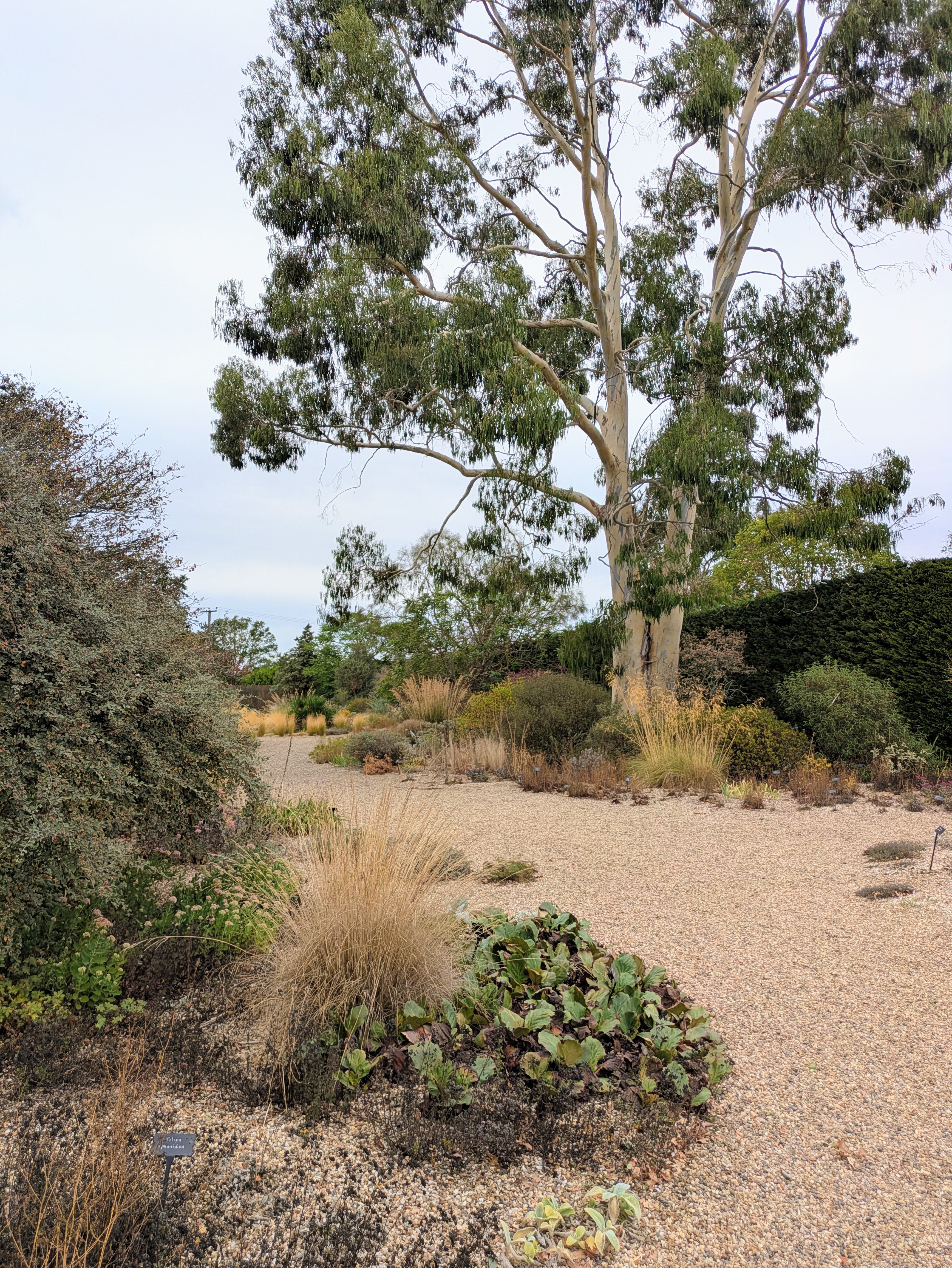
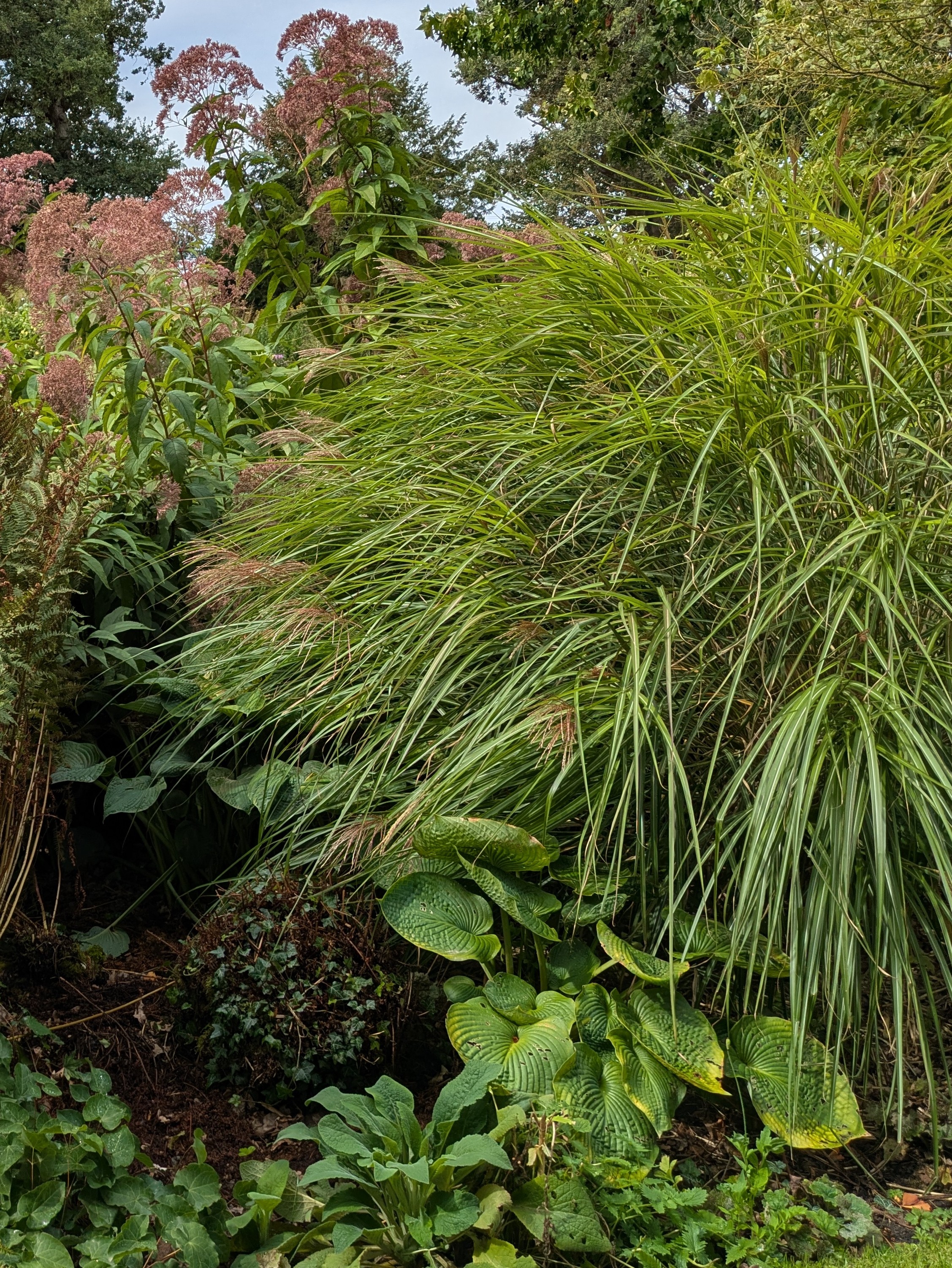
3. I think this year we need to carry out a review of very dry areas in our gardens and replant with drought tolerant plants. If you made the visit to Beth Chatto her dry garden is an excellent example. I have a bank at the back of my garden and half of it looks very sad or even dead so I’ll be replanting some of it in the spring if things don’t come through.
Last Friday, a full coach of CABAHS members took another trip to Essex, this time to see Beth Chatto’s Plants and Gardens. The last group visit was in 2021 and the irony of visiting a world-famous dry garden in torrential rain was not lost on those who attended then. A heavy downpour on Friday’s journey made us wonder if we might be reliving the experience, but it was brief and our whole visit was dry.
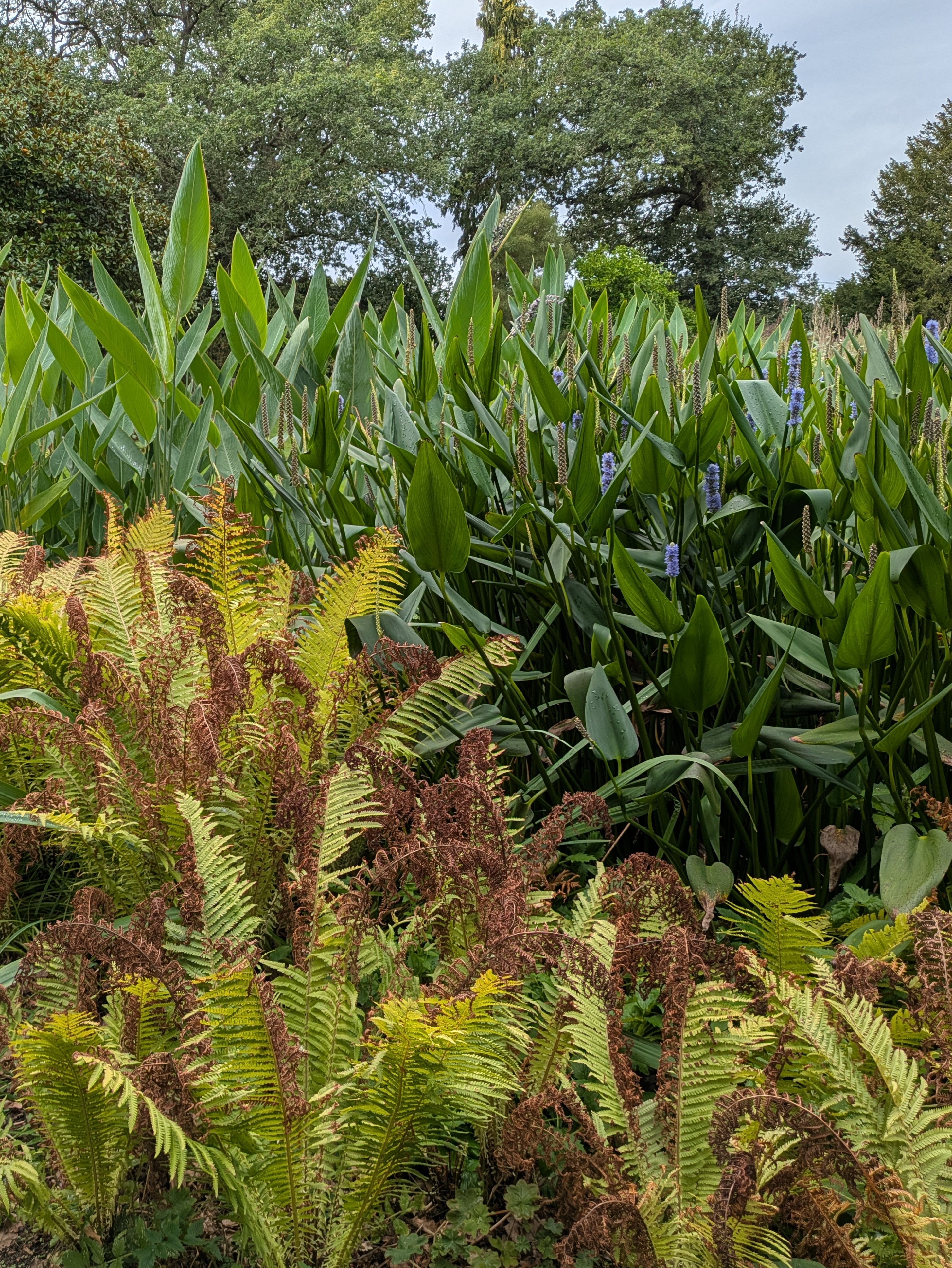
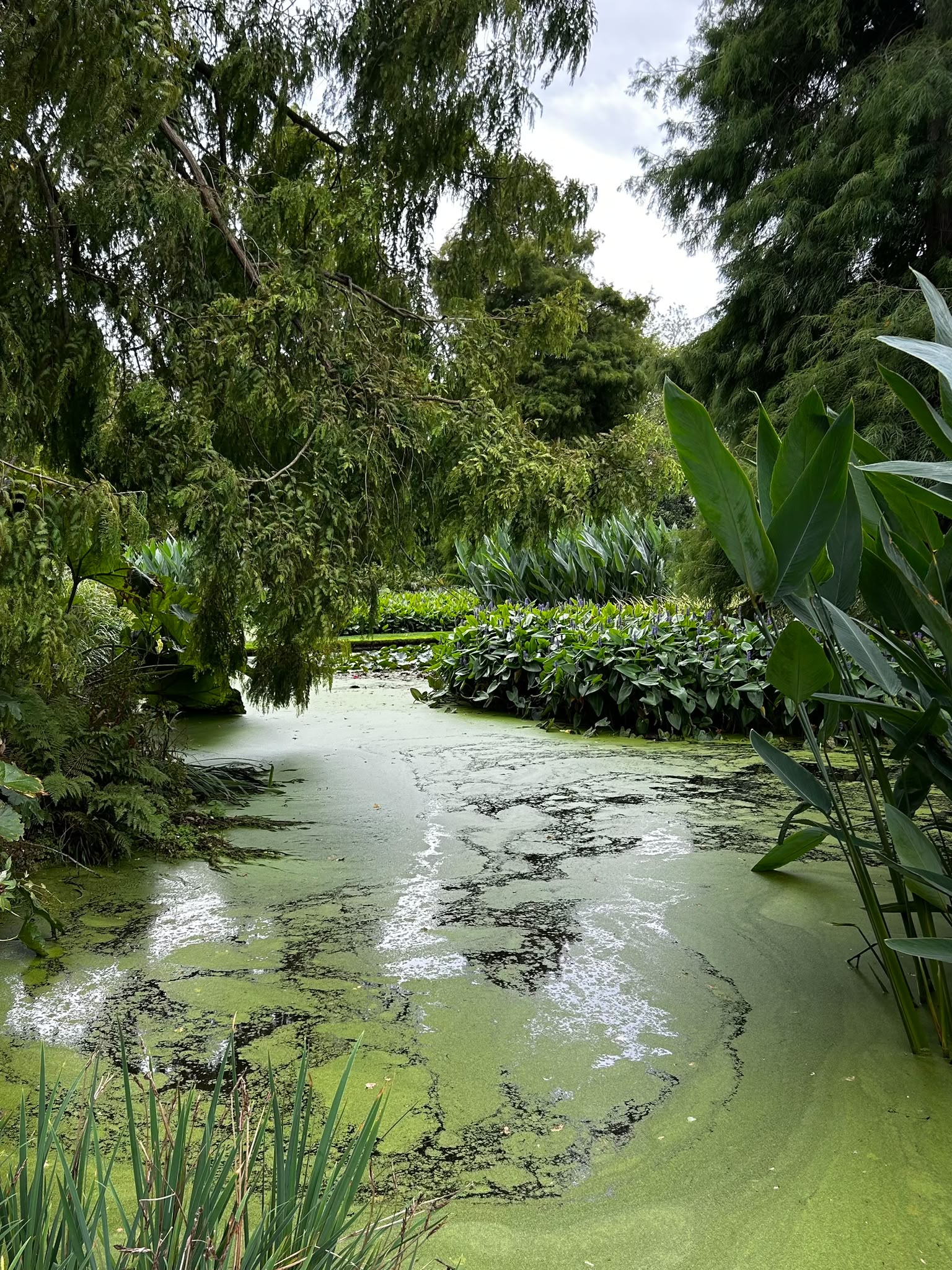
Most well-known is the Gravel Garden, which was developed in the 1990s on the former car park – at a high point in the gardens which, in Essex, are in one of the driest parts of the country. But the site has a much more varied topography and ecology than just the dry garden. Much of the site was actually boggy and Beth and Andrew Chatto carved ponds in the lowest areas. This meant that we saw green, green lawns in an area – the Water Garden – where the water table, even after this summer drought, is high.
If your own space is looking ‘a bit green’ at the moment, think about adding annuals to liven up your garden in 2026. Here are a few I highly recommend:
Zinnia
This year I’ve grown Zinnia elegans SPRITE MIXED at my allotment and they are looking good – tall, healthy, robust, colourful and bee-friendly. I am very pleased with them, as the flowers themselves are a mixture of vibrant and subtle shades, and, as an added bonus, no signs of stem rot (fungi/bacteria more prevalent in warm, wetter summers that attack the stems).
I sowed the seed straight into the soil in two rows. Two or three weeks later, I thinned the seedlings and replanted those thinnings into a third row. So, they are tightly packed and they don’t seem to mind that and I don’t need to stake them. Flowering from July to October, this robust variety is perfect for displaying in gaps in borders or containers. And ideal for picking, although I don’t have the heart to do that yet!
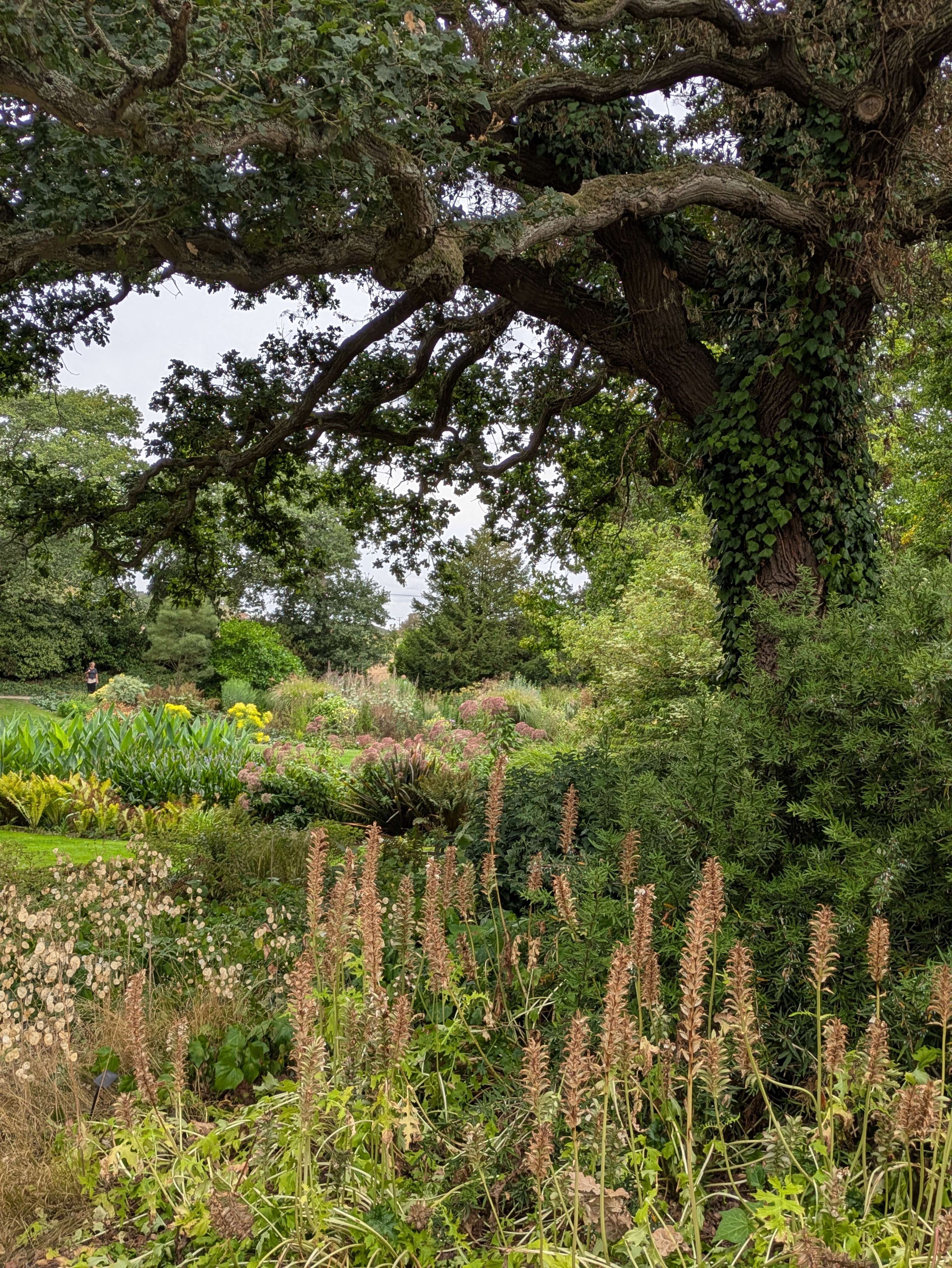
Before the 1920’s, the ten acres of land at Canford Cliffs was heathland. But along came a man with vision, one Thomas William Simpson, and, with the help of his head gardener Mr Middleton, a magical garden was created.
Mr Simpson was a businessman and entrepreneur (margarine) and having visited many countries, knew exactly what he wanted. Influenced by the gardens and architecture of Italy, Japan and the UK Arts and Crafts movement, he and his gardener set about creating a series of gardens, starting with the Italianate gardens, then a necklace of paths and ponds which connected finally to his Japanese Garden, thus turning his vision into reality, right up until WW2.
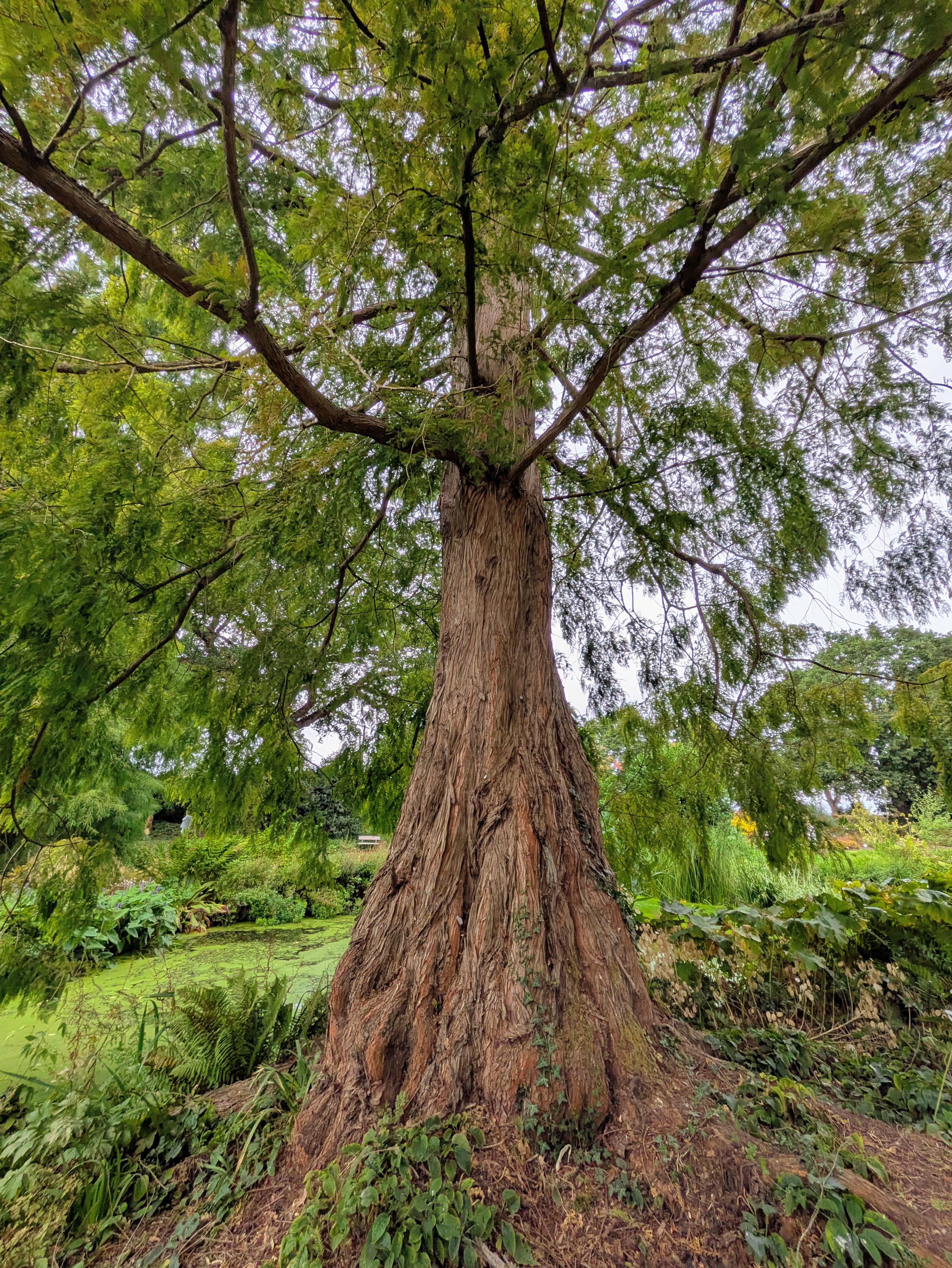
The garden sadly fell into neglect following the conflict, but in the 1950’s and 60’s, a new owner set about restoring it, planting the magnificent trees we see today – their maturity and majesty makes this garden quite a magical place to explore.
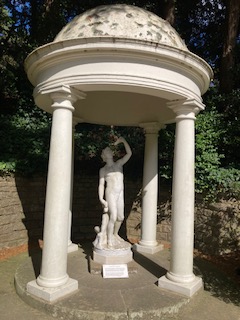
The Italianate GardenThe steps leading down to the Italianate GardenBacchus, God of Wine, sheltering beneath the temple
Upon entry into the garden, I came into the Roman Garden, passed through the Grotto and into the very impressive Grand Italianate Garden, the focal point being the rectangular formal pond and beyond, the statue of Bacchus, the Roman God of Wine, sheltering within a temple at the far end of the garden. This sheltered, south-facing, formal garden is a relaxing place to sit and admire its many features. This garden then leads into Palm Court, a formal garden with its row of impressive Chusan palms.
Jason Sylvan, Head Gardener at Charlton House, has designed the Old Pond Garden to be as attractive to wildlife as possible. Because we talk about monitoring moths, he asked if we could check how many moths are visiting the garden. We should have tried this in the warmer months when there are more plants in full flower but we had missed that for this year so we gave it a shot on a warmer dry night in September to test out a strategy.
As we wrote in an earlier post, we have been monitoring moths for the Garden Moth Scheme since 2013 in Newcastle-upon-Tyne and since 2019 in Blackheath. The moth trap is a box with a light (our type gives off no heat), and below the light are two panels of see-through Perspex, one each side and shallowly angled down, with a slot/gap between them. The moths ‘funnel’ into the box, and it’s difficult (but not impossible) to get out. Inside are egg-trays, which provide resting places.
Why do moths fly towards the light? Until recently, the correct answer has been that nobody knows, but researchers in Sweden found the answer: for aeons, light at night was above and dark was below, so moths orientated themselves to fly with their backs to the light above. In artificial light – fires, candles, street lamps – they still try to fly with their backs to the light, circling round and round, and sometimes become disorientated.
The trap is placed before sunset, and collected at sunrise the next day. So an early start.