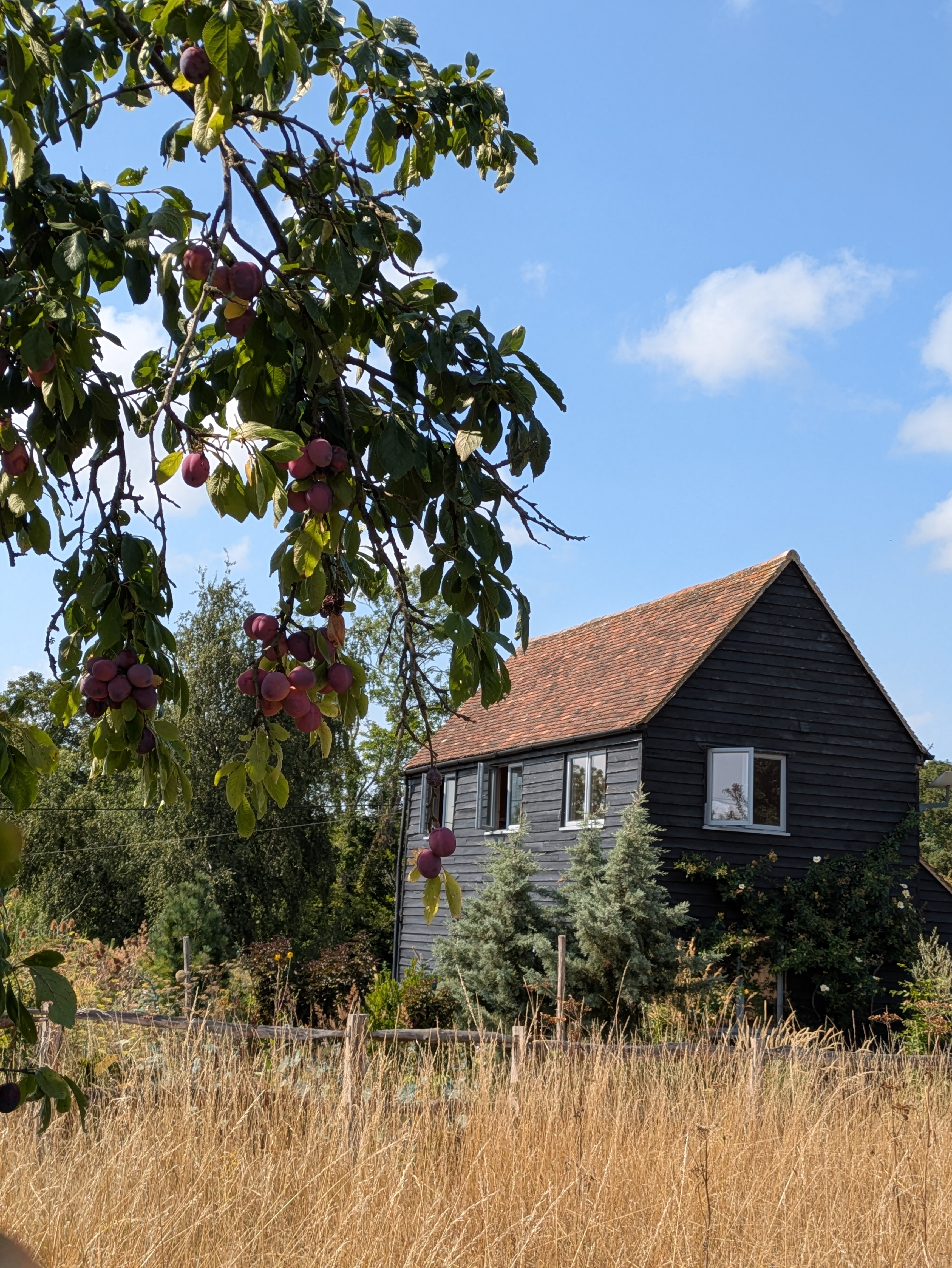
Looking to the house and garden, across the meadow from the orchard
Last weekend I visited Andrew Salter’s garden near Canterbury in Kent (@big_drewland on Instagram). Having announced the open garden date a mere three weeks into the drought, he then considered postponing / cancelling by the time another rainless, hot month had passed. I am very glad he did not, as even drought-scorched, crispy and hot, the place bewitched me.
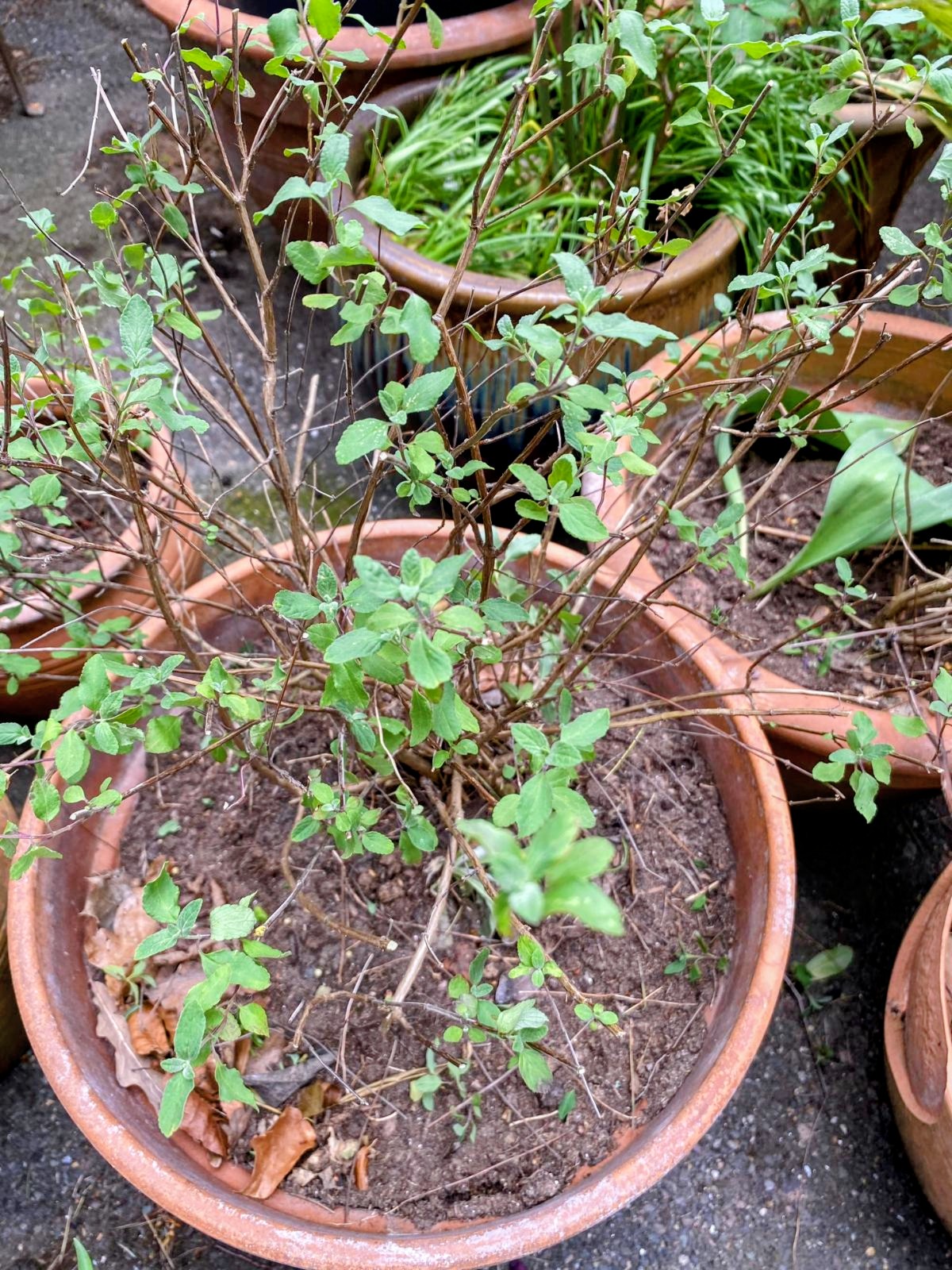
1. Cut back those shrubby Salvias now if you haven’t already done so, both in the ground and in pots. Cut just above a shoot and they will grow away fast, but listen out for forecast of frost.
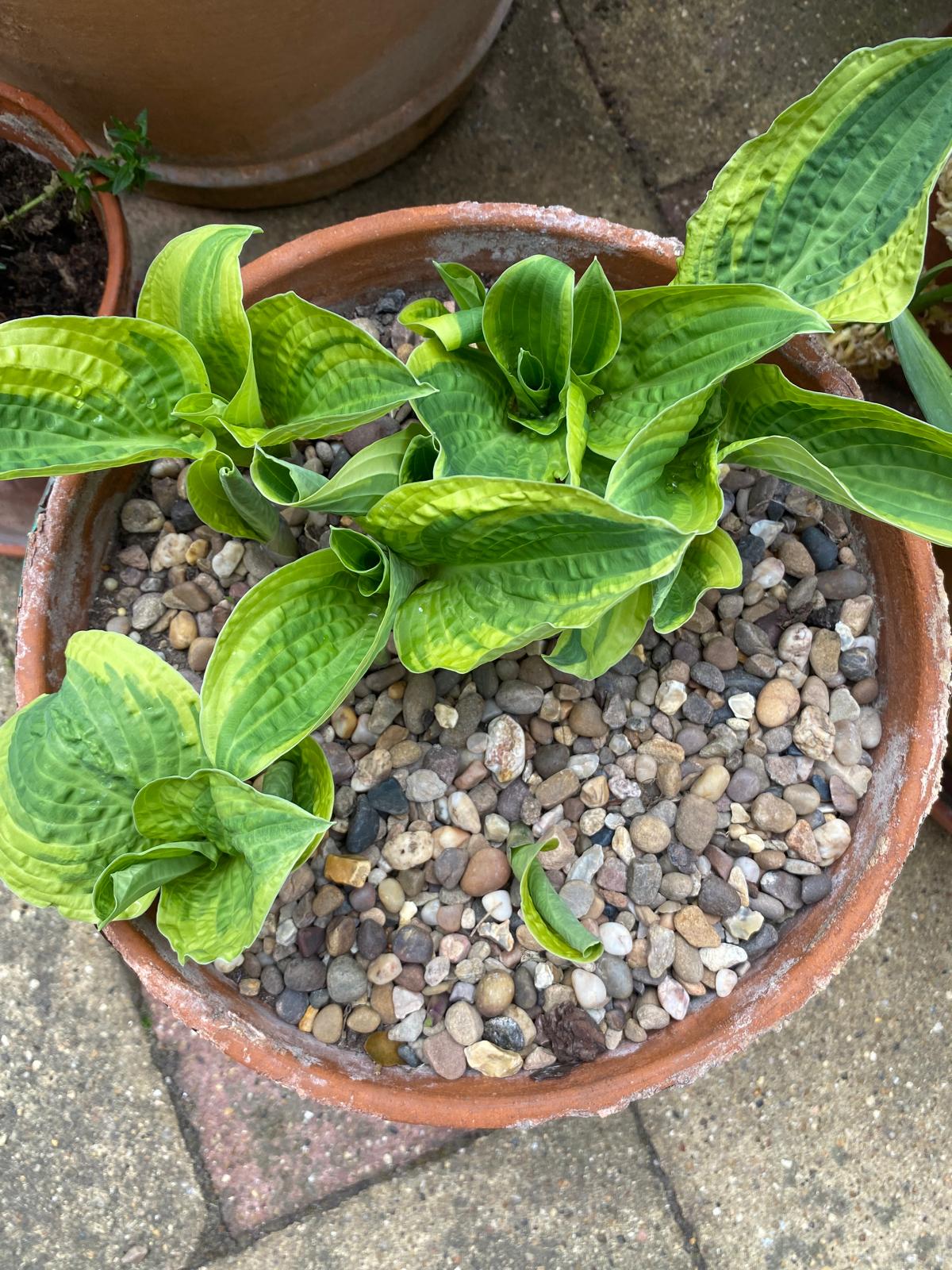
Cut back shrubby Salvia, deter weeds (and possibly molluscs) with a gravel mulch, and support your taller plants
2. Some bulbs are now over so make sure to deadhead and then leave the foliage to die back naturally, and give them a good feed to build up the bulbs for next year.
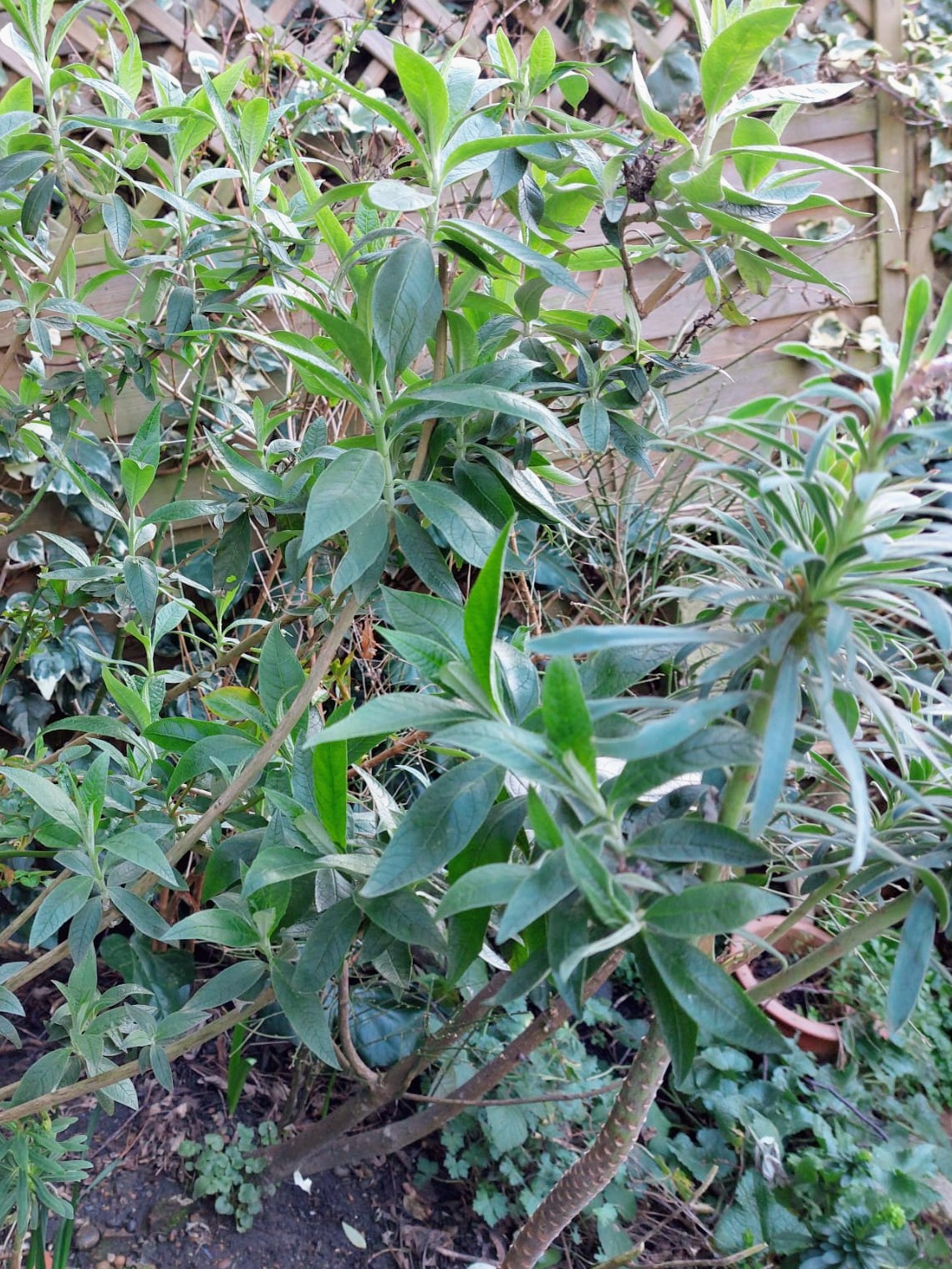
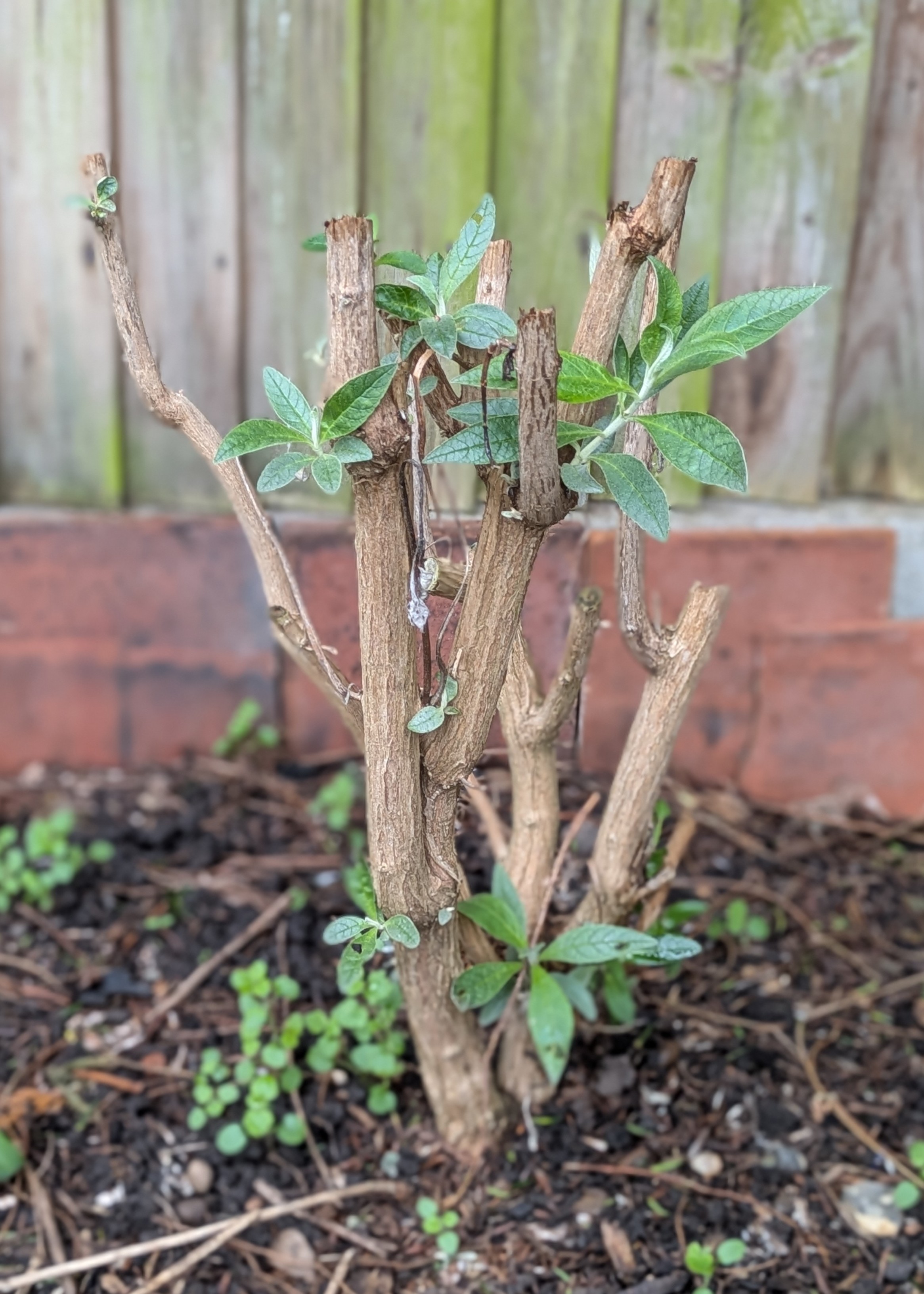
1. Time to cut back Buddleja davidii hard… don’t be timid, take it right back to 40cm to a pair of buds. If you want a taller plant make the cuts higher up the stem. It will grow back in no time. The prunings make good hardwood cuttings and root easily straight in the ground.
Buddlejas before and after a hard prune (not the same plant!)
2. You can pot up Dahlia tubers now by placing in pots or trays of peat-free compost in a frost-free place, and water once with no need to water again until shoots appear. Make sure the tubers are firm with no sign of rot.
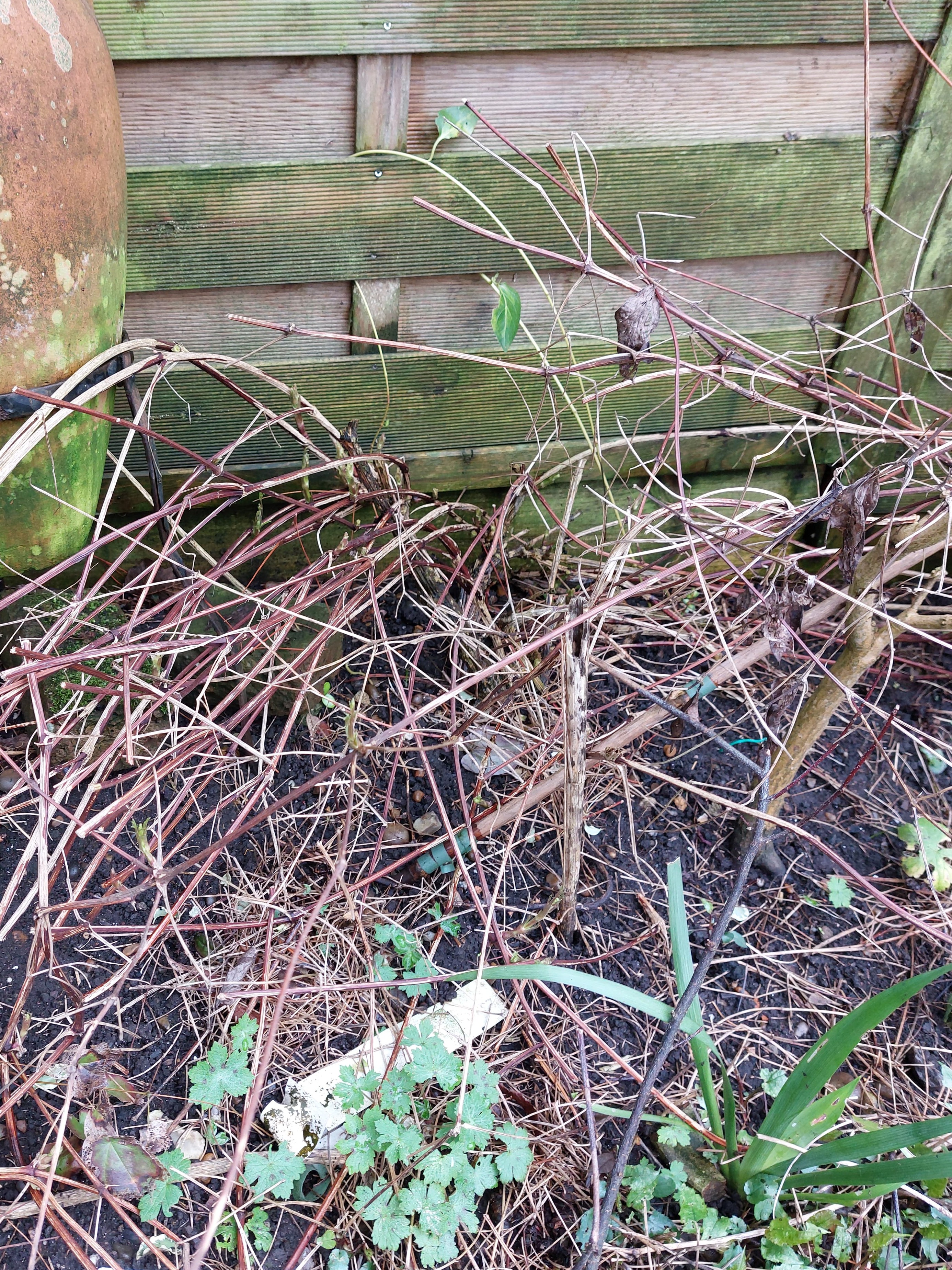
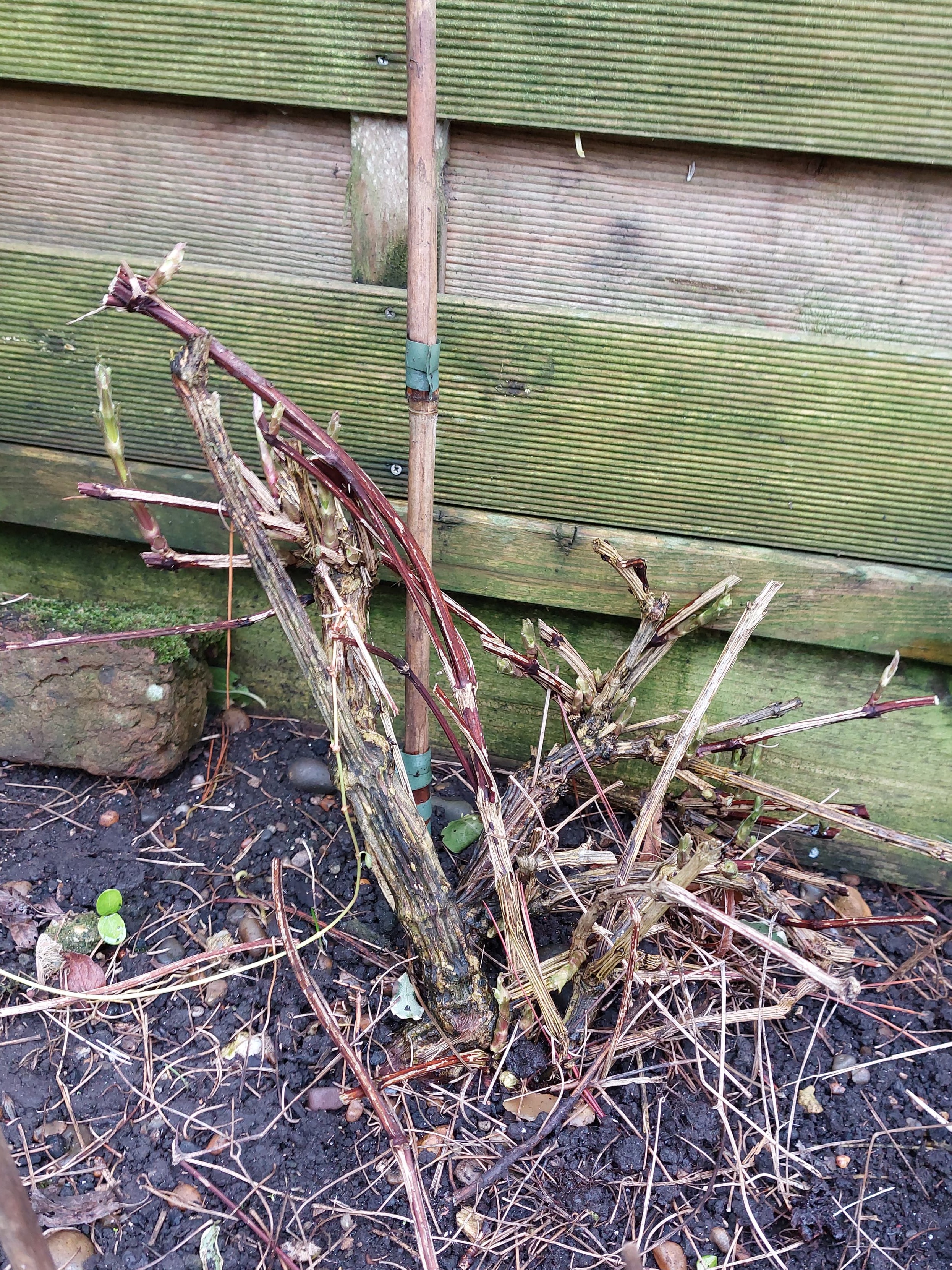
1. It’s time to prune your Group 3 Clematis (the Viticella and Jackmanii type) to tackle tangled growth at the base so they can grow away strongly. Take all growth back hard to about 6 to 12 inches above the ground, cutting above a leaf joint. Then give them a feed and a mulch. It seems drastic but they respond well and will grow quickly. If it’s a fairly new plant check around the base for slugs which can quickly eat any weak new growth.
Clematis viticella ‘Betty Corning’ before and after a hard prune
2. Cut back all spent foliage on grasses making sure not to snip emerging shoots. And look out for any seedlings to pot up for our plant sales table if you don’t want them!
2. Any form of mulch is good on the soil now, in the form of your own homemade or bought compost, or even leaf mould if you have it. If you can’t face lightly forking it in, the worms will do it for you.
1. You can start planting tulips now, either in pots or in the ground. The deeper they are planted in the ground the more chance there is of them reappearing next year – but do protect them well from squirrels who love to eat them.
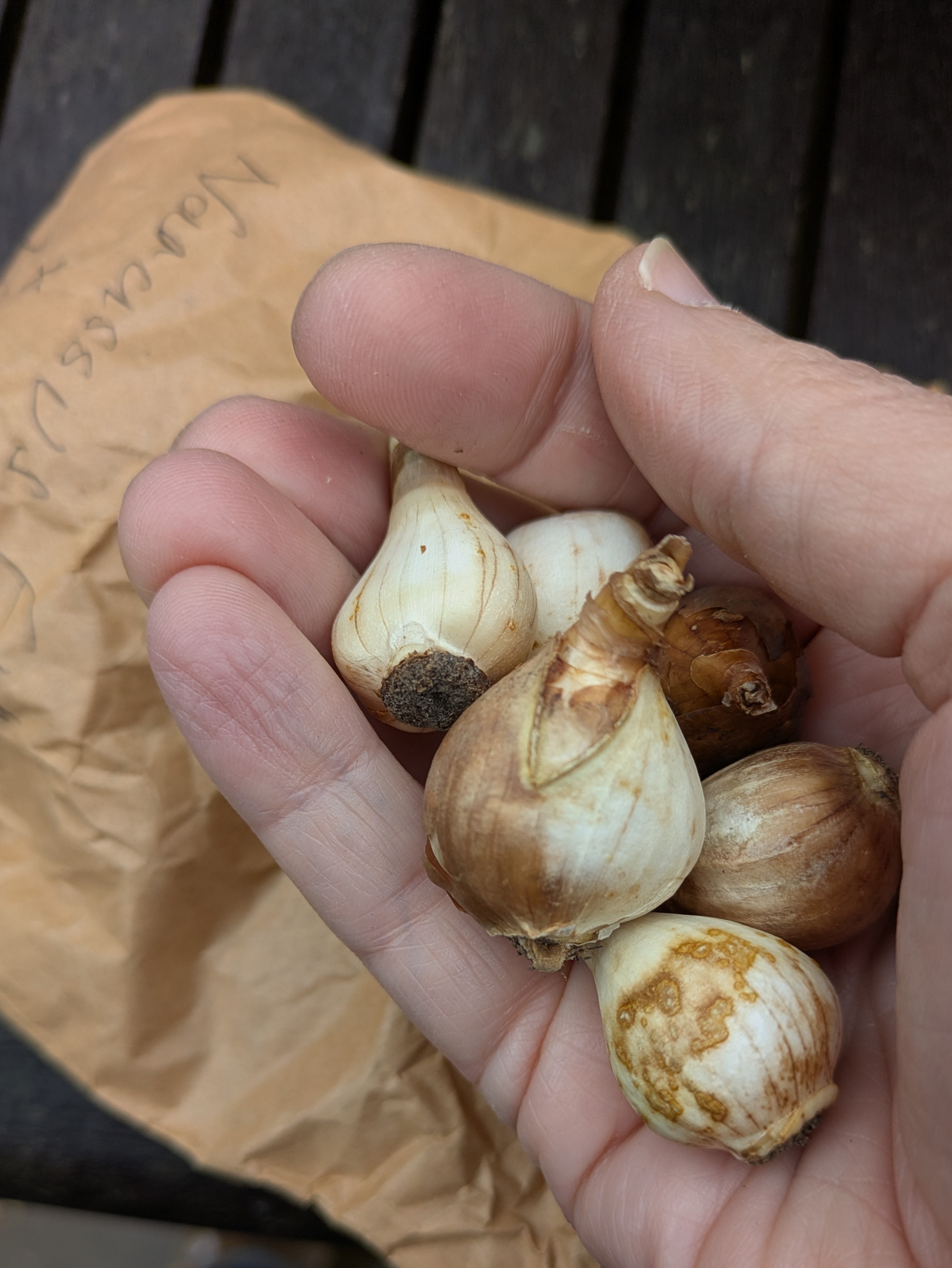
2. It’s not too late to plant Narcissus and other bulbs like Allium, but again as deep as you can if planting in the ground as squirrels do love to lunch on Allium.
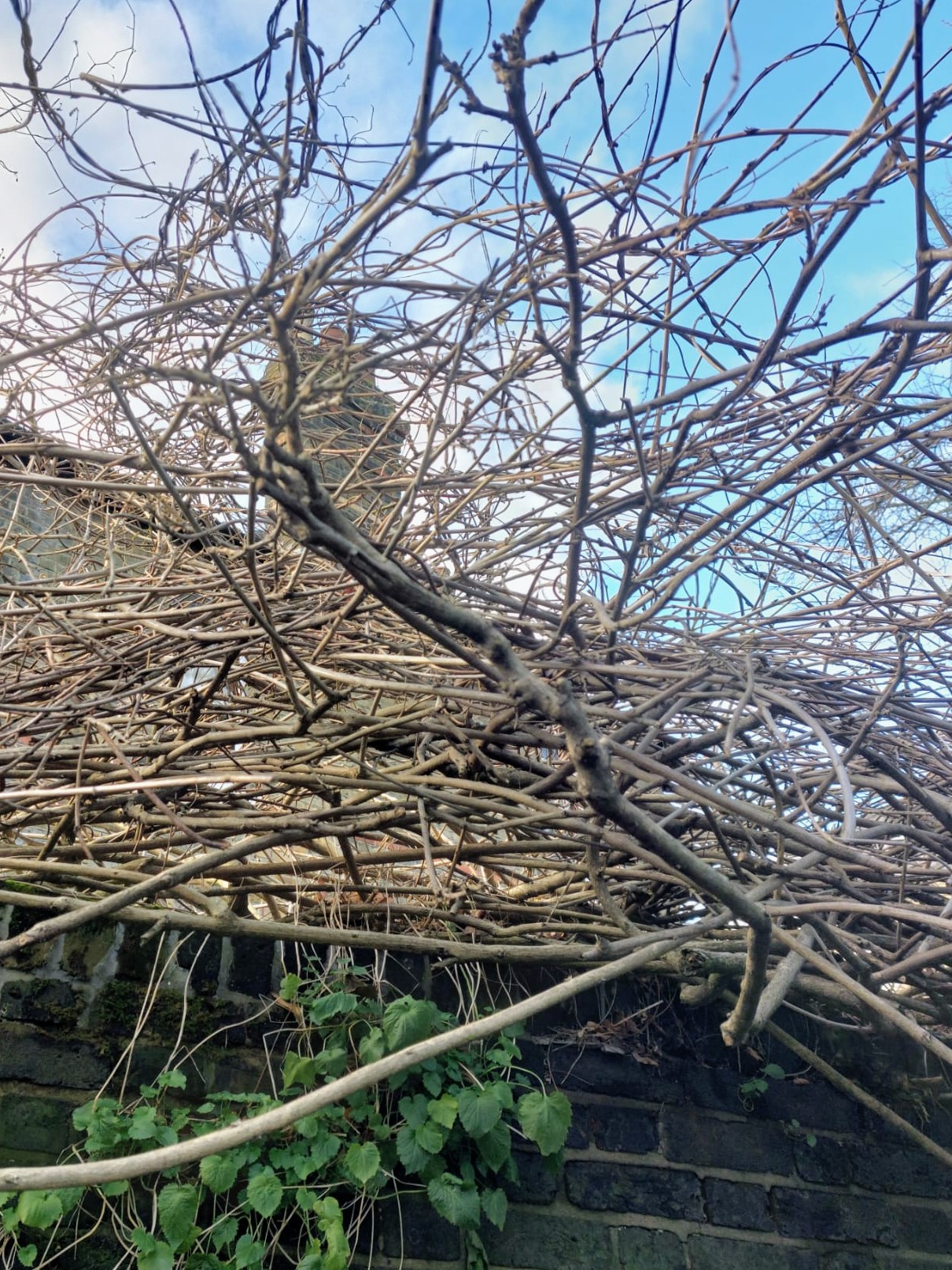
1. Prune Wisteria this month and next by taking all side shoots back to 2 or 3 buds. Very old plants may need severe pruning to show off the flowers.
Very tangled Wisteria in need of pruning!
2. Start pruning roses in earnest although some are still unbelievably flowering. Remove any foliage with blackspot and don’t compost. Old roses respond well to hard pruning so don’t be afraid, removing all dead and dying wood and cutting stems back to above a bud.
3. I had to remove dead Clematis shoots from a Daphne Jacqueline Postill and in doing so pulled off some of the flowers so take care and do it soon if you can. But leave the main prune until next month.
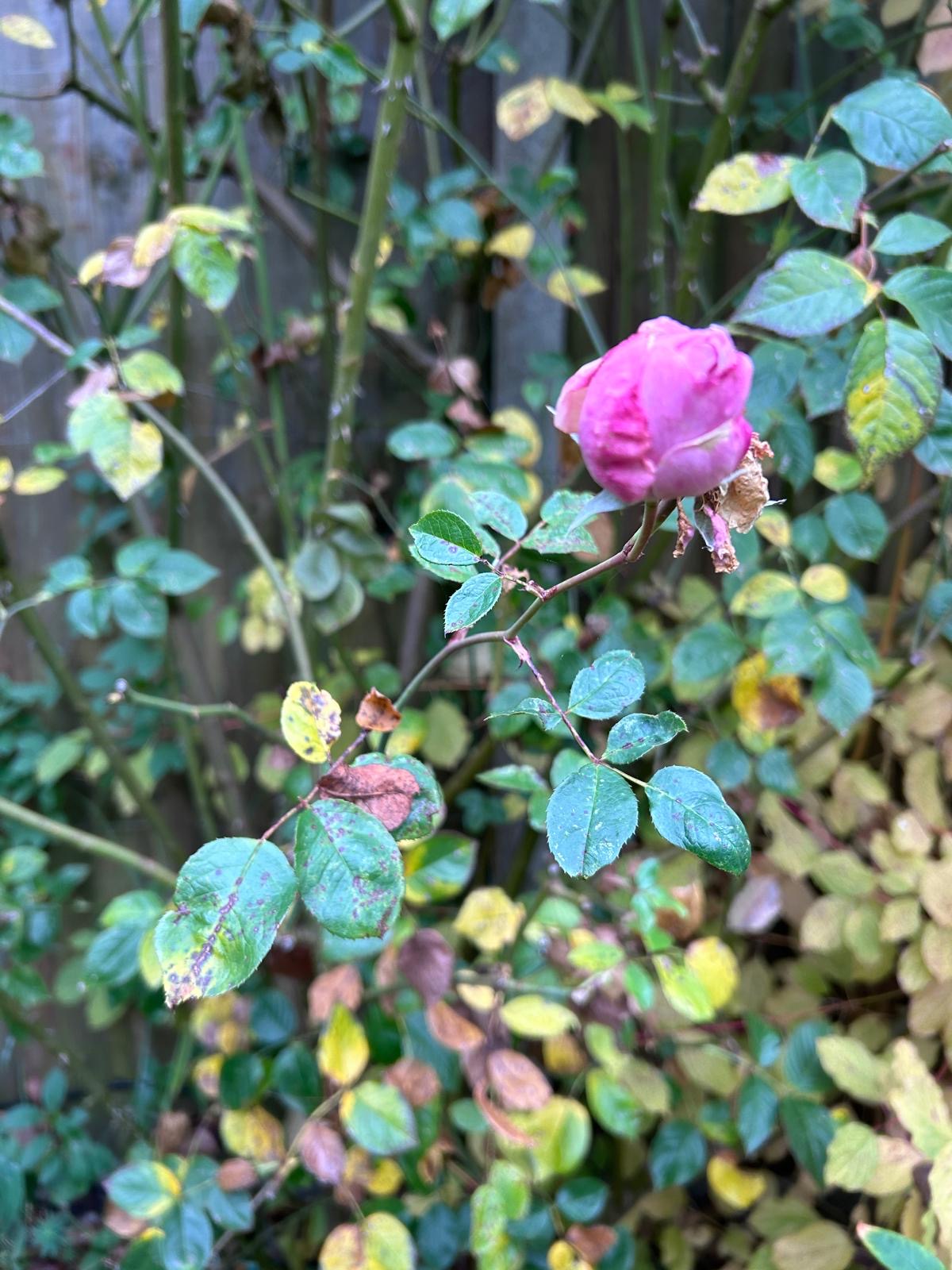
1. Check for blackspot on roses and make sure to remove the leaves by checking the bush itself and below it. But don’t add to the compost heap.
Blackspot on roses
2. If you have to, this is the best time to move trees and shrubs, but have your planting hole ready, and dig up with all the root ball and replant quickly, watering well until settled.
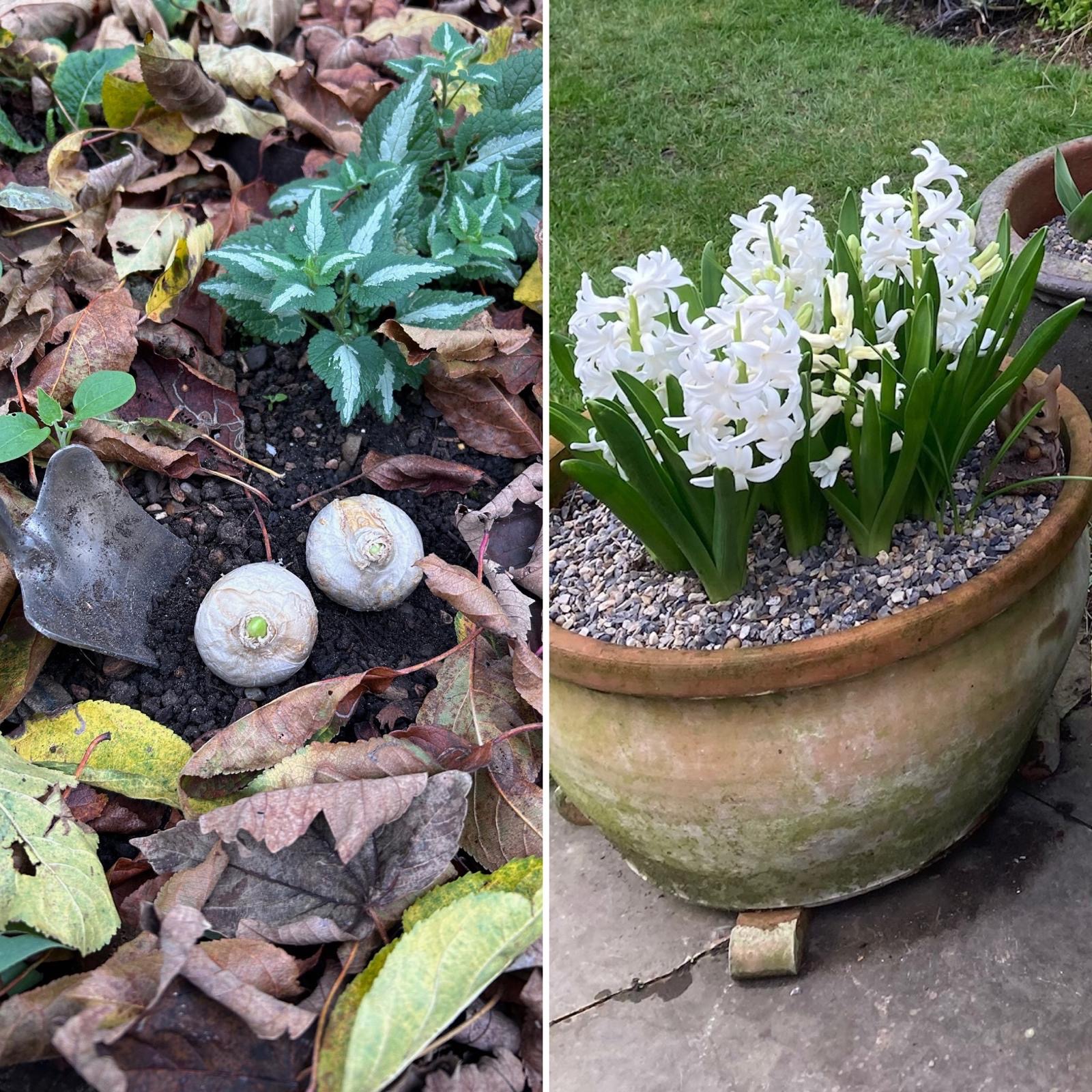
3. Plant your tulips and hyacinths now. either in the ground or in pots – but protect from squirrels.
Plant tulips and hyacinths
4. If you sowed sweet peas last month. harden them off now and it’s still not too late to get some going for an early crop.
1. Top of the list for July is pruning wisteria, taking back that whippy growth to 2 to 3 buds from the main stems.
2. Sweetpeas should be flowering by now so make sure to keep cutting the blooms and give them a feed and plenty of water. They cease flowering quickly if not picked twice a week.
3. Deadhead all your perennials and annuals regularly unless you want them to set seed for next years sowing.
I, too, have a comfy seat looking out on my garden where I spend many happy hours deciding what changes need to be made in my garden (there is always something).
I am currently enjoying watching my pots of bulbs grow and begin to flower. I posted a photo on Facebook of my Harmony irises and my friend in Norfolk (who I think was rather envious) suggested I had a microclimate in my garden. It is very sheltered and faces west so maybe I do.
I have just decided to empty my rather unsightly compost bin and replace it with a smaller, more discreet one. I therefore have a large pile of compost which I am in the process of shovelling around the garden. I am expecting a spectacular display later in the year!
My Clematis Armandii under the tree is budding nicely. I planted it some years ago and was disappointed last year that I had so few flowers on it. That was until I looked out from the upstairs window and discovered that my neighbours were enjoying a beautiful display! It had put all its energy into growing to a lighter spot in the garden next door!
I find this time of year quite difficult garden-wise, especially when the weather is mild, as it is at the moment. I am having to restrain myself from going wild with the secateurs and cutting everything back. I shall wait another month before giving my clematis, roses and salvia a good hair cut. I think it is also time to give the Hibiscus Syriacus Woodbridge a trim as it has grown rather tall and thin.
I hope other people will write about their views, as Kathy suggested.