Glut reactions

Whenever I am asked about my plans for dealing with a glut of produce from my allotment, my initial response is usually, “Chance would be a fine thing!”

I’m still on the lower slopes of allotmenteering, constantly marvelling at the (seemingly) effortless heights achieved by my neighbours.

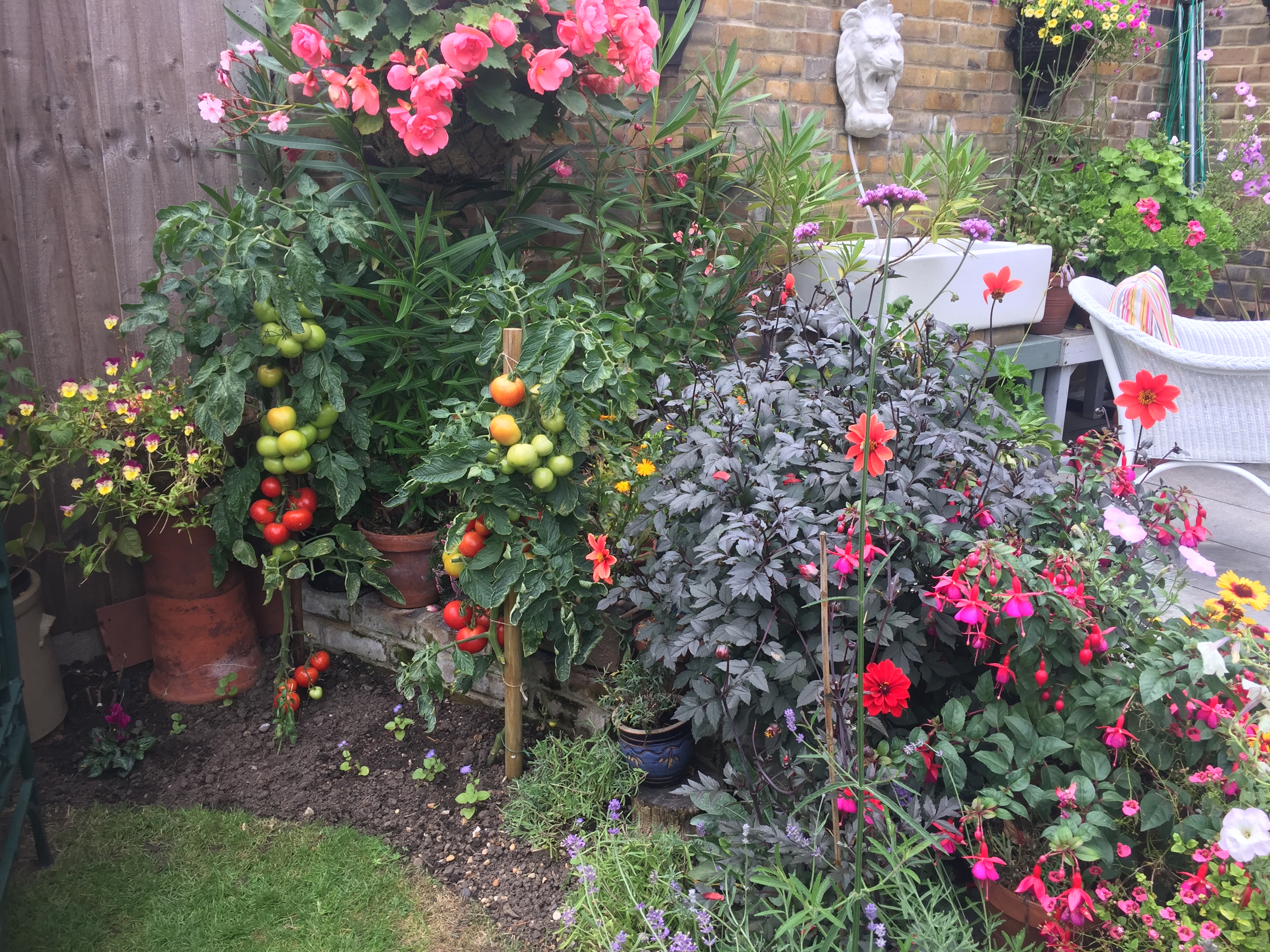
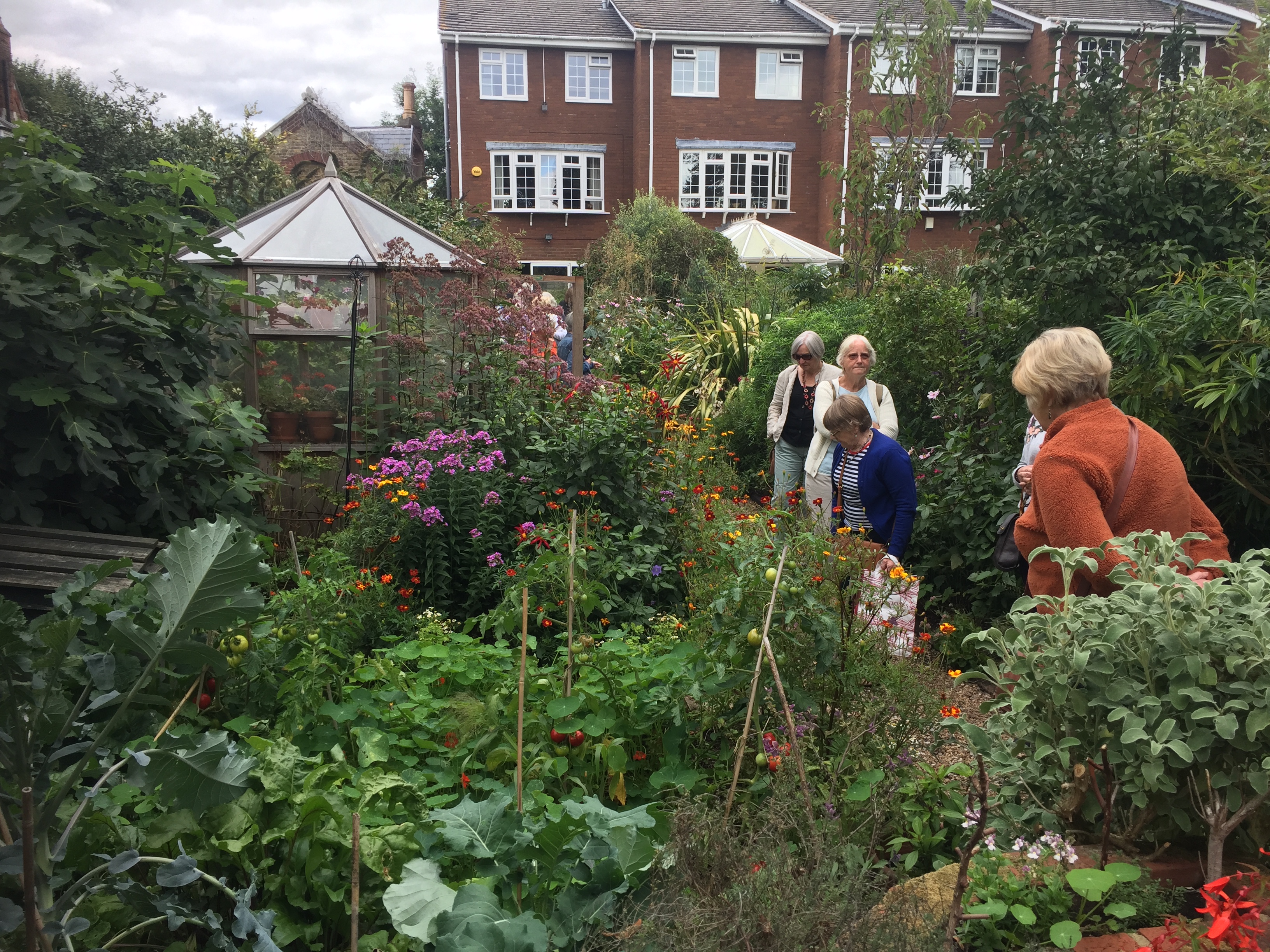
Storm Ellen did her best to scupper my chances of a substantial tomato haul, but thanks to a tendency I have to cram things close together in the ground – I can’t get over how much space I have! –  the plants and their stakes more or less held each other up. In spite of many hours agonising over the seed catalogues and subsequent cossetting of seedlings, I have to report that the finest and most prolific tomato crop on my patch this year comes from the gift of a neighbour.  In the early days of lockdown she realised that she wouldn’t be able to get any seedlings from garden centres in time so she simply dried the seeds from some piccolino tomatoes she had bought at the supermarket and planted them.

Amazing results!  She shared out dozens of seedings with nearby allotments, and now I am in the happy position of trying to decide what I should do to preserve this abundant harvest.

Last year, caught out with no plan for the cherry tomatoes on the eve of a holiday, I turned to Google for help.  A combination of the words, “tomato”, “glut”, “preserve” and “easy” produced a range of solutions (literally) involving vodka.

All I had to do was pierce the tomatoes, pop them into a sterilised glass jar, add the celery salt and chillies that I didn’t have (but that doesn’t seem to have been a problem), cover with vodka and store the jar in the fridge.  I was assured that the residual vodka would be the perfect base for a Bloody Mary, and that the tomatoes would form an impressive element of any tray of canapés.  Do they ever get that far?  Do they heck!  With admirable restraint, I have enjoyed the odd tomato or two straight from the jar over many months.

As holidays are more or less out of the question in 2020, I will have some more time to think about what to do with my expected glut of tomatoes and be on hand at the right time to deal with them.  I wondered what suggestions CABAHS members might have:  what is your favourite way to preserve tomatoes?

Perhaps we can start a separate section, sharing ideas for making the most of our produce.

Melanie

Butterflies and sunflowers

SC gatekeeper and Lysimachia

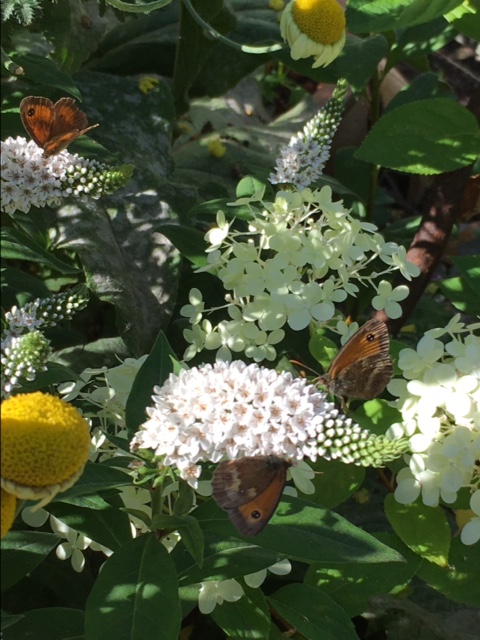
Beautiful picture of Gatekeeper butterflies enjoying Sharon’s garden. Lysimachia clethroides is grown here with Anthemis “Cally Cream” near a Hydrangea Limelight in a pot.

SC Vanilla Ice

These are Sunflowers, Helianthuis debilis “Vanilla Ice” growing daintily in Sharon’s garden, producing new flowers continually as she deadheads them.

My lockdown projects, part 2

My own garden having reached saturation point and needing space to grow veg for this year, the solution has been that John, my neighbour has kindly given me the top end of his garden. We made many raised beds and a permanent compost bin and have made it into quite the feature with a raised platform which John has crazy paved and even created a half step to make it easier for me to access.

7

The whole thing has been made complete by the addition of a wooden pallet that he found, which I made into a planter, it now forms a balustrade side for the compost platform.

The next big venture was to create a green roof garden on top of the sheds. For the last year or so John has been trying to get the Council to sort out the shed roof which was leaking very badly. When it started to impact on my own shed I took over ringing the Council.  Finally, in March the Roofing Department felted the shed and we decided to go ahead with my plan.

Firstly, I laid a pond liner and sealed it in place (after it had time to shape and settle). Followed by two layers of weed suppressant, making a hole in the layers where the drain is. I made a pebble cage to put over the drain hole, which stops the compost mix blocking the down-pipe.

More gravel was placed around the edge of the roof which helps to contain the growing medium We filled a one tonne bag with a 75/25 aggregate/compost mix. The aggregate used included 100 litres each of Perlite and Vermiculite, pebbles and 10mm gravel.

All of the plants had to be carried/lifted up a ladder, to be placed on the roof. I divided the plants into three groups and started at the far end of the roof laying the compost mix in the first third, putting in the plants and then putting a layer of gravel on top.

This process was repeated in the middle, and then the third section of the roof by making sure the corners were done before climbing back on the ladder and finishing the compost and planting from there. I have had to add more of the mix and gravel at this end since as it was not as level as the rest.

It was a surprisingly quick process and I think it’s not bad for a 1st effort!

It was around this time I was told I was needed back at work, so, sadly my garden adventures will be slowing down considerably.  I did complete some tasks indoors as well, but the pull of the garden this time of year with the gorgeous weather we had, is much stronger.

Spring, Summer, Autumn – Garden. The Winter is for indoors!

Looking back over the last three months, it’s no wonder I would fall into bed most nights aching but extremely happy.

Juli

Members’ gardens, July 2020

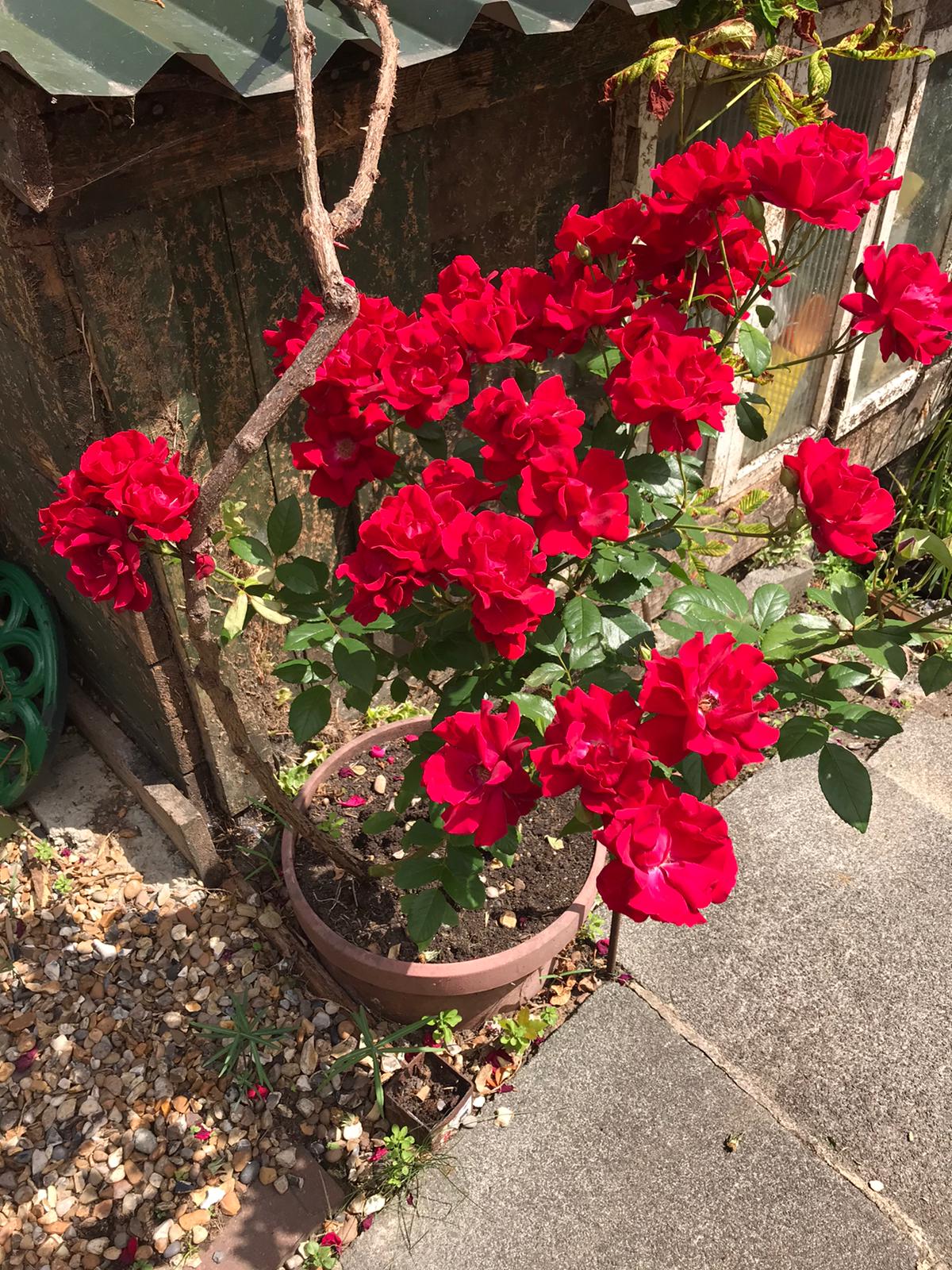
Here is Peter’s rose, he says about 50 rosebuds have come off this one side shoot, which he was going to cut off. Lucky he didn’t then!

PK Rose

This is Carol’s back garden – a very stylish “White Garden” at this season.

CM Garden

The little plant below is Night Phlox, grown from seed, in Kathy’s garden. The picture at the top is during the day – when you would definitely just pass it by. But at dusk, it absolutely dances and shines out!

KA Night Phlox

Not strictly a members garden, this is in the hedgerow at Vanburgh pits on Blackheath. It is our native Clematis – called Travellers Joy or Old Man’s Beard (because of the fluffy seed heads later on). It is rather beautiful at this time of year.

KA Travellers Joy

My lockdown projects, part 1

The most difficult part of writing this piece was deciding where to start! I vaguely remember something about introducing yourself, your subject and to put it in context, back in the days when I used to write essays.

So, introductions, not me so much as my garden, after all that’s what we are interested in. I moved here just under five years ago, my first garden, a well-established one. Too well established – houseleeks the full length of the path, Japanese anemone and bluebells (Spanish) everywhere in the deep borders. Bracken and a mini forest down the back with two large Camellias and a lilac which is covered in jasmine.

From this description I’m guessing you are thinking that it is quite a large plot. I have a friend who says I acquire enough plants to fill up the grounds of a manor house. I have recently been forced to admit that it might be reaching capacity.  So, my garden is, actually, around 30 feet by 18 feet, with a brick shed in one corner. It is fully south facing and seems not only to have its own micro-climate, but also its own definition of time:  I nip into the garden for 10 minutes and go back indoors an hour later.

Just before lockdown I had ordered some supplies for a gardening project from Wickes. While waiting for the supplies and suddenly finding myself having an unexpected staycation – I brought my Mum (94) to stay with me so that I could ‘shield’ her better – I started on the ‘must get to that’ jobs.

First, I painted the trellis and gate that forms the boundary between my garden and that of my next-door neighbour. I don’t know if you have ever painted trellis which is already in situ, but I can assure you it is not a quick job. Especially when it is 6ft + and you are a touch over 5ft. There are still bits of snagging that need attention which I have managed to ignore so far. 2

The ‘finishing’ of this project was followed by the completion of a – what turned out to be thoroughly unsuccessful – bird table which I attached to the top of the gate. The wood pigeons throw the seed everywhere, tease the dog and poop on the gate. I no longer put feed on it and have adorned it with a rather splendid peacock instead..

3While I had the paint brushes out I decided to smarten up the weather vane. He was plain black and my neighbour had told me he was getting a bit of rust. I am most chuffed with the result, particularly when he was put back up.

Earlier in the year my Mum’s oldest friend had died, they had known each other for 88 years. I wanted to do something in her memory and that of her older sister who passed a few years ago. The stories that May & Mary would tell you about the three of them and what they got up to during the war were a must-hear!

As it was getting close to May’s birthday I decided to dedicate the back of my garden to the sisters. My neighbour made a bench seat which he decided would be the perfect size for my Mum, and I thought it would be ideal for the newly named ‘Mary & May Plaza’. So, painting the bench was my next job. May’s birthday was coming up on 1st May and I wanted the project I had in mind finished so that we could sit there with a G & T (her favourite drink) and have a toast to the two sisters.

4I set to and started the lengthy process of making a sign post – I  planed the edges from the wooden post, cut and shaped my signs. Painted the whole thing including the wording and the acorn on the top which looked more like an egg and cup in it’s plain wood state.

I am pleased to say that everything was finished and in place for 1st May and we had a, not so quiet, drink to celebrate. Petra, the dog had most of the G & T in the end!

5

More to come on my other Lockdown Projects – a green roof and a pond are just two of them!

Juli

Calming colours

In his gardening column, Allan Jenkins has recently written about the colours he is using in his garden this summer, which he calls ‘candy colours’. He describes petunias and pelargoniums brightly clashing. ‘In these fearful, difficult days it seems I am cheered by childish colours’. By contrast, a friend has said that she is using a lot of white in her garden this summer, which she feels is calming in these uncertain times. I too am using a lot of pastels this summer, mainly in pots, as later in the year the dahlias will be providing bright splashes of colour.

VV Clematis Fleuri and Bijou
Trailing Clematis Fleuri and Bijou in a pot

VVPetunia Lime Green
Petunia Lime Green, and a scented Lupin

Colour is a funny thing as I have written before. Dahlias were considered ‘vulgar’ by some people at one time, but are enjoying a renaissance as they are promoted by Monty Don, Sarah Raven and of course Christopher Lloyd and Fergus Garrett who have been using them to great effect at Great Dixter for many years. Nothing can match that eye-popping brightness of these fabulous plants. CABAHS members, Alex and Joe had some lovely colour clashes in their front garden last year!

But this year, for me, a limited palette will suit. I remember one year at the Chelsea Flower Show the overwhelming impression from a large number of the show gardens was that green was the dominant colour. It was remarkably soothing.

VV Green at Chelsea
Andy Sturgeon’s Chelsea garden, all the greens

Vija

Members’ gardens, June 2020

Emma has sent in pics of her lilies doing very well this year and loving the hot weather. Well done for keeping the dreaded lily beetle at bay!

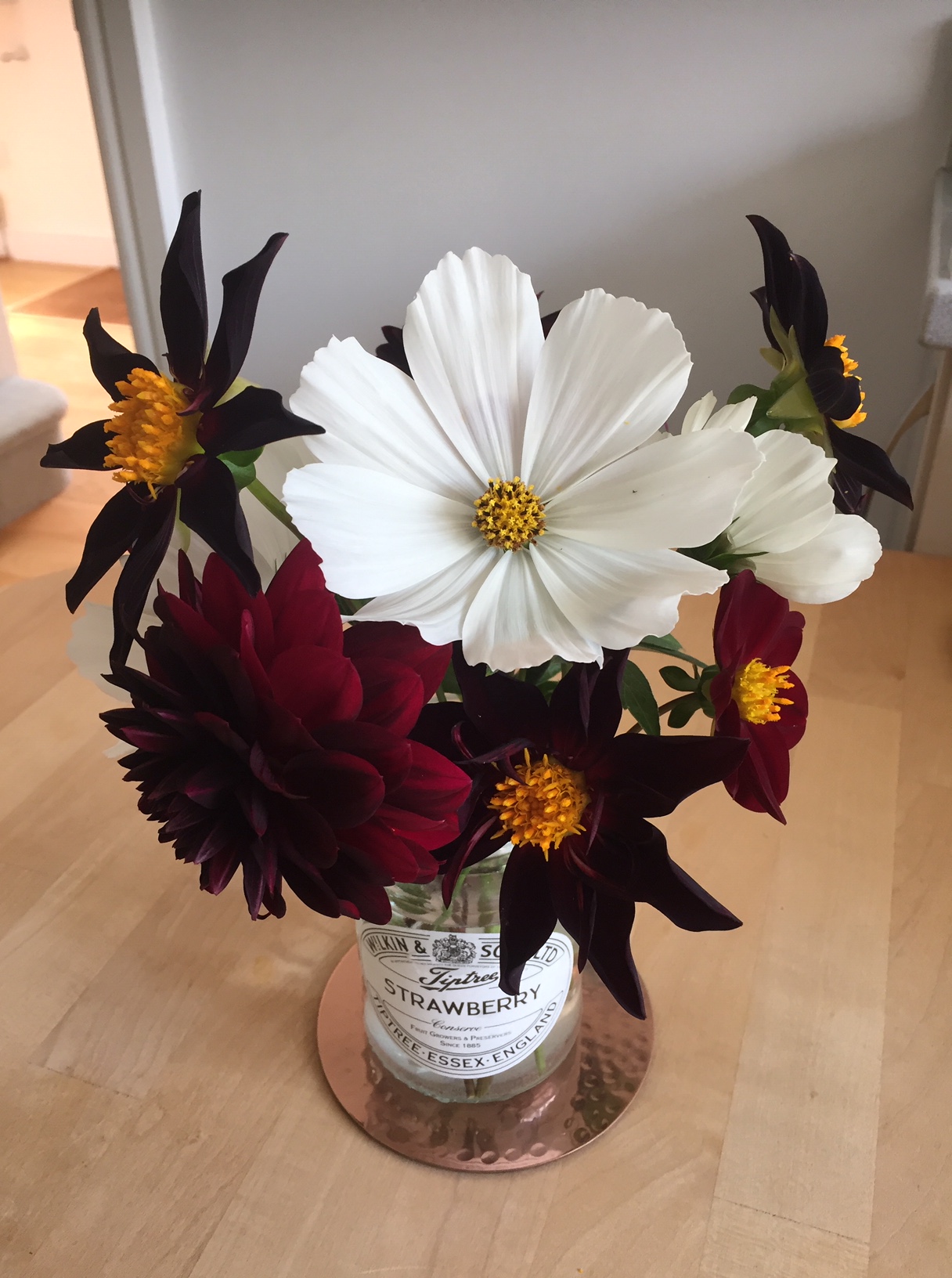
She is also very proud of her first lockdown courgette (and looks like lots more to come) and this vase of colourful home-grown flowers. Beautiful – it would be a good entry for the Summer Show coming up soon!

This rather beautiful caterpillar will turn into a Toadflax Brocade moth. Kathy says: it gave me a turn as I thought it was a box caterpillar at first ( ie Kill on Sight!), but it seems to be reasonably well-behaved and is munching on self-sown common purple toadflax so I have left them in peace.

Linaria catapillar

Val bought this clematis half-price from RHS Hyde Hall some year ago. Think she got a bargain!

VW Clematis RHS

Not everything is coming up roses in every Members Garden.  Kathy is an organic gardener and doesn’t use any pellets.. but is thinking that may change soon. Watch your Agapanthus everyone, the little beasties hide in there!

KA Snails

Val and Harry have sent in four pictures of their special plants in June: The first shows off their Pelargonium collection – “Angel” “Decorative” and “Unique”.

image1a

Here is Paeony lactiflora:

image2

Here is a “Lampranthus”, which Val says has for the last five years grown in a basket on the wall. The flowers open white and turn to pink. The plant is watered only when it rains; otherwise, it is ignored!

image3

The fourth is Petunia ekserta, a South American plant easily raised from seed. It is winter-hardy in a sheltered dry spot in the garden:

image1

In praise of Salvia ‘Black and Blue’

Angela absolutely loves Salvia guarantica Black and Blue. She says “I  have had the main plant for over 2 years. In places it is nearly 7ft tall. It has flowered non stop through out the winter. I took a few cuttings in April. Grew them in water initially (the Terry method!) before potting them up and amazingly one cutting is now in flower!!. If anybody would like one happy to donate. What an amazing plant. It really loves life.”

Anna and Kathy both grow this wonderful plant and recommend it if you have space. It can be tender and might need shelter in a harsh winter, but as Angela has found, cuttings take well as an insurance.

AB Salvia Black and Blue 2

Shout out for self-seeders

I have recently watched two online Lectures from Fergus Garrett. These are replacing the events which had been planned at Great Dixter. More are planned. The second lecture was on the subject of self seeders in the garden. Of course, Great Dixter uses these extensively and it was interesting to see how self seeding is managed by the team there and how much they value the contribution the self seeders make to the herbaceous borders.

I have never planted Valerian, but it pops up in random spots and this year makes a lovely splash of colour combined with Salvia ‘Jezebel’, and a Californian poppy. Forget-me-nots I have to be careful with as they are smotherers. But primroses are a joy (apart from when they get into the lawn). Tanicetum (tansy) and the grass Milium effusum (wood millet) make a lovely splash of colour in late spring and Erigeron karavinskianus (Mexican fleabane) makes itself at home in many inhospitable corners. Although I allow a large number of Pulmonaria (Lungwort) to provide an early food source for bees, these can be a problem if I am not ruthless, so they have to be thinned out when they finish flowering.

Part of my garden includes a gravel path and a number of plants have self seeded there very generously over the years. Many of these I take out and pot on to be used in my own garden, or give away or bring to the sales table. On occasion, this has even included Phlomis and Clematis. Spotting the gems before I tread on them takes care!

In my garden, as in all gardens, there are some plants which seem not to like where they have been planted and have made their way to anothePlume poppyr spot where they feel far more comfortable. I am thinking in particular of the Plume Poppy, Macleaya microcarpa. It has completely ceased to exist in its original spot and is now doing very well a good 5 metres further along the border. In fact, it actually looks better there. Once again, I am reminded of the maxim that plants will grow well if you provide them with the conditions  which they need to succeed. Alternatively, it seems they find these for themselves.

For more Fergus Garrett lectures, see: https://www.greatdixter.co.uk/whats-on/events/online-lectures-2020/ 

Vija

What’s in a name?

Vija’s blog on the garden jobs she finds relaxing made me think about what I enjoy most. I don’t find the action of pricking seedlings out particularly relaxing, but I do love the satisfied feeling once I’ve done it! That’s usually because the poor little babies have been in their first beds far too long and have taken to looking at me accusingly whenever I walk past.

I really enjoy planting seeds in pots, usually done on a grey day, as it creates such bright ideas for the future and dreams of wafting around a Sarah-Raven-like garden paradise. I like to dream.

I also enjoy labelling, which might seem a mundane though necessary and useful practice. But the creative variety of labelling ideas is fabulous, have a look at Pinterest sites for examples of gardeners never ending ingenuity. IMG_5562

I have labelled the trees in my garden with strong copper embossed labels, because they need the most permanent ones. I like to fantasise that after I’ve gone, whoever buys our house will find the labels and marvel at the previous owners wonderful tree choices. At the least, it may give them pause before chopping down whatever monster it has grown into!

I don’t buy new plastic labels any more, so some of them are a bit tatty but fine for annuals. I use wooden lolly sticks for seed trays but they don’t last long once planted out as my terrier can’t distinguish between a wooden label and a twig so they tend to wander onto the lawn. This year, as my husband likes woodwork, he has made me lots of sturdy batons which I have painted a trendy Charcoal Grey and written on in White – very “National Trust” and reasonably terrier-proof.

As regards what I write on the label – for the trees I have used both the common and Latin name, for posterity’s sake. But everything else tends to be in my own unique language – often the name my father taught me (so quite possibly wrong or changed according to its DNA by now) but I know what I mean! Alternatively, I label according to a memory or who gave it to me: for instance “Pat’s Tangerine Sage” or “Tina’s Geranium”. My favourite is a large and very beautiful Weigelia, called “Christian’s Bush”, which conjures a lovely memory of my son, then aged 5, charging into our friend Christian’s beautifully symmetrical shrub and snapping a great piece off.  I was embarrassed but  Christian gallantly presented it to me for a cutting and I grew it on successfully!

IMG_5569

Our future house buyer is going to be Googling in vain for all these unusual variety names!

If you have any unusual ideas for labels, let us know! Email cabahshortisoc@gmail.com

Kathy A

Members’ gardens, May 2020

Rosa ‘Bonica’ finally getting into its stride up the obelisk in Kathy’s garden:

Val & Harry’s garden has a colourful combination of Californian poppies, Asphodelus microcarpus (tall spikes of white flowers), Euphorbia mellifera and, in the background, a rambling white rose in full bloom:

VW Cal Poppies

And just look at this fabulous Abutilon vitifolium, Val says it is from a self-sown seedling fifteen years ago, and now fifteen feet high!

VW Abutilon

Sharon sent in this picture of the peaceful, shady woodland area of her garden. She has written an article explaining how this part of her garden came about: A Neglected Patch

SC Garden 5

Nicolas has sent in three pictures of his garden – first, a Dwarf Chestnut:

NB Dwarf chestnut

This is his spectacular Chilean Lantern Tree (Crinodendron hookerianum) in full flower:

NB Crinodendron

And a lovely view of the border, with the little Mexican Fleabane (Erigeron karvinskianus) on either side of a Silverbush (Convolvulus cneorum), and the two roses are Mme Isaac Pereire (dark pink) and The Generous Gardener (pale pink).

NB Generous Gardener
JF Bird Feeder

Juli has sent in a follow-up on her April lockdown project of a new bird feeding table. She says “The wood pigeons created havoc and upset the dog.  So, I have now put this fine fellow up there in the hope that there is no longer room for them, so the Great Tit and his fledglings will now get a look-in. The wood pigeons will not miss out as they can return to their previous excellent job of clearing the path and pots of the feeder cast off seeds!” Good luck with that, Juli!

Juli also sent in this picture – it might look like a common Nasturtium, but this is a granddaddy of nasturtiums, it’s 2 years old! Pretty darn good for an annual plant and shows how mild it has been.

JF Nasturtium