Shout out for self-seeders

I have recently watched two online Lectures from Fergus Garrett. These are replacing the events which had been planned at Great Dixter. More are planned. The second lecture was on the subject of self seeders in the garden. Of course, Great Dixter uses these extensively and it was interesting to see how self seeding is managed by the team there and how much they value the contribution the self seeders make to the herbaceous borders.

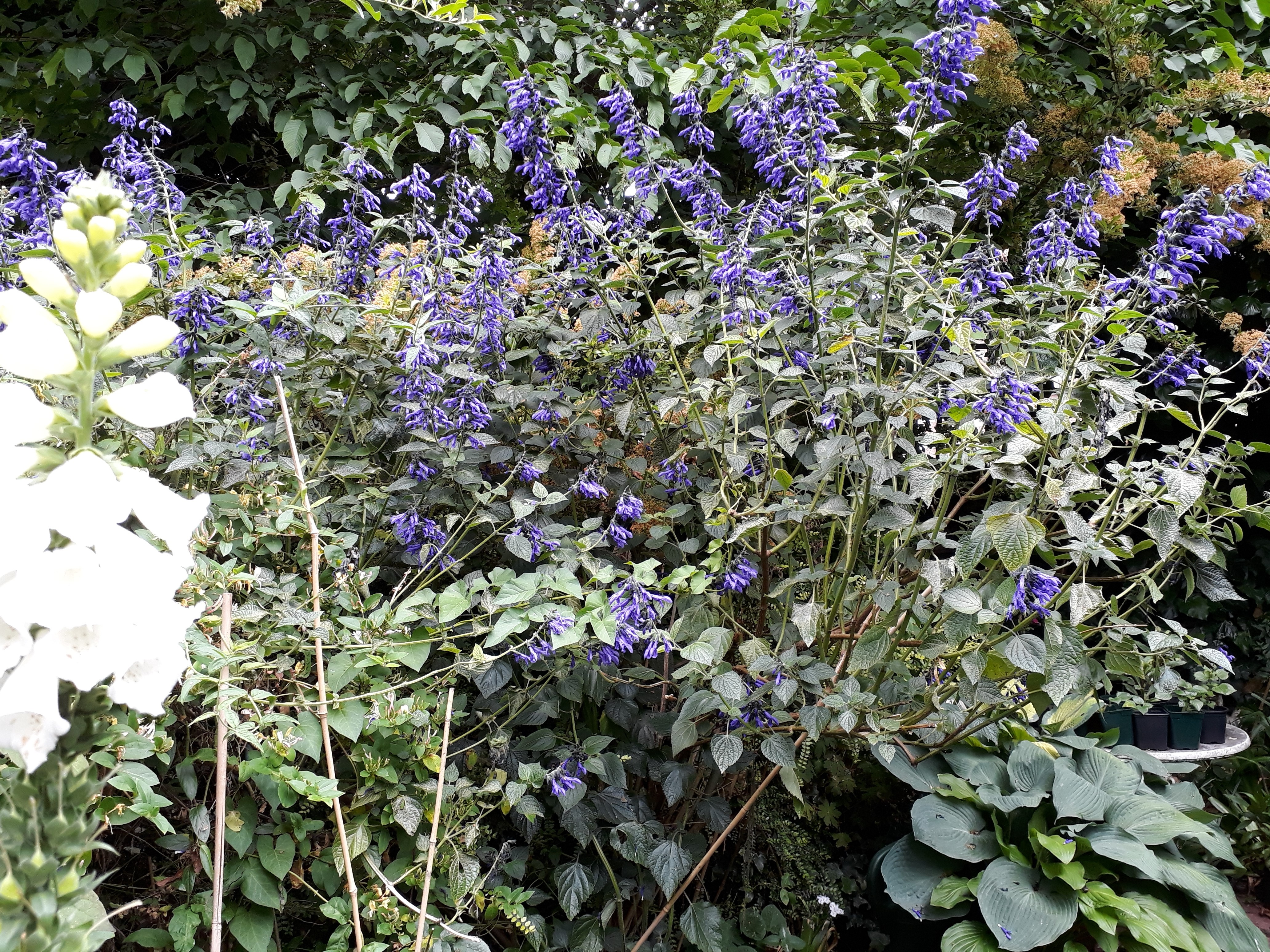
I have never planted Valerian, but it pops up in random spots and this year makes a lovely splash of colour combined with Salvia ‘Jezebel’, and a Californian poppy. Forget-me-nots I have to be careful with as they are smotherers. But primroses are a joy (apart from when they get into the lawn). Tanicetum (tansy) and the grass Milium effusum (wood millet) make a lovely splash of colour in late spring and Erigeron karavinskianus (Mexican fleabane) makes itself at home in many inhospitable corners. Although I allow a large number of Pulmonaria (Lungwort) to provide an early food source for bees, these can be a problem if I am not ruthless, so they have to be thinned out when they finish flowering.

Part of my garden includes a gravel path and a number of plants have self seeded there very generously over the years. Many of these I take out and pot on to be used in my own garden, or give away or bring to the sales table. On occasion, this has even included Phlomis and Clematis. Spotting the gems before I tread on them takes care!

In my garden, as in all gardens, there are some plants which seem not to like where they have been planted and have made their way to anothePlume poppyr spot where they feel far more comfortable. I am thinking in particular of the Plume Poppy, Macleaya microcarpa. It has completely ceased to exist in its original spot and is now doing very well a good 5 metres further along the border. In fact, it actually looks better there. Once again, I am reminded of the maxim that plants will grow well if you provide them with the conditions  which they need to succeed. Alternatively, it seems they find these for themselves.
For more Fergus Garrett lectures, see: https://www.greatdixter.co.uk/whats-on/events/online-lectures-2020/ 

Vija

What’s in a name?

Vija’s blog on the garden jobs she finds relaxing made me think about what I enjoy most. I don’t find the action of pricking seedlings out particularly relaxing, but I do love the satisfied feeling once I’ve done it! That’s usually because the poor little babies have been in their first beds far too long and have taken to looking at me accusingly whenever I walk past.

I really enjoy planting seeds in pots, usually done on a grey day, as it creates such bright ideas for the future and dreams of wafting around a Sarah-Raven-like garden paradise. I like to dream.

I also enjoy labelling, which might seem a mundane though necessary and useful practice. But the creative variety of labelling ideas is fabulous, have a look at Pinterest sites for examples of gardeners never ending ingenuity. IMG_5562

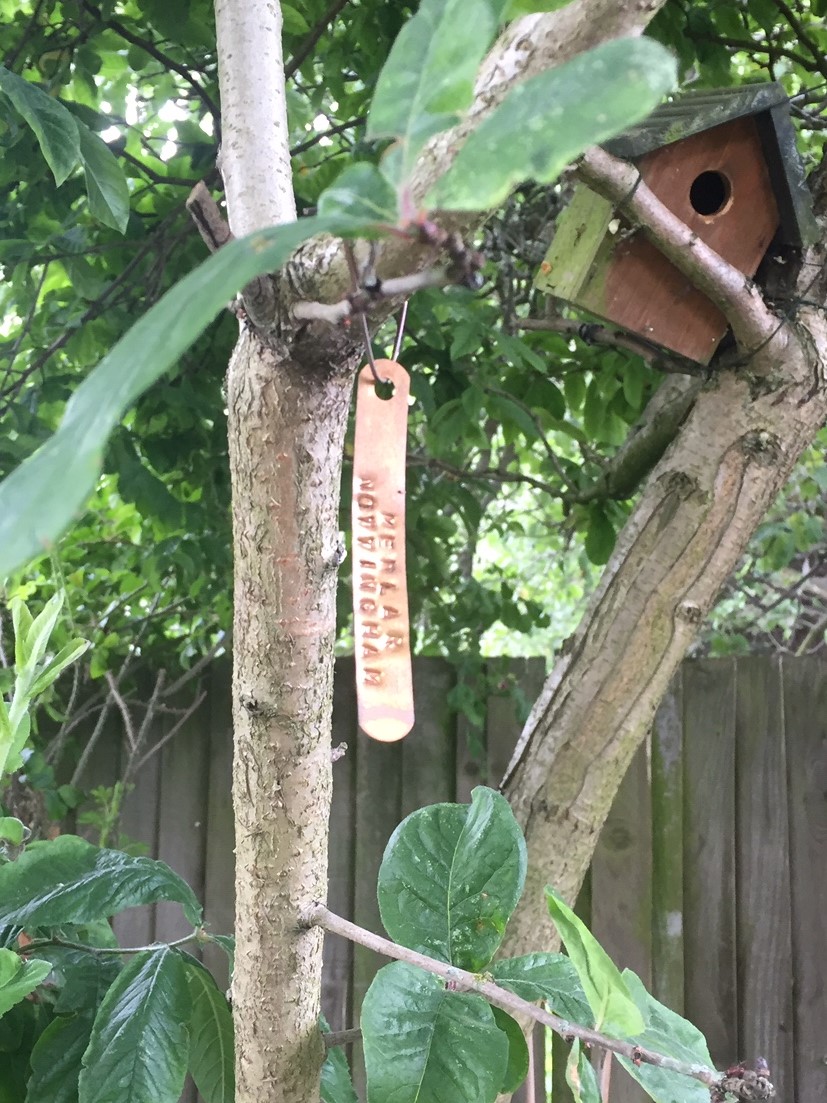
I have labelled the trees in my garden with strong copper embossed labels, because they need the most permanent ones. I like to fantasise that after I’ve gone, whoever buys our house will find the labels and marvel at the previous owners wonderful tree choices. At the least, it may give them pause before chopping down whatever monster it has grown into!

I don’t buy new plastic labels any more, so some of them are a bit tatty but fine for annuals. I use wooden lolly sticks for seed trays but they don’t last long once planted out as my terrier can’t distinguish between a wooden label and a twig so they tend to wander onto the lawn. This year, as my husband likes woodwork, he has made me lots of sturdy batons which I have painted a trendy Charcoal Grey and written on in White – very “National Trust” and reasonably terrier-proof.

As regards what I write on the label – for the trees I have used both the common and Latin name, for posterity’s sake. But everything else tends to be in my own unique language – often the name my father taught me (so quite possibly wrong or changed according to its DNA by now) but I know what I mean! Alternatively, I label according to a memory or who gave it to me: for instance “Pat’s Tangerine Sage” or “Tina’s Geranium”. My favourite is a large and very beautiful Weigelia, called “Christian’s Bush”, which conjures a lovely memory of my son, then aged 5, charging into our friend Christian’s beautifully symmetrical shrub and snapping a great piece off.  I was embarrassed but  Christian gallantly presented it to me for a cutting and I grew it on successfully!

IMG_5569

Our future house buyer is going to be Googling in vain for all these unusual variety names!

If you have any unusual ideas for labels, let us know! Email cabahshortisoc@gmail.com

Kathy A

Members’ gardens, May 2020

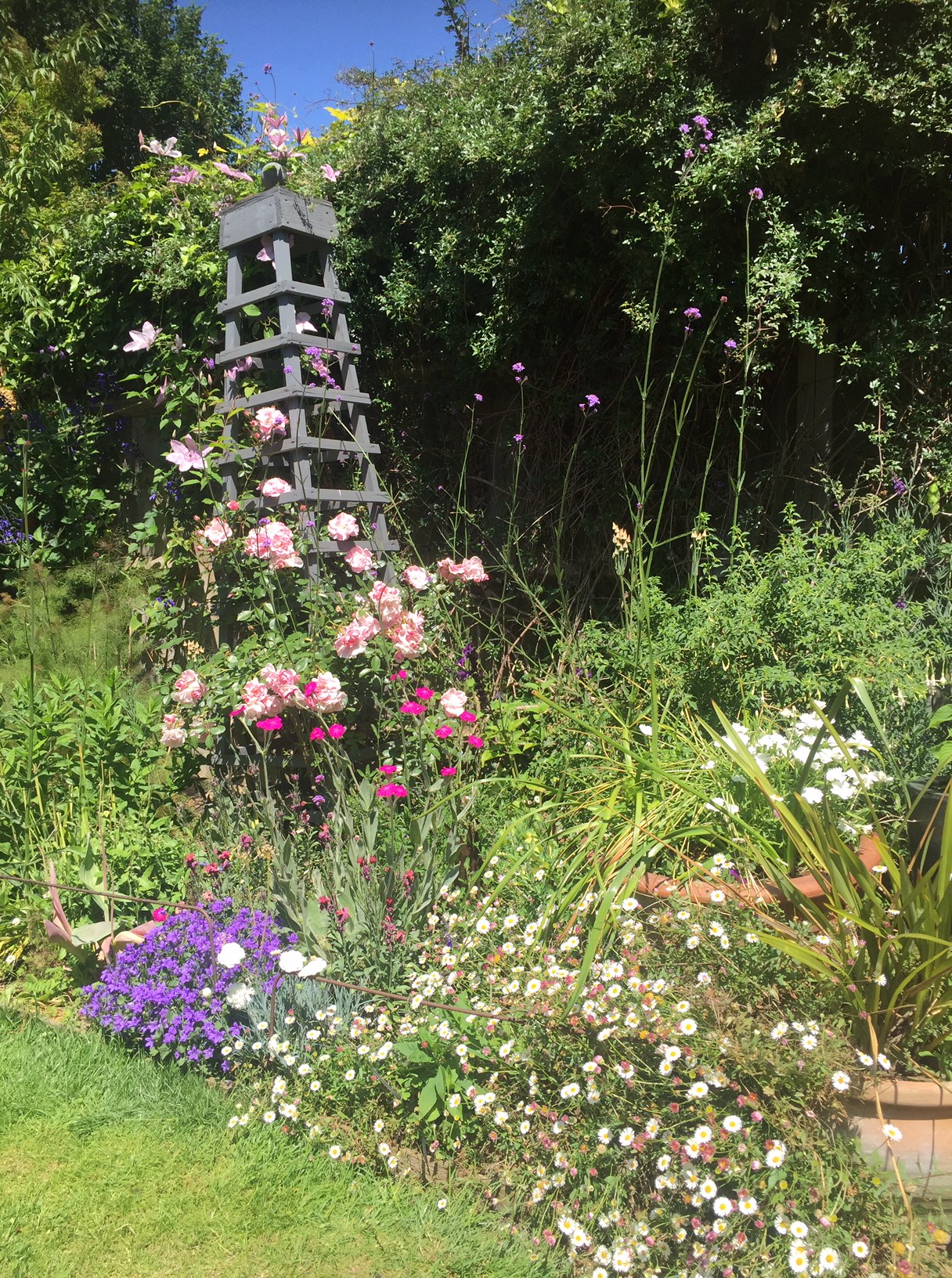
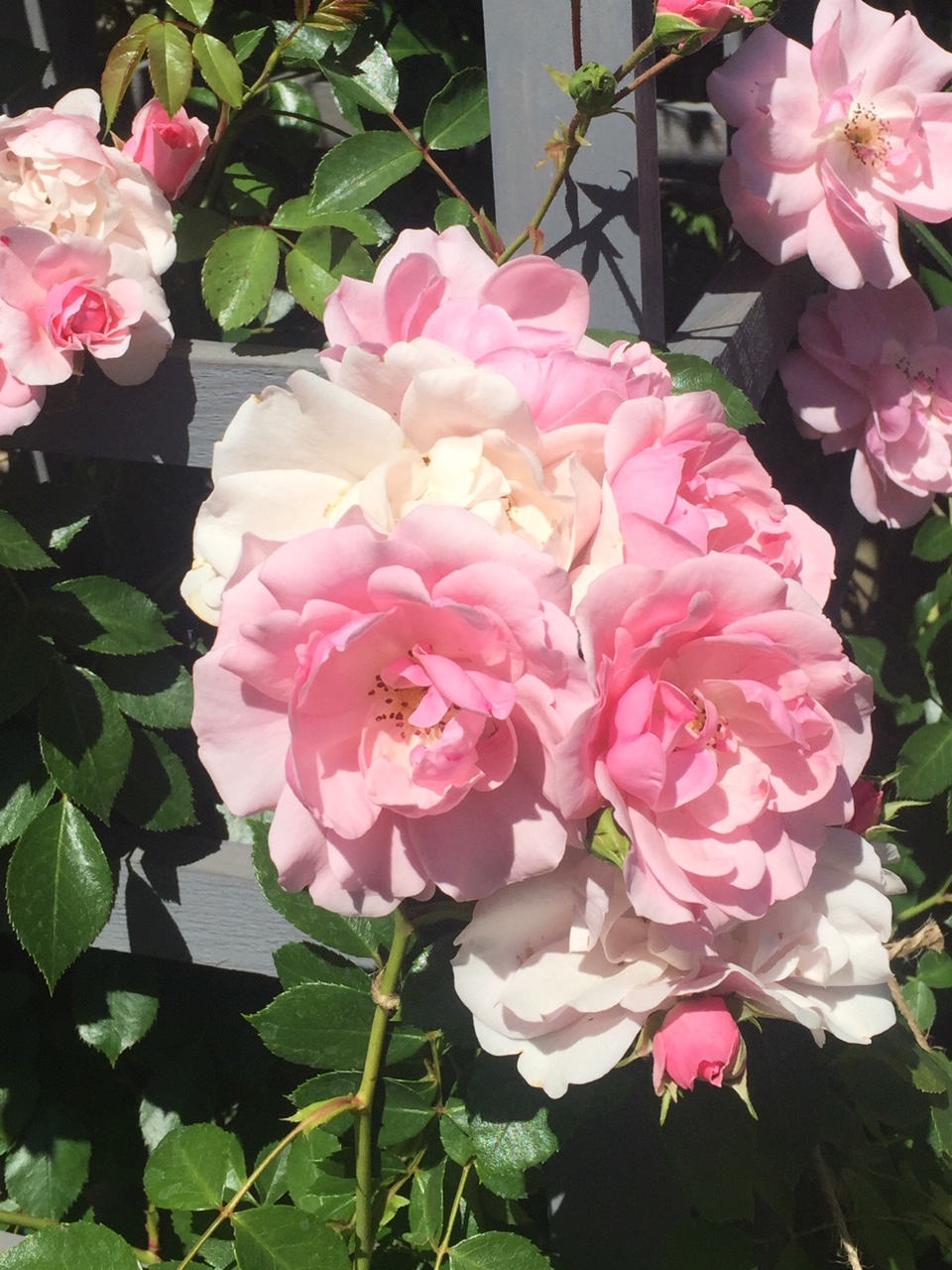
Rosa ‘Bonica’ finally getting into its stride up the obelisk in Kathy’s garden:

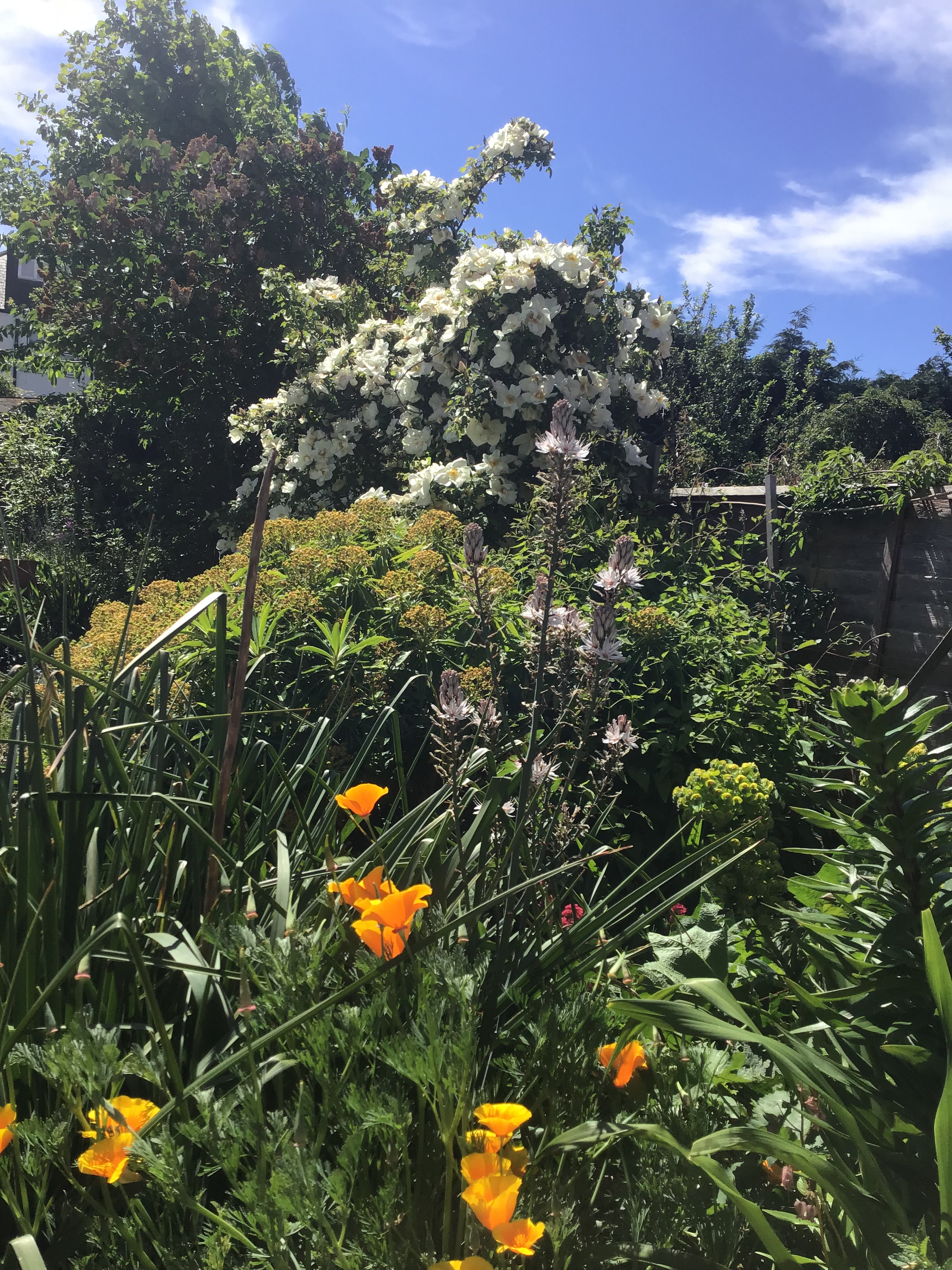
Val & Harry’s garden has a colourful combination of Californian poppies, Asphodelus microcarpus (tall spikes of white flowers), Euphorbia mellifera and, in the background, a rambling white rose in full bloom:

VW Cal Poppies

And just look at this fabulous Abutilon vitifolium, Val says it is from a self-sown seedling fifteen years ago, and now fifteen feet high!

VW Abutilon

Sharon sent in this picture of the peaceful, shady woodland area of her garden. She has written an article explaining how this part of her garden came about: A Neglected Patch

SC Garden 5

Nicolas has sent in three pictures of his garden – first, a Dwarf Chestnut:

NB Dwarf chestnut

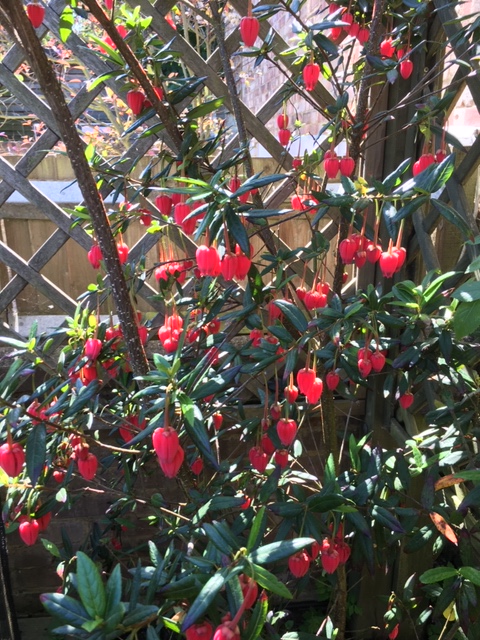
This is his spectacular Chilean Lantern Tree (Crinodendron hookerianum) in full flower:

NB Crinodendron

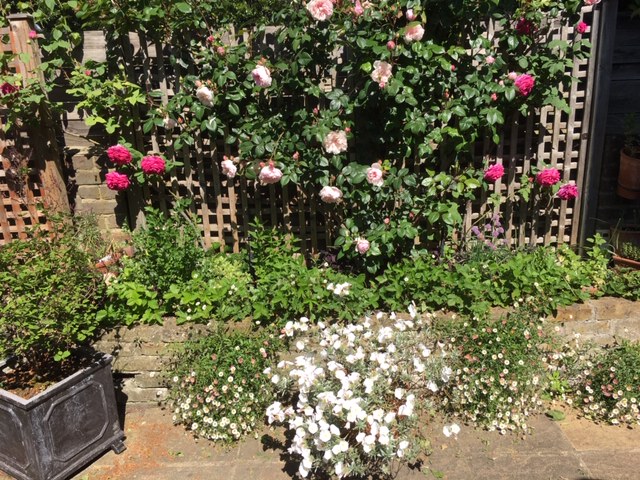
And a lovely view of the border, with the little Mexican Fleabane (Erigeron karvinskianus) on either side of a Silverbush (Convolvulus cneorum), and the two roses are Mme Isaac Pereire (dark pink) and The Generous Gardener (pale pink).

NB Generous Gardener
JF Bird Feeder

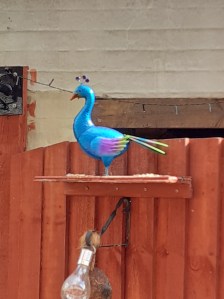
Juli has sent in a follow-up on her April lockdown project of a new bird feeding table. She says “The wood pigeons created havoc and upset the dog.  So, I have now put this fine fellow up there in the hope that there is no longer room for them, so the Great Tit and his fledglings will now get a look-in. The wood pigeons will not miss out as they can return to their previous excellent job of clearing the path and pots of the feeder cast off seeds!” Good luck with that, Juli!

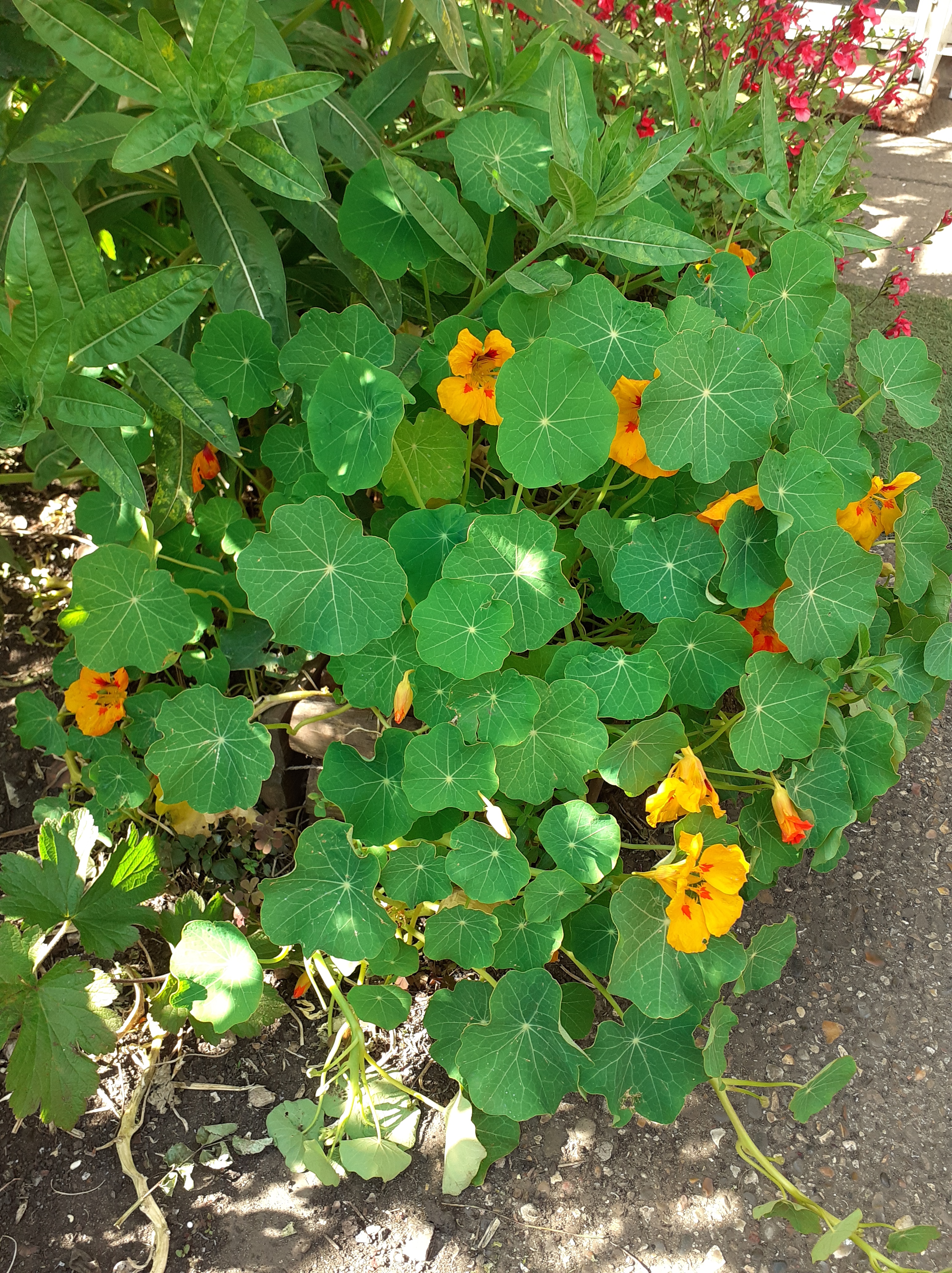
Juli also sent in this picture – it might look like a common Nasturtium, but this is a granddaddy of nasturtiums, it’s 2 years old! Pretty darn good for an annual plant and shows how mild it has been.

JF Nasturtium

A neglected patch

Retirement four years ago. Time stretched, or I thought it would. The bottom of my garden was an area where rubble collected, unwanted household items had been left and bonfires lit. It was in desperate need of a clear up and a change of use although to what I had no ideas. Nettles and weeds thrived and tall trees belonging to neighbours and the MOD who own the land at the back ensured there was shade for most of the day apart from an hour or so. One year on it remained untouched as there proved too many fun things to do.
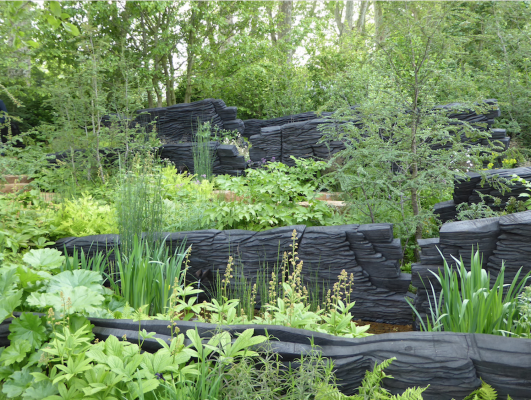
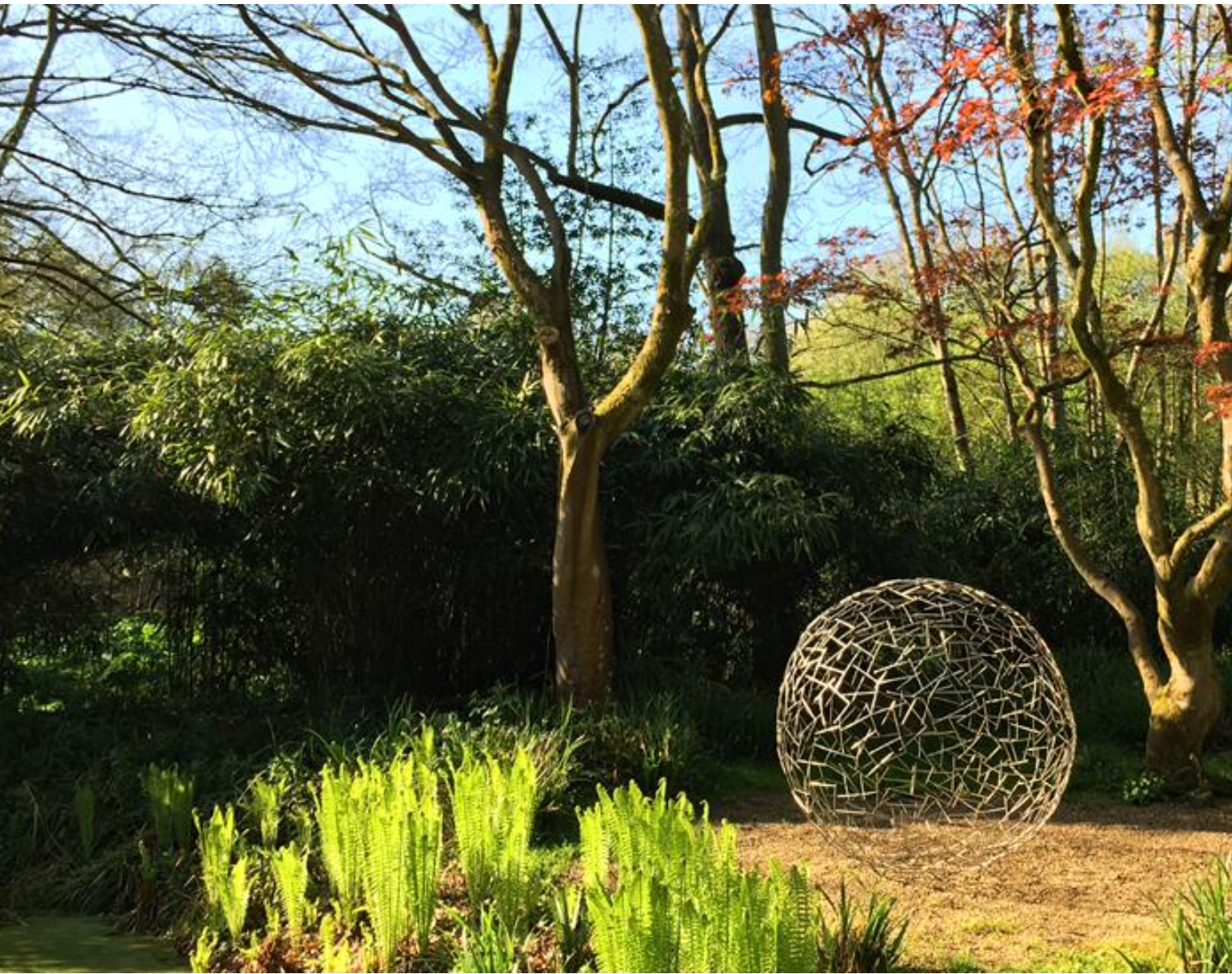
A visit to the Hannah Peschar Sculpture Garden in Surrey spurred me on to make a start.
SC Hannah Peschar
Much of this magical woodland garden is in shade and shuttlecock ferns were in abundance. I loved their structure and vibrant green. I had not grown ferns before and felt that they at least may like my shady patch. The hard work began.
Picking up the obvious rubbish, carrying it up the garden, through the house, up a steep flight of stairs, into the car, onto the recycling centre – halcyon days! – was just the beginning. When I dug into the ground, I realised there were layers of broken bricks and glass underneath. It was heavy labour and took weeks to clear. The reverse journey, but now from the garden centre, brought in bags of compost, rotted horse manure and chipped bark.
I had no particular vision of the final outcome but by now just wanted to plant something. Half of the area had been dug over. Ferns along with a few other shade tolerant plants such as astrantia and hardy geraniums were planted.
SC Garden 1
By June 2018 I had dug up the remaining rubble and added more plants – foxgloves, aquilegia, thalictrum delavayi to give height and the nettles were left for butterfly eggs. Other wildflower/ plants that had found there way in and settled were allowed to remain as good for pollinators. I now have a large clump of greater stitchwort (also known as gentlemans shirt buttons – love that name) and cow parsley. Hellebores were put in later that year.
SC Garden 2
Bronze fennel was planted last year which grew to such a height it needed staking. I found an obelisk which does the trick. As the area is fairly bare in early spring, I had put in loads of aconite bulbs. None of these survived as the local squirrels found them irresistible. A few English bluebells and snowdrops did grow and more will be planted in Autumn.

Time stretches now. I sit and enjoy watching bees, early butterflies, neighbouring cats, toads, ignoring the gaping holes where the fox has squashed the gentlemens’ shirt buttons and hoping the hedgehog recently spotted in a garden two doors away will wander into mine.
SC Garden 5

SC Garden Hogg

Sharon

Gardening for health

Monty Don has always been a keen exponent of the health benefits of gardening, in particular its effect on the not so quiet mind. I have recently read that some hospitals have introduced ‘secret gardens’ where patients recovering from the Coronovirus are taken for periods every day, even in drizzling rain, for the beneficial effects. And, of course, this week it is Gardens and Health Week, sponsored by the NGS with Rachel de Thame as its Ambassador. The NGS website has various links to the personal stories of people for whom gardens have played a vital role in their recovery.

V May blog 1

Also recently published is Sue Stuart-Smith’s (wife of the garden designer Tom Stuart-Smith) book, ‘The Well Gardened Mind: Rediscovering Nature in the Modern World’, in which she points out the pleasures of growing and nurturing things and argues for a ‘greening’ of all of our lives.

Despite exhortations to sit and enjoy our gardens, I think keen gardeners often don’t do that! But this spring there has been one thing that has brought me joy every time I look at it! In the autumn I bought a collection of ‘ tulips for a window box’. When it came to planting them, I decided the window box was too small, so I jammed  them all into a pot. The three varieties are absolute beauties and even now they are fading are still immensely lovely.

V May blog 2

I rarely sit outside,  but I am greeted by them every morning when I have breakfast.

At the end of my garden I have a Clematis ‘Freckles’ which flowered constantly through the winter. However, I only saw this when I ventured further down the garden. I have resolved to plant something which gives me such pleasure closer to the house where I can see it even in inclement weather. In these unusual and difficult times, let us take pleasure where we can.

The tulips are Double Early and Double Lates: Anthracite, Copper Image and Dream Touch.

Vija

Pond life

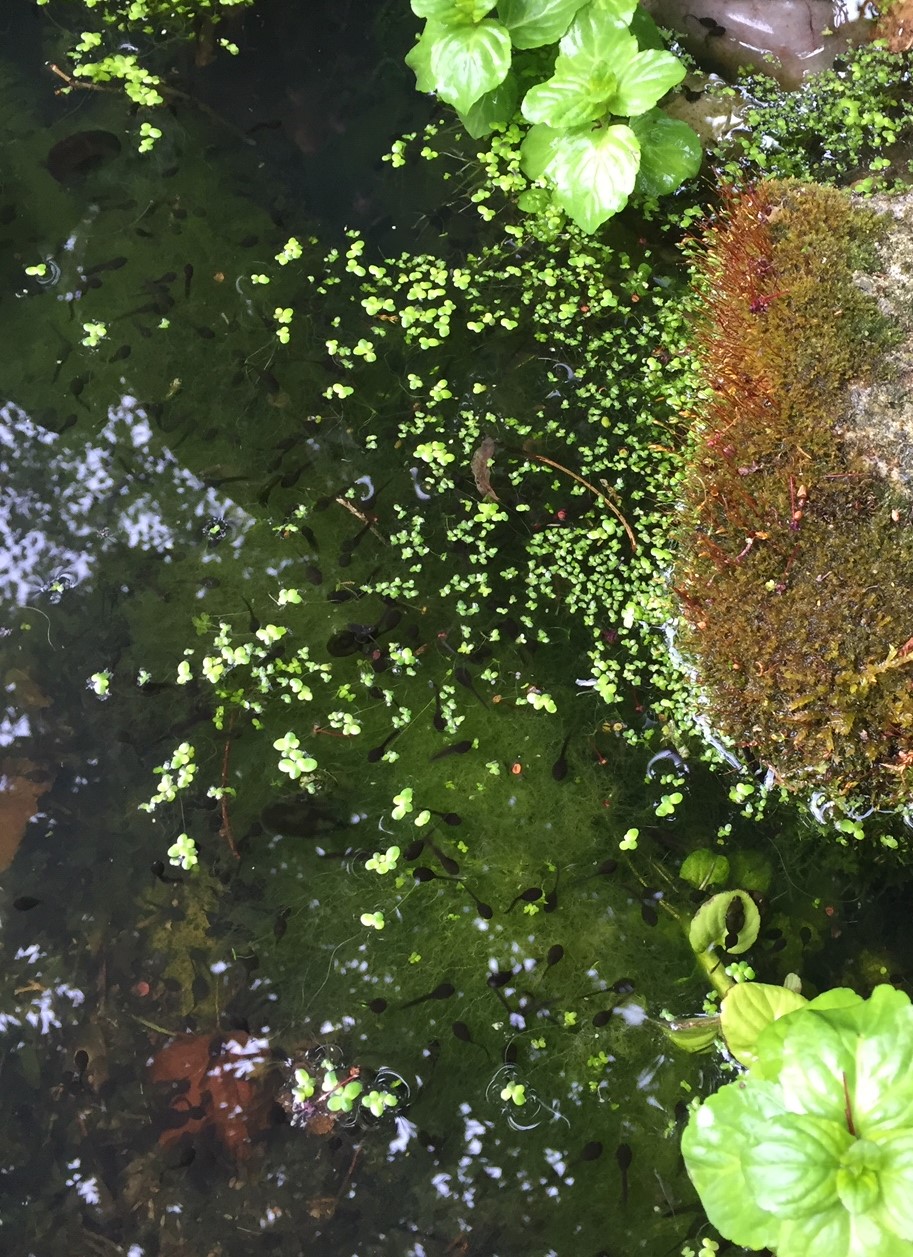
There is something very soothing to the soul to live near water, and if you can’t get a sea view in London then at least you can sit by a pond. (By this I mean a wildlife pond, not some unnatural Koi fishpond, you won’t get much wildlife around that!)  I grew up with a mother who was a primary school teacher and every Spring we had to go frog spawn hunting so that she could teach the cycle of life to a new generation of pupils. It’s actually a rather horrid lesson, when you think of the thousands of tadpoles and how many actually make it to Froghood. Everything eats tadpoles! I used to spend my days trying to save them from newts and blackbirds etc., only to find they did something stupid like sunbathe on a lily leaf until they frizzled up.

Pond Tadpoles

Hooking duckweed etc out of my pond was a lengthy process as I had to help each little black blob back into the water. I have great respect for Gardeners World and Monty, but he’s absolutely wrong when he says to just “leave the weeds on the side of the pond for a while and the creatures will crawl back in”. They jolly well don’t, and you go back to find these poor little Ramshorn snails and water slaters gasping away on the bank, or worse, idiotically crawling away  from the pond. The only things that seem to be able to wriggle back in are leeches and diving beetle larvae (– which also eat tadpoles…).


Anyway, I am now older and wiser, or perhaps just have better things to do. We have so many toads and frogs that come back to our 30 year old pond every year that it has dawned on me nature carries on working without needing my help. I do still net the pond at mating time when the Heron and Crows come down for party snacks, and I don’t mow near the pond in July when the froglets are leaving to make their way in the Big Wide World, after one traumatic year.. It seems to work!

Apparently 1 in 7 of us now have a garden pond, which act as a network for wildlife since so many agricultural ones have gone. Our recent survey of CABAHS members showed that 32% have a pond, so we are much better than the average! Apparently in 1890 there were 1.25 million ponds in the UK, a mix of natural ponds and dew ponds created by farmers for livestock. About 70% of those have been lost or are polluted with fertiliser and pesticide run-off. Or salty runoff from de-icing the roads. So garden wildlife ponds are increasingly important, not to mention a whole lot of fun!

Here are some pictures of mine, trying to turn itself into a bog garden at this time of year, but very full of life.

pond

Kathy A

Long live lily-of-the-valley!

I realise that Lily of the Valley is not everyone’s cup of tea but these little flowers and I have history:  quite a bit of history in fact. Lily_of_the_Valley_2020

My photograph doesn’t show them at their best (ahem) which causes me a pang of guilt and a determination to look after them a little better.  Experienced CABAHS gardeners will perhaps find it a little eccentric of me to “look after” what many consider to be nothing more than a weed.

The new shoots you can see in this picture sit in their pot outside my door in south east London, but I have known them (or maybe their great grandparents) since 1968, when they made the journey from my grandmother’s house in Stanley Road to our house in Hollingworth Street, Oldham. I am astonished to find that Google Maps thinks that distance is 60 yards.  I would have put it at far less!

My dad was born in the house in Stanley Road in 1924.  He and my mother had moved to Hollingworth Street after they were married in 1951.  Neither house had a garden; just a small, and rather dark, backyard.  In 1968 his mother died.  The house was sold, the contents dispersed but my mother rescued the plant pot of Lily of the Valley, the single item of colour in my grandmother’s backyard, installing it as the single item of colour in our own backyard.  So it remained for many years. A bit of the rim of the pot came away in a particularly harsh winter but my dad stuck it back together and the pot lives on still.

With my mother’s encouragement I became almost as excited as she did when the first shoots of the Lily of the Valley started to appear, letting us know it was Spring.  And their perfume!  Nothing can ever match it for me. lily-of-the-valley

When I left home my mother began to accumulate more pots of plants for the backyard, so that in time it became almost impossible to see the bare flagstones in the summer.   If I concentrate now I can hear my dad grumble about these pots and see my mother wink and say, “He thinks they’re great, really!”

I’d quite forgotten about the Lily of the Valley until I moved into my own house.  In 1988 the clump was divided and I became owner of a half-share of the inheritance.  They stayed in their pot, a plastic one this time, and came with me on two house moves.  Some of their offspring have found a home in Ireland, some in Scotland.  They’re now well-travelled!

These days I think about them a lot.  I wonder how old any of the individual plants are.  I wonder too where my grandmother acquired them from in the first place.  It pleases me to think that I can trace them back for 50 years at least.

Shortly after my mother died I was in Vienna one Spring.   At every station on the underground system there were tiny, impromptu flower stalls with just one thing to sell:  small bunches of Lily of the Valley, which infused the entire station, so it seemed, with their heavenly perfume.

I discovered then that in some countries Lily of the Valley is traditionally given as a May Day gift.  Happy May Day, everyone! 

Lily of the valley pot

Melanie A

Members’ gardens, April 2020

Juli’s project to keep busy has been making a bird table. She says it took the birds less than a day to find it, and she’s restocking it daily. She now has 6 feeders and 3 coconut suet holders, and her garden is quite small. A real hit with the wildlife though!

This image has an empty alt attribute; its file name is jf-bird-table-robin.jpg

This common Hawthorn in full flower is one of many that line the Vanburgh Pits, just by the top Maze Hill entrance to Greenwich Park. It is magnificent, and makes you wonder why we bother to buy and grow pampered garden shrubs like Spirea etc.!

Hawthorn by Vanburgh pits

Anna’s Coronilla was purchased as a small cutting from a garden Open Day. It grows happily in a pot and flowers around now for about 2 months. Every garden should have one!

Anna Corylopsis

Here is another from Anna, a pretty Epimedium pubigerum, in flower now.  The common name for it is Hairy Barrenwort – rather nasty,  I can see why we all stick to “Epimediums” even if that doesn’t trip off the tongue either.

This image has an empty alt attribute; its file name is anna-epimedium-2.jpg

Below is Juli’s apple tree in blossom overload. She says it is usually a biennial fruit bearer and wasn’t expecting much from it this year. Either the mild winter, or the fact it didn’t crop heavily last year, has sent it into overdrive this year! Lots of apples for the Autumn Show maybe..

Juli Apple Biennial

Angerstein Lane, going well over the top on tulips, just gorgeous!

Angerstein Lane April 20

Sara B has been out on dog walks and spotted some lovely blossom in Maryon Road, enjoyed her Whispering Dream tulips (a birthday present) and got crafty making the most of the spring flowers!

Vija’s pots of Narcissus, in the early morning April sunlight:

Vija Narcissi Pots

This is Juli’s “cloud-pruned” patio Cherry! It really couldn’t fit any more flowers on, I bet the bees just love it.

Juli Cherry

Here is Angela’s Iris japonica, or Fringed Iris, looking fab. The flowers are almost like orchids and seem to float above the foliage, which is why it is sometimes called the Butterfly Flower.

Angela Iris
Angela Iris close up

Below: Not very pretty perhaps, Kathy is very proud of her two year old “black gold”, especially as its so tricky to get hold of compost now!

Compost Kathy

Here’s Pat K’s Chionodoxa sardensis, in full bloom and some!

Pats Chionodoxa

A view from my kitchen table II

Seeding itself in the gravel and containers in my garden is the exquisitely beautiful, native, Welsh Poppy (Meconopsis cambrica).
With its delicate, buttery-yellow and orange flowers and fern-like foliage, this plant is a must for any garden.
I originally found this perennial very difficult to establish itself, taking two or three years before it finally took off. I don’t know why this is but if I had to start again in a new garden I would sow the seed in pots, topped with grit or gravel for a quicker result.
Some gardeners have masses of Welsh poppies in their borders but I have never managed to achieve that: I only have the odd plant growing at the border edges.

Anna Welsh Poppy

I have learnt that in order to prolong the flowering season throughout the summer, deadheading is imperative. I have already start to do this in April.

But, I also like to collect seed to sprinkle around and to offer to other gardeners, so I aim to sacrifice long-term flowering in order for one or two plants to develop seed heads, which are also attractive in themselves. Each seed head contains dozens and dozens of tiny black seed.
Welsh poppies are a short-lived species that will flower in sun or shade but mainly prefer part-shade and moist, fertile soil. But, generally speaking they are not too fussy.

If you are ordering your seeds now I would suggest you add Welsh poppies to your list.  You will not be disappointed.

Allotment life, and surprising bulbs

Do you ever plant things in your garden and forget that you have done so? I have clearly planted these tulips in a pot (last year? The year before?) and they have surprised me by coming up a treat.

Vijas suprising tulips

That is probably part of the interest in planting bulbs. It is deferred gratification if ever there was an example. The anticipation of beauty to come. To some extent it is similar to sowing seeds, although here there is less of an excitement of immediate colour. Gardening is a thing of hope!

March and April are hugely busy in terms of seed sowing. At home I have a small patch given over to vegetables. It used to be bordered by trimmed box, but with the depredations of the box moth, all this has had to be removed. This year, I have decided to sow the annual SalVijas Claryvia Viridis to create the borders. It used to be grown so much, but seems to have become less popular and I haven’t seen it for years. I am hoping this will create an attractive foil for the tomatoes, salad greens, shallots and climbing beans that I plan to have here.

For my allotment I have my usual courgettes ( three varieties) tomatoes ( four varieties) runner and French beans, potatoes (earlies and maincrop)  cucumber, beetroot,  celeriac, cavalo nero and purple sprouting broccoli. I am going to add carrots, turnips and swedes. If the seed stocks in the garden centres on the weekend of 22 March are anything to go by, a large proportion of the population is anticipating a problem with food supply! I hope I have enough to feed the extended family.

My allotment soil is incredibly heavy and successive years of cultivation have done little to break it down. For those new to gardening, this could be very off-putting. Watching Monty Don or Joe Swift or Adam Frost plant vegetables in soil that is honed to a fine tilth you could blow on it and create a hole and then be confronted by the average plot, is something that might make you quail. In the week before lockdown ( are we all thinking in terms of ‘before lockdown’ and ‘after lockdown’ now?) I had two guys dig over the plot, but this still leaves large clods of soil which need to be broken up. I am now in the backbreaking process of doing this. Only then can I direct- sow into the soil, or plant things like French beans.

Vija