CABAHS members share photos from their gardens.
Members, please send in photos of your garden or a particular plant or flower in your garden, to be included here.
Winter aconites and snowdrops looking happy in Vija’s garden. (For once, an example of some flowers that are blooming at the right time of year!)
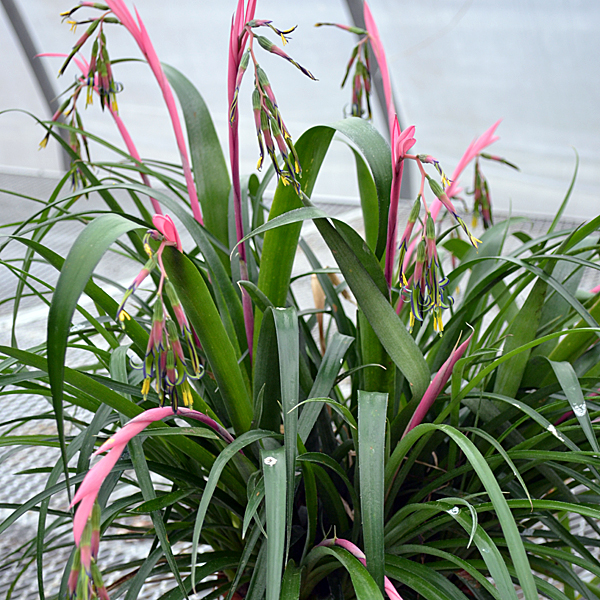
Something to look forward to: Jillian has lots of babies off her Billbergia nutans, which she has potted up for sale to members, for when we can finally meet again. It’s common name is Queen’s Tears or Friendship Plant. She thinks the small plants should be big enough to flower this year. This isn’t a picture of her own plant, but something to aspire to! A challenge..
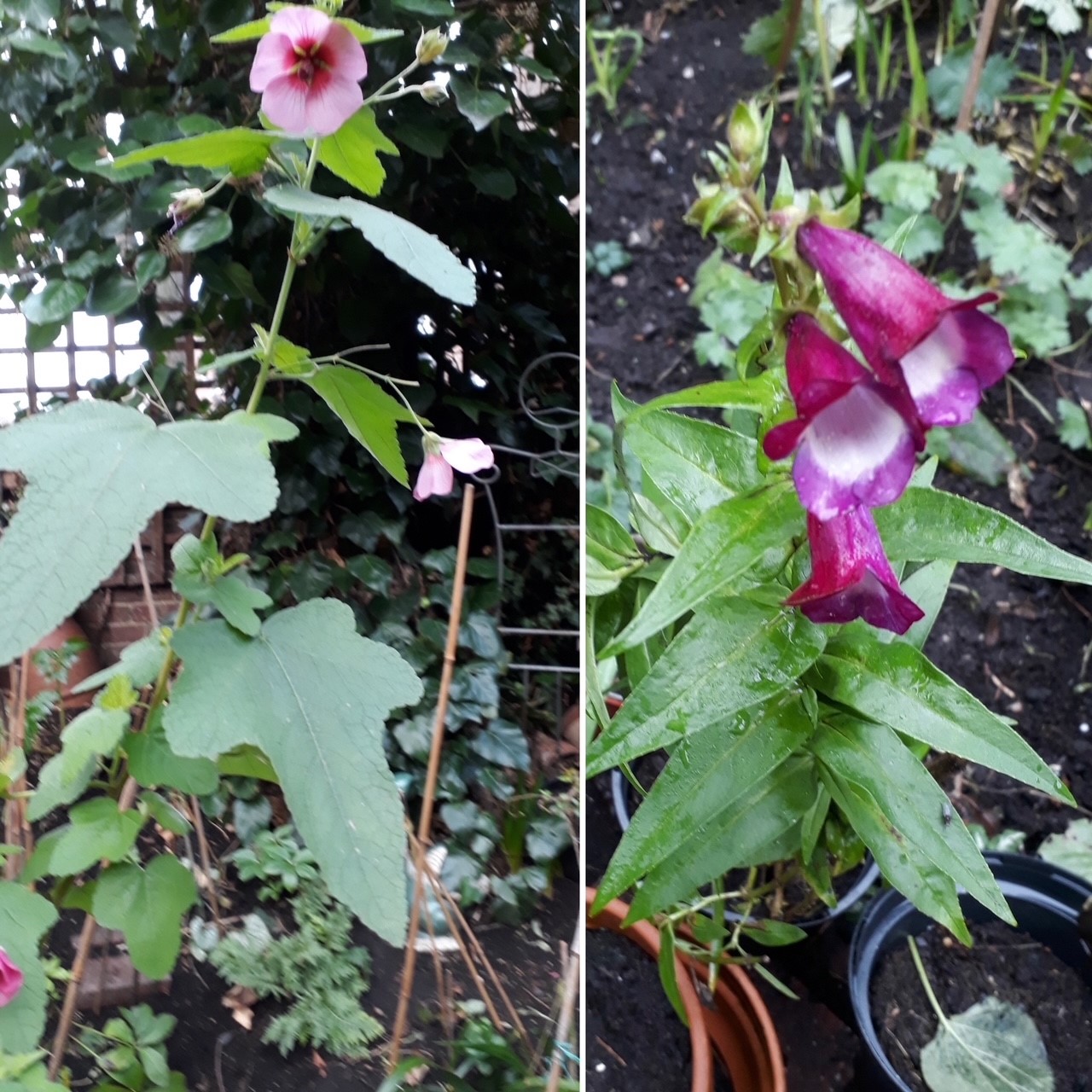
Some unusual flowers out in Angela’s garden – here is a Penstemon thinking it’s still summer, and the Anisodontea, African Mallow, has ignored the recent frosts and carried on.
Maggie has been out and about on her daily walks, and says that the daffodils down near the O2 are all coming out. A lovely sign of Spring, and a good walk along the Thames side.
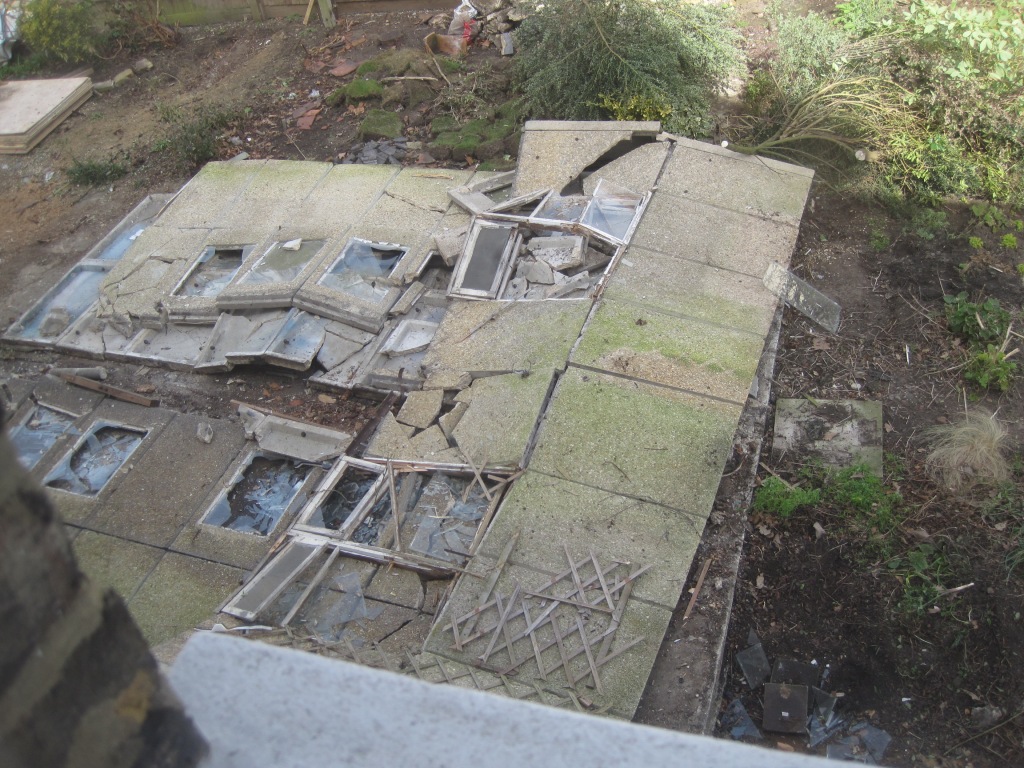
The photo below might remind us all to ensure there are gaps under the fences in our gardens. There is a trend to use concrete gravel boards at the base of new fences, and while they are wonderfully sturdy and long-lasting, spare a thought for the wildlife! Frogs and toads need to travel between gardens and water sources. It’s really easy to push a trowel under the gravel board and make a little underpass for them, it makes all the difference.
Happy Dahlias, in bed for the winter, covered with a lovely blanket of Christmas tree branches!
What’s in flower in YOUR garden? All these in Kathy’s garden on January 3rd 2021, they don’t seem to know it’s winter. Although it’s a bit tatty, there is even a blue Lobelia flower, what’s that about? If you have more, send them in to feature here.
Clockwise from top left: Hellebore, Mexican fleabane, Cobea Cup & Saucer, Clematis Wisley Cream, Bergenia, Geranium “Pino”, Rose Bonica, Fuchsia Hawshead, Geranium Regal
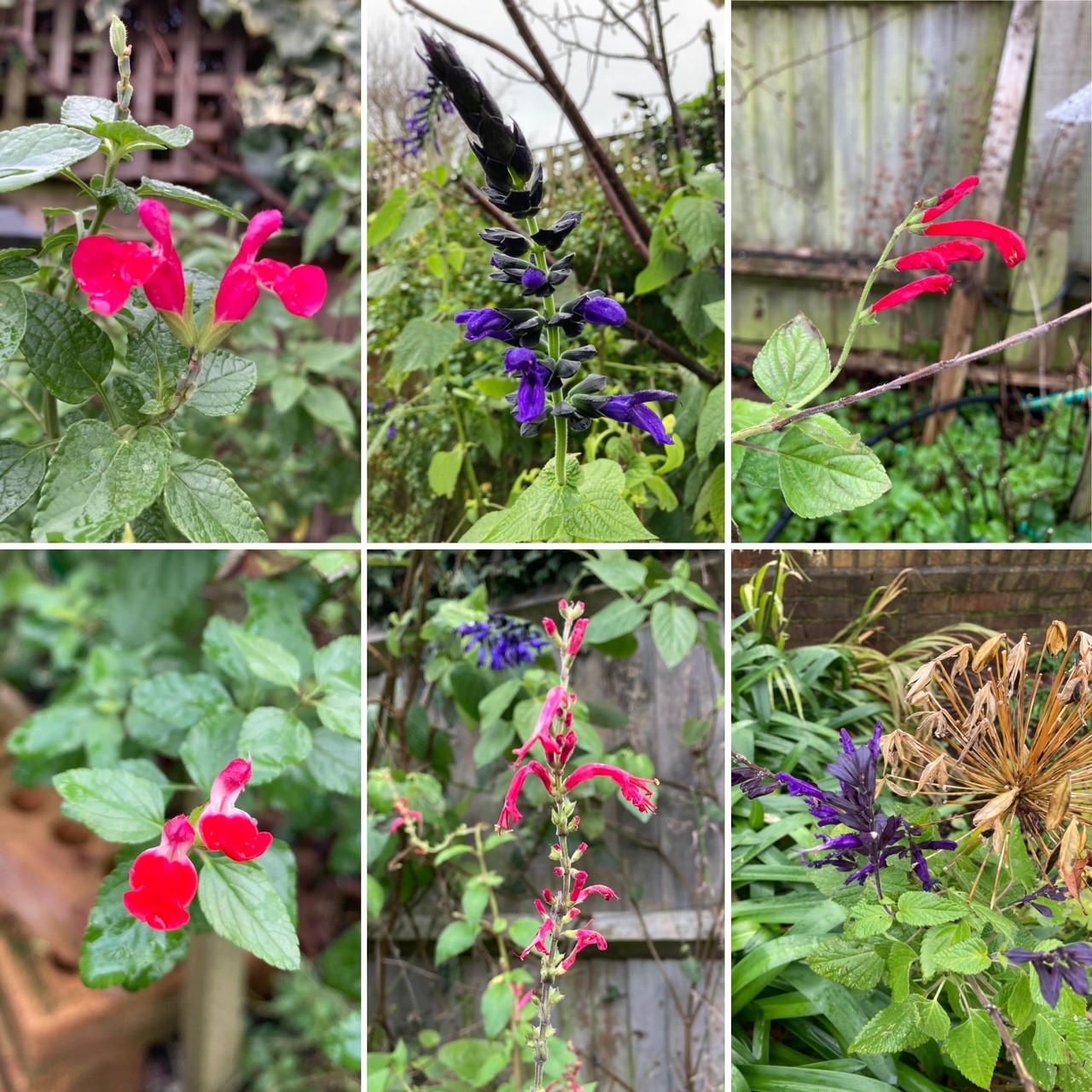
Salvias: Neon, Black & Blue, Tangerine, Hotlips, Pineapple and Amistad
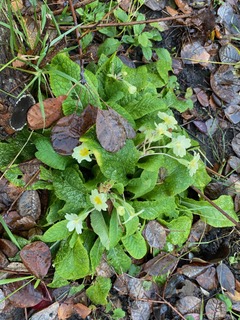
Teucrium, Wallflower, Parahebe, Lobelia and Primrose
Like Francis Griffiths and Elsie Wright, as a child I believed there were fairies at the bottom of my garden. Unlike Francis and Elsie, I didn’t take this any further. The story of the Cottingley Fairies went on to become one of the greatest hoaxes of the twentieth century.
When Elsie’s mother showed the photographs to the local Theosophical Society, it set in motion a chain of events that led Sir Arthur Conan Doyle to conclude that the photographs were authentic.
Then in 1920, when Conan Doyle wrote an article on fairy life, fairy fever gripped the nation.
But there are other reasons to go to the bottom of your garden!
In one of the December entries in his book The Ivington Diaries, Monty Don writes that, in order to feed his chickens, he has to walk right to the end of the garden and back, ‘which means that whatever the weather … I am obliged to have a good look at things’. There is no doubt that, in the depths of winter, having to get from one end of your garden is quite an education. You can make all kind of assessments in terms of use of space and structure, when everything is so bare.
And there are, of course, additional benefits. The scent of the Viburnum bodnantense at the end of my garden is astonishing. It knocks me out every time. Perhaps even more so in winter when there is less competition. I think I should have it closer to the house, or perhaps I should get another one.
But I do like the idea of a little cluster of fairies whispering somewhere under the still green leaves of my nasturtiums at the bottom of my garden!
Kathy’s garden – a Fuchsia thymifolia which seems to bear its tiny flowers for 365 days a year and thrives in part-shade. What’s not to like? An added bonus that it is apparently slightly resistant to the gall mite too.
Anne R’s beautiful fully compostable wreath – ivy with osmanthus, rosemary, bay, honesty, rose hips, haws.
Primroses, snowdrops and Christmas rose out and doing their thing in Jan’s garden. Everything so early!
Lots of late colour in Chris B’s garden, Osteospermum, Pyracantha, Cotoneaster and a very pink Salvia.
This is Harry & Val’s Eucharis amazonica, which is flowering for them for the fourth time this year!
Here is Jean’s rose “Compassion”, still blooming away in November:
Penny has sent in a picture of her Cobea plant, which she says is sited in a cold part of her garden but still insisting on flowering in November. It is beautiful, and usually grows as an annual in this country, so it must love her!
Cobea scandens
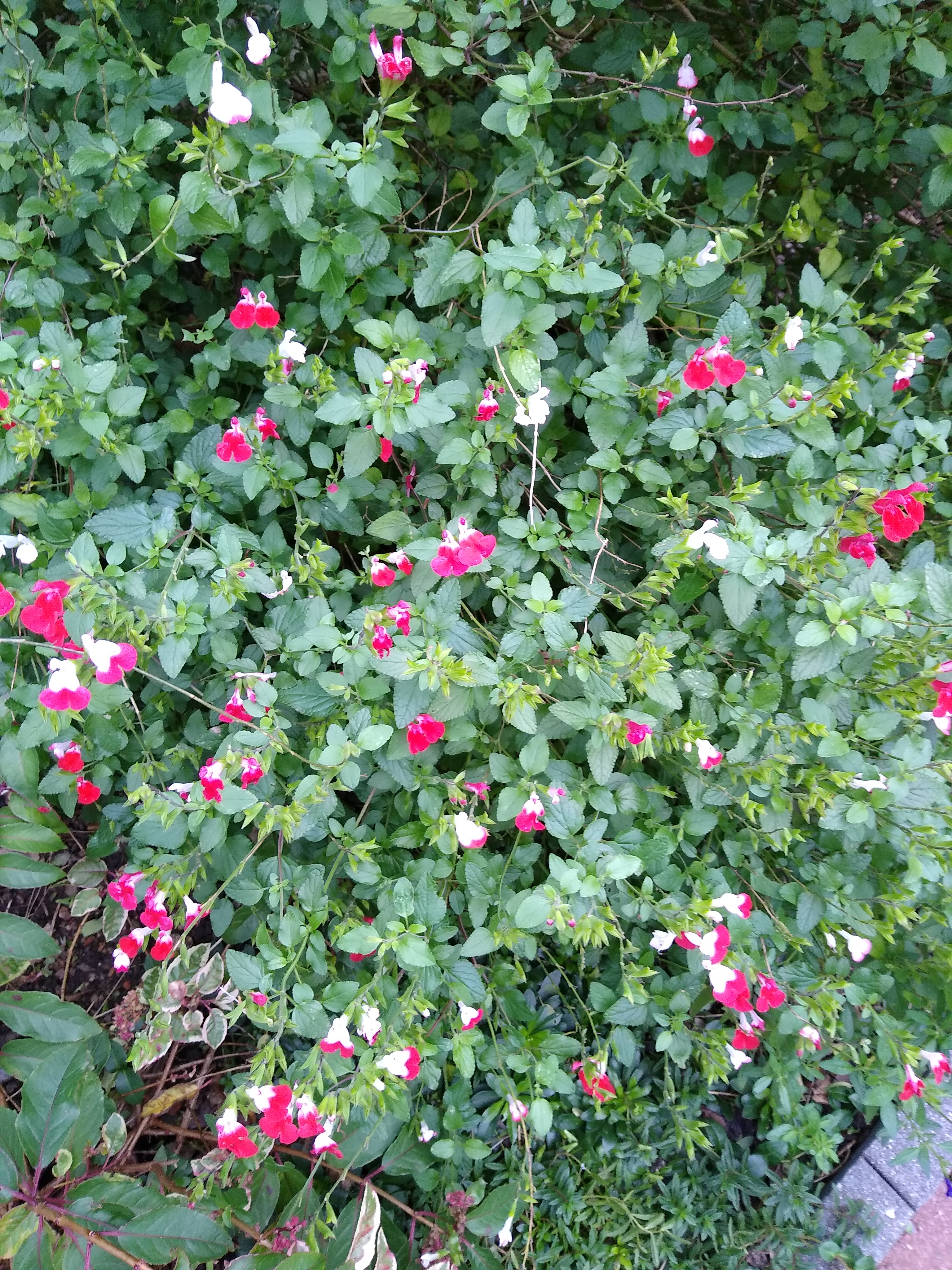
Carolyn’s Salvia “Hotlips” is providing late colour and cheer in her garden, having been flowering all summer long.
Salvia Hotlips
Viv has sent in her star performers, Schizostylus coccinea in two colours. Or Hesperantha as I suppose we should call them. Also known as Kaffir Lily or River Lily.
It’s hard to believe that a whole year has passed since we moved into our new house in Mottingham. Many members will have visited our old house and garden, next door, whilst the new build was taking place. For those who don’t know though, after realising that we needed to downsize, as our family had flown the nest, we decided to knock down our garages and build a smaller house adjacent to our old one.
Going…Going…GONE!
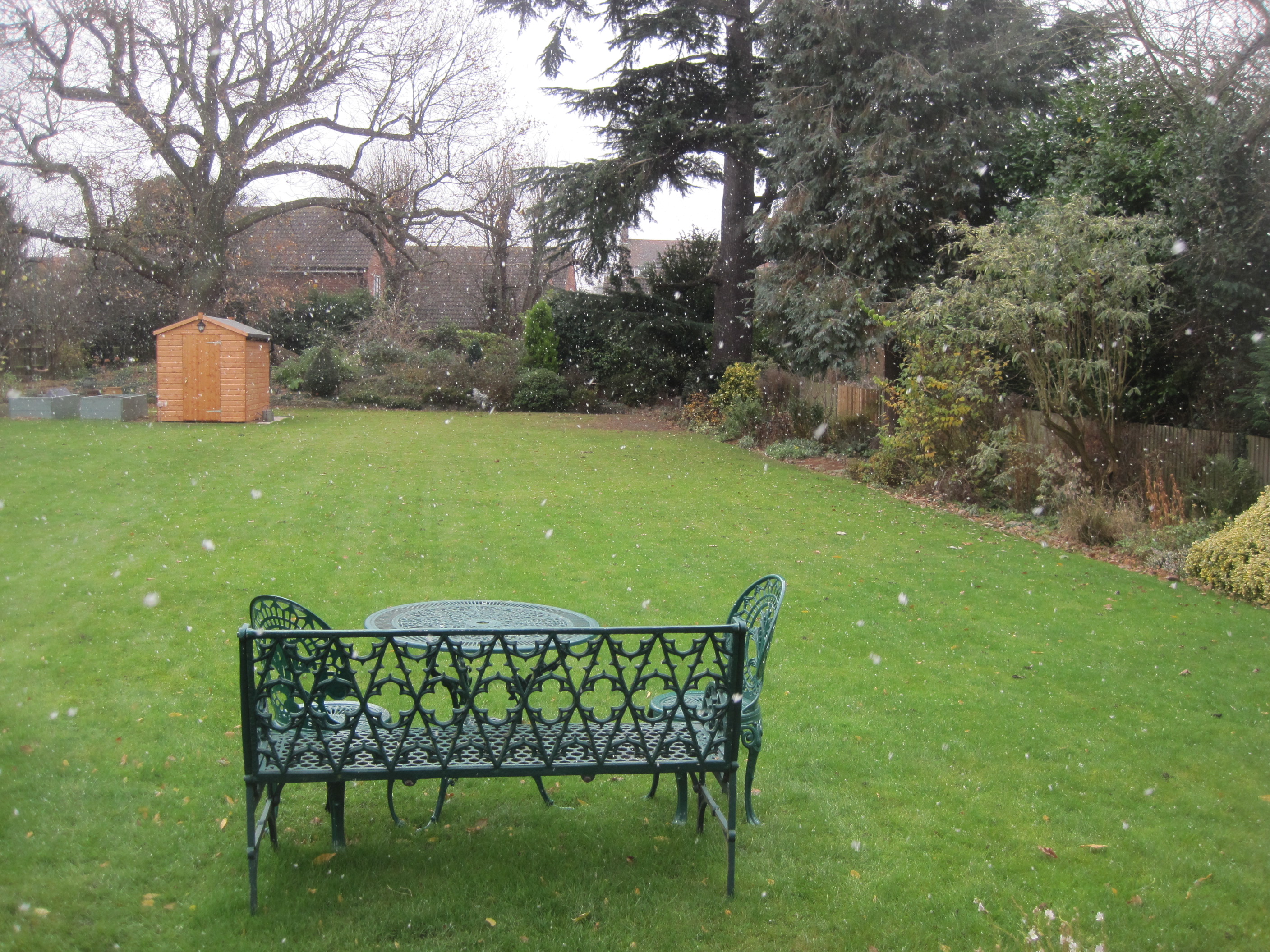
Before the dividing fence went up between the two gardens a man came to us to erect a shed in, what appeared to him, to be the middle of our large rectangular lawn. I showed him the sticks I had placed to mark where I would like the shed to be built. He took his hat off, scratched his head and asked “Are you sure that’s where you want it? -It’s a bit random isn’t it?”
When the shed had been built a dividing fence was erected straight down the middle of our large rectangular lawn, between our old and the new gardens. I invited some friends around to see what was going on. Some even peered rather nervously through a gap in the new fence to hear what plans I was hatching for my new garden.
Whilst the house was going up I got cracking on creating a new garden.
The first thing I did was to lay a curvy hose on the lawn to plan my new bed layout. I placed long canes to indicate where I hoped to build the raised beds, compost etc. By running up and down the temporary staircase in the, by now, half built new house I could look out of the windows, then adjust the hose each time, and get a better idea of how the new flowerbeds would look. I found this quite exciting as I was fed up with my straight lines of the old garden.
Then we moved the arch from our old garden into the new one, taking care to move the rose and clematis it supported at the same time. None of the side flowerbeds have been made at this point.
I must confess, at this stage that two of my son’s friends were on hand to help with the arch and digging out the lawn to make flowerbeds. We barrowed all of the compost that I had been making in the old garden and set about improving the soil in our new beds. They also helped us to make two raised beds, from scaffolding planks, which quickly became temporary residences for extra plants that were in transit. Here they are with my beautiful Cercis siliquastrum flowering profusely in the background.
I do find that gardening is rather like decorating. You have to put in many hours of hard work before you can enjoy the easy bit.
The next task was to dig up and split all of my beloved treasures in our old garden. I planted half of each one back in the old garden and half in the new. I was thoroughly enjoying myself and I was barely buying any plants but by the end of the year but I had almost filled every bed. The job was made easier by removing a fence panel so that I could dash, laden with plants, from the old garden to the new.
As you can see by the next spring the garden was starting to shape. It’s simply amazing how things have grown. After just a year it almost looks like a mature garden.
Isn’t gardening wonderful? If you put a little work in you get so many rewards.
Since taking this photo I have created a dedicated iris bed with 7 different coloured irises. I’m worried that I’m becoming an iris addict!
During this year’s lockdown my projects were a bug hotel and very small pond.
I have also been trying to introduce some vertical planting which will hopefully cover the new fence that looks so bare. So far I have put in several climbing roses including Iceberg, Compassion, Danse du Feu and Golden Gate. I’ve also planted several other climbers like honeysuckles, clematis and Hardenbergia. This is a new plant to me. Apparently it’s similar to a Wisteria but less vigorous.
All of this has required rather a lot of trellis so I do hope that it all grows!
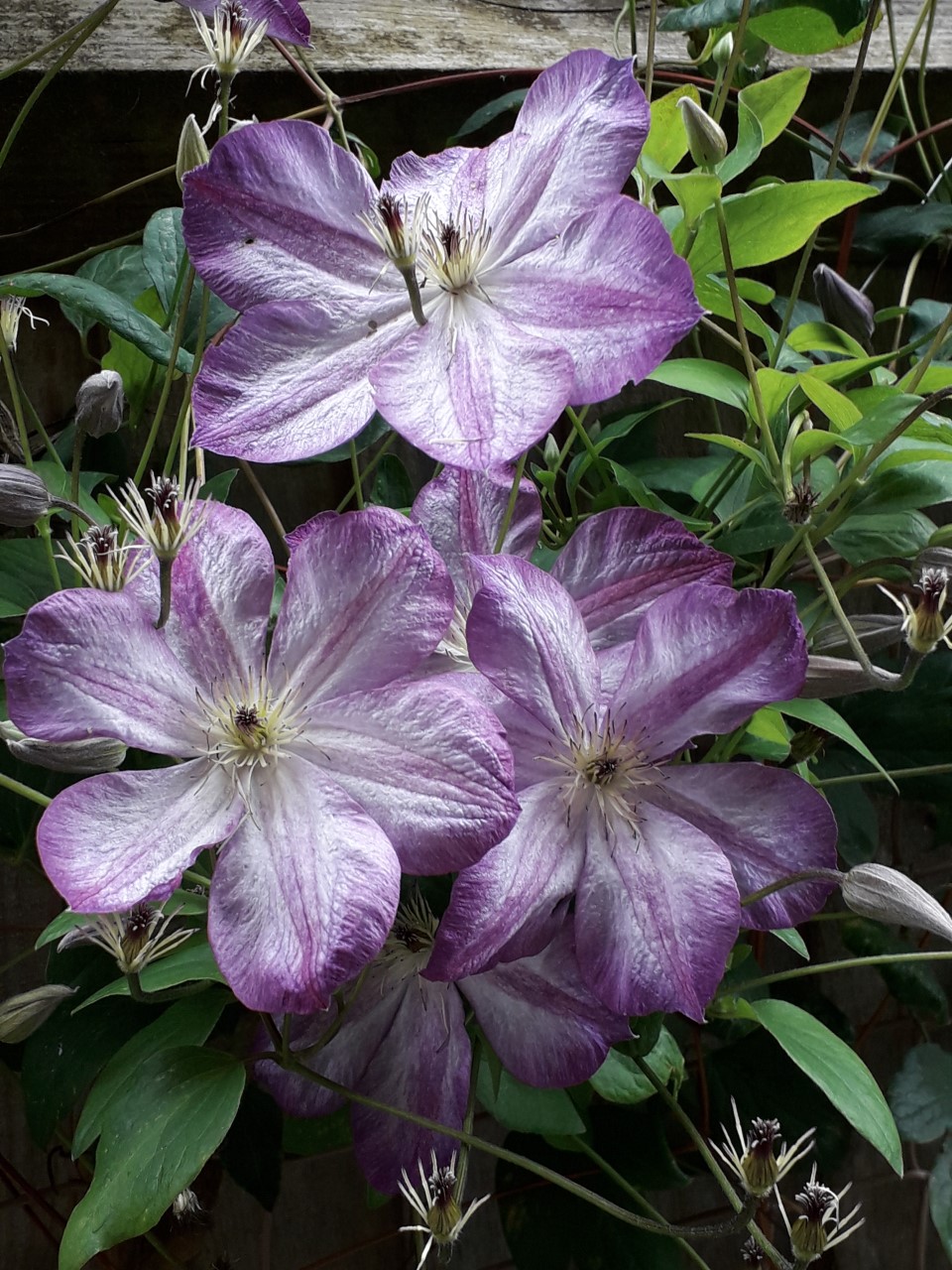
Clematis Pernille
In August I was glad to welcome many members to our open garden. We shared the day with Vija and Fran who also opened their gardens and made a whopping great £319 for cancer charities. I know that some society members could not come that day and so I thought I’d share a few photos of our progress over the year. Viv.
With apologies to Rod Liddle, writing in The Spectator!
I am sad that my Quince tree (the produce of which gave me the CABAHS “Best in Show” cup once upon a time!) has not managed to bring a single fruit to maturity this year. Squirrels and the dreaded brown rot have taken all.
Quinces were first grown in England by Edward I, the ‘Hammer of the Scots’, a man who would have made short work of Nicola Sturgeon. The fruit resembles a degenerate pear — a pear which has made bad choices in its life. Downy and squat. The tree from which it emerges is a delight, especially in early May when fecund with blossom, which is the time that famous perfume begins to emanate. That perfume stays with you — in the fruit bowl, when you are peeling it and, most of all, while it is being cooked.
Like all good food, the quince requires work, time and an appetite for deferred gratification. It is a beast to prepare. Peel and core a quince and you will find a swede can be sliced through like butter in comparison. The flesh of the quince is fibrously obstinate and the core intractable; be careful with that knife. When you have finished peeling and quartering, set the seeds aside in case someone you really don’t like comes over. They are rich in cyanide. Toast them and say to your adversary they are pumpkin seeds..
Anyway, cook those quarters gently. Either poach in a couple of inches of sugared water, a dash of honey and perhaps a strand of thyme in a saucepan on the stove top, or in a bath of the same in the oven. The recipe instructions vary as to how long you should do this — some suggest 40 minutes. Rubbish. You need at least two hours on a low heat. Only then will the quince reveal its magic — the gradual metamorphosis from a wan, pale yellow to a rich crimson, the anthocyanins doing their work. Add another hour or so if you’re making quince cheese from the pulp and then another six to rest, before straining and cooking again with added sugar. It will set just fine due to its natural load of pectin.
I prefer the quartered fruit to still have a little bite; five or six segments and the reserved cooking juice will transform your apple crumble with a gentle tartness. You can purée the red fruit into an accompaniment for duck, or simply serve as they are, with their gloriously red and sticky cooking juice, topped with cream. Either way, hurry: the quince season is nearly at an end.
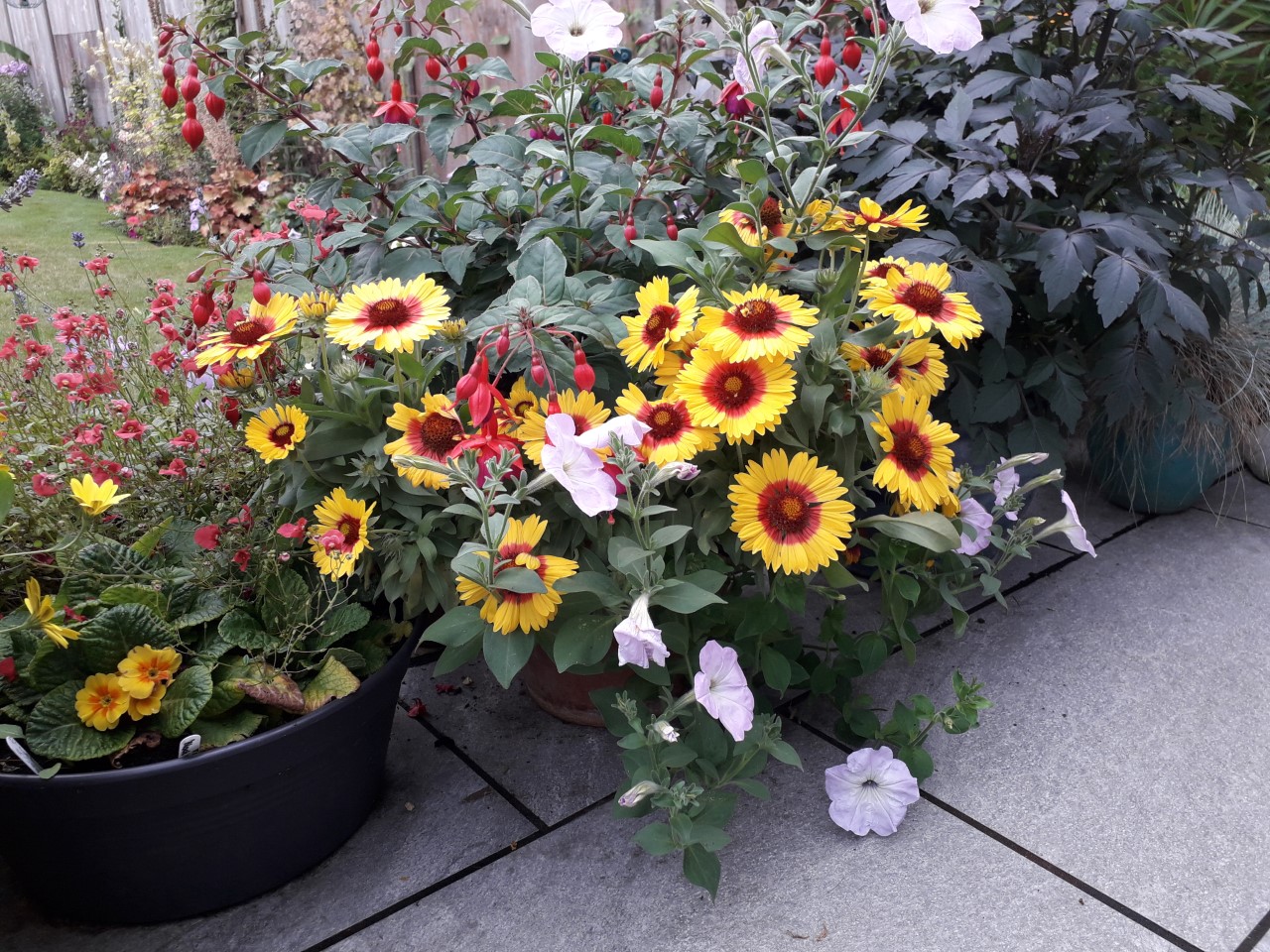
Val & Harry have sent in this selection of their Autumn stars. They have a wonderful stripy Tagetes patula ” Jolly Jester” in their border. Harry says it germinates like mustard & cress and grows to 75cm-1m. It looks stand-out!
Last of the summer annuals, including stripy Tagetes
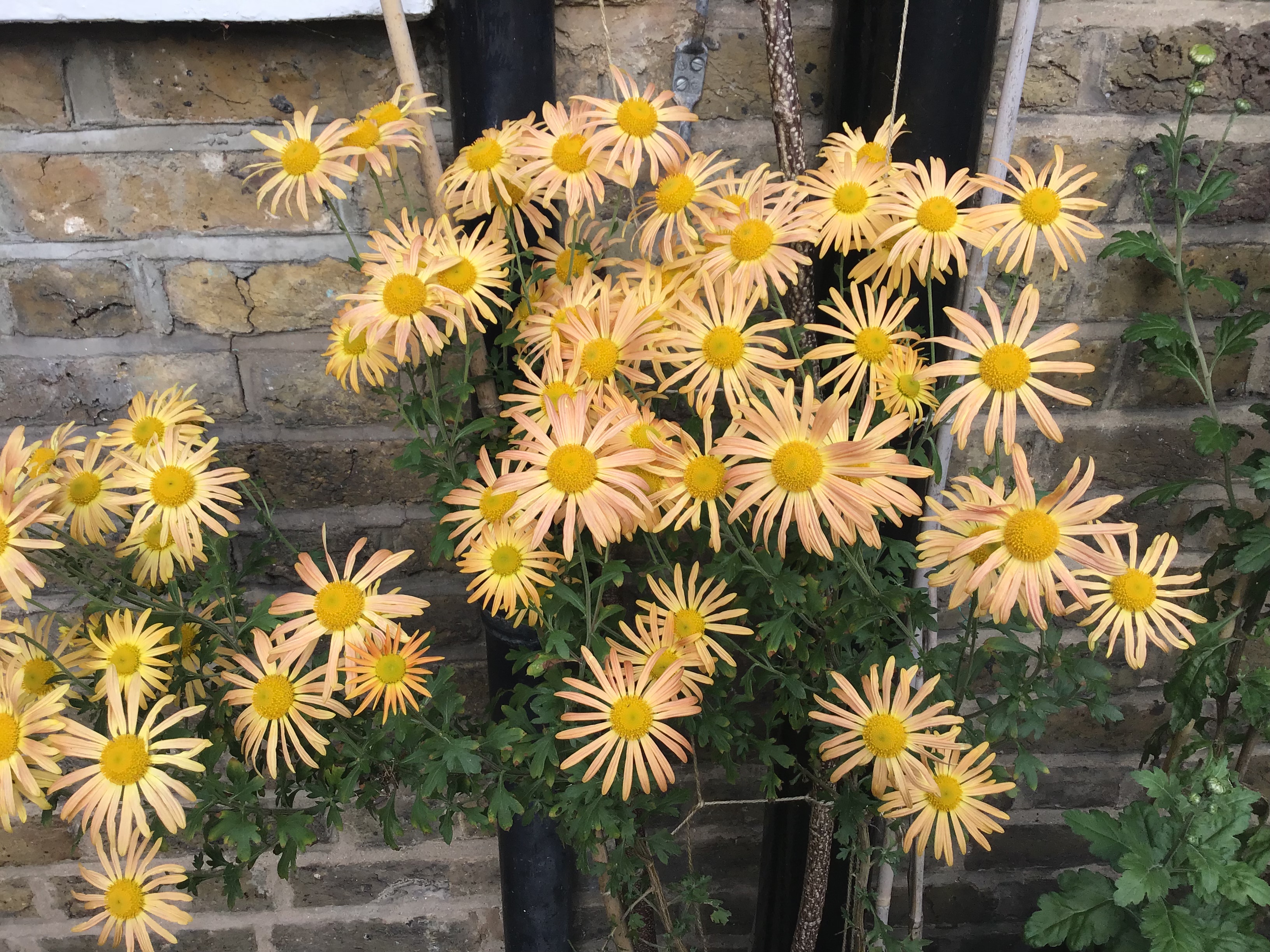
Korean chrysanthemum “Mary Stoker”
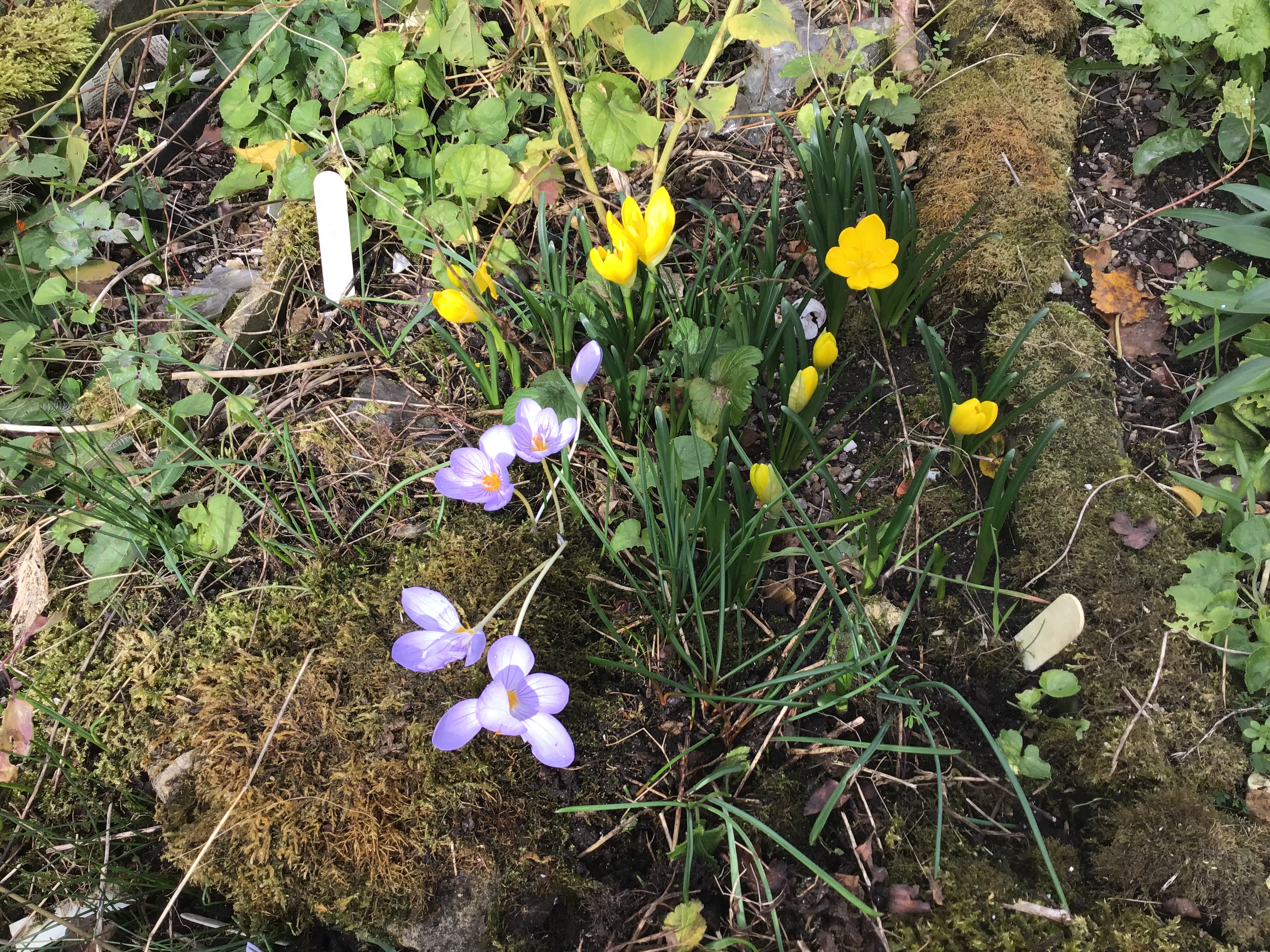
Crocus speciosus and Sternbergia lutea
Val and Harry’s perennial border
Here is Jillian’s garden, she has a lovely display of cyclamen in her borders, some of the corms are the size of saucers!
The succulent display in Jillian’s greenhouse is looking good:
Here is Marian’s dewy autumnal rose:
Show those Autumn colours! This is Kathy’s Blueberry “Goldtraube”, what a waste to have this in the soft fruit bed, it should be on full view in a border. All the books say it needs acid soil or to be in a pot of ericaceous compost, but it fruits and thrives very happily in normal soil with a watering can of Sequestrene a couple of times a year.
Annie has harvested her garlic and it’s done very well this year. I expect these would have been part of her Autumn Show entry, never mind, next year..
Cutting back lavender is this month’s job. Kathy was a bit mystified by these structures revealed when the lavender was cut back. They look a bit like Nigella seed cases! But Mr Google says that they are the nests of the Wasp Spider, a fearsome looking spider which is spreading to the South East of England from the continent. It is actually quite harmless, and mimics the wasp so that predators leave it alone.
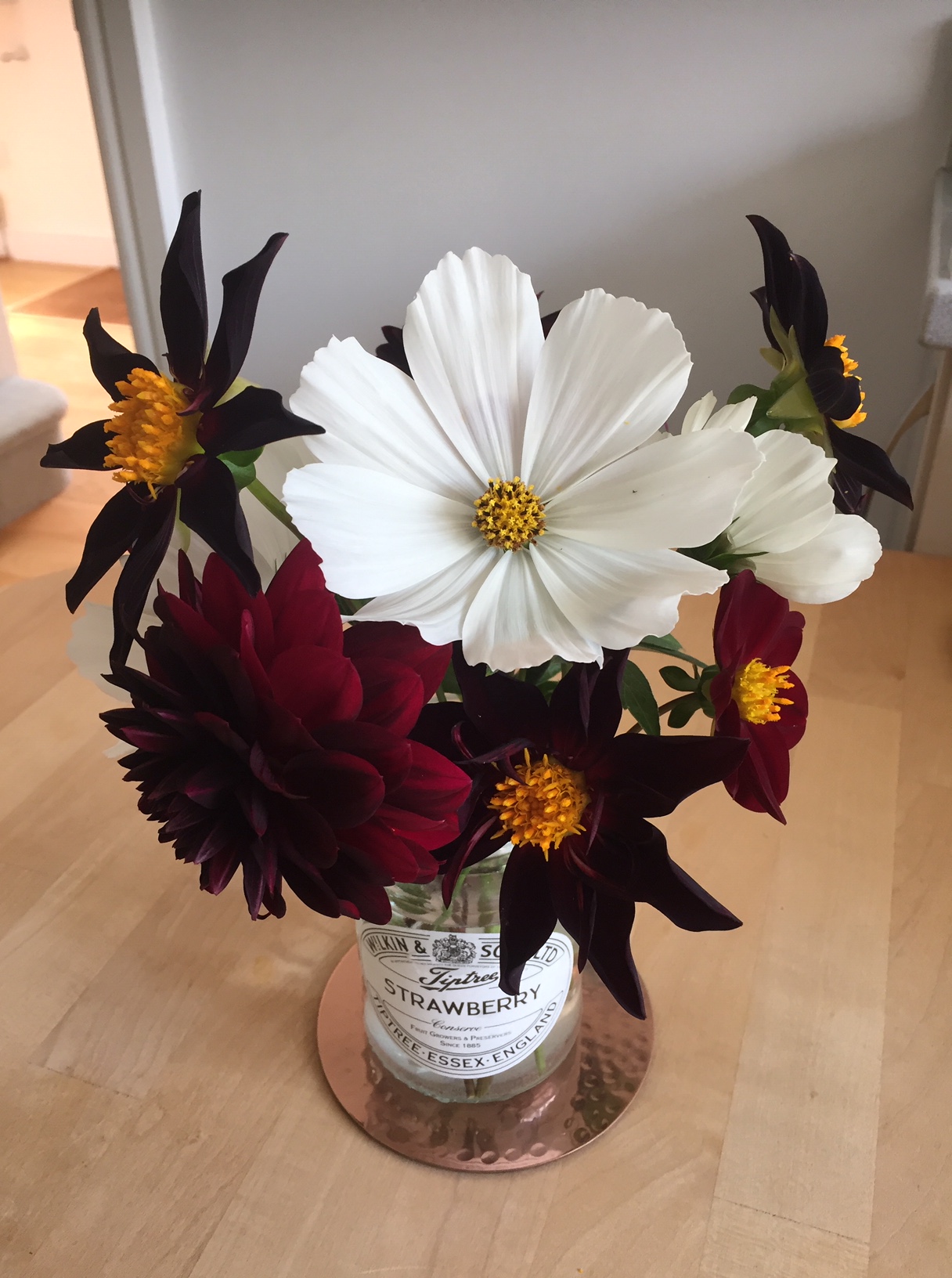
A lovely selection of Cosmos and Dahlias, definitely September’s flowers. These are Cosmos Purity, Dahlias Verrone’s Obsidian, Mexican Star and Bishop of Auckland. (Plus an unknown beautiful double red one).
A suggestion made by Anna has prompted me to think what we can learn from random gardening mistakes, or shall we say, unplanned activity.
I use a lot of salad vegetables and always have a variety of leaves growing to use as a base for additional ingredients. I sow a selection in various seed trays, which I then prick out and later plant into the garden. A few years ago, at the tail end of the summer, I sowed seeds into their seed trays as usual. For whatever reason, I failed to prick out and then felt it was too late to do anything much with them, so I was left with several seed trays full of fresh young seedlings. And I left them. But what happened then was that they provided me with a steady supply of cut-and-come-again salad leaves (the kind you pay a fortune for in bags in supermarkets) to enjoy through the winter. Ever since then, I use this method to provide me with small young and tasty salad leaves, throughout both the summer and winter. I do this with Mizuna, Endive, Rapa da Foglia (turnip greens), mustard, rocket as well as the usual lettuce varieties which we grow. I am sure it works equally well with chard and beetroot and members will have their own varieties to suggest here. Obviously the mild winters we have been experiencing do help, I am not sure what a sharp frost would do. Ultimately, the plants will become very rootbound, but growth in the winter slows down, so this takes a while to happen.
Trays of seedlings sown 5 September.
The usefulness of this method is also that you could do this on your kitchen windowsill, balcony, or whatever space is available.
I sowed these Zinnia seeds directly into the ground in June and replanted the thinnings and ended up with two rows. This is the first time I have ever grown Zinnias. It was old seed and I probably bought the packet at our plant sale a year or two ago for the going rate of 20p!
I reckon my success is down to beginner’s luck and the Poundland compost!!!! I have very light soil so I also added the ash from the bonfires and chicken manure pellets before I planted up the plot. As they are adjacent to my tomato plants I made sure they were watered nearly every day to encourage a good root system. Yet information online says they only need watering every five to seven days. I was warned not to get water on their leaves as they are prone to folliar diseases. They are growing adjacent to the boundary fence and I’ve had to support them when the high winds came.
There are doubles and singles, in various shades of pink and yellow. The bees love them and they are long lasting as cut flowers. They are the first plants I look at when I arrive at my allotment plot and I coo over them! Margaret grows rich, strong orange Zinnias which knock my Zinnias aside and they are simply stunning. Definitely a plant to try again next year.

















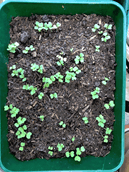
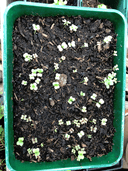 Trays of seedlings sown 5 September.
 Charlton and Blackheath Amateur Horticultural Society