Weather winners and losers

NB: We have just heard about an RHS survey about the impact of the recent weather: RHS Climate Change Resilience: Heatwave Impact on Gardens which has to be completed by 30 September 2026.

Following on from Pat’s ’10 Jobs…’ tips on coping with drought and heat, we asked CABAHS members to share which plants had proved to be ‘winners’ and ‘losers’ in the recent extreme weather, to help us all make climate-change-appropriate choices in the future.

Charlton House Peace Garden, July 2026 Pomegranate, Magnolia grandiflora and perovskia are all winners
Pomegranate, Magnolia grandiflora and Salvia yangii (aka perovskia) are all winners in the Charlton House Peace Garden this year

A summary: After the spring AND summer drought of 2025 (with four of the previous five years being the warmest on record), we experienced a cold November and a wet winter (the 4th wettest on record for Southern England), with the addition of unusually low light levels in early spring. We have now had extreme drought (no rain at all since early June and counting – and there were long dry periods before that too) and, so far, several heatwaves (which is counted as three or more consecutive days over 28 degrees in London – all have been in the 30s). Of course, the heatwaves may have counted six times (starting on 22 May, 19 June, 4 July, 28 July, 2 August and 9 August respectively) but the weather hasn’t exactly cooled off much in between. In addition, Thames Water declared a hosepipe ban beginning on 23 July (though watering cans and drip-feed systems are not banned) and there’s precious little rain showing in the forecast even now.

Continue reading Weather winners and losers

Coach trip to RHS Wisley

On Wednesday 11 May, a coachload of CABAHS members went on a much anticipated trip to RHS Wisley. This was my first experience of a CABAHS coach trip and it was brilliantly organised by Anna (thank you Anna!).

RHS Wisley May 2022
Just before the rain started… RHS Wisley May 2022

After experiencing dry weather for weeks, the forecast was for rain mid-afternoon, so it felt important to pack as much in as possible before the rain started. Several members had signed up for a tour with a Wisley volunteer, but as the tours started, so did the rain – several hours earlier than forecast! We were, however, undeterred.

Continue reading Coach trip to RHS Wisley

Weather-proofing the garden

I have spent some time over the past two days trying to protect the more tender plants I still have outside. The greenhouse is full and there is nowhere else for anything to go, short of bringing everything indoors! I therefore have varying layers of fleece and old sheets propped up with canes to keep them clear of the plants and all looking very ugly.  With a weather forecast now predicting temperatures of -6 I have added blankets.

I look with envy to countries like Japan who so effectively seem to support their plants, making the supporting structure a thing of beauty in itself. The technique below is called yakitsuri and I first saw it in a Monty Don television series. This is designed to stop the weight of the snow from breaking the branches of the trees.

Similarly, the woven willow used to support border plants through the summer in our own gardens such as Great Dixter is not only functional, but looks nice.

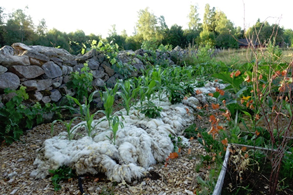
When Pat and I visited in a brief respite from lockdown in 2020, to protect dahlias from slugs at Great Dixter, they had used sheep’s wool spread out over the soil at the base of plants. Where this was dark brown it worked, but the white sheep’s wool was not in the least appealing and detracted from the overall beauty of the borders.

(Photo NOT from Great Dixter, just an example.)

There is an art to protecting your plants in winter (or summer) in a way that looks attractive, or at the very least not as offensive as my own efforts and is which not damaging to the environment. I have yet to master it.

Vija