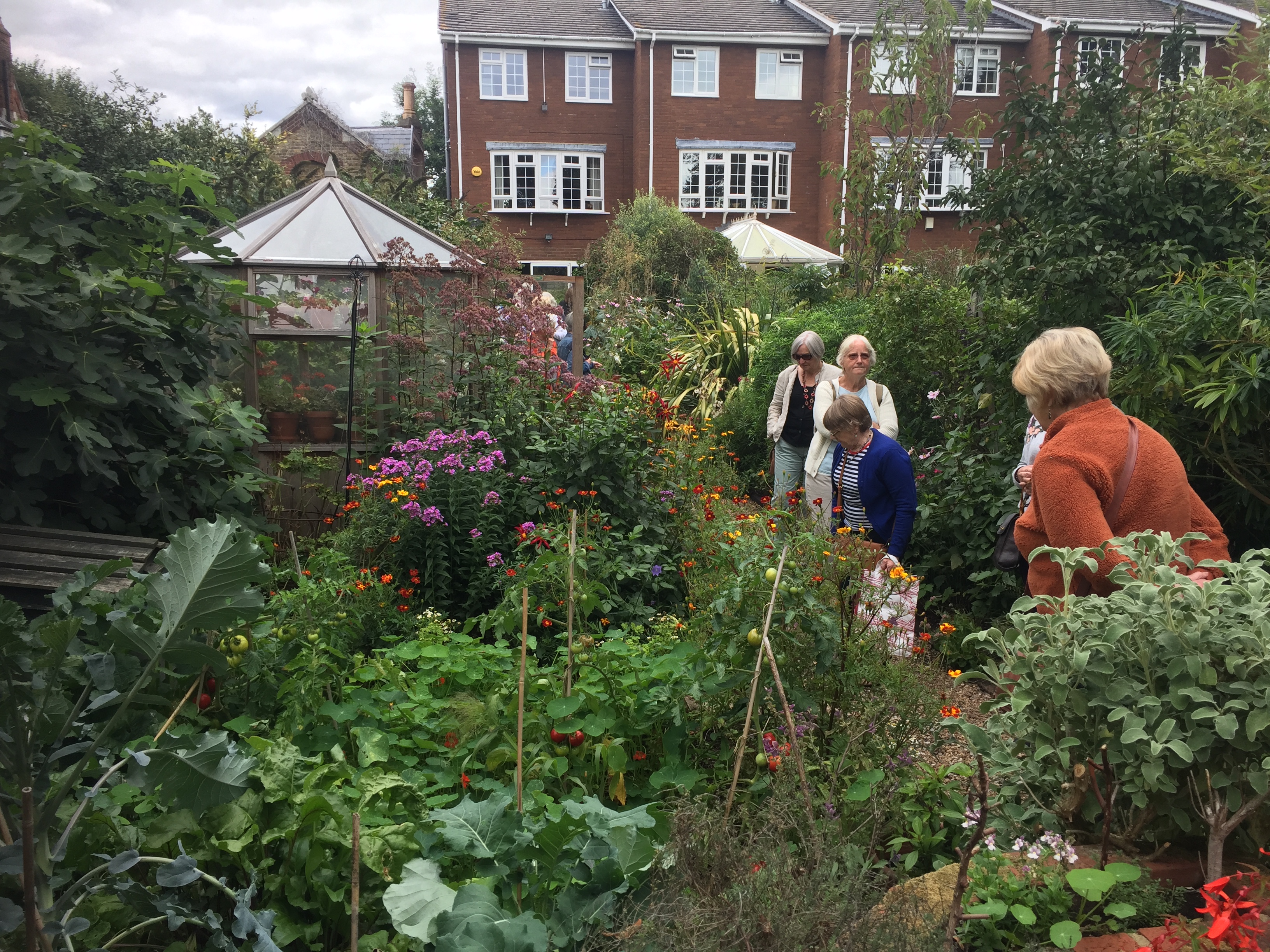
Now is the quince season…

With apologies to Rod Liddle, writing in The Spectator!

I am sad that my Quince tree (the produce of which gave me the CABAHS “Best in Show” cup once upon a time!) has not managed to bring a single fruit to maturity this year. Squirrels and the dreaded brown rot have taken all.

Quinces were first grown in England by Edward I, the ‘Hammer of the Scots’, a man who would have made short work of Nicola Sturgeon. The fruit resembles a degenerate pear — a pear which has made bad choices in its life. Downy and squat. The tree from which it emerges is a delight, especially in early May when fecund with blossom, which is the time that famous perfume begins to emanate. That perfume stays with you — in the fruit bowl, when you are peeling it and, most of all, while it is being cooked.

Like all good food, the quince requires work, time and an appetite for deferred gratification. It is a beast to prepare. Peel and core a quince and you will find a swede can be sliced through like butter in comparison. The flesh of the quince is fibrously obstinate and the core intractable; be careful with that knife. When you have finished peeling and quartering, set the seeds aside in case someone you really don’t like comes over. They are rich in cyanide. Toast them and say to your adversary they are pumpkin seeds..

Anyway, cook those quarters gently. Either poach in a couple of inches of sugared water, a dash of honey and perhaps a strand of thyme in a saucepan on the stove top, or in a bath of the same in the oven. The recipe instructions vary as to how long you should do this — some suggest 40 minutes. Rubbish. You need at least two hours on a low heat. Only then will the quince reveal its magic — the gradual metamorphosis from a wan, pale yellow to a rich crimson, the anthocyanins doing their work. Add another hour or so if you’re making quince cheese from the pulp and then another six to rest, before straining and cooking again with added sugar. It will set just fine due to its natural load of pectin.

I prefer the quartered fruit to still have a little bite; five or six segments and the reserved cooking juice will transform your apple crumble with a gentle tartness. You can purée the red fruit into an accompaniment for duck, or simply serve as they are, with their gloriously red and sticky cooking juice, topped with cream. Either way, hurry: the quince season is nearly at an end.

Kathy

Members’ gardens, October 2020

Enjoy a walk around Sian’s beautiful garden this October: click on the button below and the video will play. We love Sian’s pebble beach idea!

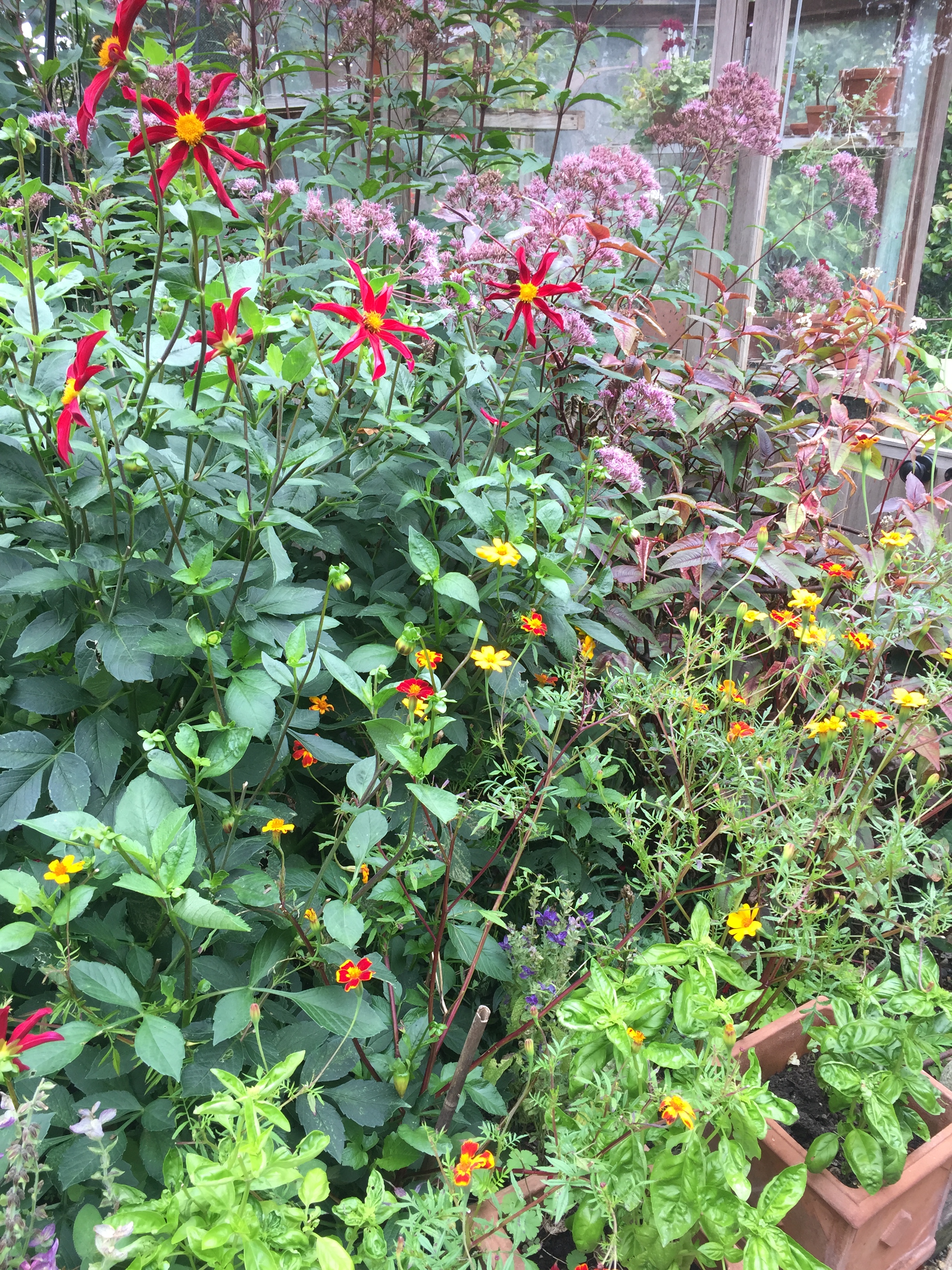
Val & Harry have sent in this selection of their Autumn stars. They have a wonderful stripy Tagetes patula ” Jolly Jester” in their border. Harry says it germinates like mustard & cress and grows to 75cm-1m. It looks stand-out!

Last of the summer annuals, including stripy Tagetes
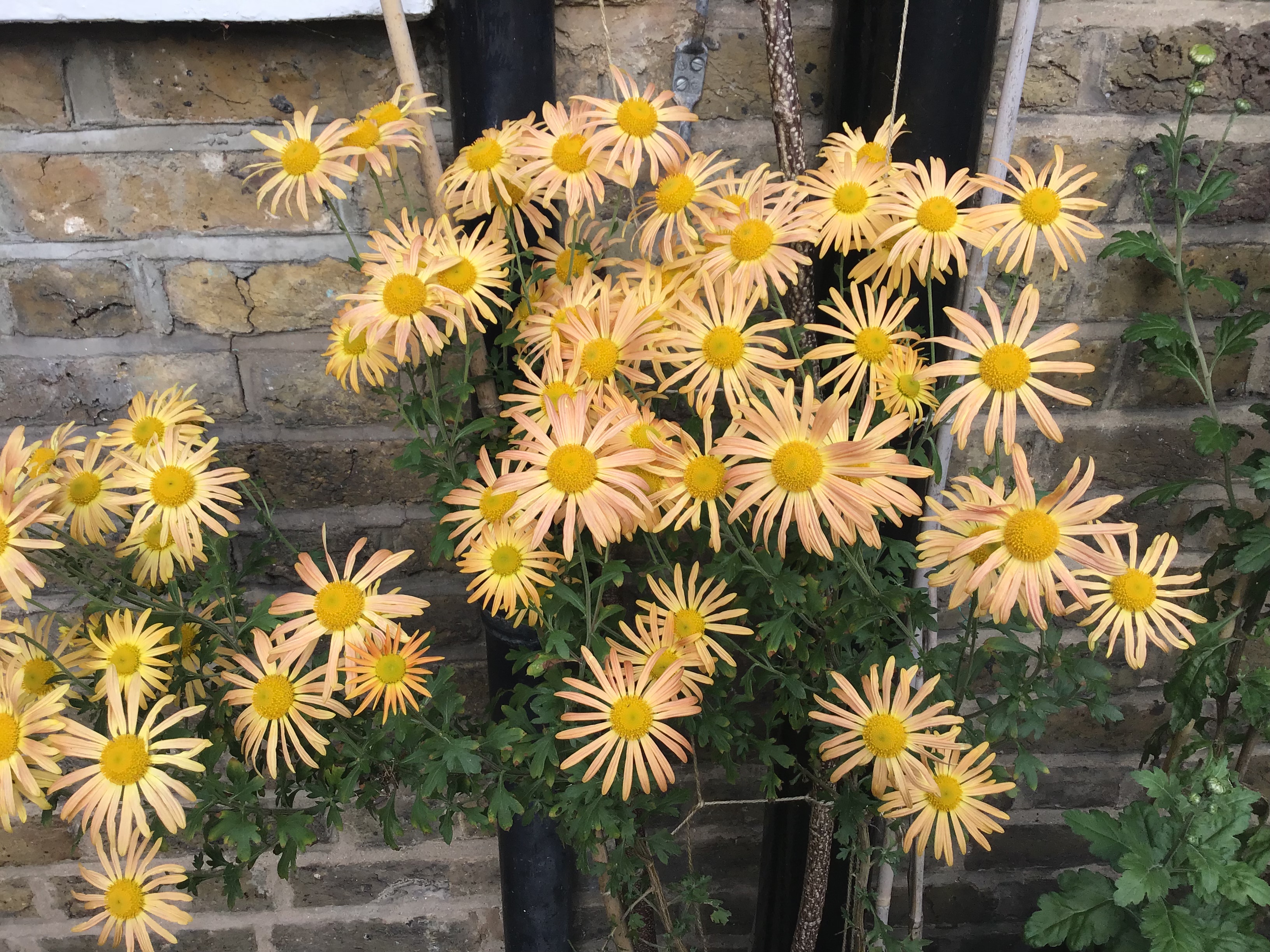
Korean chrysanthemum “Mary Stoker”
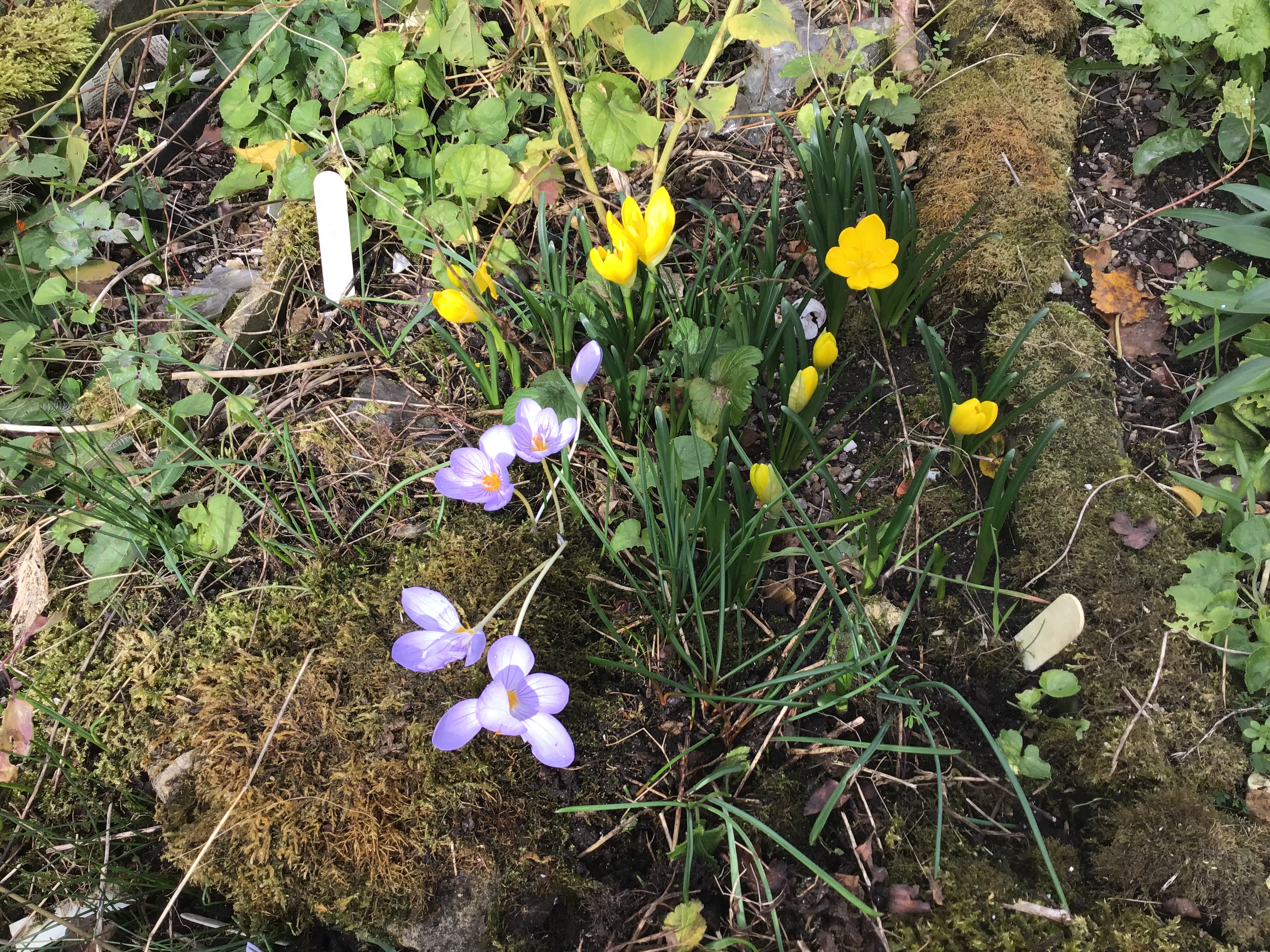
Crocus speciosus and Sternbergia lutea
Val and Harry’s perennial border

Here is Jillian’s garden, she has a lovely display of cyclamen in her borders, some of the corms are the size of saucers!

The succulent display in Jillian’s greenhouse is looking good:

Here is Marian’s dewy autumnal rose:

Show those Autumn colours! This is Kathy’s Blueberry “Goldtraube”, what a waste to have this in the soft fruit bed, it should be on full view in a border. All the books say it needs acid soil or to be in a pot of ericaceous compost, but it fruits and thrives very happily in normal soil with a watering can of Sequestrene a couple of times a year.

Members’ gardens, September 2020

Annie has harvested her garlic and it’s done very well this year. I expect these would have been part of her Autumn Show entry, never mind, next year..

Cutting back lavender is this month’s job. Kathy was a bit mystified by these structures revealed when the lavender was cut back. They look a bit like Nigella seed cases! But Mr Google says that they are the nests of the Wasp Spider, a fearsome looking spider which is spreading to the South East of England from the continent. It is actually quite harmless, and mimics the wasp so that predators leave it alone.

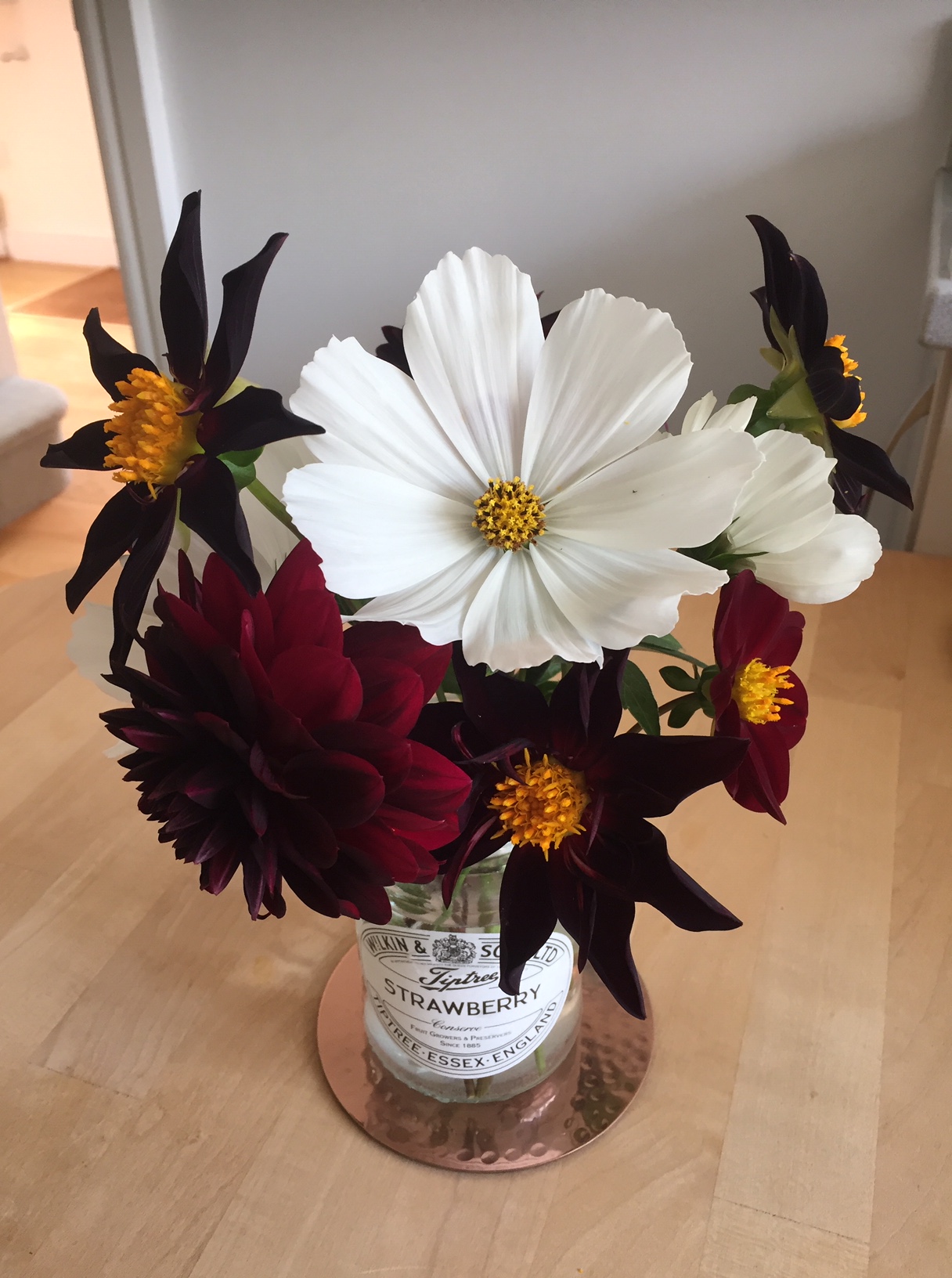
A lovely selection of Cosmos and Dahlias, definitely September’s flowers. These are Cosmos Purity, Dahlias Verrone’s Obsidian, Mexican Star and Bishop of Auckland. (Plus an unknown beautiful double red one).

Homegrown

A suggestion made by Anna has prompted me to think what we can learn from random gardening mistakes, or shall we say, unplanned activity.

I use a lot of salad vegetables and always have a variety of leaves growing to use as a base for additional ingredients. I sow a selection in various seed trays, which I then prick out and later plant into the garden.  A few years ago, at the tail end of the summer, I sowed seeds into their seed trays as usual. For whatever reason, I failed to prick out and then felt it was too late to do anything much with them, so I was left with several seed trays full of fresh young seedlings. And I left them. But what happened then was that they provided me with a steady supply of cut-and-come-again salad leaves (the kind you pay a fortune for in bags in supermarkets) to enjoy through the winter.  Ever since then, I use this method to provide me with small young and tasty salad leaves, throughout both the summer and winter. I do this with Mizuna, Endive, Rapa da Foglia (turnip greens), mustard, rocket as well as the usual lettuce varieties which we grow. I am sure it works equally well with chard and beetroot and members will have their own varieties to suggest here. Obviously the mild winters we have been experiencing do help, I am not sure what a sharp frost would do. Ultimately, the plants will become very rootbound, but growth in the winter slows down, so this takes a while to happen.

Trays of seedlings sown 5 September.
The usefulness of this method is also that you could do this on your kitchen windowsill, balcony, or whatever space is available.

Vija

My Zinnia success

I sowed these Zinnia seeds directly into the ground in June and replanted the thinnings and ended up with two rows.  This is the first time I have ever grown Zinnias. It was old seed and I probably bought the packet at our plant sale a year or two ago for the going rate of 20p!  

I reckon my success is down to beginner’s luck and the Poundland compost!!!! I have very light soil so I also added the ash from the bonfires and chicken manure pellets before I planted up the plot.  As they are adjacent to my tomato plants I made sure they were watered nearly every day to encourage a good root system.  Yet information online says they only need watering every five to seven days.  I was warned not to get water on their leaves as they are prone to folliar diseases. They are growing adjacent to the boundary fence and I’ve had to support them when the high winds came. 

There are doubles and singles, in various shades of pink and yellow. The bees love them and they are long lasting as cut flowers.  They are the first plants I look at when I arrive at my allotment plot and I coo over them! Margaret grows rich, strong orange Zinnias which knock my Zinnias aside and they are simply stunning.  Definitely a plant to try again next year.

Anna L

Garden legacies

As I look around my garden I am very conscious of the origin of many of my plants. I have a bright pink phlox which was originally in my mother’s garden and which comes up faithfully year after year – highly scented but  rather susceptible to disease and needs to be cosseted a little. And then there are the Salvias, many of which are from Terry, but Jezebel and Phyllis’ Fancy are from Pat.

Phyllis Fancy

Over the years a number of plants have been bought from the plant sales held in Jillian’s wonderful garden when it was opened to visitors and have now become mainstays in my own.

I now have a small collection of Acers, but my first one came from an open garden in Beckenham Hill. The couple gardened on a steep slope covering a vast area, at the bottom of which was a railway track. He was an acer expert and grew many rare varieties, some of which he propagated himself. The garden was always a pleasure to view and my love of Acers began here. Sadly, I no longer have my original purchase, although it lived to a good age and the couple sold their house some years ago and moved away. I remember him saying that they would need a single large furniture van just to transport the plants!

I have long cultivated the beautiful Pelargonium Sidoides, but at one of our Autumn Shows, Harry showed a variety with a slightly different colour – paler and more crimson than mine, he gave me two pieces immediately and I successfully rooted these to produce my own plants. This year at the Old Pond Garden sale, Jean offered a pelargonium with a leaf which looked very much like Frank Headley but with a frilly pink and white flower – I think she called it Apple Blossom. I bought this and have made two cuttings which I hope will give me more plants of this unusual variety. On a recent visit to Great Dixter, I fell in love with P. Concolour Lace. Kathy had some to spare and I have bought one from her.

And so it goes on: the gardening stories and memories which we make with each other.

Vija

What’s to be done?

At the end of August, my hostas are looking a bit ragged. They have had a tough year. Forced into early growth by a warm spring, a frost scorched the young leaves of many of the plants, particularly the green leaved varieties, which seem particularly susceptible to a late frost. Overcoming this early obstacle, the hostas forged on to produce lots of leaf and looked absolutely splendid in May.  Strong winds then battered the leaves and here the larger leaved varieties suffered most. With foliage that was still comparatively young and tender they had not built up enough resistance to withstand the winds that barrelled down the side of my house. At one point they were all listing to one side like sailors who had been on ship for too long. Sum and Substance with leaves the size of elephant’s ears really struggled. A month of very hot temperatures has now left them looking very sad indeed. In a south facing walled garden they have basically been inside an oven and baked. Of course, hostas should not be grown in these conditions and in most years they have managed relatively well, but this year has done for them.  Additionally, these stressed plants are also more susceptible to the depredations of slugs and snails. For the first time, they have been given a liquid seaweed feed. I’m hoping this will cheer them up a bit.

Vija

Ed: Here’s a clip of Vija’s garden at the recent Open Gardens event. Hostas definitely looking a bit cheered up!

Mottingham Open Gardens

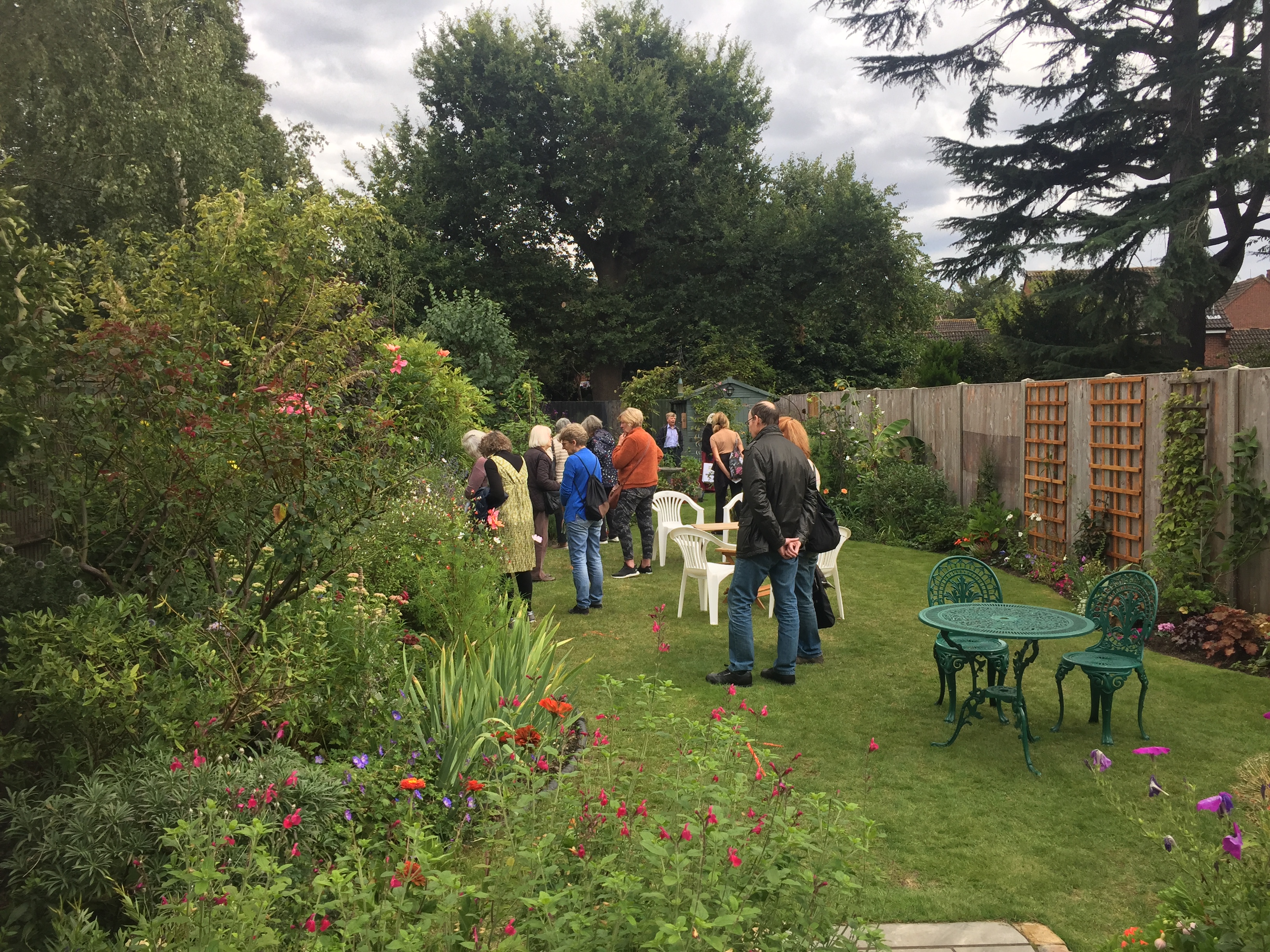
Thank you to all members who visited Fran, Viv and Vija’s open gardens over the August Bank Holiday weekend. They have raised £319 in total for Macmillan Cancer Support, such a very good cause. The gardens all looked fabulous and everyone had a great time.

246B0C5E-1C34-4A1E-8D91-BDEC7BD6242E

Fran’s garden

Viv’s garden

Vija’s garden

Thank you to everyone who visited!

Glut reactions

Whenever I am asked about my plans for dealing with a glut of produce from my allotment, my initial response is usually, “Chance would be a fine thing!”

I’m still on the lower slopes of allotmenteering, constantly marvelling at the (seemingly) effortless heights achieved by my neighbours.

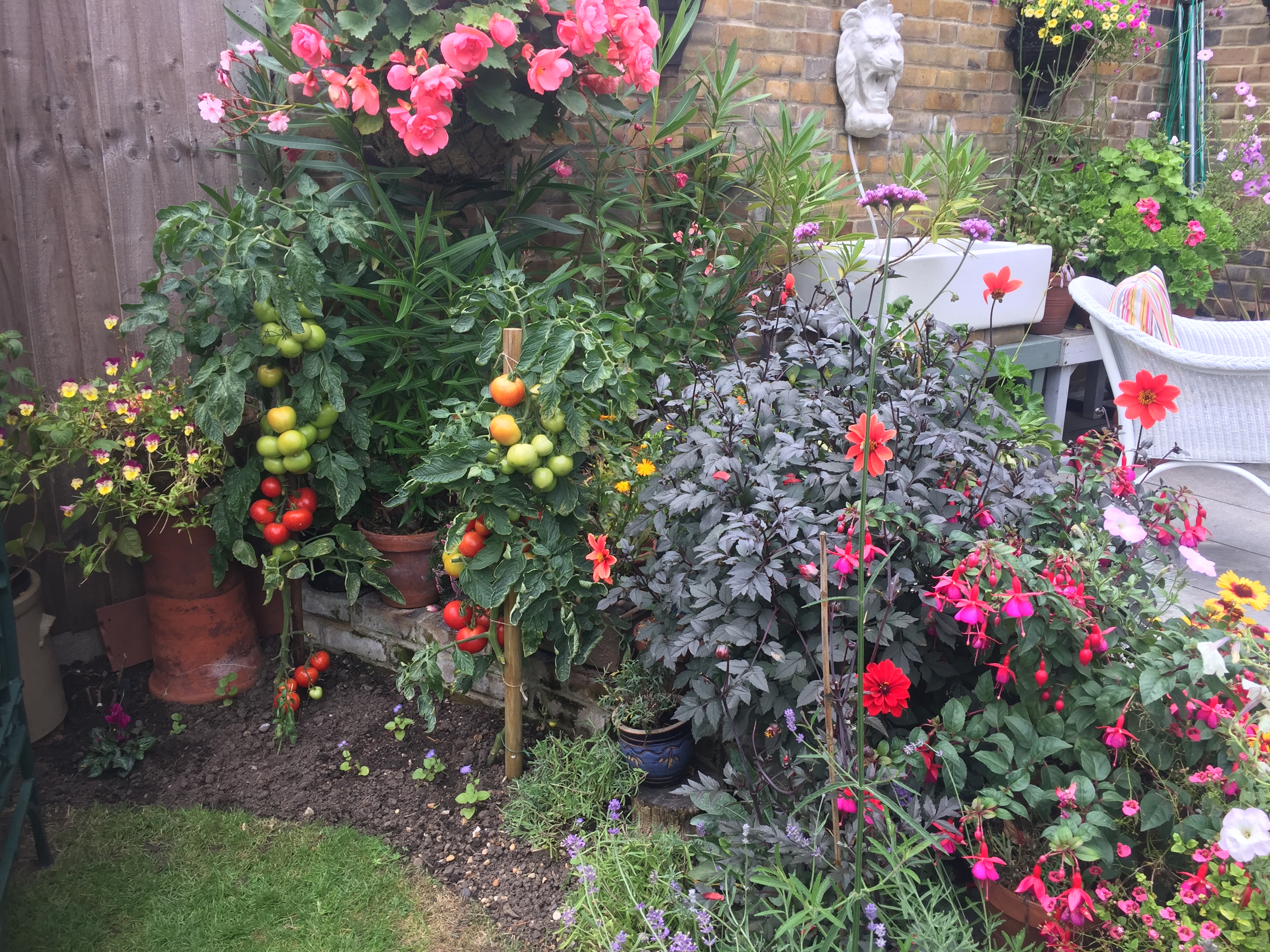
Storm Ellen did her best to scupper my chances of a substantial tomato haul, but thanks to a tendency I have to cram things close together in the ground – I can’t get over how much space I have! –  the plants and their stakes more or less held each other up. In spite of many hours agonising over the seed catalogues and subsequent cossetting of seedlings, I have to report that the finest and most prolific tomato crop on my patch this year comes from the gift of a neighbour.  In the early days of lockdown she realised that she wouldn’t be able to get any seedlings from garden centres in time so she simply dried the seeds from some piccolino tomatoes she had bought at the supermarket and planted them.

Amazing results!  She shared out dozens of seedings with nearby allotments, and now I am in the happy position of trying to decide what I should do to preserve this abundant harvest.

Last year, caught out with no plan for the cherry tomatoes on the eve of a holiday, I turned to Google for help.  A combination of the words, “tomato”, “glut”, “preserve” and “easy” produced a range of solutions (literally) involving vodka.

All I had to do was pierce the tomatoes, pop them into a sterilised glass jar, add the celery salt and chillies that I didn’t have (but that doesn’t seem to have been a problem), cover with vodka and store the jar in the fridge.  I was assured that the residual vodka would be the perfect base for a Bloody Mary, and that the tomatoes would form an impressive element of any tray of canapés.  Do they ever get that far?  Do they heck!  With admirable restraint, I have enjoyed the odd tomato or two straight from the jar over many months.

As holidays are more or less out of the question in 2020, I will have some more time to think about what to do with my expected glut of tomatoes and be on hand at the right time to deal with them.  I wondered what suggestions CABAHS members might have:  what is your favourite way to preserve tomatoes?

Perhaps we can start a separate section, sharing ideas for making the most of our produce.

Melanie

Butterflies and sunflowers

SC gatekeeper and Lysimachia

Beautiful picture of Gatekeeper butterflies enjoying Sharon’s garden. Lysimachia clethroides is grown here with Anthemis “Cally Cream” near a Hydrangea Limelight in a pot.

SC Vanilla Ice

These are Sunflowers, Helianthuis debilis “Vanilla Ice” growing daintily in Sharon’s garden, producing new flowers continually as she deadheads them.