| NB: We have just heard about an RHS survey about the impact of the recent weather: RHS Climate Change Resilience: Heatwave Impact on Gardens which has to be completed by 30 September 2026. |
Following on from Pat’s ’10 Jobs…’ tips on coping with drought and heat, we asked CABAHS members to share which plants had proved to be ‘winners’ and ‘losers’ in the recent extreme weather, to help us all make climate-change-appropriate choices in the future.
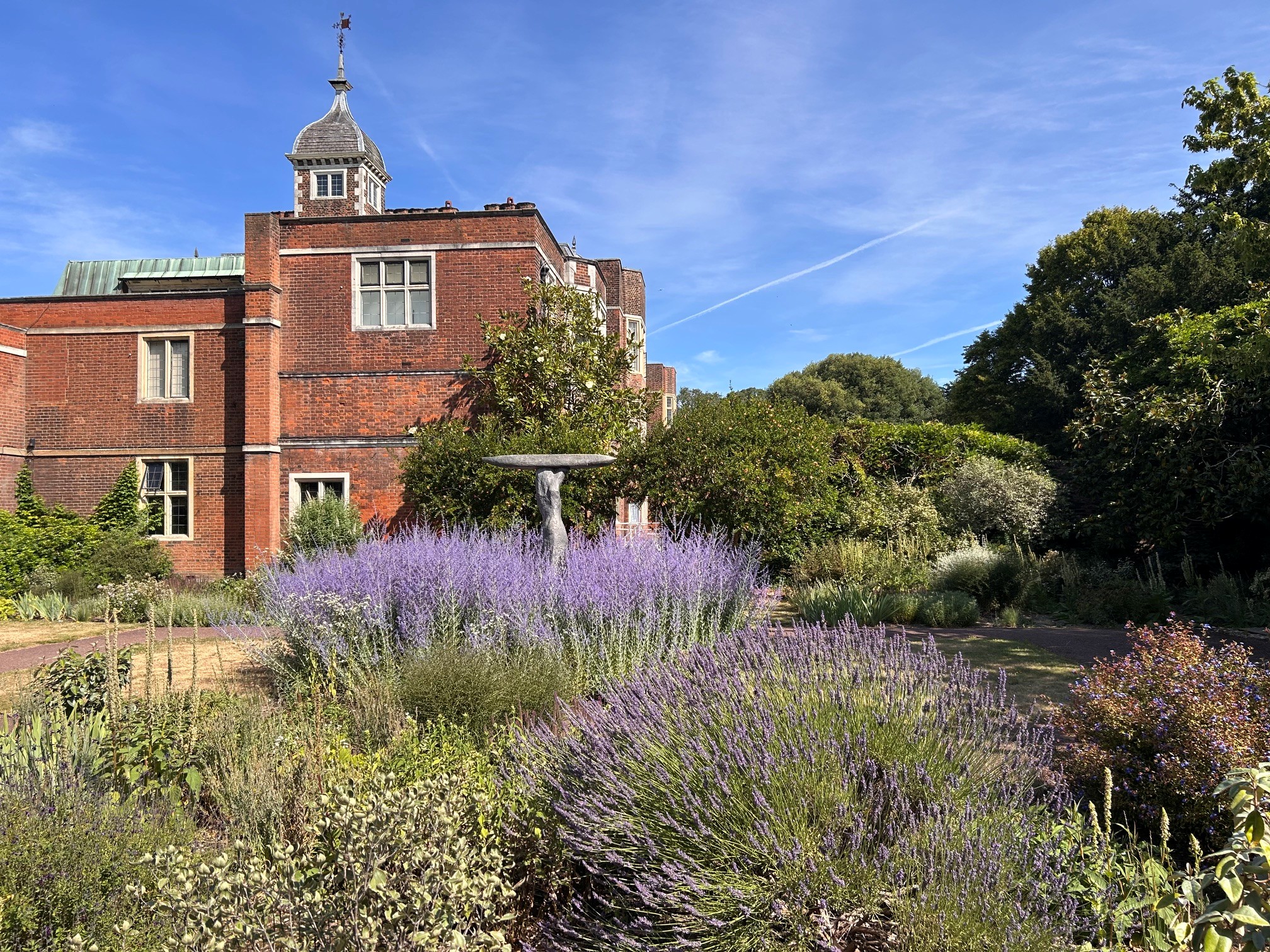
A summary: After the spring AND summer drought of 2025 (with four of the previous five years being the warmest on record), we experienced a cold November and a wet winter (the 4th wettest on record for Southern England), with the addition of unusually low light levels in early spring. We have now had extreme drought (no rain at all since early June and counting – and there were long dry periods before that too) and, so far, several heatwaves (which is counted as three or more consecutive days over 28 degrees in London – all have been in the 30s). Of course, the heatwaves may have counted six times (starting on 22 May, 19 June, 4 July, 28 July, 2 August and 9 August respectively) but the weather hasn’t exactly cooled off much in between. In addition, Thames Water declared a hosepipe ban beginning on 23 July (though watering cans and drip-feed systems are not banned) and there’s precious little rain showing in the forecast even now.
Working out what to grow in these changing circumstances can be complicated, as climate change brings extremes in all directions – hotter, drier summers but also wetter winters, in recent experience. Finding plants that can cope with both sets of conditions can be challenging – it’s not just a matter of ‘drought tolerance’. For instance, plants that love the high temperatures and tropical nights might only be coping because they’re well-watered or in some shade. Other plants that can cope in full hot sun and dry ground might not be reliably hardy in a cold winter, or rot in waterlogged ground. It’s complicated!
Bear all the above in mind when seeing what members are reporting as thriving – some will have been watered, even if minimally, others will not. Being in a pot, or in the ground, and the age / size / overall health of the plants will all affect how they cope. There are some surprises too – drought-tolerant plants that have keeled over and moisture-lovers that are proving to enjoy a holiday in the desert after all!
Losers
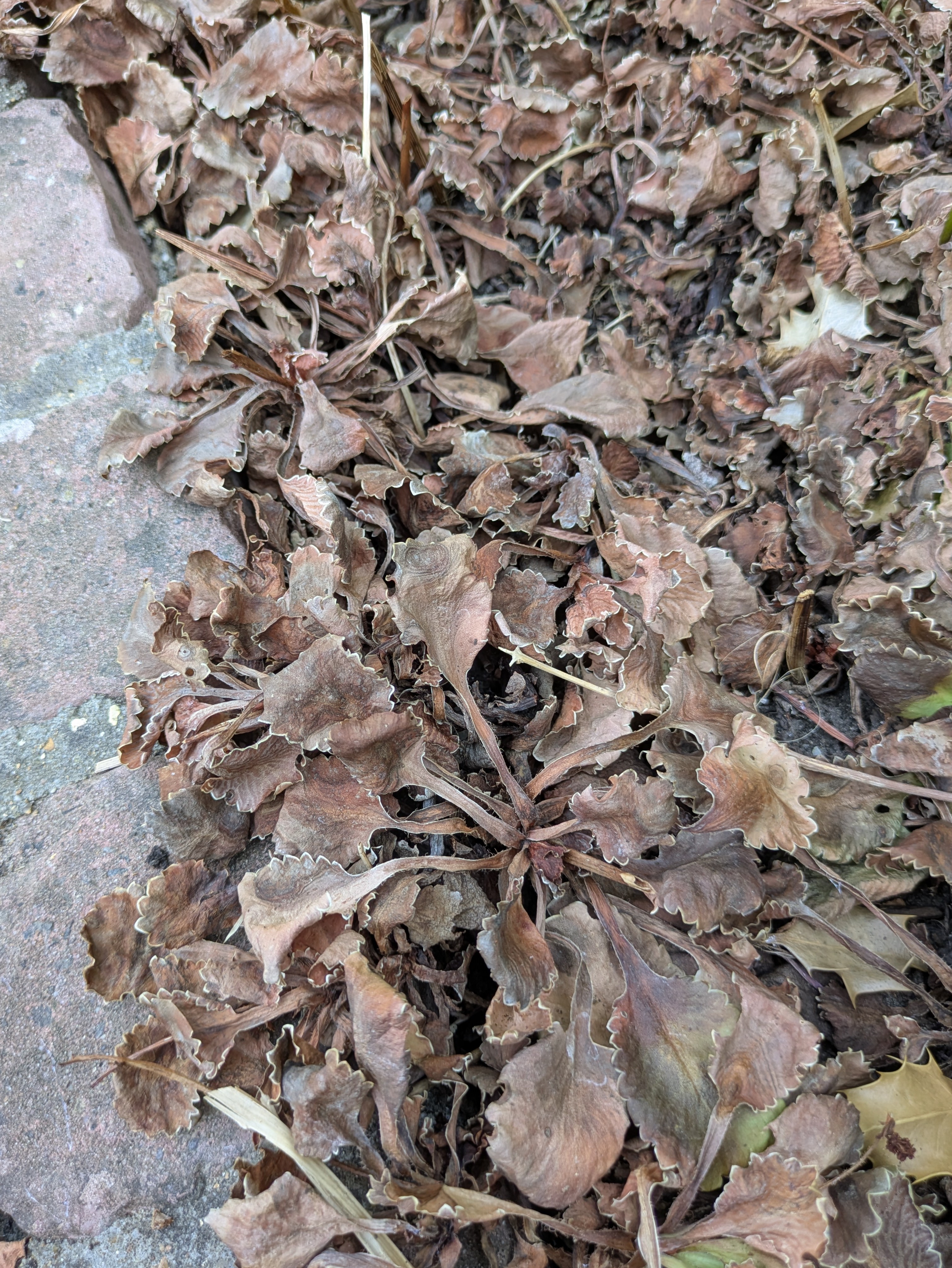
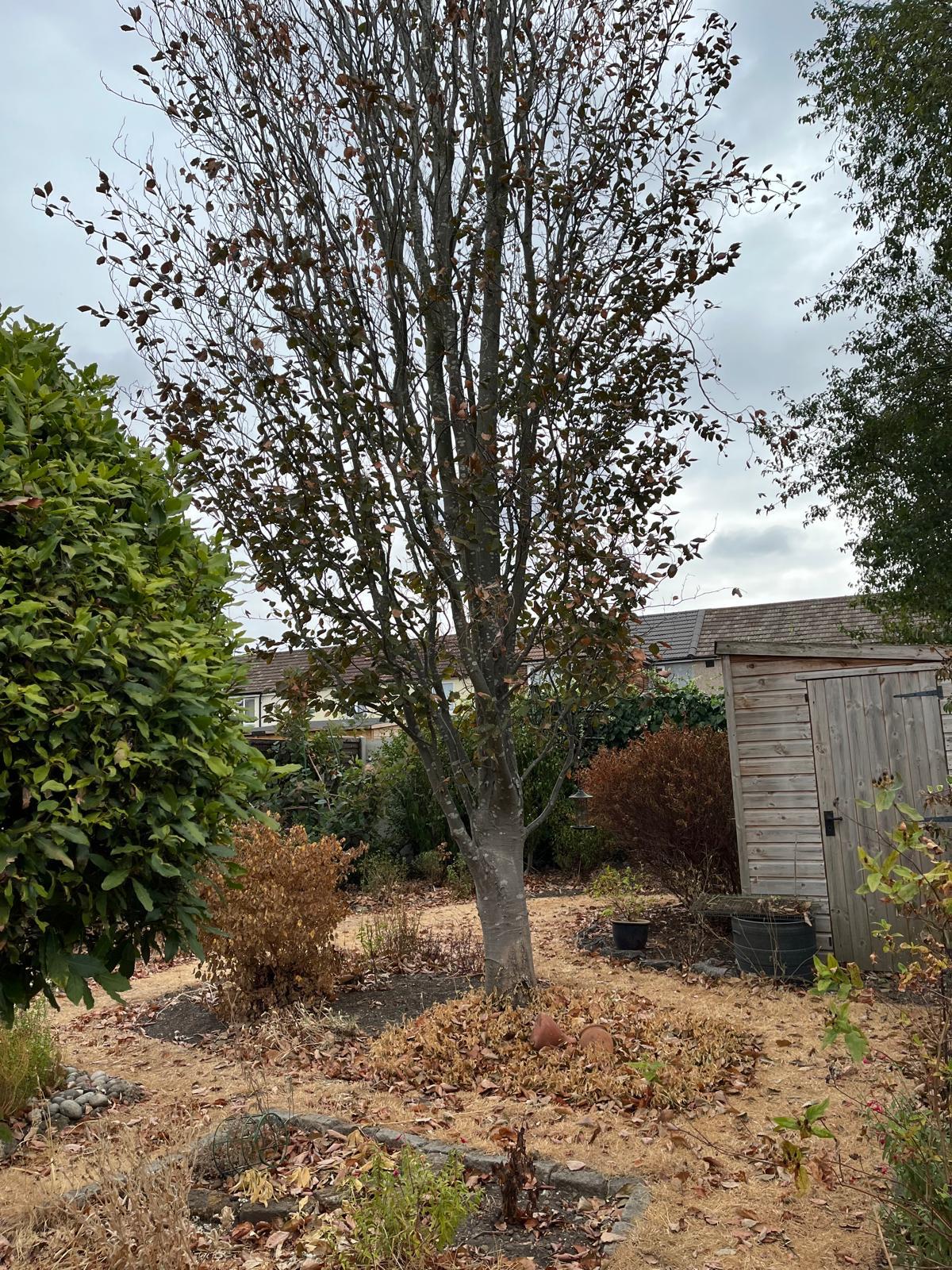
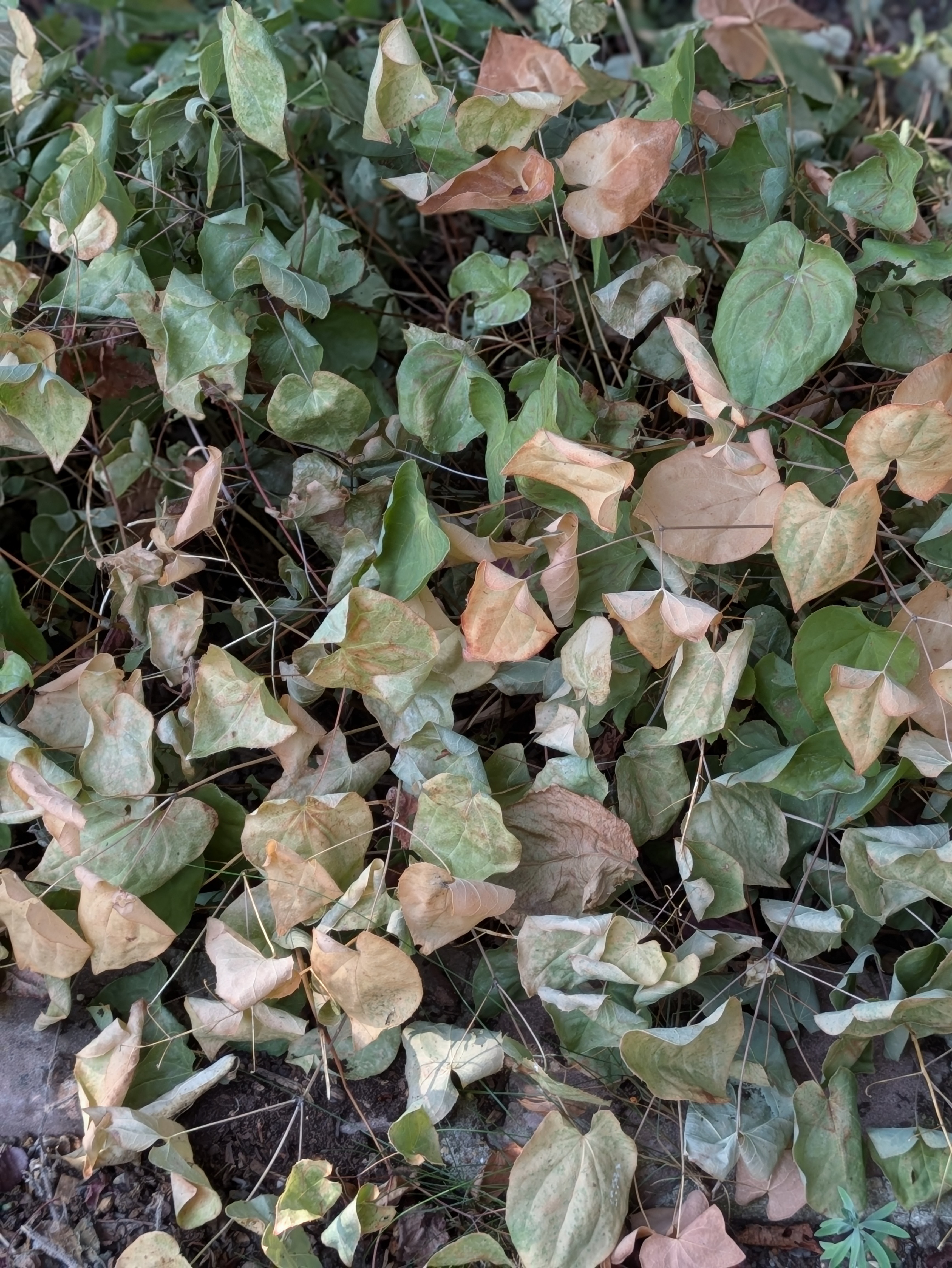
Fagus sylvatica f. purpurea (copper beech) is struggling and even resilient Epimedium is crispy
Unsurprisingly, most members reporting on the season’s ‘losers’ didn’t send photographs (it’s pretty heartbreaking), but here is the list:
Nobody’s honeysuckles (Lonicera) are doing well, being woodland edge plants, and Terry’s lovely established copper beech is really suffering.
Viv’s ‘very disappointing surprises’:
Rudbeckias have wilted in the sun & cannot cope without watering; Hydrangeas – even when grown in the shade – flowered well but cannot cope without watering. The worst disaster has been Sambucus nigra ‘Black Lace’: a small tree that has completely wilted throughout whole plant despite occasional bucket of water.
Sue’s ‘losers’:
Forsythia – this is as tough as old boots normally, both bushes are long established, but are struggling badly this year. Also: weeds! This really surprised me, I thought they would carry on regardless but even dandelions and green alkanet have failed! I’m guessing the seeds are lying dormant for a nasty onslaught as soon as any significant rain arrives…
Ali’s ‘losers’:
London Pride (Saxifraga x urbium) always suffers in drought, and copes best in my garden in shade, but the relentlessness and strength of this year’s sun, even when only for an hour or so a day, has scorched them beyond redemption.
Well-established Salvia ‘Amistad’ plants have wilted horribly without watering. They will survive but I was surprised . Ditto the Epimediums which are usually incredibly tolerant of everything but crispy this year.
Saddest loser (hopefully not a permanent loss but I can’t be sure): an established Eucryphia x nymansensis ‘Nymansay’ (planted in 2021 and absolutely thriving until now) is worryingly crispy top to bottom.
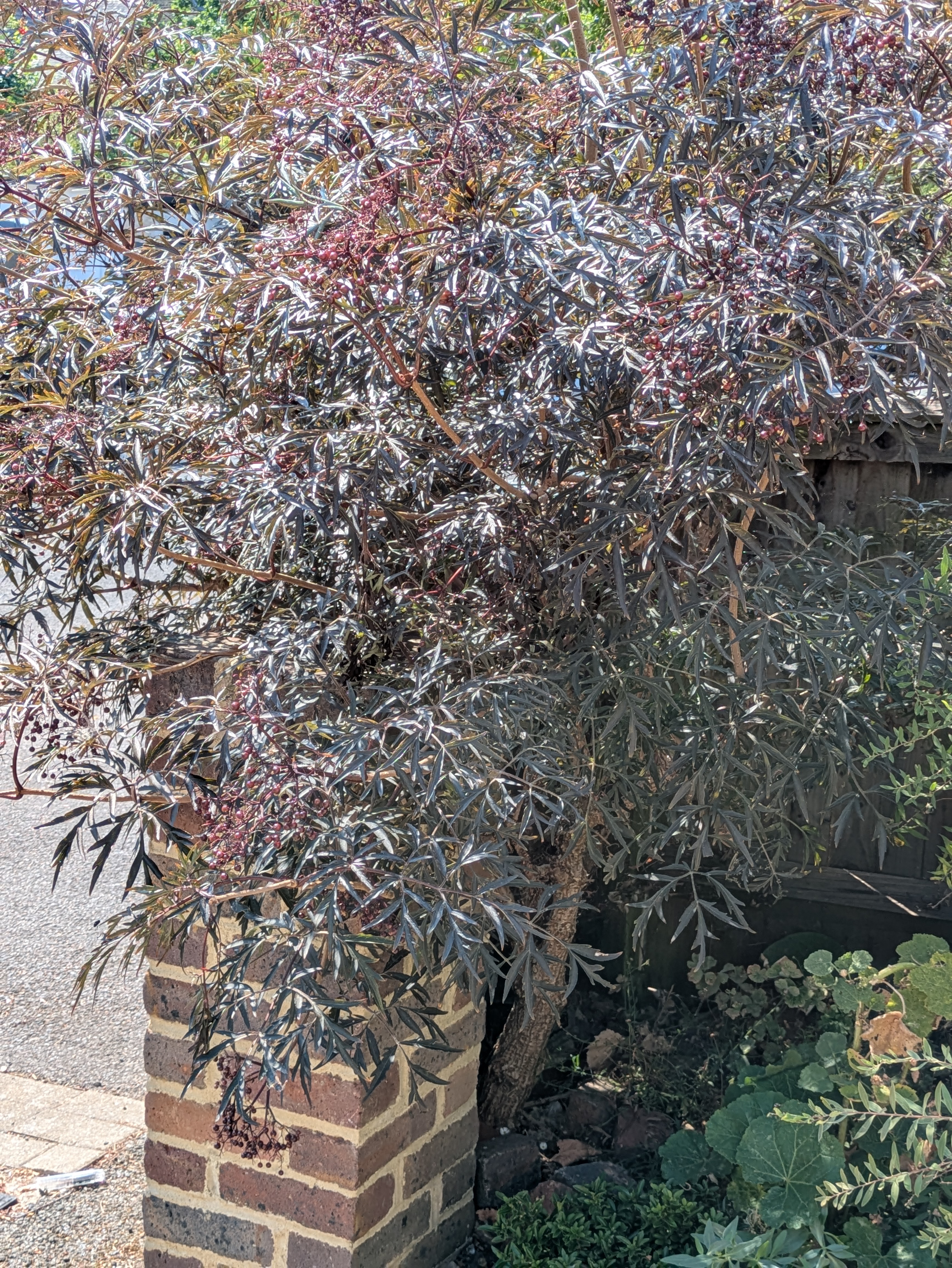
But in contrast to Viv, Ali’s Sambucus nigra ‘Black Lace’ is doing brilliantly on no water. Which illustrates the point that local conditions, pot or ground, and maturity / establishment of plant can make a huge difference. Or it might have broken into the mains supply…
Winners
Here’s a list of the plants that have done well in Viv’s, Pat’s, Ali’s, Terry’s, Chris’s, Val’s, Carolyn’s, Vija’s and Sue’s gardens this year (with some comments):
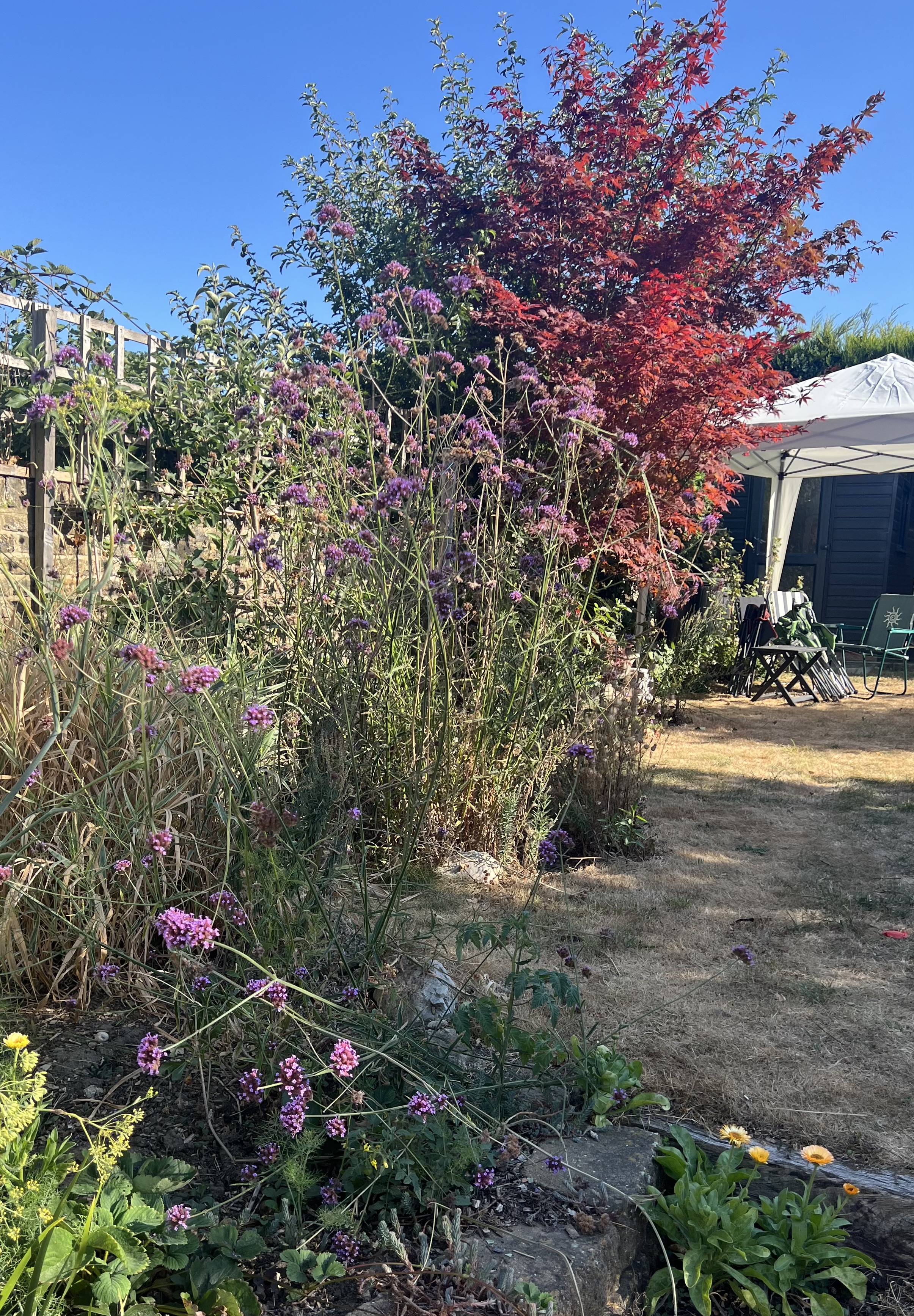
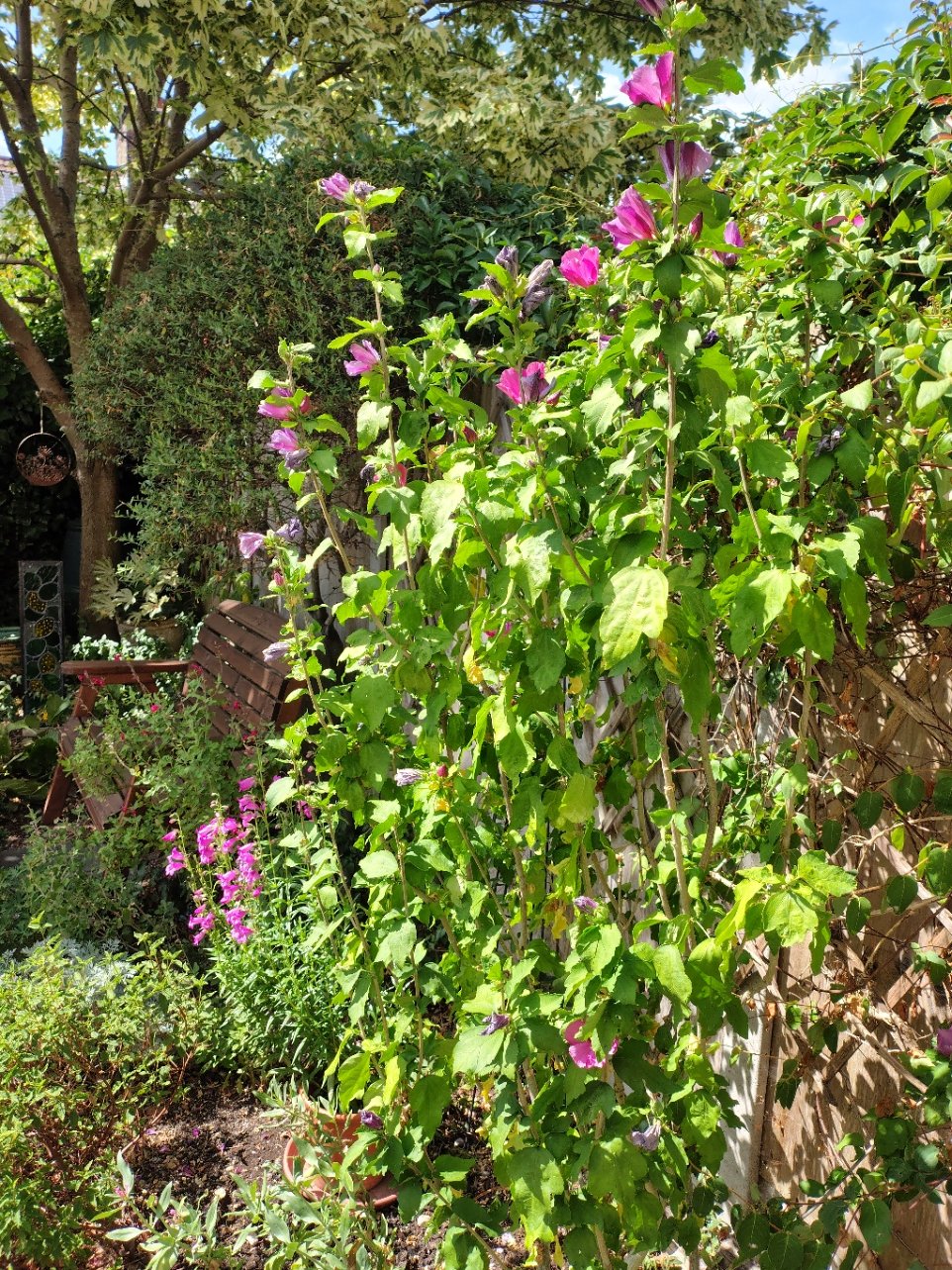
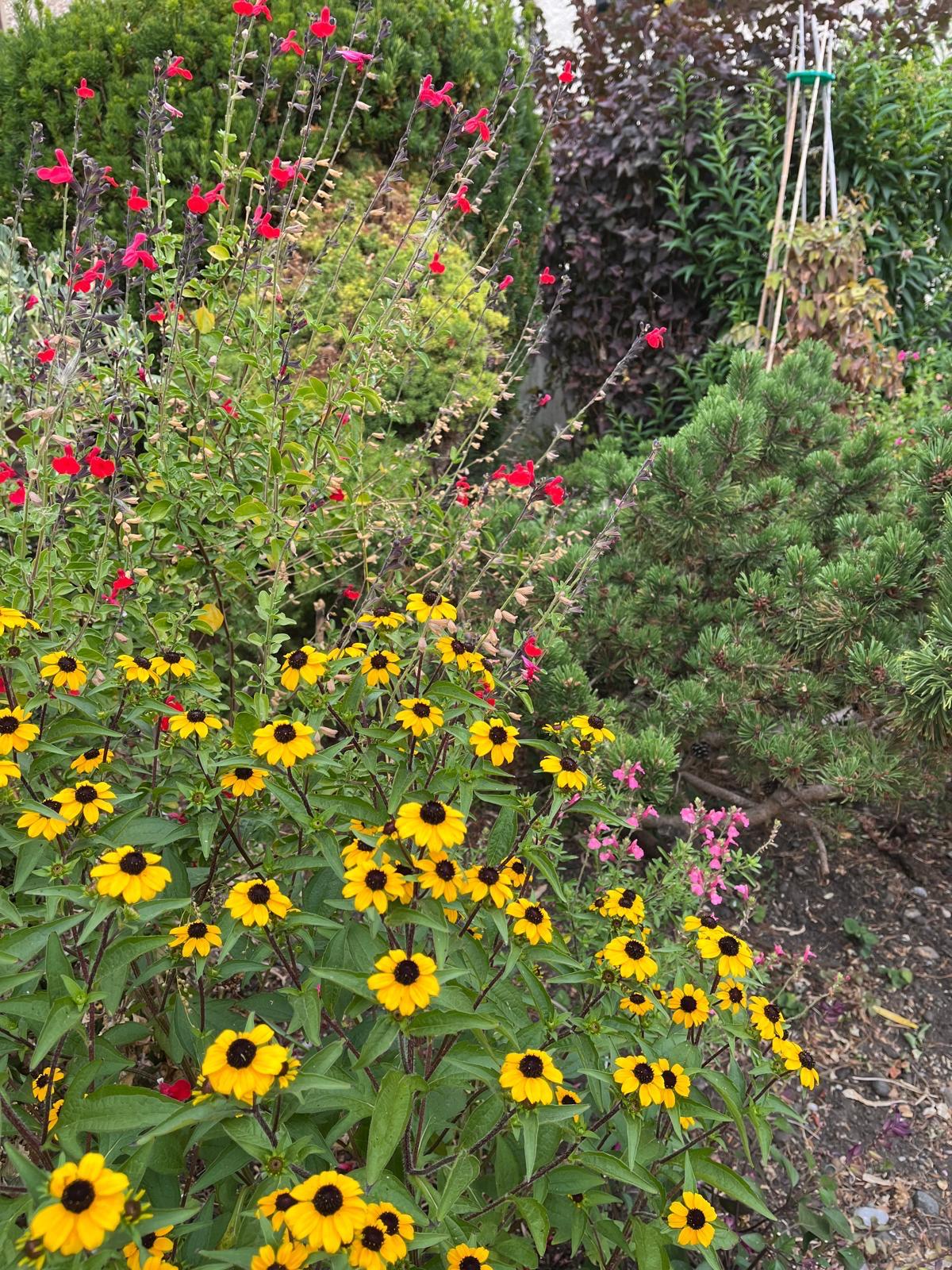
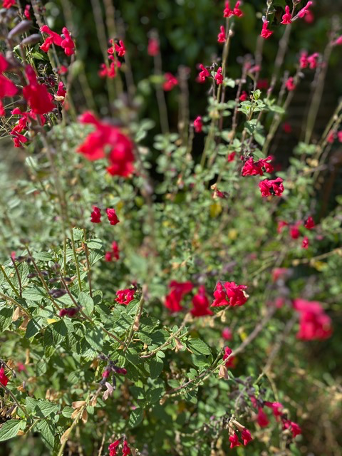
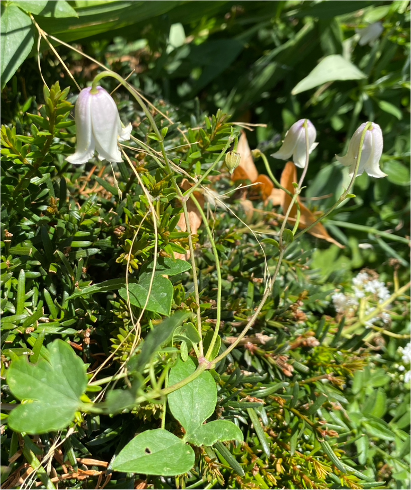
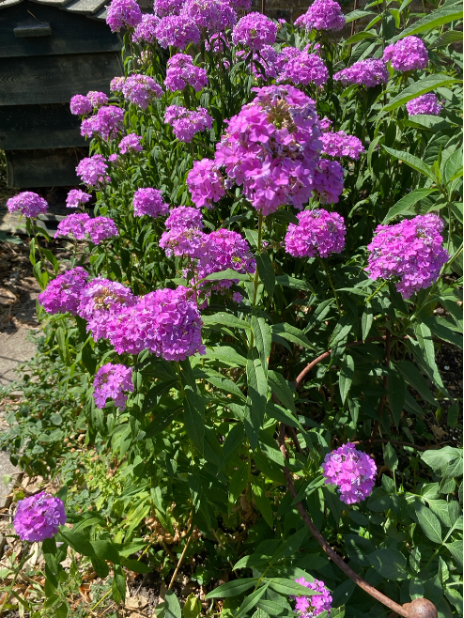
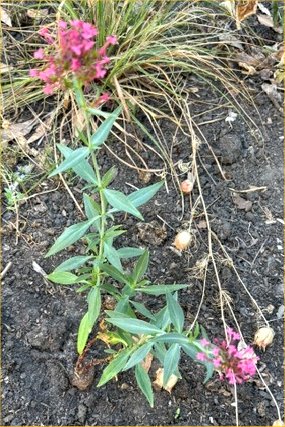
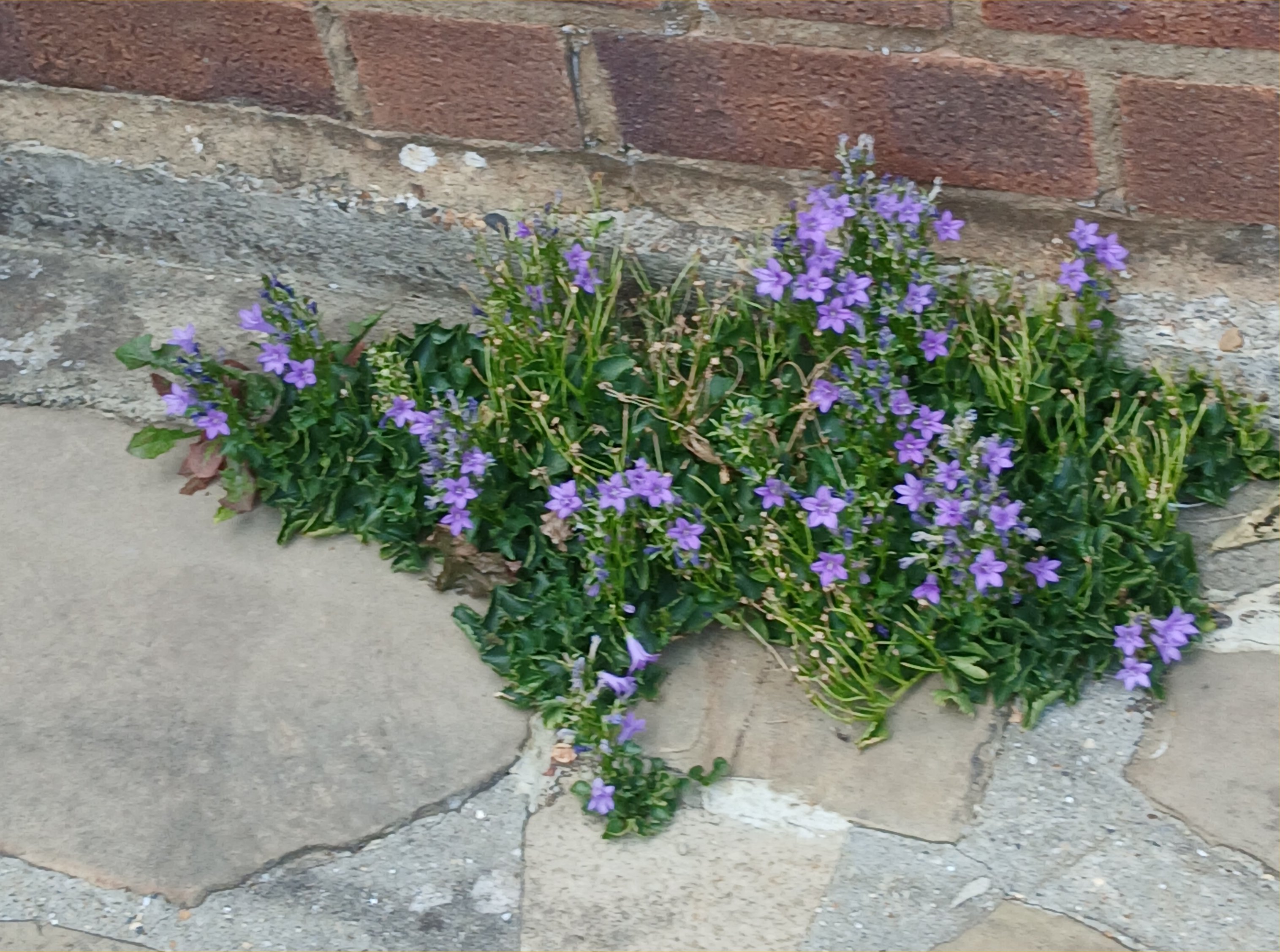
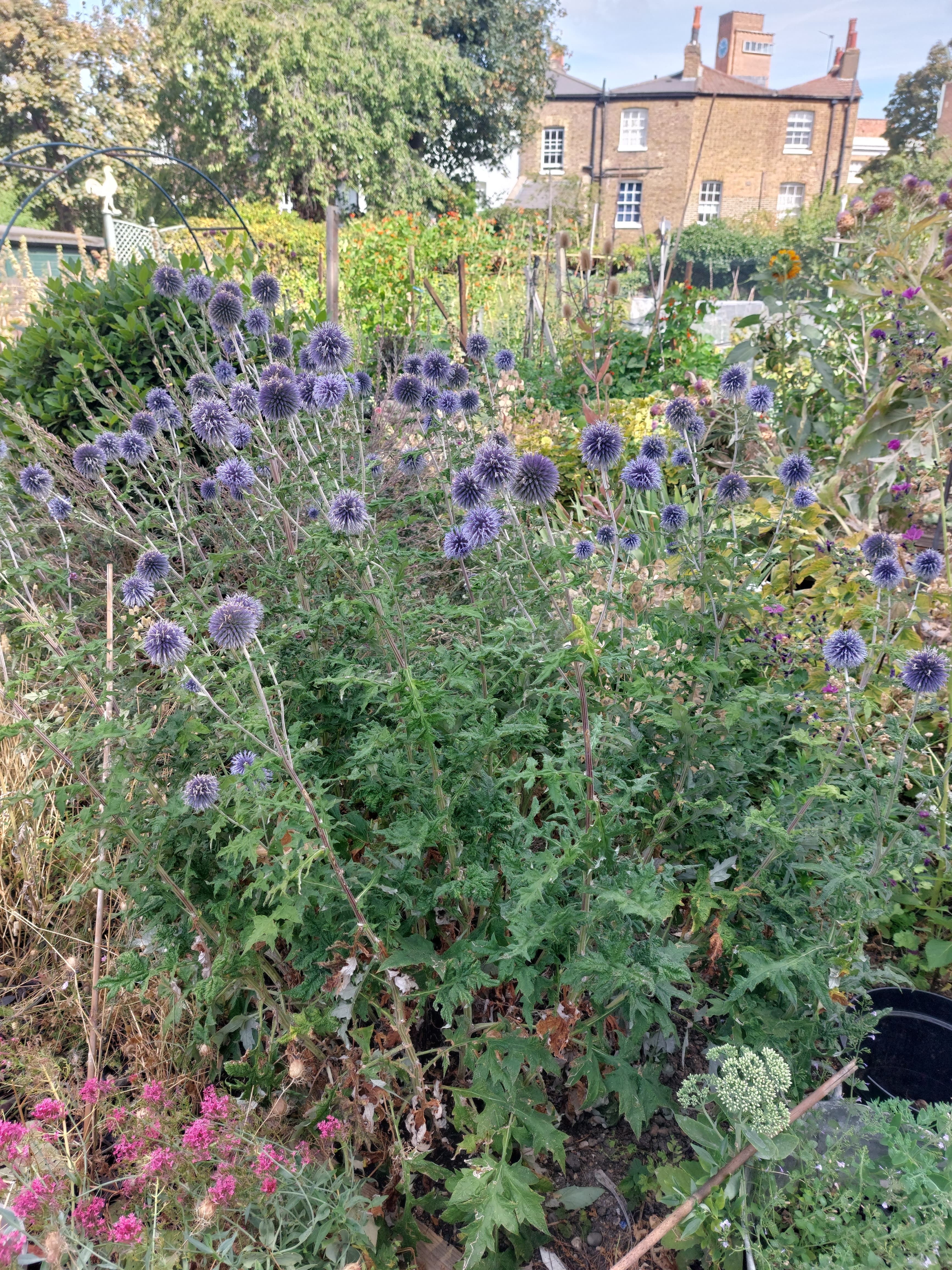
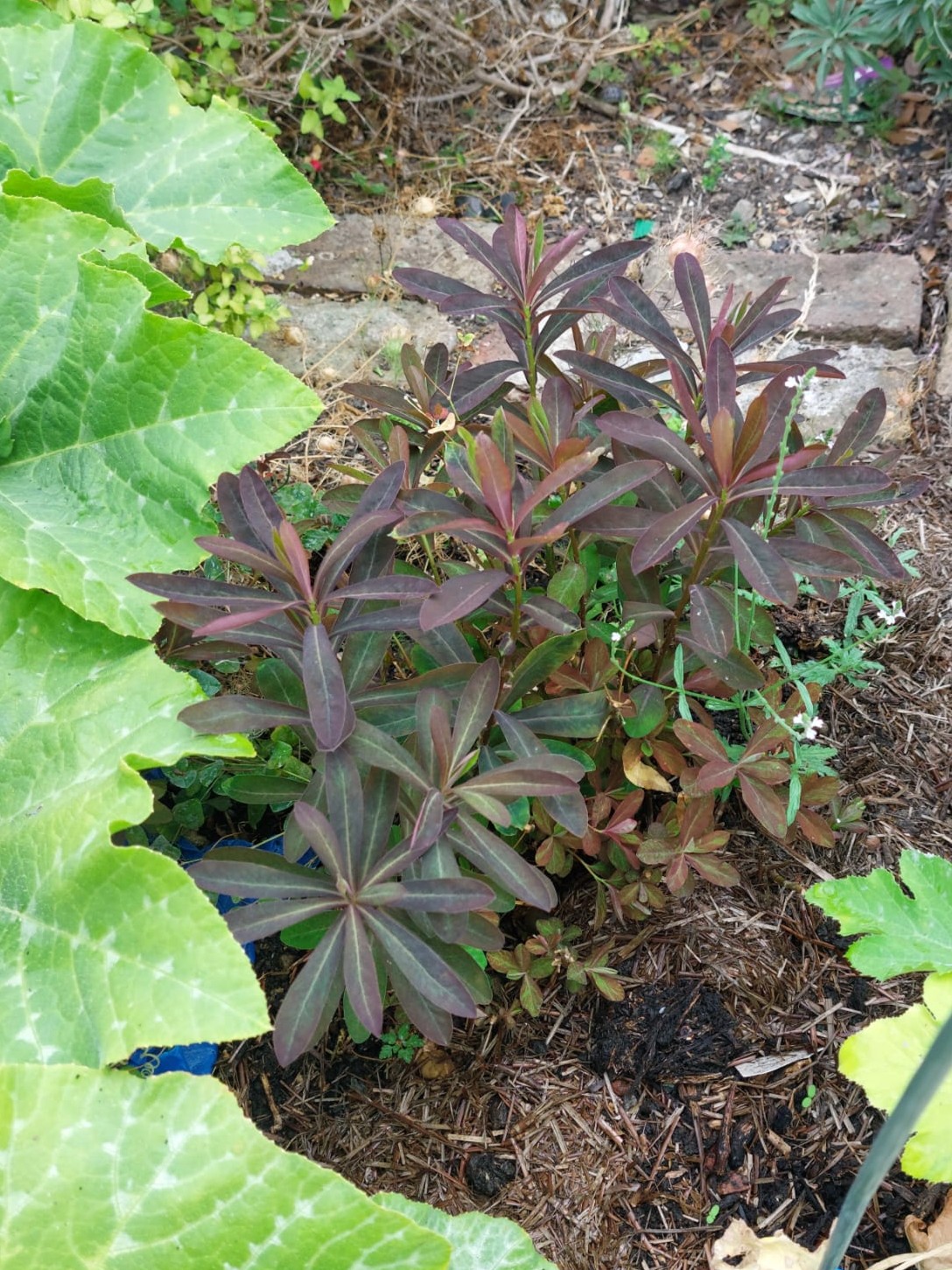
With virtually no watering at all:
- Achillea spp.
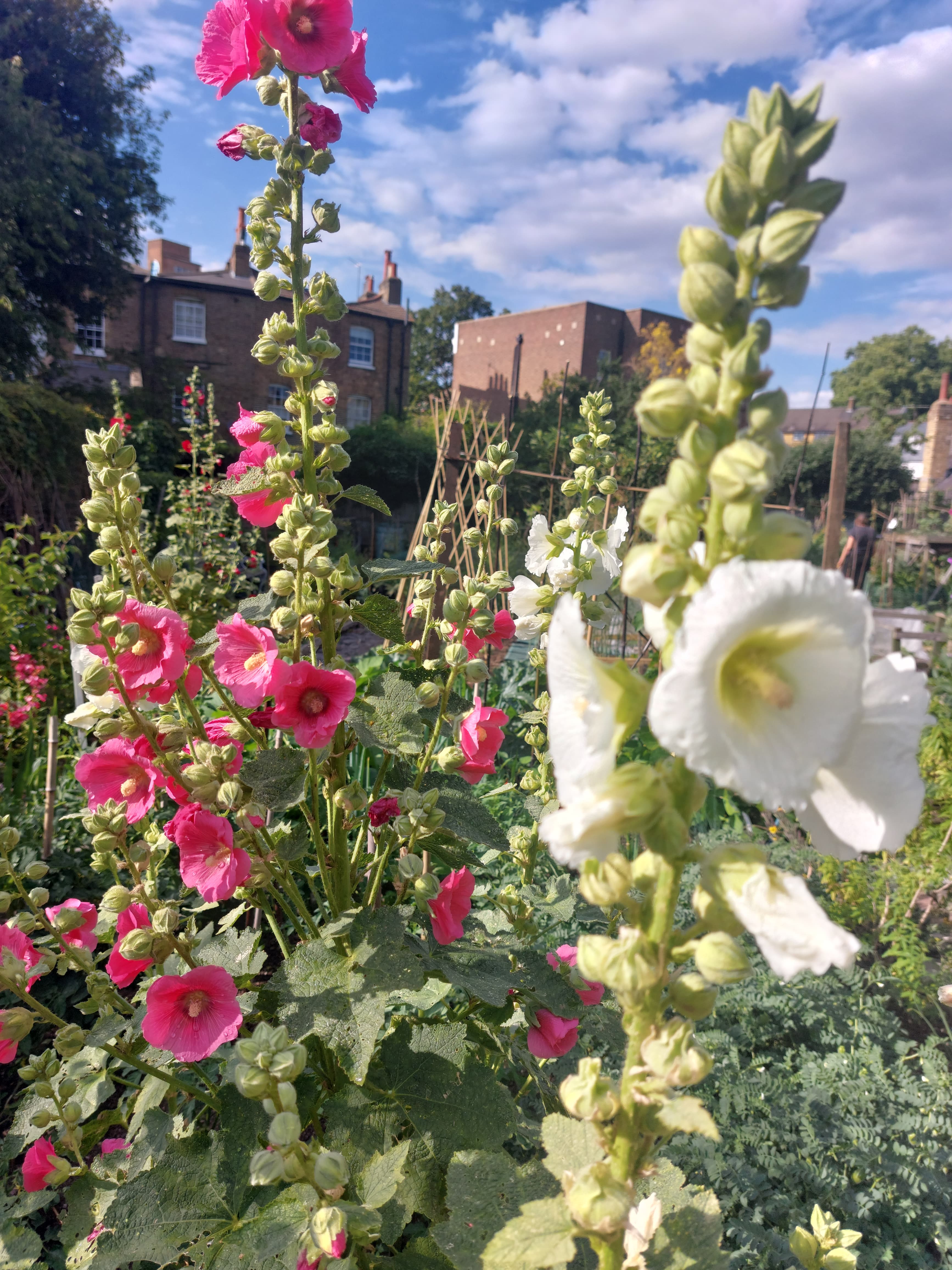
- Established hollyhocks (Althea)
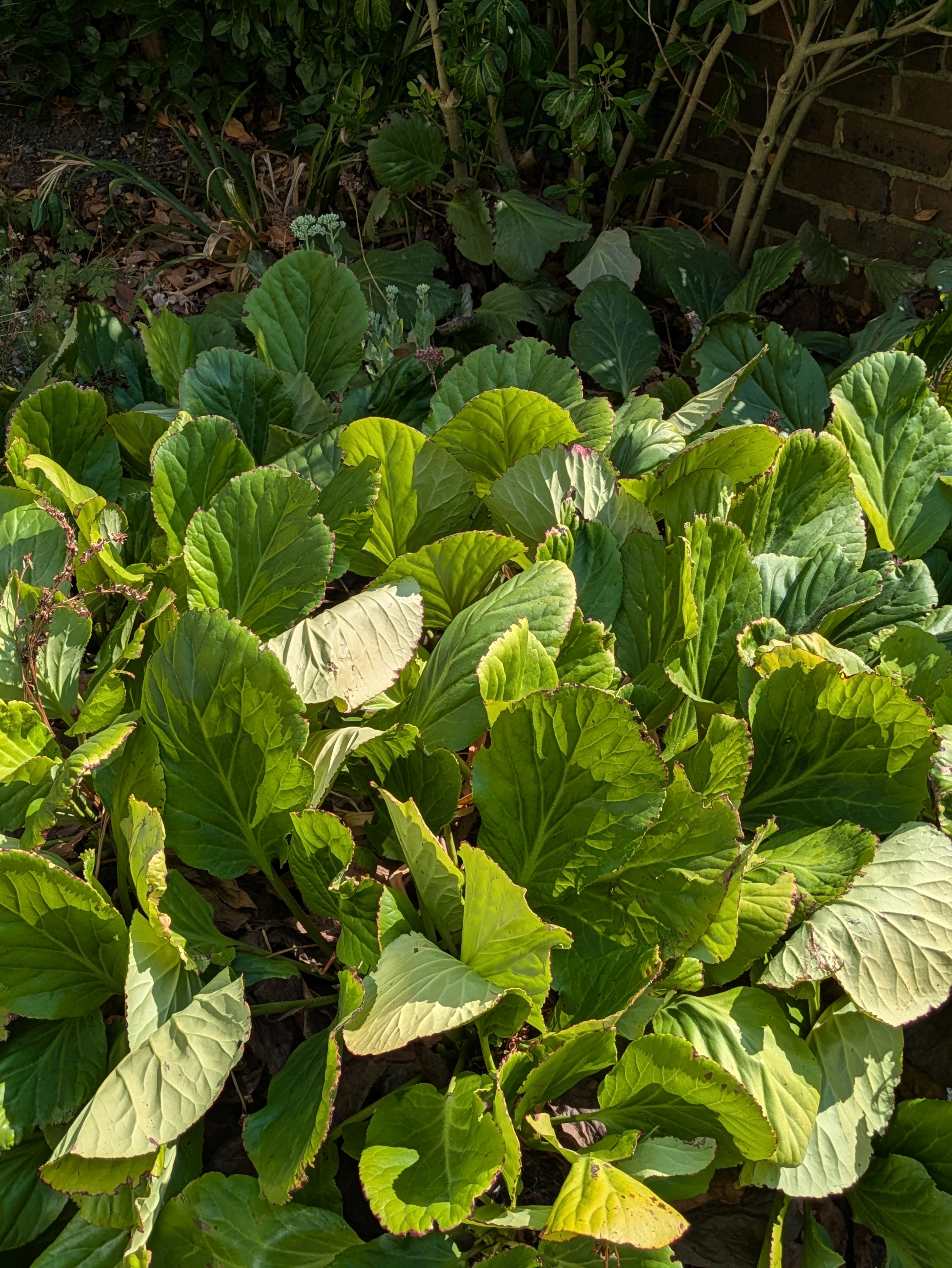
- Bergenia cordifolia (elephant’s ears)
- Calendula officinalis (pot marigold)
- Campanula
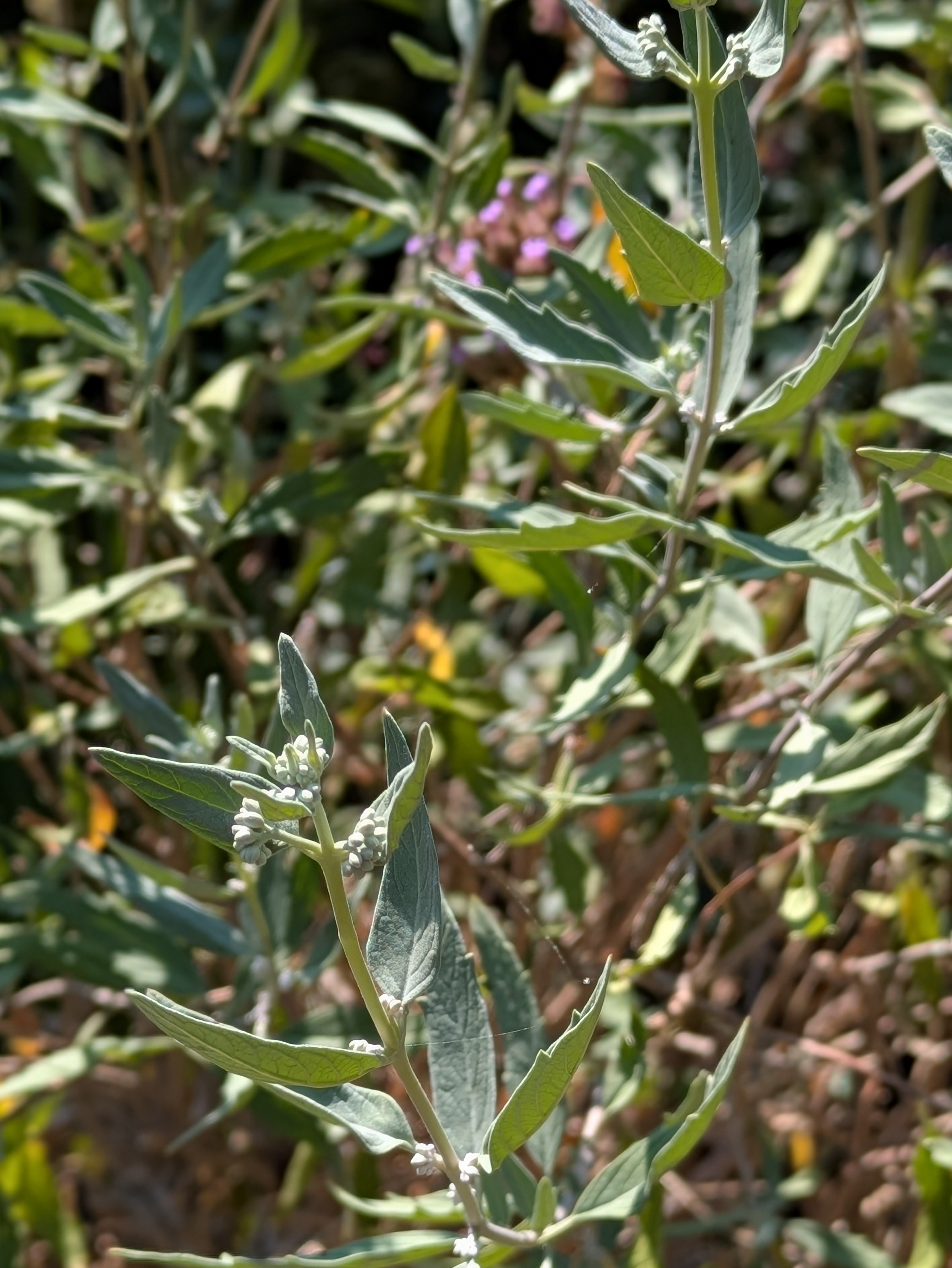
- Caryopteris
- Echinops (globe thistle)
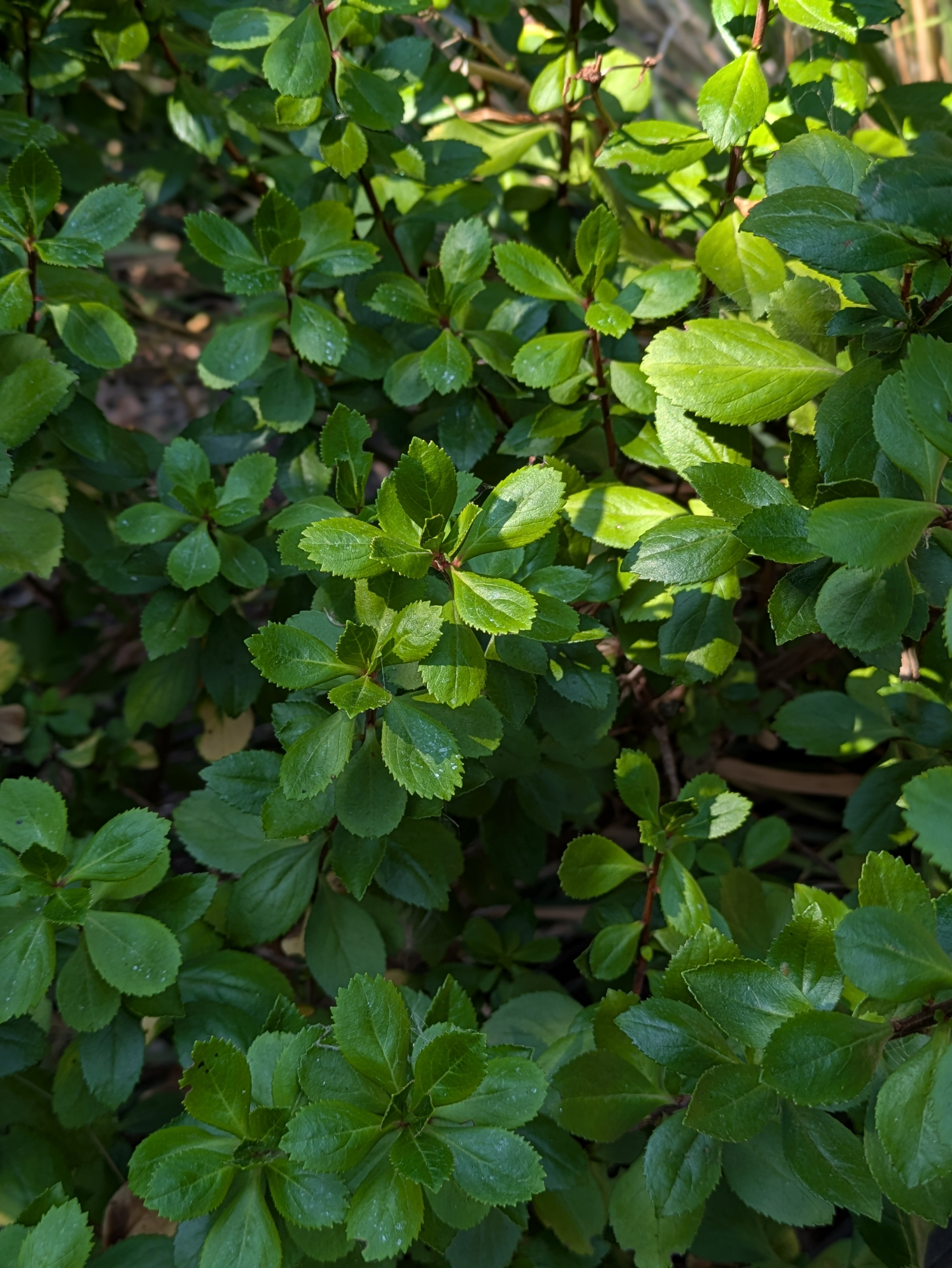
- Escallonia ‘Pride of Donard’ has no sign of any flowers but is looking the healthiest I’ve seen it in 20 years with no leaf spot for the first time EVER
- Euphorbia – most but not all species
- Hibiscus shrubs
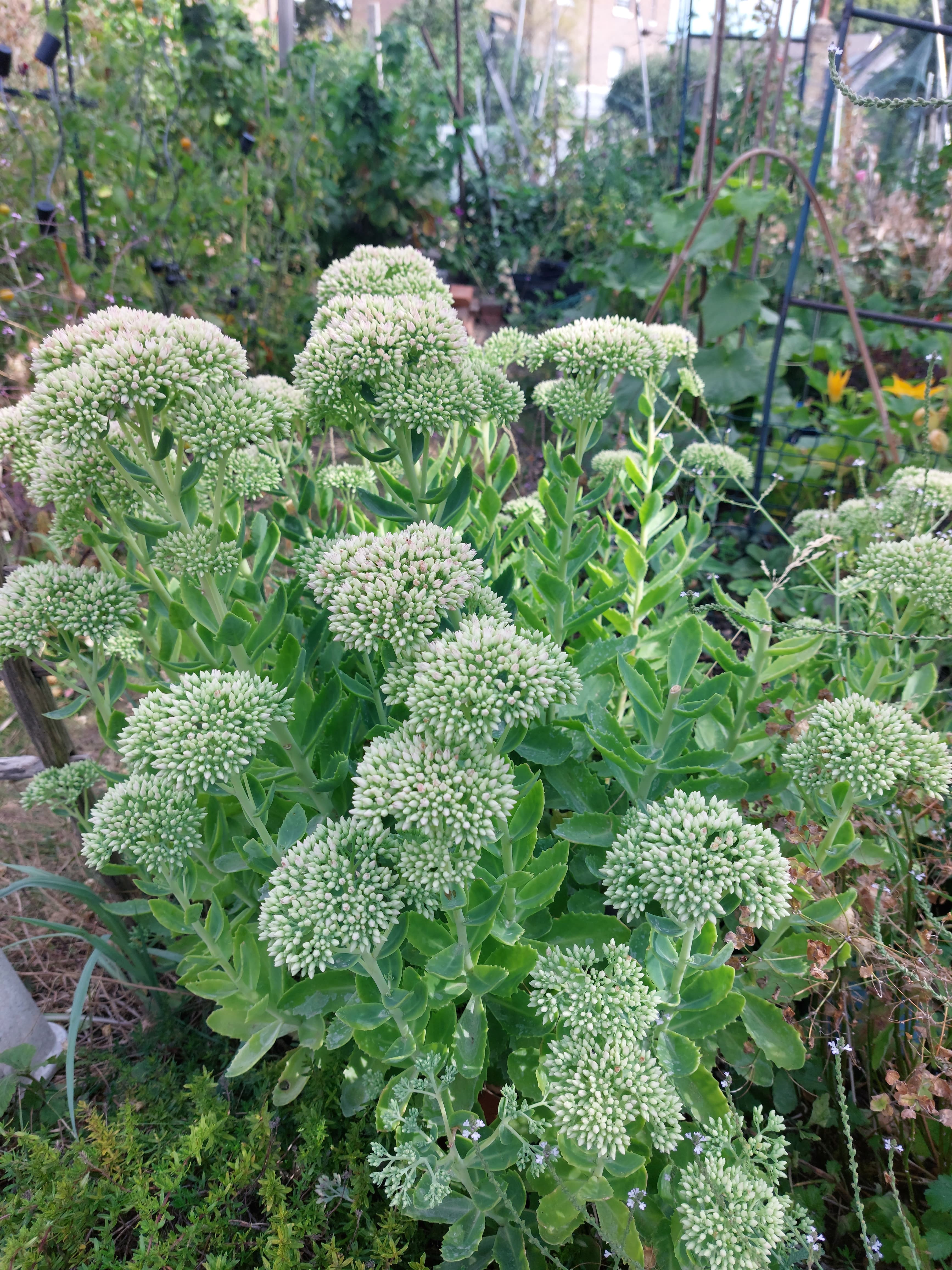
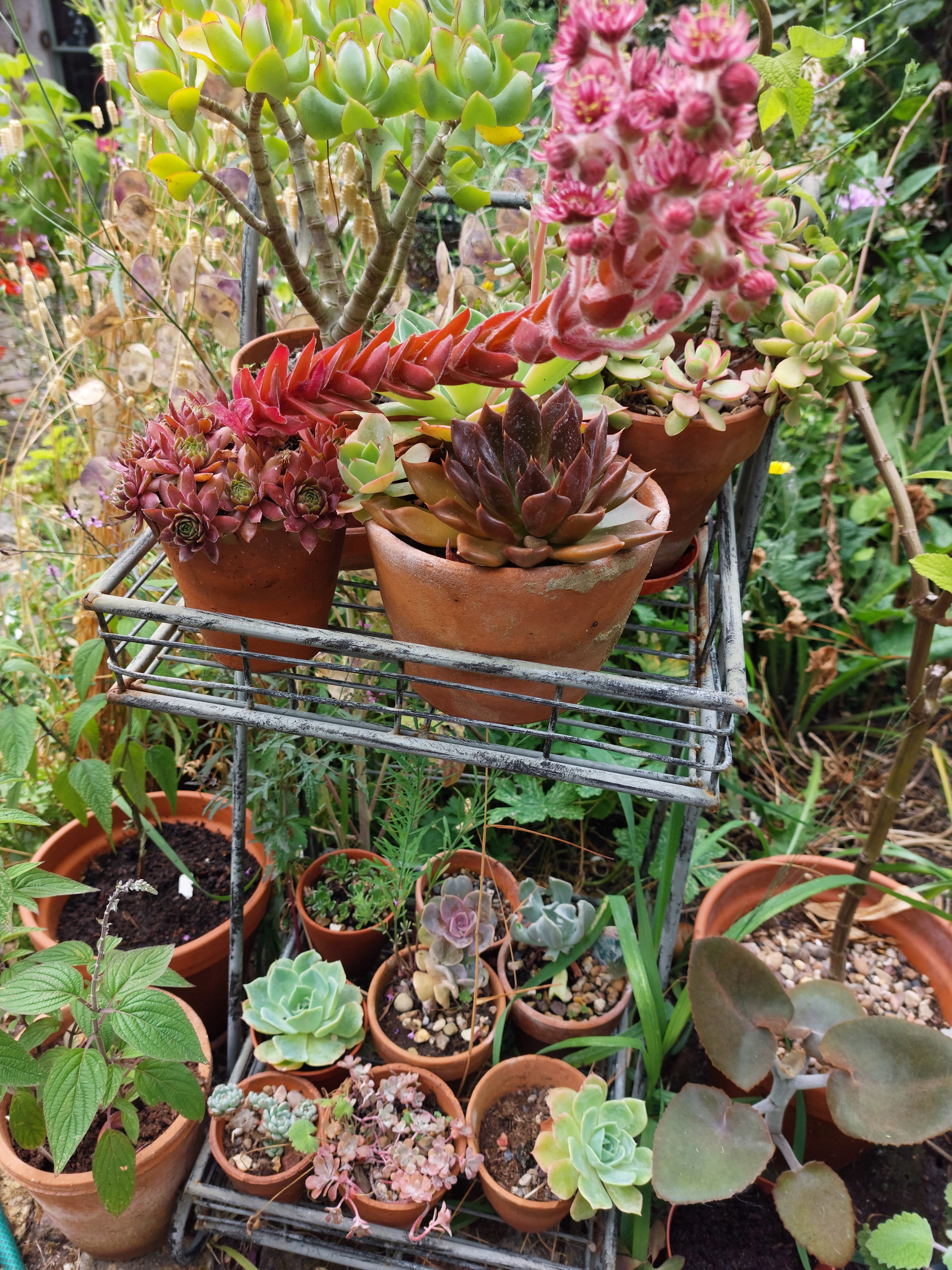
- Hylotelephium ‘Herbstfreude’ (aka ‘Autumn Joy’) and most other Hylotelephium and Sedums
- Magnolia grandiflora
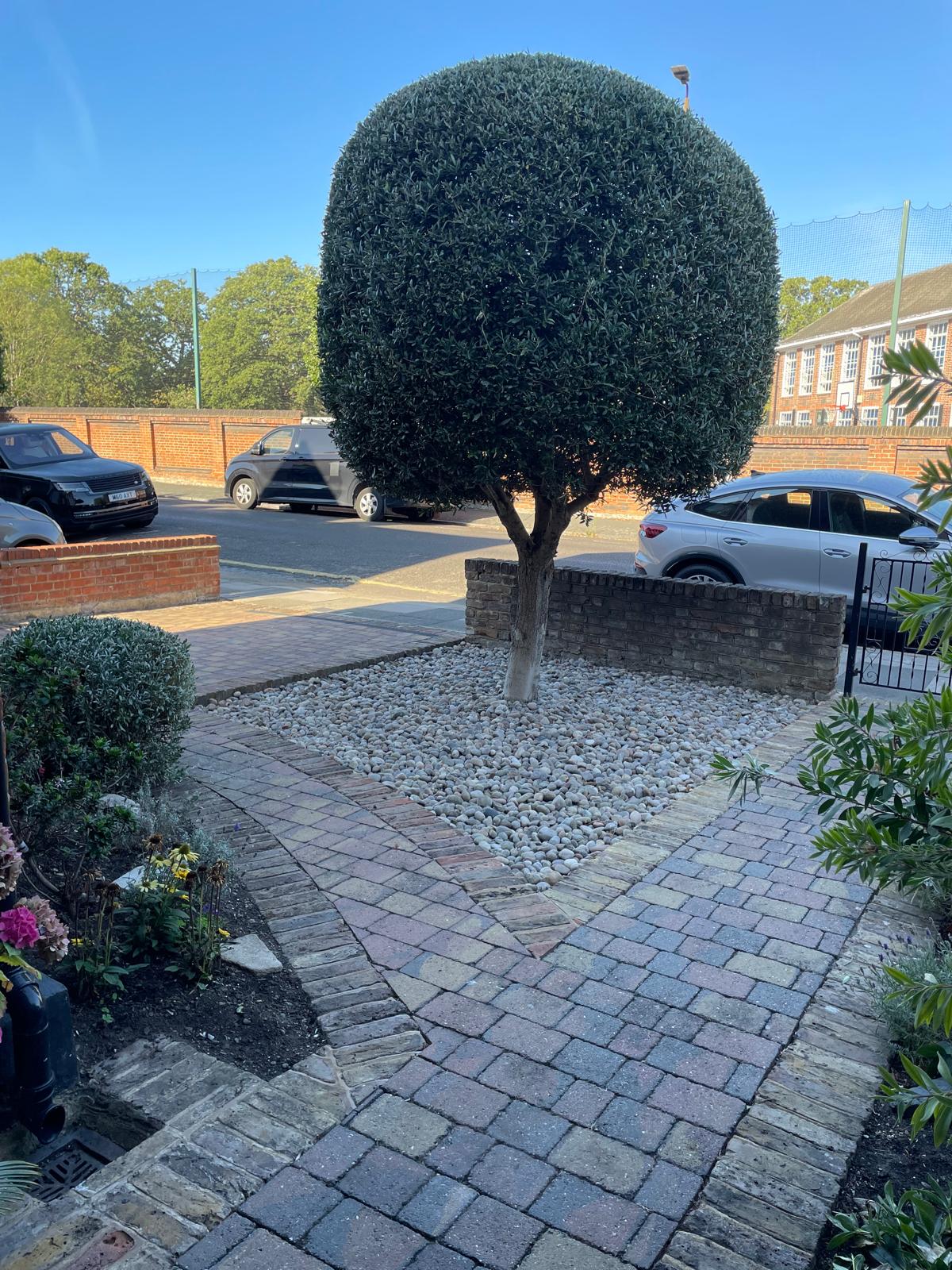
- Olea europaea (olive tree)
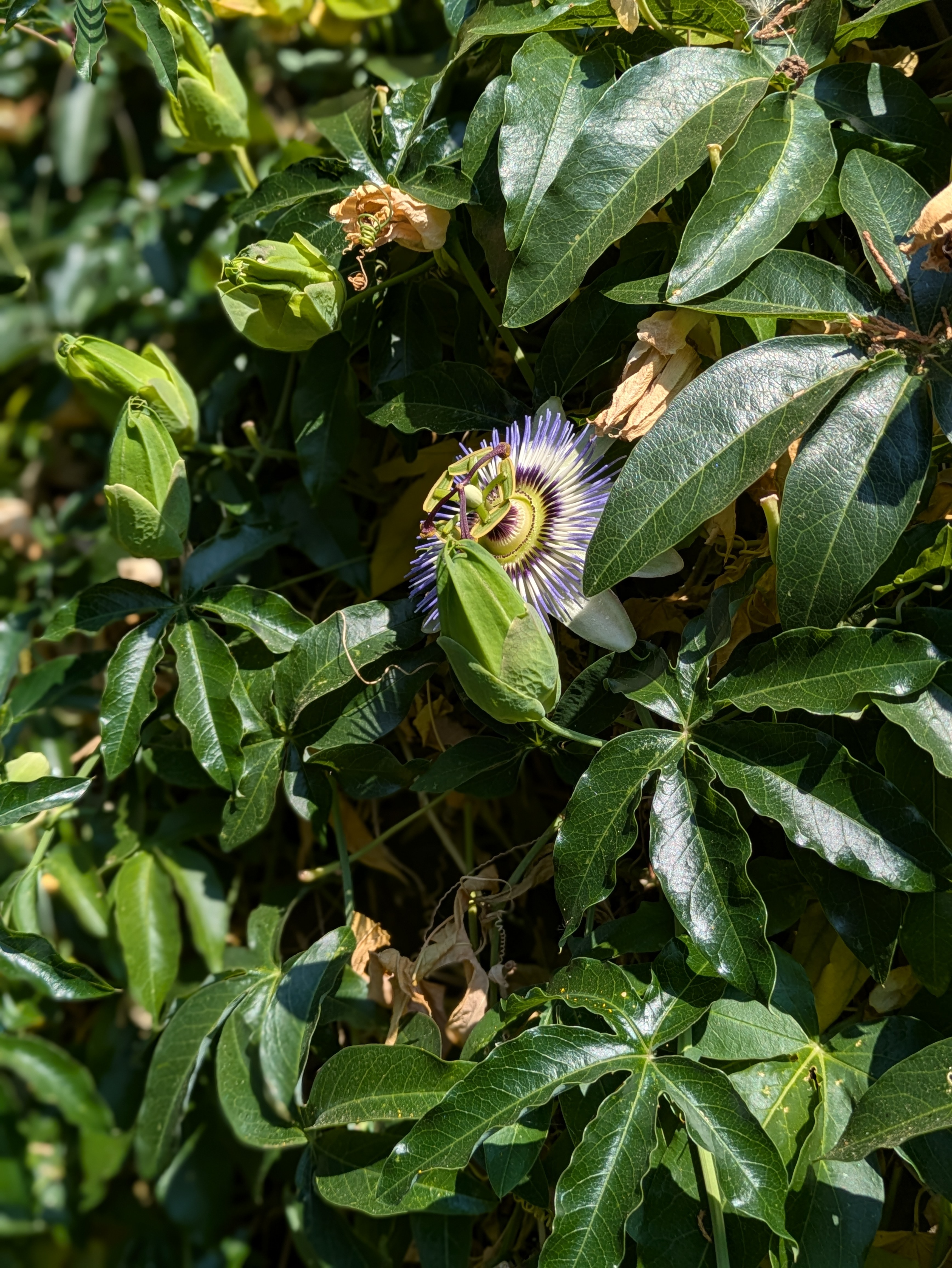
- Established Passiflora caerulea (passionflower) is still attempting world domination
- Pinus spp if established
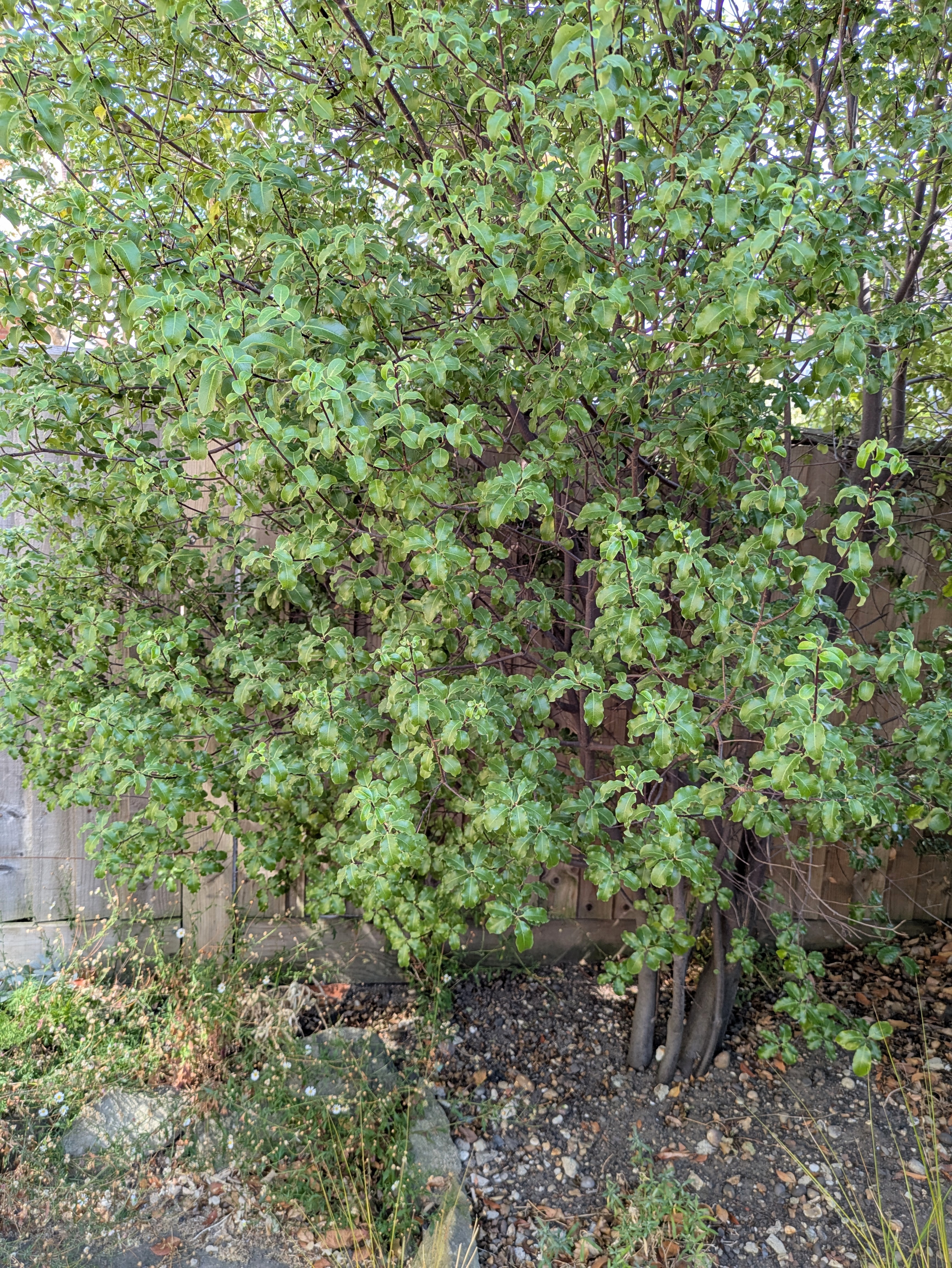
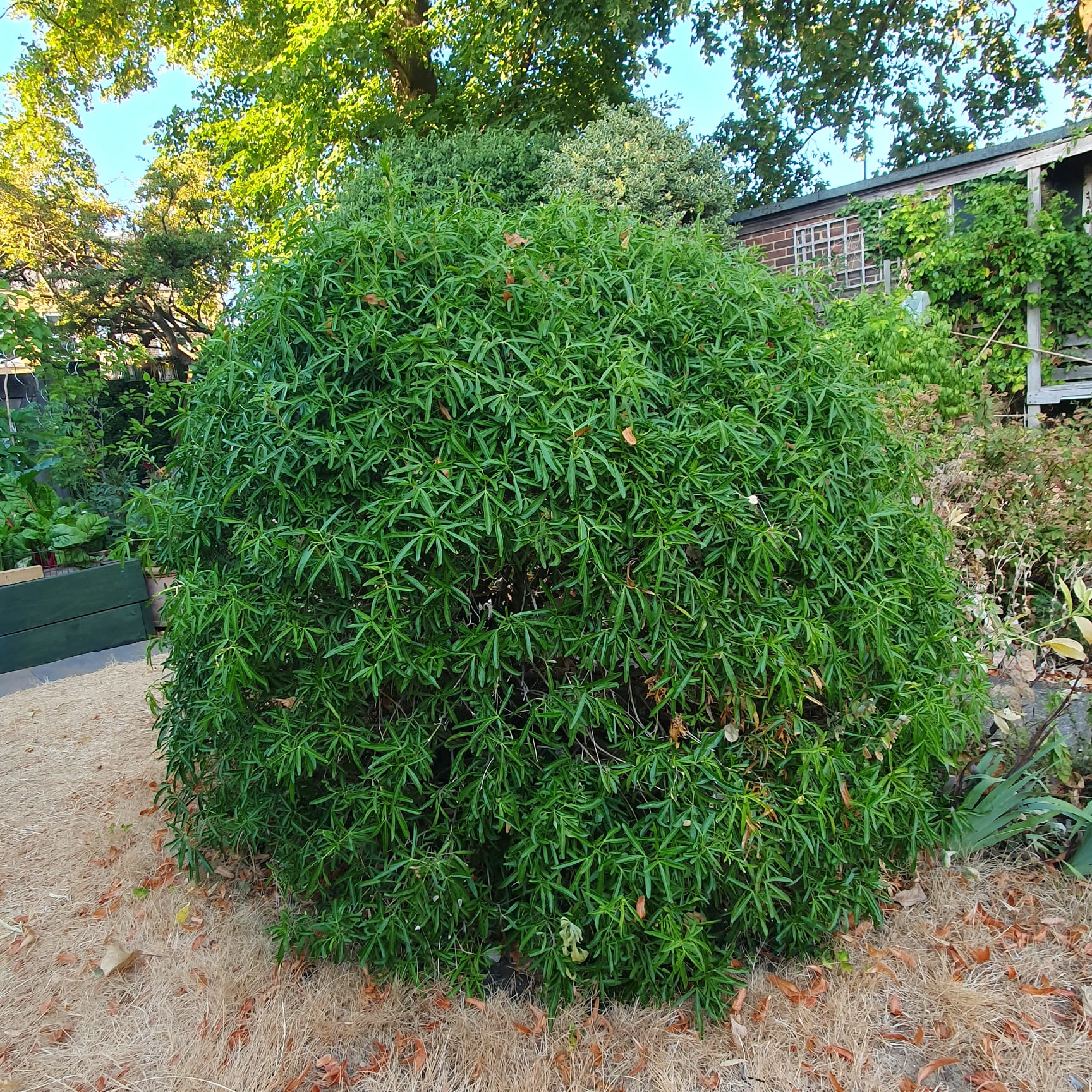
- Pittosporum tenuifolium
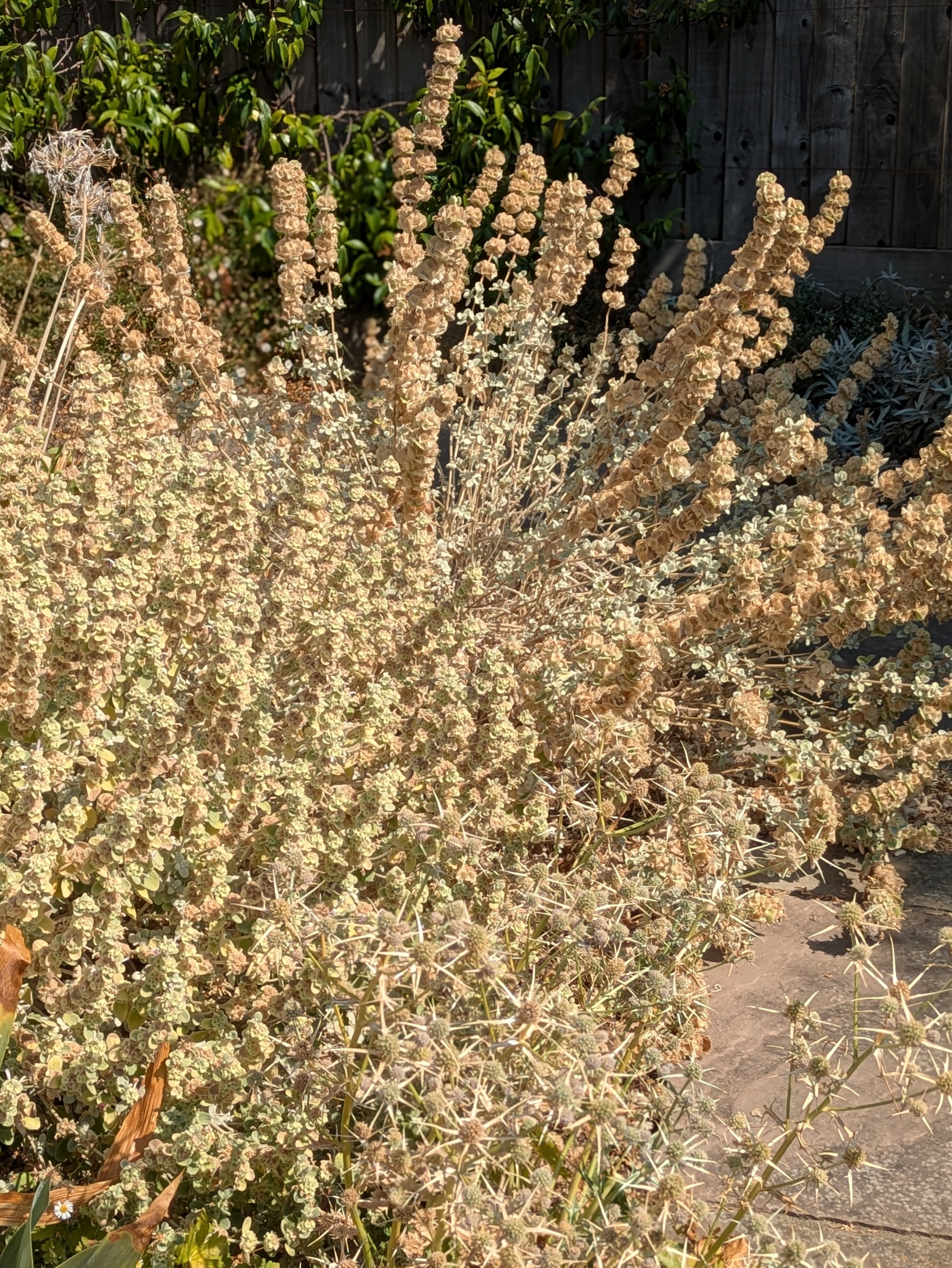
- Pseudodictamnus mediterraneus (aka ballota) has gone to seed very early but is thriving
- Punica granata (pomegranate)
- Salvia yangii (aka perovskia)
- Sphaeralcea
- Verbenas, incl. V. bonariensis, V. hastata, V. x baileyana
- Herbs: especially rosemary, sage, oregano
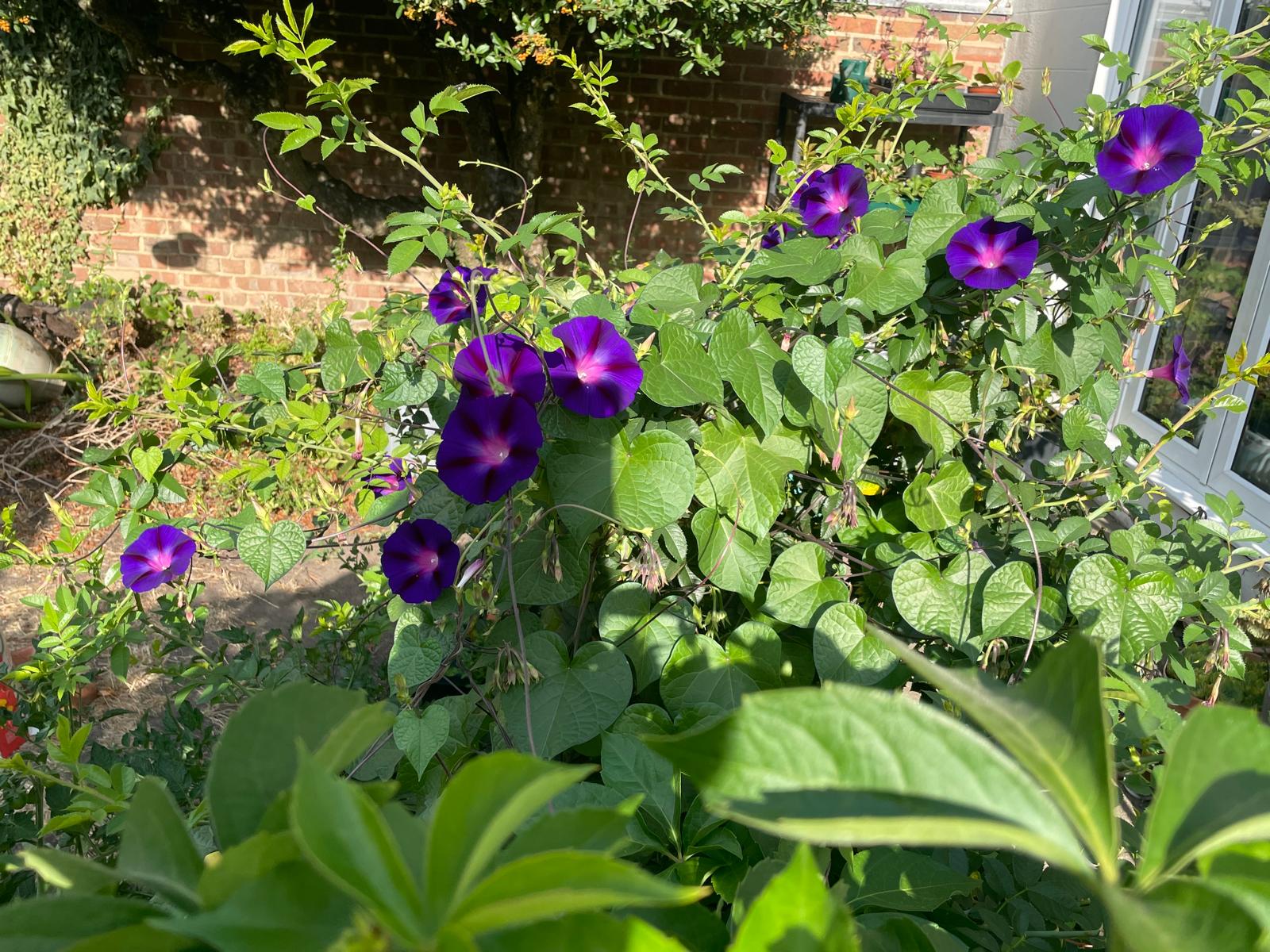
Coping well with minimal watering:
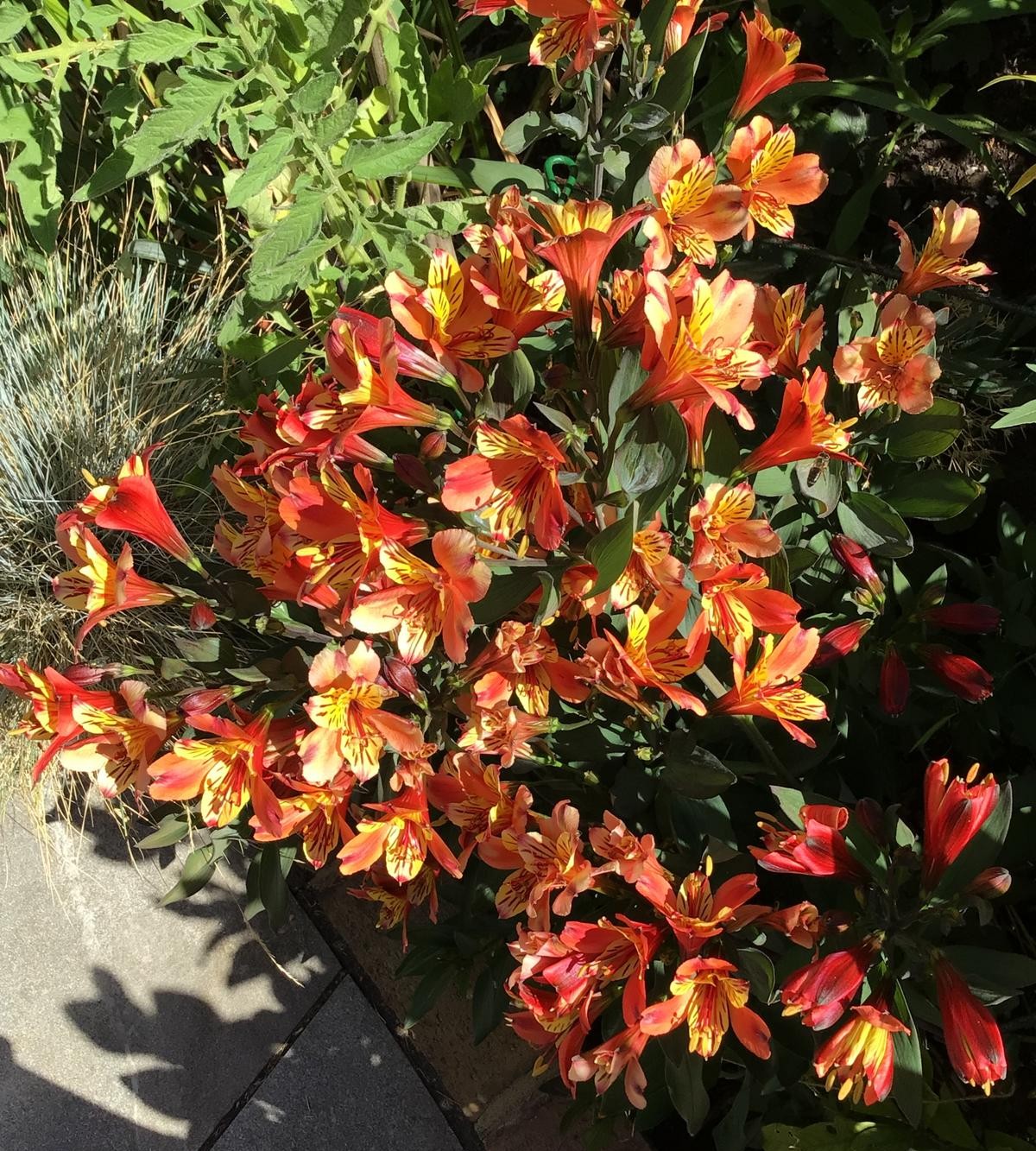
- Alstroemeria ‘Indian Summer’ – big surprise! On its 2nd flowering & looking brilliant!
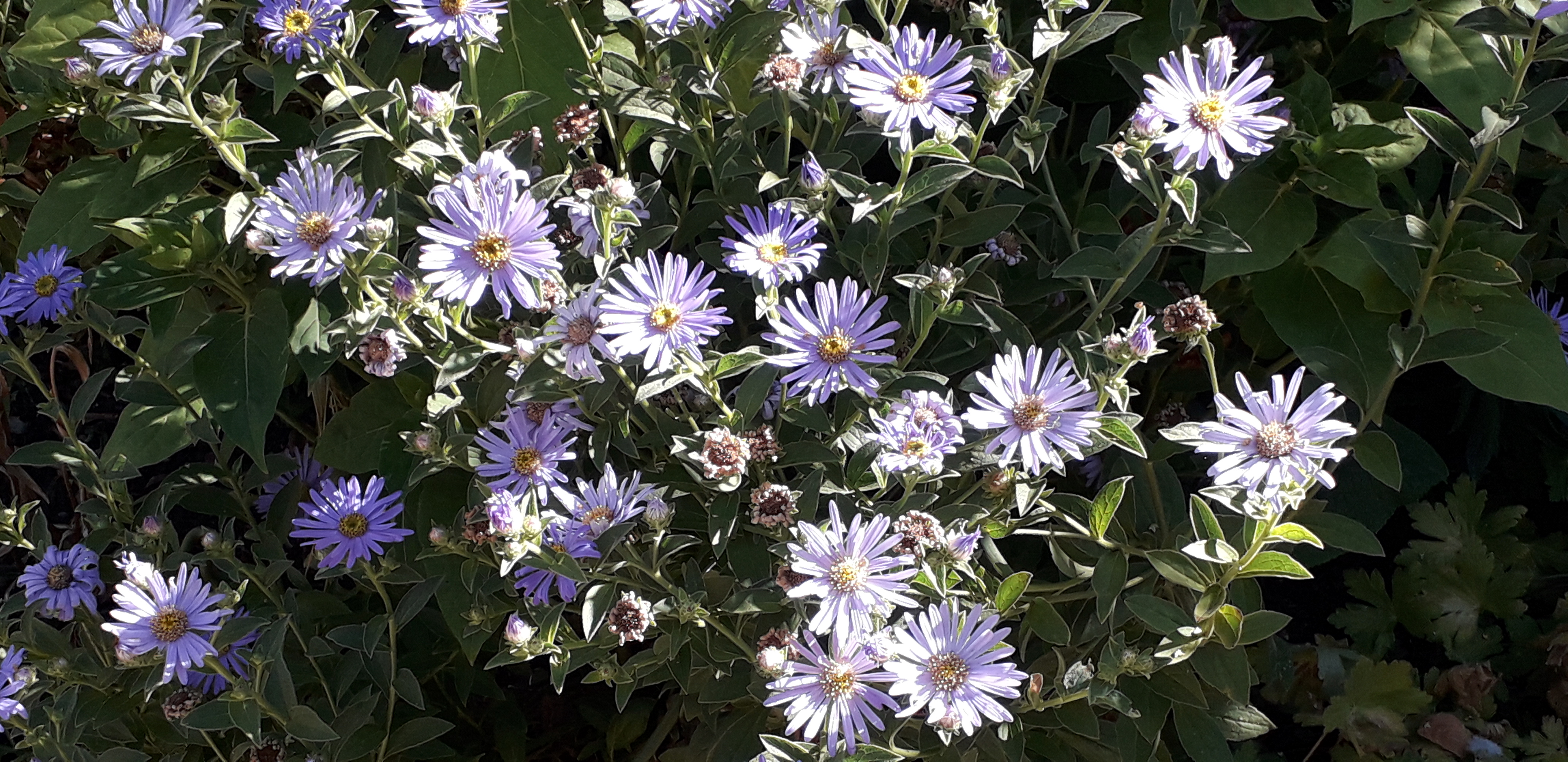
- Aster frikartii ‘Mönch’
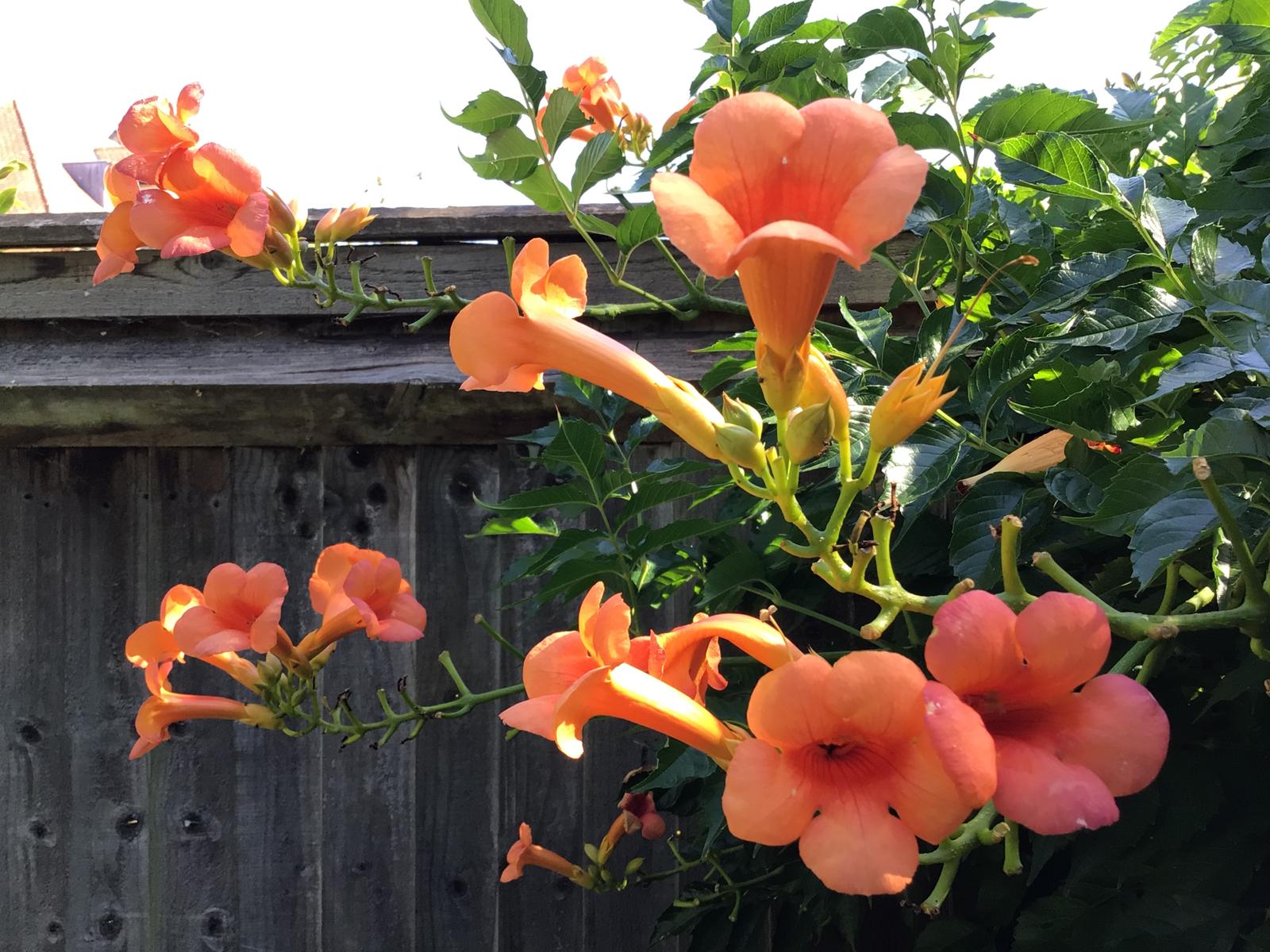
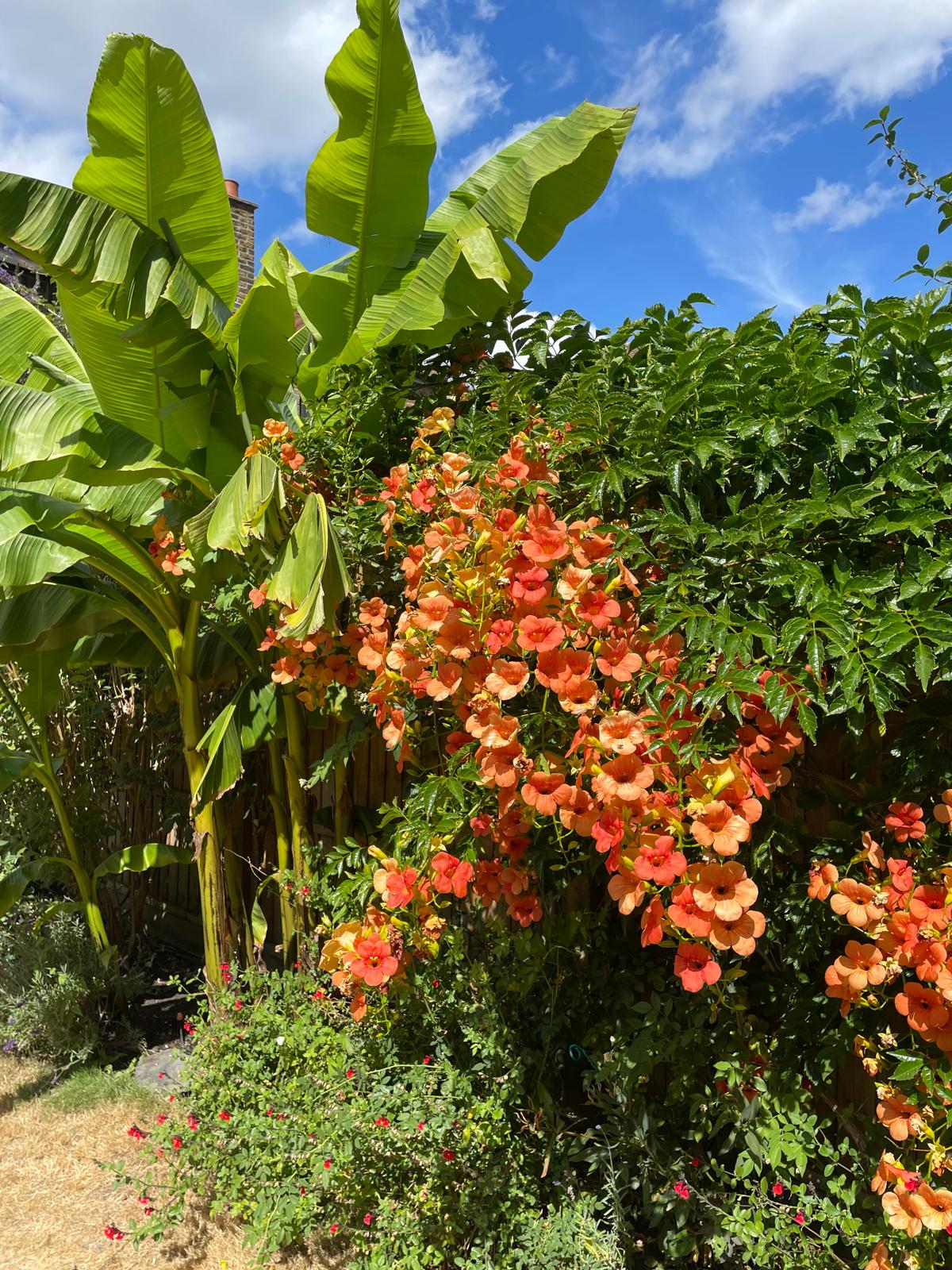
- Campsis radicans (strong, wonderful climbing shrub) and Campsis grandiflora (Chinese Vine)
- Established Choisya ‘Aztec Pearl’
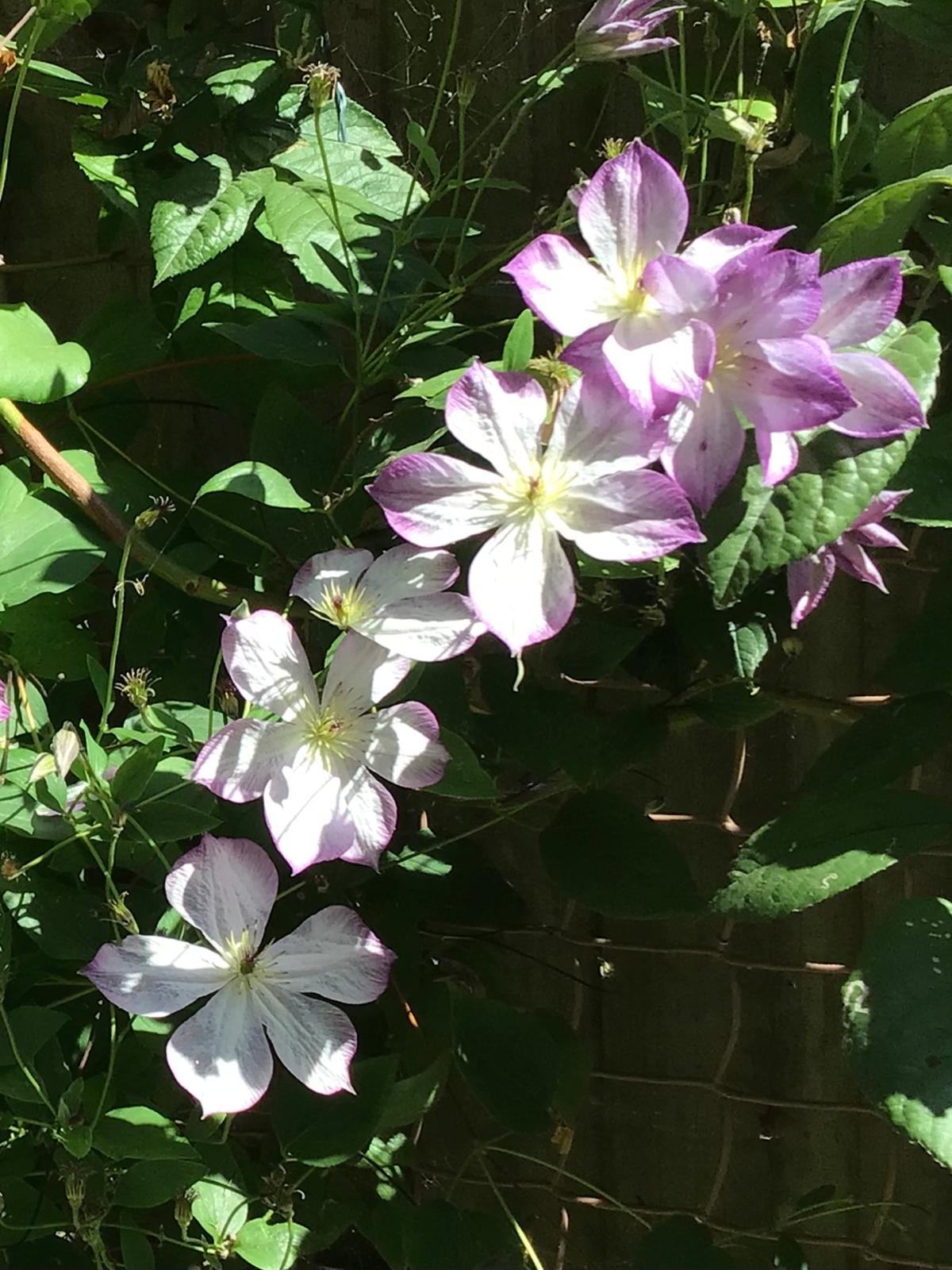
- Clematis ‘Betty Corning’
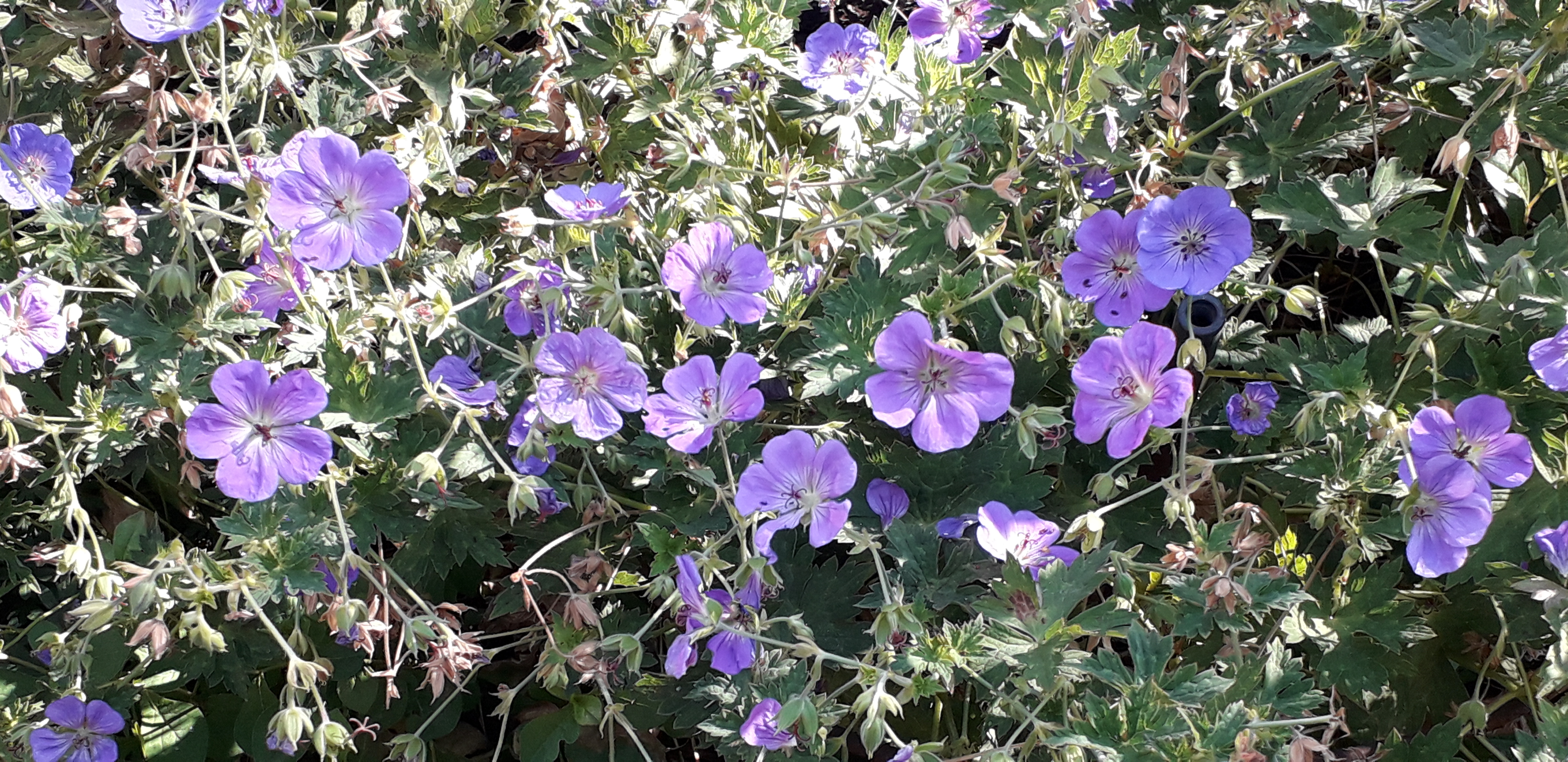
- Geranium ‘Rozanne’
- Morning Glory (Ipomoea tricolor) – Sue says: “I’ve never been able to grow more than a feeble weedy plant with one or two flowers each day. This year I have two large plants producing between 20-30 flowers a day each.”
- Banana (Musa basjoo)
- Nerium oleander
- Evening primroses (Oenothera) – standing tall & looking good
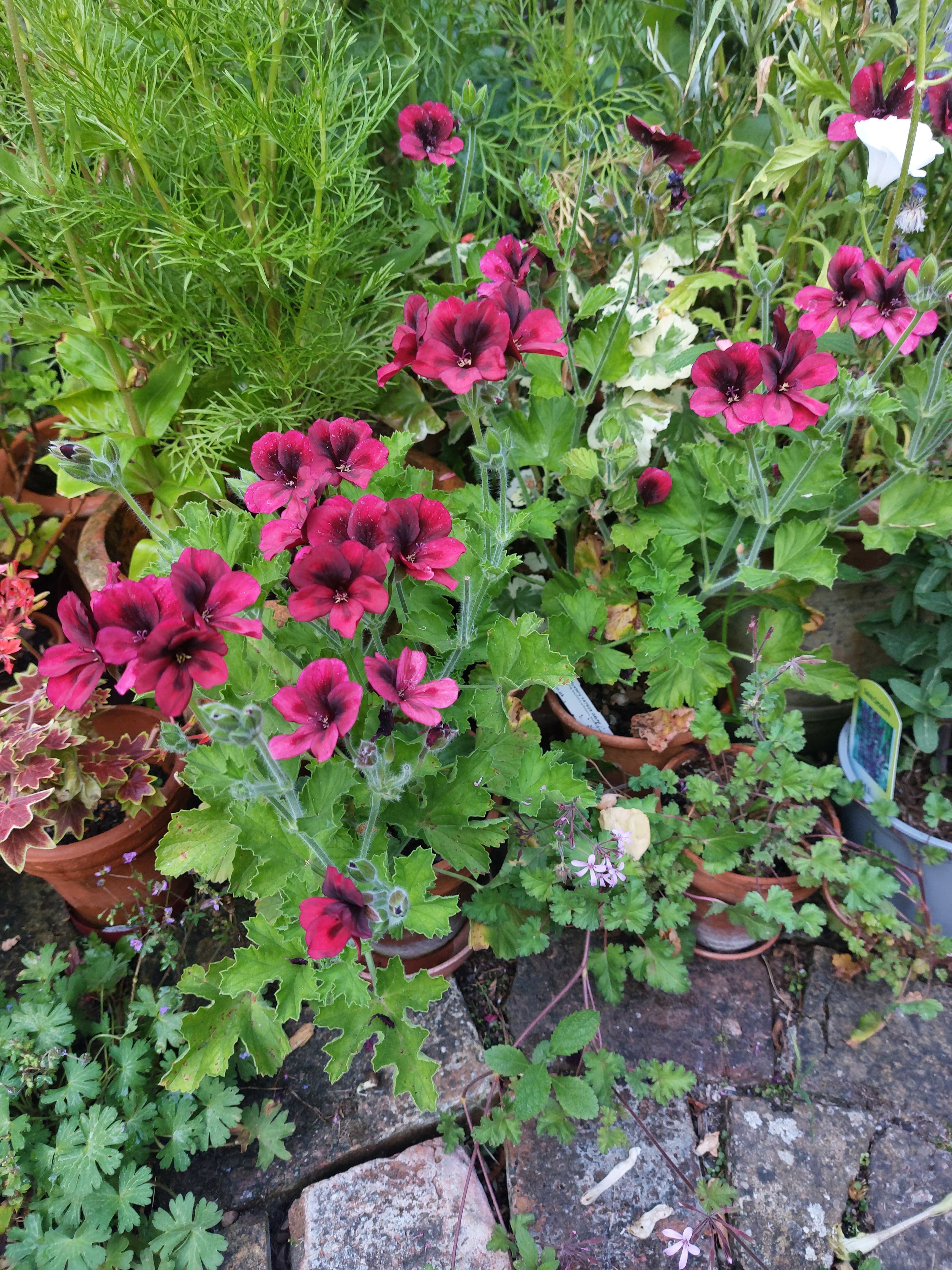
- Pelargonium
- Penstemon
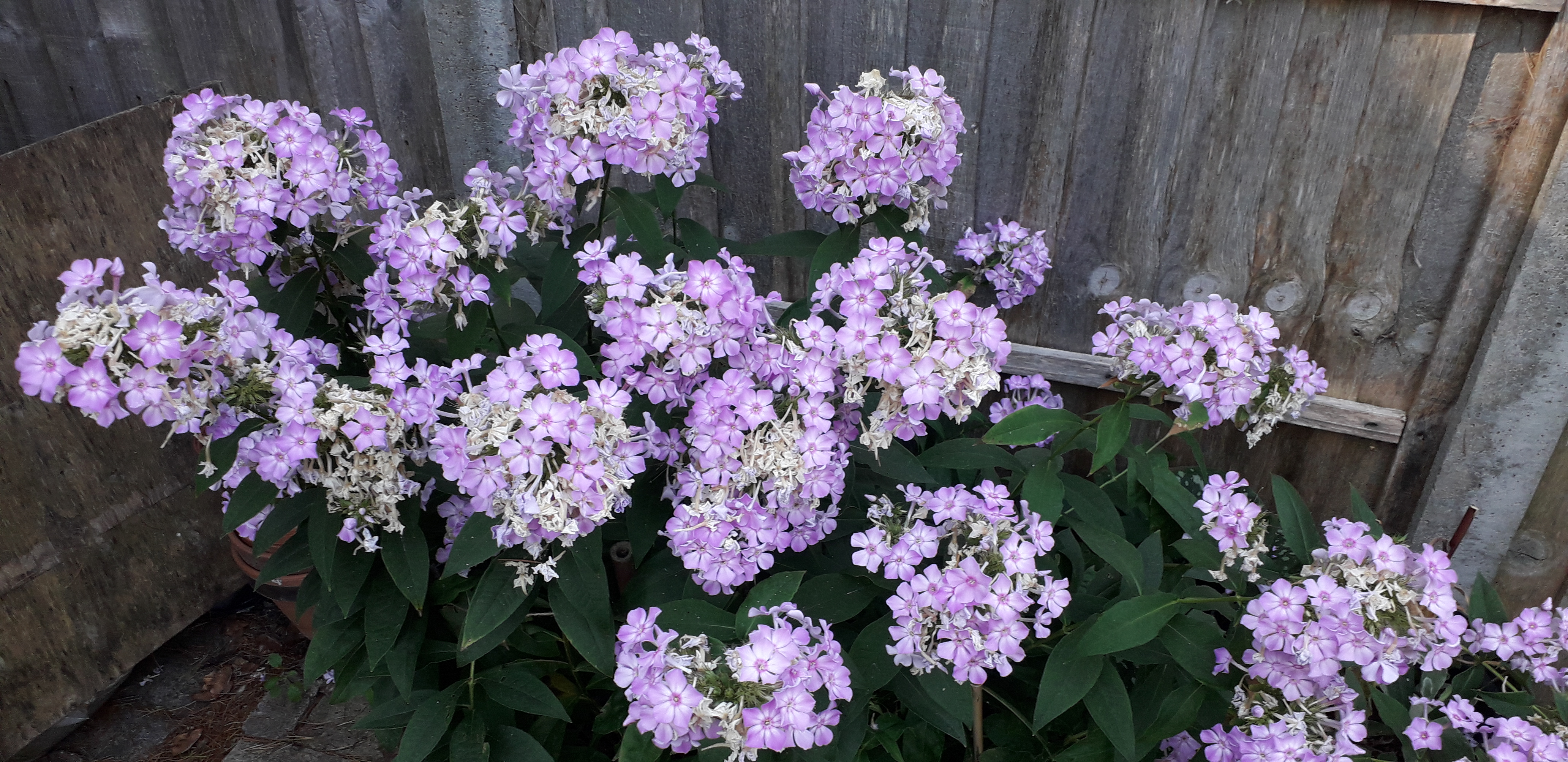
- Some Phlox (Vija says “most Phlox have suffered badly but P. ‘White Admiral’ and P. ‘Margery Fish’ are doing quite well”)
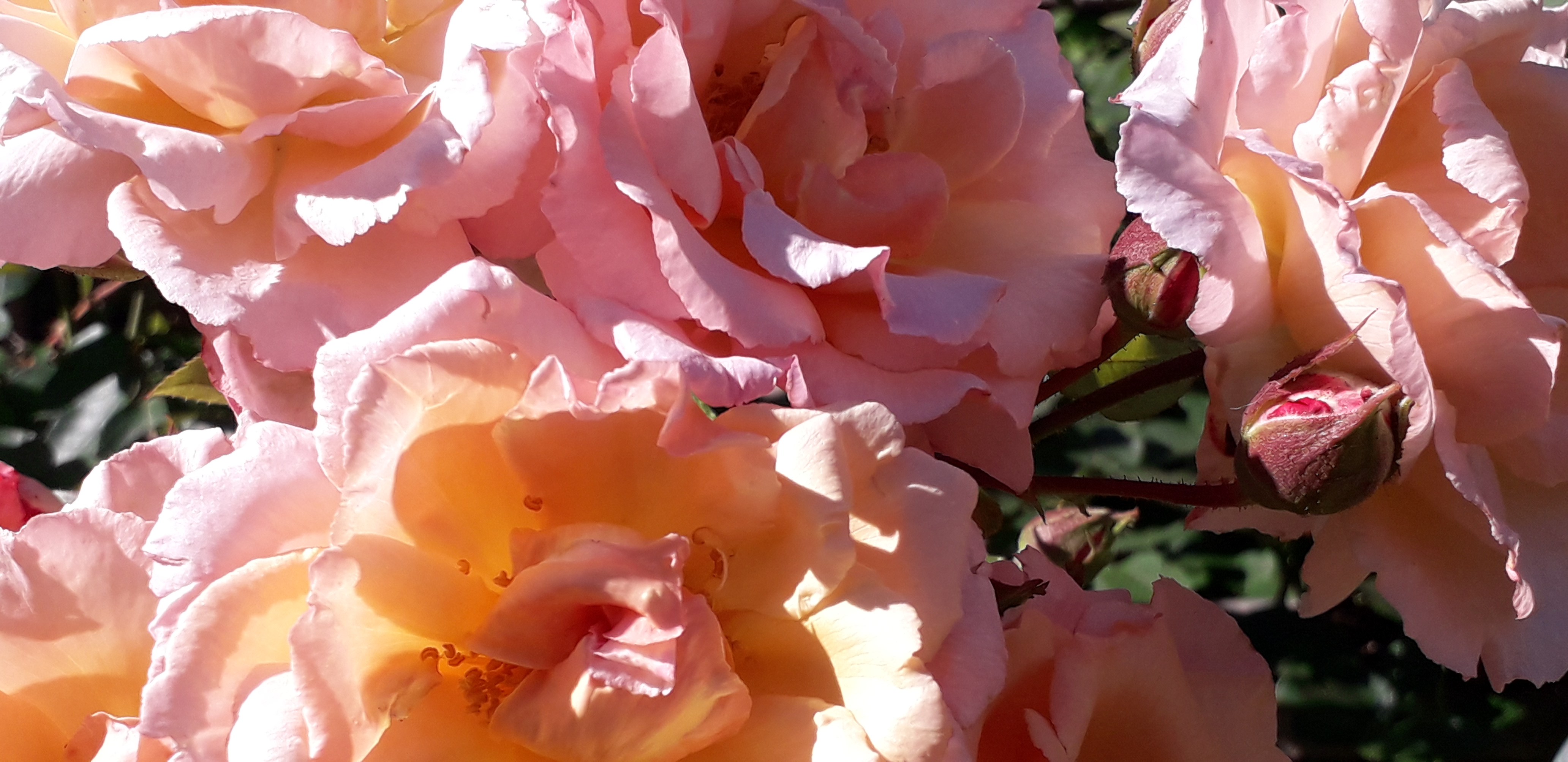
- Rosa ‘Compassion’ (on its second flowering), also R. ‘Ghislaine de Feligonde’, musk rose and R. ‘Climbing Iceberg’)
- All Salvias, though “while Salvia ‘Amistad’ and S. ‘Phylis Fancy’ have needed watering, the smaller leaved varieties such as S. ‘Jezebel’ and S. ‘Love and Wishes’ are doing well”.
- Stachys byzantina
In shade:
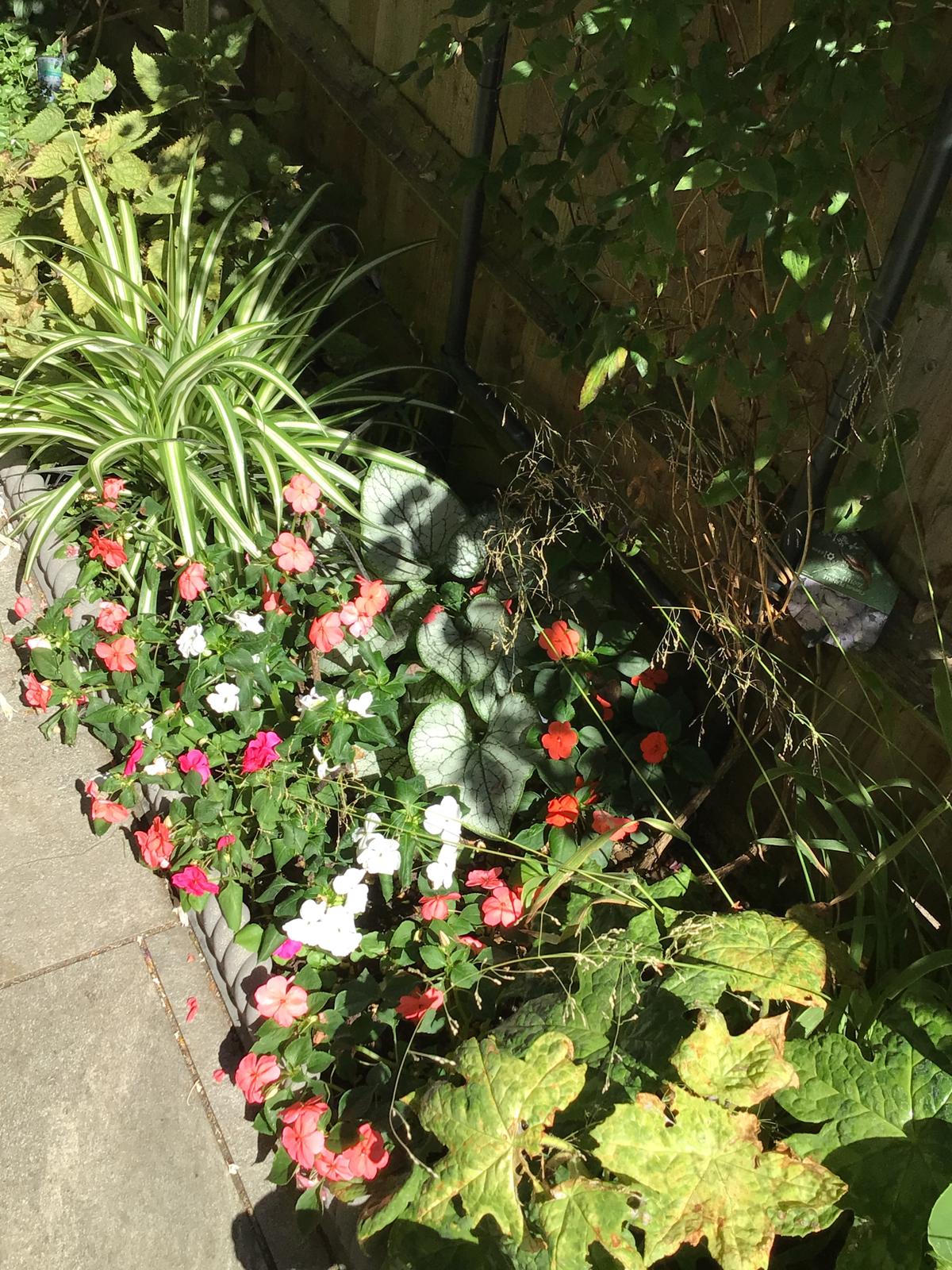
- Brunnera ‘Jack Frost’
- Clematis ‘Pernille’
- Impatiens (busy Lizzies)
- Many Phlox that have been watered but flower best in shade
- Podophyllum ‘Spotty Dotty’
Coping well with the heat but needing water:
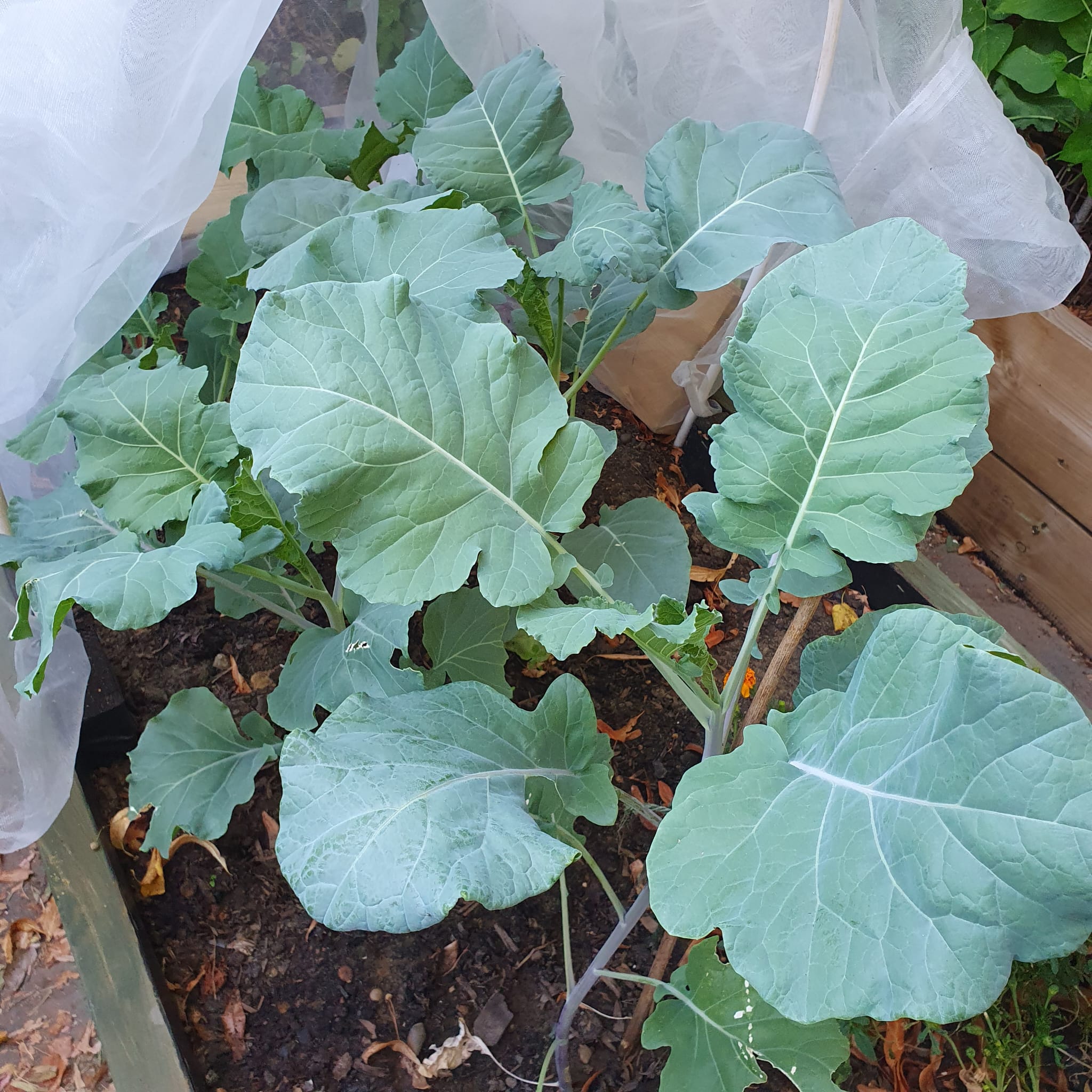
- Broccoli
- Rudbeckia
- Tomatoes
We hope that this has proved useful and interesting. If all else fails, you could do as Andrew suggests and “embark on heavy construction work during a heatwave. All plants dug up so nothing to water!”
Please add your experiences in the comments.
Ali H
Discover more from Charlton and Blackheath Amateur Horticultural Society
Subscribe to get the latest posts sent to your email.

