1. Top of the list for July is pruning wisteria, taking back that whippy growth to 2 to 3 buds from the main stems.
2. Sweetpeas should be flowering by now so make sure to keep cutting the blooms and give them a feed and plenty of water. They cease flowering quickly if not picked twice a week.
3. Deadhead all your perennials and annuals regularly unless you want them to set seed for next years sowing.
We might complain about all the rain we have had over the last few months but the plants have just loved, loved, loved it!
So, for the first time ever, I can celebrate, as my Angel’s Fishing Rod (beautiful name) is due to send up at least four flowering stems after many years and I put this down to the extensive rain we have endured this past winter and spring.
At Sissinghurst Gardens recently, I spotted two Dieramas in flower – the maturer pink-flowering specimen in the sheltered Rose garden, in a front-of-border, corner position where two paths meet, and a smaller, delicate-blush-mauve-flowering specimen growing in a south-facing border, situated in front of a tall brick wall – both looking absolutely gorgeous.
June really is the month for roses and when I saw Margaret T’s roses growing on her allotment, I was enchanted by each and every one and I have listed below a few that are in flower now.
Rosa ‘James Galway’
A David Austin climbing rose, introduced in the year 2000 and named after the Irish flautist. Margaret grows this rose as a shrub, so the flowers are at head height and the pink blooms, paler at the edges, have an old rose appearance and fragrance.
Rosa ‘A Whiter Shade of Pale’
What a name! And, what a rose! This gorgeous hybrid tea has blush-pink, very fragrant, repeat-flowering clusters, and glossy dark-green leaves. Considered disease resistant. Introduced in 2006 by rose-breeder, Colin Pearce.
We hope you are enjoying a walk around the walled gardens at Charlton House! This month, look out for:
Turkish sage (Phlomis russeliana)
A herbaceous perennial in the Mint family, native to Syria and Turkey. The name ‘Phlomis’ comes from the Greek word meaning ‘flame’. Heart shaped leaves of some species were used as lamp wicks in ancient times. The stiff upright stems carry yellow flowers, which look good as seed heads in winter and provide shelter in winter.
Woodland sage or Balkan Clary (Salvia nemorosa ‘Caradonna’)
A bee magnet because it offers both nectar and pollen, this a hardy herbaceous perennial with dazzling violet flowers. Susceptible to slugs and snails sadly, but luckily we don’t get too many of those in the Old Pond Garden.
Catchfly (Silene armeria ‘Electra’)
Blue-grey leaves and hot pink flowers for weeks on end. An annual which self-seeds prolifically. It is called catchfly because there is a sticky area on the stems just below the flowers, which greenfly and small insects get stuck to. Feel it gently with your fingers!
Trying to select photos to use from a visit to Beth Chatto’s garden is not easy! All aspects of this Essex garden are stunning and there are numerous ‘take homes’ from a visit. The cluster of pots around a wooden bench is easy to replicate, with its mixture of plectranthus, fuschia, a small but perfect blechium, pelargonium ‘Vancouver centennial’ (keep a lookout for this at our plant sales – it was our ex-Chair Jillian Smith who originally provided a steady supply) and a charmingly named begonia, ‘Beth’s Houseplant’.
Of course, the dry garden is stunning with gaura, various grasses and verbenas (Bonariensis, hastata and ‘Bampton’) dominating the display in mid-August. Stipa gigantea and verbascums add height and Althaea cannabina has seeded itself generously. The blue of Catanche caerulea looked startlingly beautiful in one corner. This area of the garden is always a useful guide to what will manage with little water and good drainage.
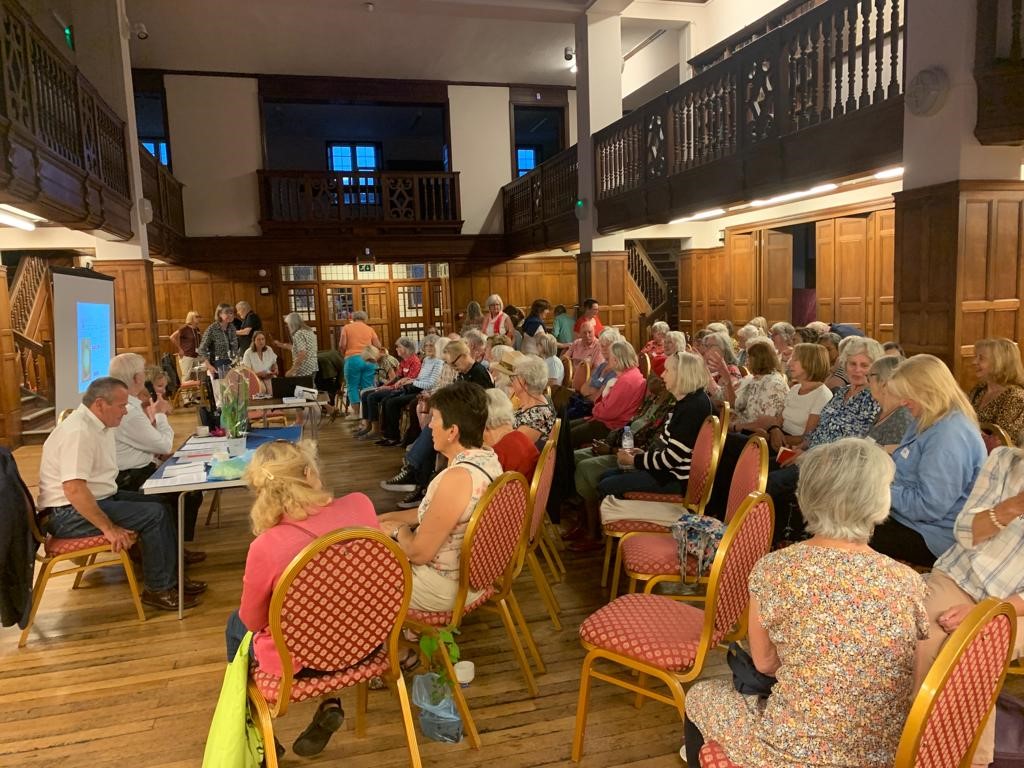
The panel this year consisted of the CABAHS President, Sir Nicolas Bevan in the chair along with the well known horticulturalist, retired Greenwich Park Manager and teacher, Joe Woodcock and our own knowledgeable CABAHS member, Pat Kane. It was a jolly affair much enjoyed by the members, held in the Old Library at Charlton House because of the possibility of rain.
Before the meeting, some members visited the Old Pond Garden to check on and discuss progress.
We had some superb exhibits on the Show Table at this month’s meeting, with a wide range of pot plants, flowers and fruits on display, so it deserves it’s own post! The Table was, as always, a great focal point for members to gather round and chat about the entries.
Hmm, the committee wonders if the new prize for ‘Best on Table’ is encouraging our members’ competitive sides to come out? Winner this month was Ruth C, with her beautiful vase of Dahlias ‘Creme de Cassis’. CABAHS President Nicolas presented Ruth with a pot plant plus a special CABAHS Biro. The biro is limited edition, and can only be given to a Show Table winner. In future we expect this to become as coveted an item as a Golden Gavel or Blue Peter badge…!
The CABAHS BiroDahlia Creme de Cassis (purple)
The whole Show Table:
A note about last month’s Show Table – winner was Pat K with her bowl of mixed sweet peas. Here is a selection of those entries:
Pat’s Sweet Peas
There will not be a Show Table next month as you will no doubt all be busy entering classes in the Autumn Show, but we look forward to the display in October. 🙂
We hope you are enjoying a walk around the walled gardens at Charlton House! This month, look out for:
Coneflower (Echinacea purpurea ‘Magnus’)
Coneflowers are part of the daisy family, originally from North America. Plains dwellers used the fresh roots and root juice to treat toothache and snake bites. Today many people take Echinacea supplements to prevent colds and boost their immune systems. ‘Magnus’ has large pink flowers and orange-brown central cones – bumblebee heaven!
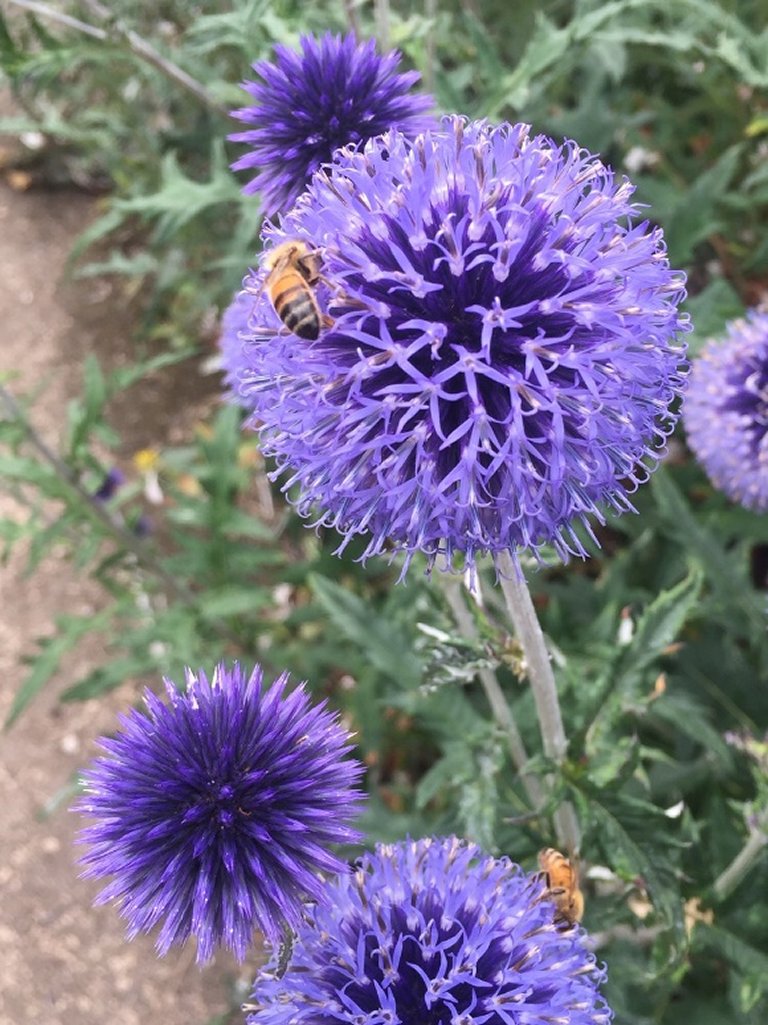
Globe Thistle (Echinops ritro)
With spiky leaves and bristly metallic blue flowers, globe thistles make a great architectural choice for the back of a sunny border. The flowers are extremely attractive to bees, butterflies and other insects and it makes a good cut flower. This is a plant that we prefer to cut the seed heads off before they drop their seeds – they spread VERY easily!
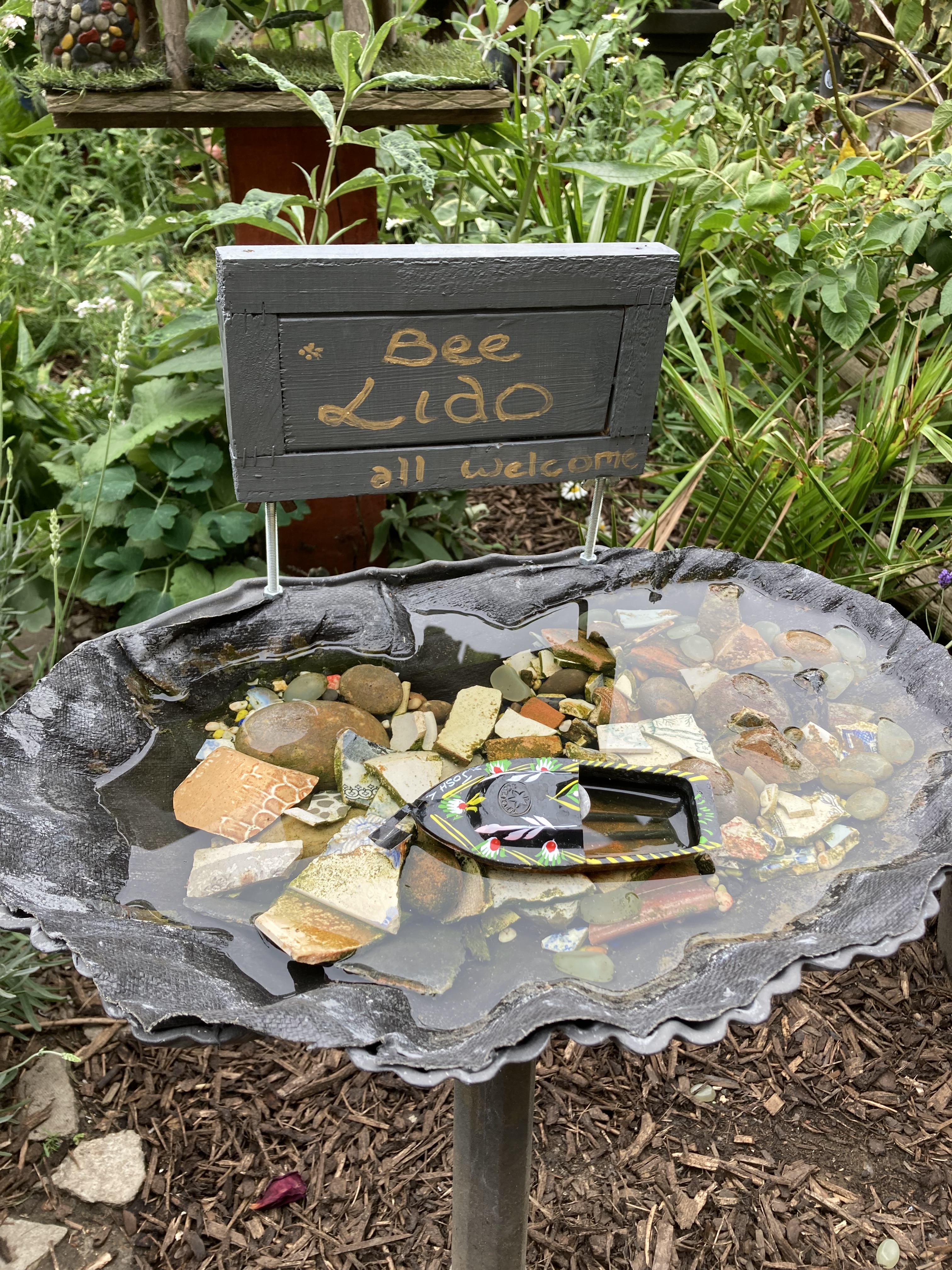
One very warm and sunny Sunday in June, CABAHS members were invited to come and visit our member Juli’s garden in Plumstead – which she generously opened specially for us, in aid of the Greenwich & Bexley Community Hospice. Juli’s garden is in the middle of a dense housing estate, but it is pretty easy to spot by the large banana tree sprouting over the top of her wall. Her garden beautifully demonstrates what can be done in a small space with some greenery, lots of care, and a sense of humour!
Juli in her garden
After the banana, the first things you notice are the Bee Lido and the fish pond, and I also liked the healthy looking lavender – which was a Charlton House reject that has been nursed back to full flower. Juli’s plant range includes her beloved roses, many perennials and even fruit trees. There are so many fun details, it takes much longer to properly appreciate than you would expect!
Thought for wildlife is everywhere in this garden, including Juli’s collection of friendly Bunnies – who were the stars at our Easter “Bunnies in the Beds” event.
We hope you are enjoying a walk around the walled gardens at Charlton House! This month, look out for:
Catchfly (Silene armeria ‘Electra’)
Blue-grey leaves and hot pink flowers for weeks on end. An annual which self-seeds prolifically. It is called catchfly because there is a sticky area on the stems just below the flowers, which greenfly and small insects get stuck to. Feel it gently with your fingers!
Lamb’s ear (Stachys byzantina)
Lamb’s-ear or woolly hedge nettle, is a species of flowering plant in the mint family, native to Armenia, Iran, and Turkey. Very drought tolerant. Loved by the wool carder bee, which combs or ‘cards’ the leaves to make a hairy nest to lay her eggs.







 Charlton and Blackheath Amateur Horticultural Society