A tale of two gardens

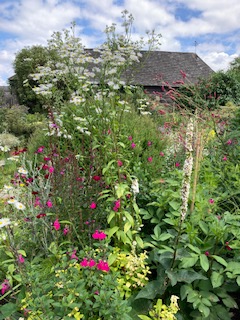
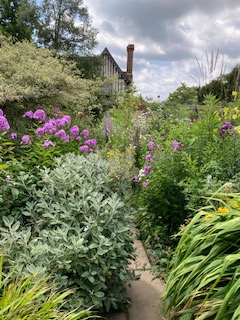
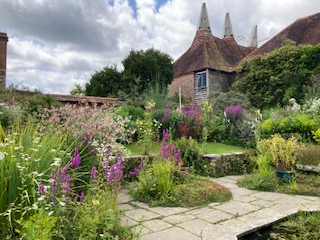
One very warm and sunny Sunday in June, CABAHS members were invited to come and visit our member Juli’s garden in Plumstead – which she generously opened specially for us, in aid of the Greenwich & Bexley Community Hospice. Juli’s garden is in the middle of a dense housing estate, but it is pretty easy to spot by the large banana tree sprouting over the top of her wall. Her garden beautifully demonstrates what can be done in a small space with some greenery, lots of care, and a sense of humour!

Juli in her garden
Juli in her garden

After the banana, the first things you notice are the Bee Lido and the fish pond, and I also liked the healthy looking lavender – which was a Charlton House reject that has been nursed back to full flower. Juli’s plant range includes her beloved roses, many perennials and even fruit trees. There are so many fun details, it takes much longer to properly appreciate than you would expect!

Thought for wildlife is everywhere in this garden, including Juli’s collection of friendly Bunnies – who were the stars at our Easter “Bunnies in the Beds” event.

Continue reading A tale of two gardens

What to look out for in the Old Pond Garden: June 2023

We hope you are enjoying a walk around the walled gardens at Charlton House! This month, look out for:

Catchfly (Silene armeria ‘Electra’)

Silene armeria 'Electra' in the Old Pond Garden, Charlton House, June 2023

Blue-grey leaves and hot pink flowers for weeks on end. An annual which self-seeds prolifically. It is called catchfly because there is a sticky area on the stems just below the flowers, which greenfly and small insects get stuck to. Feel it gently with your fingers!

Lamb’s ear (Stachys byzantina)

Lamb's ears (Stachys byzantina) in the Old Pond Garden, Charlton House, June 2023

Lamb’s-ear or woolly hedge nettle, is a species of flowering plant in the mint family, native to Armenia, Iran, and Turkey. Very drought tolerant. Loved by the wool carder bee, which combs or ‘cards’ the leaves to make a hairy nest to lay her eggs.

Continue reading What to look out for in the Old Pond Garden: June 2023

Colour in the garden

Begonia ‘Glowing Embers’
Petunia ‘Tidal Wave Red Velour’

During this blistering summer a number of people have commented on the colour in my garden (such as it is). I think this is down to a very few plants. (For those of you not enamoured with Sarah Raven, look away now). The top photograph is of Begonia ‘Glowing Embers’. These have flowered continuously all through the summer and I think the contrast of the leaf and flower is lovely. Although often grown as an annual, I have found that if I keep them in a sheltered and frost-free place over the winter they will flower again year-on-year. But be patient! The little stone-like tubers look thoroughly lifeless for a long time and, just when you might think they were totally dead, little green shoots appear.

The bottom photograph is of Petunia ‘Tidal Wave Red Velour’. These were originally plants in pots with cosmos and coleus, the latter two turned up their toes leaving only the petunia to inhabit the pot. It is only one plant and this too has continued to flower continuously through the summer. The pots have only been watered with waste water and have had no additional feed.

Both of these hard workers have come from Sarah Raven and, no, I don’t get a discount!

Vija

Perch Hill

Thinking we would take advantage of the extra days made available for visits to Perch Hill, we chose the one for container planting. However, on the day it was the dahlias that stole the show and which we will remember!

Although rain was not forecast, we arrived to a little bit of a mizzle and a very grey sky – in the photographs this has tended to deaden the exuberant colours. We were knocked out by Penhill Watermelon, Geri Scott and the delicious Apricot Desire, but it would be impossible to choose one favourite out of all the lovely colours. Although some are critical of the Sarah Raven enterprise, there is no question that the gardens are beautifully styled. Of course, plants are labelled so that anything you see you will find on their website, but it is a commercial business. In fact, it is good to find a label so that you can identify what you are looking at! Salvias are everywhere, edging the herbaceous borders, in pots as well as mixed through the beds. These are such versatile plants.

Dahlias at Perch Hill
Continue reading Perch Hill

OPG Diary – July / August

Our previous post was all about how well the garden was growing – and it really was – except it then just stopped raining, for ever! At the beginning of July, everything was looking nice and green:

But as the Summer heatwave went on, and ever hotter, the volunteers spent more time working in the shade..

And pretty soon all we were doing was watering. It has been heart-warming to see the volunteers arriving every Tuesday or Thursday, picking up their watering cans and setting off to save many of the plants we planted in to the Old Pond Garden just last year. We have lost remarkably few in the end, and as long as we don’t have a repeat heatwave/drought next year, most should get their roots down and become more resilient for the future. There have been a few casualties, and a few that clearly don’t like where they are. So as soon as Autumn comes, Jason will be directing some tweaks. As August came around, the garden’s colours and textures changed to become Autumnal.

Continue reading OPG Diary – July / August

August 2022: Gardeners Question Time
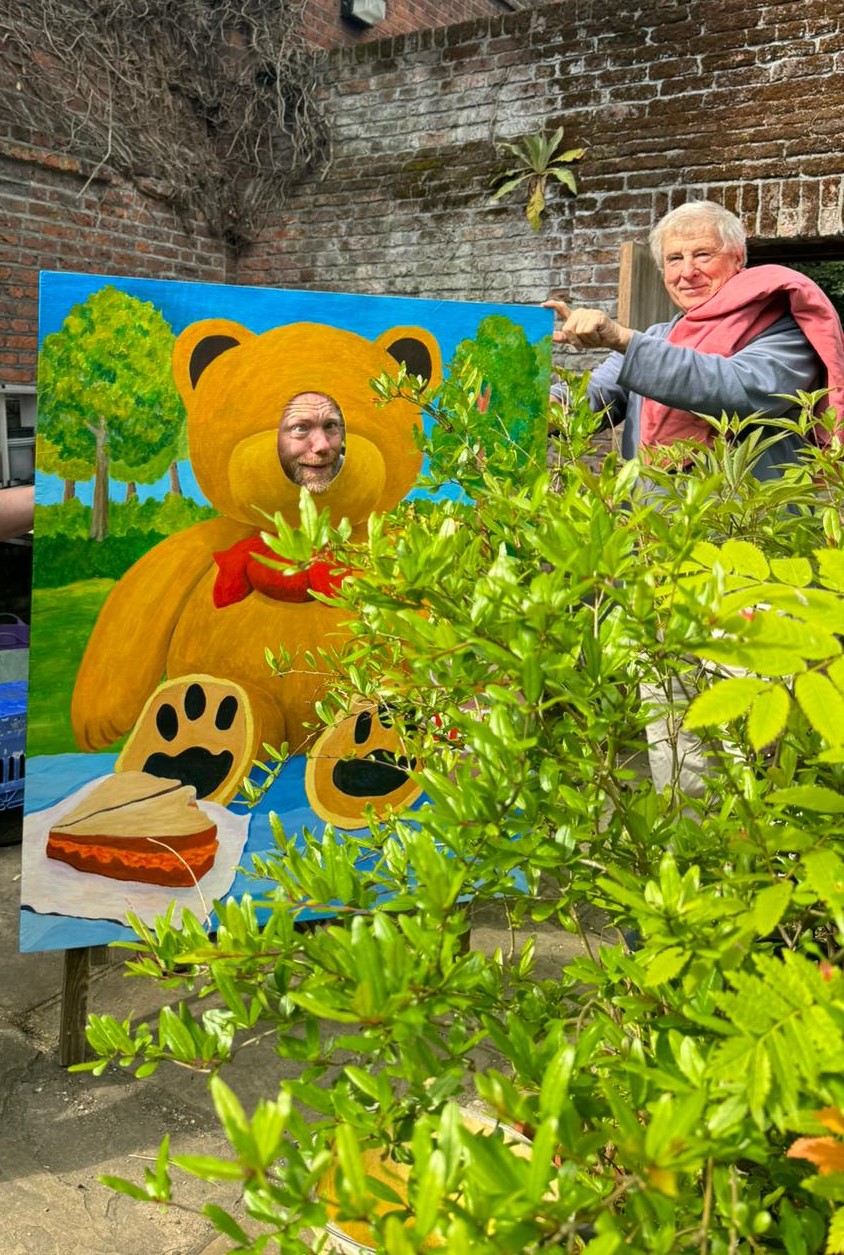
Our annual amateur Gardeners Question Time meeting was once again held in the Peace Garden at Charlton House. Some members will remember last year, when everyone was in thermals and anoraks and it was the coldest August evening for years – ah, not this year we thought, it has been so warm and dry for weeks! Well, best laid plans as they say. Everyone was settled and happily getting in to the swing of questions about the drought. And so of course, the heavens opened!

True to type, we gardeners just picked up our things and decamped to Frilly’s Tea Room for a little break. Thank you to our stalwart committee and helpers who covered things up in the garden (do you know what Doritos and Pringles look like when they are soaked? ugh!). As the thunderstorm carried on, so too did we and the questions continued in the Tea rooms.

GQT in the tea rooms

Thank you to our panel, especially guest panellist Joe Woodcock, for cheerfully answering our questions, and to Charlton House for letting us drip all over their cafe. It was still a very enjoyable evening, but sad that not many members saw the old Pond Garden in the dusk, lit up with solar lights and looking magical.

The committee will be having a think about whether to have next years GQT meeting in the safety of the Old Library!

Kathy A

Funky Hostas

Photo of Hostas taken in the Spring!
Photo taken in the Spring!

I love hostas, but they have a reputation for being difficult, not least because of their attractiveness to slugs and snails. They are commonly thought to do best in moist partial shade, but this shockingly dry year has been a surprise. As Chris Beardshaw points out, there are several that do well in dry shade, the sieboldiana types in particular. Although many of mine in direct sunshine for most of the day have scorched this year, there are also several that have done surprisingly well in quite dry and sunny conditions.

Hostas were originally named in honour of the Austrian botanist Nichloas Host, but in 1817 the name Funkia was used by a German botanist in honour of botanist Heinrich Funk. The name Funkia remained in use for some time and there are a number of horticultural texts written over this period which refer to Funkias. In 1905 Hosta was reinstated as the genus name by the International Botanical Congress.

I quite like the name Funkia. It makes me think of the plants secretly having a good time after I have gone to bed.

Vija

August blog 1

‘Rubens Peale with a Geranium’, painted by his brother, Rembrandt Peale, 1801. National Gallery of Art, Washington, USA – Patrons’ Permanent Fund
‘Rubens Peale with a Geranium’, painted by his brother, Rembrandt Peale, 1801. National Gallery of Art, Washington, USA – Credit: Patrons’ Permanent Fund

I found this photo posted on the blog of Garden History Girl. It’s one of the blogs I have at some stage signed up to and now get regular posts. It is worth checking out (overlook the name) and this one contains some fascinating information on pelargoniums / geraniums and snippets of plant history. If you have never been clear on what are pelargoniums or geraniums, this is the one to look at! And there are some lovely pictures too!

Vija

Bedding Plant dilemma

I love Greenwich Park Flower garden and am full of admiration for how their gardeners have gradually adapted, from growing all their plants on site to whatever combination of outsourcing they use nowadays. It usually looks wonderful.

I understand it is a public garden and has to cover those who like the bedding plant tradition, those who expect a wow factor and those who want a bit of modern style.

But the current drought has really highlighted the bedding plant issue!

Bedding plant beds

It is eye-catching for all the wrong reasons, little oases of green with the rest of the park straw-dry.

Even traditionalists must wonder what on earth the point is of pouring water on these beds of Impatiens. There are other beds containing tree ferns and perennials and it absolutely makes sense to water expensive plants that will come back and cope in a (hopefully) more normal future year.

This is a personal viewpoint, not necessarily representative of the CABAHS membership, it would be interesting to hear members views..? Perhaps it’s a debate we can have at the Gardeners Question Time meeting on August 15th!

Kathy A

Members Gardens – July

I thought we should collect some pictures from members to show that despite the recent Armageddon heatwave, we still have gardens! There might be a few crispy edges here and there, but it appears a huge range of winners are out enjoying the sun.

Vija has sent in this lovely scented Pelargonium Pink Capitatum, container-grown.

Pink Capitatum
Pelargonium Pink Capitatum

Anna found a beautiful Jersey Tiger Moth in her garden, sightings of these seem to be getting more common. Pat says they like warm walls, and I have found them in my garden too. They are very eye-catching in flight, when the orange wings underneath flash out. Their caterpillars eat nettle, bramble and ground ivy, what’s not to like? Also in Anna’s garden, her Yucca plants love this heatwave.

Annie H says ” These Evening Primroses have been flowering continuously since early May. They appeared self sown in next door’s garden so I collected some seeds and this is the result. They open new flowers each evening which shrivel up the next day.”

Continue reading Members Gardens – July