Our star speaker from last year, Nick Bailey, has a very informative blog on his website: ‘New Ways with Spring Bulbs‘. Worth a read before ordering hundreds of bulbs from those enticing catalogues!
Tag: spring
Members’ gardens, April 2020
Juli’s project to keep busy has been making a bird table. She says it took the birds less than a day to find it, and she’s restocking it daily. She now has 6 feeders and 3 coconut suet holders, and her garden is quite small. A real hit with the wildlife though!

This common Hawthorn in full flower is one of many that line the Vanburgh Pits, just by the top Maze Hill entrance to Greenwich Park. It is magnificent, and makes you wonder why we bother to buy and grow pampered garden shrubs like Spirea etc.!

Anna’s Coronilla was purchased as a small cutting from a garden Open Day. It grows happily in a pot and flowers around now for about 2 months. Every garden should have one!

Here is another from Anna, a pretty Epimedium pubigerum, in flower now. The common name for it is Hairy Barrenwort – rather nasty, I can see why we all stick to “Epimediums” even if that doesn’t trip off the tongue either.

Below is Juli’s apple tree in blossom overload. She says it is usually a biennial fruit bearer and wasn’t expecting much from it this year. Either the mild winter, or the fact it didn’t crop heavily last year, has sent it into overdrive this year! Lots of apples for the Autumn Show maybe..

Angerstein Lane, going well over the top on tulips, just gorgeous!

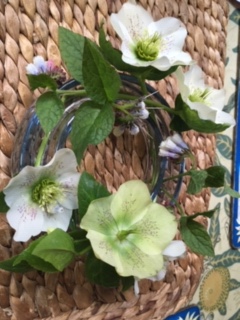
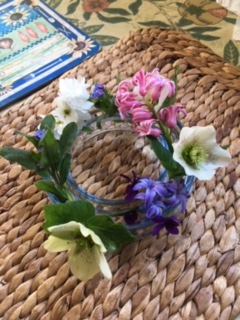
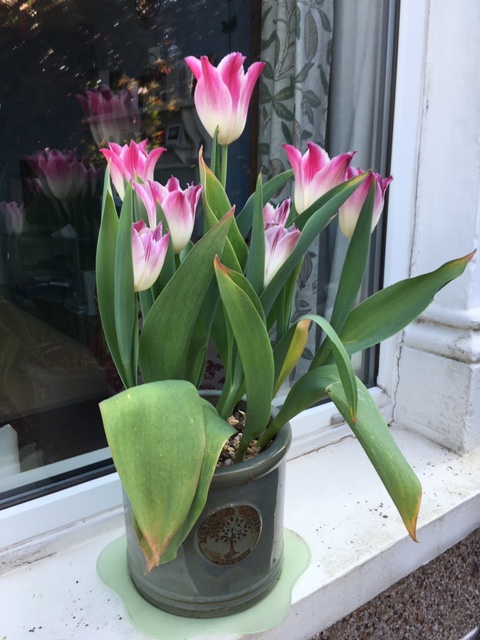
Sara B has been out on dog walks and spotted some lovely blossom in Maryon Road, enjoyed her Whispering Dream tulips (a birthday present) and got crafty making the most of the spring flowers!

Vija’s pots of Narcissus, in the early morning April sunlight:

This is Juli’s “cloud-pruned” patio Cherry! It really couldn’t fit any more flowers on, I bet the bees just love it.

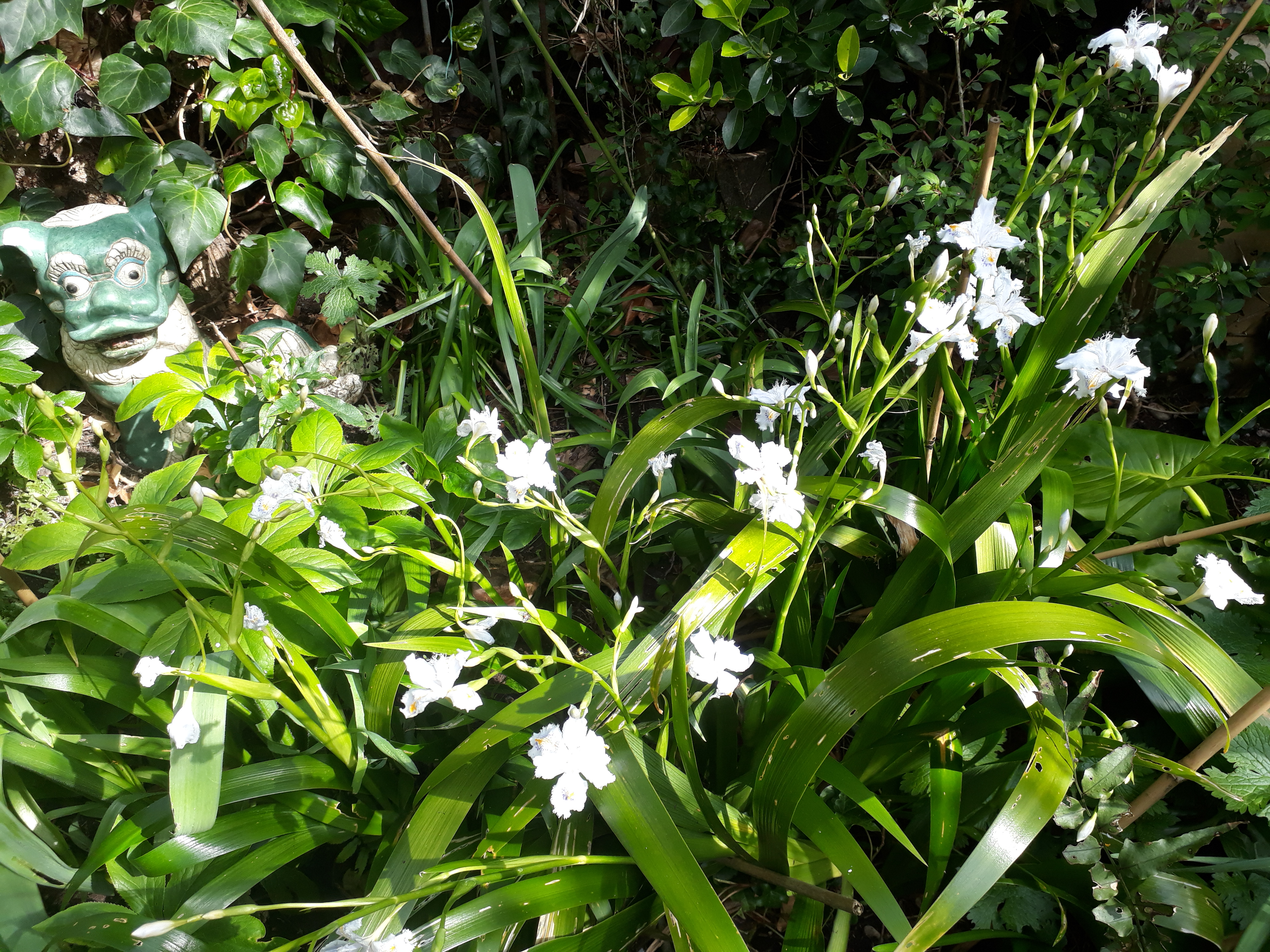
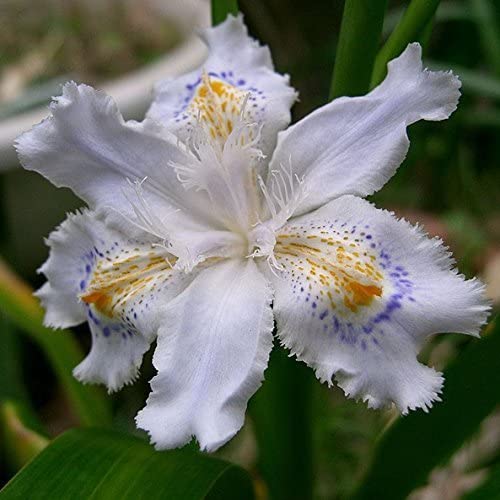
Here is Angela’s Iris japonica, or Fringed Iris, looking fab. The flowers are almost like orchids and seem to float above the foliage, which is why it is sometimes called the Butterfly Flower.
Below: Not very pretty perhaps, Kathy is very proud of her two year old “black gold”, especially as its so tricky to get hold of compost now!

Here’s Pat K’s Chionodoxa sardensis, in full bloom and some!

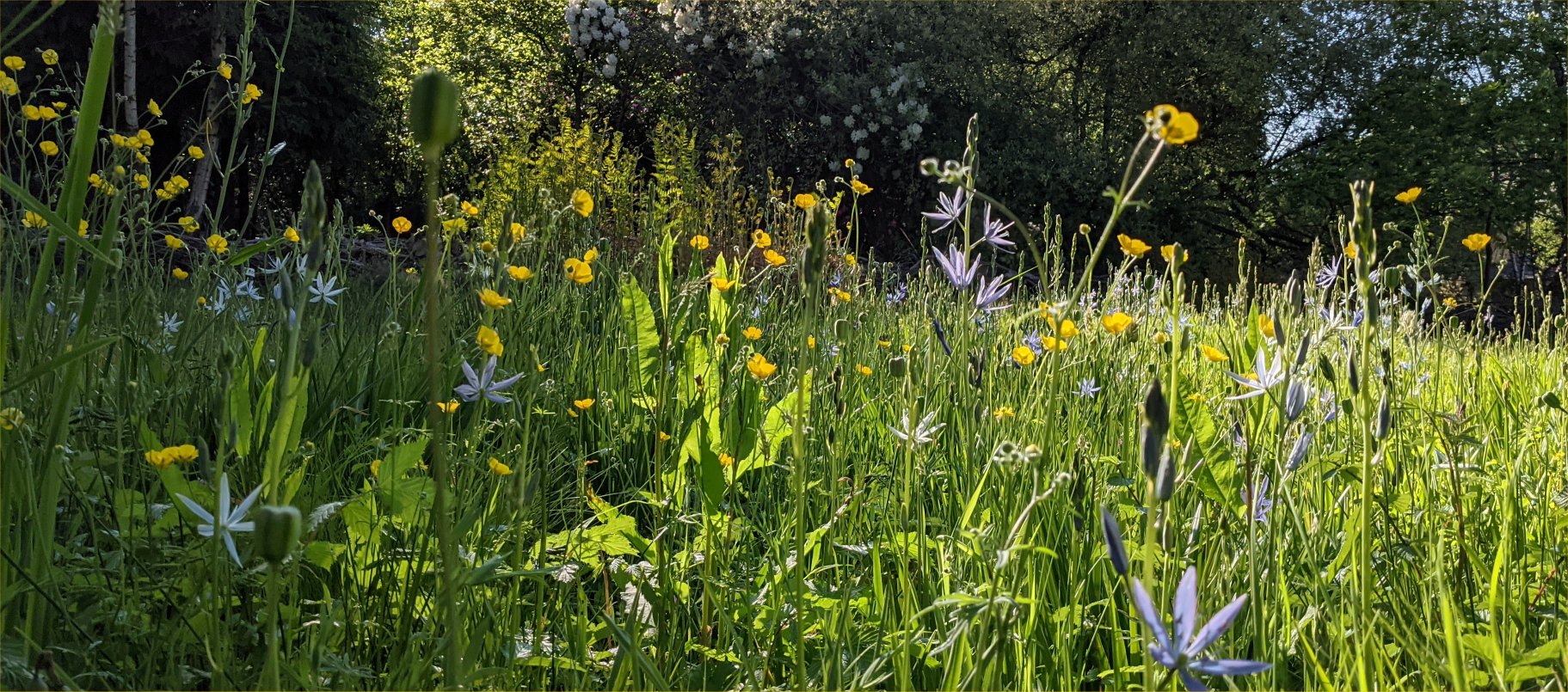
No Mow May – Every Flower Counts
Plantlife are running their No Mow May campaign again this year. Don’t mow, then between 23 and 30 May, count the flowers in a random 1m square of lawn. Send in the results to Plantlife and they will calculate a National Nectar index to show how our lawns are helping pollinators.
Online Spring Flower Display 2020
Photos of our 70th Anniversary and 1st Online SPRING SHOW 2020 winners
Our President, Sir Nicolas Bevan says, “I am greatly impressed by the quality of entries to our virtual Spring Show and I congratulate all those who sent in their photographs. At this time of anxiety and sadness our gardens can be a source of consolation and diversion and provide an outlet for our energies. I encourage all our members to carry on gardening and I look forward to the time when we can meet together again.”
The winner of Best in Show photograph is 10A, sent in by Faith. Congratulations! Here it is:

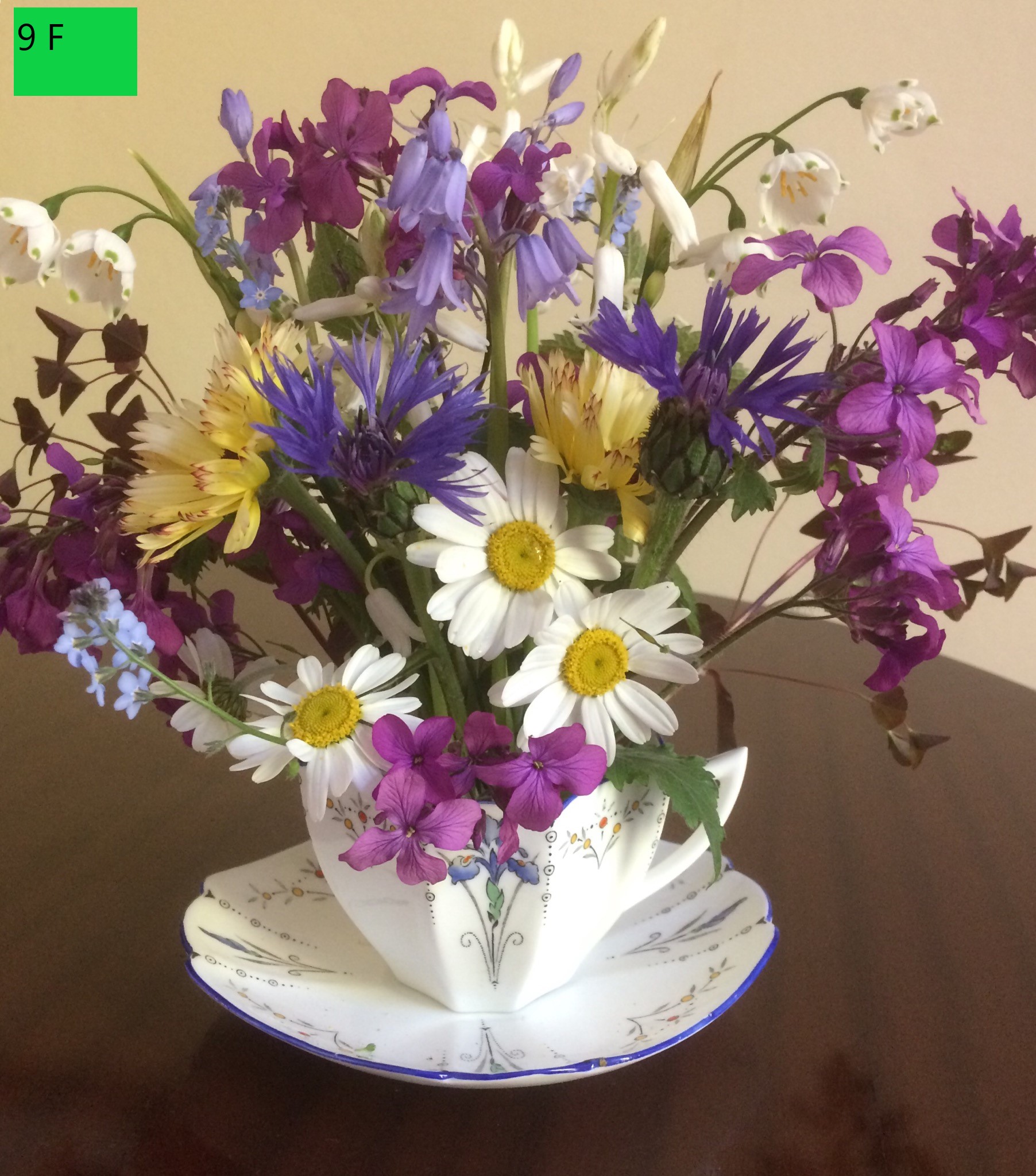
Close runners up were 9F, the tea cup display by Ann H, followed by 4D the stripy camellia by Peter S, and 2D, the white tulips by Anastasia.


We have submitted Faith’s lovely photo to the Horti-Aid Gardening competition being run by the Perennial charity, to be judged by Alan Titchmarsh, Jim Buttress & others.
CABAHS has traditionally helped to support Greenwich & Bexley Community Hospice over many years. Usually, we donate two months of our Plant Sales Table proceeds to the Hospice but this year we invited donations through this page, in celebration of successfully holding our first online Spring Show.
NGS video on sweet peas
The National Garden Scheme has some good tutorials from their Open Garden owners. If you are going to risk planting out sweet peas due to the recent good weather, have a look at this one for some tips.
Members’ gardens, March 2020
Maggie’s lovely spring garden. The flowering shrub is Exochorda “Magical Springtime” and was a Mother’s Day present a few years ago, what clever children she has!

Christine’s alpine trough, with Thrift in full swing. Lovely blossom on the tree.


Muscari latifolium coming out, just as Hyacinth Splendid Cornelia is going over, on Kathy’s sunny bit of the patio. Rose Cottage bulbs again, they were a winner!

So maybe we have a local heron who is going round checking out members gardens? Chris’ visitor from yesterday has popped over to look at Kathy’s pond. Thankfully the pond is netted, otherwise his breakfast would have been toad spawn..

Here are two of Chris B’s shrubs, looking very good this Spring – Spiraea arguta Bridal Wreath and Viburnham tinus:


Chris was surprised to see this visitor – a Heron, checking out her garden!

Angela says she is not a fan of tulips generally, but the Rose Cottage speaker we had last year convinced her to try these wild tulips, Tulipa sylvestris, and she is so pleased with them. They do look lovely in a “woodland” setting like this.

Jenny’s Camellia is looking wonderful, she says its thanks to all the rain, and she didn’t have to do a thing!

My Australian rosemary
From my kitchen table I am fortunate in being able to admire a shrub growing in a pot on the patio table that is looking glorious at the moment.
Westringia rosemarinformis is an Australian native and commonly known as the Australian rosemary. I was given this plant as a cutting a few years ago and it has grown into a lovely shape. Margaret T has a large shrub growing on the sheltered, south-facing wall of her front garden, where it has thrived for about 12 years.

This is a truly fantastic shrub to grow in London’s dry, sheltered gardens and seems to be completely unknown. Its specialness derives from the fact it flowers during the winter months and will keep on flowering for months afterwards. I imagine Margaret purchased her Westringia from a rare plant fair or specialist nursery years ago.
Westringia is a genus of 25 species, found all over Australia and comprised of rounded to erect specimens from dry coastal, heathland or dry forest areas, which make them ideal to grow as rounded shrubs or as hedging in Australian gardens.
In the UK they are regarded more as conservatory plants, but if they are given a hot, sheltered position, they will thrive happily for many, many years. They tend to like a fertile, well drained soil, with sharp sand and compost added to the mix, although I imagine they grow in poor soil in Australia.

The small, lavender-coloured flowers are not scented but I think they have an orchid-like appearance, with contrasting orange stamens. They are exceedingly beautiful to look at in close-up.
Margaret would be happy to supply cuttings to those interested in growing this shrub (contact cabahshortisoc@gmail.com)
Anna L
Rachel de Thame: How to beat the Coronovirus blues by getting back to nature (The Sunday Times, 29 March 2020)
Great article, read the whole thing if you subscribe. If not here is an extract:
“While we remain largely confined to our homes, really take it all in during your daily walk or run through the park. Above all, make the most of any outdoor growing space you have, be it a narrow suburban strip, roof terrace, balcony or window box. No matter the size, each can provide an escape from the news and break the monotony of being cooped up. Encourage others in your household to get involved. Especially children, who might just tire of games consoles and Snapchat for long enough to become hooked on this “growing things” malarkey. Gardening teaches that the effort and patience required to achieve long-lasting rewards can feel as good as instant gratification.
Getting out in the garden makes us fitter, and growing our own food can transform our diet. Fresh vegetables and fruit are essential for good health, so if you are sowing seeds now then pick as many edible plants as you can. It’s easy, and if you don’t want to dig up your ornamental borders then grow herbs and salads among your roses and dahlias, and sow curly-leaved parsley as an edging for the front of flower beds.
Gardening engenders a sense of wonder and is as good for the soul as it is for the body; the benefits to our mental health and general wellbeing are well documented.”
I love the idea of parsley as an edging for flower beds!
One exercise a day…
If you live anywhere near Angerstein Lane, just off the Heath, it’s worth making a detour for – Stephen’s garden is looking great and all the tulips are coming out.

March 2020


 Charlton and Blackheath Amateur Horticultural Society