This year’s Autumn Show will be held a month earlier than usual, on Monday 18 August, at 7.30pm in the Old Library at Charlton House. Please note that due to the earlier date, the Potato competition will be judged as part of the Show Table at September’s meeting.
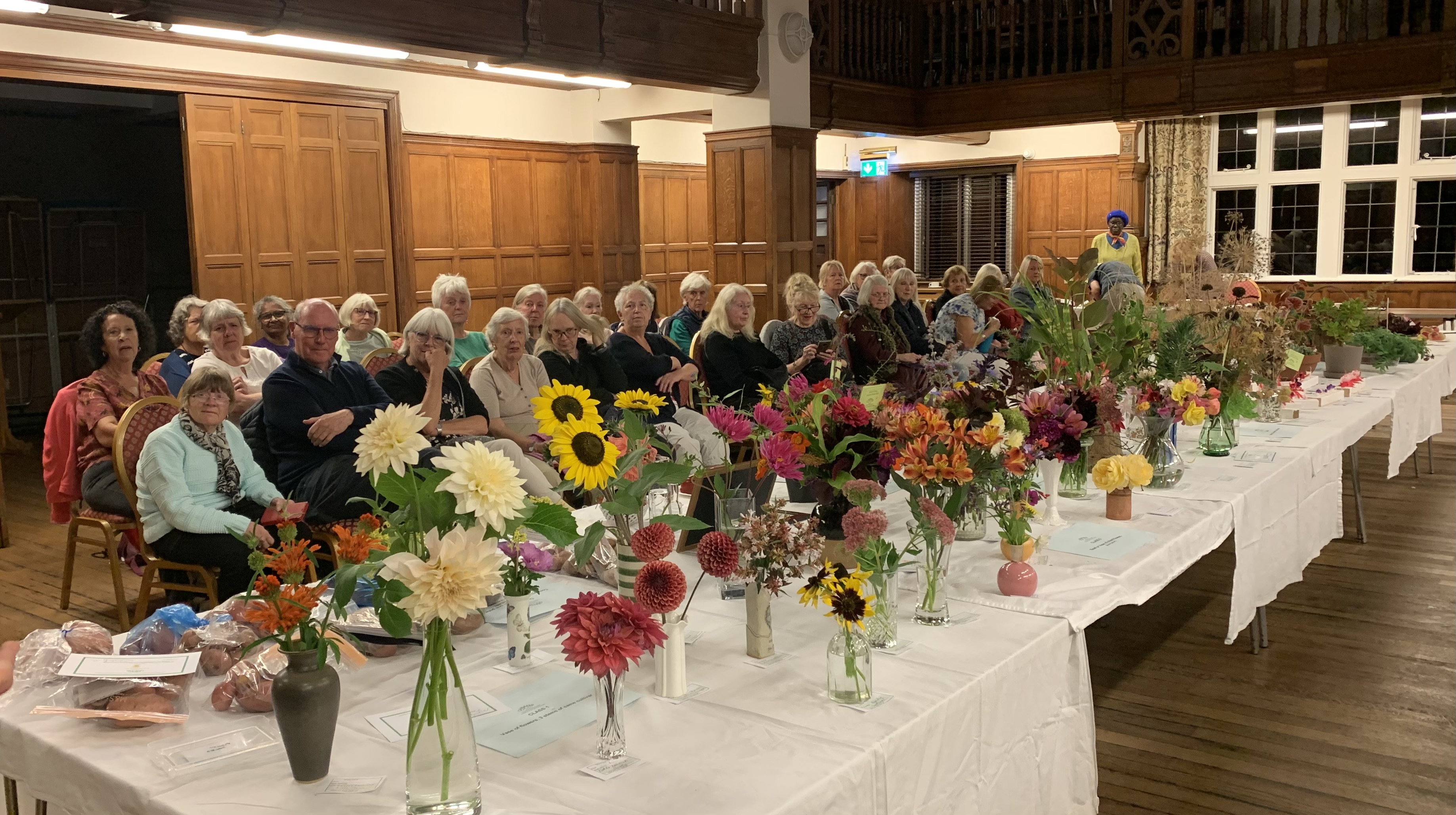
Here’s a reminder of last year’s efforts!
The classes you can enter this year are shown below, please have a go at as many as you like!
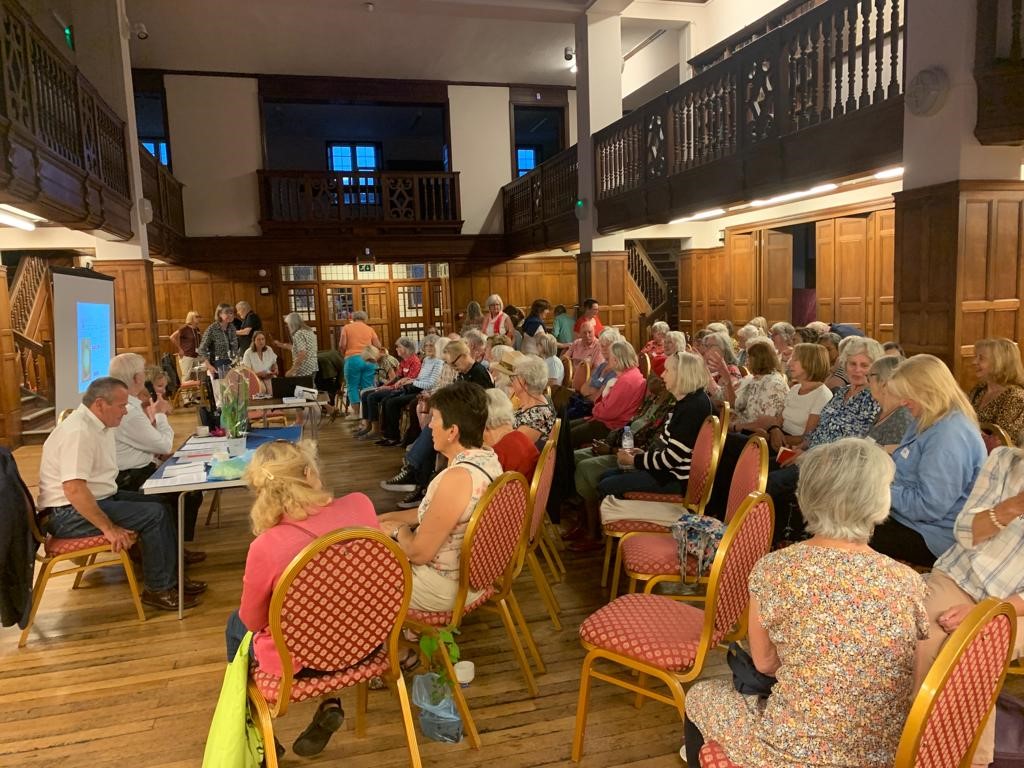
An entertaining and informative evening was had at this year’s Gardeners Question Time. As usual, it enabled members to get advice on their gardening problems, and to air their gardening frustrations. Chaired by Sir Nicolas Bevan, the CABAHS President, the panel also comprised Tom Brown, the Greenwich Park’s Head Gardener, and Pat Kane, a long standing CABAHS member.
Most of the questions were sent in by members beforehand. They covered a broad range of gardening areas and problems: growing hollyhocks; aphid control; tree size; cistus, salvia and sisyrinchium pruning; how to grow dahlias; what killed my rose; problems with apple trees and rambling roses; how to encourage children to get involved in gardening; recommending a fertiliser for yew hedges; the cause of curly cucumbers; dealing with self seeding; and problems with bamboo.
One of the nicest aspects about walking around the streets in our neighbourhoods is being able to view the diverse range of flowering trees, shrubs, perennials and bulbs that enhance front gardens and, in early August, it’s the showiness of Agapanthus that makes one stop in one’s tracks in admiration.
And so, it was an added pleasure to be able to admire the magnificent evergreen Agapanthus praecox “Madeira Blue” and “Madeira White” in my neighbour’s rear garden. Linda tells me she purchased the bulbs in Madeira approximately ten years ago, where these perennials have become naturalised throughout the island.
The plants are extremely tall and vigorous and absolutely stunning, with additional flowering stems this year, having outgrown (and broken) previous terracotta pots. The bulbs have been in the existing plastic pots (sitting on feet) for the past three years, having been divided up – no easy task – and planted into several more containers. They have not been fed for a while and are not given protection in the winter (it’s a sheltered garden) with the flower heads left on until spring.
1. It is especially important to keep Camellias and Rhododendrons damp at the roots this month as this is the time that the buds form for next Spring. Water well and mulch if you can.
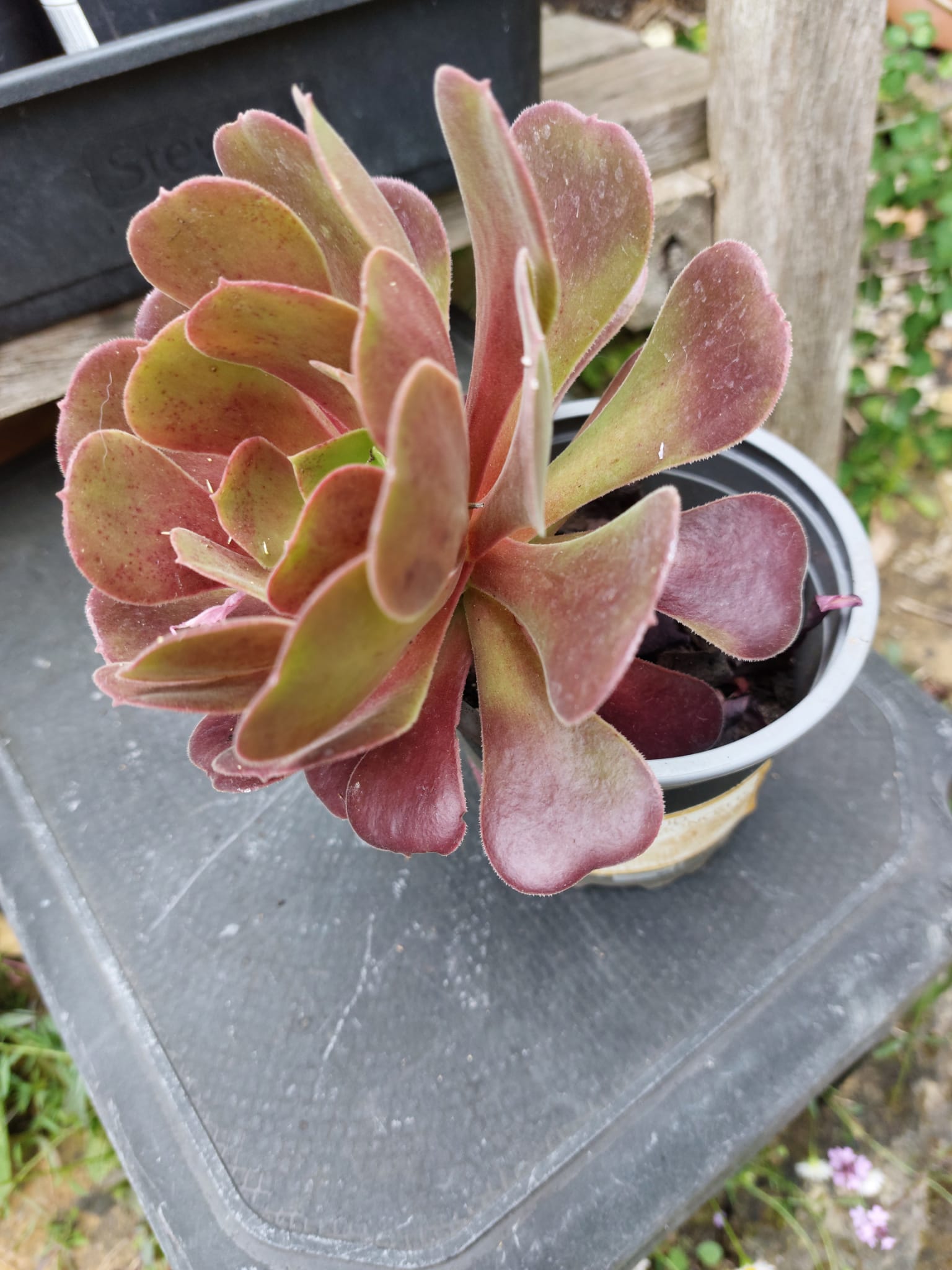
2. Take Aeonium cuttings now by severing leggy leaf stems a couple of inches below a cluster. Leave the stem end to callous over, then push into gritty compost and keep in a shady spot until roots start to form.
Trying to select photos to use from a visit to Beth Chatto’s garden is not easy! All aspects of this Essex garden are stunning and there are numerous ‘take homes’ from a visit. The cluster of pots around a wooden bench is easy to replicate, with its mixture of plectranthus, fuschia, a small but perfect blechium, pelargonium ‘Vancouver centennial’ (keep a lookout for this at our plant sales – it was our ex-Chair Jillian Smith who originally provided a steady supply) and a charmingly named begonia, ‘Beth’s Houseplant’.
Of course, the dry garden is stunning with gaura, various grasses and verbenas (Bonariensis, hastata and ‘Bampton’) dominating the display in mid-August. Stipa gigantea and verbascums add height and Althaea cannabina has seeded itself generously. The blue of Catanche caerulea looked startlingly beautiful in one corner. This area of the garden is always a useful guide to what will manage with little water and good drainage.
The panel this year consisted of the CABAHS President, Sir Nicolas Bevan in the chair along with the well known horticulturalist, retired Greenwich Park Manager and teacher, Joe Woodcock and our own knowledgeable CABAHS member, Pat Kane. It was a jolly affair much enjoyed by the members, held in the Old Library at Charlton House because of the possibility of rain.
Before the meeting, some members visited the Old Pond Garden to check on and discuss progress.
We had some superb exhibits on the Show Table at this month’s meeting, with a wide range of pot plants, flowers and fruits on display, so it deserves it’s own post! The Table was, as always, a great focal point for members to gather round and chat about the entries.
Hmm, the committee wonders if the new prize for ‘Best on Table’ is encouraging our members’ competitive sides to come out? Winner this month was Ruth C, with her beautiful vase of Dahlias ‘Creme de Cassis’. CABAHS President Nicolas presented Ruth with a pot plant plus a special CABAHS Biro. The biro is limited edition, and can only be given to a Show Table winner. In future we expect this to become as coveted an item as a Golden Gavel or Blue Peter badge…!
The CABAHS BiroDahlia Creme de Cassis (purple)
The whole Show Table:
A note about last month’s Show Table – winner was Pat K with her bowl of mixed sweet peas. Here is a selection of those entries:
Pat’s Sweet Peas
There will not be a Show Table next month as you will no doubt all be busy entering classes in the Autumn Show, but we look forward to the display in October. 🙂
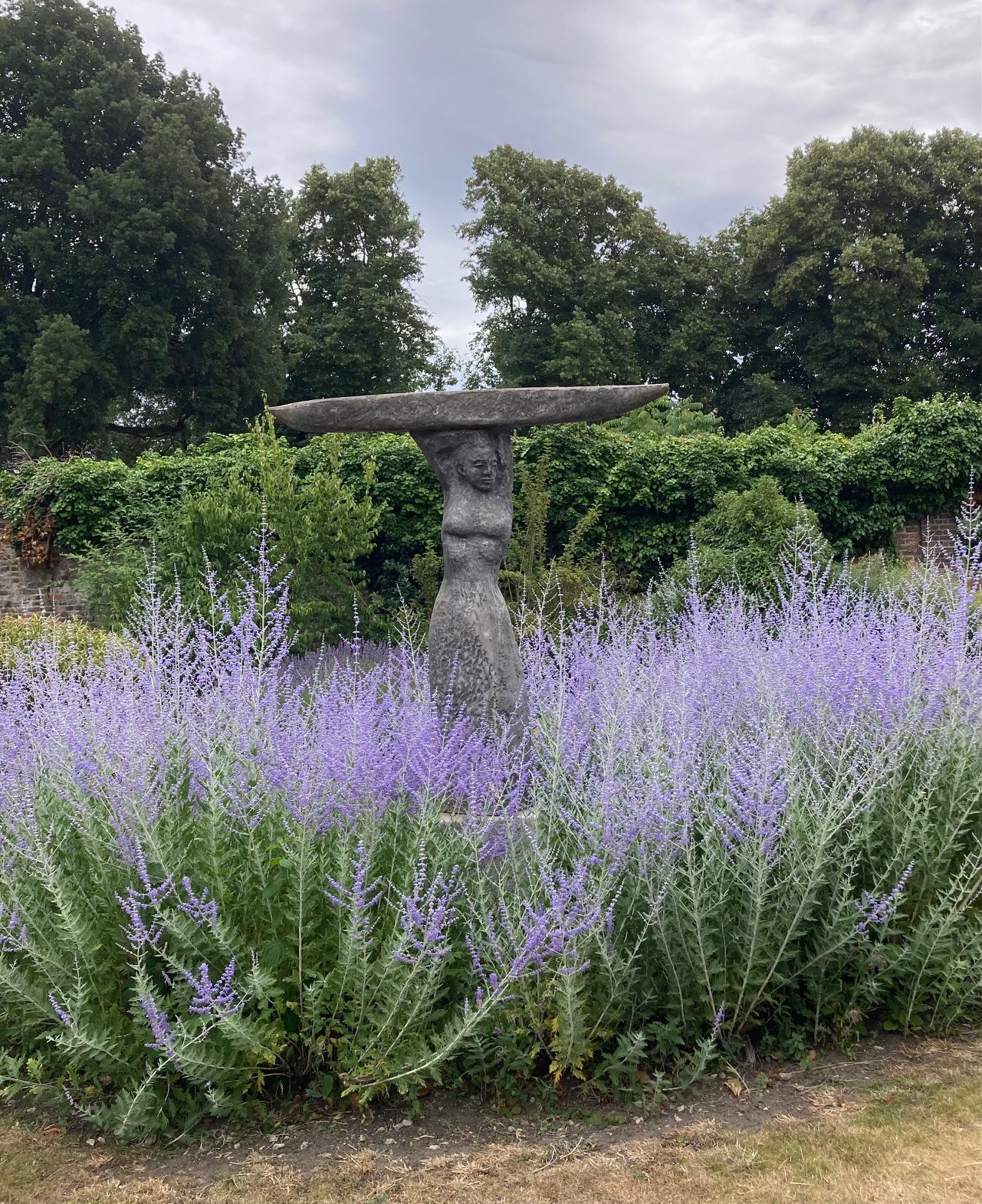
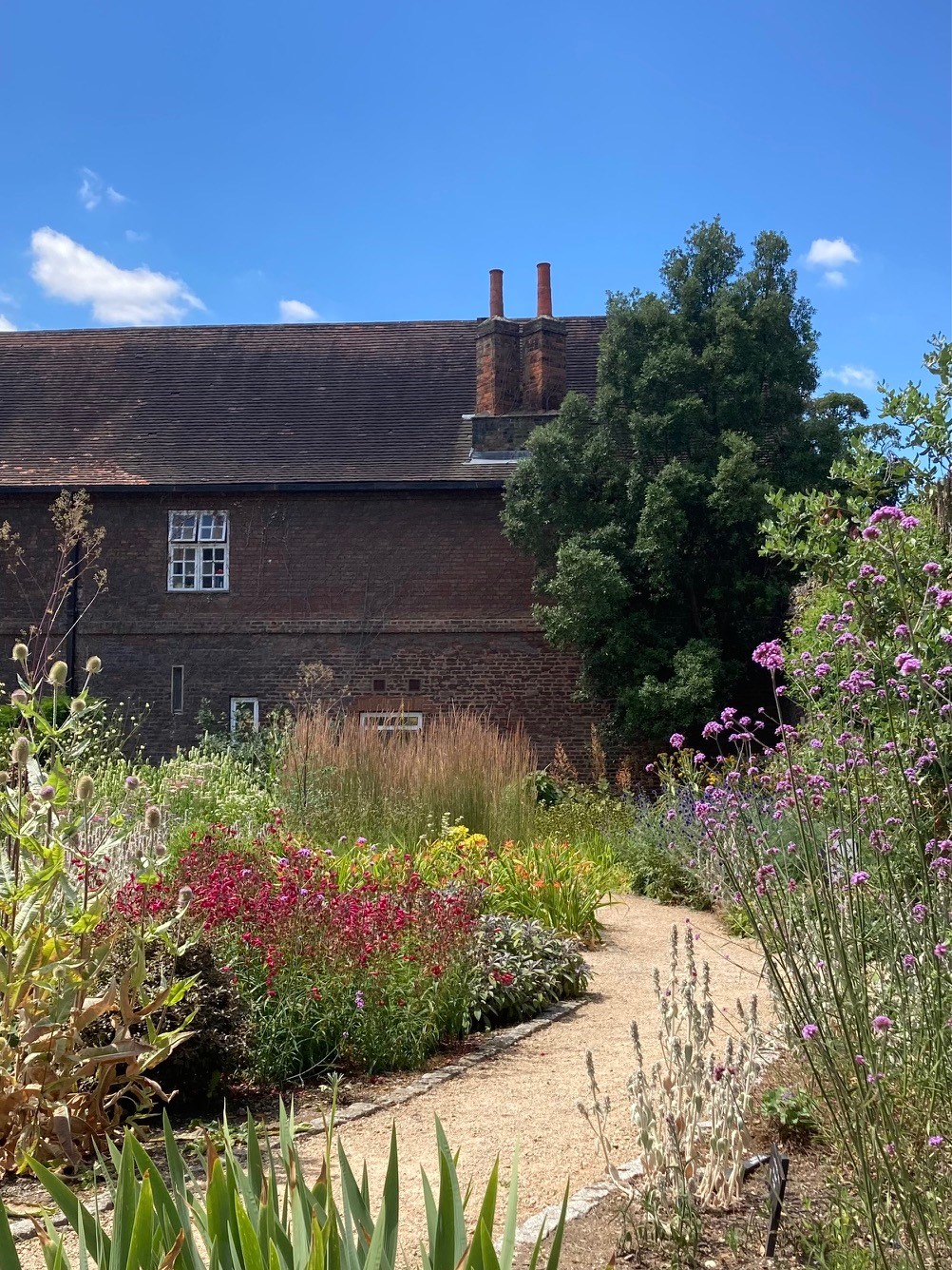
We hope you are enjoying a walk around the walled gardens at Charlton House! This month, look out for:
Coneflower (Echinacea purpurea ‘Magnus’)
Coneflowers are part of the daisy family, originally from North America. Plains dwellers used the fresh roots and root juice to treat toothache and snake bites. Today many people take Echinacea supplements to prevent colds and boost their immune systems. ‘Magnus’ has large pink flowers and orange-brown central cones – bumblebee heaven!
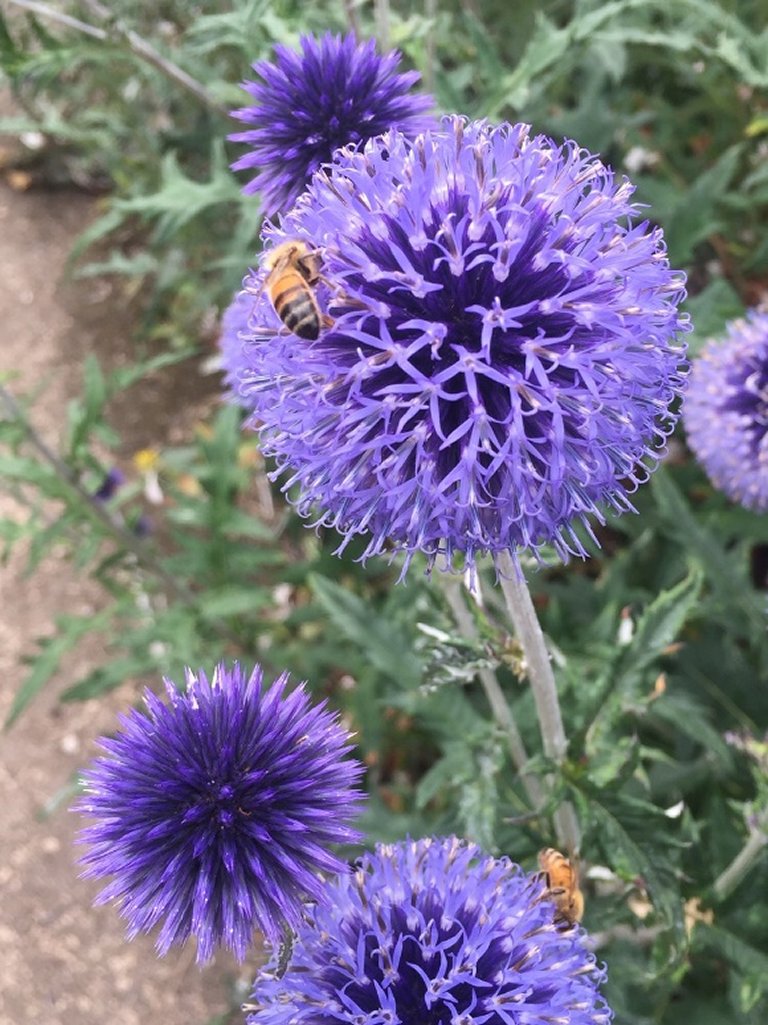
Globe Thistle (Echinops ritro)
With spiky leaves and bristly metallic blue flowers, globe thistles make a great architectural choice for the back of a sunny border. The flowers are extremely attractive to bees, butterflies and other insects and it makes a good cut flower. This is a plant that we prefer to cut the seed heads off before they drop their seeds – they spread VERY easily!
As always, we didn’t get around to answering all your questions at our August GQT meeting (I’m very sure they don’t manage to on the radio programme either!). But you may remember that Annie H brought in her strange distorted tomatoes to show everyone. If it had not been for the biblical deluge, I expect we would have had a good discussion about them.
Annie H’s weird tomatoes!
Annie was undaunted by getting no answers at the meeting, and contacted the RHS directly. She says, “I was informed that the most likely cause was a too high concentration of a contaminated farmyard manure compost in the pots. The farmers spread weedkiller/ pesticide on the field, the grass grows and the cattle dump cowpats which are composted and then bagged up for sale but still contains residues of weedkiller/ pesticide.”
Thank you for this Annie, something for us all to watch out for. It would be interesting to hear from other members if they have had a similar experience.
Our previous post was all about how well the garden was growing – and it really was – except it then just stopped raining, for ever! At the beginning of July, everything was looking nice and green:
Peace GardenGACO Juneberry TreeOPG
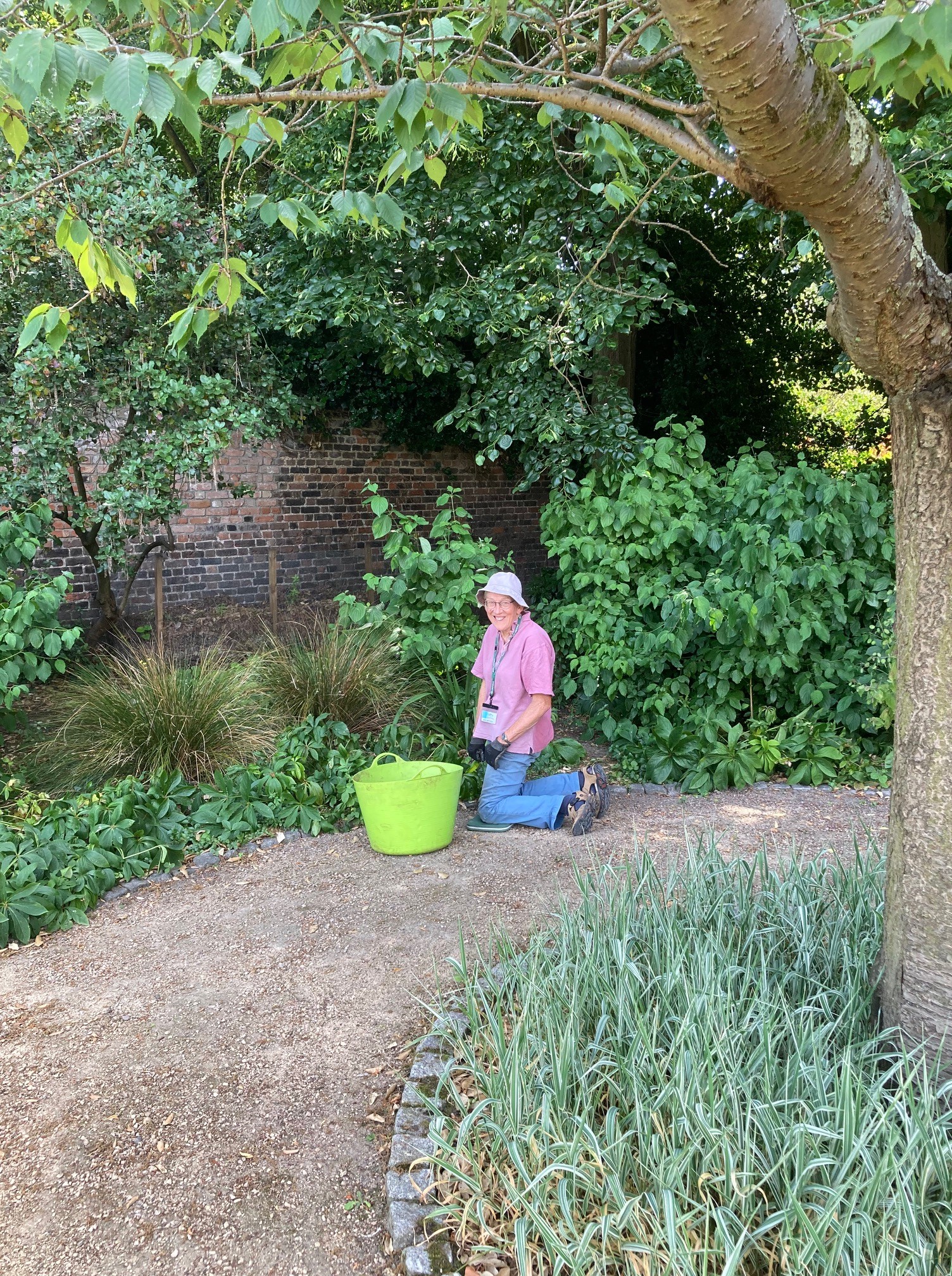
But as the Summer heatwave went on, and ever hotter, the volunteers spent more time working in the shade..
Barbara in the PoppiesJane tidying the shrubberyLinda pruning, in her Ski boot! – Dedication.Lynda tidying up the HelleboresBarbara and Sharon watering
And pretty soon all we were doing was watering. It has been heart-warming to see the volunteers arriving every Tuesday or Thursday, picking up their watering cans and setting off to save many of the plants we planted in to the Old Pond Garden just last year. We have lost remarkably few in the end, and as long as we don’t have a repeat heatwave/drought next year, most should get their roots down and become more resilient for the future. There have been a few casualties, and a few that clearly don’t like where they are. So as soon as Autumn comes, Jason will be directing some tweaks. As August came around, the garden’s colours and textures changed to become Autumnal.