Basically, melt chocolate and let it set in old teaspoons. Then use them as stirrers in a cup of hot milk – hey presto, hot chocolate!
Wander round the garden hugging your hot cup and planning for the spring…
Autumn colours
I have been reading that the Autumn colours this year should be lovely, following an unusually warm September and the coming month will provide an opportunity to get out into the gardens to experience these first hand.
One of the most spectacular displays may be at Stourhead in Wiltshire, where exotic species such as tulip and katsura trees stand alongside natives such as oak, beech and birch. Tom Hill, who looks after sites at Winkworth Arboretum in Surrey and Petworth Park in West Sussex, says he can already see the colours beginning to change. And it isn’t just the colour of the trees. At Mount Stewart in Northern Ireland, the assistant head gardener, Oliver Johnson, says he loves the light at this time of year.
Living as we do, on the edge of Kent, within fairly easy reach of a number of lovely gardens, it might be worth taking advantage of our privileged location. With the evenings already drawing in and with the potential of further localised lockdowns due to coronavirus, taking the time to notice nature and to take in the colourful landscapes that we can see at this time of year seems more important than ever.
Simon Toomer, a plant specialist at the National Trust, says that “The particular dusky, heavy scent of autumn and the sounds of crisp leaves crunching under foot, will all serve to help our wellbeing through the next few colder, darker months.”

Vija
OPG diary – October 2020
13 October
Heroic (and very wet) volunteers in the garden today. A lot of the plants from our shopping trip to Provender Nurseries are now in place. We really appreciated extra help from students from the University of Greenwich, who sportingly also got very wet. Donations of cinnamon buns from Charlton Bakehouse went down well. Thank you everyone. The picture below will be used as a ‘Before’ picture – so looking forward to taking some ‘After’ pictures next year!

20 October
Another glorious Autumn day! Lots of volunteers and a bit of sun, what more do you want? We discovered the friendly Greenwich Carers café in the Stables next door. Bring your own cup/mug.


22 October
Our Oak-leaved Hydrangea is turning a lovely colour. Look what has taken up residence in it – a crab spider. Apparently they camouflage themselves but it takes a few days to change colour – this one must have been in a white flower recently!

The second week in October
Before I turn to the second week in October, I should explain that the first week in October saw me, by and large, cowering indoors, hoping to avoid the rain. I felt shamed into turning my attention to several ‘projects’ that I had earmarked for myself when lockdown began, err, just over six months ago.
One of these projects was to put some order into several piles of books that I have been accumulating and I saved that one till last, as a sort of reward to myself. It’s possible to do a fair amount of sitting down and indulge in a little light reading to help the project along. When I was almost done I unearthed (no pun intended) a great little collection of old and new books about gardening that a friend had presented to me when I took on my allotment.
One was a charming reprint of a book containing sensible advice for the novice WWII allotment-holder, including how to dig efficiently without straining your back – why didn’t I pay more attention?! – and a list of necessary tools to see you through:

Adam the Gardener, a Sunday Express publication from around 1954, presents the gardener’s year, what to do and when, with illustrations of Adam in action. He never looks very happy and I fear he hadn’t got the advice about digging techniques. I thought I would see what Adam had to say about jobs to be done in the garden in the second week in October. Here’s what I found!


Melanie
A new ‘green’ initiative at Blackheath Standard
The September edition of the Westcombe News has an interesting article about a ‘greening’ initiative to tidy up Delacourt Road. Led by financial planning company Gingko Financial, there are some lovely new planters on show and a clever green roof on the bin store. It is hoped that making the area smarter will stop some of the littering problems. It certainly looks prettier! The idea is led by owner Daren Wallbank who has set up a Grow with Gingko page.
When you are next in the Standard area, make time to have a look, Delacourt Road has some interesting businesses.

Members’ gardens, September 2020
Annie has harvested her garlic and it’s done very well this year. I expect these would have been part of her Autumn Show entry, never mind, next year..

Cutting back lavender is this month’s job. Kathy was a bit mystified by these structures revealed when the lavender was cut back. They look a bit like Nigella seed cases! But Mr Google says that they are the nests of the Wasp Spider, a fearsome looking spider which is spreading to the South East of England from the continent. It is actually quite harmless, and mimics the wasp so that predators leave it alone.


A lovely selection of Cosmos and Dahlias, definitely September’s flowers. These are Cosmos Purity, Dahlias Verrone’s Obsidian, Mexican Star and Bishop of Auckland. (Plus an unknown beautiful double red one).
OPG diary – September 2020
25 September
Starting to plant things instead of just weeding and pulling up. This picture shows newly planted clumps of lilyturf (Liriope muscari) looking happy under the Tree of Heaven. The lilyturf was kindly donated by a CABAHS member.

We are ordering 2,000 bulbs of Narcissus ‘Tete a Tete’ and Thalia, for some spring colour, these should arrive in a week or so. Lots of planting to do!
28 September
A lesson and/or debate on how to plant a shrub! These are the Pittosporum “Tom Thumb” being planted.

Homegrown
A suggestion made by Anna has prompted me to think what we can learn from random gardening mistakes, or shall we say, unplanned activity.
I use a lot of salad vegetables and always have a variety of leaves growing to use as a base for additional ingredients. I sow a selection in various seed trays, which I then prick out and later plant into the garden. A few years ago, at the tail end of the summer, I sowed seeds into their seed trays as usual. For whatever reason, I failed to prick out and then felt it was too late to do anything much with them, so I was left with several seed trays full of fresh young seedlings. And I left them. But what happened then was that they provided me with a steady supply of cut-and-come-again salad leaves (the kind you pay a fortune for in bags in supermarkets) to enjoy through the winter. Ever since then, I use this method to provide me with small young and tasty salad leaves, throughout both the summer and winter. I do this with Mizuna, Endive, Rapa da Foglia (turnip greens), mustard, rocket as well as the usual lettuce varieties which we grow. I am sure it works equally well with chard and beetroot and members will have their own varieties to suggest here. Obviously the mild winters we have been experiencing do help, I am not sure what a sharp frost would do. Ultimately, the plants will become very rootbound, but growth in the winter slows down, so this takes a while to happen.

Trays of seedlings sown 5 September.
The usefulness of this method is also that you could do this on your kitchen windowsill, balcony, or whatever space is available.
Vija
A visit to Great Comp
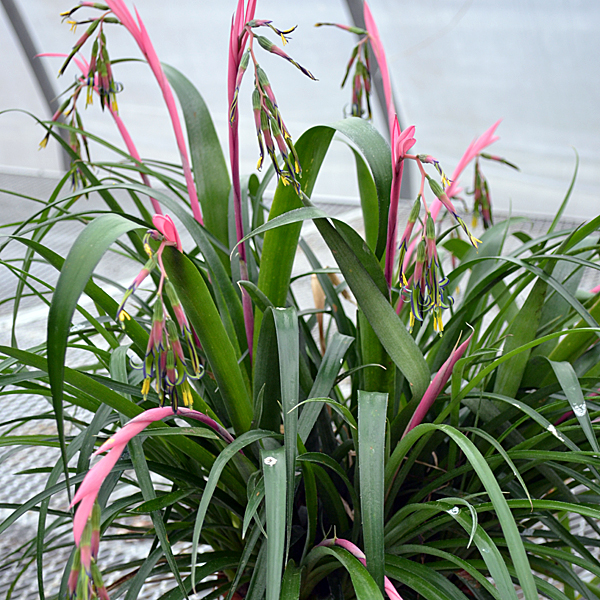
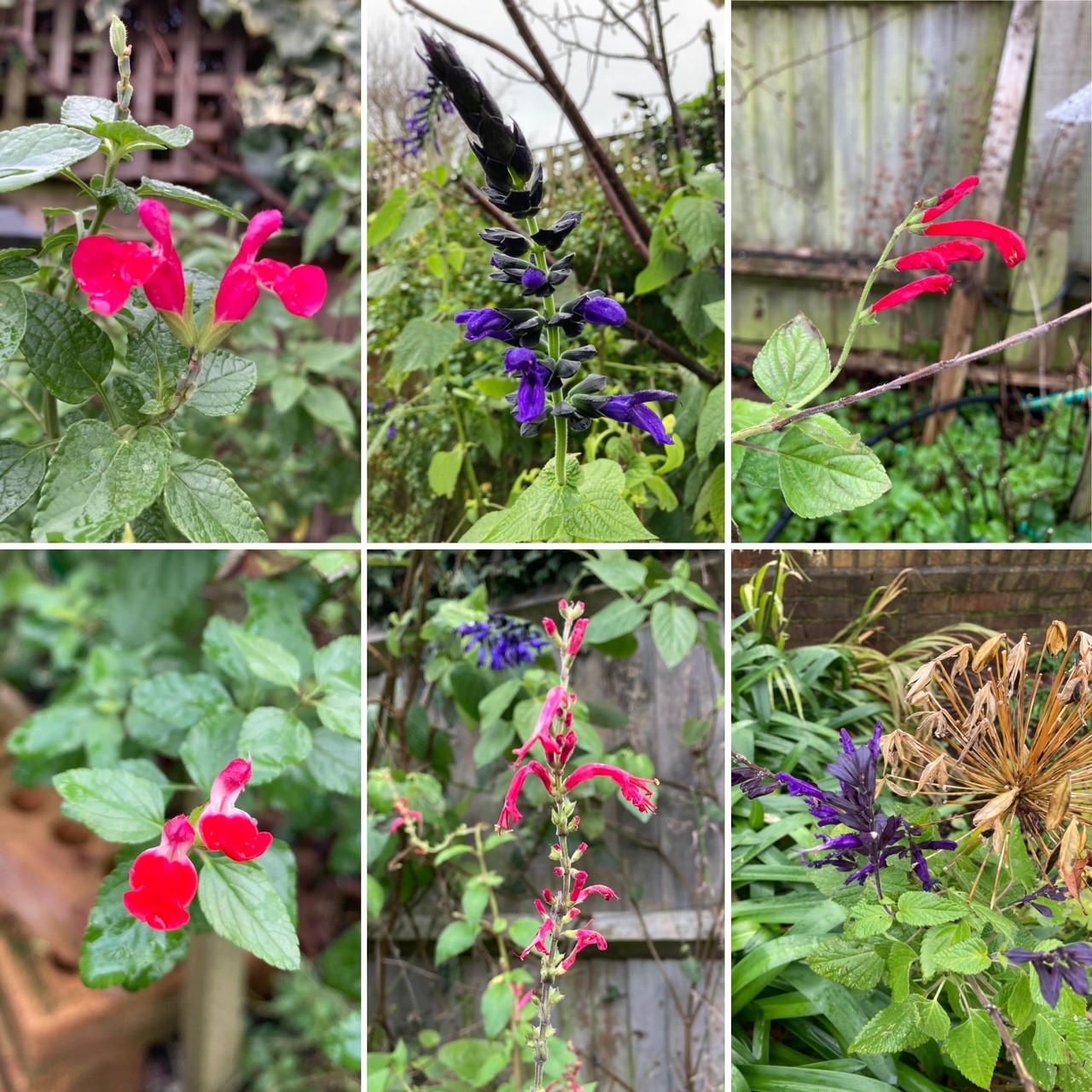
CABAHS members enjoyed visiting Great Comp Garden on 21 and 25 September 2020. The garden is looking so good at this time of year, it really is Salvia heaven.
My Zinnia success

I sowed these Zinnia seeds directly into the ground in June and replanted the thinnings and ended up with two rows. This is the first time I have ever grown Zinnias. It was old seed and I probably bought the packet at our plant sale a year or two ago for the going rate of 20p!
I reckon my success is down to beginner’s luck and the Poundland compost!!!! I have very light soil so I also added the ash from the bonfires and chicken manure pellets before I planted up the plot. As they are adjacent to my tomato plants I made sure they were watered nearly every day to encourage a good root system. Yet information online says they only need watering every five to seven days. I was warned not to get water on their leaves as they are prone to folliar diseases. They are growing adjacent to the boundary fence and I’ve had to support them when the high winds came.
There are doubles and singles, in various shades of pink and yellow. The bees love them and they are long lasting as cut flowers. They are the first plants I look at when I arrive at my allotment plot and I coo over them! Margaret grows rich, strong orange Zinnias which knock my Zinnias aside and they are simply stunning. Definitely a plant to try again next year.
Anna L