Snippets of news relating to gardens, the environment and the local area, CABAHS members’ posts about garden topics, gardening hints and tips, and short pieces about garden design and history
A visit to Exbury Gardens in the week between two May Bank Holidays was a treat for the senses. I last visited after the summer drought and before the winter storms and asked myself, ‘how would everything look?’ In short, everything looked thrillingly fresh.
There have been some losses, which, while regrettable, have provided opportunities to the gardeners to open up views, plant new (drought-resistant) species and create entirely new gardens.
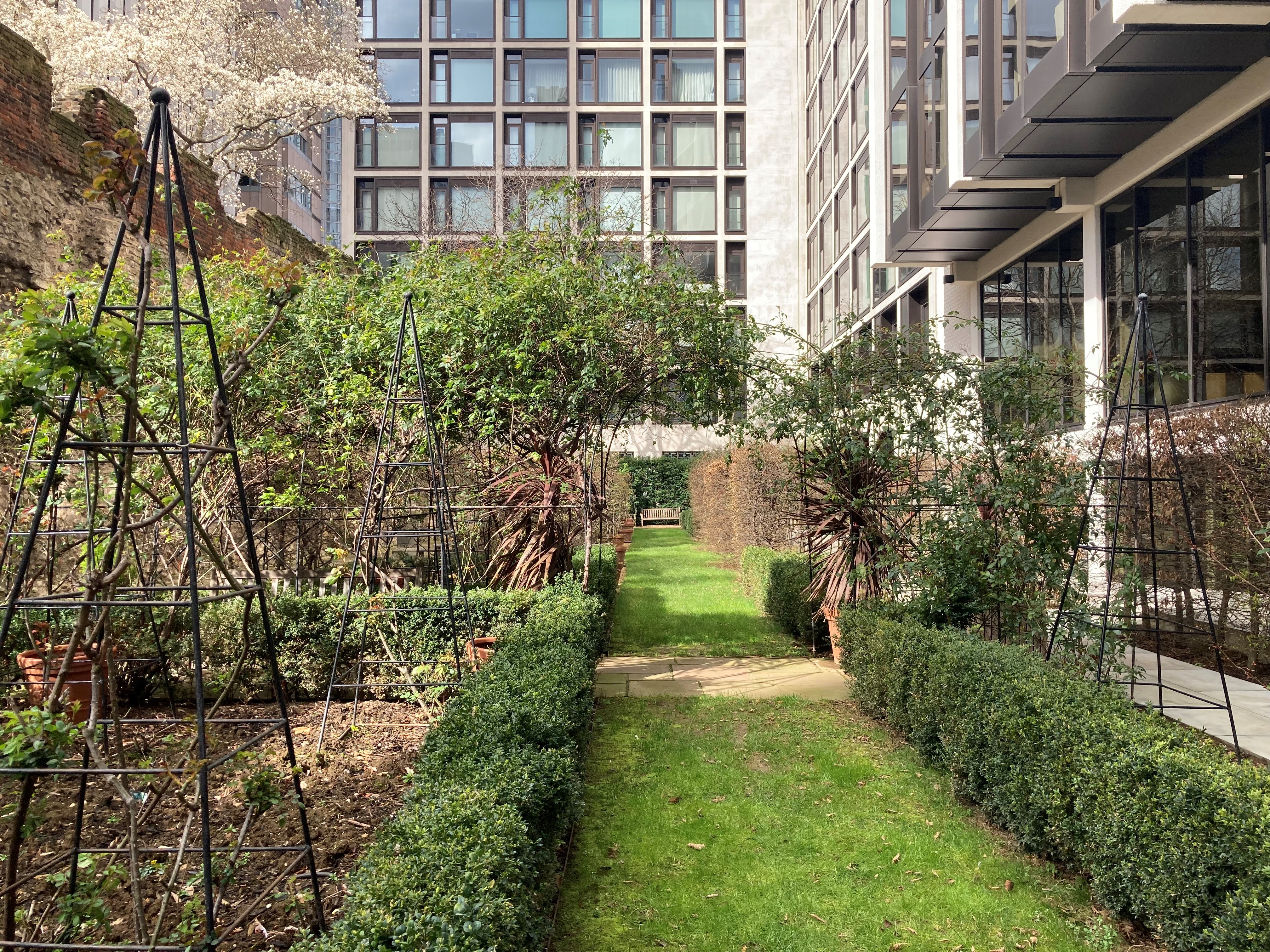
The City of London is a wonderful place to explore and is full of hidden- away gardens for us to access. We came upon this garden in early spring when we were meandering (slightly lost, really) towards the Barbican to visit the Conservatory.
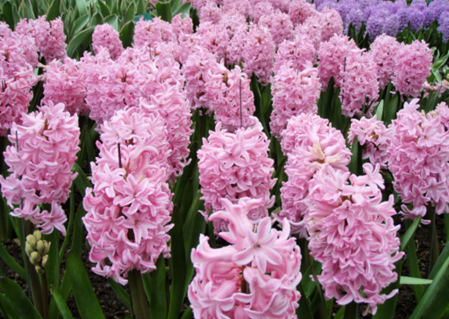
A visit to Keukenhof for the second year running found a different garden, although the visits were only a week apart. Spring has evidently come later and most of the narcissus and hyacinths were still in full flower. Last year there were very few remaining in flower. The scent from both filled the air.
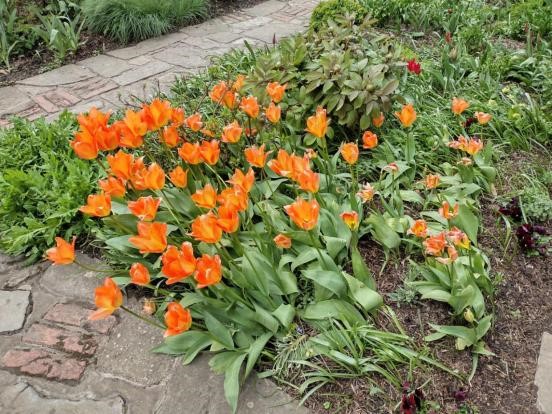
Even where some of the tulips had gone over they were still exquisitely beautiful – like a Dutch still life painting.
At home my hyacinths have been swept around by the rain and wind, but at Keukenhof they stand firm.
But then I looked closer. Each individual hyacinth has been individually staked, so discretely that it is hardly noticeable! What a labour!
For those who haven’t visited, Beth Chatto’s Garden is a horticultural paradise located in Essex, England. In March, visitors can expect to see a range of unique features and highlights that make Beth Chatto’s Garden a must-see destination for anyone with an interest in gardening or nature.
One of the most striking things about Beth Chatto’s Garden in March is the abundance of early spring blooms. As winter fades and the weather begins to warm up, the garden comes alive with an array of colourful flowers and blossoms. The famous Gravel Garden is a great place to start exploring the garden. This innovative garden was created in the 1990s, and features plants that are adapted to dry conditions, making it an ideal spot for early bloomers like crocuses, daffodils, and tulips. Visitors can expect to see bright pops of colour as they stroll along the winding paths that wind through the garden.
In addition to the early spring blooms, March is also a great time to explore the woodland areas of Beth Chatto’s Garden. The woodland gardens are home to a wide range of plant species, including ferns, shrubs, and trees. Another highlight of Beth Chatto’s Garden in March is the chance to see the garden’s many rare and unusual plant species. Beth Chatto was a pioneer of ecological gardening and her garden is a testament to her commitment to sustainable practices. Visitors can expect to see a range of native and non-native plants that are perfectly suited to the local climate and soil conditions.
The Barbican Conservatory is a tropical and sub-tropical botanical glass-roofed garden located on the third floor of the Barbican. It’s an ideal place to visit during the winter months (and all-year round) but on 16th March we hit the jackpot and were thrilled to see Clivia plants in full flower – perfect timing, as it is this month’s Plant of the Month!
This is the second largest conservatory in London (Kew Gardens’ Temperate House being the largest). Opened in 1984, the walkways and terraces have been designed to encourage visitors to wander the pathways and along the walkways in order to explore and experience an urban jungle and to observe the characteristic form of every plant.
Amongst the tropical planting, various exotic palms stand out and the handsome foliage of Monstera deliciosa (swiss cheese house-plant as we know it) is there to be admired. The majestically tall weeping fig tree emphasises the height of the conservatory and frames everything around it. Wide, arching stems of the handsome tree fern and the striking tree, Araucaria heterophylla (which we rested under), plus unusual climbers and shrubs including yuccas and cordylines, are amongst the 1500 plant species on show for the public to appreciate.
I have never visited the Botanical Garden at Ventnor on the Isle of Wight, but the gardens have recently become the subject of some controversy with factions divided over the way in which the gardens are currently being managed (or not). The significance of the garden lies in its situation in a micro-climate which makes it ‘the hottest garden in England’ and the previous head gardener gained a reputation for bringing in plants from far flung regions. From its foundation in 1970 until it was sold to an American businessman, John Curtis in 2012, the garden was publicly owned, and run by the Isle of Wight council, but as the council struggled with significant financial losses the garden was sold.
Over the course of the next few years a number of visitors noted what they described as a decline in the gardens – weeds were appearing and there seemed to be a general feeling that it was no longer being managed properly. John Curtis defended the garden arguing that the methods being used supported gardening in a time of climate change. Unlike a typical botanic garden, plants are no longer labelled which the current head gardener, Chris Kidd describes as creating an ‘immersive experience’ and the idea is to garden with nature.
With opinions sharply divided on both sides, ultimately, much seems to depend on what one describes as a ‘natural garden’ and the nature of a ‘botanic garden’. What is wild gardening, or gardening with nature? How natural is a natural garden? Ventnor’s dilemma seems to embody much of current horticultural conversation.
On Saturday 11th February Jean and I spent a very pleasant day at RHS Wisley. This was the last day of the Iris and Cyclamen Show held in the Hilltop event hall.
The displays were beautiful. So uplifting to see so many spring colours after a long, cold winter. We were amazed at the variety in size and pattern of cyclamen leaves, all in perfect condition of course.
The Iris Fields of Hall Road, Wenhaston IP19 9HF were selling small pots of irises to which we both succumbed!
In a previous life when I worked for garden charity Thrive*, I was involved in replanting the Old English Garden in Battersea Park and last week I and a former colleague went back to see how it is looking now, some 10 years later.
Although it has a similar feel and look to the Old Pond Garden, it is only walled on one side, but it does still have a large pond in the middle, which is full of water lilies in the summer – spot the heron !
Much of the funding was provided by Jo Malone London (JML) and many of the plants are those used in their fragrances including lilies, rhubarb, pomegranate, jasmine and, of course, roses. Some replanting has been done in the intervening period and it continues to be well maintained and supported by JML, volunteers and Thrive gardeners.
Friends of Great Dixter were invited to a post- Christmas event at the end of January to join Fergus Garrett, students and staff. Warm spiced home-made apple juice and biscuits were available for refreshment and the archives were open for those who had not already seen them. We were welcomed into the Great Hall where a huge fire crackled and students created a ladder from chestnut poles gathered from the surrounding area. Outside, Fergus demonstrated how, using a traditional A-frame and tools, chestnut poles could almost perfectly be split ready for use. Of course, the highlight was being able to look around the gardens at a time when they are not usually open to the public. For those who have watched Fergus’ lectures on successional planting, the practice was evident in the canes laid out on the soil. Fergus’ favourite giant fennels were already unfurling and the gardens were positively covered with Galanthus atkinsii, both of which are clearly visible in the photograph above. An added bonus was that the day was sunny and moderately mild. What a treat.








 Charlton and Blackheath Amateur Horticultural Society