Snippets of news relating to gardens, the environment and the local area, CABAHS members’ posts about garden topics, gardening hints and tips, and short pieces about garden design and history
I made my first visit to the charming Lullingstone World Garden today, and am very sure I will be back! This is the most eccentric and fun walled garden, as you might expect if you are trying to fit a worldwide range of plants into it. I especially liked the plant labels everywhere, so you know what you are looking at.
Entrance through the Moon gateAustralia houseRed Hot Pokers standing out
There is a nursery selling high quality plants and a cafe serving great sandwiches and drinks, also lots of seating for picnics. The private House wasn’t open when I visited, but opens sometimes for events. Add it to your list for visiting!
Trying to select photos to use from a visit to Beth Chatto’s garden is not easy! All aspects of this Essex garden are stunning and there are numerous ‘take homes’ from a visit. The cluster of pots around a wooden bench is easy to replicate, with its mixture of plectranthus, fuschia, a small but perfect blechium, pelargonium ‘Vancouver centennial’ (keep a lookout for this at our plant sales – it was our ex-Chair Jillian Smith who originally provided a steady supply) and a charmingly named begonia, ‘Beth’s Houseplant’.
Of course, the dry garden is stunning with gaura, various grasses and verbenas (Bonariensis, hastata and ‘Bampton’) dominating the display in mid-August. Stipa gigantea and verbascums add height and Althaea cannabina has seeded itself generously. The blue of Catanche caerulea looked startlingly beautiful in one corner. This area of the garden is always a useful guide to what will manage with little water and good drainage.
Throughout the year Great Dixter hold various events for their Friends membership. So, on yet another dismal July evening this year, Pat and I drove to Sussex. The evening began with drinks and canapes and a talk from Fergus which should have been held on the front lawn but, due to the inclement weather, was inside in the Great Hall. Three boxes of plants from the nursery, designed for dry, wet and shady aspects of the garden, were raffled at £5.00 a ticket. Surprisingly, as Fergus was talking, the sun came out and what could have been a wet evening turned into a very pleasant one. Although the colour of the sky in the photo demonstrates it was still fairly cloudy!
We had arrived slightly early, so were already able to explore the garden which is always full of surprises. The phlox were particularly beautiful and Pat and I were trying to note varieties for our own gardens! Following Fergus’ talk, which was generally about the work of Great Dixter and collaborative projects that were ongoing including one with Hastings council, we divided up into groups according to our chosen tour/talk. Each one of these was conducted by one of the students at Great Dixter. Pat and I had opted for the Long Border and Jungle Garden (although we popped out of the latter and into the Nursery!). The students are articulate and engaging and certainly know their material. Having watched Fergus’ lectures on the Long Border, it was interesting to see this in practice and explained to us by Andrew Wiley, one of the Chanticleer Scholars. A particularly interesting stand of Salvia Indigo Spires was a huge clump of individual cuttings rather than one big plant. Also in use was a lovely creamy apricot Cosmos (Cosmos bipinnatus Apricotta) – a colour which we have seen a lot in other gardens this year and can be picked out in the photo (one to be ordered for sowing next year!). We always leave these gardens full of ideas and plans!
I visited Arundel Castle last week with my son and grandson who spent too long in the castle leaving little time for me to see the gardens. The castle is set in over 40 acres of verdant grounds and within that are the formal gardens in a Jacobean style comprising a domed pergola covered in hornbeam, temples, cascading fountains and obelisks. There is also a stumpery, some very colourful herbaceous borders and a wildflower gardens. I just wish I had more time.
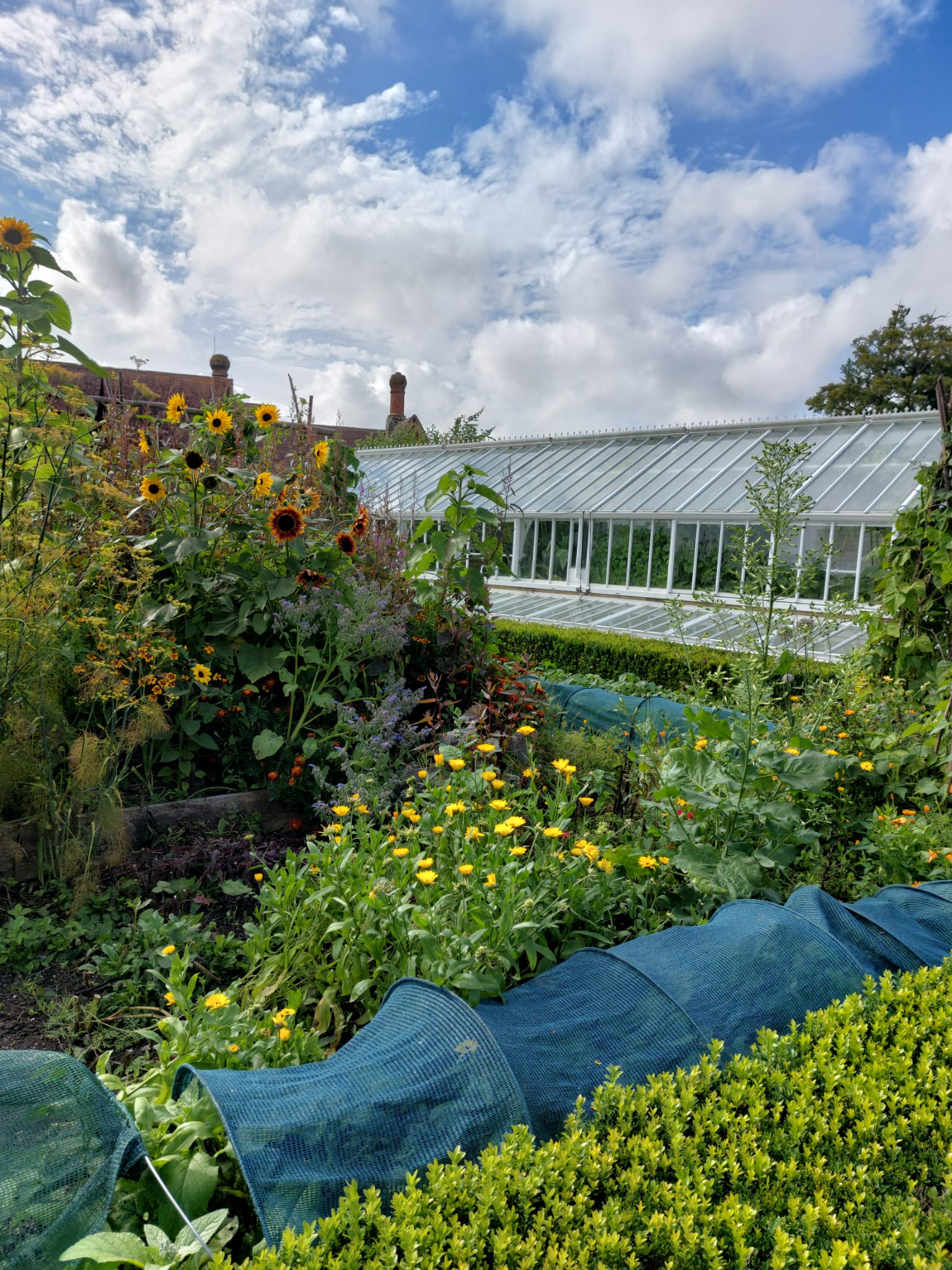
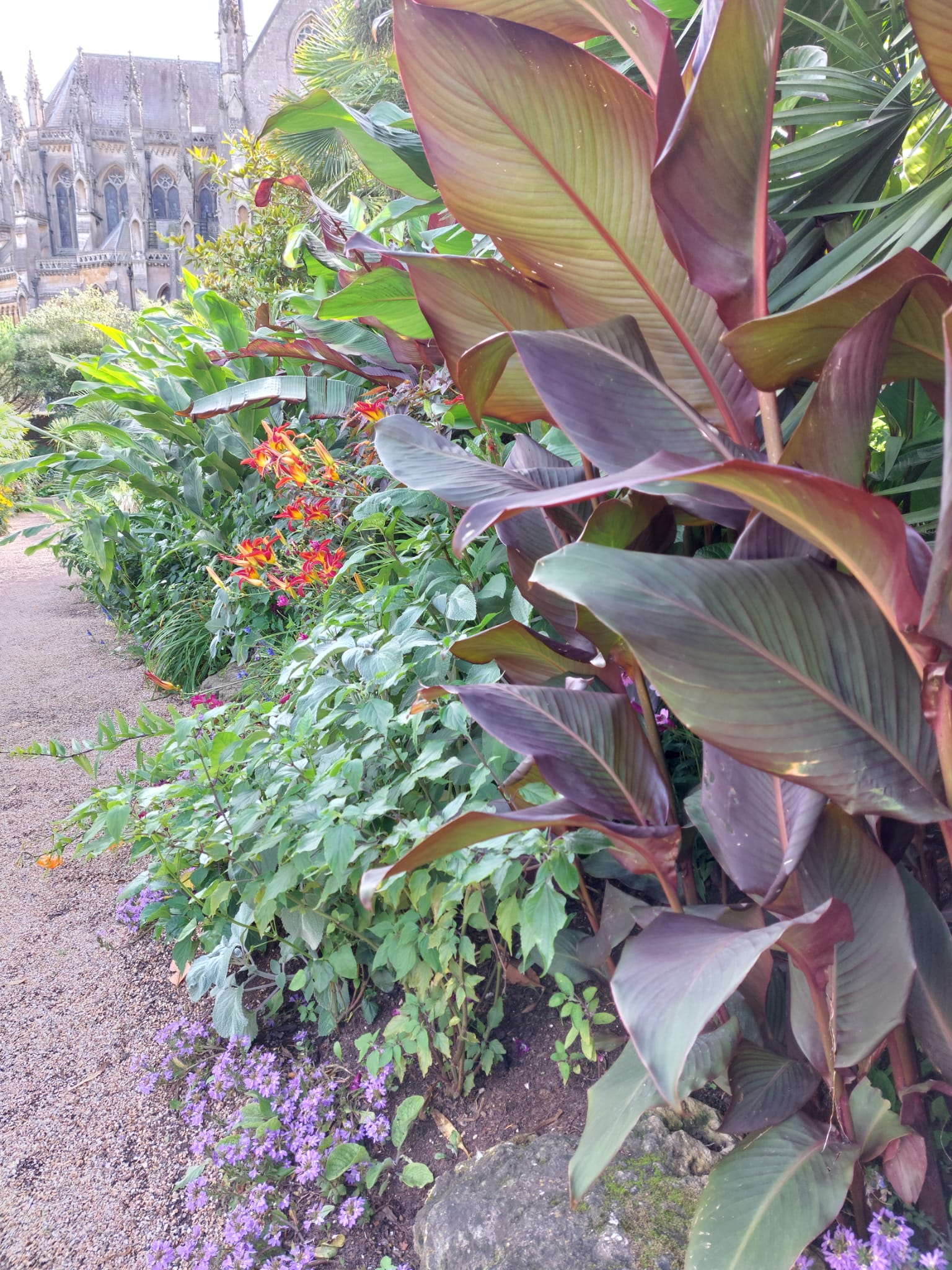
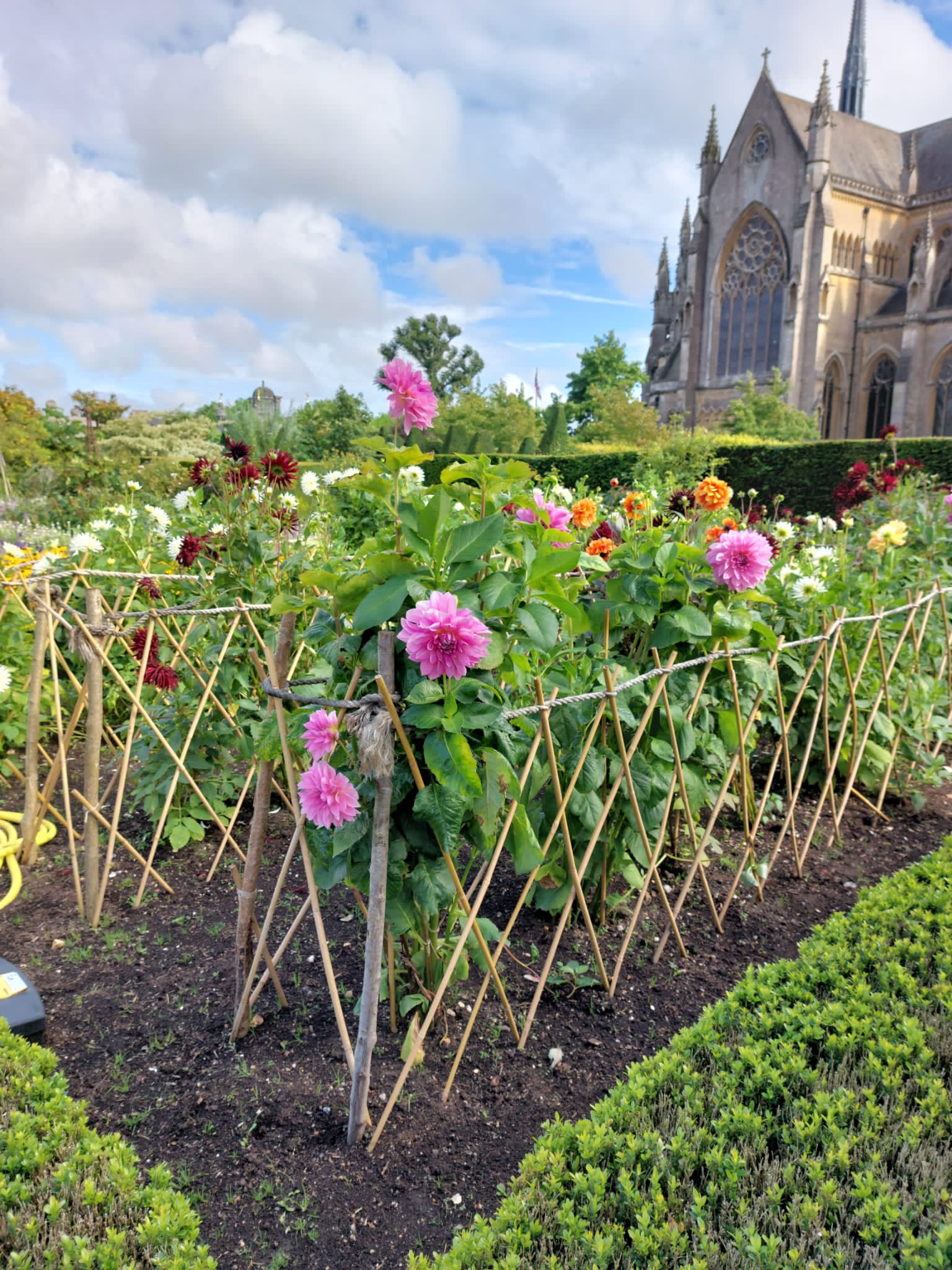
There are two huge Victorian glasshouses, one housing a collection of pelargoniums and another for more tender vegetables in the kitchen gardens. The box parterre was in very good condition with little damage from box moth or blight and had in its midst some lovely healthy looking dahlias. Some of the huge pots housed tender perennials in quite a formal style in what must be a very sheltered spot. I understand that the garden underwent a renewal when the current head gardener arrived and surrounded the lawns with a tropical border based on work he had done in gardens in Bermuda. They also have a tulip festival in the spring which a friend of mine went to and said was spectacular. It certainly packs a punch and if you find yourself in the vicinity of Arundel it is definitely worth a visit but make sure to give yourself time to see it all.
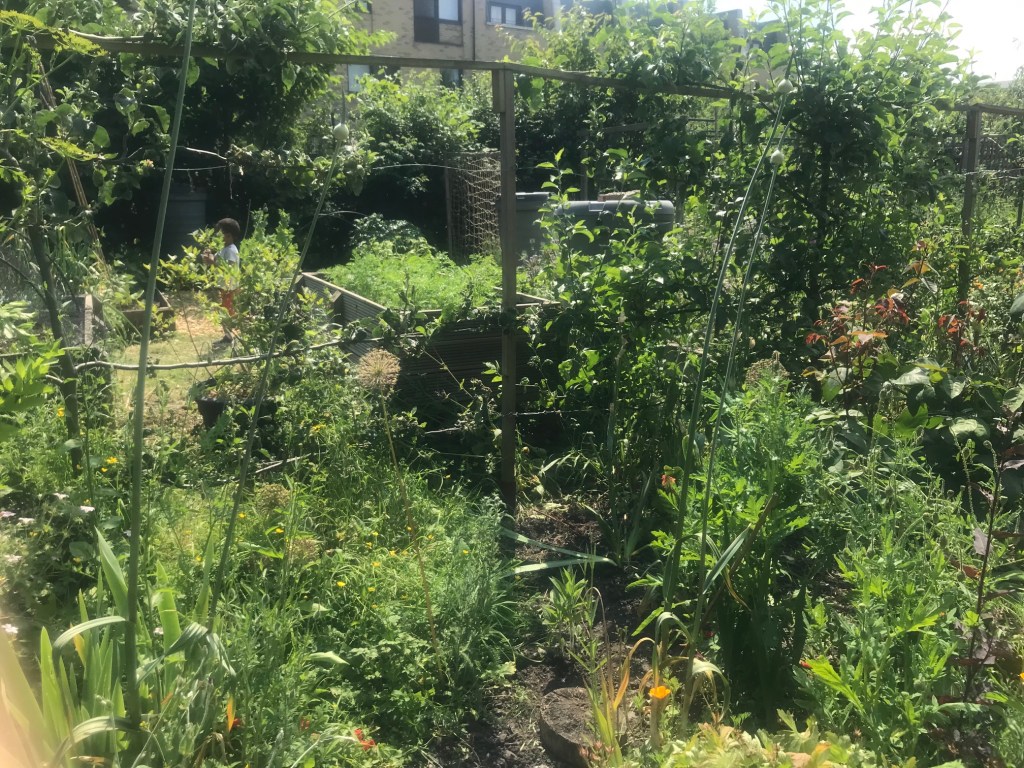
Like most of our members, I always enjoy visiting the Open Gardens Festival in support of Greenwich & Bexley Community Hospice, and I think the range gets better each year. So many special gardens on display, but I always make a point of visiting the Prior Street Allotments because they have a very different vibe, being working gardens. I’m sure in reality the plot holders do lots of scurrying around before the Open Day, but it looks just effortless and wonderfully “been there forever”.
The site is tucked away behind Prior Street in Greenwich and is made up of just 18 plots (with a huge waiting list, before you ask!). This land was part of the Nunhead to Greenwich Park railway, which closed in 1917. The allotments were started on an informal basis in the 80’s and are now protected by the Allotment Act. They open once a year to support the Hospice, and they serve the best cakes and Pimms in Greenwich!
How many of us have been on holiday, fallen in love with the flora of the region and maybe even recognised a plant as one that we know can be grown in UK, either indoors or out? The temptation is huge to bring back a few seeds, to buy some rhizomes at a market (yes, those Madeiran Agapanthus were hard to resist) or – if we’re visiting friends, to accept a cutting or two. But we now know that as well as being illegal, in doing so we risk introducing plant diseases and devastating an aspect of the horticultural world we love.
The RHS give some clear advice on bringing plants back to the UK from your holidays (ie: DON’T!), but also what to do if you decide that you are willing to take on the administrative load and expense to get hold of a particular plant.
Olive trees affected by Xylella in Gallipoli, Italy. (Image from Wikimedia Commons)
The week didn’t start well. The train was delayed at King’s Cross and then got stuck behind a freight service so was an hour and a half late into Edinburgh. The visits, next day, to two lovely gardens near Peebles, about three quarters of an hour south west from the city more than made up. The Royal Botanic Gardens Edinburgh took responsibility for Dawyck in the 1970s. The gardens of this country estate are renown for their woodland areas and spectacular plantings of rhododendrons and azelas. All tastes in colours are catered for: from deep reds and oranges to more subtle whites and mauves. There are also areas covered in beautiful blue Meconopsis. A former owner, Sir John Naesmith was a patron of the plant-hunter, David Douglas (1799-1834) and there are splendid examples of his fir here as well as some impressive redwoods.
While we were in the area we decided to call in at Kailzie Gardens which are undergoing significant development. Their glasshouses were one of the first installed in the 1860s by the famous Scottish firm of Mackenzie and Moncur. We were fascinated to read about the restoration which involves much linseed oil to ensure the wood-framed structures last for another century and a half at least! The gardens themselves provide a peaceful but colourful sanctuary with herbaceous borders to inspire and walks with views of the lovely countryside beyond. We finished our outings with tea in a stylish courtyard café.
Given the hot weather for this year’s Festival and that this is our third, we focused on Gardens we haven’t seen before. So this afternoon we set off to Christchurch School Community Garden to see what was going on there. And we were pleased. It demonstrates what can be done with a pocket of land, off a busy main road, with some funding and lots of enthusiasm and knowledge – and effort. The description on the Festival brochure referred to raised beds for food crops, a community orchard, ornamental borders, a Forest School and a covered meeting hub. They also have a hugelkultur bed, a bee hive, a wildlife pond – and they were selling goji berry plants!
A few years ago I cleared out my greenhouse following the losses of the winter and dumped in my compost the remains of pelargoniums and other dead items. It’s always a little sad to lose much loved plants which have given you their best. I then had some fun ordering new plants to replace the old ones (and some others!). A couple of weeks later, I found several of my ‘dead’ pelargoniums lying in the compost and sprouting new shoots from the roots. Of course, I swiftly took them out and potted them up to achieve lovely healthy plants. I am now a little less impatient to discard anything that looks dead.
A few weeks back Vija and I went to one of the open days at Sarah Raven’s farm Perch Hill in East Sussex. The preceding evening had seen torrential rain and an email arrived on the morning of the visit warning people of the muddy conditions and that a four wheel drive was essential. And they weren’t exaggerating… the field we were to park in was a mud slide with a tractor towing cars out of the mud!

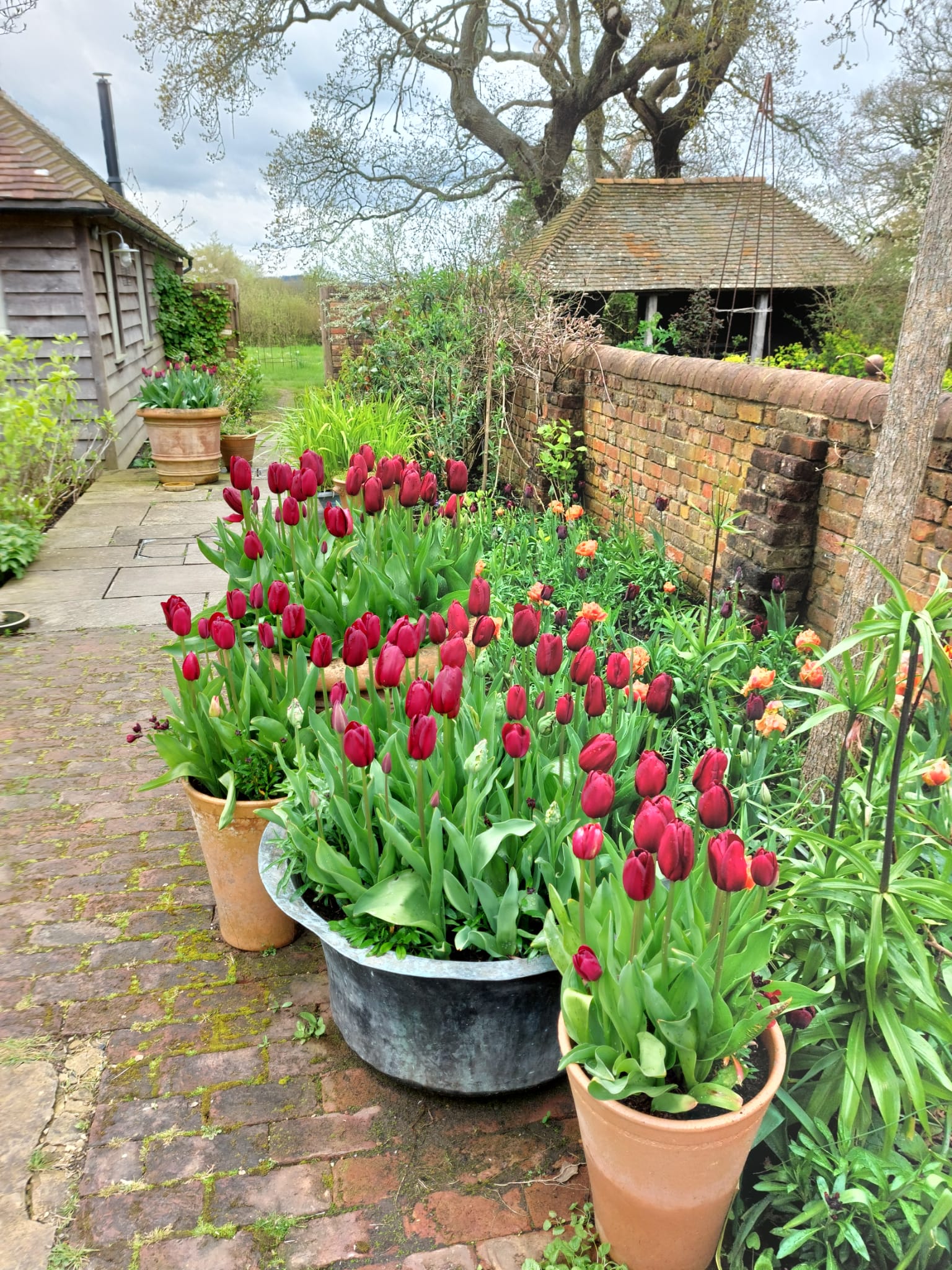
But the rain hadn’t affected the garden. The tulips, many of which were in pots,were stunning with the same colours used repeatedly throughout the garden. They were well labelled so we could make a note of them and there seemed to be loads of new varieties and quite a lot in oranges and shades of reds. There were lots of pots with pastel shades too and it wasn’t just tulips. There was a whole bed planted with a tall variety of fritillary which you don’t see very often and is certainly different.
Additionally there were displays in pots of some lovely frilly violas and the glasshouse was planted with ranunculus and other early varieties of annuals. There were displays of early vegetables but they were small and obviously affected by the cold spring. And the tea and cakes were good too!
All in all a stunning display and worth a visit despite the mud and flooded roads.















 Charlton and Blackheath Amateur Horticultural Society