Feeling a little nostalgic…

I wonder how many people listened to the moving tribute on Radio 4 on 10 April from a woman who had just lost her sister to Covid-19? She listed a range of qualities for which Billie, her sister, would be remembered. If I were to write a tribute to my parents, gardening would be one of them. They were both growers. Brought up on the land, their year revolved around growing, cultivating and then preserving the fruit and vegetables produced. For me, gardening at certain times of year strongly evokes memories. I still have some sacks which, when they gave them to me, were full of potatoes; I have plant labels from the plants they gave me to grow on myself with the names of varieties like Moneymaker, Gardener’s Delight, Scarlet Emperor, Winter King. Their handwriting is still clearly visible. The varieties I grow myself is often informed by what they used to grow; tried and trusted varieties. Sometimes, it is the smell of fresh tomatoes on my hands, or hot sun on grass. The song of birds on my allotment and the quiet created by these strange times evokes memories of childhood with my father on his plot.

Gardens are, of course, places of remembrance and memories. In many cultures they have been created as oases of peace. A few years ago I drove around Normandy with a friend, visiting the gardens in the region. Jardin de Sericourt tells the story or war and peace and contains symbols of a once war-torn-landscape. One area (the garden is designed into ‘compartments’) has a series of topiary symbolising fallen soldiers, for example. This does not, however, create a sombre atmosphere. Rather it is a garden full of joy and hope.

jardin de sericourt 1
The Warrior Garden at Jardin de Sericourt

This page on Jardin de Sericourt’s website is well worth a look for the videos giving virtual tours. https://www.jardindesericourt.com/newpage

Vija

Plantlife road verge campaign

Plantlife say “In these challenging times, wild flowers on our verges and waysides are an uplifting sight, contributing significantly to our wellbeing. It’s been wonderful to see on social media many photos of botanical gems that people have spotted whilst out for their daily exercise; there is some solace to be found in nature.”

Have a look at their Road Verge Campaign pages.

Rachel de Thame: How to beat the Coronovirus blues by getting back to nature (The Sunday Times, 29 March 2020)

Great article, read the whole thing if you subscribe. If not here is an extract:

“While we remain largely confined to our homes, really take it all in during your daily walk or run through the park. Above all, make the most of any outdoor growing space you have, be it a narrow suburban strip, roof terrace, balcony or window box. No matter the size, each can provide an escape from the news and break the monotony of being cooped up. Encourage others in your household to get involved. Especially children, who might just tire of games consoles and Snapchat for long enough to become hooked on this “growing things” malarkey. Gardening teaches that the effort and patience required to achieve long-lasting rewards can feel as good as instant gratification.

Getting out in the garden makes us fitter, and growing our own food can transform our diet. Fresh vegetables and fruit are essential for good health, so if you are sowing seeds now then pick as many edible plants as you can. It’s easy, and if you don’t want to dig up your ornamental borders then grow herbs and salads among your roses and dahlias, and sow curly-leaved parsley as an edging for the front of flower beds.

Gardening engenders a sense of wonder and is as good for the soul as it is for the body; the benefits to our mental health and general wellbeing are well documented.”

I love the idea of parsley as an edging for flower beds!

Go wild gardening

CABAHS Committee member Paula, reminds us that even the smallest urban garden can attract and help wildlife. She suggests you can select a small space in a patch of lawn to sow wild flowers as well as well-known plants. Plants such as Echinacea, Foxgloves, Hollyhocks and Lavender – there is a huge choice to pick from, or how about letting the grass grow and think of the time you will save in not mowing! It will attract insects, bees and who knows what else will show up. Check out the RHS tips for creating a wildlife garden

Has your ‘wild bit’ attracted any unusual wildlife? Let us know!

Pressed flower art

I was recently given a book on the “Art of Pressed Flowers and leaves” by Jennie Ashmore, which aims to re-energise and re-imagine this very traditional craft. It might be a very good time to have a go at this fascinating hobby!

Pressed Flowers BookPeople have collected and pressed plants from the earliest times, when explorers returned from faraway places laden with Botanical specimens. During the Victorian era, pressing became a genteel art and pressed plants were used to create pictures and decorate all manner of objects.

Jennie’s art uses every sort of leaf as a background, to set off the more delicate pressed flowers. This one uses Sycamore leaves (at last, a use for Sycamores!) and Fennel:
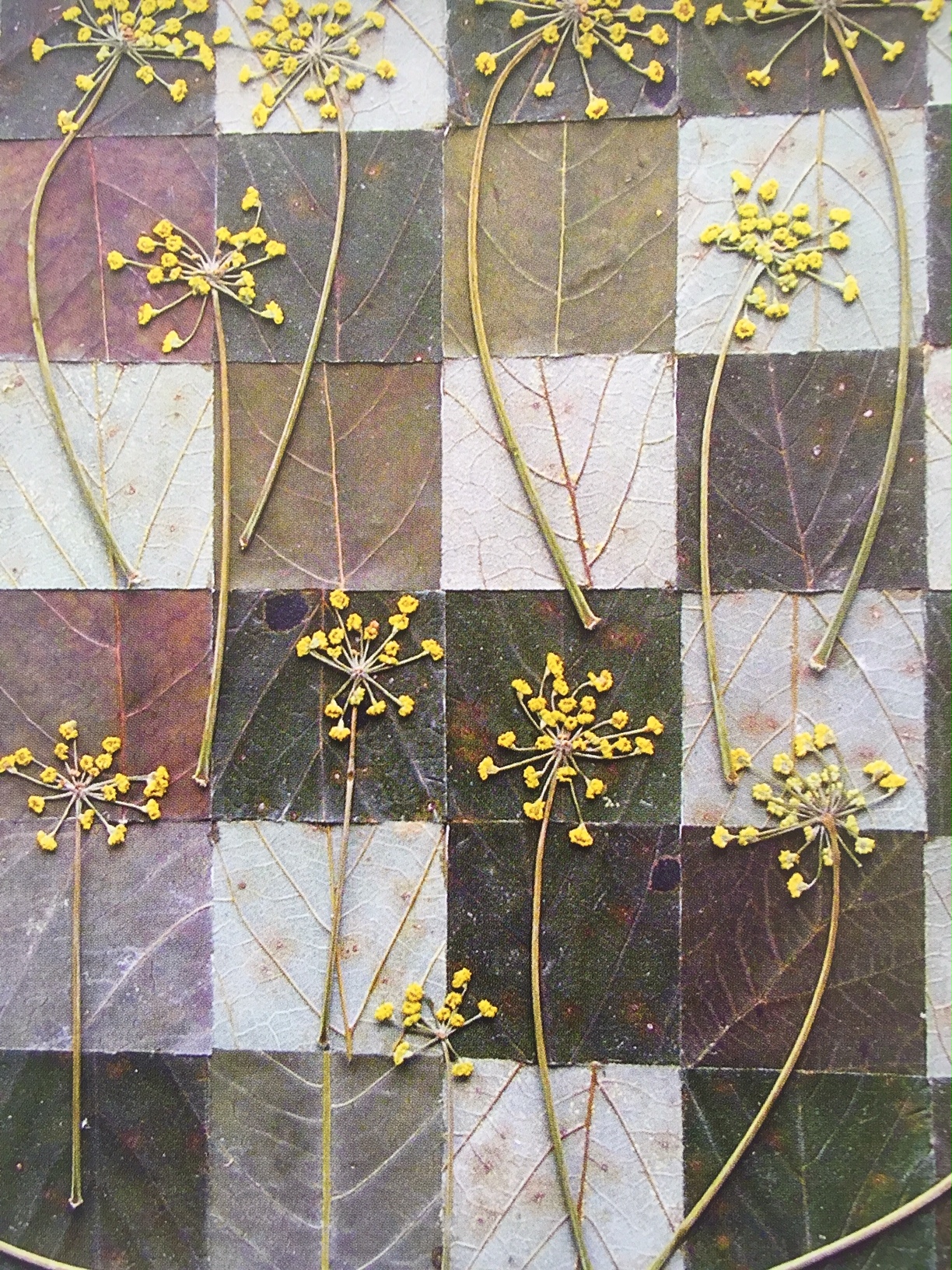
Pressed Sycamore and fennel

This hobby is refreshingly low cost – Jennie uses old telephone directories for her pressing, with a brick weight on top. Inexpensive photocopying paper can be used, or blotting paper if you can get hold of it. All material is pressed for a month or two, depending on how thick the leaves are. Check after a month to see.

Jennie suggests experimenting, but says she always cuts off the woody and the fleshy parts of plants for best results. Most shiny leaves (Laurel, rhododendron) are not suitable. You should cut the fleshy middle out of Hosta leaves, otherwise they go mouldy, but they make wonderful colours.

Jennie’s leafworks are mounted on paper or thin card, and she uses Copydex or a rubber-based adhesive that can be easily removed if there is excess. Don’t use much – a dot on a matchstick works – especially when sticking delicate petals. Make a template and use a cutting knife to make backgrounds:

Pressed cut outs

Here’s what you can end up with:

Pressed flowers

I love this idea too – this is a picture of a walk, and then the pressed picture that Jennie made using material collected on the walk. What a great idea for your daily exercise walk! Have fun.

Kathy A

Glass flowers

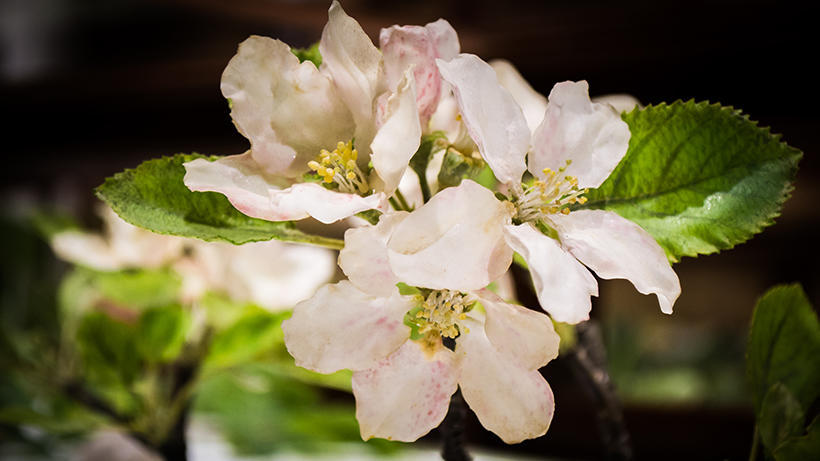
Have you ever heard of the Harvard Museum’s collection of glass flowers? This is a huge collection of over 4,300 flowers from some 780 species. The models were made because one of the professors wanted life-like models for teaching botany, and only paper mache or wax models were available at the time. Could you ever guess this picture shows a glass model of apple blossom?

apple_blossom_detail_exhibit_page_01

The website has a wonderful video about the collection, look for the Exhibit video ‘Harvard restores its famous glass flowers’.

The Nunhead Gardener

The Nunhead Gardener is is a little gem of a nursery / shop tucked in under the railway arches by Nunhead Station. Not a large space but they have really made the most of it. A wonderful range of indoor plants, and some well-chosen outdoor plants plus lots of pots and accessories and quirky garden art (I didn’t mean to, but I had to buy a Kiwi plant…).

Thank you to Joyce for the recommendation.

In praise of… earwigs!

I have not been an earwig lover for all of my life. As a child, I remember my father making a nightly check on his prize dahlias and coming back into the kitchen with earwigs crawling out of the turn ups of his trousers. My mother’s predictable reaction meant that I thought earwigs were definitely not insects one was meant to love. Now years later, in my own garden, I can see the results that a small earwig population have on my own favourite Dahlias, Verrone’s Obsidian, and it’s extremely annoying. But this Christmas my husband gave me a book – “The Garden Jungle” by Dave Goulson and it has rather opened my eyes to the trials and tribulations of this little insect.

Goulson points out that earwigs are easily eradicated by sprays, and because they don’t fly and only produce one generation a year, they don’t re-colonise very quickly once they have gone. I haven’t used pesticide sprays for some years, with the exception of a drench for vine weevil in my containers, so I know I do have earwigs in the garden, although not in the numbers I remember as a child.

earwig

Earwigs are overwhelmingly beneficial insects, they feed voraciously on aphids, as well as munching on the occasional petal. In orchards where earwigs have been sprayed out of existence, trees are infested with three times as many woolly aphids as those with a good earwig population. It is generally the case that beneficial predators of a crop pest breed more slowly than the pests they feed on.  Aphids, in particular, breed spectacularly fast, giving birth to live young which themselves have developing offspring inside them when they are born. In contrast, Mrs Earwig produces maybe 50 offspring a year, laying creamy eggs in a burrow in the ground towards the end of winter. She tenderly cares for the eggs, guarding, cleaning and turning them and looks after the young brood (nymphs) until they moult and gradually become independent. Then she turns them out of the burrow and they must look after themselves, foraging at night and hiding in the day in any crevice (or dahlia) they can find. They must do this all Summer and Autumn dodging predators while they grow, until winter comes and they find a mate and it all starts again.

The fierce looking pincers are actually quite feeble and incapable of doing harm to a human, they are used by the earwig in defence against predators such as ground beetles, and also in mating. The “wig” part of their name comes from an old word for “wiggle” and they definitely never burrow into ears!

We should certainly see earwigs as our friends in the garden, just as we now do ladybirds and lacewings. I have decided that a nibbled petal here and there is a small price to pay for all the good they do.

Kathy