Plantlife say “In these challenging times, wild flowers on our verges and waysides are an uplifting sight, contributing significantly to our wellbeing. It’s been wonderful to see on social media many photos of botanical gems that people have spotted whilst out for their daily exercise; there is some solace to be found in nature.”
Maggie’s lovely spring garden. The flowering shrub is Exochorda “Magical Springtime” and was a Mother’s Day present a few years ago, what clever children she has!
Christine’s alpine trough, with Thrift in full swing. Lovely blossom on the tree.
Muscari latifolium coming out, just as Hyacinth Splendid Cornelia is going over, on Kathy’s sunny bit of the patio. Rose Cottage bulbs again, they were a winner!
So maybe we have a local heron who is going round checking out members gardens? Chris’ visitor from yesterday has popped over to look at Kathy’s pond. Thankfully the pond is netted, otherwise his breakfast would have been toad spawn..
Here are two of Chris B’s shrubs, looking very good this Spring – Spiraea arguta Bridal Wreath and Viburnham tinus:
Chris was surprised to see this visitor – a Heron, checking out her garden!
Angela says she is not a fan of tulips generally, but the Rose Cottage speaker we had last year convinced her to try these wild tulips, Tulipa sylvestris, and she is so pleased with them. They do look lovely in a “woodland” setting like this.
Jenny’s Camellia is looking wonderful, she says its thanks to all the rain, and she didn’t have to do a thing!
Great article, read the whole thing if you subscribe. If not here is an extract:
“While we remain largely confined to our homes, really take it all in during your daily walk or run through the park. Above all, make the most of any outdoor growing space you have, be it a narrow suburban strip, roof terrace, balcony or window box. No matter the size, each can provide an escape from the news and break the monotony of being cooped up. Encourage others in your household to get involved. Especially children, who might just tire of games consoles and Snapchat for long enough to become hooked on this “growing things” malarkey. Gardening teaches that the effort and patience required to achieve long-lasting rewards can feel as good as instant gratification.
Getting out in the garden makes us fitter, and growing our own food can transform our diet. Fresh vegetables and fruit are essential for good health, so if you are sowing seeds now then pick as many edible plants as you can. It’s easy, and if you don’t want to dig up your ornamental borders then grow herbs and salads among your roses and dahlias, and sow curly-leaved parsley as an edging for the front of flower beds.
Gardening engenders a sense of wonder and is as good for the soul as it is for the body; the benefits to our mental health and general wellbeing are well documented.”
I love the idea of parsley as an edging for flower beds!
If you live anywhere near Angerstein Lane, just off the Heath, it’s worth making a detour for – Stephen’s garden is looking great and all the tulips are coming out.
CABAHS Committee member Paula, reminds us that even the smallest urban garden can attract and help wildlife. She suggests you can select a small space in a patch of lawn to sow wild flowers as well as well-known plants. Plants such as Echinacea, Foxgloves, Hollyhocks and Lavender – there is a huge choice to pick from, or how about letting the grass grow and think of the time you will save in not mowing! It will attract insects, bees and who knows what else will show up. Check out the RHS tips for creating a wildlife garden
Has your ‘wild bit’ attracted any unusual wildlife? Let us know!
As we had quite a small turnout on Monday (understandably!) I thought you might like to know a little about Russell’s great talk. Russell started his talk with some facts, such as that when war broke out in 1939, nearly 80% of Britain’s food was imported. Imports were by ship and German blockades threatened supplies almost immediately.
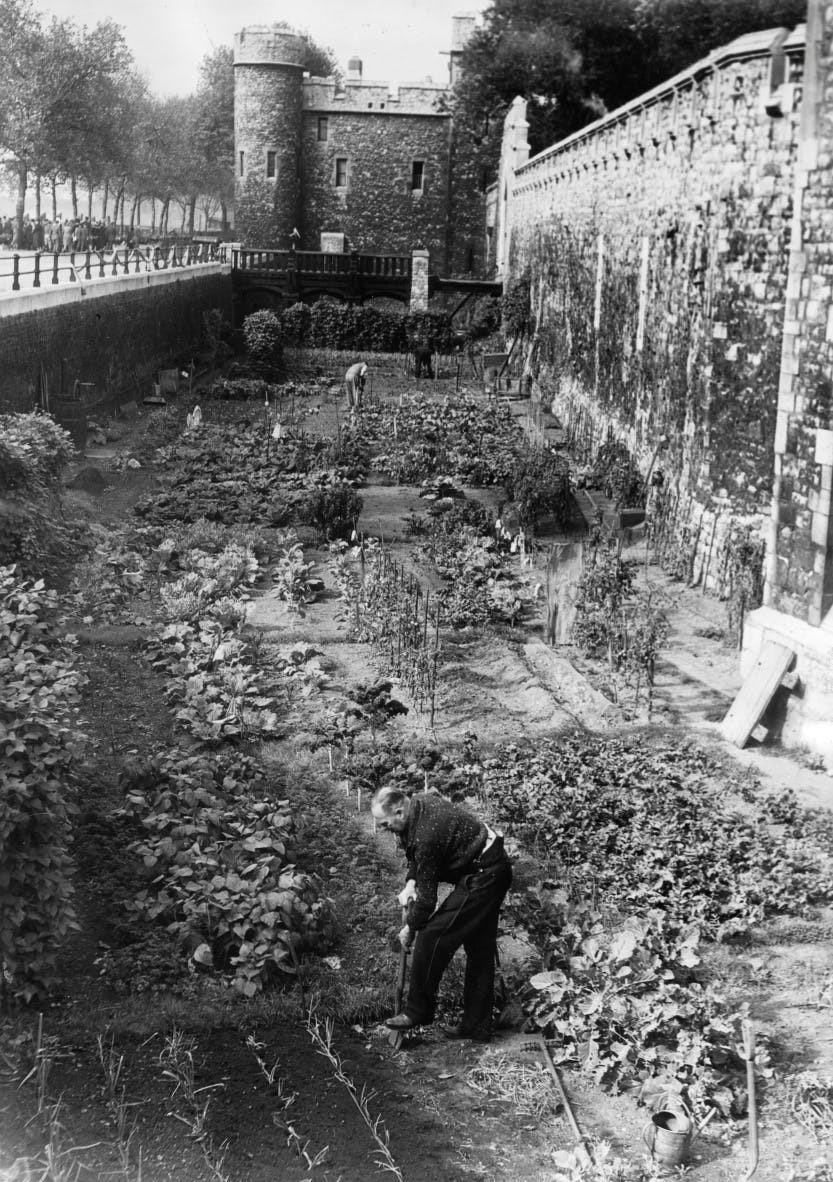
A “Dig for Victory” campaign was started and people were urged to use any spare land to grow vegetables – this included parks, golf clubs and even the moat at the Tower of London:
The campaign featured lots of posters, this one was interesting because as Russell pointed out, the man is using the wrong foot. In fact the photo was taken using a mannequin’s dummy leg!
Much of the campaign’s success, which was overseen by the Ministry of Agriculture, was thanks to the Royal Horticultural Society’s role in teaching men and women across the country how to grow vegetables year round.
Another way of increasing food production was down to the War Agricultural Executive committees which were formed in Autumn 1939 and given expansive powers over farmers and landowners in the United Kingdom. After performing surveys of rural land in their county, each Committee was given the power to serve orders to farmers “requiring work to be done, or, in cases of default, to take possession of the land”. Committees could decide, on a farmer’s behalf, which crops should be planted in which fields, so as to best increase the production of foodstuffs in their areas.
Russell told us about the Womens Land Army too. This started in WW1 but was re-established shortly before the outbreak of the Second World War, in June 1939. It was finally disbanded in 1950. At its peak in 1943 over 80,000 women worked as ‘land girls’. They came from a wide range of backgrounds including towns and cities as well as the countryside.
He included lots of anecdotes about how dedicated the girls were, telling a story about one girl who turned up late with plaster in her hair, and asked the farmer not to mark her as late because she got there as soon as she could. Her house had been bombed that night! Another walked miles through waist-high snow to get to her farm and then apologised for being late.
Russell told us that one of the most missed vegetables was the humble onion. As they were nearly all grown in France, there were shortages immediately. One time, the post office received a parcel of onions where the address label was missing, so it went to lost property. They had 38 people turn up to claim it was theirs!
There were children’s campaigns too. Doctor Carrot popularised the myth that carrots could make you see in the dark.
We also heard about Cecil Middleton, who was really the first “celebrity gardener” on radio. He broadcast in Britain during the 30’s and 40’s, especially in relation to the “Dig for Victory” campaign. He was very knowledgeable but his programme went out on Sunday afternoons, and he had a soothing voice, so his main claim to fame was that he sent people to sleep after their Sunday lunch!
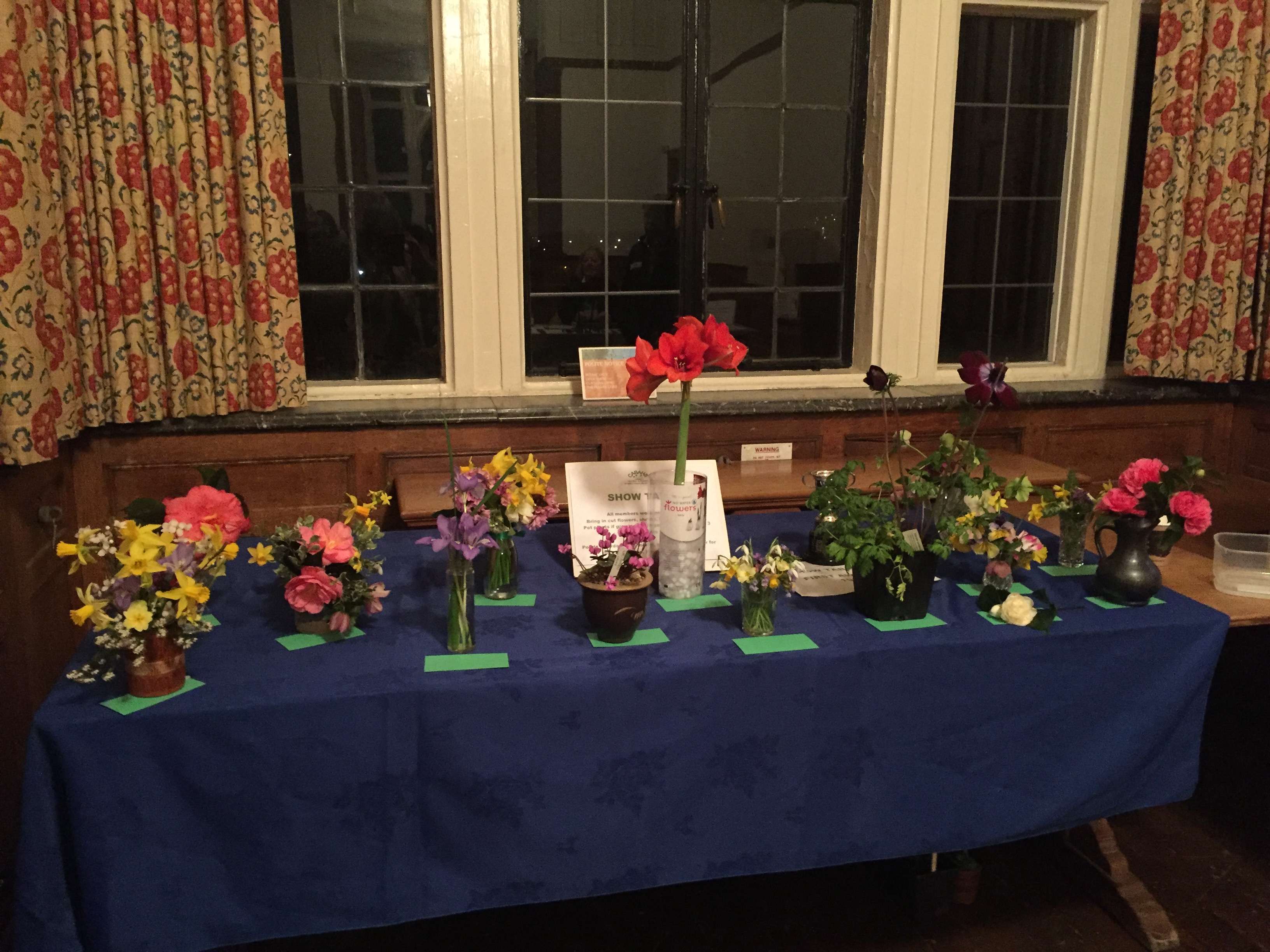
We thanked Russell for his entertaining talk and asked him to judge the Show Table and call the raffle. (We should really have had a loo roll as a raffle prize..!) It was a good evening, especially as we are going to have a bit of a break in meetings now. Take care everyone, stay well!
Russell Bowes is a freelance garden historian, garden tour guide and researcher.
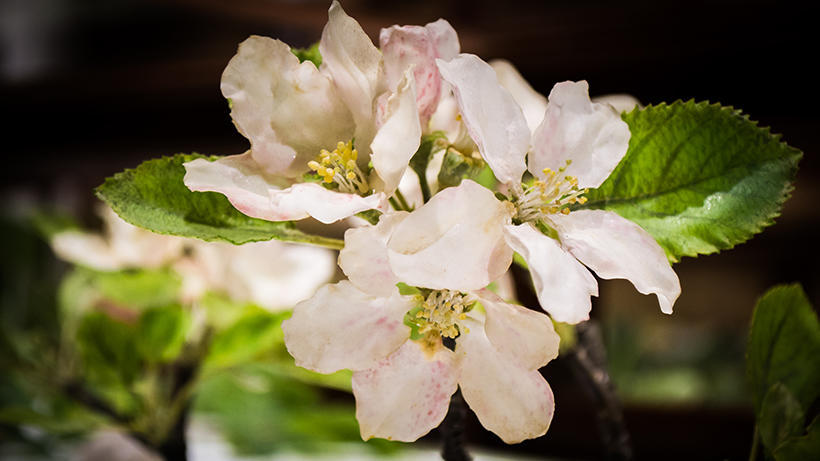
Have you ever heard of the Harvard Museum’s collection of glass flowers? This is a huge collection of over 4,300 flowers from some 780 species. The models were made because one of the professors wanted life-like models for teaching botany, and only paper mache or wax models were available at the time. Could you ever guess this picture shows a glass model of apple blossom?
The website has a wonderful video about the collection, look for the Exhibit video ‘Harvard restores its famous glass flowers’.
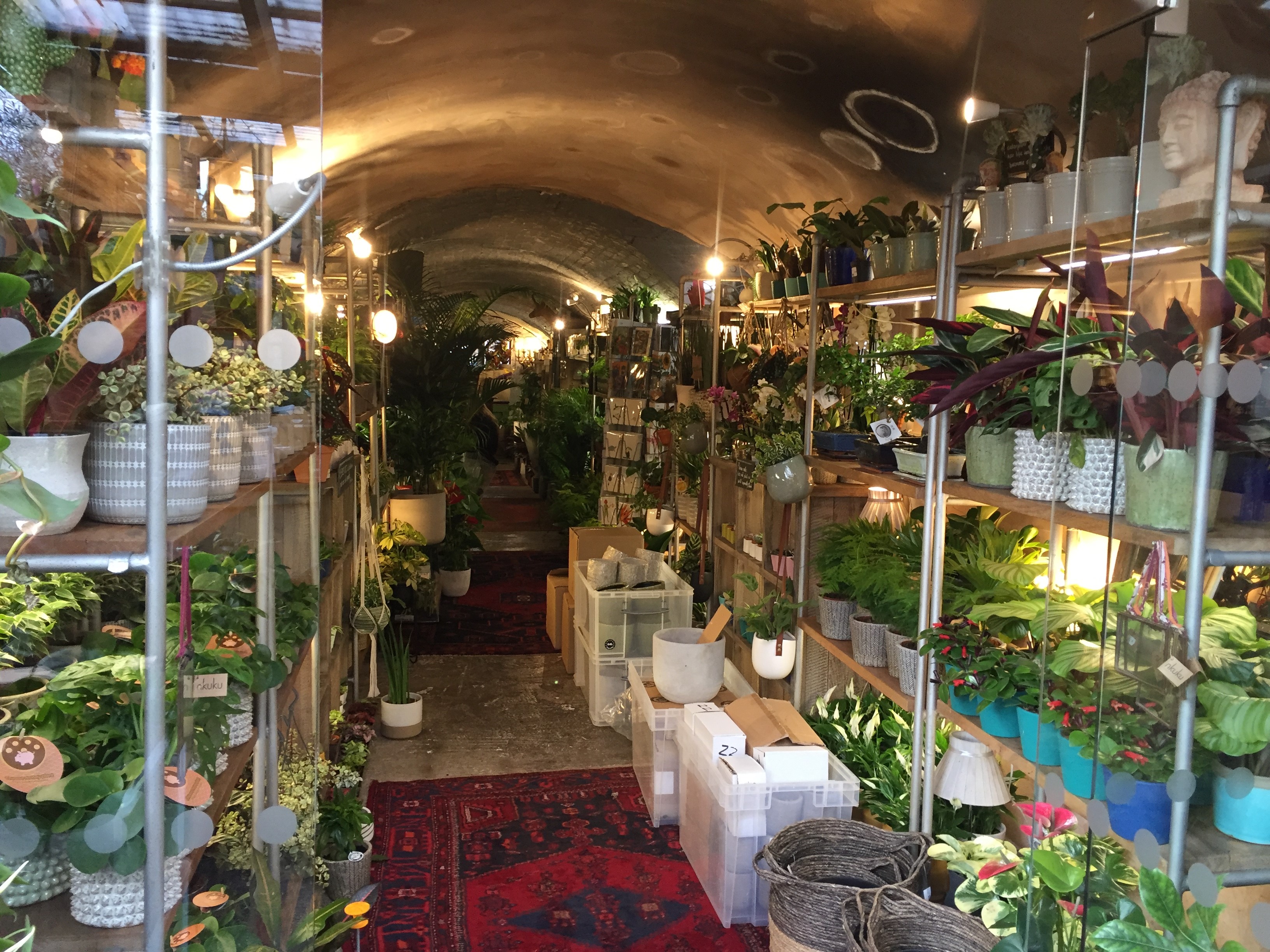
The Nunhead Gardener is is a little gem of a nursery / shop tucked in under the railway arches by Nunhead Station. Not a large space but they have really made the most of it. A wonderful range of indoor plants, and some well-chosen outdoor plants plus lots of pots and accessories and quirky garden art (I didn’t mean to, but I had to buy a Kiwi plant…).






 Charlton and Blackheath Amateur Horticultural Society