Anna has sent a picture of her blue garden, which she plants in late winter every year before the Eucomis take over in the summer. The Polyanthus flower clusters are going over but more buds are coming up, including hyacinths and Welsh poppy seedlings. What a striking effect!
And Sue has a succession of bulbs appearing in her pots as her ‘lasagne’ style planting develops through spring.
Spurred by Kathy’s post on Euphorbia in the Old Pond Garden I have taken this photo of E. myrsinites which sits outside my back door all year round. As Kathy points out, Euphorbia are a large and adaptable genus and at this time of year are a real treat. I have found they do particularly well in my gardening conditions and now have several varieties.
In my front garden (such as it is) Euphorbia characias s. wulfenii is usefully seeding itself in a way which looks like I have planted it deliberately, but is actually nothing to do with me at all.
Inspired by Melanie’s wonderful talk to members about the various Rothschild gardens, Sharon & I accompanied her on a trip to see the restoration project at Gunnersbury Park. We had our volunteer project at Charlton House & Gardens firmly in mind throughout the day, and were pleased to find parallels – albeit on a much grander scale there! Gunnersbury was bought by Ealing & Acton council in 1925 (Charlton was bought by Greenwich Council in the 1920s) and used as a public park in much the same way that Charlton Park has been.
In 2018 the “Large Mansion” was restored using Heritage Lottery and other funding and opened as a Museum housing the borough archive. Major parts of the park were included in the funding, the Orangery, lake and orchards for example. The Friends of Gunnersbury Park were instrumental in the restoration effort, and volunteers clearly play a large part in the day-to-day running.
Winter is over, swing in to Spring! The garden is waking up slowly, with Euphorbia amygdaloides robbiae showing signs of becoming a Star Plant. It’s rosettes of zingy lime green are unfurling and it really shines out in the sun.
These simple, unsophisticated plants, which rarely receive the recognition they deserve for all their efforts in growing and flowering, year in, year out, without asking for any help from anyone or anything, are among many unsung heroes of the gardening world.
Also showing off, Cornus mas or Cornelian Cherry in the Peace Garden, and lungwort, borage, rosemary, to name just a few.
British Nestbox weekstarts every year on Valentines Day, have a look at their website to get tips on siting nestboxes to get the best chance of an occupier. Our feathered friends need all the help they can get.
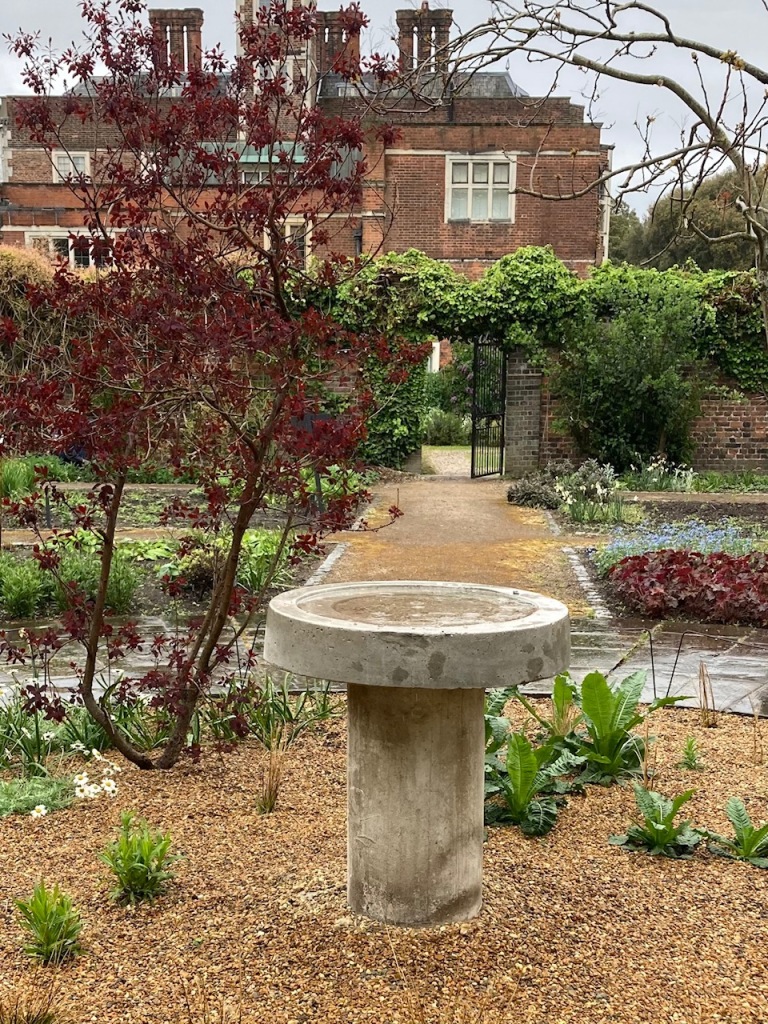
Early May The rainiest May for years, wet volunteers still working away. (They come for the Lotus biscuits at half time…). The gravel garden looks rather good in the rain actually. But for heaven’s sake when is that Alianthus (Tree of Heaven) going to come into leaf? It’s almost as slow as the Mulberry.
Bird bath being used, and our lovely Cotinus (Smoke Bush) is coming out.
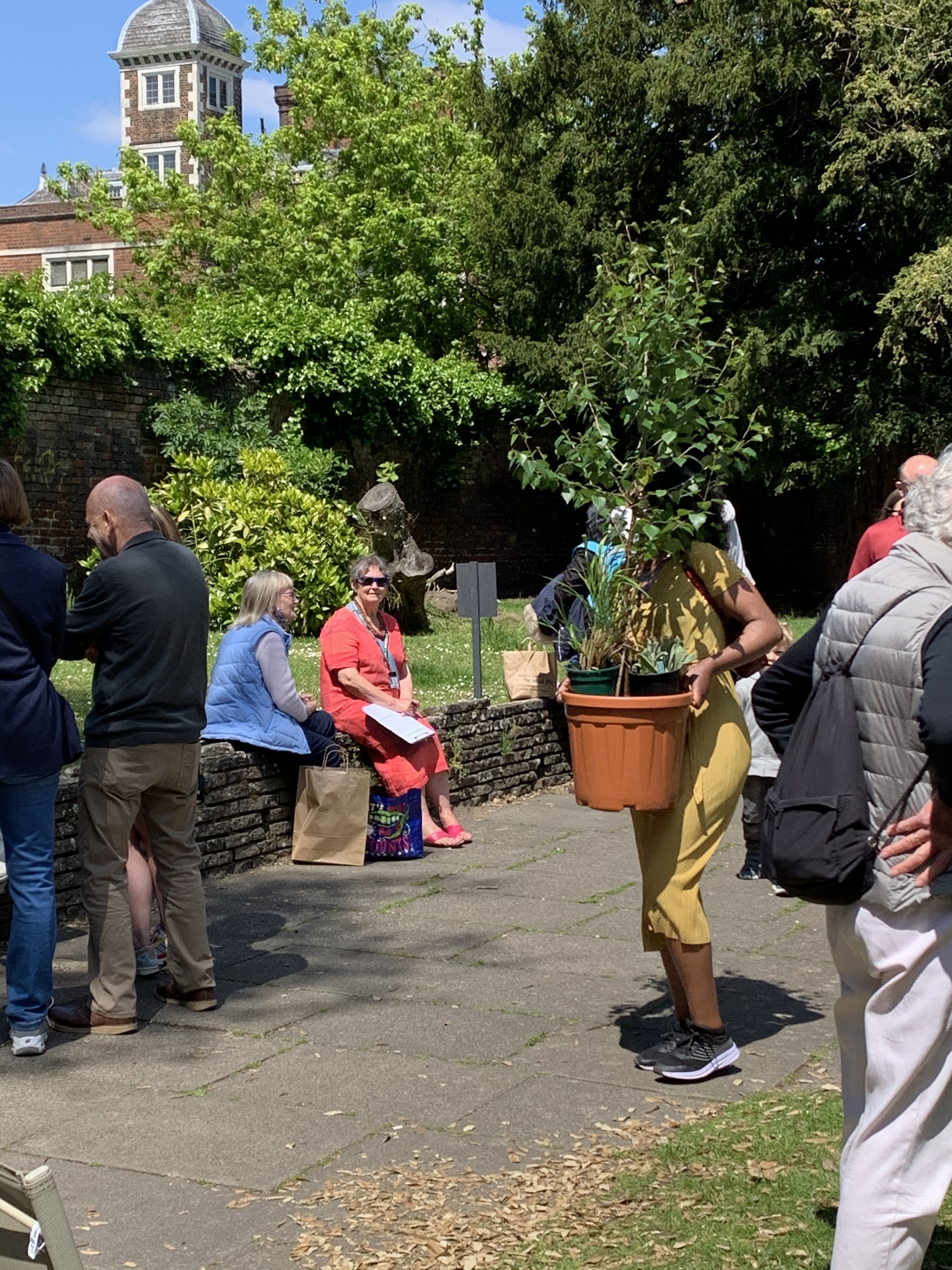
Sunday 30 May Our Plant Sale and Community Day was a great success – all those pleas were answered and the sun did come out. Thank you so much to everyone who donated plants or gave their time on the day to help. This was the biggest plant sale CABAHS has ever held, and has raised over £950 for the Hospice, plus more funds to continue the garden revival.
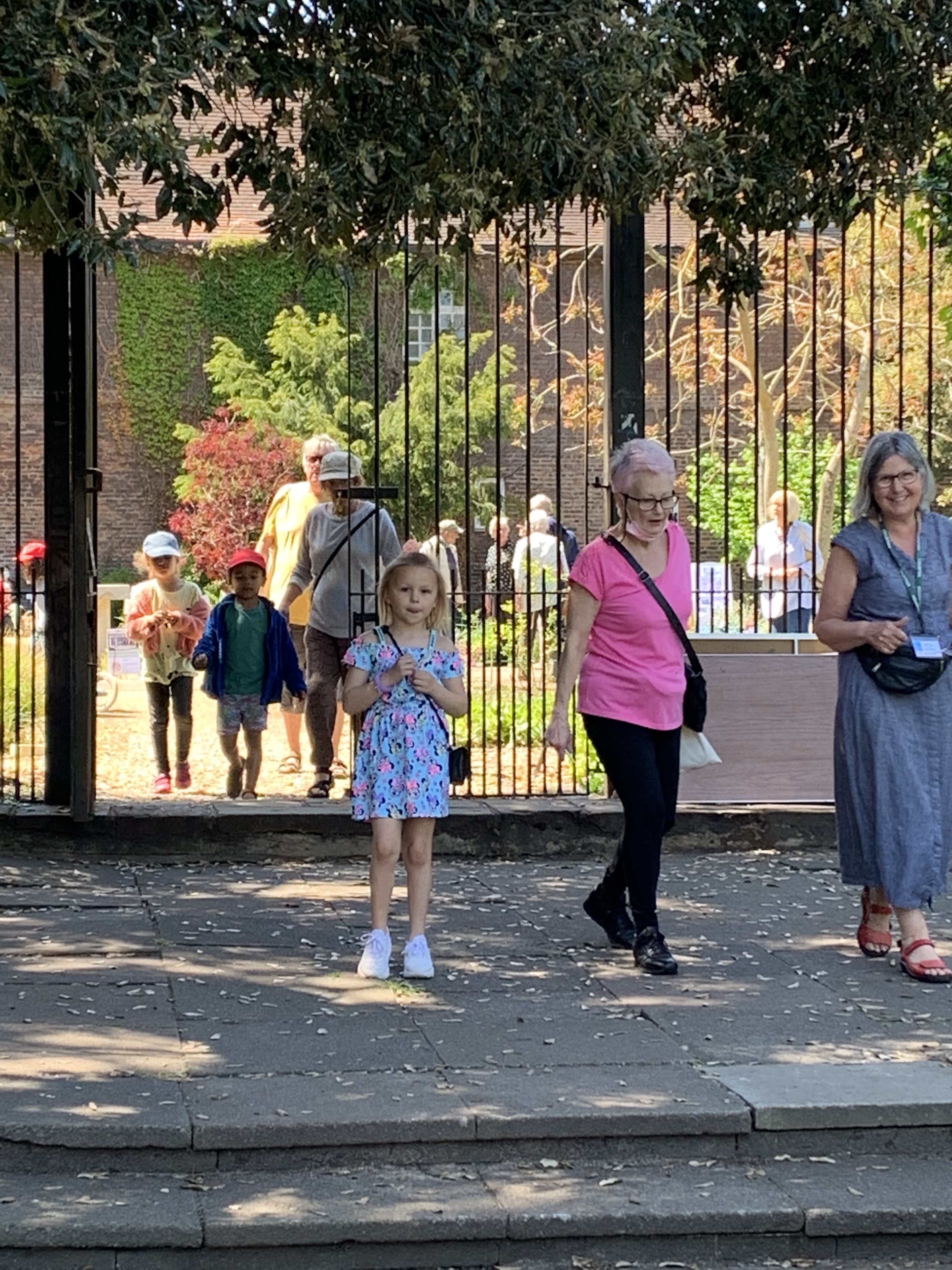
The stalls all set up, selling about to start!The ‘Pot up a Plant’ tableA ‘Mayor of London’ birch tree going to a new home.A Young Explorer about to go on the Discovery Trail around the gardensAre we doing well?A really good day!
The gardens opened to the public on18 April for our ‘Bunnies in the Beds’ Easter trail, and a plant sale in the Long Borders. We were very impressed to receive a visit from keen gardener, the Mayor of Greenwich, Linda Bird. The gardens are now open Monday to Friday, 10am-4pm.
More pics below: top right is Viv in front of her re-located driveway, now the gravel garden. And the bottom left picture is of Bunny number 4, Borage, or Panic Bunny as he is better known since we discovered rather late that there was no Borage in the Peace Garden, so we had to hastily plant some!
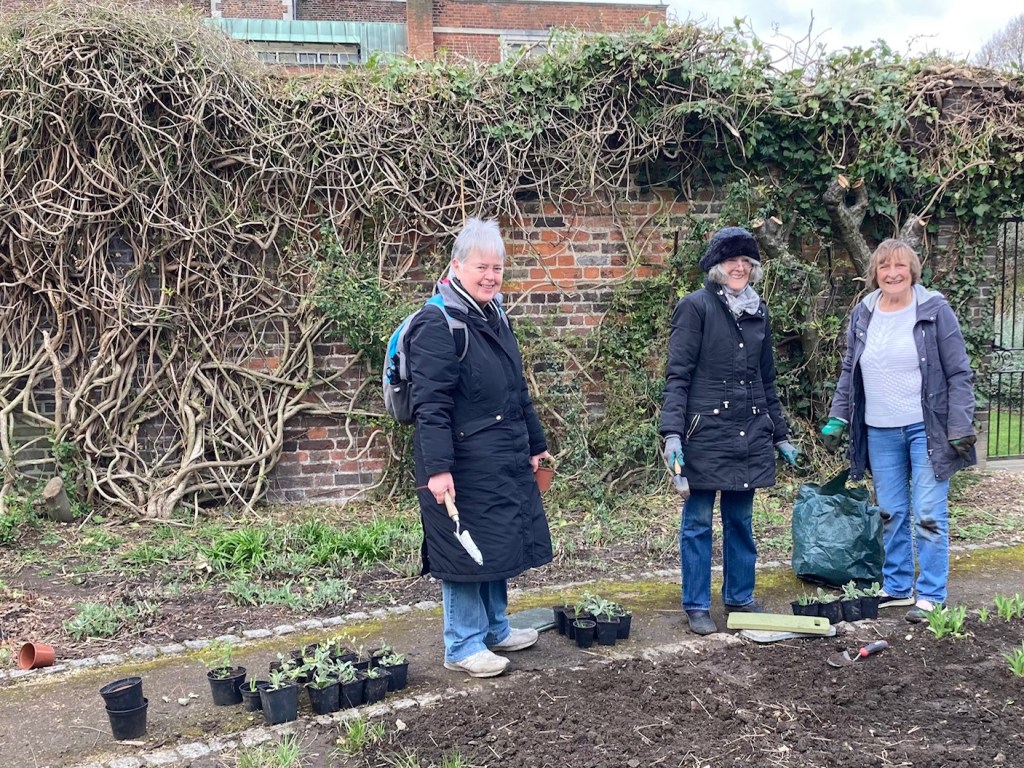
9 March So nice to see volunteers back in the garden. A great weeding and planting session.
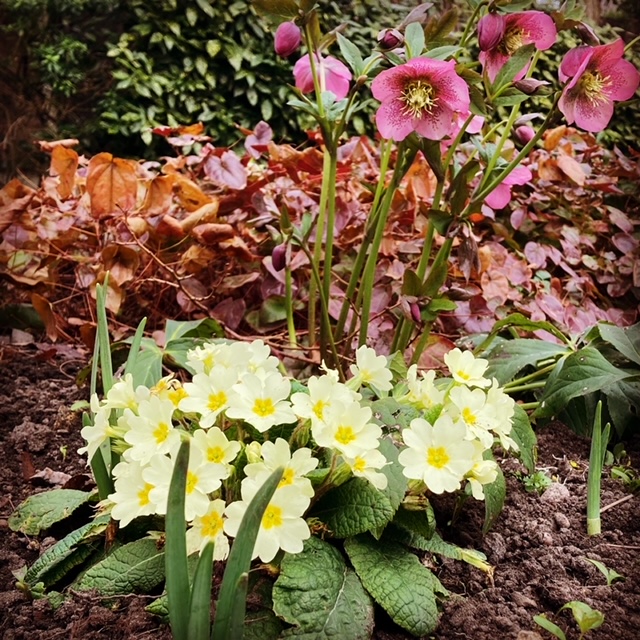
Primroses, Epimedium and Hellebores
16 March The potting-up team
The Long Borders Party
We even had a canine volunteer today, being good as gold (no squirrels around luckily!)
18 March The Rockery Ladies.. Making a good start on the Rockery weeding, might need a bigger fork next time!
What a turn out for the Long Border. We had peak volunteer numbers, on a rather wet and nasty day. Thank you so much to everyone who came along, hope you come back (and please bring nicer weather!)
The start of a bird bath in the central bed! Thank you to the chain gang..
Winter aconites and snowdrops looking happy in Vija’s garden. (For once, an example of some flowers that are blooming at the right time of year!)
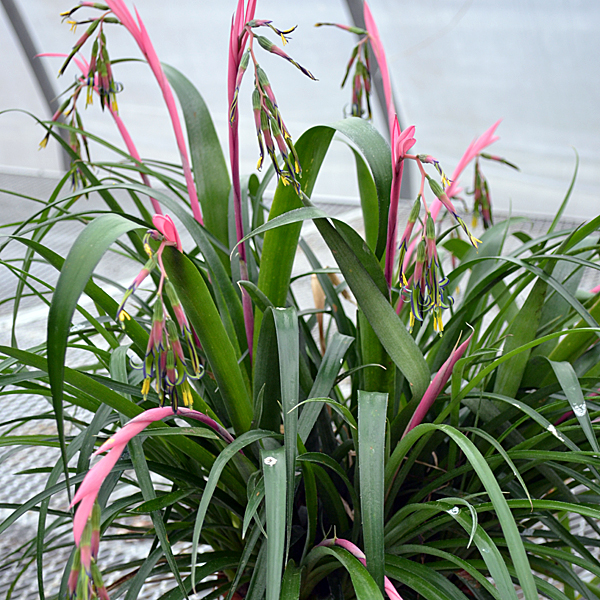
Something to look forward to: Jillian has lots of babies off her Billbergia nutans, which she has potted up for sale to members, for when we can finally meet again. It’s common name is Queen’s Tears or Friendship Plant. She thinks the small plants should be big enough to flower this year. This isn’t a picture of her own plant, but something to aspire to! A challenge..
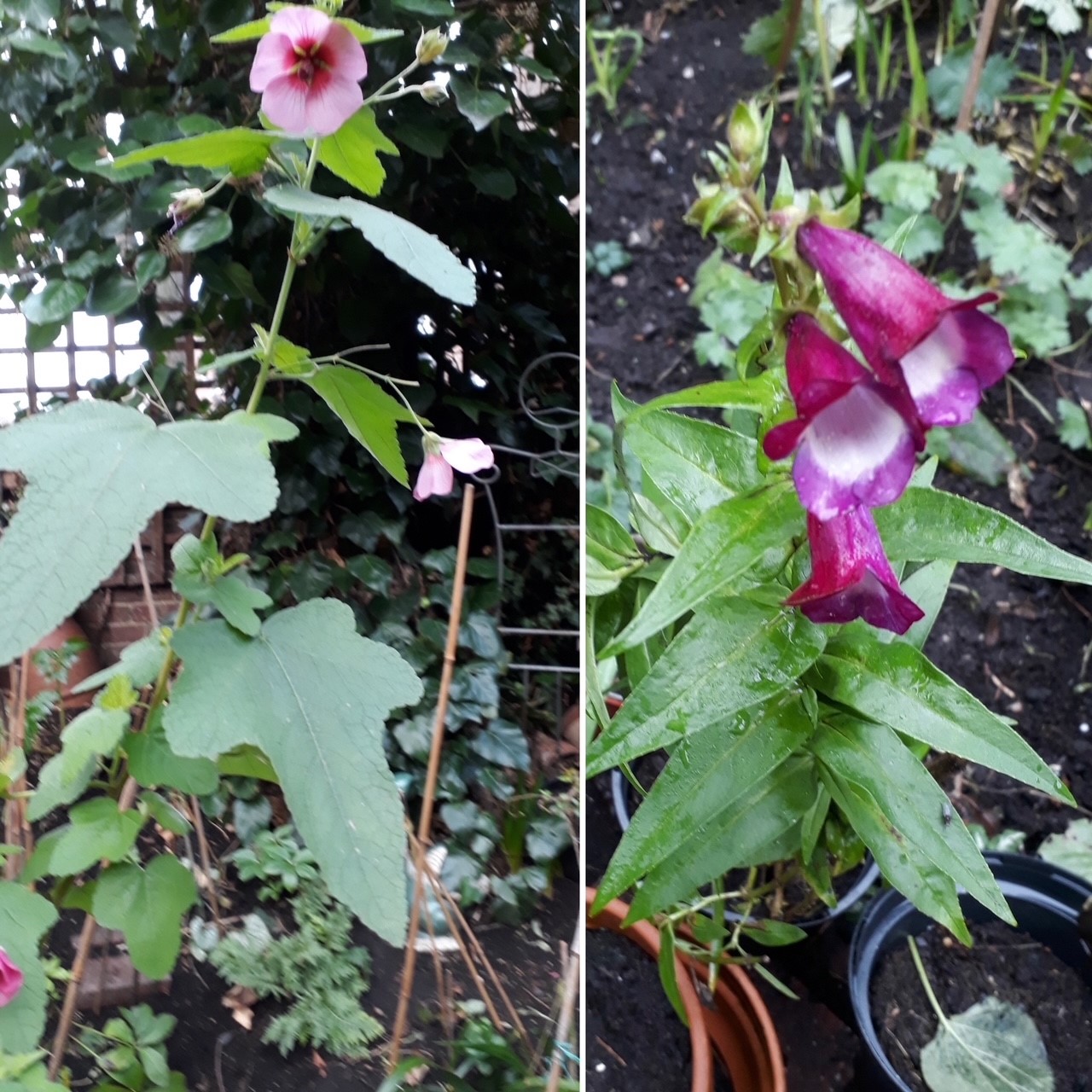
Some unusual flowers out in Angela’s garden – here is a Penstemon thinking it’s still summer, and the Anisodontea, African Mallow, has ignored the recent frosts and carried on.
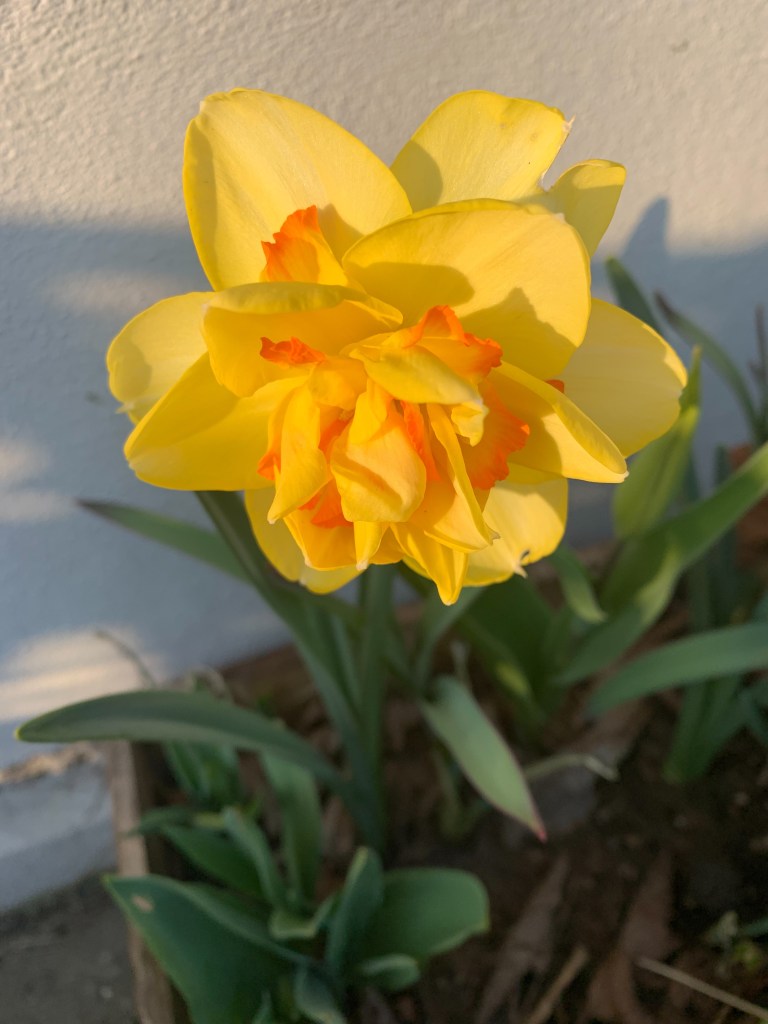
Maggie has been out and about on her daily walks, and says that the daffodils down near the O2 are all coming out. A lovely sign of Spring, and a good walk along the Thames side.
The photo below might remind us all to ensure there are gaps under the fences in our gardens. There is a trend to use concrete gravel boards at the base of new fences, and while they are wonderfully sturdy and long-lasting, spare a thought for the wildlife! Frogs and toads need to travel between gardens and water sources. It’s really easy to push a trowel under the gravel board and make a little underpass for them, it makes all the difference.
Happy Dahlias, in bed for the winter, covered with a lovely blanket of Christmas tree branches!
What’s in flower in YOUR garden? All these in Kathy’s garden on January 3rd 2021, they don’t seem to know it’s winter. Although it’s a bit tatty, there is even a blue Lobelia flower, what’s that about? If you have more, send them in to feature here.
Clockwise from top left: Hellebore, Mexican fleabane, Cobea Cup & Saucer, Clematis Wisley Cream, Bergenia, Geranium “Pino”, Rose Bonica, Fuchsia Hawshead, Geranium Regal
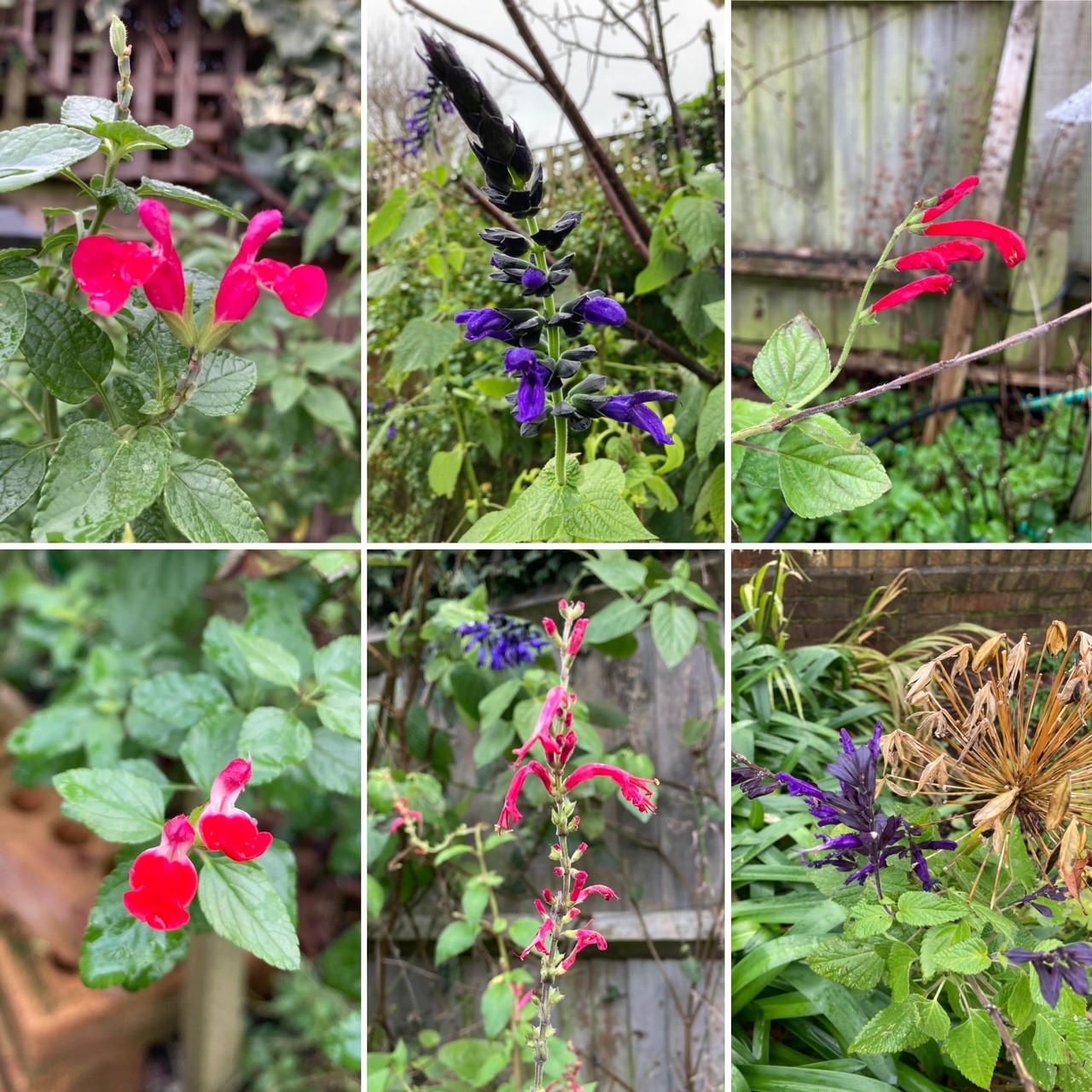
Salvias: Neon, Black & Blue, Tangerine, Hotlips, Pineapple and Amistad
Teucrium, Wallflower, Parahebe, Lobelia and Primrose
Our star speaker from last year, Nick Bailey, has a very informative blog on his website: ‘New Ways with Spring Bulbs‘. Worth a read before ordering hundreds of bulbs from those enticing catalogues!