Labour of love – Keukenhof (2)

A visit to Keukenhof for the second year running found a different garden, although the visits were only a week apart. Spring has evidently come later and most of the narcissus and hyacinths were still in full flower. Last year there were very few remaining in flower. The scent from both filled the air.

swathes of daffodils


Even where some of the tulips had gone over they were still exquisitely beautiful – like a Dutch still life painting.

"still life" of tulips

At home my hyacinths have been swept around by the rain and wind, but at Keukenhof they stand firm.

swathes of hyacinths

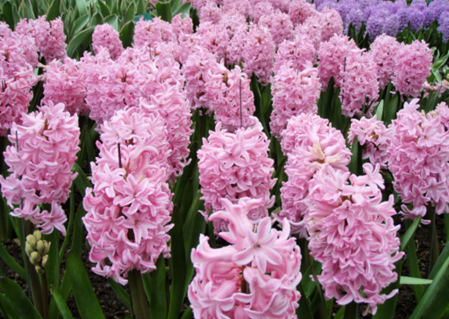
But then I looked closer. Each individual hyacinth has been individually staked, so discretely that it is hardly noticeable!  What a labour!

pink hyacinths staked - to stand firm

Vija

Spring Show 2023

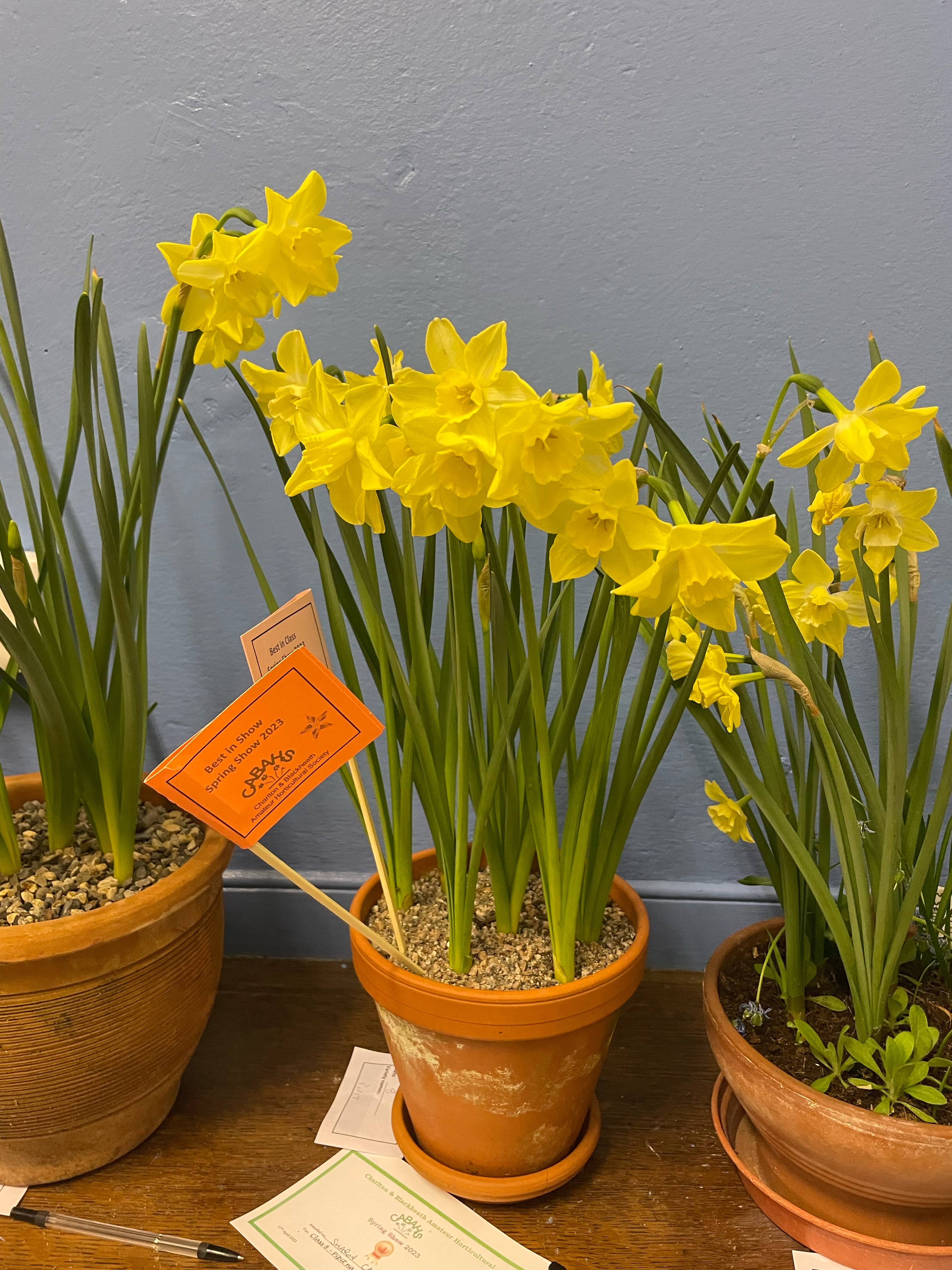
Well, as we now know from a trawl through the CABAHS archive, our first Spring Show took place in April 1978, when the entries were recorded as “good considering the wintry conditions”. 45 years later, in 2023, our display has once again risen above the challenging weather and looked frankly fabulous!

Thank you to everyone who carried their exhibits into St Thomas’ Church hall, we had more entries than in the past few years, 73 in total, and everyone seemed to have a great evening. Our judge Mrs Norma Leslie said she had a hard time choosing the winners, listed below. Best in Show was awarded to Sharon’s “Perfect Pot of Pipits”, well deserved, and it was good to see so many entries in this class. The Wild Card class generated a lot of conversations around the range of entries, so that will be a fixture from now on. The short talk about past shows sparked some good ideas for future classes, such as one for Primroses and Auriculas and perhaps we can revive a “Domestic” class to add a baking angle to the evening (followed by some munching probably).

Continue reading Spring Show 2023

OPG Diary – Dec to March 23

Here is an update on what Jason and the Gardenauts have been getting up to in the gardens since my last post. Apologies it’s rather long, we’ve been doing lots!

December turned the gardens into a winter wonderland, and caused us to miss a few days volunteering, but gave some great photo opportunities. The prolonged cold period hit a few of the more tender shrubs quite hard and we lost some big favourites like the Teucrium. 

January was about cutting back, the ivy in particular. The old walls cannot take the weight of the ivy so we are taking it off in stages and being careful of wildlife. Our efforts revealed the top of the doorway for the first time in some years!

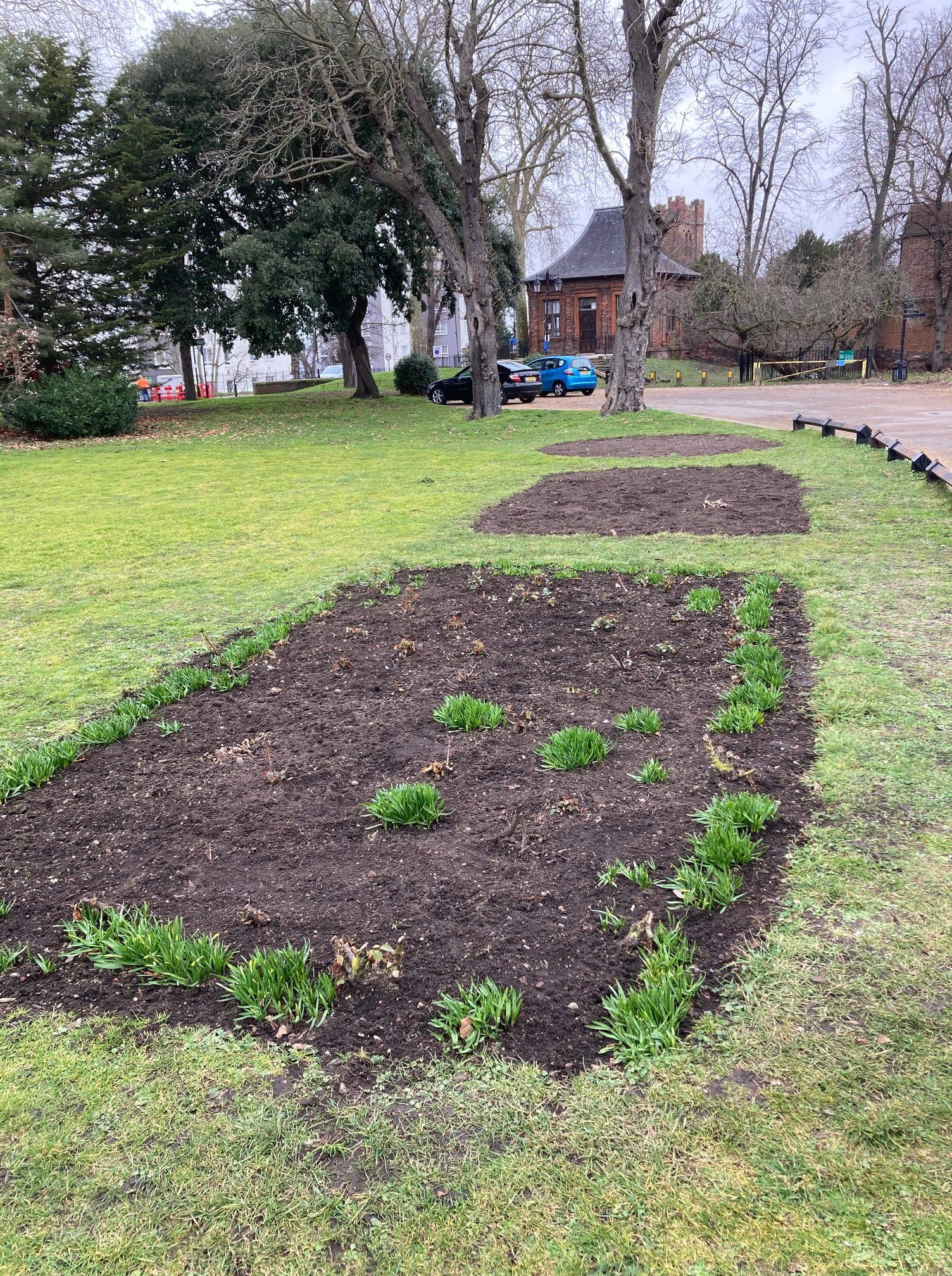
We have removed the palms from the front lawn beds and the beds will be re-designed this summer. The Palms were planted as part of an annual bedding scheme years ago and never envisaged to get as tall as they have. The Tete-a Tete daffodils have all been lifted and will go in the woodland glade next year. The Summerhouse has had a good weed and tidy-up, as has the Mulberry. Snowdrops and Hellebores popped up in the OPG woodland side.

In February, we discovered our regular feline visitor is called Casper and he lives in Canberra Road but clearly considers the gardens his playground.

Continue reading OPG Diary – Dec to March 23

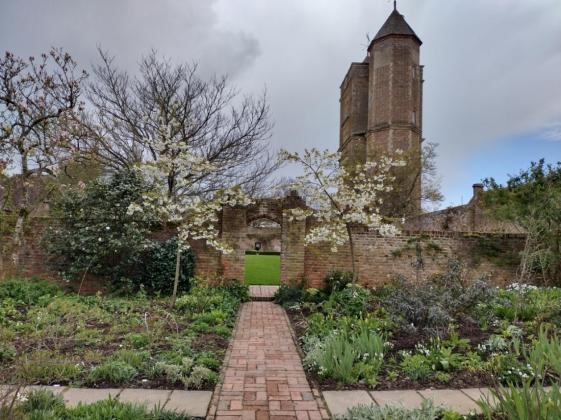
Visit to Beth Chatto’s garden

For those who haven’t visited, Beth Chatto’s Garden is a horticultural paradise located in Essex, England. In March, visitors can expect to see a range of unique features and highlights that make Beth Chatto’s Garden a must-see destination for anyone with an interest in gardening or nature.

One of the most striking things about Beth Chatto’s Garden in March is the abundance of early spring blooms. As winter fades and the weather begins to warm up, the garden comes alive with an array of colourful flowers and blossoms. The famous Gravel Garden is a great place to start exploring the garden. This innovative garden was created in the 1990s, and features plants that are adapted to dry conditions, making it an ideal spot for early bloomers like crocuses, daffodils, and tulips. Visitors can expect to see bright pops of colour as they stroll along the winding paths that wind through the garden.

Beth Chatto's garden

In addition to the early spring blooms, March is also a great time to explore the woodland areas of Beth Chatto’s Garden. The woodland gardens are home to a wide range of plant species, including ferns, shrubs, and trees. Another highlight of Beth Chatto’s Garden in March is the chance to see the garden’s many rare and unusual plant species. Beth Chatto was a pioneer of ecological gardening and her garden is a testament to her commitment to sustainable practices. Visitors can expect to see a range of native and non-native plants that are perfectly suited to the local climate and soil conditions.

Vija

Harrogate Flower Show and Harlow Carr

Late April is a great time to remind yourself that spring happens outside of London, and I had the joy of meeting a group of friends in Yorkshire for the Harrogate Flower Show.  This is quite a major show, running over 4 days, but it’s not run by the RHS and it has quite different emphases.  It does, though, have lots of exhibitors and we enjoyed a full day there, in brilliant sunshine.

First off, we looked at the flower arranging, clearly a major component with several training colleges nearby.  There were lots of competition categories, from big set pieces to carefully chosen themes.  We admired long-horned cows fashioned from garlands of flowers, and saw a heavy emphasis on arum lilies, which featured on the Best In Show winner, for instance. 

By contrast, the show gardens were a very minor element of the event.  They were small, commercially-sponsored but not carefully themed, and quite underwhelming.  And they had very few people looking at them. 

The area for various Societies was dominated by the Daffodil Society Northern Group, where competitors were vying for prizes in nearly 100 categories.  The variety of blooms was extraordinary, with a strong emphasis on precision and newly-developed cultivars.  Among others, the Yorkshire Bonsai Society was also showing beautiful specimens, as were the National Auricula and Primula Society, the National Dahlia Society, and the West Yorkshire Hardy Plant Society, which won a Premier Gold award for its spectacular display. 

Continue reading Harrogate Flower Show and Harlow Carr

Keukenhof

The gardens at Keukenhof in April are quite remarkable. Great rivers of tulips are everywhere. Small exhibitions in the Juliana house give background information to the history and also to the planting practices of this huge venture: 7 million tulips (and other flowering bulbs) are planted each year and each year, at the end of flowering, these are all taken up and crushed to be used as compost around the trees in the garden and made into pulp for the paper which covers the guides to the estate.

As a not-for-profit organisation, in addition to the garden architects, the gardens rely on an army of volunteers. From May onwards the gardens are closed to allow time for the essential work of taking up the tulips and replanting, until reopening for the spring display. The bulbs in each garden area are given to Keukenhof by growers in the Netherlands and the name of the company appears as signage on the beds. For those wishing to make a note of their favourites, tulips are also discretely labelled, although it is easy to feel overwhelmed by the enormous range on display!

Vija

Members Gardens April

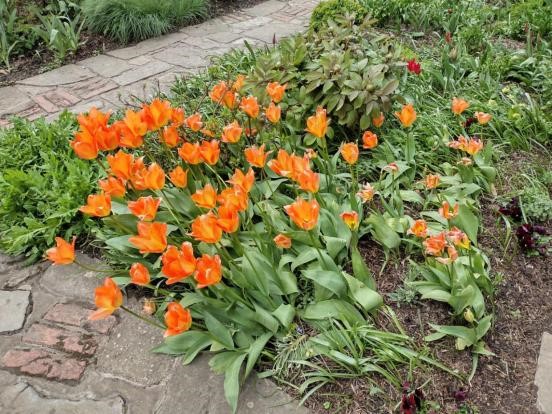
We’re always pleased to receive reports from our members’ gardens, particularly when accompanied by photos. This month Annie H wanted us to share her delight with the Rose Cottage ‘Garden Party’ tulips in her front garden.

Rose Cottage 'Garden Party' tulips in Annie H's front garden

Nicolas shared this photo with us showing his Daphne bholua in February.

Continue reading Members Gardens April