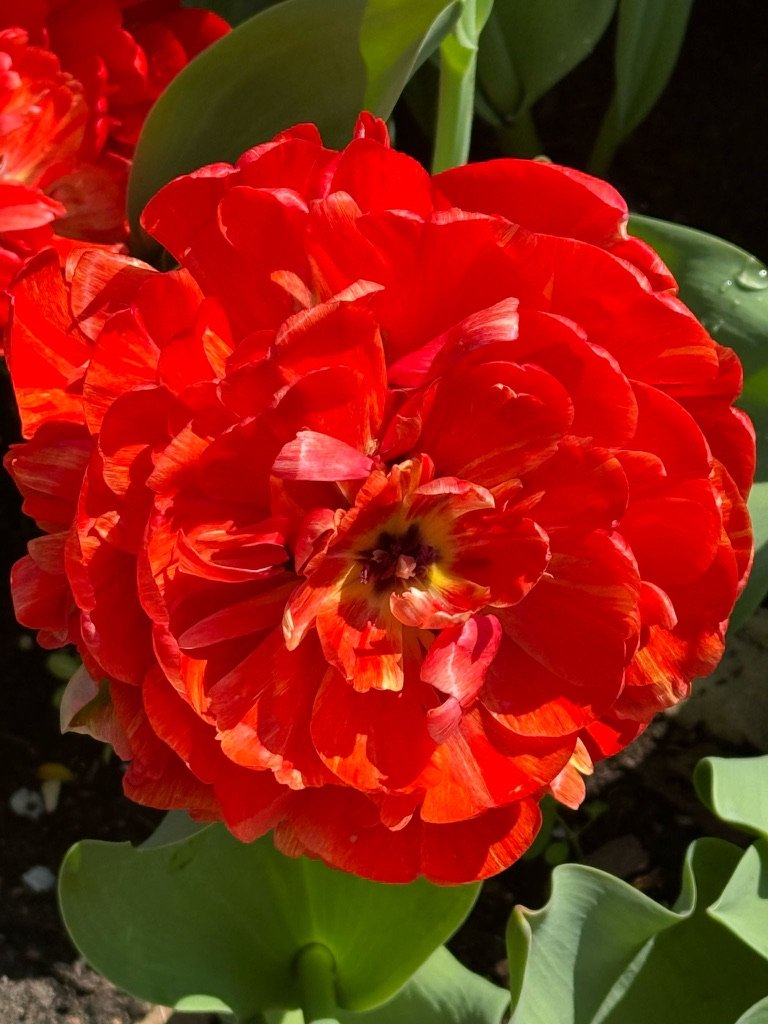
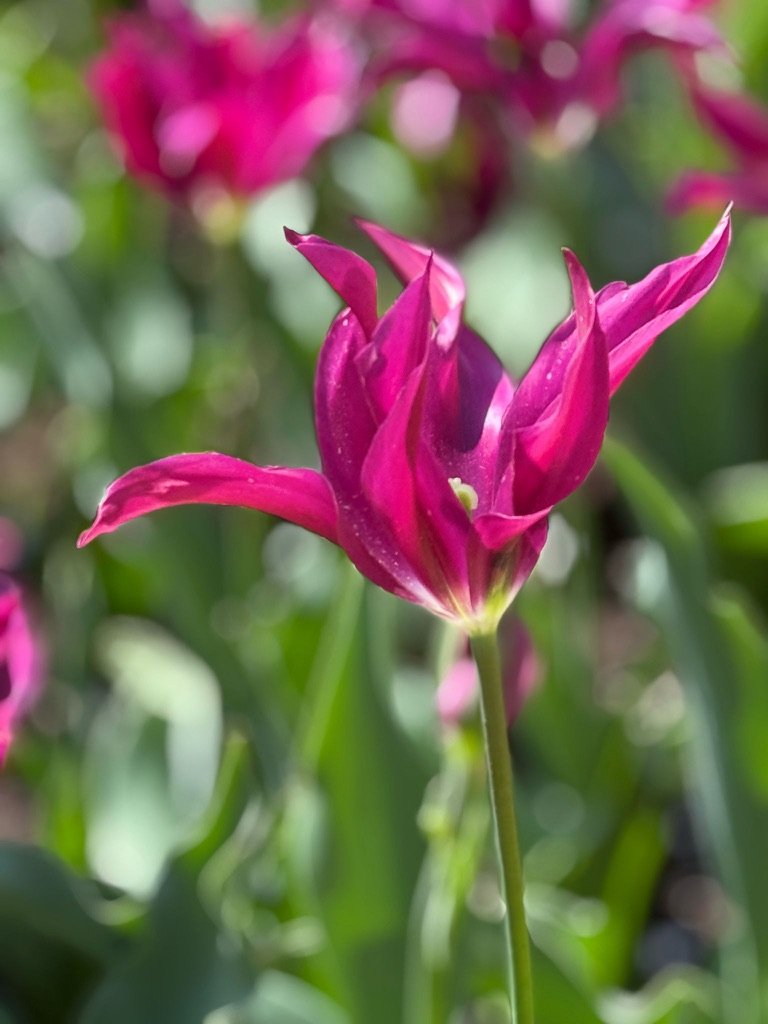
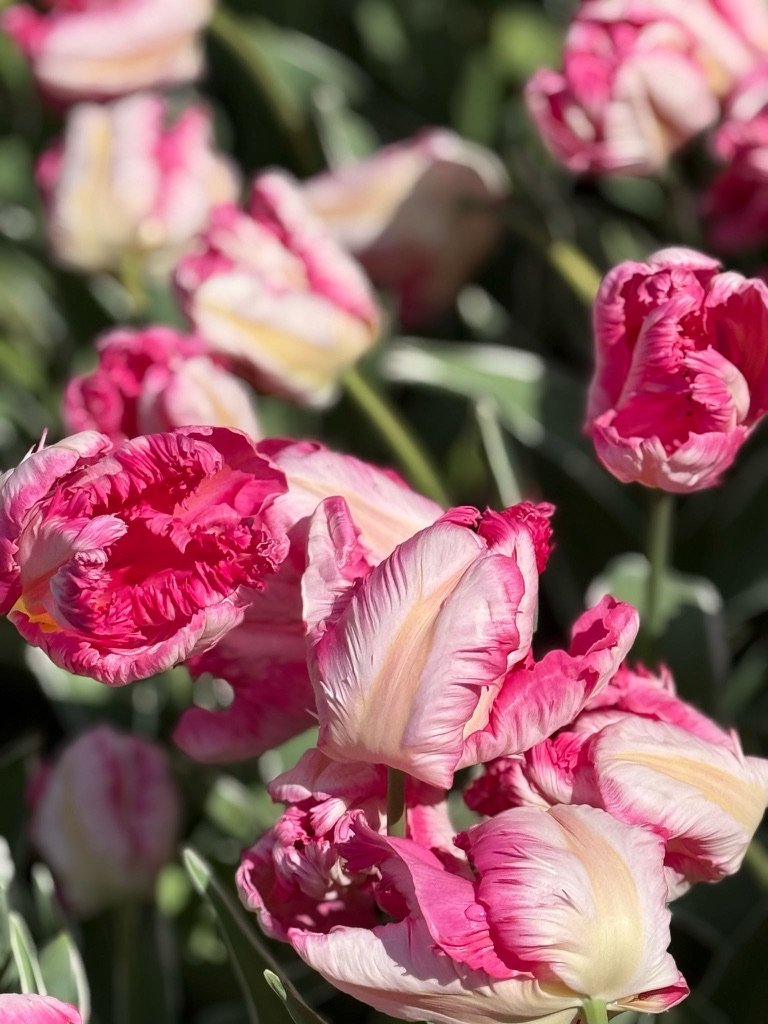
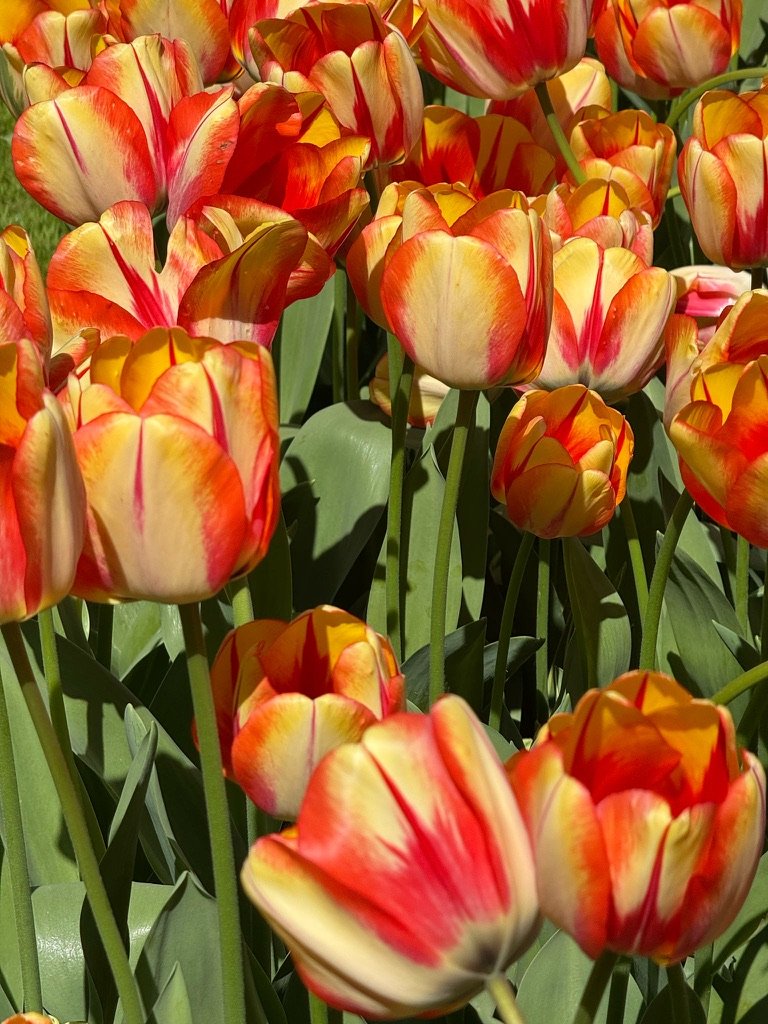
I returned to Keukenhof for a brief visit again this year. Transport in the Netherlands makes this a very easy trip and it is well worth making a stopover in Haarlem, which is a lovely town. I have little to add to the descriptions of my previous visits (April 2022, April 2023) so have just included a selection of photos which lovers of colour and tulips might enjoy!
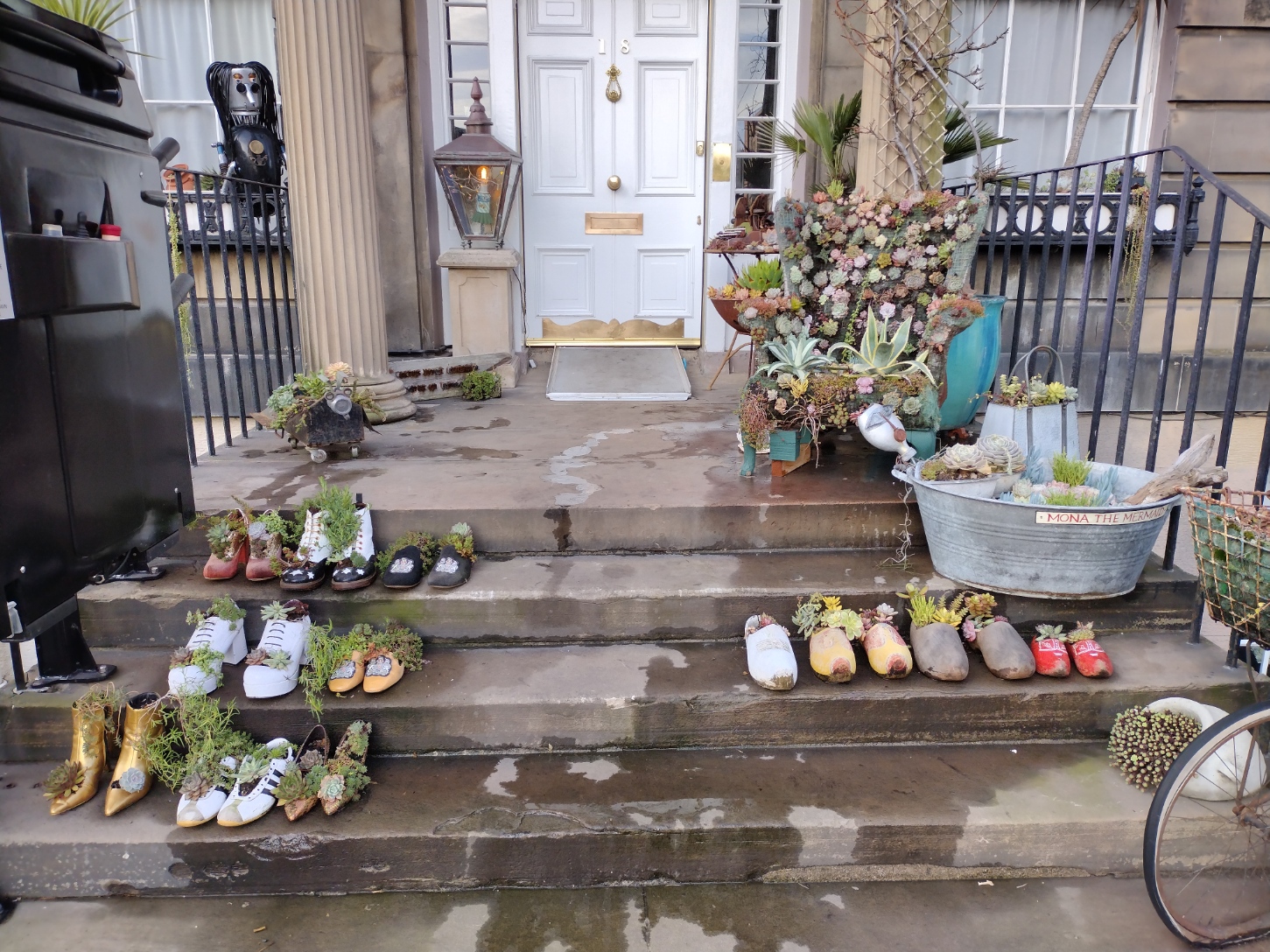
I spent a weekend this February in Edinburgh, and came across this interesting doorstep display on my travels around the city. Some new ideas for displaying your succulents …!
I also visited the Royal Botanic Garden. The morning I visited was bright, cold and calm, in stark contrast to the previous weekend when the garden had been ravaged by storm Eowyn. The sad remains of the garden’s tallest tree – a 166 year-old conifer – were clear to see.
The sun was shining and the sky a bright blue but the frost remained in the shadier parts of the beds and the Rhododendrons had bowed their leaves to protect themselves from the cold. But they were also covered in buds, waiting to burst forth in a few weeks time.
This year’s Orchid display, based on the beauty of Peru, is being show-cased in the Princess of Wales Conservatory. The display is absolutely stunning and should not be missed.
The glasshouse is divided in two sections: the arid, dry zone, featuring cacti and succulents; and the lush, tropical zone. Within the dry zone several large containers of orchids and hanging orchid planters are on display but it’s the tropical zone that contains the main display and you won’t be disappointed.
Inspired by the Peruvian flag and coat of arms, the display centres on a cornucopia (an ornamental goat-horn), overflowing with orchids, to signify the abundance of mineral wealth of Peru. Adjacent (keeping guard?) stands a distant relative of the alpaca.
I have been spending some time recently in Northern Ireland, and was enchanted to find the Belfast Botanic Gardens are right on my doorstep here.. just waiting to be explored.
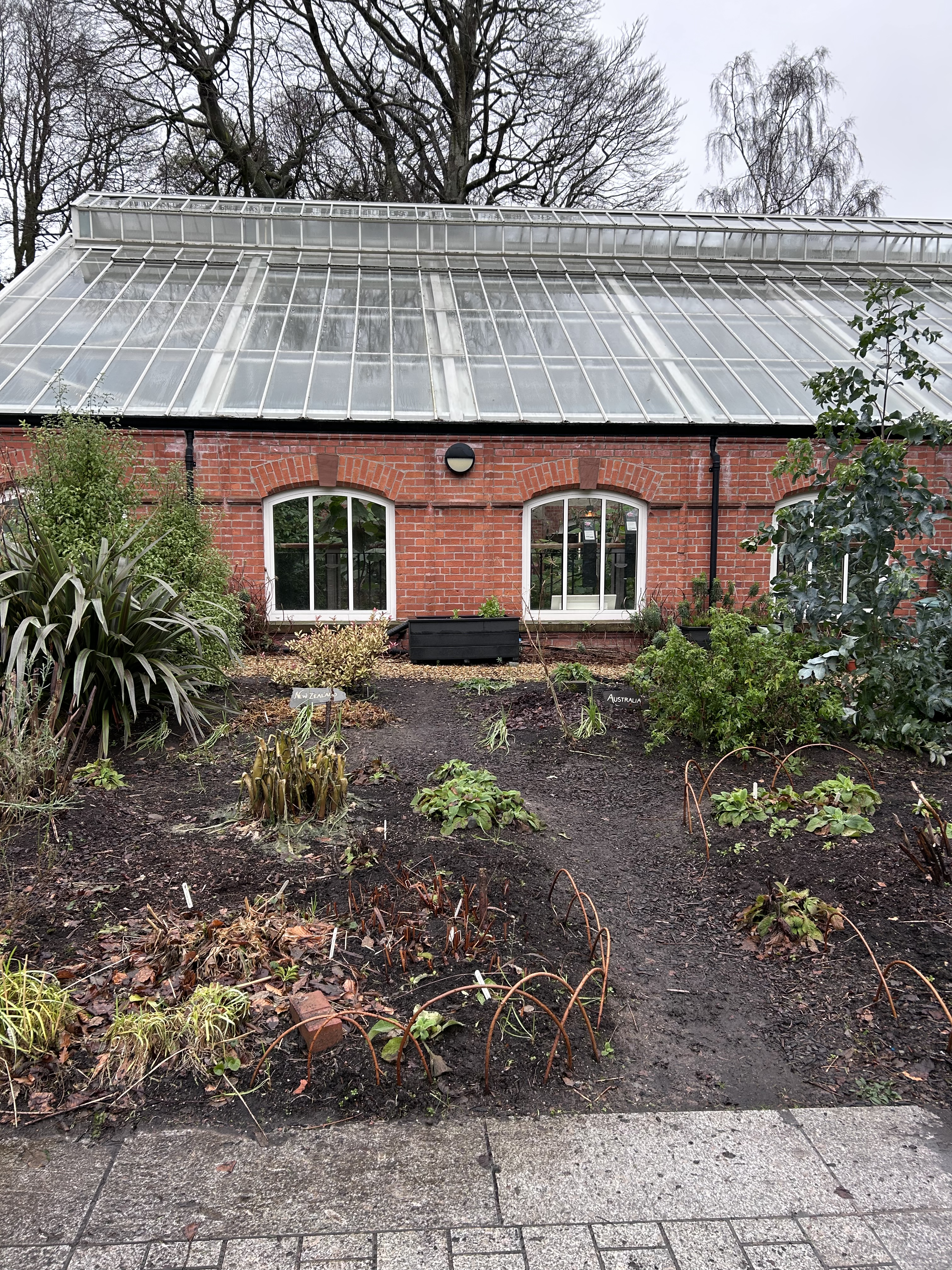
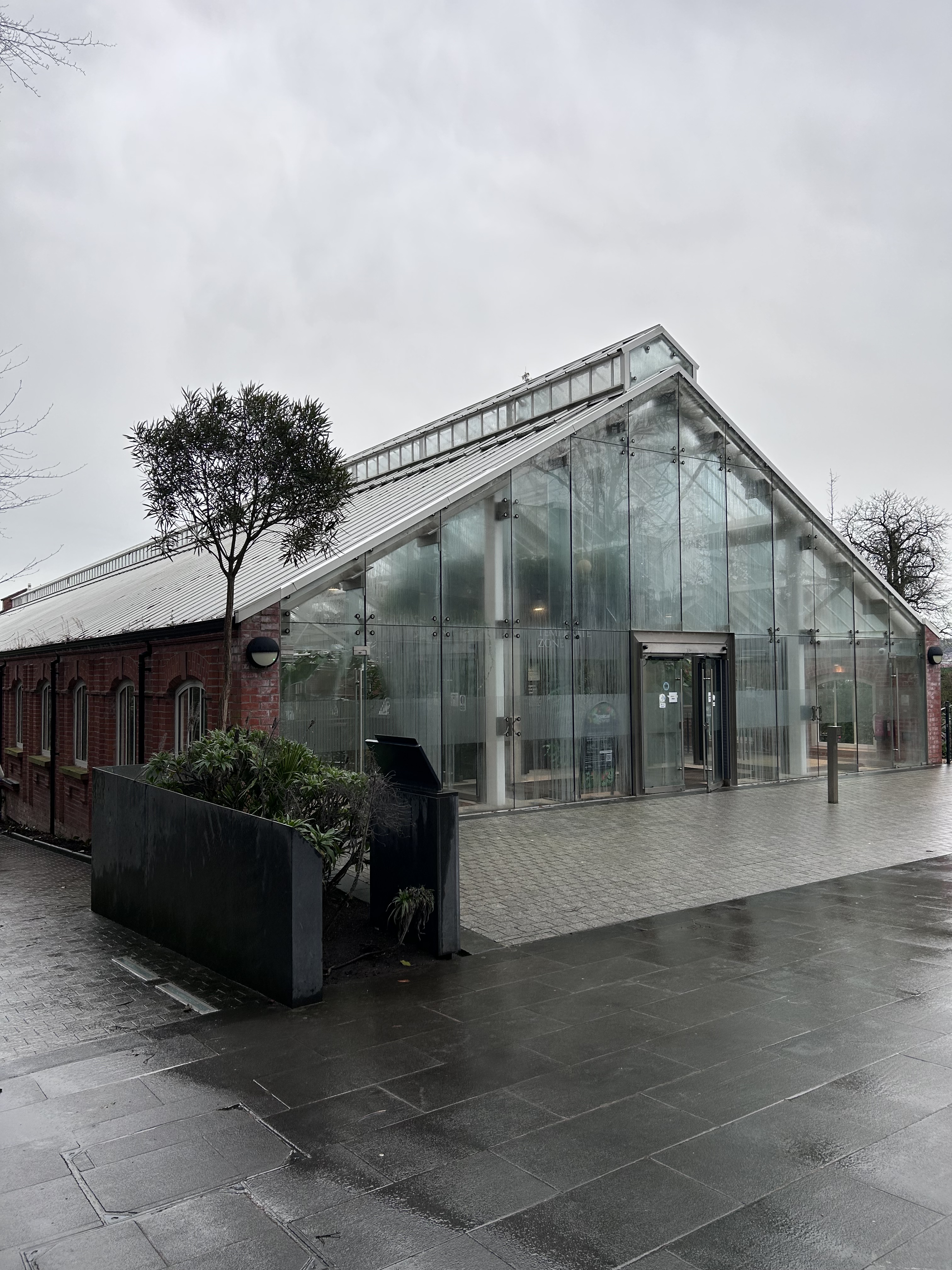
The gardens started in 1828, when the “Belfast Botanic and Horticultural Society” was formed and a 14 acre site purchased. The Palm House was built in 1839 by ironmaster Richard Turner of Dublin, who went on to build the Palm House at Kew a few years later! If this one was a practice run, it is still really impressive.
It is not large, but cleverly designed to incorporate a Cool Wing, a central Dome which is sub-tropical, and a Tropical wing, so it can house a wide range of plants. Sadly it was closed for repairs on the day of my visit, courtesy of the recent winter storms.
There is another glasshouse on the site, the Tropical Ravine House, which is just amazing. It was built by “the Head Gardener and his staff” (Jason & the Garden volunteers – there’s an idea!) and was finished in 1889. Uniquely constructed into a hillside, so the visitor walks around a balcony and looks down into a moist glen filled with tropical planting.
It was renovated in 2019 with help from the Friends of Belfast Botanic Gardens, who clearly play a large part in supporting and maintaining these gardens. They have also created a fascinating new Global Medicine Garden just to the side of the glasshouse. https://fobbg.co.uk/
One autumn Saturday morning in 2024 my companion and I visited the Sarah Price-designed garden at The Exchange in Erith, South-East London and we were in for a treat.
As Erith Library for over 100 years, and Grade II-listed, this Carnegie-financed building of 1906 finally closed its doors in 2009, thus becoming an unused space with unkept grounds. Two visionary locals, respectively with conservation and community arts experience, approached Bexley Council in 2016. Their initiative resulted in a community arts hub which opened in 2022 – a refurbished building with a new garden to match.
Mediterranean front garden
The garden surrounds the building on all sides, with various plantings complementing each of the four different areas. The forefront of the building has become a Mediterranean garden with a tapestry of lime-greens, blue-greens and greys. In amongst the herbaceous and shrubs I noticed Myrtle, Euphorbias, Irises, California poppies and particular favourites, sub-shrub Dorycnium hirsutum and several Hesperaloe parviflora (red yucca), a very choice succulent that I have at home (and managed to keep alive!). On our visit we noticed that flowering was just finishing, with its tall stem of red-orange pendulum flowers just going over.
Before the 1920’s, the ten acres of land at Canford Cliffs was heathland. But along came a man with vision, one Thomas William Simpson, and, with the help of his head gardener Mr Middleton, a magical garden was created.
Mr Simpson was a businessman and entrepreneur (margarine) and having visited many countries, knew exactly what he wanted. Influenced by the gardens and architecture of Italy, Japan and the UK Arts and Crafts movement, he and his gardener set about creating a series of gardens, starting with the Italianate gardens, then a necklace of paths and ponds which connected finally to his Japanese Garden, thus turning his vision into reality, right up until WW2.
The garden sadly fell into neglect following the conflict, but in the 1950’s and 60’s, a new owner set about restoring it, planting the magnificent trees we see today – their maturity and majesty makes this garden quite a magical place to explore.
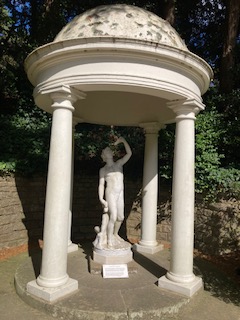
The Italianate GardenThe steps leading down to the Italianate GardenBacchus, God of Wine, sheltering beneath the temple
Upon entry into the garden, I came into the Roman Garden, passed through the Grotto and into the very impressive Grand Italianate Garden, the focal point being the rectangular formal pond and beyond, the statue of Bacchus, the Roman God of Wine, sheltering within a temple at the far end of the garden. This sheltered, south-facing, formal garden is a relaxing place to sit and admire its many features. This garden then leads into Palm Court, a formal garden with its row of impressive Chusan palms.
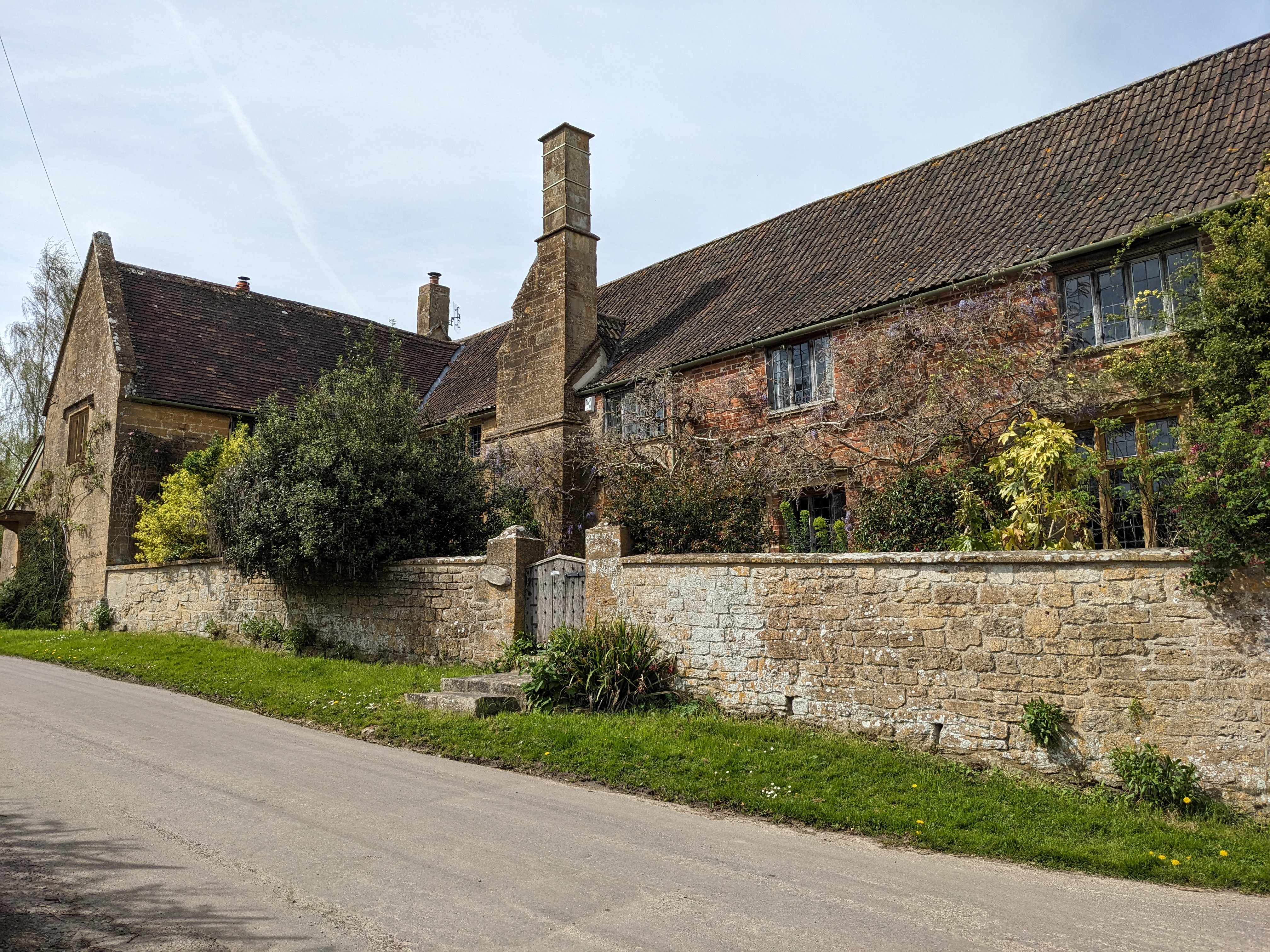
After years of repeatedly reading about East Lambrook Manor in Margery Fish’s classic book ‘We Made a Garden’ [book review], I discovered late in 2023 that the house and garden were to be sold. While the garden is Grade 1 listed and therefore protected to some extent, it may not have to be open to the public, so I determined to visit as soon as I possibly could. The garden is not open over the winter – its season begins with the snowdrop festival in February – so I waited nervously to see if it would re-open in 2024. It did, so plans were hatched as there was now a caveat on the East Lambrook Manor website that opening arrangements could change if it is sold.
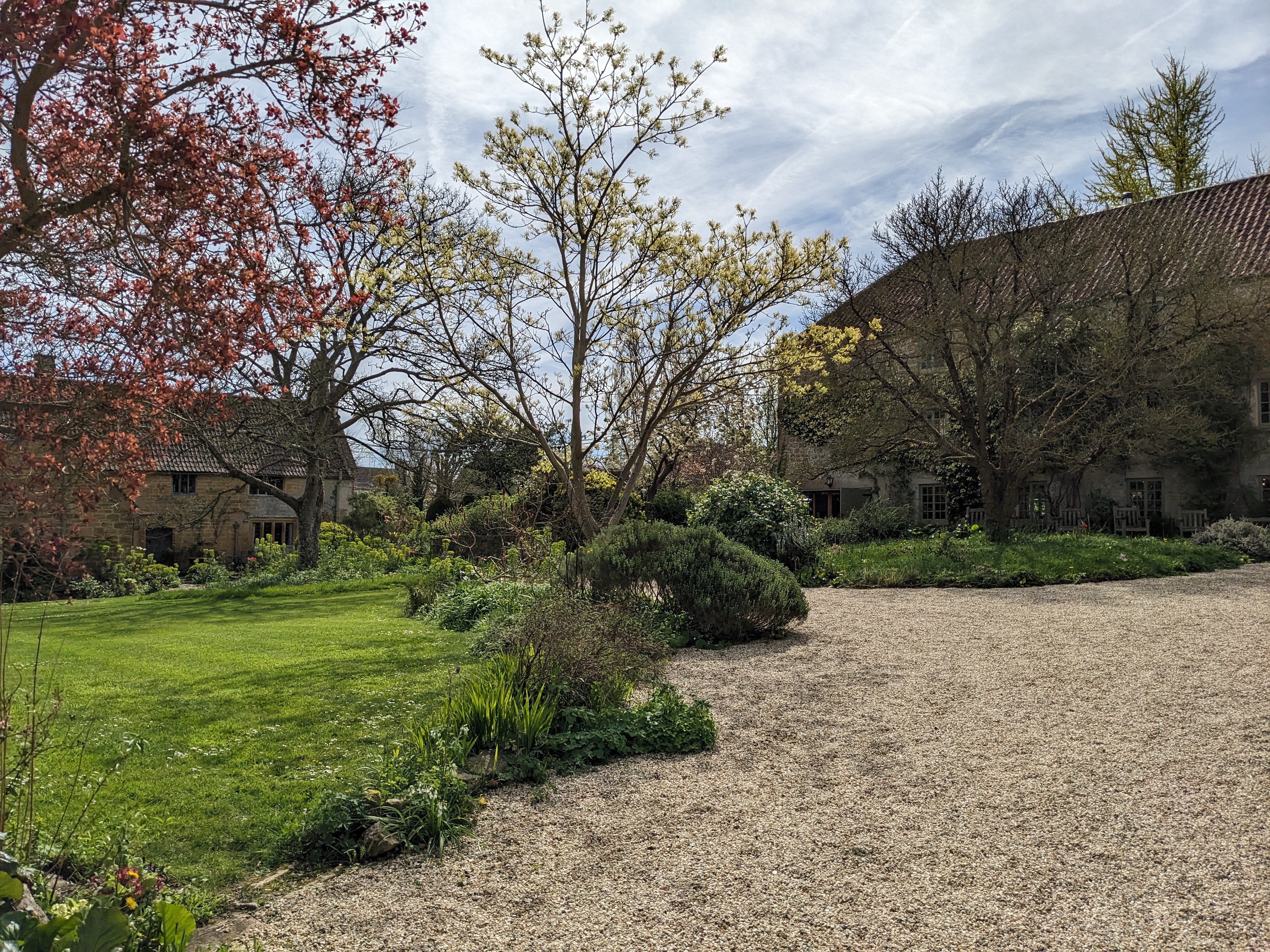
First view: House and lawn to the left, Barton ahead and Malthouse behind.
On a sunny morning in early April we set off to walk from South Petherton, where we were staying, to East Lambrook. It was a lovely walk of just under two miles, leading us into a small village with some very nice front gardens… and we turned into a driveway with the manor house on our left, the Malthouse ahead and a beautiful tree with a host of snakeshead fritillaries (Fritillaria meleagris) below. This was The Barton – the former farmyard.
After the busyness of a visit during half-term to the Imperial War Museum, it was relaxing to visit the adjacent Tibetan Peace Garden on an amazingly warm and sunny, winter’s day in February.
This is a lovely, partially enclosed garden which was opened by the Dalal Lama in 1999 and it was named ‘Samten Kyil’, meaning the Garden of Contemplation and this is exactly what the designers have achieved.
The garden is made up of two parts: an outer garden of trees and lawn sweeping around and enclosing the inner circular garden, the whole bordered by a circular pathway in which to enjoy the views. White-barked Himalayan Birches, making a striking contrast against the green and blue of the grass and the sky, are interspersed with Weeping Cherries and Prunus serrula (Tibetan Cherry) with polished, red-purple bark.
During September 2023 I revisited the newly-built Wellbeing Garden, located at the rear of University Hospital, Lewisham.
There have been some exciting changes and the most notable is the large, beautifully-built, pergola that pulls the whole garden together. The pergola not only provides shelter but acts as a meeting place for various classes, including the Gardening Club. Some of the structure’s uprights are decorated with painted terracotta tiles, showcasing talented and creative individuals.
The planting in the garden had matured, and, being autumn, the grasses were in their prime, growing alongside the flowering stars of pink Tulbaghia violacea. I noticed a Snow Drop tree (Halesia diptera) and an additional small tree, Heptacodium miconioides, a species I had never seen before. The tree was displaying clusters of prominent, white, flowers with an intoxicating perfume, so, for me, this was an exciting find.
According to my (many) English Heritage emails, Down House and garden is one of the best of their sites to visit in the autumn. We went expecting a show of bright autumn colours but I have to say we were rather disappointed.
However, there were compensations. There were autumn colours aplenty on the drive down with the low autumn sun sparkling through the yellow trees.
The house itself is very interesting. The staff were friendly and welcoming and keen to impart their knowledge of Charles Darwin and to ensure that we were enjoying our visit. The original kitchen with its flag-stoned floor is a good place to start with coffee and cakes.
Charles Darwin lived in the house for 40 years with his wife, Emma Wedgewood (also his first cousin). They had ten children, seven of whom survived beyond the age of eleven. Darwin was an unconventional Victorian father, allowing the children into his study and providing them with the means to play noisily in the house, building a wooden slide that fitted on one of the staircases.













 Charlton and Blackheath Amateur Horticultural Society