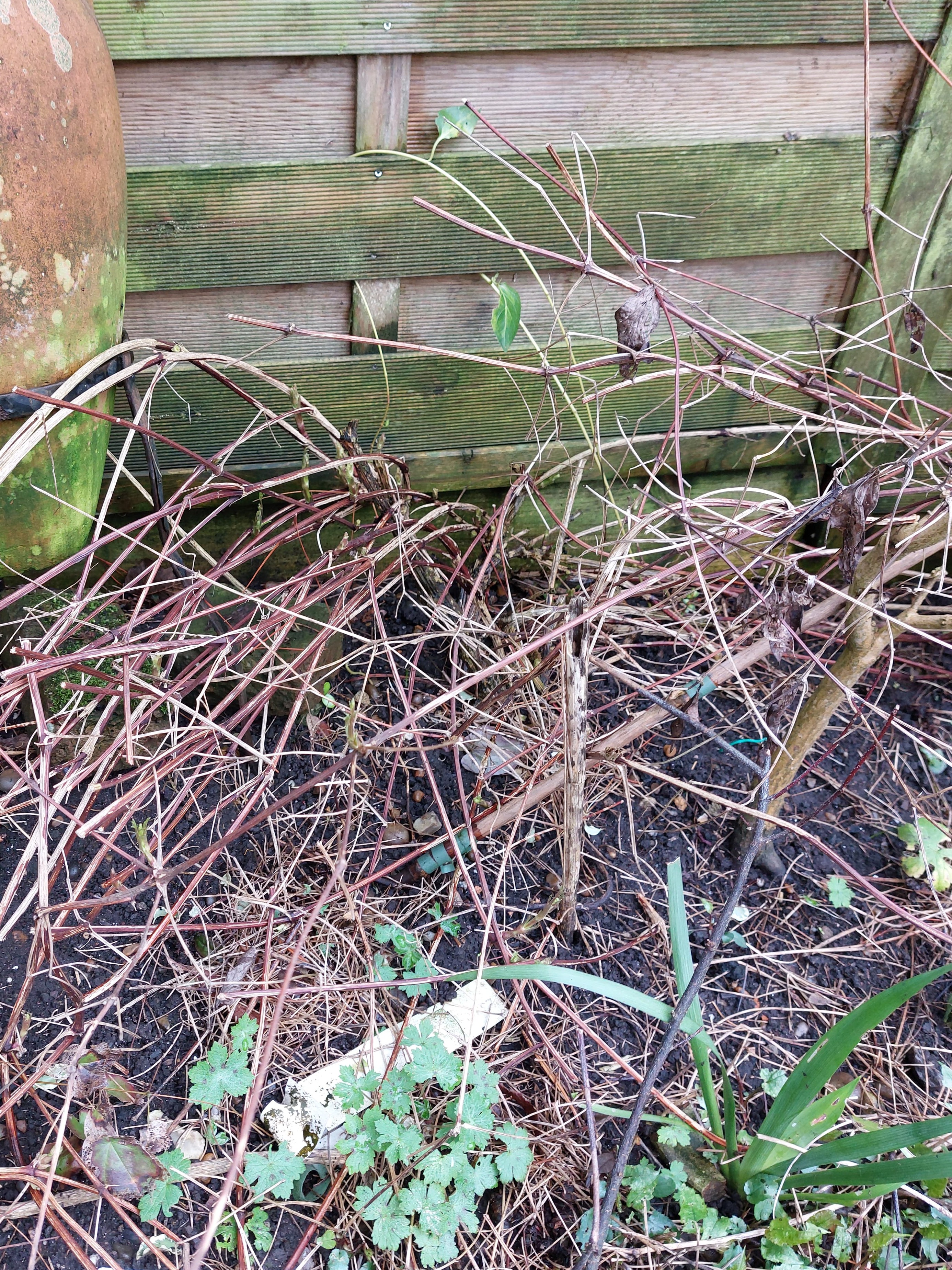
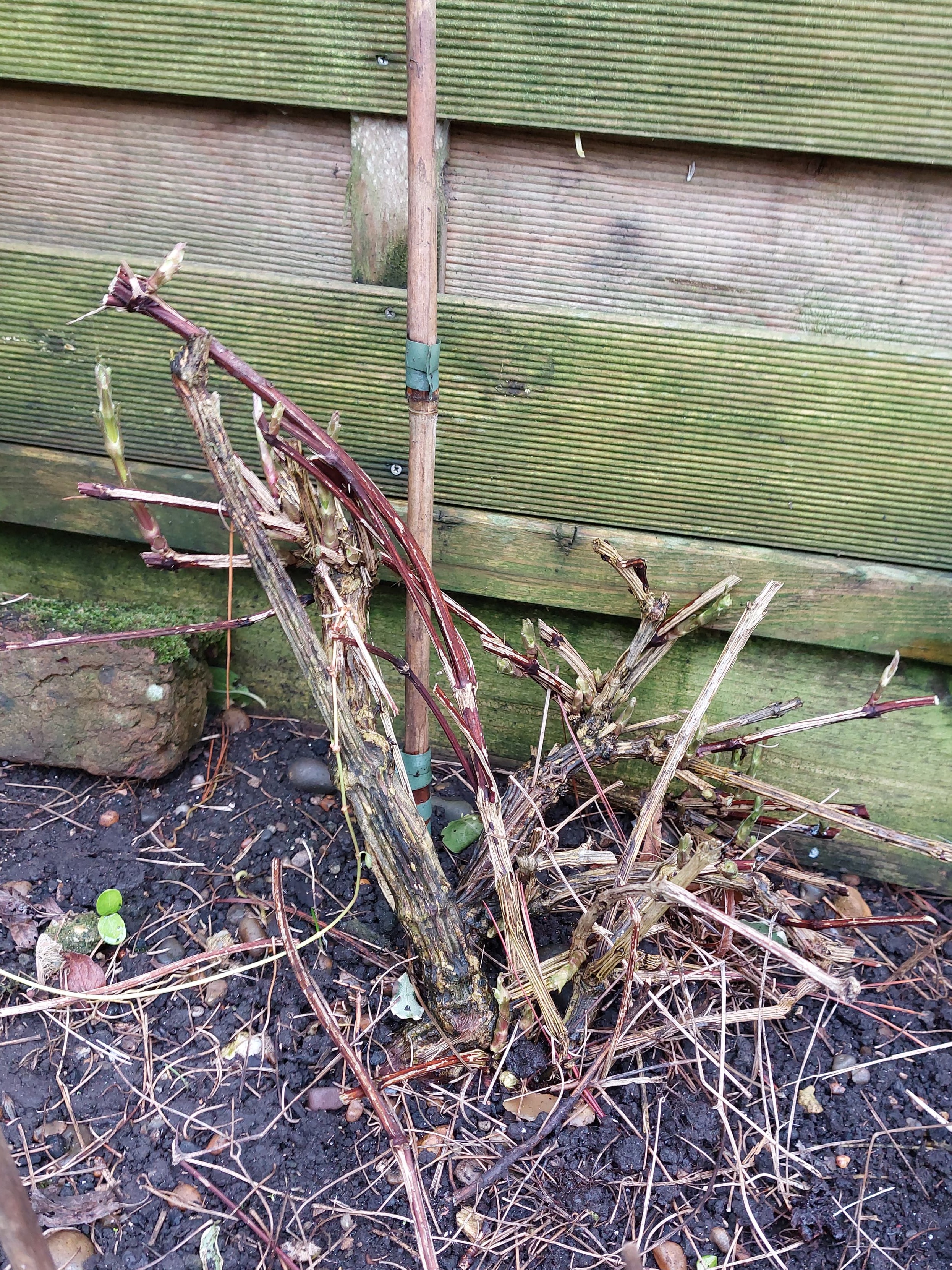
1. It’s time to prune your Group 3 Clematis (the Viticella and Jackmanii type) to tackle tangled growth at the base so they can grow away strongly. Take all growth back hard to about 6 to 12 inches above the ground, cutting above a leaf joint. Then give them a feed and a mulch. It seems drastic but they respond well and will grow quickly. If it’s a fairly new plant check around the base for slugs which can quickly eat any weak new growth.
Clematis viticella ‘Betty Corning’ before and after a hard prune
2. Cut back all spent foliage on grasses making sure not to snip emerging shoots. And look out for any seedlings to pot up for our plant sales table if you don’t want them!
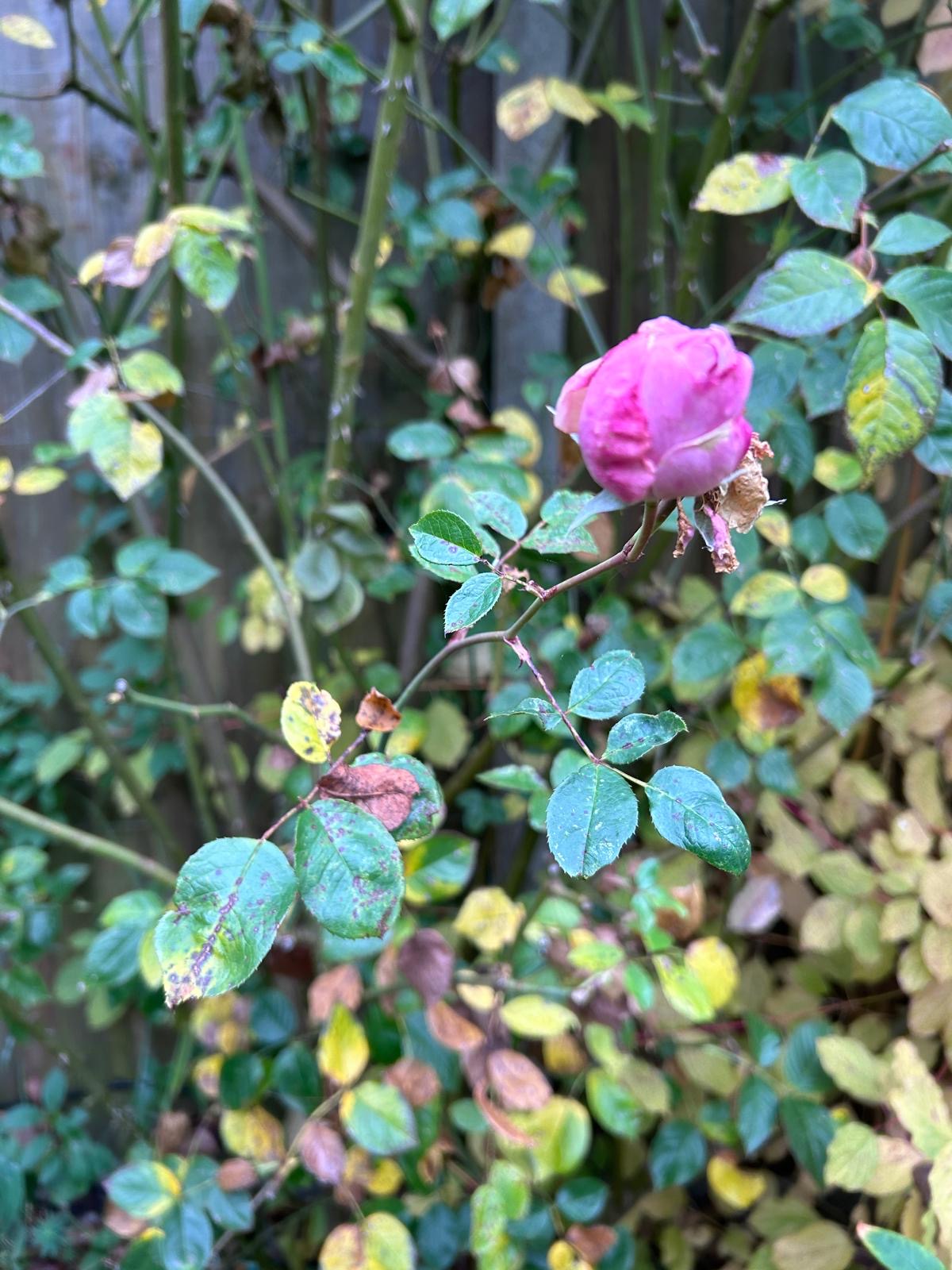
1. Check for blackspot on roses and make sure to remove the leaves by checking the bush itself and below it. But don’t add to the compost heap.
Blackspot on roses
2. If you have to, this is the best time to move trees and shrubs, but have your planting hole ready, and dig up with all the root ball and replant quickly, watering well until settled.
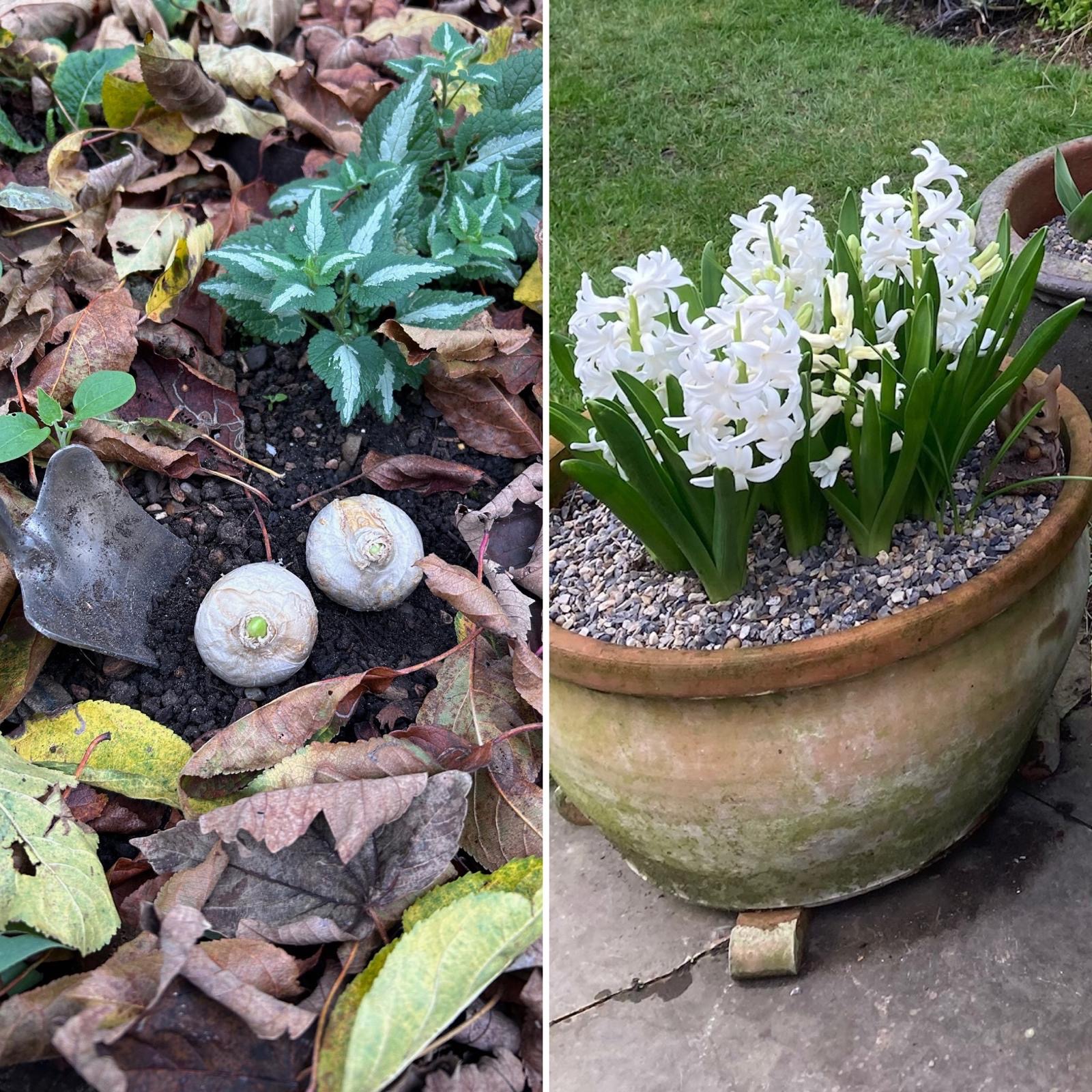
3. Plant your tulips and hyacinths now. either in the ground or in pots – but protect from squirrels.
Plant tulips and hyacinths
4. If you sowed sweet peas last month. harden them off now and it’s still not too late to get some going for an early crop.
Dave Goulson, Professor of Biological Sciences at the University of Sussex specialising in the ecology and conservation of insects, and author of several books*, gave a talk about the dramatic insect decline worldwide. He outlined some of actions required on a National and International scale to reverse this apocalypse and what we as gardeners can do.
When he was a boy, he started collecting caterpillars (in his lunchbox) and his interest in insects became a life long passion when one of them pupated into a Cinnabar Moth. He explained that insects evolved over 480 million years ago and there are now around one million known species worldwide. They were the first creatures to fly and sing and many have complex inventive ways to camouflage themselves or mimic others. Examples of some ‘weird and wonderful’ insects were shared with us such as the Shield Bug from Thailand whose back very much looks like the face of Elvis.
The horrifying statistics on insect decline were shown, particularly over the last 30 to 40 years. Studies show that the decline is around 75%. He has researched the Shrill Carder Bee which was common across Southern England pre-1960 but by the year 2000 the populations of this bee had greatly decreased and there were only about six populations left. Since 2000, the population which inhabited the Salisbury Levels has become extinct.
The small patio is shielded from the sun, in a south facing garden, by an Acer palmatum ‘Katsura’. The tree caught my eye while on a trip to Kent. Must have one of those I thought. The sapling was bought and is now well mature. Some of the limbs show signs of viral attack, but it soldiers on.
Early to leaf, in February, the leaves are green and red. It produces sap, which attracts the aphids. With the aphids, the small birds make regular visits to eat the goodies. The birds include Blue, Great and Coal Tits, Robin and Goldfinches. The Dunnocks also pay a visit, foraging in the growth below, together with a variety of bees including the distinctive yellow faced variety. Soon after, it will produce a vast amount of blossom, and after that very small sycamore-like seeds. In time and onto autumn, the leaves go from yellow to orange and then fall, covering all the surrounding ground.
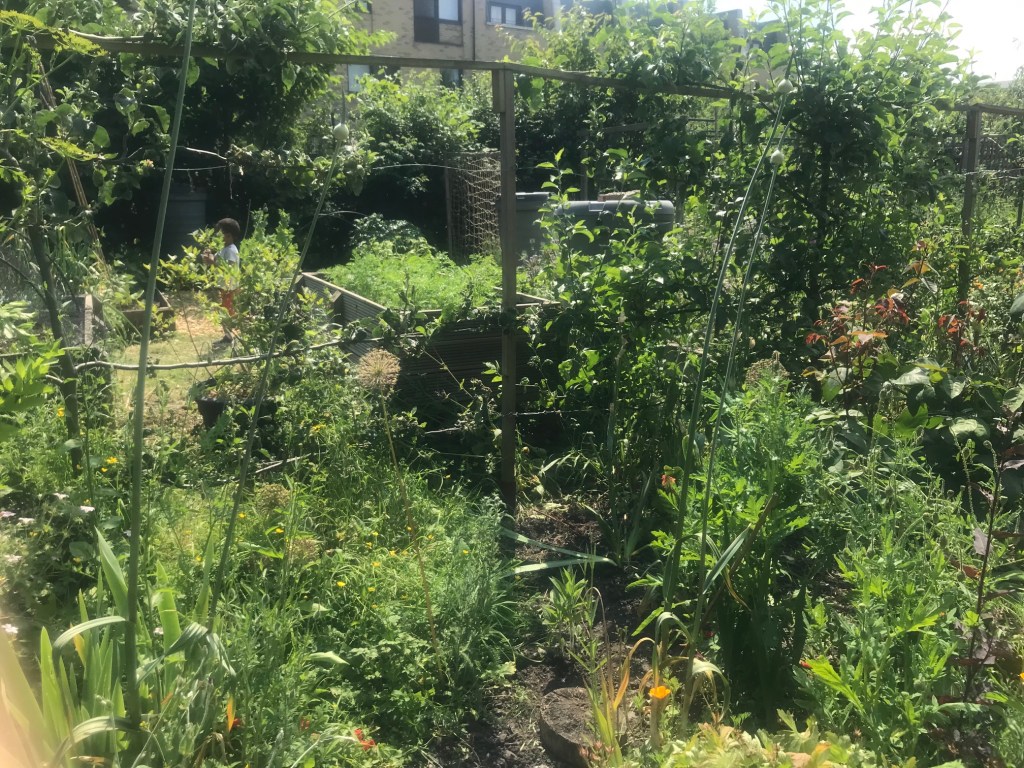
One very warm and sunny Sunday in June, CABAHS members were invited to come and visit our member Juli’s garden in Plumstead – which she generously opened specially for us, in aid of the Greenwich & Bexley Community Hospice. Juli’s garden is in the middle of a dense housing estate, but it is pretty easy to spot by the large banana tree sprouting over the top of her wall. Her garden beautifully demonstrates what can be done in a small space with some greenery, lots of care, and a sense of humour!
Juli in her garden
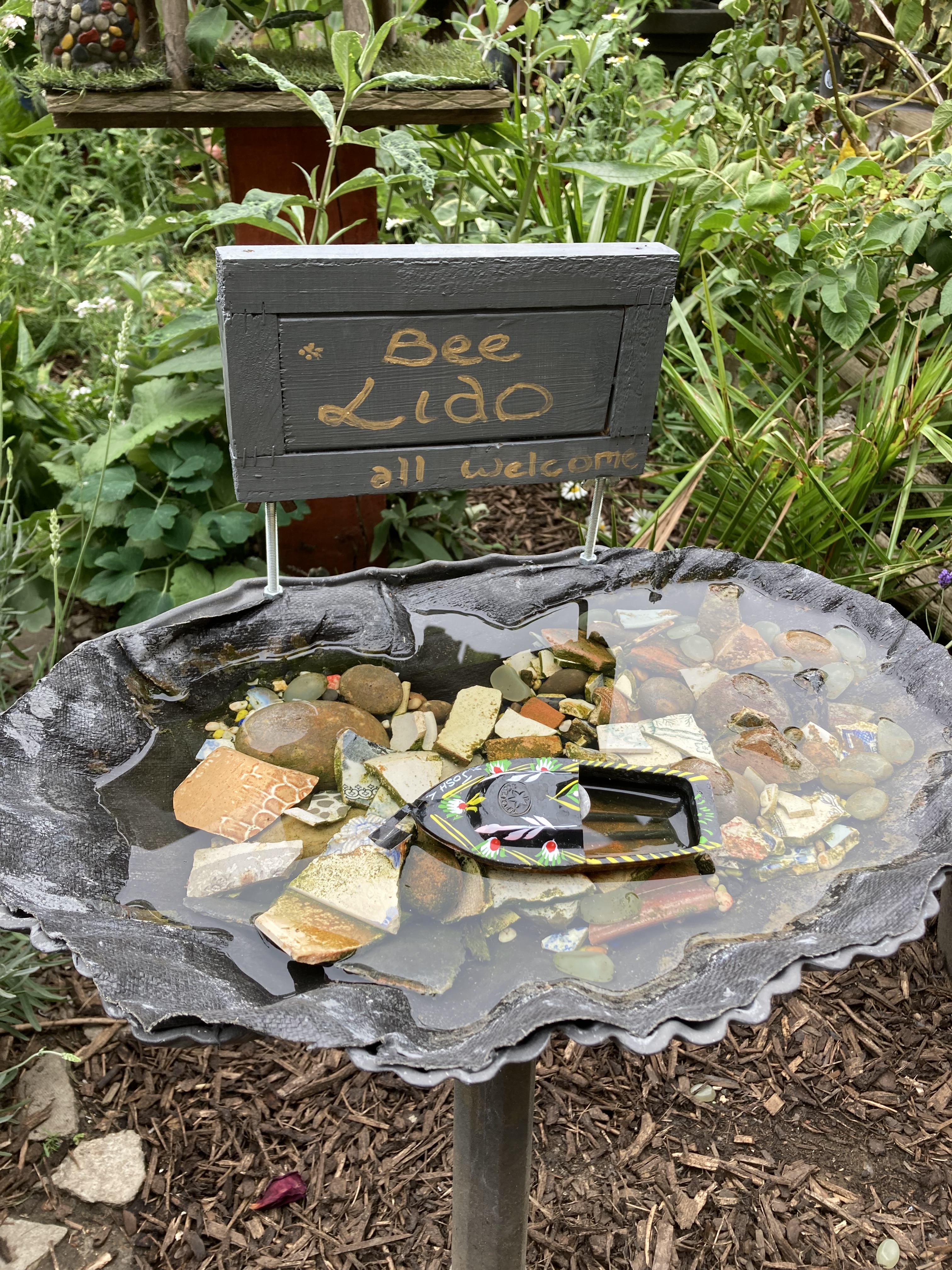
After the banana, the first things you notice are the Bee Lido and the fish pond, and I also liked the healthy looking lavender – which was a Charlton House reject that has been nursed back to full flower. Juli’s plant range includes her beloved roses, many perennials and even fruit trees. There are so many fun details, it takes much longer to properly appreciate than you would expect!
Thought for wildlife is everywhere in this garden, including Juli’s collection of friendly Bunnies – who were the stars at our Easter “Bunnies in the Beds” event.
Given the hot weather for this year’s Festival and that this is our third, we focused on Gardens we haven’t seen before. So this afternoon we set off to Christchurch School Community Garden to see what was going on there. And we were pleased. It demonstrates what can be done with a pocket of land, off a busy main road, with some funding and lots of enthusiasm and knowledge – and effort. The description on the Festival brochure referred to raised beds for food crops, a community orchard, ornamental borders, a Forest School and a covered meeting hub. They also have a hugelkultur bed, a bee hive, a wildlife pond – and they were selling goji berry plants!
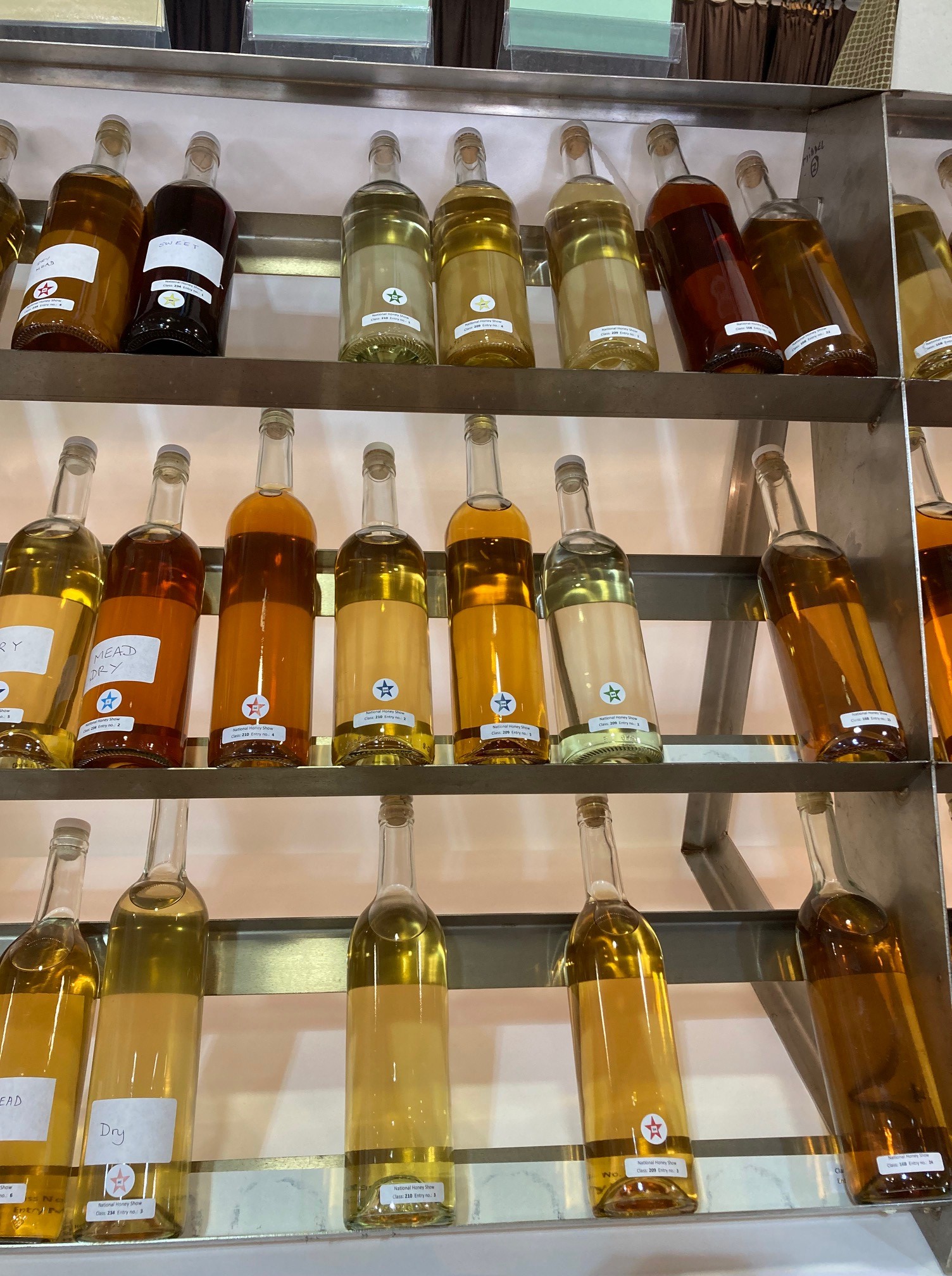
My husband ( a beekeeper) recently treated me to a visit to the National Honey Show, which is sort of like going to RHS Chelsea if you are a beekeeper. Apart from an enormous number of jars of honey, there were talks available, and we attended one from Dr Nick Tew on “The role of gardens in supporting Insect Pollinators”. It was a really good talk, with scientific research explained in easy terms.
A few slides stood out for me – for instance, the time period for flowering plants in a garden, compared with a hedgerow or pasture. Most gardeners love to have something in flower all through the year, so although the volume of nectar/pollen in a garden might not be as high as in a meadow or hedgerow in full swing, it is available for a much longer time span. So in fact such a garden is more useful to insects.
There are some downsides to a garden – Nick calls it “horticultural bling”, a lovely phrase which unfortunately can be applied to a few parts of my garden (but luckily not many!)
A version of the talk is on Youtube, the link is below, it’s a good watch.
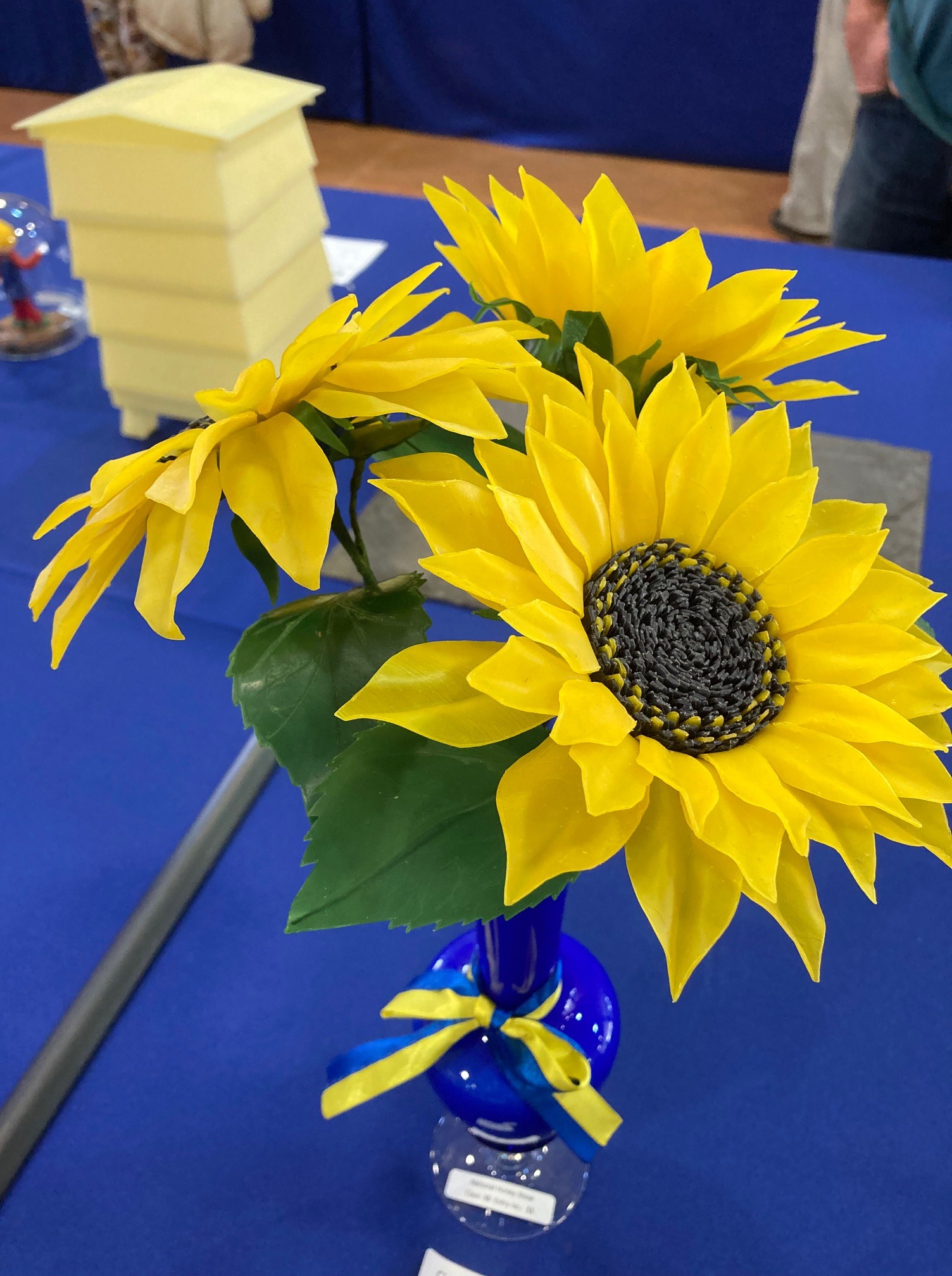
The Show was held at Sandown Park racecourse, and it was huge. It reminded me of a Horticultural Show in that it not only had classes for honey, but also eg craft and baking classes. The sunflowers shown here are made of wax!
I bought some sparkling mead from one of the stalls, took down a recipe for “Gin & Tonic Honey cake” and bought a couple of seed packets to convert my lawn into a meadow at some point in my dreams. The final stall we visited worried me a little, as it is giving my husband ideas!
September started off with the tail end of The Drought and as it became wetter the Volunteers were very grateful to get back to some proper gardening. The great news is that we hardly lost any plants at all.
Volunteers on Tea Break
The Peace Garden has benefited from our attention, with the last of the annoying stones on the path edges being removed, and work on the shrubs and climbers along the walls making them look much more defined and trim.
Removing the last loose stones, saving the lawn mower!
In the Old Pond Garden, many perennials went to seed earlier than usual, due to the drought, but the seedheads are quite spectacular.
TeaselSea Holly
The Volunteers were thrilled to receive a donation of jars of honey from the Charlton House Beekeepers. The bees had a bumper year, partly due to our lovely gardens. To stop any squabbling, we held a raffle to decide who got a jar and the happy winners are shown here:
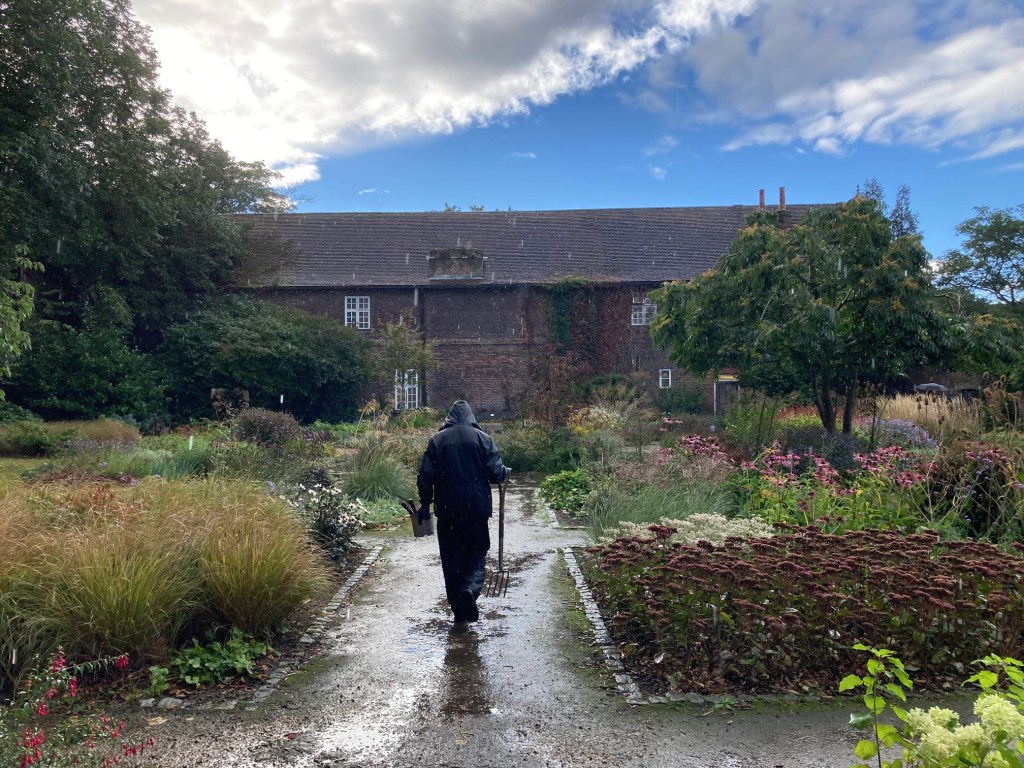
A rainy start to October! Autumnal tones everywhere now. The bees are still out in force though.
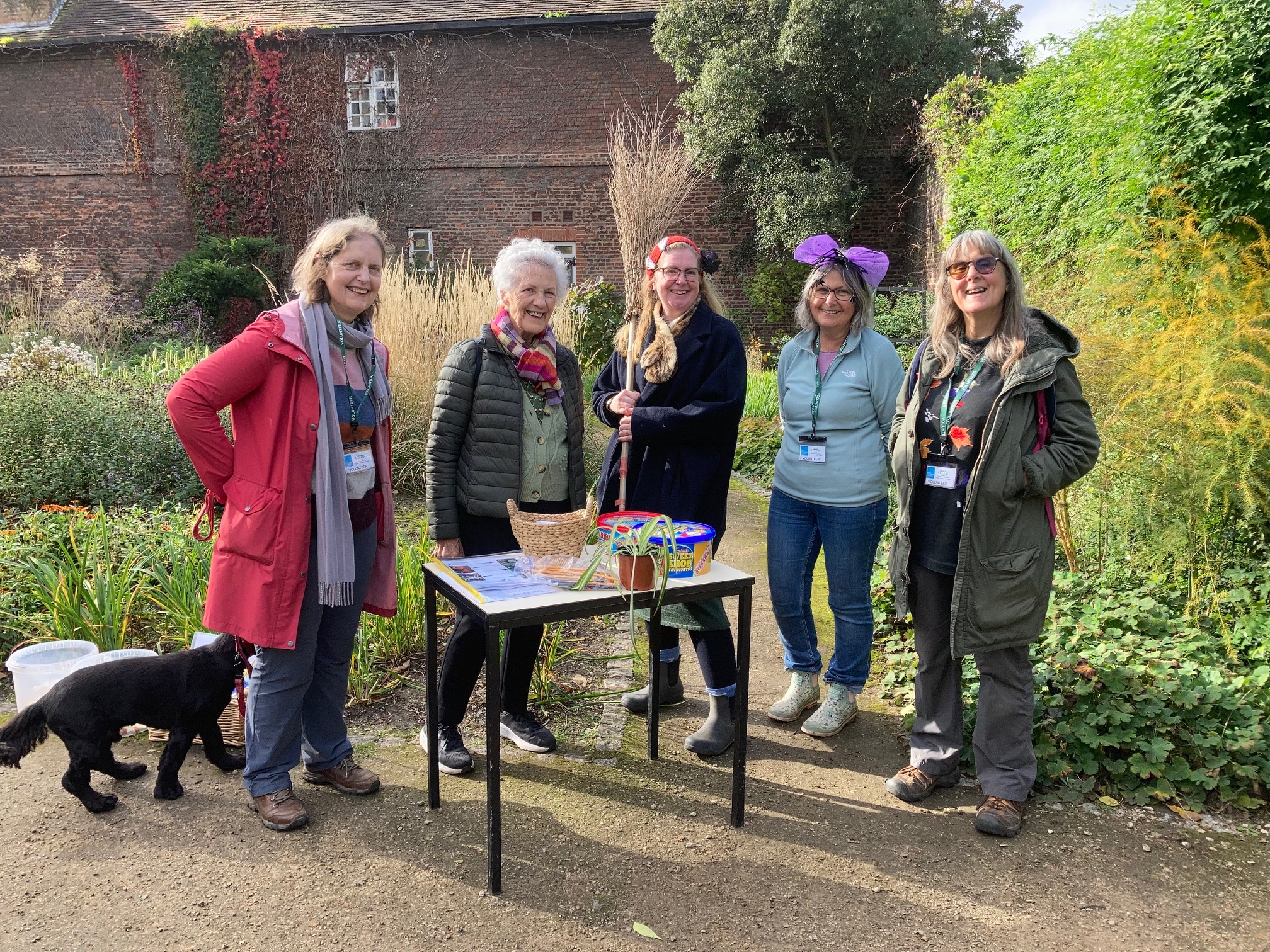
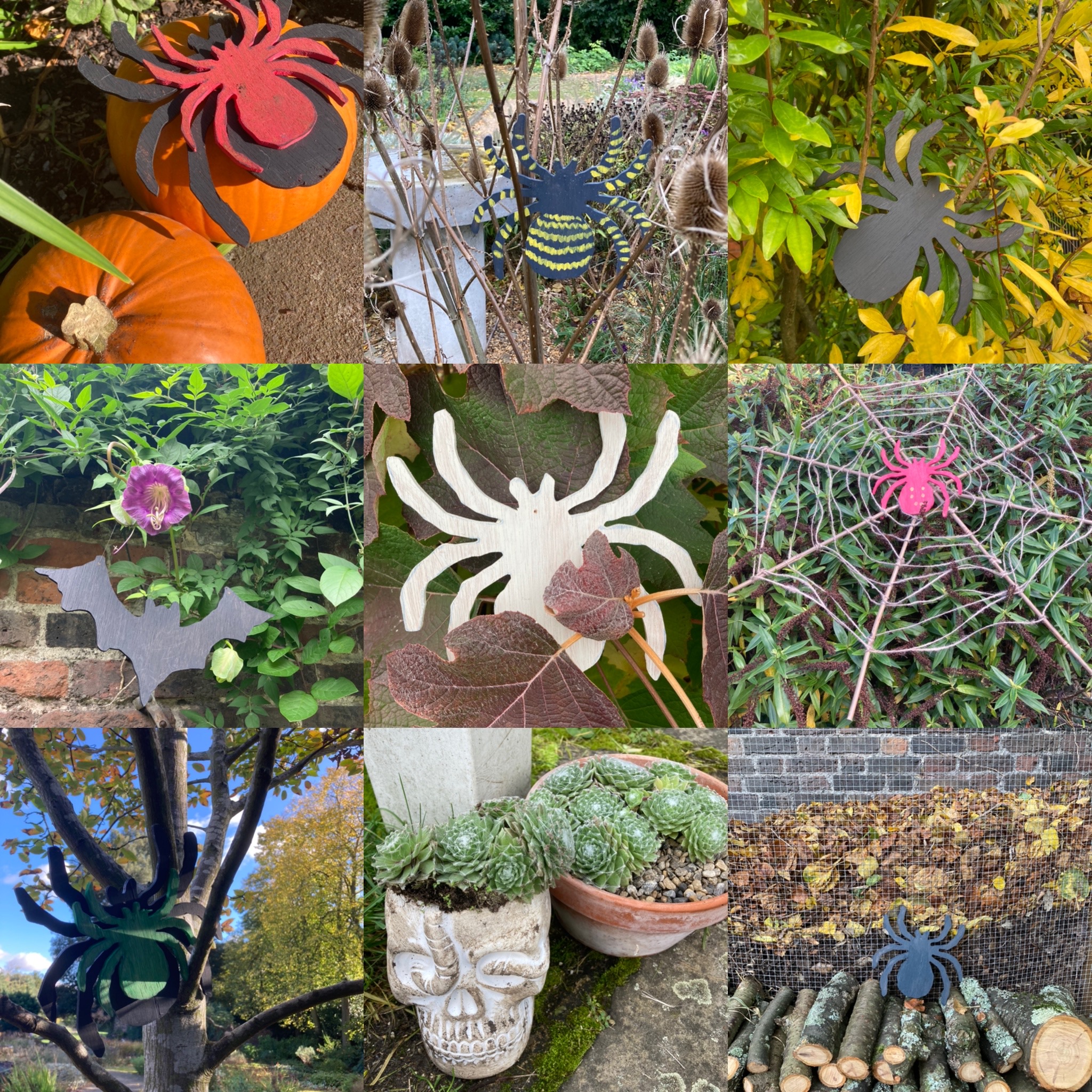
Our Halloween Spooky Spiders Trail went down well with Charlton House Explorers this half term. There were 10 spooks to find around the garden, and it kept them all busy after their Ghosts and Gargoyles session in the Long Gallery. We had 140 children through the gardens over the two days, phew. Great fun, although we didn’t do much gardening this week!
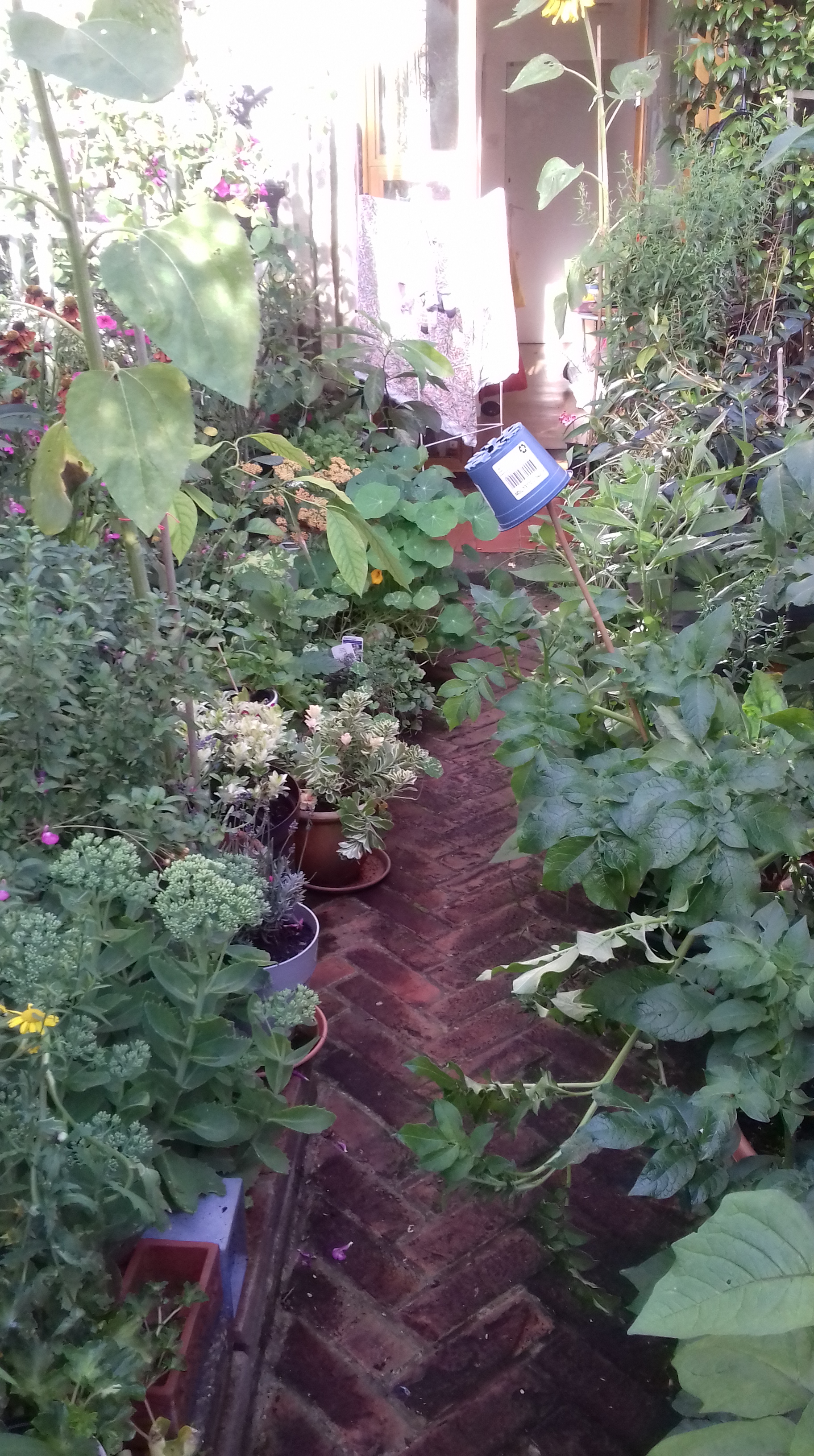
CABAHS member Jean R thinks her garden is out of control! She says:
I’m a true amateur gardener and have watched aghast as nasturtiums, chinese lanterns and the leaf cutting bee have almost destroyed all my carefully laid out spring plans! In fact I love those bees, but do they really need so much leaf to line their nests? I also love nasturtiums and Chinese lanterns, but how dare they spread so prolifically!
Then to cap it all, intrepid visitors searching for my garden path find that only a sideways crab-like advance is possible to reach my front door! You can spot my front garden in Vanbrugh Park if you are passing by…….
Jean’s front garden path (somewhere in there)
Evidence of Jean’s leaf cutting bees!
An unusual shrub in Kathy’s garden – this is Sphaeralcea (Globe Mallow) Newleaze Coral. A real toughie, it loves this dry sunny weather.
This is Angela’s pretty Monarda (bee balm), the photo doesn’t really show it but Angela says it is now 5 feet tall!
Rambling Rosie looking great in Carolyn’s garden. Love the name, really suits it!














 Charlton and Blackheath Amateur Horticultural Society