Many of us anthropomorphise plants. It is often a winning combination when writing about them. Anna Pavord, a particular favourite of mine, writes about Symphytum grandiflorum as being ‘thuggish in its attitude to neighbours’.[1] Violas are described as ‘well drilled miniature rent-a crowds, all gazing in the same direction, each bloom well-mannered enough not to get in the way of the one behind’[2].
I have a pretty little Fittonia sitting on a table indoors and bought one for my daughter a while ago, as they seem fairly bullet proof. I tend to under water my houseplants and have noted this Fittonia in particular suddenly looking terribly limp; its leaves really hang down and it looks very miserable. However, a spot of water revives it swiftly and it looks complete sprightly again. My daughter commented that her plant ‘fainted’ – this is such an apt description it made me smile.
Of course, attributing human characteristics to plants may be another way of expressing the care we have for them. There are many keen gardeners who talk to their plants. I apologise profusely if I accidentally dig up and damage a bulb and it is often said that gardening is a form of nurturing.
Although anthropomorphisation has long been regarded as something of a lovable quirk, recent studies suggest it promotes a view of the object as prosocial, intelligent and able to suffer, all of which are important aspects in conservation. If this is not limited to species which we view as somehow ‘being like us’, the empathy intrinsic to anthropomorphisation can be a useful tool to conserve threatened biodiversity. Of course, this is a huge debate, but it does highlight the relationship between private attitudes and public approaches.
Vija
[1] Pavord, A. (1991) The Flowering Year Chatto and Windus, p. 56
[2] Pavord, A. (2001) Plant Partners Doring Kindersley, P 106.
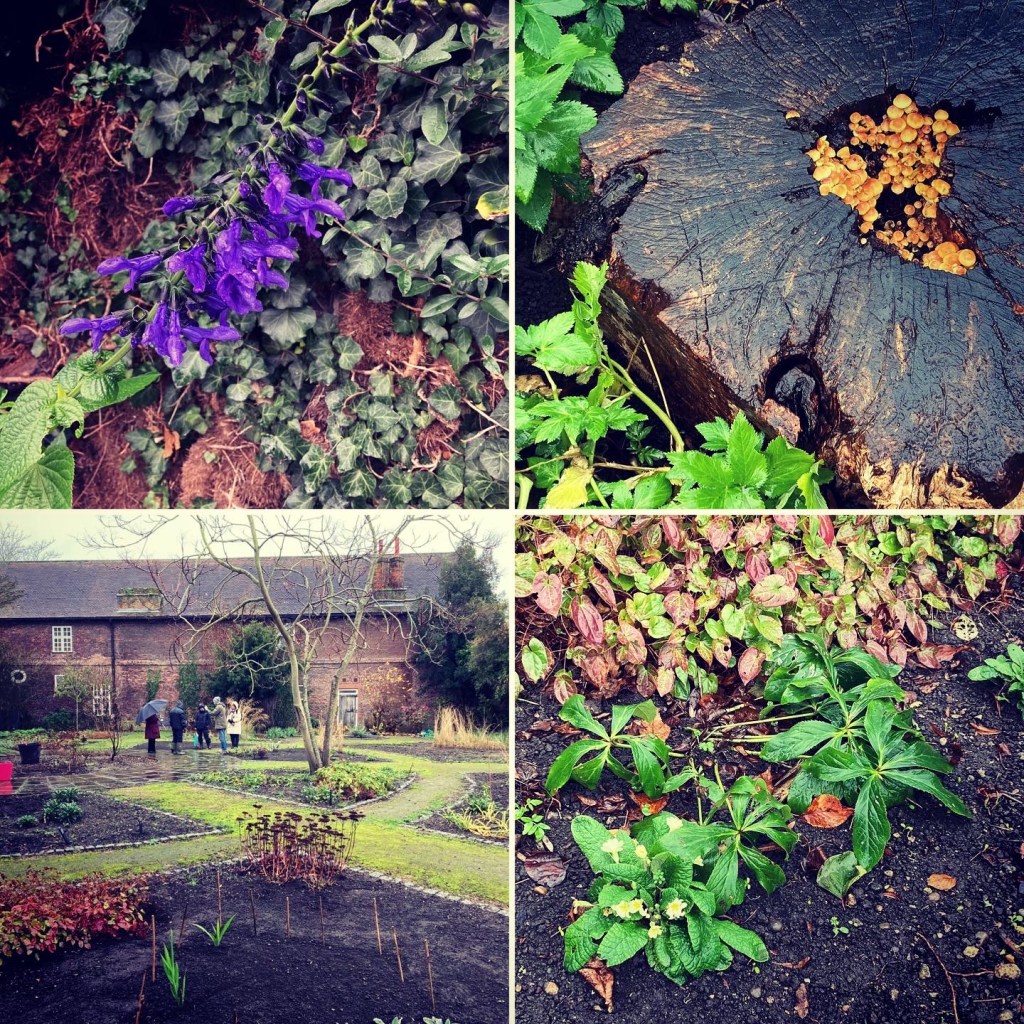
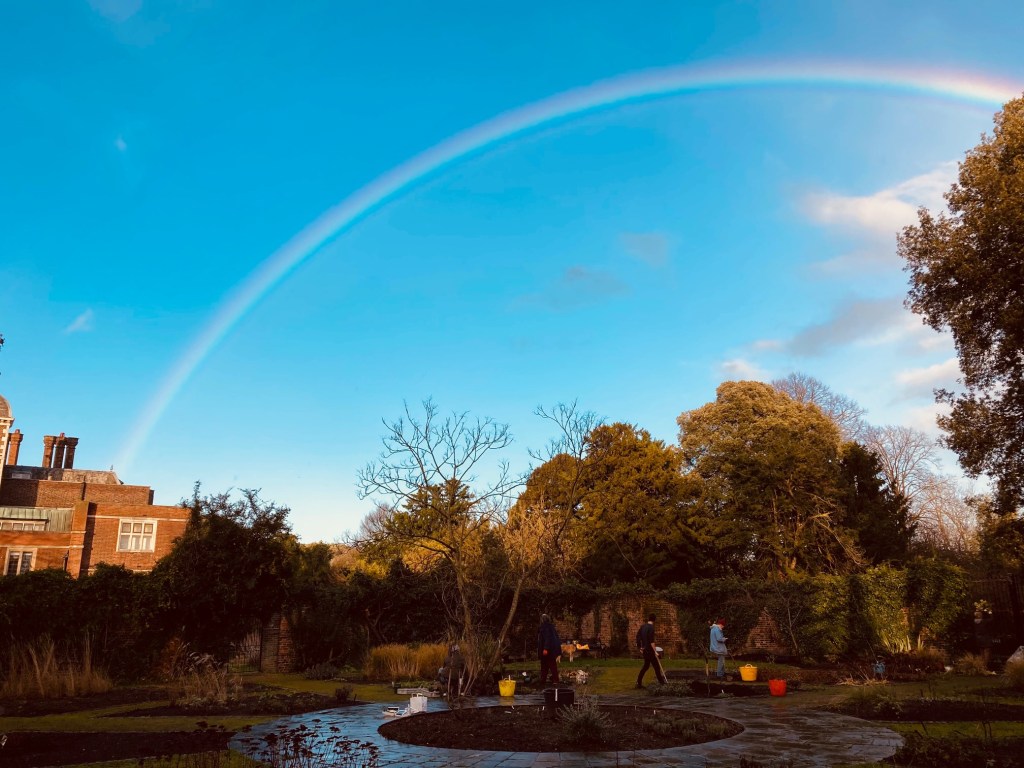
2 December A wet and chilly session, but good to be back after Lockdown II.
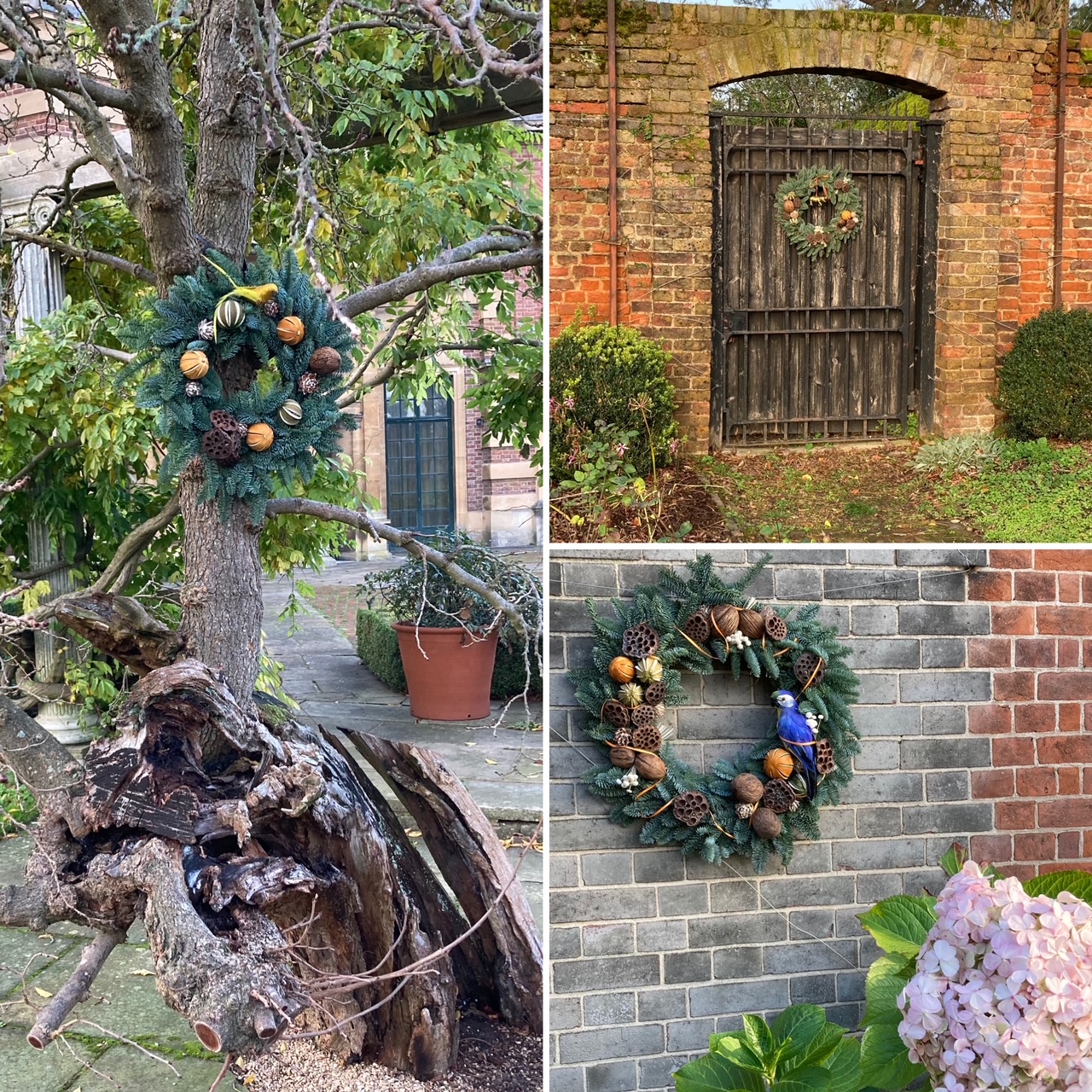
15 December A great day for gardening! Lots of planting was done, path clearing was started, and as for the gate decoration – we’re getting really festive now. Mince pies (from Charlton Bakehouse) at half-time were much appreciated.
The CABAHS bench, to commemorate our Platinum (70th) Anniversary, in situ. A lovely shady spot to look forward to next summer. We think perhaps a Trachelospermum climber up the back wall..
Isn’t this a great idea? St Luke’s Church in Charlton Village asked residents to send in their Christmas messages and they would be hung on the tree outside, so everyone can read them as they walk past. There are some lovely children’s drawings and heartfelt messages. CABAHS has added a message on members’ behalf too.
John Sturgis has recently written an article in the Spectator, much after my own heart. He says he has two birds on the go, one in the garden, one at the allotment, both real beauties — and both robins.
With much of the nation still working from home, robins have become more familiar than ever. Most species of garden birds are horribly in decline, but the robin has stubbornly stuck around in great numbers.
While those other great survivors, magpies and pigeons, are brash and ungainly, the robin is a delicate little gem: magpie song is shrill, pigeon dumbly repetitive, but robin chirrups are a delight. They’re bold, too. Other garden birds flap away when we appear, but not robins. In fact, they approach — as inquisitive as a kitten.
The robin has a territory that ‘can be as small as a half acre’ so where I live I must share my robin with several neighbours. But one always appears as soon as I venture out of the back door, for human activity is their cue. My robin particularly likes it when I use my daisy grubber on the lawn. The stabbing activity seems to prompt all the worms near the daisy to come to the surface, in case I stab them too, I suppose. But there she comes, Mrs Robin following my every footstep, darting around where I have just been, feasting on the worms leaving their cover.
I say ‘she’ but frankly I don’t know. No doubt your Chris Packham types would be able to gender a robin from half an acre away, but to the untrained amateur, male and female are very much interchangeable.
Sturgis points out that robins frequently come up in literature and songs – John Donne’s Robin Redbreast, or The Secret Garden, or Rockin Robin of the Jackson 5. And, of course, the robin is the Boy Wonder’s spirit bird in Batman. Imagine trying to pitch that set-up today. ‘I like this Bat guy – very dark and cool. What are we doing for the kid? A scorpion? Eagle?’ ‘No, we thought a robin.’ Yet it works, accentuating the character’s chirpy loyalty.
But their definitive place is on Christmas cards. They’ve somehow smuggled themselves into the greeting card nativity scene, apparent survivors, along with holly, ivy and mistletoe, of pre-Christian winter festivals, one of the few flashes of colour in the bleak midwinter.
So just go outside with a trowel or daisy grubber and she will soon appear. And despite the Christmas connotation, she’ll still be there in the bleaker days of January and February. Because robins are very much for enhancing life, not just for Christmas!
Wreaths everywhere in the gardens! Lovely idea, and lots of benches to sit on if you are wrapped up warm. I especially like the wreath in the old Mulberry tree.
This is Harry & Val’s Eucharis amazonica, which is flowering for them for the fourth time this year!
Here is Jean’s rose “Compassion”, still blooming away in November:
Penny has sent in a picture of her Cobea plant, which she says is sited in a cold part of her garden but still insisting on flowering in November. It is beautiful, and usually grows as an annual in this country, so it must love her!
Cobea scandens
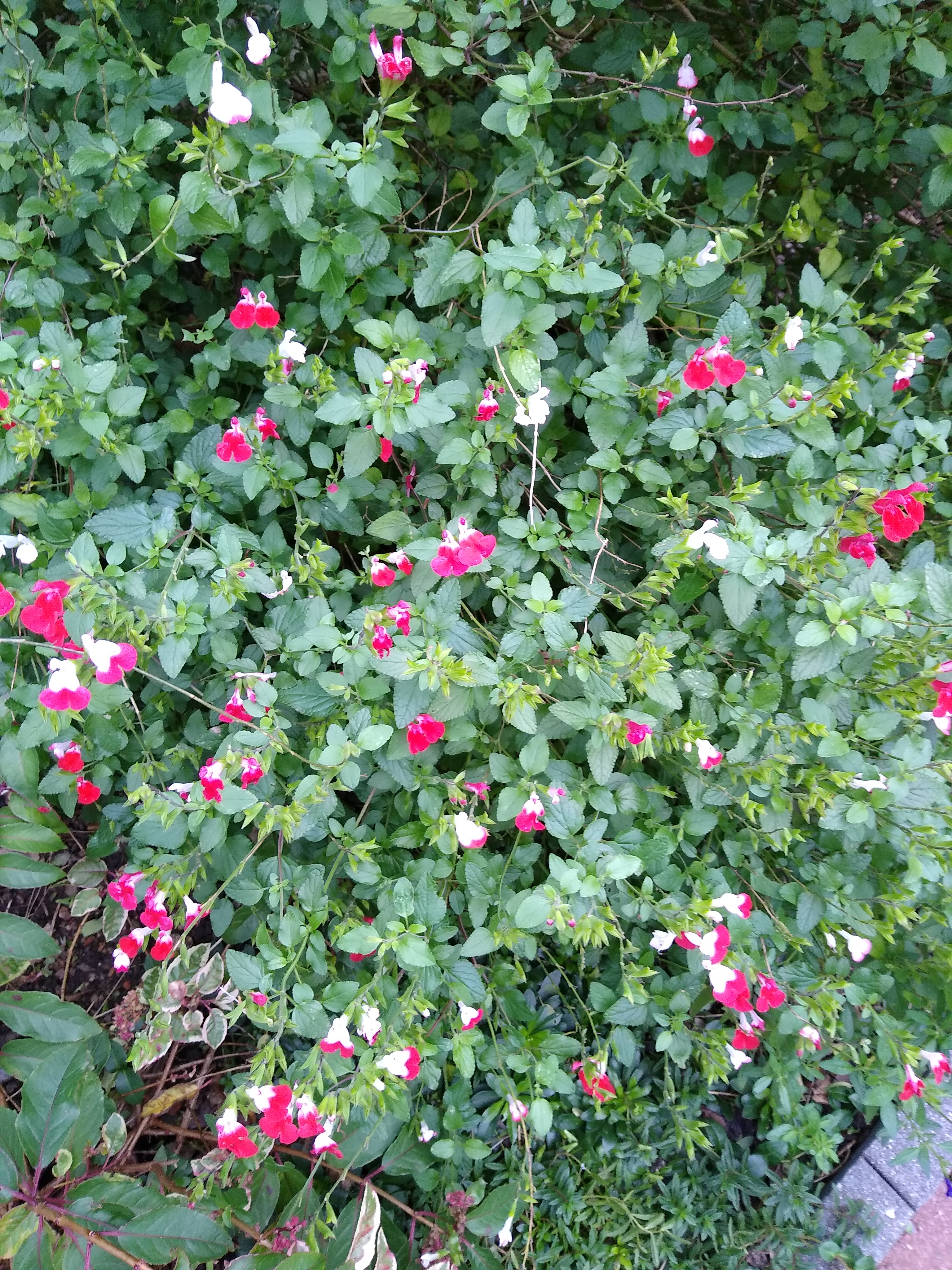
Carolyn’s Salvia “Hotlips” is providing late colour and cheer in her garden, having been flowering all summer long.
Salvia Hotlips
Viv has sent in her star performers, Schizostylus coccinea in two colours. Or Hesperantha as I suppose we should call them. Also known as Kaffir Lily or River Lily.
As she sought to improve her horticultural knowledge, Jane Loudon had found the gardening manuals of the day were targeted at those who already had a solid level of horticultural understanding – there were no entry-level manuals, for which she saw a need and potential interest and so began to write them herself. She set to writing them as she herself learned: Instructions in Gardening for Ladies; The Ladies’ Flower Garden; The Ladies’ Companion to the Flower Garden; Botany for Ladies; The Lady’s Magazine of Gardening. These became standard books of reference, and attained a large circulation, making gardening an accessible pastime for women, who were often excluded from planting practices.
Like Mary Wollstonecraft, another keen reformer, Jane Loudon was acutely aware of her position. Mary Poovey’s book, The Proper Lady and the Woman Writer (1984) and Alexis Easeley’s First Person Anonymous (2004) explore the challenges female authors faced in a late eighteenth and early nineteenth century society which emphasised the proprieties of the Proper Lady and the accommodations which women writers made. They also point out why many prominent female writers chose to publish anonymously, as it provided effective cover for exploring a variety of conventionally ‘masculine’ issues’.
Despite its associations with virtuous endeavour and the home, the garden also provided opportunities for women to negotiate between domestic space and the larger world. Jane Loudon was not alone in publishing for women, although most focused on botany – a far less ‘practical’ activity than gardening. And it is clear on reading Jane Loudon’s work, that she is actually encouraging women to get outside in the garden and to engage in some gardening activity – the reader is advised on how best to dig, the most suitable types of implement, as well as on soil quality, compost and plants themselves. Her work is encyclopaedic. Not quite advocating the throwing away of dresses, she treads a careful line between decorum, education and reform. For many years she has languished in the shadow of her husband, but her work deserves to be read on its own merits and for the contribution it makes to the study of the history of women in the garden.
For anyone interested in reading a little more about Jane Loudon, Bea Howe’s book, ‘Lady With Green Fingers’ is a very readable account of her life. Bea Howe herself ( a ‘fringe ‘member of the Bloomsbury Group) was born in Chislehurst.
It’s hard to believe that a whole year has passed since we moved into our new house in Mottingham. Many members will have visited our old house and garden, next door, whilst the new build was taking place. For those who don’t know though, after realising that we needed to downsize, as our family had flown the nest, we decided to knock down our garages and build a smaller house adjacent to our old one.
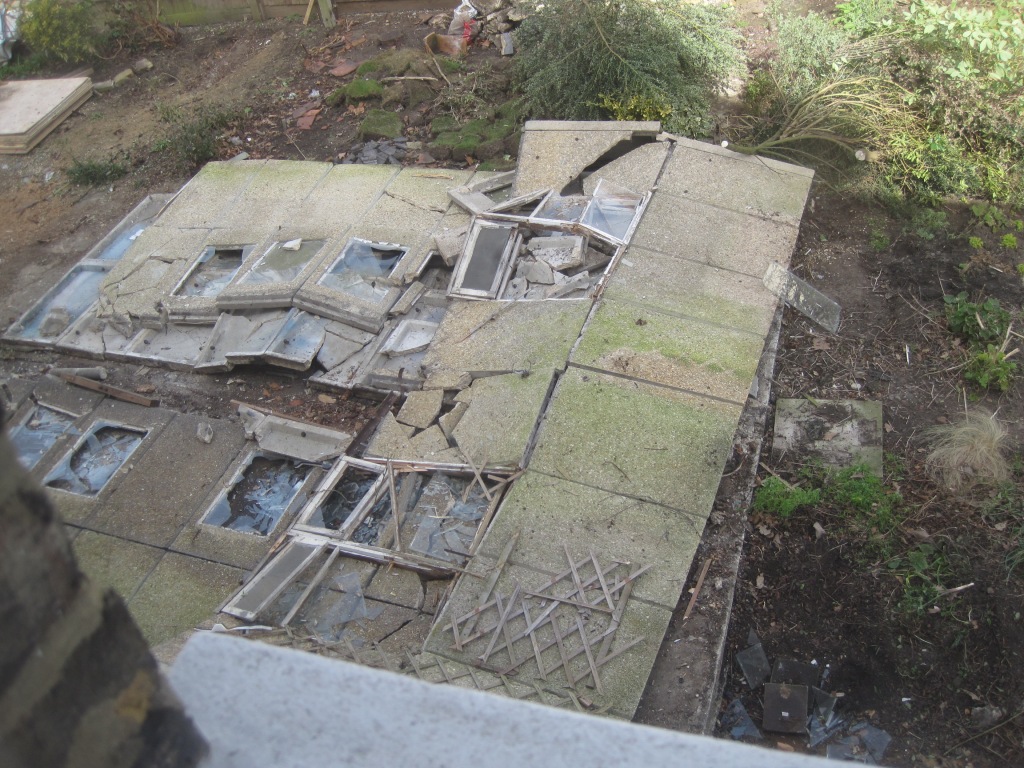
Going…Going…GONE!
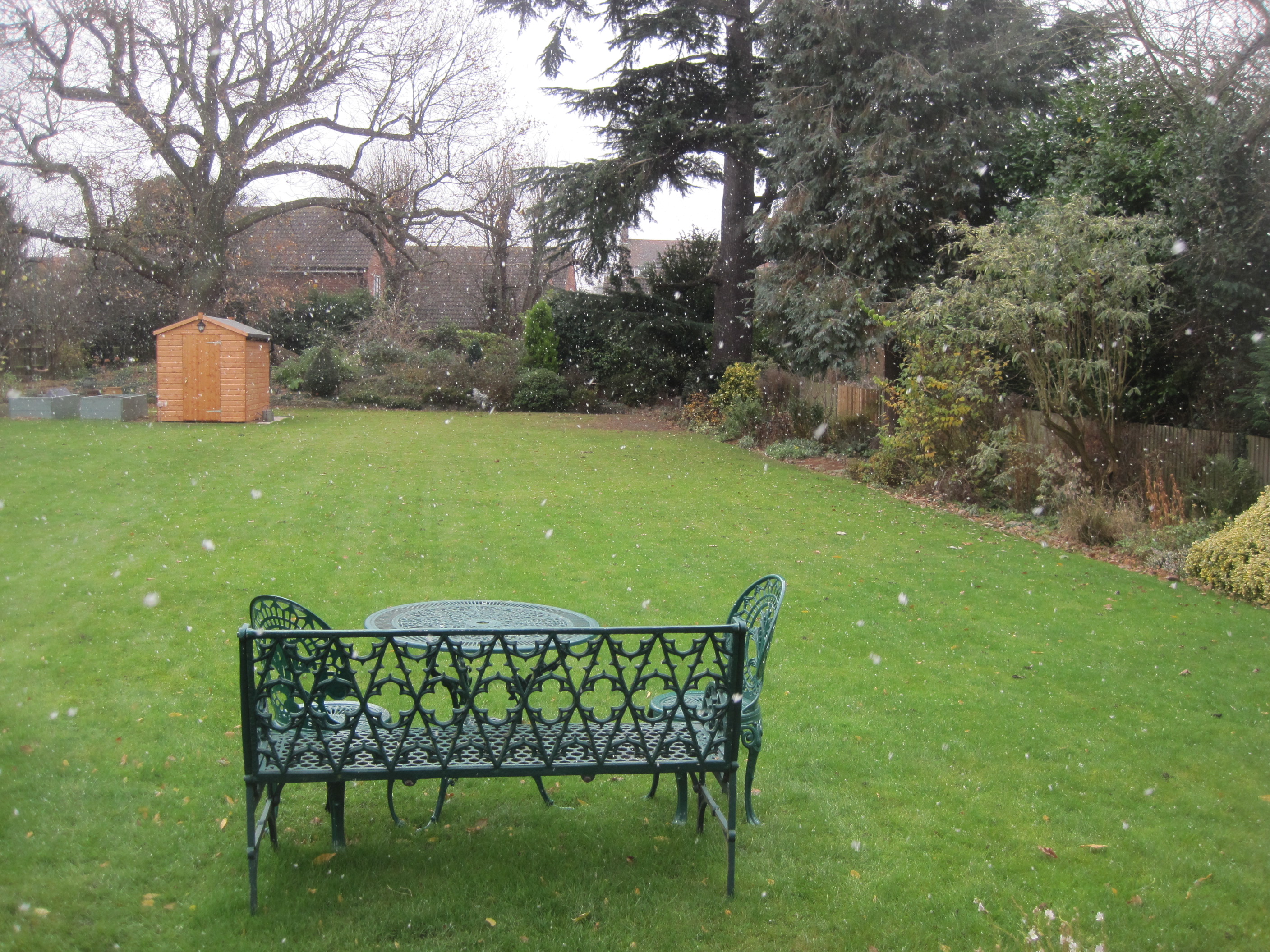
Before the dividing fence went up between the two gardens a man came to us to erect a shed in, what appeared to him, to be the middle of our large rectangular lawn. I showed him the sticks I had placed to mark where I would like the shed to be built. He took his hat off, scratched his head and asked “Are you sure that’s where you want it? -It’s a bit random isn’t it?”
When the shed had been built a dividing fence was erected straight down the middle of our large rectangular lawn, between our old and the new gardens. I invited some friends around to see what was going on. Some even peered rather nervously through a gap in the new fence to hear what plans I was hatching for my new garden.
Whilst the house was going up I got cracking on creating a new garden.
The first thing I did was to lay a curvy hose on the lawn to plan my new bed layout. I placed long canes to indicate where I hoped to build the raised beds, compost etc. By running up and down the temporary staircase in the, by now, half built new house I could look out of the windows, then adjust the hose each time, and get a better idea of how the new flowerbeds would look. I found this quite exciting as I was fed up with my straight lines of the old garden.
Then we moved the arch from our old garden into the new one, taking care to move the rose and clematis it supported at the same time. None of the side flowerbeds have been made at this point.
I must confess, at this stage that two of my son’s friends were on hand to help with the arch and digging out the lawn to make flowerbeds. We barrowed all of the compost that I had been making in the old garden and set about improving the soil in our new beds. They also helped us to make two raised beds, from scaffolding planks, which quickly became temporary residences for extra plants that were in transit. Here they are with my beautiful Cercis siliquastrum flowering profusely in the background.
I do find that gardening is rather like decorating. You have to put in many hours of hard work before you can enjoy the easy bit.
The next task was to dig up and split all of my beloved treasures in our old garden. I planted half of each one back in the old garden and half in the new. I was thoroughly enjoying myself and I was barely buying any plants but by the end of the year but I had almost filled every bed. The job was made easier by removing a fence panel so that I could dash, laden with plants, from the old garden to the new.
As you can see by the next spring the garden was starting to shape. It’s simply amazing how things have grown. After just a year it almost looks like a mature garden.
Isn’t gardening wonderful? If you put a little work in you get so many rewards.
Since taking this photo I have created a dedicated iris bed with 7 different coloured irises. I’m worried that I’m becoming an iris addict!
During this year’s lockdown my projects were a bug hotel and very small pond.
I have also been trying to introduce some vertical planting which will hopefully cover the new fence that looks so bare. So far I have put in several climbing roses including Iceberg, Compassion, Danse du Feu and Golden Gate. I’ve also planted several other climbers like honeysuckles, clematis and Hardenbergia. This is a new plant to me. Apparently it’s similar to a Wisteria but less vigorous.
All of this has required rather a lot of trellis so I do hope that it all grows!
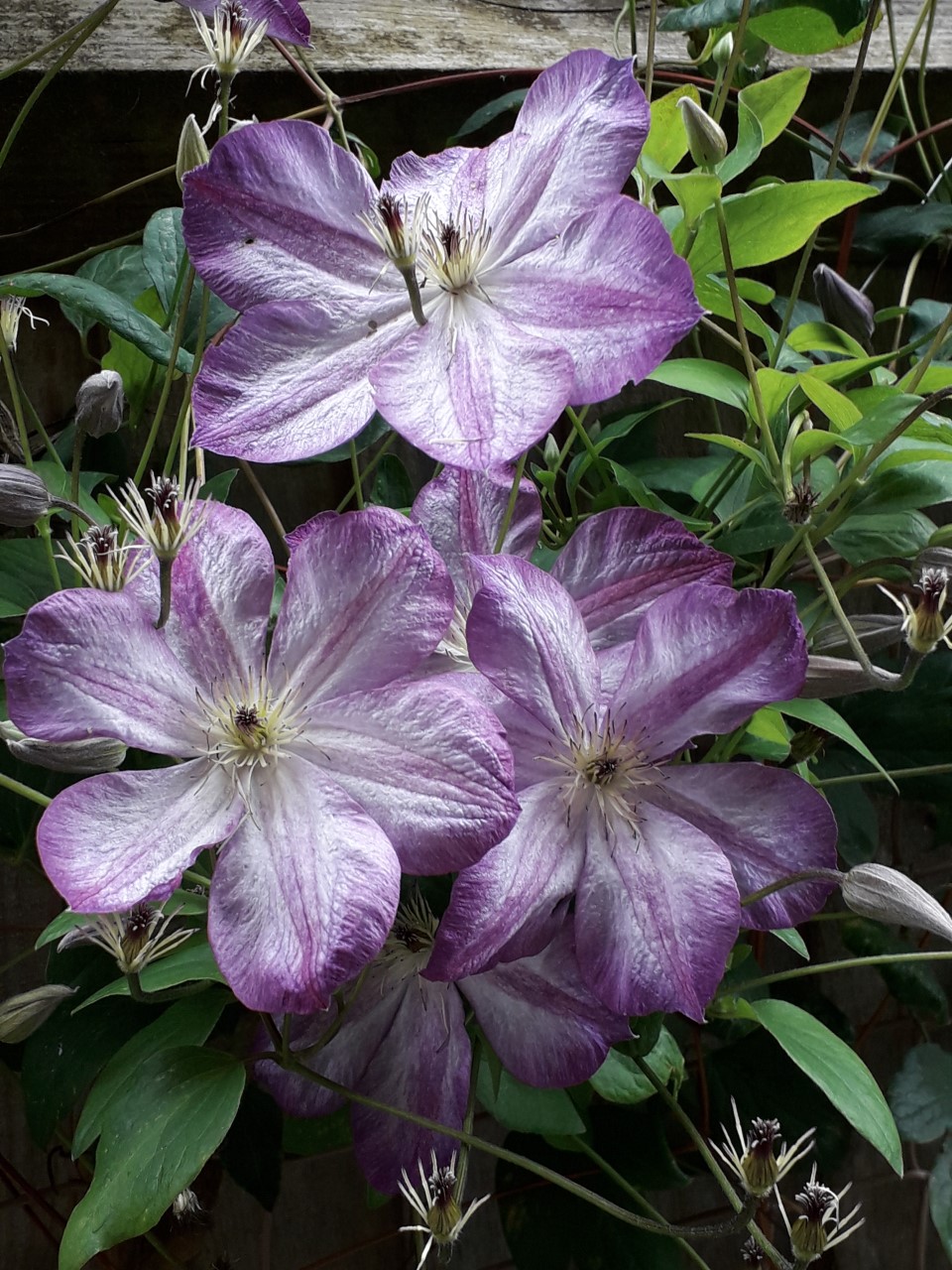
Clematis Pernille
In August I was glad to welcome many members to our open garden. We shared the day with Vija and Fran who also opened their gardens and made a whopping great £319 for cancer charities. I know that some society members could not come that day and so I thought I’d share a few photos of our progress over the year. Viv.
I have recently finished reading Sarah Bilston’s book ‘The Promise of the Suburbs’. This is a very readable study of the history and development of the suburbs and their representation in literature. Rather than being the incredibly boring places often demonised in popular culture and variously vilified as boring, conventional and unimaginative (Bilston’s introductory chapter is titled ‘The “Horror” of Suburbia’) Bilston shows how they provided opportunities for female professionalism and new ideas about modernity.
The massive expansion of the suburbs during the Victorian period enabled an increasing role for the middle class people who were to occupy them. Central to this were ideas of taste. Visions of landscape gardens and spacious country home interiors were not appropriate to these smaller scale domestic environments and a new market developed for advice texts. With the removal of the paper tax, the end of the 18th century and the beginning of the 19th century saw a burgeoning of journals of all kinds and many of these were written and contributed to by women. This was the period of Mary Wollstonecraft, George Eliot and Jane Austen when middle class women were finding a voice and journals provided an opportunity to share ideas, in many cases anonymously if these were particularly controversial. [1] Bilston includes a chapter on Jane Loudon (b. 1807, d.1858), a name which, until fairly recently, I was unfamiliar with. More popular than Mrs. Beeton in her day and writing at the same time, selling huge numbers of books in print, as a female gardener writing for people in the suburbs, she didn’t stand a chance and, for the most part, has disappeared from view, receiving scant attention in the scholarly discussions of horticulture.
Jane Wells Webb Loudon was born on 19 August 1807 and died on 13 July 1858. After the death of her mother in 1819, she travelled in Europe for a year with her father, clearly a far-sighted man with regard to a suitable education for girls, but who lost his business to excessive speculation. He died penniless in 1824, when Jane Webb was only 17, forcing her into a position where she had to financially support herself. Already quite a prolific writer, she wrote ‘The Mummy; Or a Tale of the Twenty-second Century’ which was published anonymously in 1827 and has been seen as an early forerunner of science fiction. (Mary Shelley had written Frankenstein in 1818, but The Mummy is a very different narrative).
Through this she came to the attention of John Claudius Loudon, who, on meeting, was surprised to find that she was a woman.
Although much older than she (he was 47) and well established with a reputation in horticulture, the two were married seven months later. Jane Loudon makes it clear in her diaries that, knowing nothing whatsoever about plants, she was determined to make up her knowledge deficit. She studied botany (at the time this was considered a suitable subject for girls and women ) under John Lindley and worked closely alongside her husband. By the 1840s she was publishing horticultural journals and books in her own right, supporting her husband’s work and his family (his sisters lived next door) and continued to do so for the rest of her life – John Claudius died in 1843, leaving her to bring up and to financially support their 10 year old daughter single-handedly. She died age 50 in the family home in Bayswater.
Vija
[1] See work such as ‘The Proper Lady and the Woman Writer’ by Mary Poovey and Alexis Easely’s ‘First Person Anonymous’.
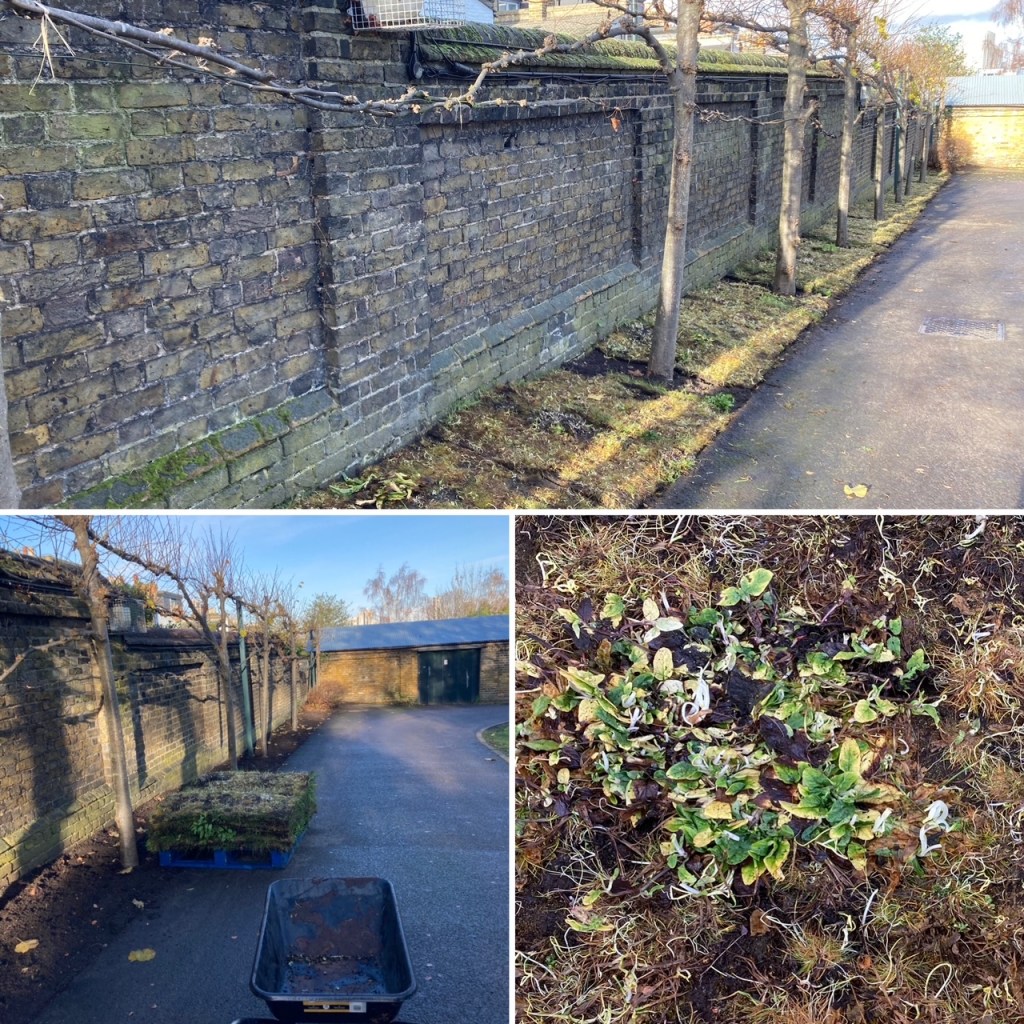
EGP volunteers have laid 40m of wildflower turf all along the west side under the lime trees, so we can look forward to a wonderful display next year. RBG gardeners kindly weeded all the Alkanet plants out of the border, and three pallets of wildflower turf was donated by a local developer. Fingers crossed now!










 Charlton and Blackheath Amateur Horticultural Society