A Romance with Punica granatum

Vita Sackville-West wrote that “Of all fruits the pomegranate is surely one of the most romantic.” I would be willing to bet that most people walk through the Peace Garden gate at Charlton House without realising they have just passed under two “most romantic” pomegranate trees.

Pomegranate trees in the Peace Garden
Pomegranates in the Peace Garden

When the Volunteer scheme started in 2020, these two trees were deeply entwined with ivy, choking them very UNromantically. I wish I had taken a photo of our volunteers, wrestling and chopping at the ivy around the base of the trees! It was one of the team’s early successes, as the next year the trees were covered in their startlingly bright orange flowers and looked very happy. We have yet to get the flowers to “set”, so no pomegranate fruits yet. But of course as gardeners, we live in hope.

Continue reading A Romance with Punica granatum

The best way to ripen green tomatoes

Green, orange and red tomatoes

This summer’s heatwave feels like a distant memory now, but it was a good one for ripening lots of tomatoes! However, if you’ve got green ones struggling in the cooler temperatures, here’s BBC Gardener’s World Magazine’s advice on the best way to ripen them: How to ripen late tomatoes.

Using the ethylene released by bananas to help ripen other fruit is a well known method, but while Which? Gardening agree with GW on most points, they differ on the banana:

You may have heard different techniques recommended for ripening green tomatoes, including putting them with a banana, but when Which? Gardening magazine tested different methods we found that putting them in a dark place indoors, such as a drawer, works best. Tomatoes left with bananas were one of the worst methods for causing the tomatoes to rot.

Which? Gardening, How to Grow Tomatoes

Do you use a banana to help ripen tomatoes? Or do you relish the prospect of green tomatoes for cookery? Let us know in the comments.

The Rothschild Nerine Collection

Nerine bowdenii

CABAHS member Melanie told us about an unusual collection:  Exbury Gardens in Hampshire, perhaps best known for the springtime magnificence of its rhododendrons, is also home to a special collection of Nerines.

If you can visit Exbury, the Nerine collection is on view from 4 – 30 October.

As it’s quite a long way to travel, you might instead like to see photographer Lisa Creagh’s website, where she has captured the extraordinary quality of this South African native ‘Jewel lily’ in some stunning images: The Rothschild Nerines. Lisa gives a super description of the collection’s history as well as describing the drama of the Nerines’ lifecycle.

Autumn Flower, Fruit and Vegetable Display 2022

Our Autumn Show was held on Monday September 26th in the Old Library of Charlton House, having been delayed a week for the Queen’s funeral. We counted 56 attendees and there were nearly 100 entries across all the classes, a marvellous effort!

Attendees at Autumn Show 2022

Our guest judge, Joe Woodcock, had agreed to undertake this onerous task again this year. He made it clear how impressed he was with all the entries, providing an encouraging commentary on the horticultural skills demonstrated, and explained why he selected the winning entry in each class.

The classes and winners were as follows:
1. Vase of flowers, 3 stems – Nicholas B
2. Bowl of mixed flowers – Georgina P
3. Vase of shrubs or foliage, 3 stems – Liz K
4. Display of ornamental seed heads – Viv P
5. Five Fuchsia blooms – Viv P
6. Ornamental pot plant – Pat K
7. Display of fruit, mixed – Lynda F
8. Display of vegetables, mixed – Annie H
9. Tomatoes (dish of 5) – Karen S
10. A display of herbs – Maggie T
11. Preserves – Maggie T
12. Baking – Coconut cake – Kathy A
13. Floral arrangement in a teacup – Debbie W
14. Largest Sunflower – Ruth Y
15. Highest yield, Potato – Ann F

Joe presented trophies to Annie H for Class 8, to Viv P for Class 5 and to Georgina P for Best in Show for her bowl of mixed flowers in Class 2.

Continue reading Autumn Flower, Fruit and Vegetable Display 2022

Sussex Prairie Gardens

The Sussex Prairie Garden is a six acre garden with naturalistic planting, created by Paul and Pauline McBride, who worked with Piet Oudolf some years ago. The garden is on a farm and surrounded by oak trees, featuring a wide range of herbaceous perennials, Veronicastrums, Thalictrums, Persicarias, Sanguisorbas, Kniphofias and Hemerocallis. Huge drifts of ornamental grasses and Asters extend the season of interest hugely. In addition to the planting in the borders there are some massive pots beautifully planted up with huge salvias, Melianthus Major and splendid Pelargonium Tomentosum. The expansive beds are planned with winding rough paths to allow visitors to wander through, brushing grasses and Heleniums as they pass. It is definitely a garden for a late summer visit and seems to have managed remarkably well through this hot summer of 2022.

The plant fair on the day of our visit was spread out through the garden and accompanied by a band and stalls selling refreshments. It had a decidedly festive air! There are dozens of varieties of Miscanthus, Panicums, Molinias, Sporobolis and Penisetum and several of the plant stalls capitalize on this by selling a good selection of grasses.

Beds of mixed grasses and herbaceous perennials

The garden is at its best in late summer and into the autumn as might be expected from the nature of the plants. I have visited earlier in the year when there is far less to see.

Beds of mixed grasses and herbaceous perennials

The planting is bold and on a grand scale, not much of it less than a metre tall, but for anyone interested in growing prairie type plants or simply just interested, this is a garden well worth visiting.

Vija

GQT Follow-up question

As always, we didn’t get around to answering all your questions at our August GQT meeting (I’m very sure they don’t manage to on the radio programme either!). But you may remember that Annie H brought in her strange distorted tomatoes to show everyone. If it had not been for the biblical deluge, I expect we would have had a good discussion about them.

Distorted tomatoes
Annie H’s weird tomatoes!

Annie was undaunted by getting no answers at the meeting, and contacted the RHS directly. She says, “I was informed that the most likely cause was a too high concentration of a contaminated farmyard manure compost in the pots. The farmers spread weedkiller/ pesticide on the field, the grass grows and the cattle dump cowpats which are composted and then bagged up for sale but still contains residues of weedkiller/ pesticide.”

Thank you for this Annie, something for us all to watch out for. It would be interesting to hear from other members if they have had a similar experience.

Kathy

Pashley Manor Trip

A lovely day was had by all, despite the rain, for our visit to Pashley Manor Gardens, on Wednesday 14 September.  The first wow factor was the magnificent and absolutely huge 500-year-old spreading oak tree that is the same age as the frontage of the Manor House. The second wow factor are the gardens: exquisitely beautiful, divided into several colour-co-ordinated garden ‘rooms’ which lead to the fabulous terrace, with sweeping views of the long borders, lawns, lake (once a moat) and surrounding trees to the countryside beyond. After a refreshing coffee, many joined a half-hour gardener’s dahlia ‘talk and walk’ around sections of the garden’s long borders. I loved the gardens so much that I am aiming to visit again on a sunny day so that I can relax on the terrace and absorb the spirit of the place.

Anna

Colour in the garden

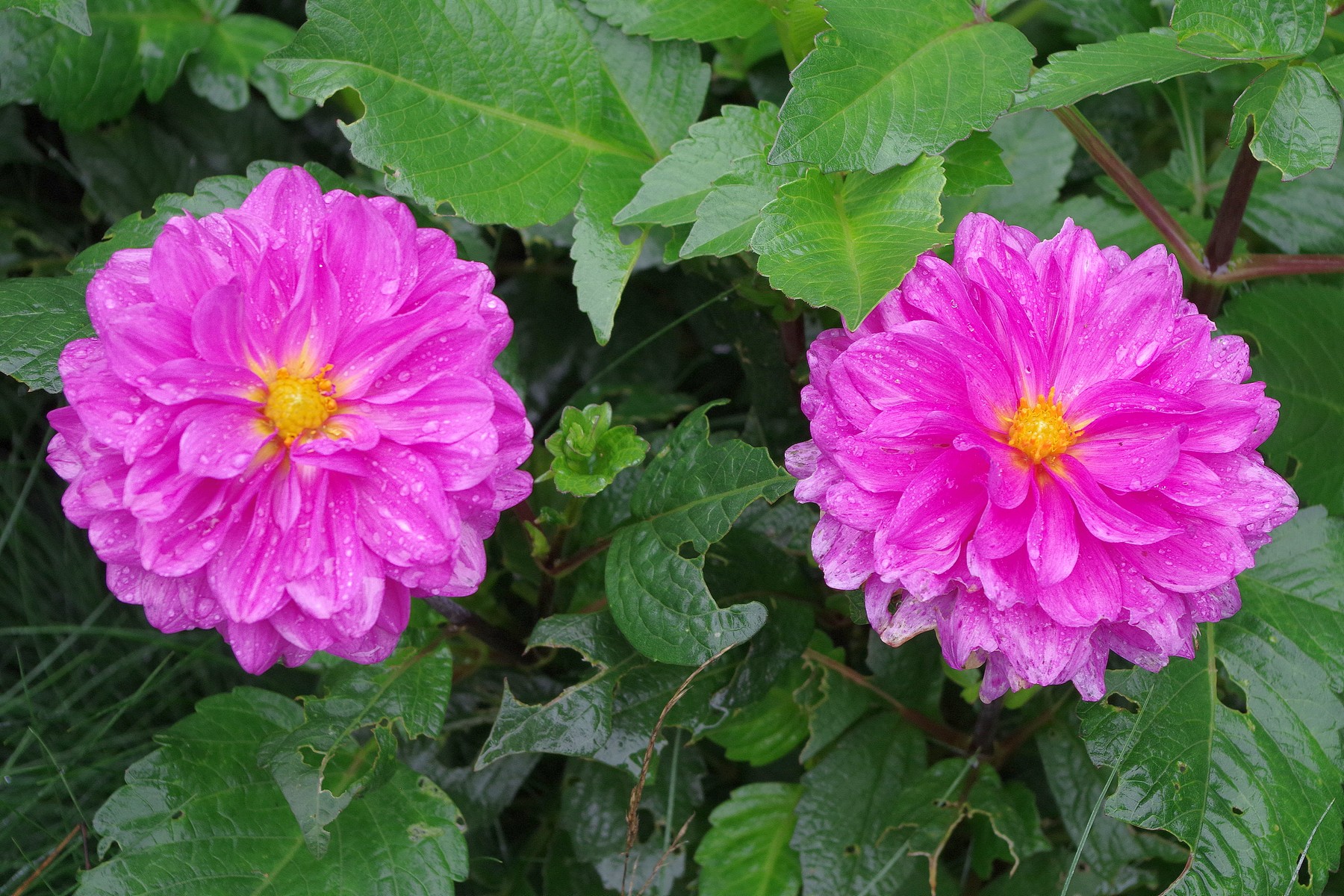
Begonia ‘Glowing Embers’
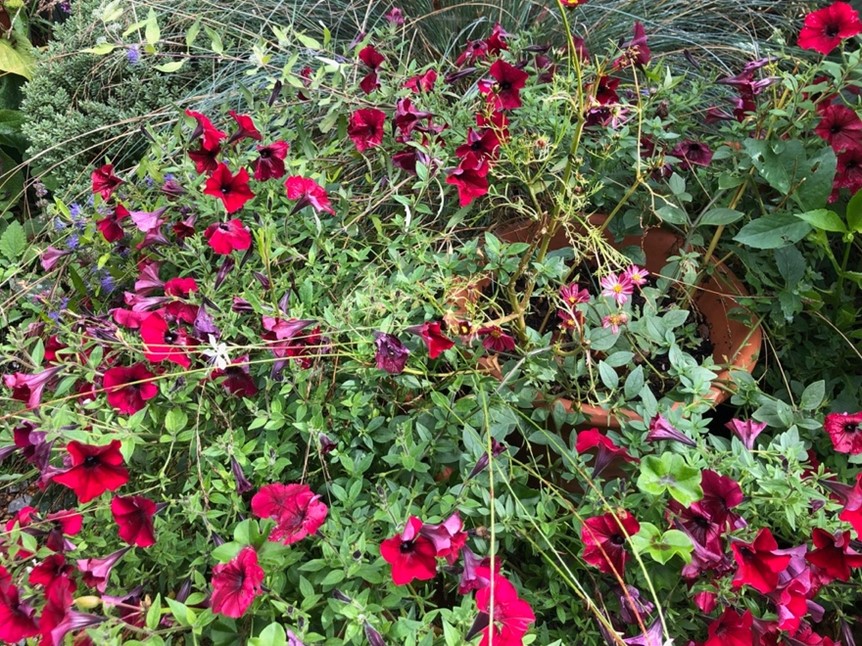
Petunia ‘Tidal Wave Red Velour’

During this blistering summer a number of people have commented on the colour in my garden (such as it is). I think this is down to a very few plants. (For those of you not enamoured with Sarah Raven, look away now). The top photograph is of Begonia ‘Glowing Embers’. These have flowered continuously all through the summer and I think the contrast of the leaf and flower is lovely. Although often grown as an annual, I have found that if I keep them in a sheltered and frost-free place over the winter they will flower again year-on-year. But be patient! The little stone-like tubers look thoroughly lifeless for a long time and, just when you might think they were totally dead, little green shoots appear.

The bottom photograph is of Petunia ‘Tidal Wave Red Velour’. These were originally plants in pots with cosmos and coleus, the latter two turned up their toes leaving only the petunia to inhabit the pot. It is only one plant and this too has continued to flower continuously through the summer. The pots have only been watered with waste water and have had no additional feed.

Both of these hard workers have come from Sarah Raven and, no, I don’t get a discount!

Vija

Perch Hill

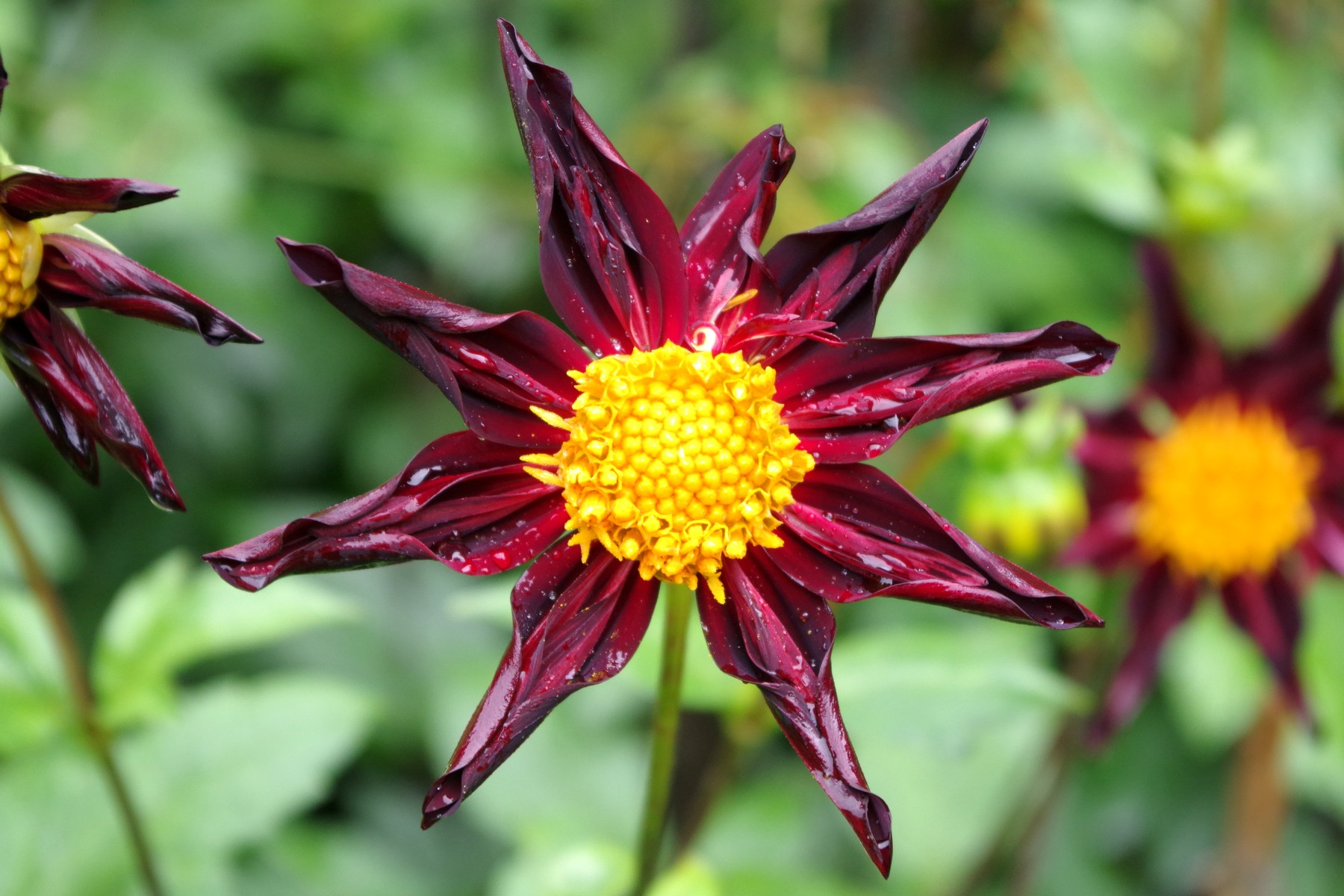
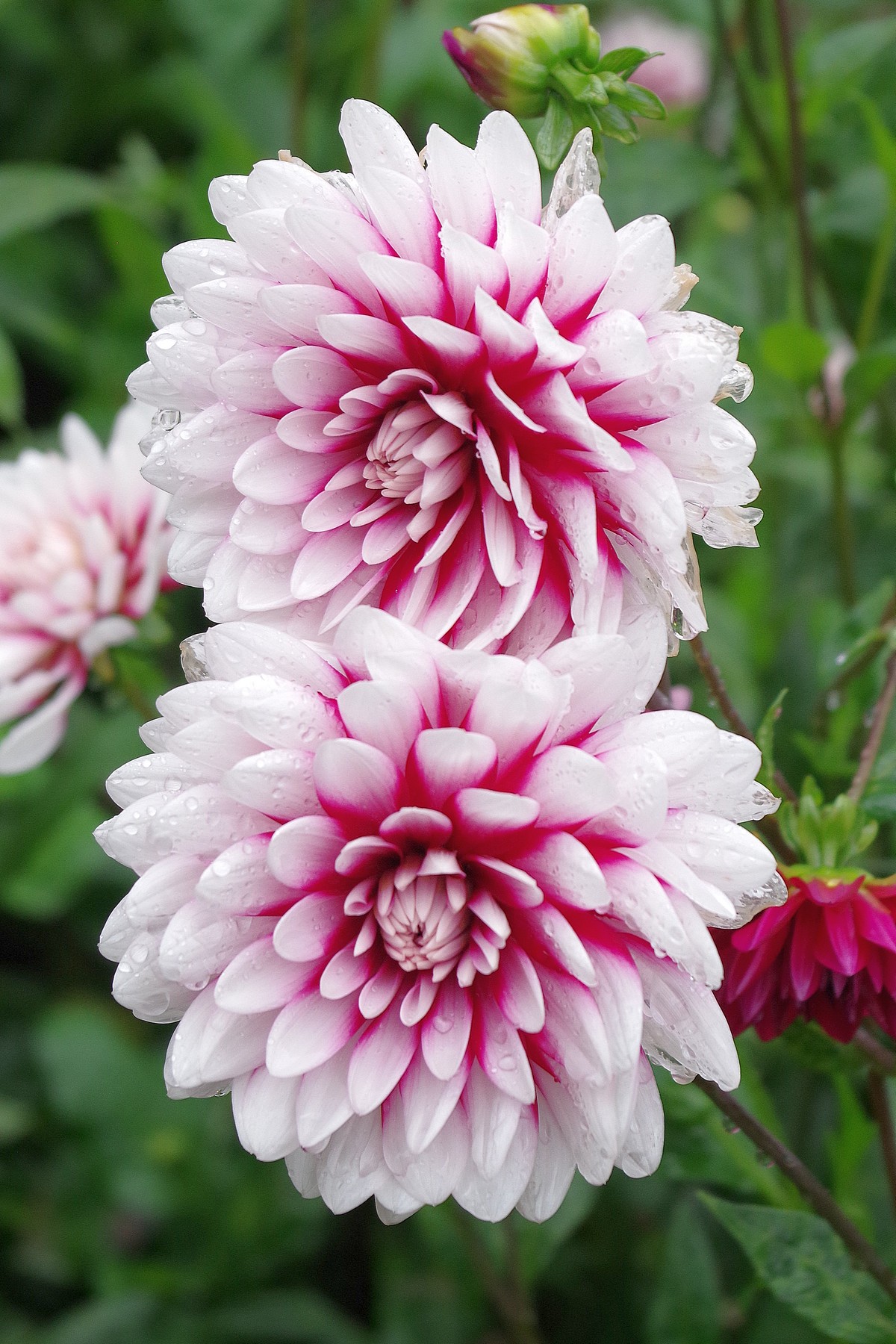
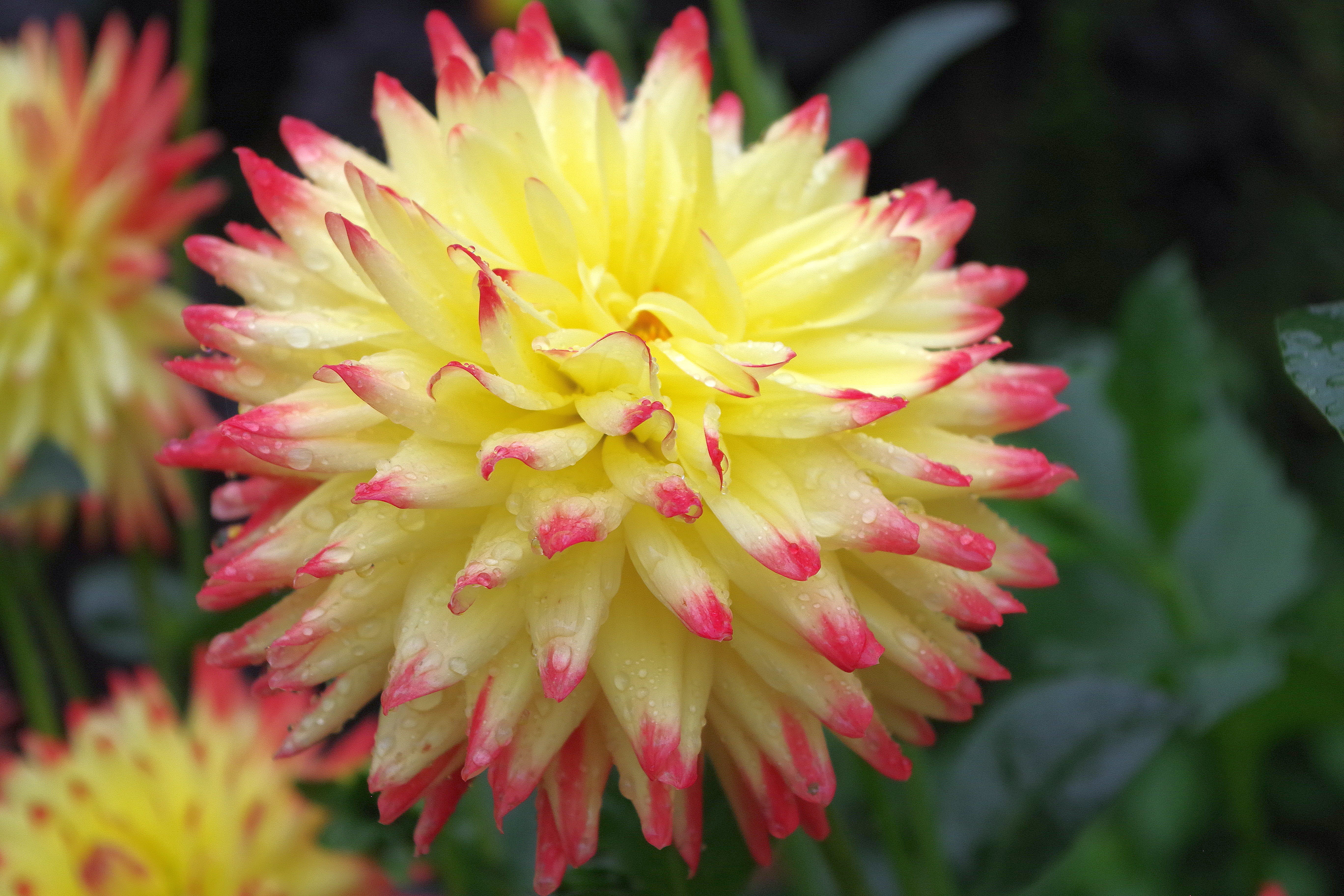
Thinking we would take advantage of the extra days made available for visits to Perch Hill, we chose the one for container planting. However, on the day it was the dahlias that stole the show and which we will remember!

Although rain was not forecast, we arrived to a little bit of a mizzle and a very grey sky – in the photographs this has tended to deaden the exuberant colours. We were knocked out by Penhill Watermelon, Geri Scott and the delicious Apricot Desire, but it would be impossible to choose one favourite out of all the lovely colours. Although some are critical of the Sarah Raven enterprise, there is no question that the gardens are beautifully styled. Of course, plants are labelled so that anything you see you will find on their website, but it is a commercial business. In fact, it is good to find a label so that you can identify what you are looking at! Salvias are everywhere, edging the herbaceous borders, in pots as well as mixed through the beds. These are such versatile plants.

Dahlias at Perch Hill
Continue reading Perch Hill