Members’ gardens, March 2020

Maggie’s lovely spring garden. The flowering shrub is Exochorda “Magical Springtime”  and was a Mother’s Day present a few years ago, what clever children she has!

Maggie T Spring garden

Christine’s alpine trough, with Thrift in full swing. Lovely blossom on the tree.

Christine blossom

Muscari latifolium coming out, just as Hyacinth Splendid Cornelia is going over, on Kathy’s sunny bit of the patio. Rose Cottage bulbs again, they were a winner!

Kathy Muscari latifolium

So maybe we have a local heron who is going round checking out members gardens? Chris’ visitor from yesterday has popped over to look at Kathy’s pond. Thankfully the pond is netted, otherwise his breakfast would have been toad spawn..

Kathy heron

Here are two of Chris B’s shrubs, looking very good this Spring –  Spiraea arguta Bridal Wreath and Viburnham tinus:

Chris was surprised to see this visitor – a Heron, checking out her garden!

ChrisB Heron

Angela says she is not a fan of tulips generally, but the Rose Cottage speaker we had last year convinced her to try these wild tulips, Tulipa sylvestris, and she is so pleased with them. They do look lovely in a “woodland” setting like this.

Angela Tulip sylvestris

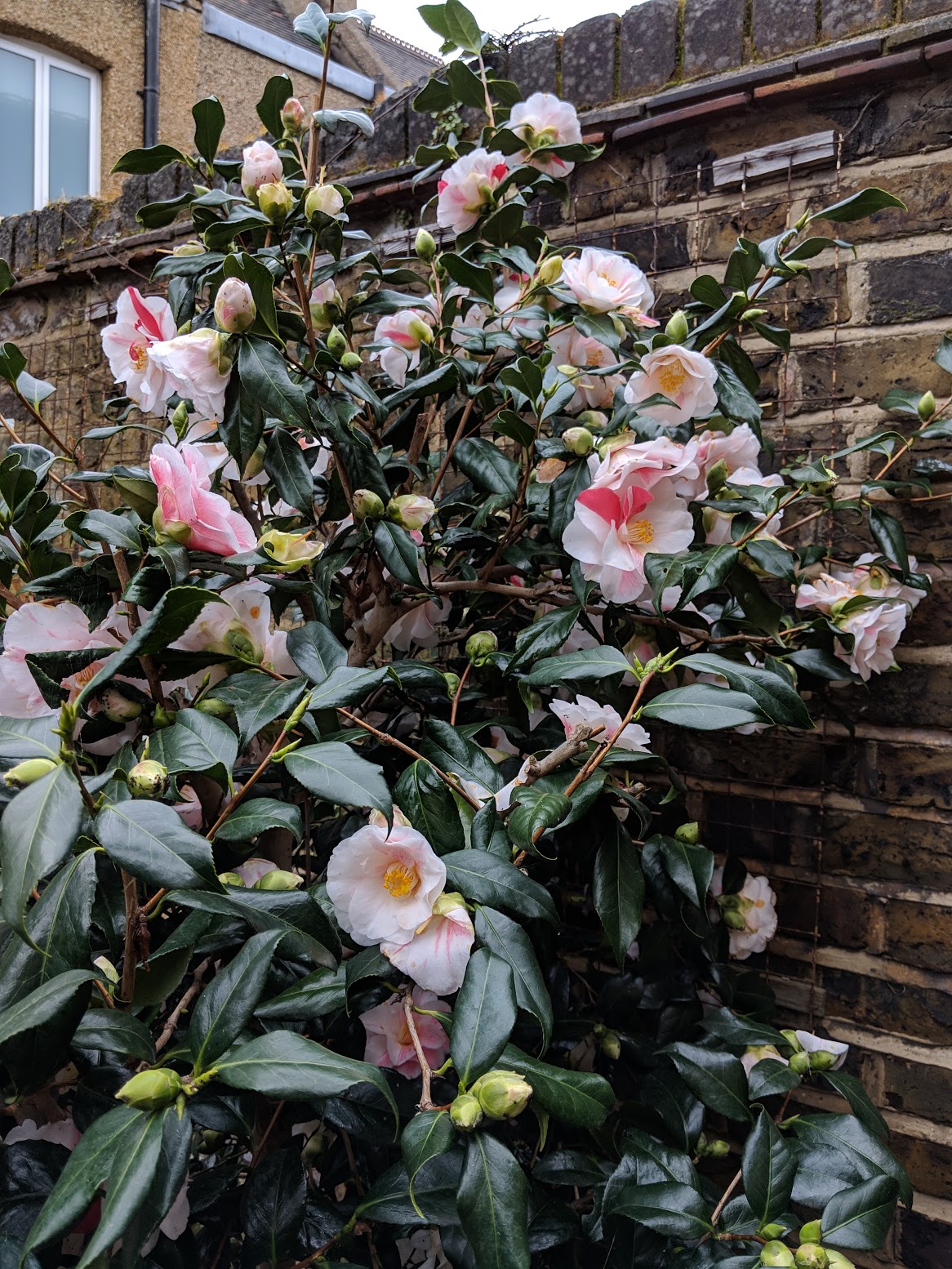
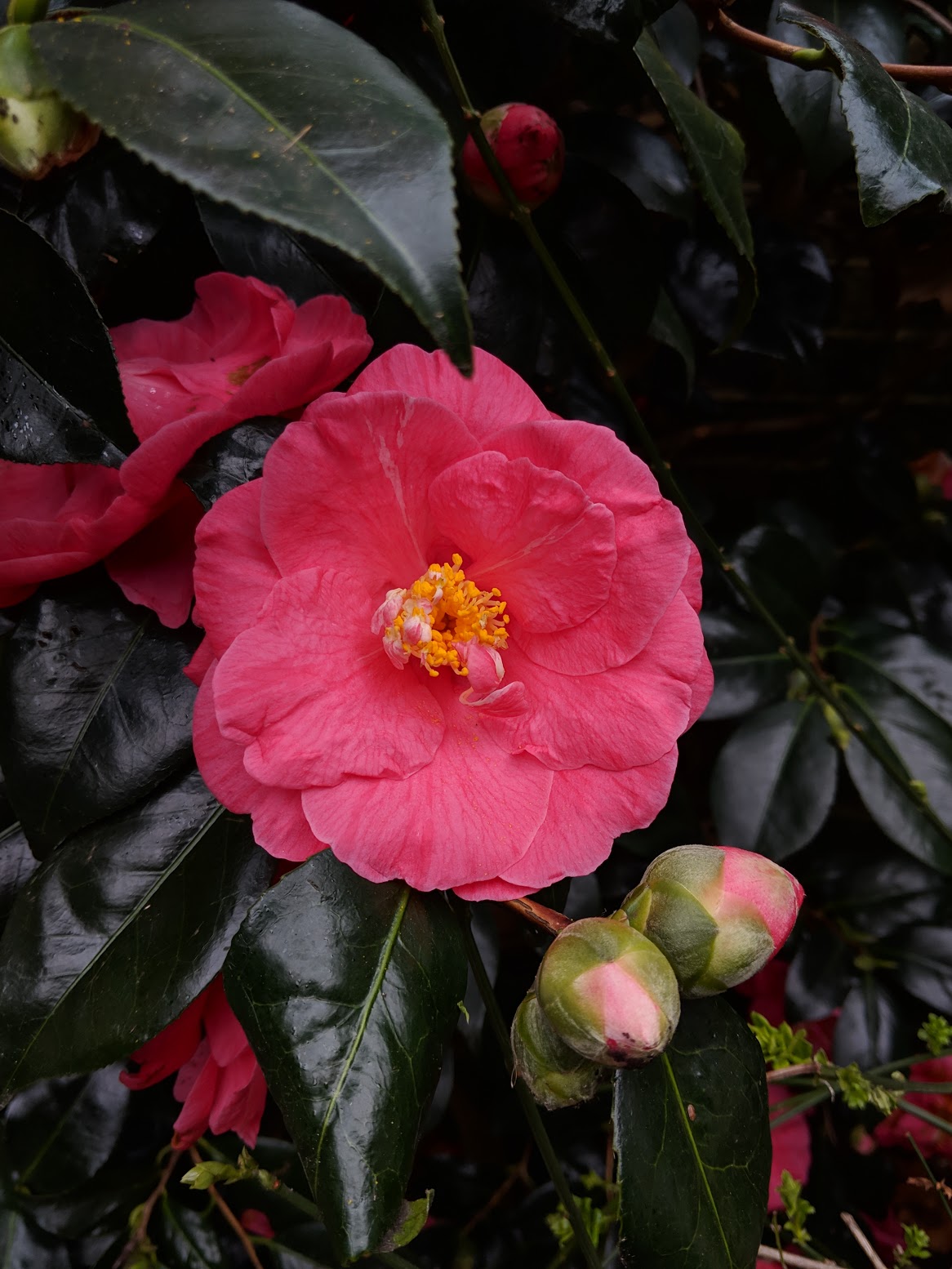
Jenny’s Camellia is looking wonderful, she says its thanks to all the rain, and she didn’t have to do a thing!

My Australian rosemary

From my kitchen table I am fortunate in being able to admire a shrub growing in a pot on the patio table that is looking glorious at the moment.

Westringia rosemarinformis is an Australian native and commonly known as the Australian rosemary. I was given this plant as a cutting a few years ago and it has grown into a lovely shape. Margaret T has a large shrub growing on the sheltered, south-facing wall of her front garden, where it has thrived for about 12 years.

Anna Westringia

This is a truly fantastic shrub to grow in London’s dry, sheltered gardens and seems to be completely unknown. Its specialness derives from the fact it flowers during the winter months and will keep on flowering for months afterwards. I imagine Margaret purchased her Westringia from a rare plant fair or specialist nursery years ago.

Westringia is a genus of 25 species, found all over Australia and comprised of rounded to erect specimens from dry coastal, heathland or dry forest areas, which make them ideal to grow as rounded shrubs or as hedging in Australian gardens.

In the UK they are regarded more as conservatory plants, but if they are given a hot, sheltered position, they will thrive happily for many, many years. They tend to like a fertile, well drained soil, with sharp sand and compost added to the mix, although I imagine they grow in poor soil in Australia.

Westringia

The small, lavender-coloured flowers are not scented but I think they have an orchid-like appearance, with contrasting orange stamens. They are exceedingly beautiful to look at in close-up.

Margaret would be happy to supply cuttings to those interested in growing this shrub (contact cabahshortisoc@gmail.com)

Anna L

Speaking of foxes: Tales of woe from a frustrated gardener

Foxes are the bane of my life. I first became a keen gardener twenty five years ago when I moved into my small three story terraced house close to Ministry of Defence land, a wooded conservation area, and was confronted with a back garden that was bare.  Keen on wildlife, I decided to try and create a wild life garden, including digging a pond to encourage the breeding of frogs  which over the years has matured successfully. However I had not bargained with the attraction this would have for the local foxes who much to my chagrin have come to see my garden as their play area and my pond a drinking place They have spent their time wrecking it, most days trampling down and pulling up the plants and bulbs, burrowing deep holes, messing up the paths and pooing everywhere. For example, enthused by the recent CABAHS talk on tulips, I bought a range of tulips which I planted in very large pots and colour schemed.  As suggested by the speaker I planted violas on the top of them. The next morning I discovered the foxes had ripped them all up, muddled up the bulbs, totally messed up the different colours and ruined my design irreparably.

Foxes have three times got through my cat flap into my basement kitchen area. The stench they left was awful and on one occasion took two days scrubbing to get rid of.  During the fox mange epidemic I even found a bald cub lying near death in my basement. As someone who would not harm an animal I contacted the South Essex Wild life and Fox Sanctuary who obligingly came and took it away.  I thought that was the last I had seen of it.  But later in the year this charity sent me its annual report. It referred to my fox and how they had nursed it back to health and, much to my horror, had returned it to the area from which it came!

My cats regularly got fleas from the foxes as they both liked to sleep in the same place under a very large sycamore tree. I thought I am going to stop this. The academic in me thought if Qin Shi Huang, the Chinese emperor of terracotta warrior fame, could have a terracotta army I would have an army of reconstituted stone gnomes to deal with this situation. I bought some fifteen garden gnomes which I placed closely packed together on the place shared by the foxes and my cats, thinking they would no longer be able to sleep there. Did that work? No. They just slept on top of the gnomes!  Incidentally when my elderly cats later died I took great pleasure in getting rid of them. Some of the gnomes saw their way to the plant stall at CABAHS!

I am an early riser and weather and work permitting, as part of my daily fitness regime, I do some gardening usually about 30-45 minutes. The time is often spent clearing up after and repairing the damage made during the night by the foxes.  Sometimes I take a quick rest and sit on my garden seat drinking one of my three morning wake-me-up cups of coffee. Often my ginger cat, Bonzo, would come and sit on my knee for a five minute cuddle. One morning a young cub having seen this came up to me, obviously thinking it was a cat it wanted to do the same. It wouldn’t take no for an answer and took some shooing away.

Angelas fox

Animals know instinctively if a human is an animal lover and none of the foxes are afraid of me. They come up to me and don’t take any notice of what I say or do.  I have tried everything to get rid of them over the years. Including fox repellents. The only thing I haven’t tried is lion poo which I gather they don’t like.  After the tulip fiasco I have decided to throw in the towel. I finally accept my back garden belongs to the foxes.  I will just have to live with them, garden around them and make good after them. The only outlet I now have left for expressing my fox frustrations is boring my friends and social network with my woes.

If any other CABAHS members have gardening frustrations, problems or tales they want to get off their chests and give an airing why not send them to CABAHS for this webpage? Perhaps other members have similar problems. It’s said a problem shared is a problem solved. Some might even have an answer to them. Perhaps we could start a CABAHS Moan Corner webpage.

Angela B

Successes, disappointments and surprises in a North-facing courtyard garden over 30 years 

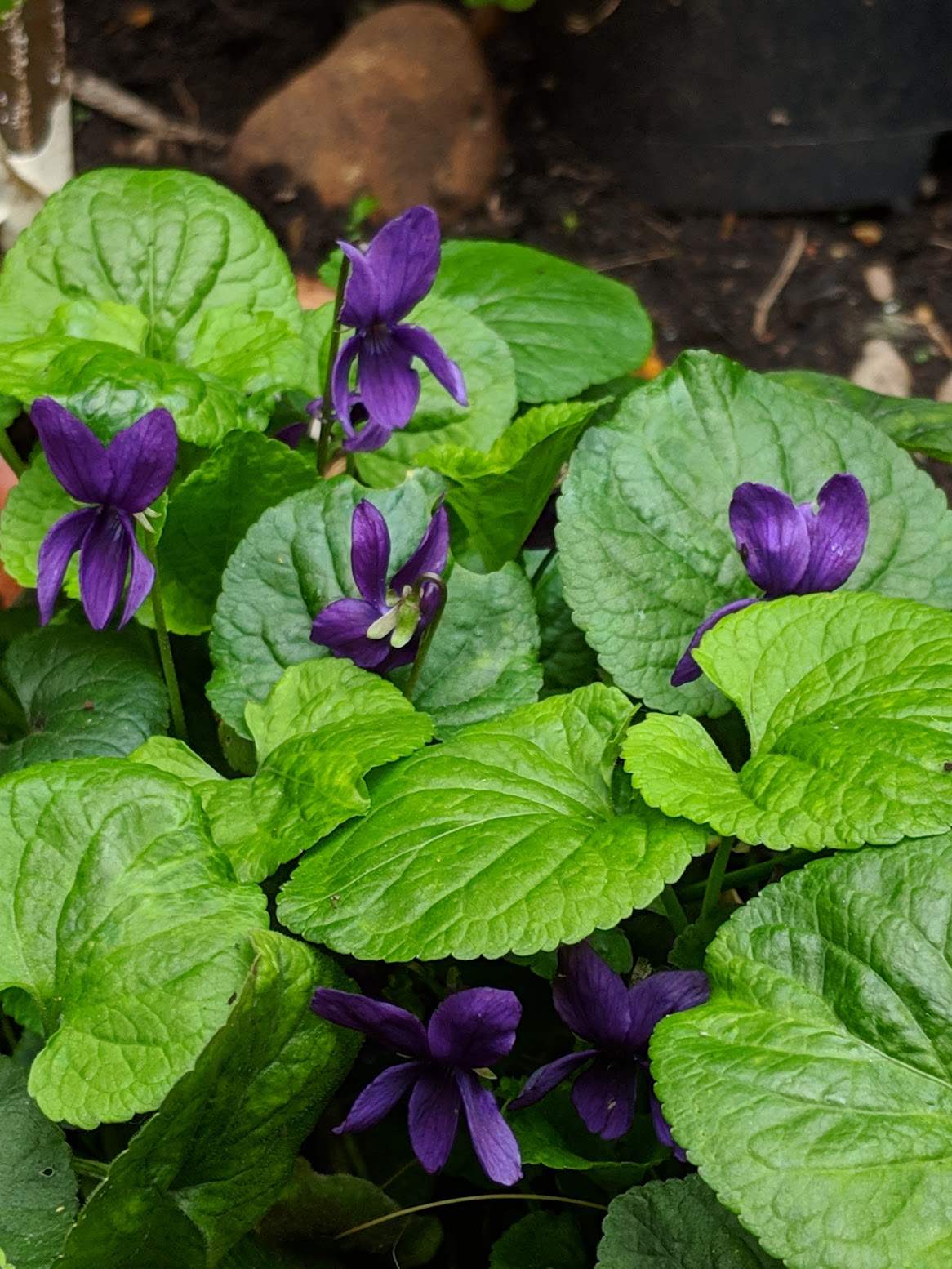
First of all, the soil had to be brought in to create my garden out of a concrete yard – it was a mixture of all sorts from subsoil to clay to leaf mould and anything else that kind guests gave me to get it going. The garden is full of colour now. There are two camellias, ‘Lady Clare’ and ‘Lady Vansittart’, a Berberis darwinii, a Daphne bholua ‘Jacqueline Postill’, violets and a windowsill vibrant with pots of pink and white cyclamen.

There are two big pots of tulips in bloom, a large Viburnum carlesii in a barrel, covered in white scented flowers and a Skimmia in full bud, a mauve and a red Erysimum, plus other plants and shrubs that will bloom later in the year. I have a really lovely white and green Hydrangea covered in new leaves and a newly established Arum Lily alongside it.

There are four Roses : ‘Iceberg’, ‘Salmon Leap’, ‘Brother Cadfael’ and ‘Compassion’ – the biggest surprise of them all. This had become so rampant and unmanageable that I had my  grandson dig it up – but, lo and behold, eight weeks later there it was, back again, healthy and with all the shoots showing 5 leaves (not 7) so it is the original rose not the rootstock.

Four roses

Two hanging baskets of pink trailing geraniums have survived the winter, so I’ve pruned them back and fed them to encourage a new display later on.

One of the biggest disappointments was a white star Magnolia which just sulked and wouldn’t bloom and then died. Also Choisya ternata which bloomed prolifically for ten years has sadly now died. Many climbers such as honeysuckle and Rosa banksiae became invasive, smothering nearby shrubs, so had to be removed.

I’m really fortunate to have so many things doing well and the garden is just the right size for me to manage. It will become even more welcoming from now on as the sun slowly comes over the rooftops and creeps across the yard. Time to get the folding chairs out and enjoy a cuppa and a quiet read… perhaps even a snooze.

Frances P