Funky Hostas

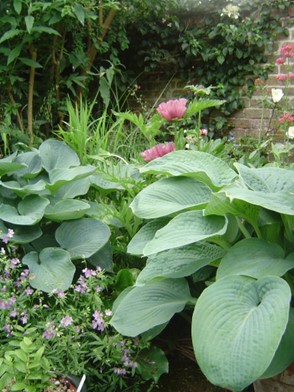
Photo of Hostas taken in the Spring!
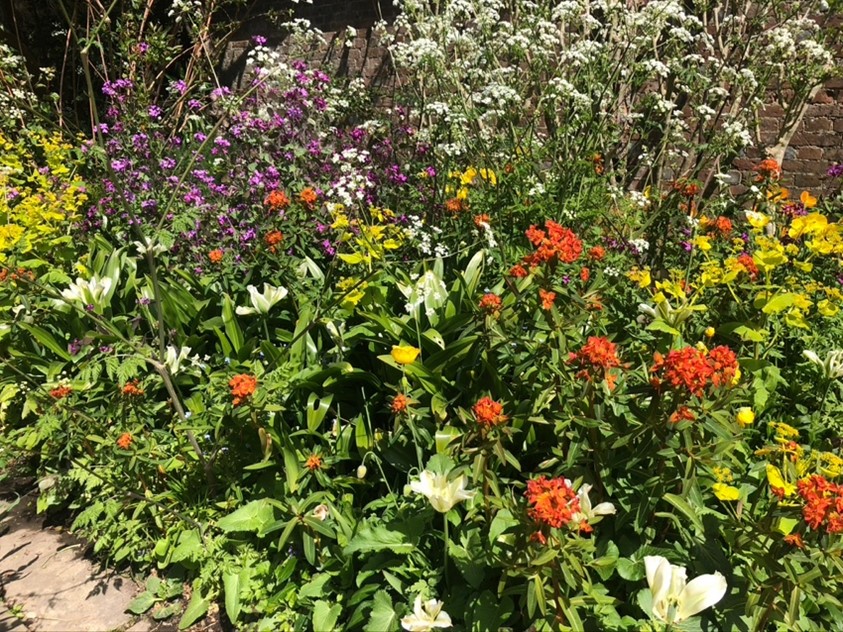
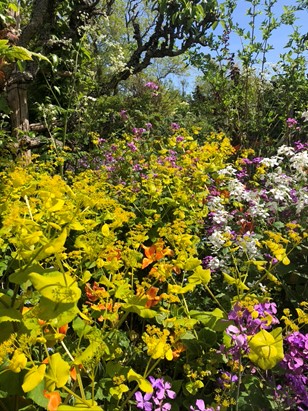
Photo taken in the Spring!

I love hostas, but they have a reputation for being difficult, not least because of their attractiveness to slugs and snails. They are commonly thought to do best in moist partial shade, but this shockingly dry year has been a surprise. As Chris Beardshaw points out, there are several that do well in dry shade, the sieboldiana types in particular. Although many of mine in direct sunshine for most of the day have scorched this year, there are also several that have done surprisingly well in quite dry and sunny conditions.

Hostas were originally named in honour of the Austrian botanist Nichloas Host, but in 1817 the name Funkia was used by a German botanist in honour of botanist Heinrich Funk. The name Funkia remained in use for some time and there are a number of horticultural texts written over this period which refer to Funkias. In 1905 Hosta was reinstated as the genus name by the International Botanical Congress.

I quite like the name Funkia. It makes me think of the plants secretly having a good time after I have gone to bed.

Vija

August blog 1

‘Rubens Peale with a Geranium’, painted by his brother, Rembrandt Peale, 1801. National Gallery of Art, Washington, USA – Patrons’ Permanent Fund
‘Rubens Peale with a Geranium’, painted by his brother, Rembrandt Peale, 1801. National Gallery of Art, Washington, USA – Credit: Patrons’ Permanent Fund

I found this photo posted on the blog of Garden History Girl. It’s one of the blogs I have at some stage signed up to and now get regular posts. It is worth checking out (overlook the name) and this one contains some fascinating information on pelargoniums / geraniums and snippets of plant history. If you have never been clear on what are pelargoniums or geraniums, this is the one to look at! And there are some lovely pictures too!

Vija

Bedding Plant dilemma

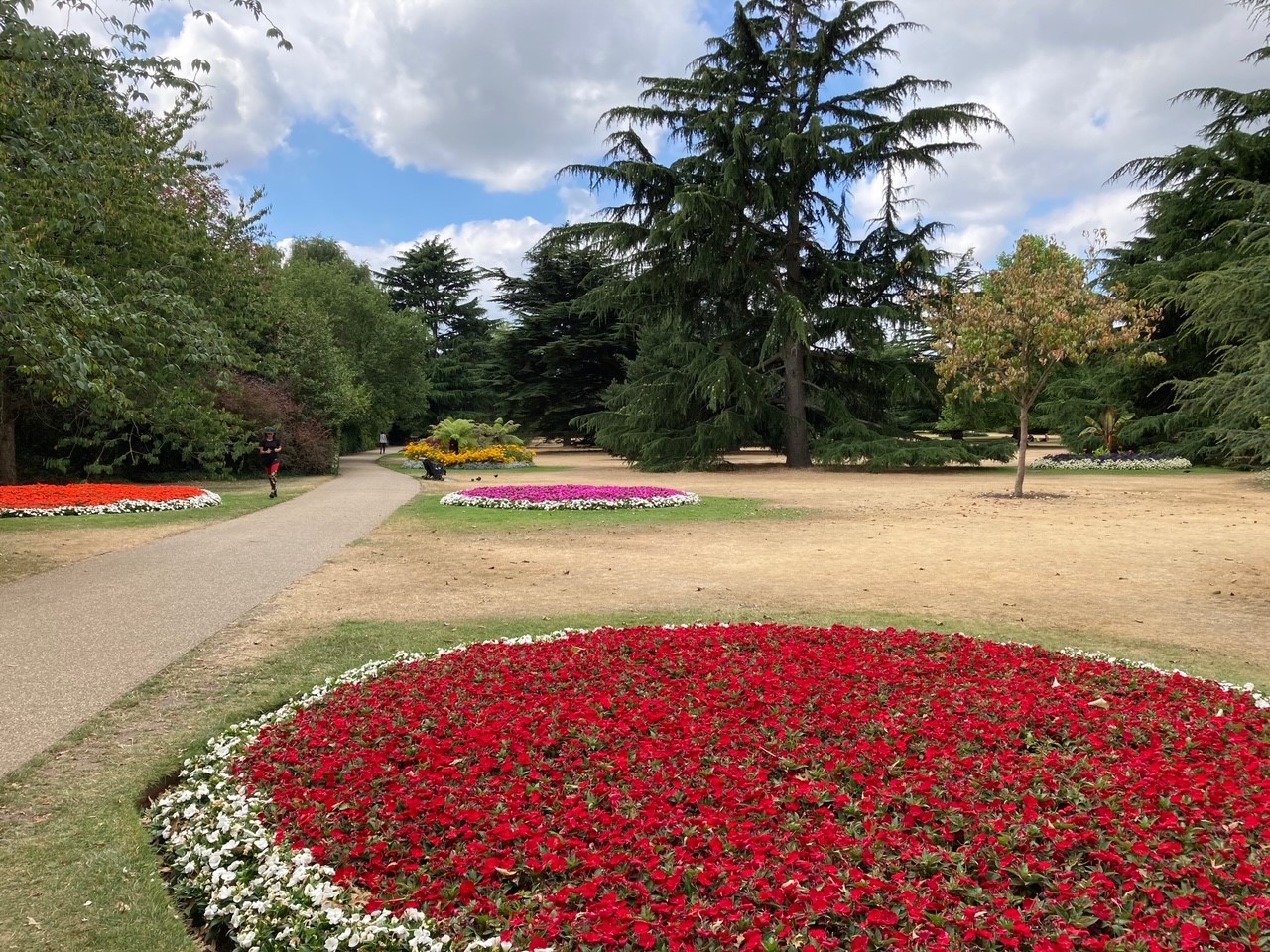
I love Greenwich Park Flower garden and am full of admiration for how their gardeners have gradually adapted, from growing all their plants on site to whatever combination of outsourcing they use nowadays. It usually looks wonderful.

I understand it is a public garden and has to cover those who like the bedding plant tradition, those who expect a wow factor and those who want a bit of modern style.

But the current drought has really highlighted the bedding plant issue!

Bedding plant beds

It is eye-catching for all the wrong reasons, little oases of green with the rest of the park straw-dry.

Even traditionalists must wonder what on earth the point is of pouring water on these beds of Impatiens. There are other beds containing tree ferns and perennials and it absolutely makes sense to water expensive plants that will come back and cope in a (hopefully) more normal future year.

This is a personal viewpoint, not necessarily representative of the CABAHS membership, it would be interesting to hear members views..? Perhaps it’s a debate we can have at the Gardeners Question Time meeting on August 15th!

Kathy A

Garden at the Garrison Church

This week I was delighted to attend a special Commonwealth & Gurkha Garden reception at St George’s Garrison Church in Woolwich. The event was to progress the funding and plans for a Commonwealth garden designed by Juliet Sargeant, and was also attended by their patron, HRH The Duke of Gloucester.

We were blessed with a lovely sunny day and entertained with music during the afternoon tea. After the speeches I was very interested to be shown around the garden site by Juliet (who is a multiple Chelsea Gold Medal winner, including this year’s Blue Peter garden with the theme “Don’t treat soil like dirt” and a fabulous green roof) https://www.julietsargeant.com/cfs/

Continue reading Garden at the Garrison Church

Thinking outside the box

One of the things I like best about RHS Wisley is how useful it is – beautiful to walk around, pleasant to visit, but also how just being there can answer a multitude of gardening questions: ‘Will this plant survive outside?’ ‘Just how big can an Indian Bean Tree get?’ or ‘How best can I display alpine plants in my small garden?’

But one of the most useful parts of RHS Wisley helps to answer a question that has become louder and more frequent with every passing year, especially here in the South East:

‘What can I use to replace my ravaged box hedges?’

'Thinking Outside the Box' garden at RHS Wisley May 2022
Continue reading Thinking outside the box

Harrogate Flower Show and Harlow Carr

Late April is a great time to remind yourself that spring happens outside of London, and I had the joy of meeting a group of friends in Yorkshire for the Harrogate Flower Show.  This is quite a major show, running over 4 days, but it’s not run by the RHS and it has quite different emphases.  It does, though, have lots of exhibitors and we enjoyed a full day there, in brilliant sunshine.

First off, we looked at the flower arranging, clearly a major component with several training colleges nearby.  There were lots of competition categories, from big set pieces to carefully chosen themes.  We admired long-horned cows fashioned from garlands of flowers, and saw a heavy emphasis on arum lilies, which featured on the Best In Show winner, for instance. 

By contrast, the show gardens were a very minor element of the event.  They were small, commercially-sponsored but not carefully themed, and quite underwhelming.  And they had very few people looking at them. 

The area for various Societies was dominated by the Daffodil Society Northern Group, where competitors were vying for prizes in nearly 100 categories.  The variety of blooms was extraordinary, with a strong emphasis on precision and newly-developed cultivars.  Among others, the Yorkshire Bonsai Society was also showing beautiful specimens, as were the National Auricula and Primula Society, the National Dahlia Society, and the West Yorkshire Hardy Plant Society, which won a Premier Gold award for its spectacular display. 

Continue reading Harrogate Flower Show and Harlow Carr

Keukenhof

The gardens at Keukenhof in April are quite remarkable. Great rivers of tulips are everywhere. Small exhibitions in the Juliana house give background information to the history and also to the planting practices of this huge venture: 7 million tulips (and other flowering bulbs) are planted each year and each year, at the end of flowering, these are all taken up and crushed to be used as compost around the trees in the garden and made into pulp for the paper which covers the guides to the estate.

As a not-for-profit organisation, in addition to the garden architects, the gardens rely on an army of volunteers. From May onwards the gardens are closed to allow time for the essential work of taking up the tulips and replanting, until reopening for the spring display. The bulbs in each garden area are given to Keukenhof by growers in the Netherlands and the name of the company appears as signage on the beds. For those wishing to make a note of their favourites, tulips are also discretely labelled, although it is easy to feel overwhelmed by the enormous range on display!

Vija

April blog Euphorbia 2

I know we have had posts on euphorbias already, but these plants are such a delight in the month of April that I am adding yet more. The little Euphorbia Chameleon, below, self -seeds happily, but in such a delicate and restrained way that it is welcome everywhere I find it. In addition to this, it politely dies back and allows summer flowering plants to take over.

 Euphorbia Chameleon

The Euphorbia below (amygdaloides purpurea) is a stunning contrast with the lime green flower head and the stems which are an intense dark red. It has seeded itself in the gravel path and I’m not entirely sure where it comes from.

 Euphorbia Amygdaloides Purpurea

In Euphorbia, flowers occur in a head, called the cyathium. Each male or female flower in the cyathium head has only its essential sexual part, in males the stamen and in females the pistil.  The flowers do not have sepals, petals or nectar to attract pollinators, although other nonflower parts of the plant have an appearance and nectar glands with similar roles. Euphorbias are the only plants known to have this kind of flower head. It should also be noted that, when the stems are cut, they exude a thick white substance which is extremely irritating to skin.

And, of course, there is the magnificent Euphorbia Mellifera (Honey Spurge) which rightfully deserves its common name and is a delight to be near at this time of year when the scent fills the air. Every garden should have one – it keeps its shape well or can be cut back. Mine originally came from the garden of Jillian Smith, CABAHS ex-Chair, who many remember fondly. Jillian, if you are reading this – thank you!

 Euphorbia Mellifera (Honey Spurge)

Vija

Did you ‘Follow the Carrots’ for Easter Bunnies, Plants and a Gorgeous Garden?

Thank you to everyone who came to last Sunday’s ‘Bunnies in the Beds’ and open garden at Charlton House. The ‘Follow the Carrots’ signs worked out a treat, and lots of small people arrived at the Peace Garden ready to find the Easter Bunnies and claim their prize. We gave it an International twist this year, after finding out how other countries celebrate Easter. So as well as Bunnies, the children had to find eg a Bilby from Australia, a Witch from Sweden, and some Willow sticks & feathers from Finland. No-one could really miss the kites (Bermuda) and we had a set of beautiful eggs from Ukraine to find too.

Here they come! Queues for the trail, and let the Hunt begin..

Ladies giving out Easter Egg prizes

The day included a successful plant sale too, and Blackheath Flower Arranging Club joined us for a bit of promotion. Not to mention the Producers Market and Frilly’s cafe open all day.

Thank you everyone, these are wonderful gardens in which to hold an event!