Remember the survey we asked you to fill in, way back at the February AGM? The results are interesting anyway but will also help us tailor our events and talks in future. Full details downloadable here: KnowOurMembers2020
Author: CABAHS admin
Members’ gardens, July 2020
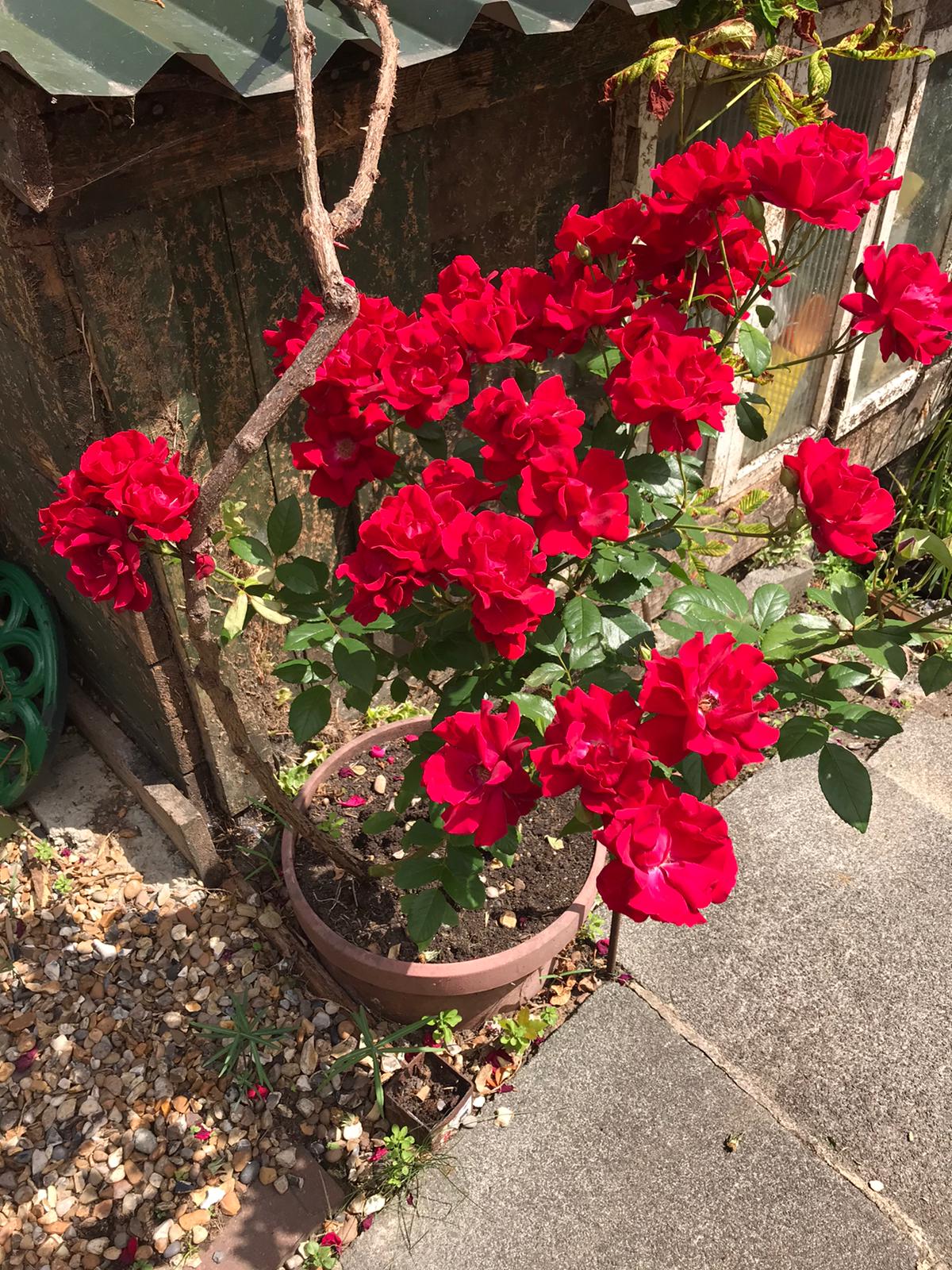
Here is Peter’s rose, he says about 50 rosebuds have come off this one side shoot, which he was going to cut off. Lucky he didn’t then!
This is Carol’s back garden – a very stylish “White Garden” at this season.

The little plant below is Night Phlox, grown from seed, in Kathy’s garden. The picture at the top is during the day – when you would definitely just pass it by. But at dusk, it absolutely dances and shines out!

Not strictly a members garden, this is in the hedgerow at Vanburgh pits on Blackheath. It is our native Clematis – called Travellers Joy or Old Man’s Beard (because of the fluffy seed heads later on). It is rather beautiful at this time of year.

OPG diary – February to July 2020
Remember the central lavender bed? Here it is in June 2020
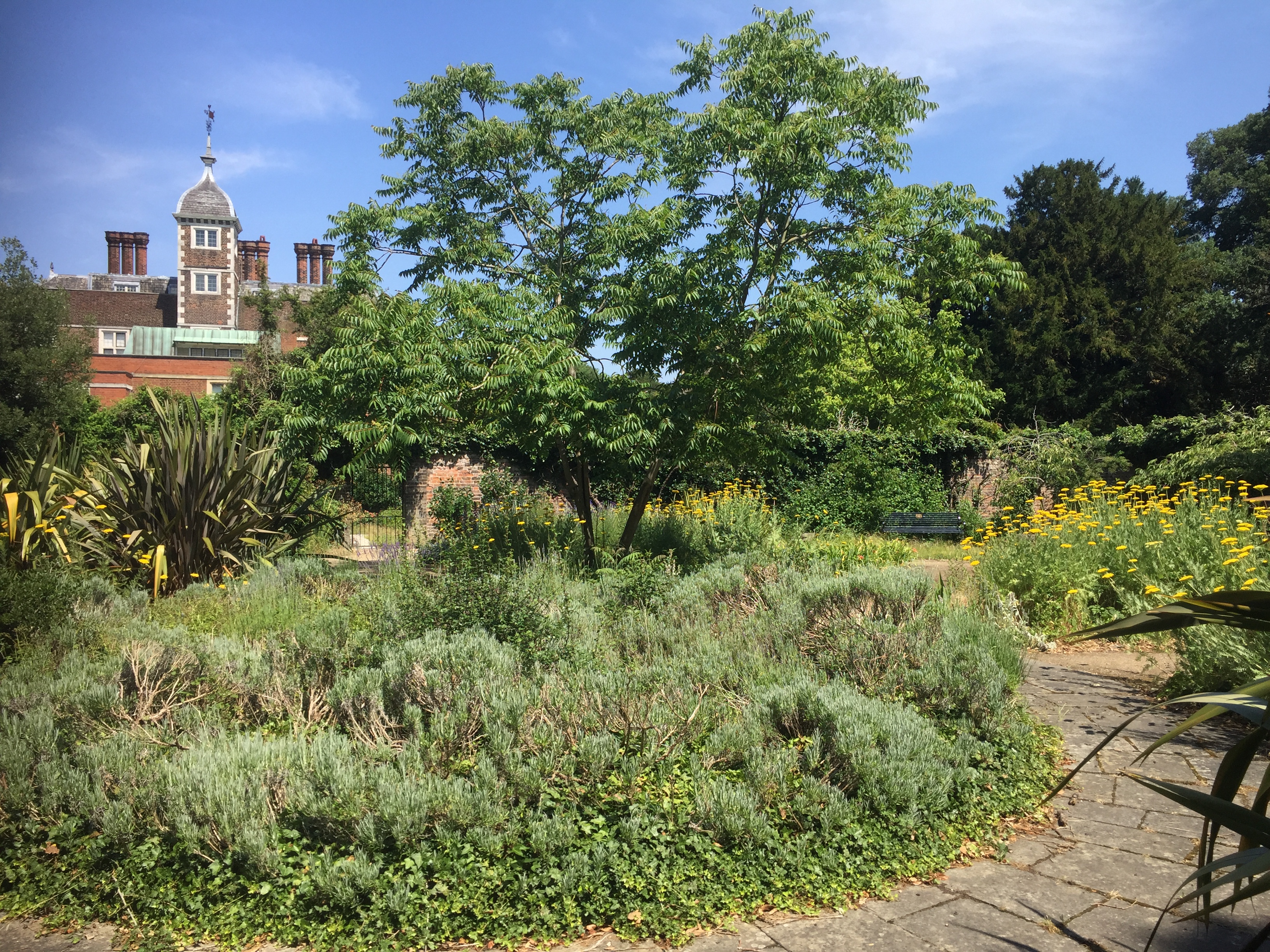

The lavender has stolen at least 2 feet

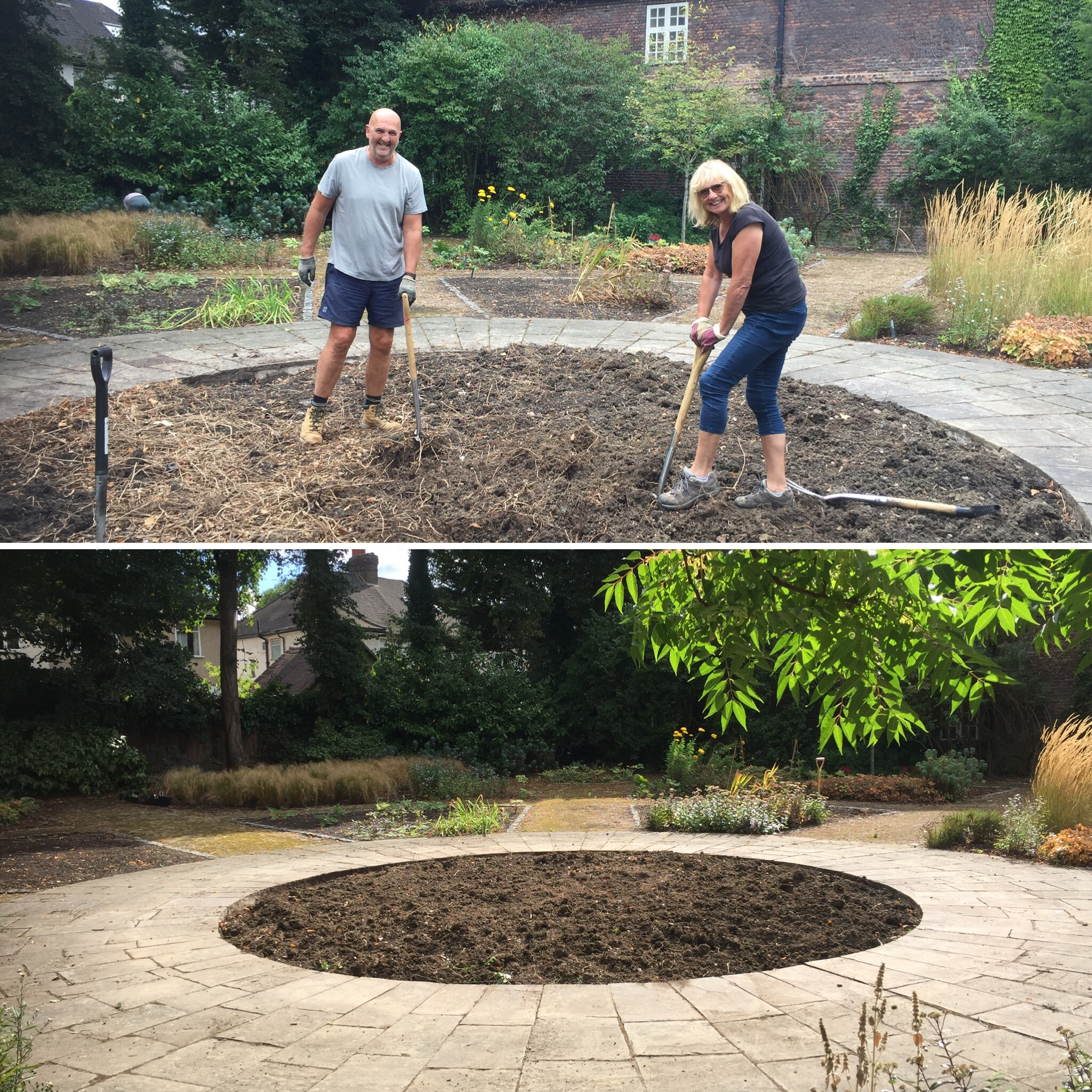
Back in June, we met Vlad the Beekeeper, who looks after the hives on the roof of Charlton House. He gave us some great advice about what flowers his bees like. You can download the recommended list of bee-friendly plants here: BestPlantsForBeesMatrix
Online Summer Flower Display 2020
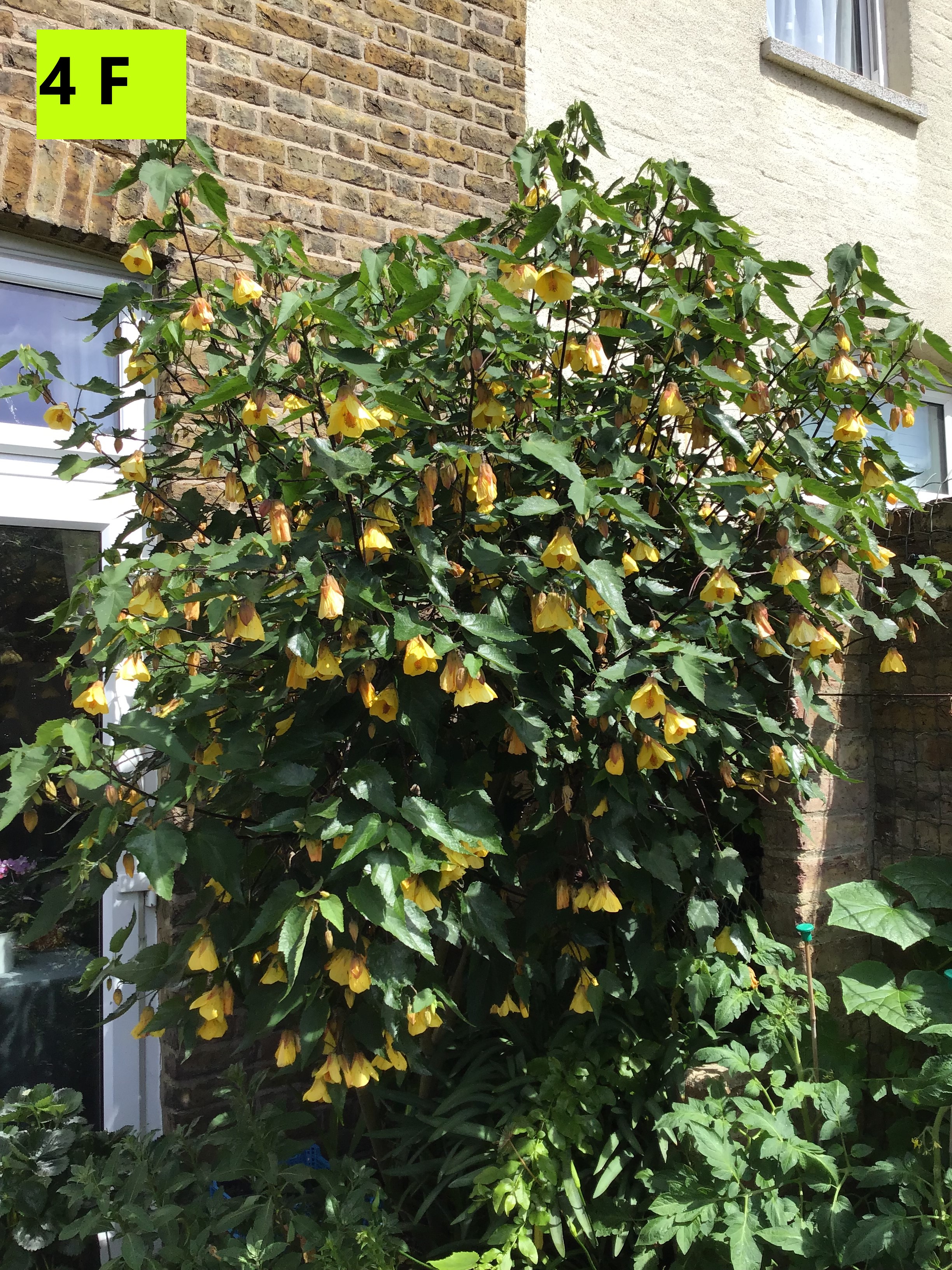
Thank you to everyone who sent in photos for our second online show this year. We hope you had fun! Winners of each class are shown below, congratulations! They are 1C (Pat), 2A (Ann), 3L (Margaret), 4F (Val) and 5D (Kathy)



Members’ gardens, June 2020
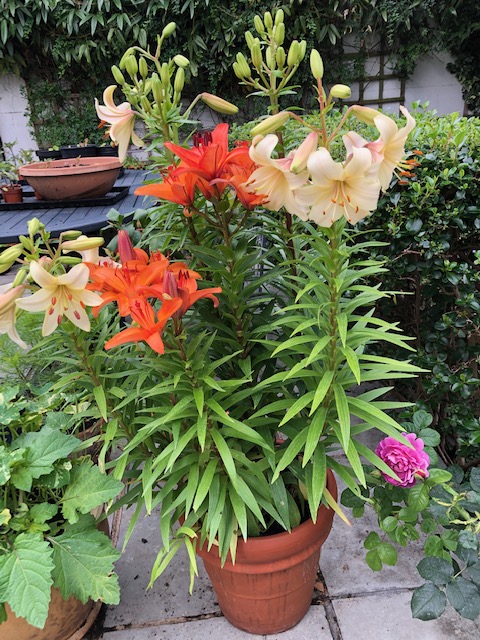
Emma has sent in pics of her lilies doing very well this year and loving the hot weather. Well done for keeping the dreaded lily beetle at bay!

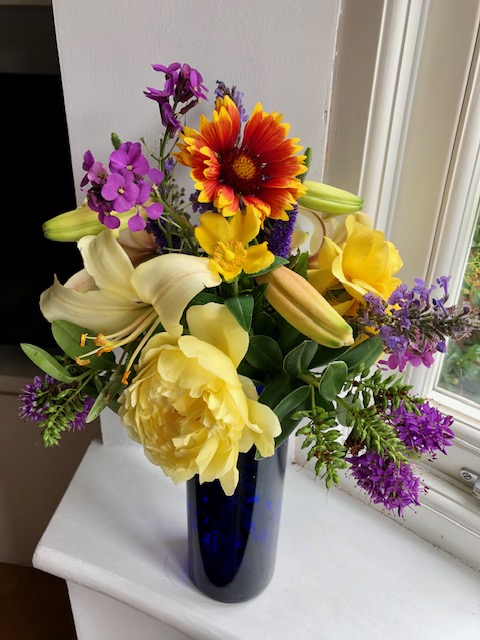
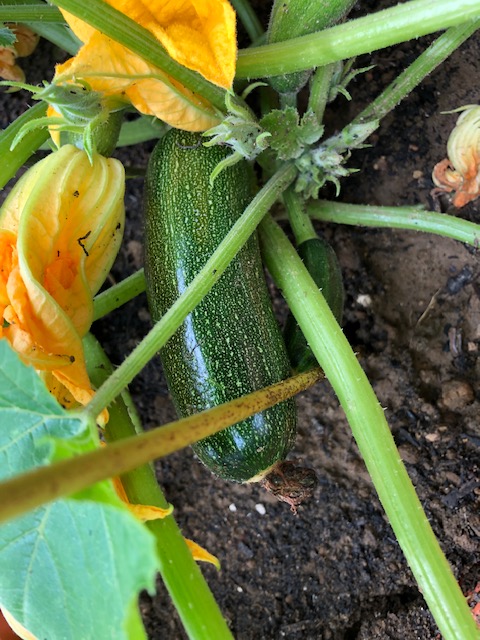
She is also very proud of her first lockdown courgette (and looks like lots more to come) and this vase of colourful home-grown flowers. Beautiful – it would be a good entry for the Summer Show coming up soon!
This rather beautiful caterpillar will turn into a Toadflax Brocade moth. Kathy says: it gave me a turn as I thought it was a box caterpillar at first ( ie Kill on Sight!), but it seems to be reasonably well-behaved and is munching on self-sown common purple toadflax so I have left them in peace.

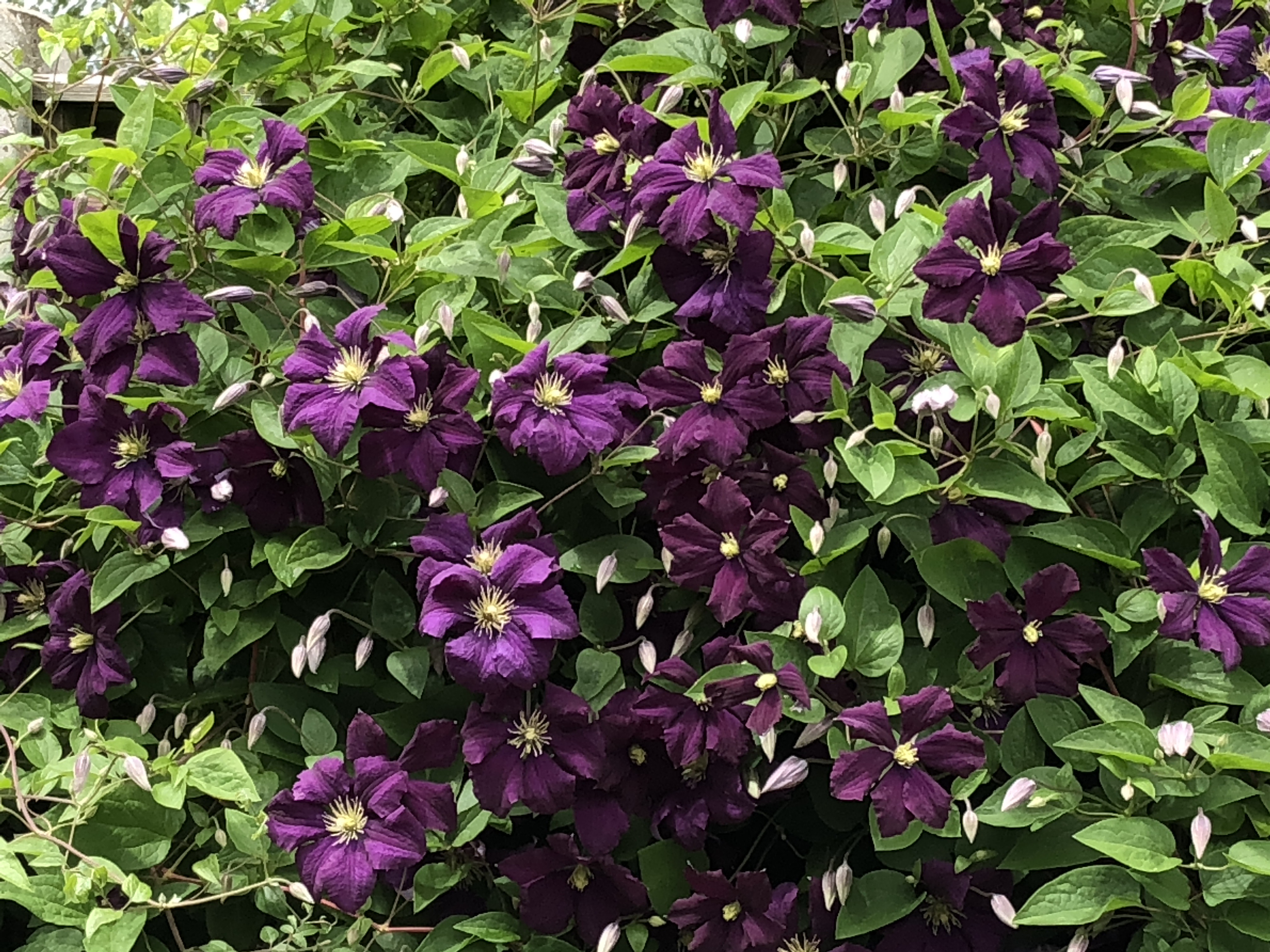
Val bought this clematis half-price from RHS Hyde Hall some year ago. Think she got a bargain!
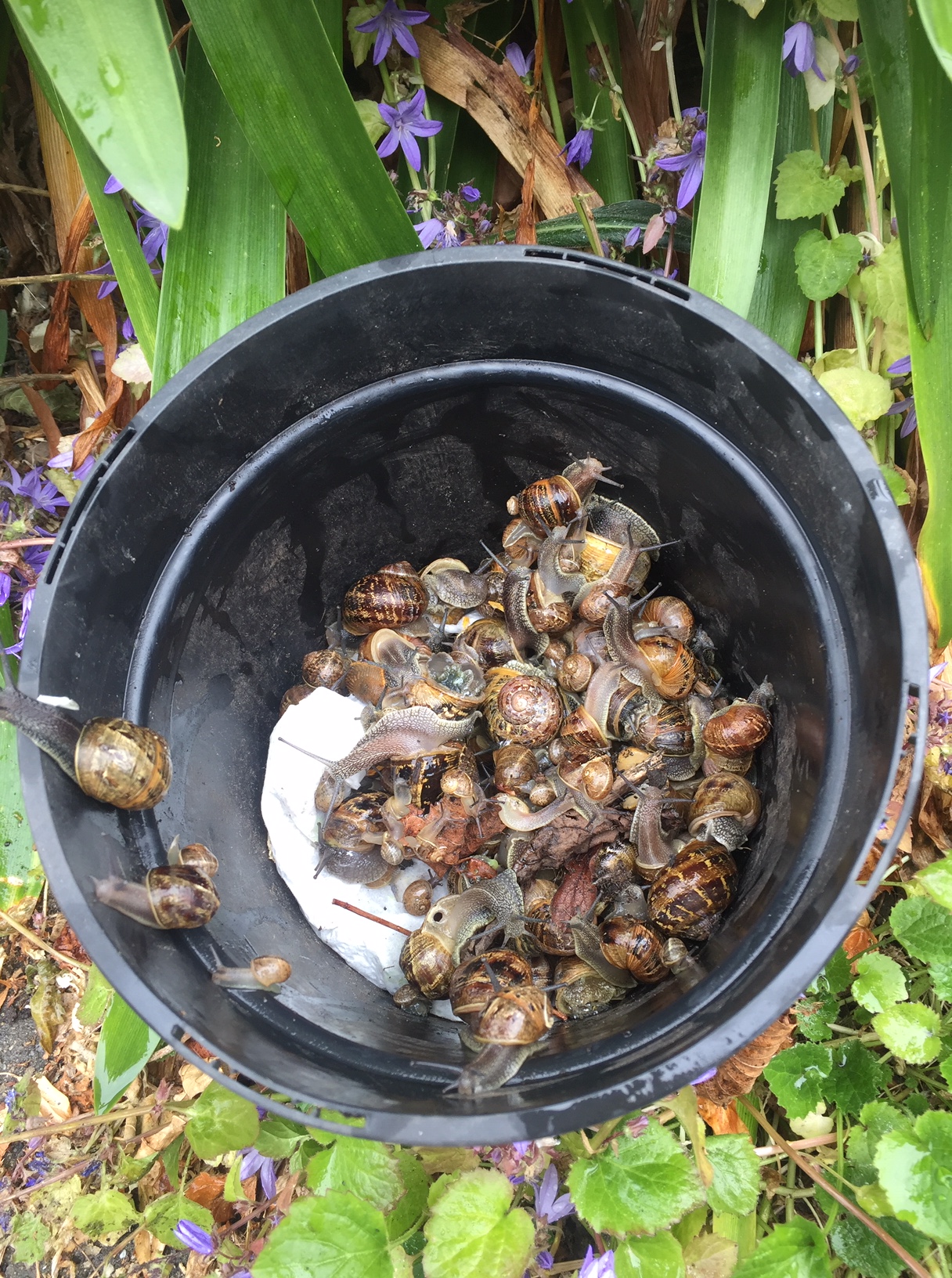
Not everything is coming up roses in every Members Garden. Kathy is an organic gardener and doesn’t use any pellets.. but is thinking that may change soon. Watch your Agapanthus everyone, the little beasties hide in there!
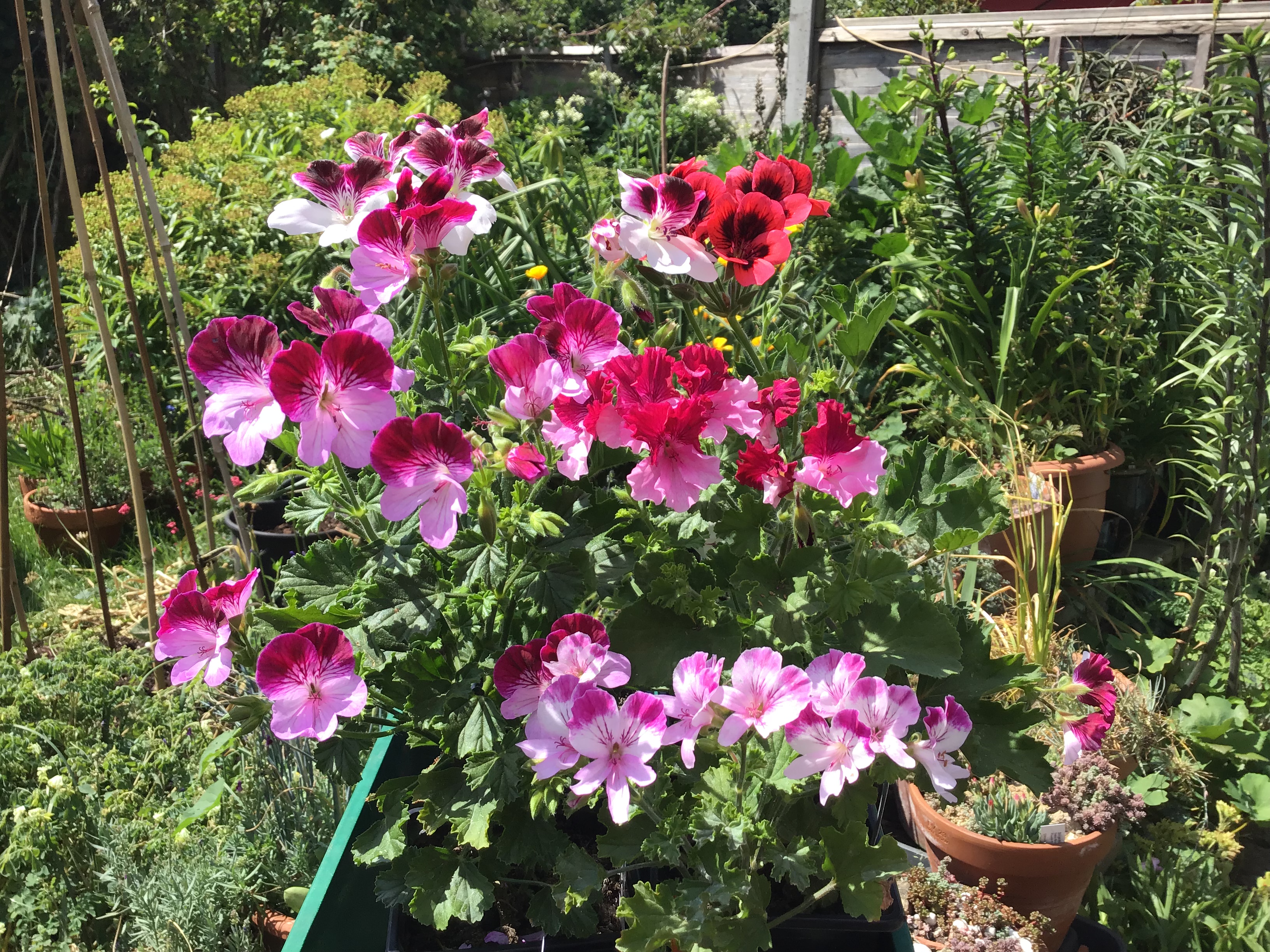
Val and Harry have sent in four pictures of their special plants in June: The first shows off their Pelargonium collection – “Angel” “Decorative” and “Unique”.
Here is Paeony lactiflora:

Here is a “Lampranthus”, which Val says has for the last five years grown in a basket on the wall. The flowers open white and turn to pink. The plant is watered only when it rains; otherwise, it is ignored!

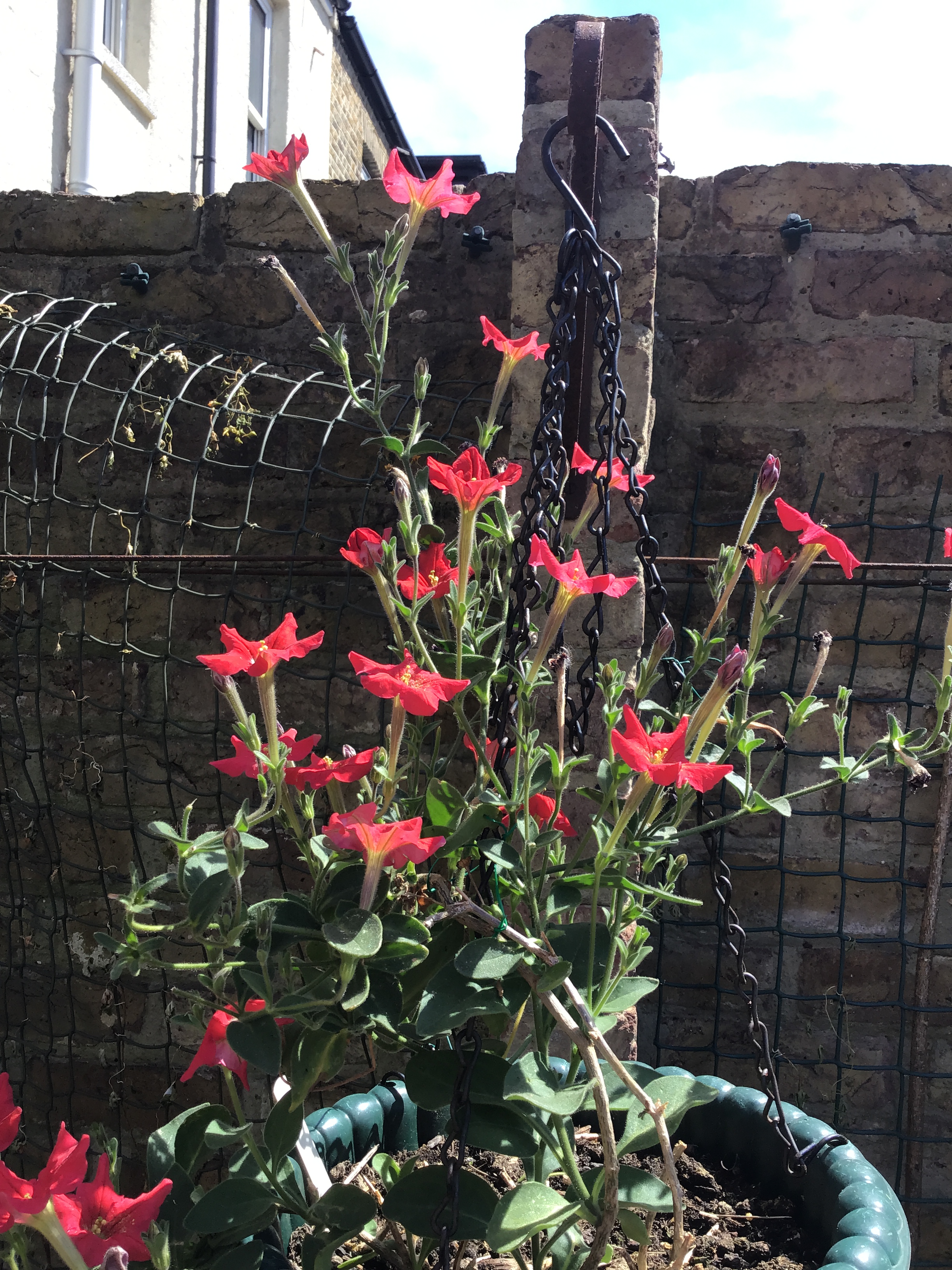
The fourth is Petunia ekserta, a South American plant easily raised from seed. It is winter-hardy in a sheltered dry spot in the garden:
In praise of Salvia ‘Black and Blue’
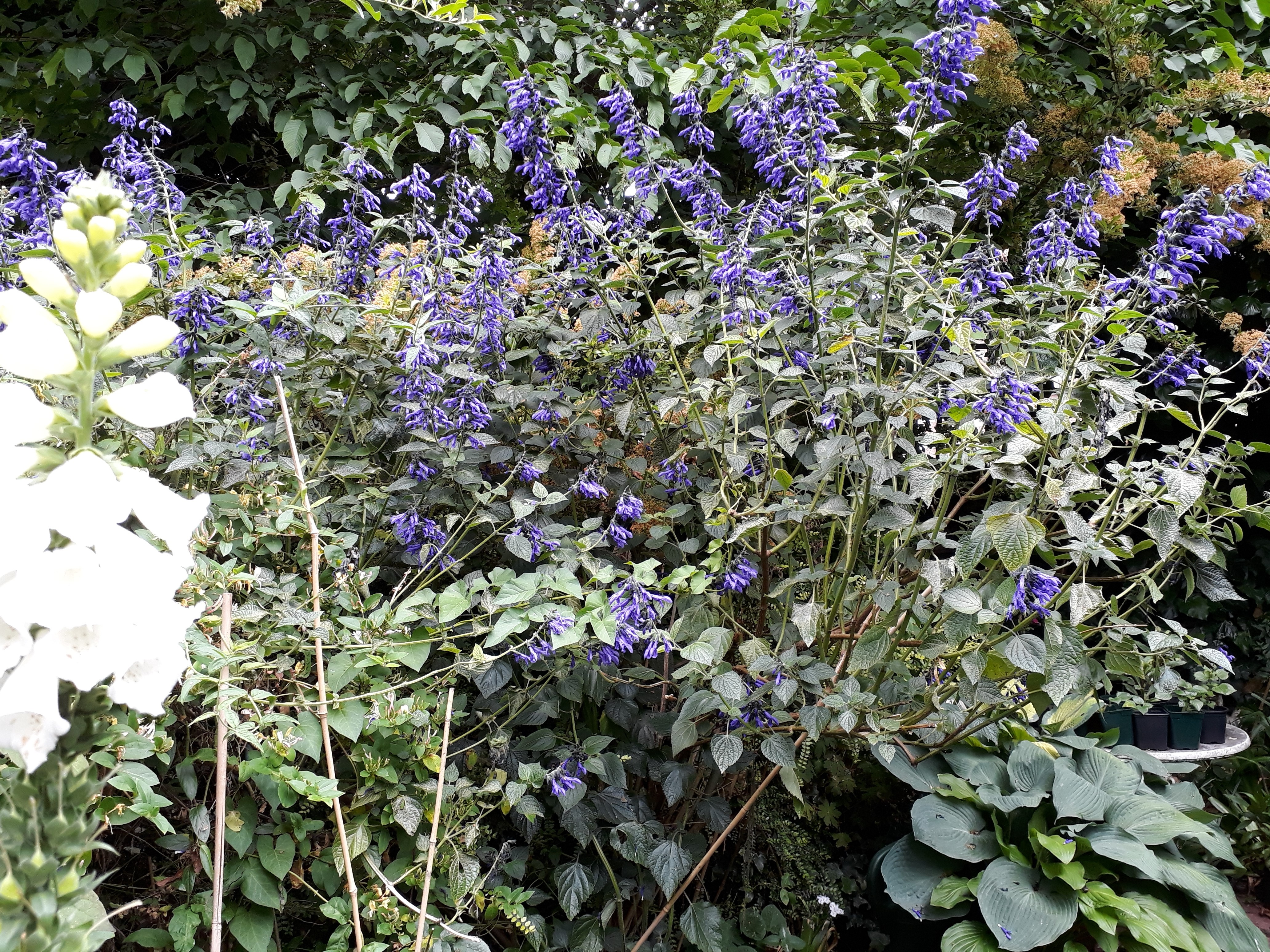
Angela absolutely loves Salvia guarantica Black and Blue. She says “I have had the main plant for over 2 years. In places it is nearly 7ft tall. It has flowered non stop through out the winter. I took a few cuttings in April. Grew them in water initially (the Terry method!) before potting them up and amazingly one cutting is now in flower!!. If anybody would like one happy to donate. What an amazing plant. It really loves life.”
Anna and Kathy both grow this wonderful plant and recommend it if you have space. It can be tender and might need shelter in a harsh winter, but as Angela has found, cuttings take well as an insurance.
Rare and specialist plant fairs – news, and list of nurseries
All the recent rare and specialist plant fairs have had to be cancelled due to COVID-19, but it’s worth keeping an eye on the industry websites for latest news.
The Rare Plant Fair website also has articles – a past CABAHS speaker, Colin Moat of Pineview Nurseries has just written an article on ferns, and there is a very good one on Salvias this month too.
Keep an eye on the Plant Fairs site as well. All the contributing small nurseries are listed and a lot of them offer mail order.
What’s in a name?
Vija’s blog on the garden jobs she finds relaxing made me think about what I enjoy most. I don’t find the action of pricking seedlings out particularly relaxing, but I do love the satisfied feeling once I’ve done it! That’s usually because the poor little babies have been in their first beds far too long and have taken to looking at me accusingly whenever I walk past.
I really enjoy planting seeds in pots, usually done on a grey day, as it creates such bright ideas for the future and dreams of wafting around a Sarah-Raven-like garden paradise. I like to dream.
I also enjoy labelling, which might seem a mundane though necessary and useful practice. But the creative variety of labelling ideas is fabulous, have a look at Pinterest sites for examples of gardeners never ending ingenuity. 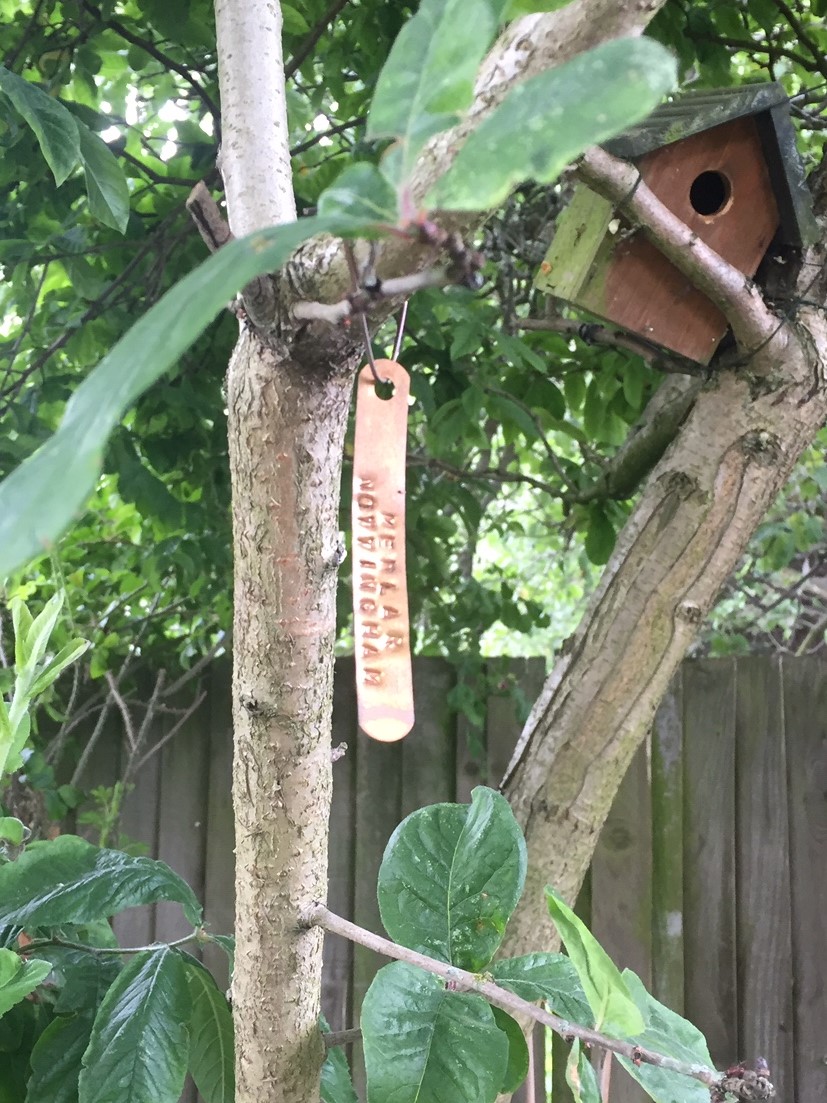
I have labelled the trees in my garden with strong copper embossed labels, because they need the most permanent ones. I like to fantasise that after I’ve gone, whoever buys our house will find the labels and marvel at the previous owners wonderful tree choices. At the least, it may give them pause before chopping down whatever monster it has grown into!
I don’t buy new plastic labels any more, so some of them are a bit tatty but fine for annuals. I use wooden lolly sticks for seed trays but they don’t last long once planted out as my terrier can’t distinguish between a wooden label and a twig so they tend to wander onto the lawn. This year, as my husband likes woodwork, he has made me lots of sturdy batons which I have painted a trendy Charcoal Grey and written on in White – very “National Trust” and reasonably terrier-proof.


As regards what I write on the label – for the trees I have used both the common and Latin name, for posterity’s sake. But everything else tends to be in my own unique language – often the name my father taught me (so quite possibly wrong or changed according to its DNA by now) but I know what I mean! Alternatively, I label according to a memory or who gave it to me: for instance “Pat’s Tangerine Sage” or “Tina’s Geranium”. My favourite is a large and very beautiful Weigelia, called “Christian’s Bush”, which conjures a lovely memory of my son, then aged 5, charging into our friend Christian’s beautifully symmetrical shrub and snapping a great piece off. I was embarrassed but Christian gallantly presented it to me for a cutting and I grew it on successfully!

Our future house buyer is going to be Googling in vain for all these unusual variety names!
If you have any unusual ideas for labels, let us know! Email cabahshortisoc@gmail.com
Kathy A
Members’ gardens, May 2020
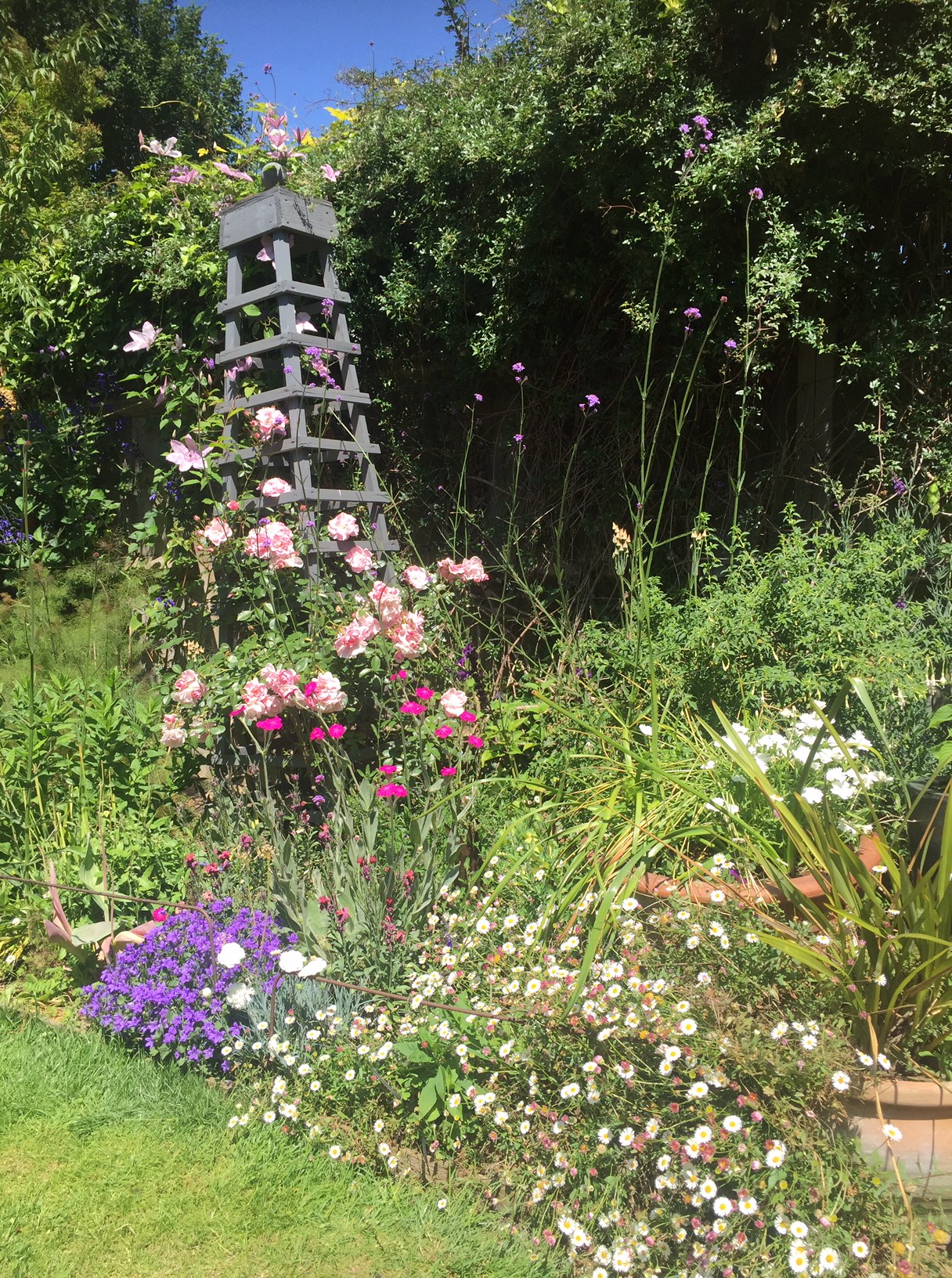
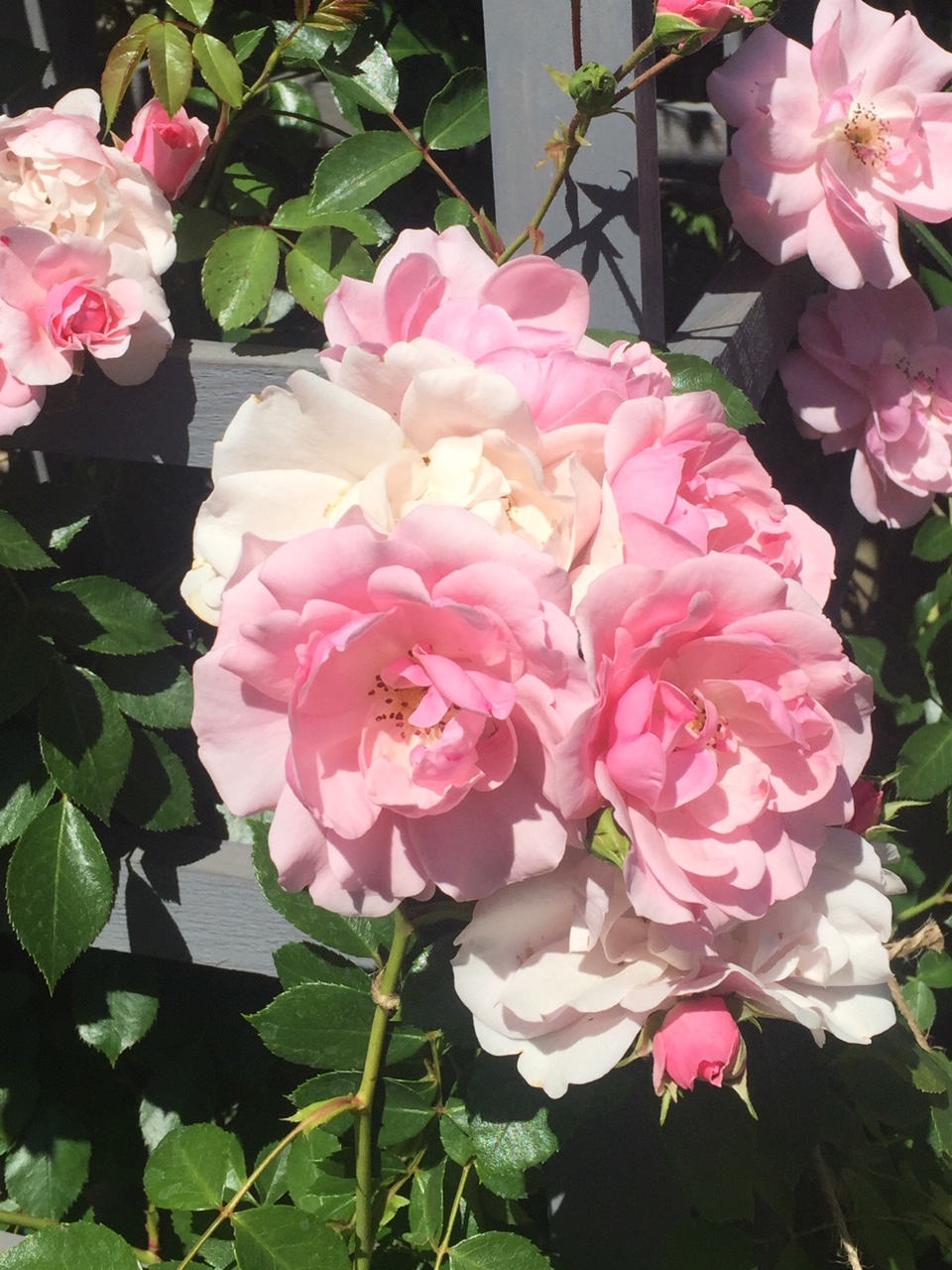
Rosa ‘Bonica’ finally getting into its stride up the obelisk in Kathy’s garden:
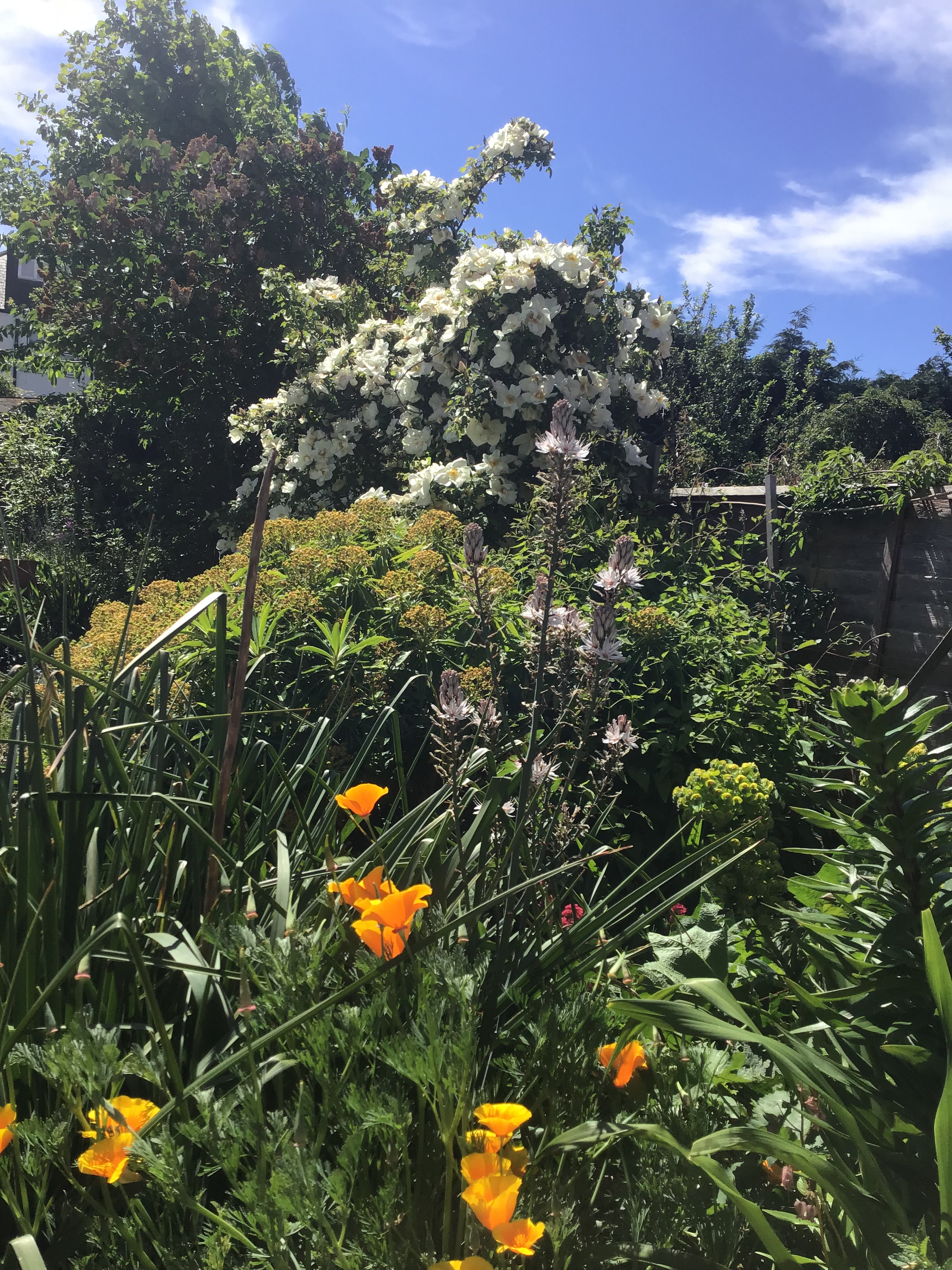
Val & Harry’s garden has a colourful combination of Californian poppies, Asphodelus microcarpus (tall spikes of white flowers), Euphorbia mellifera and, in the background, a rambling white rose in full bloom:
And just look at this fabulous Abutilon vitifolium, Val says it is from a self-sown seedling fifteen years ago, and now fifteen feet high!

Sharon sent in this picture of the peaceful, shady woodland area of her garden. She has written an article explaining how this part of her garden came about: A Neglected Patch

Nicolas has sent in three pictures of his garden – first, a Dwarf Chestnut:

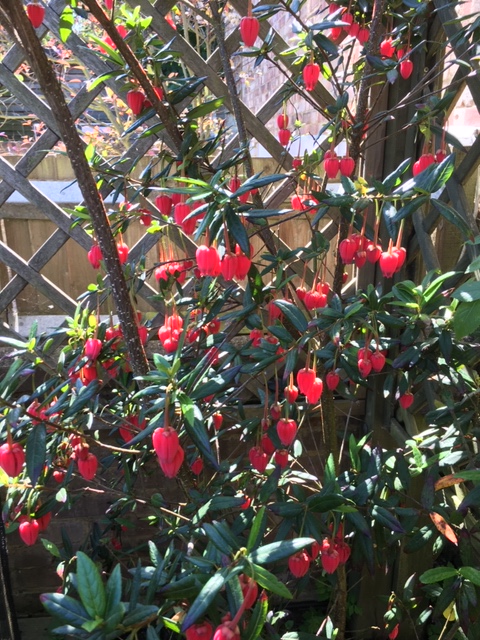
This is his spectacular Chilean Lantern Tree (Crinodendron hookerianum) in full flower:
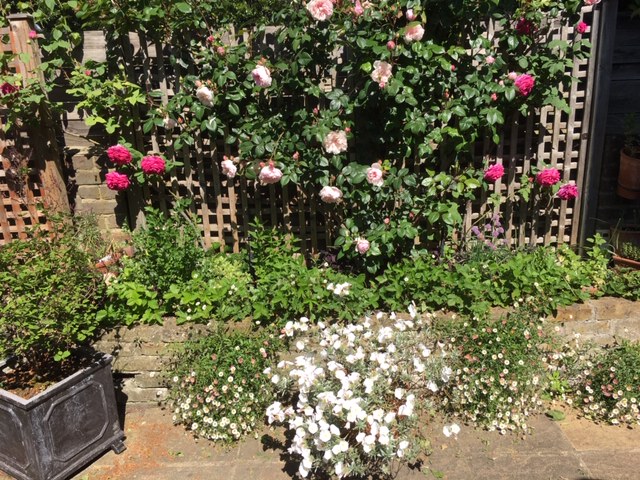
And a lovely view of the border, with the little Mexican Fleabane (Erigeron karvinskianus) on either side of a Silverbush (Convolvulus cneorum), and the two roses are Mme Isaac Pereire (dark pink) and The Generous Gardener (pale pink).
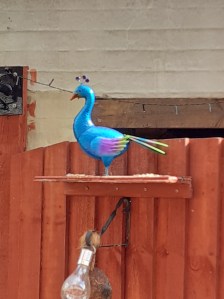
Juli has sent in a follow-up on her April lockdown project of a new bird feeding table. She says “The wood pigeons created havoc and upset the dog. So, I have now put this fine fellow up there in the hope that there is no longer room for them, so the Great Tit and his fledglings will now get a look-in. The wood pigeons will not miss out as they can return to their previous excellent job of clearing the path and pots of the feeder cast off seeds!” Good luck with that, Juli!
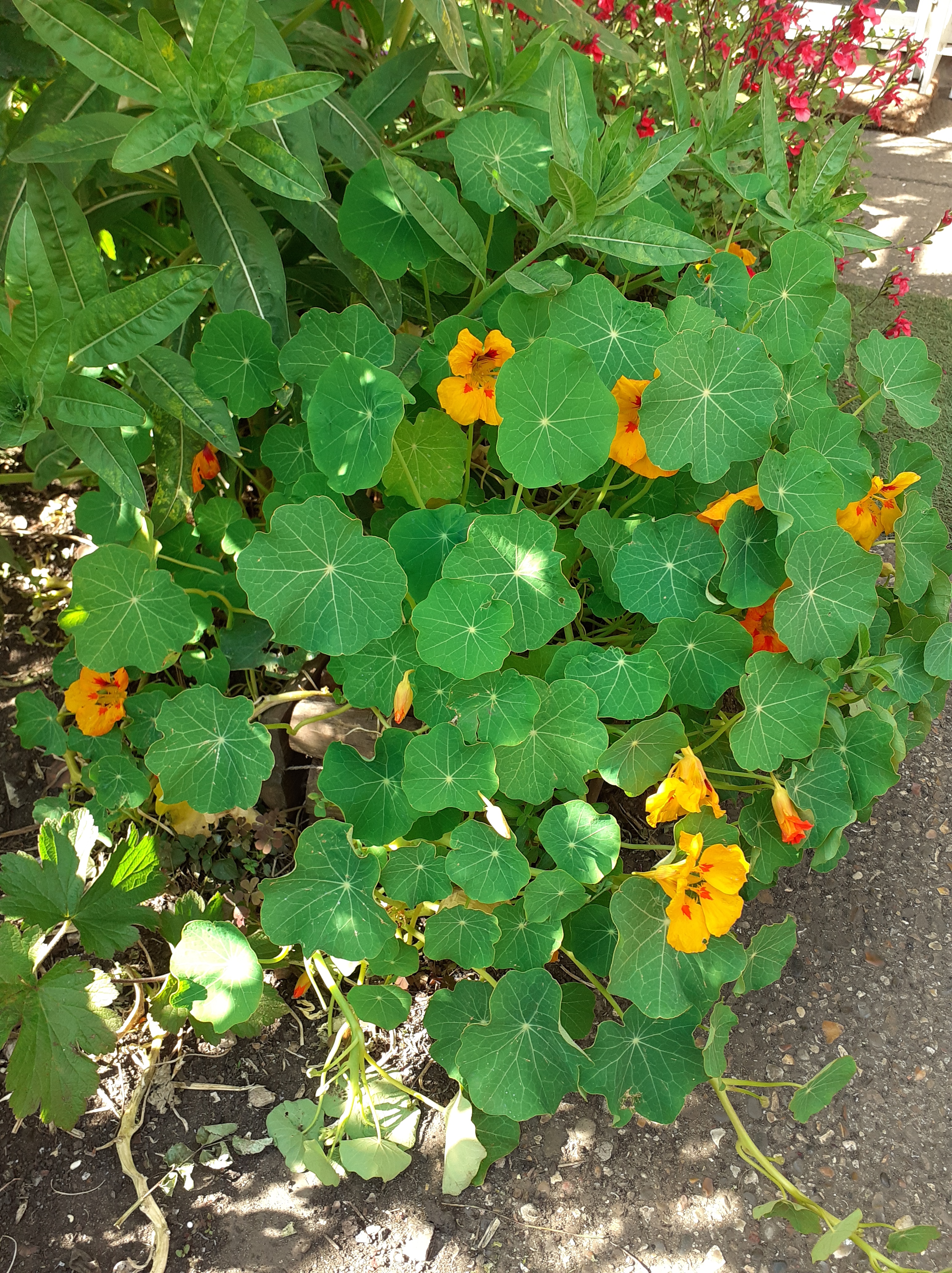
Juli also sent in this picture – it might look like a common Nasturtium, but this is a granddaddy of nasturtiums, it’s 2 years old! Pretty darn good for an annual plant and shows how mild it has been.
‘Brave’ plants
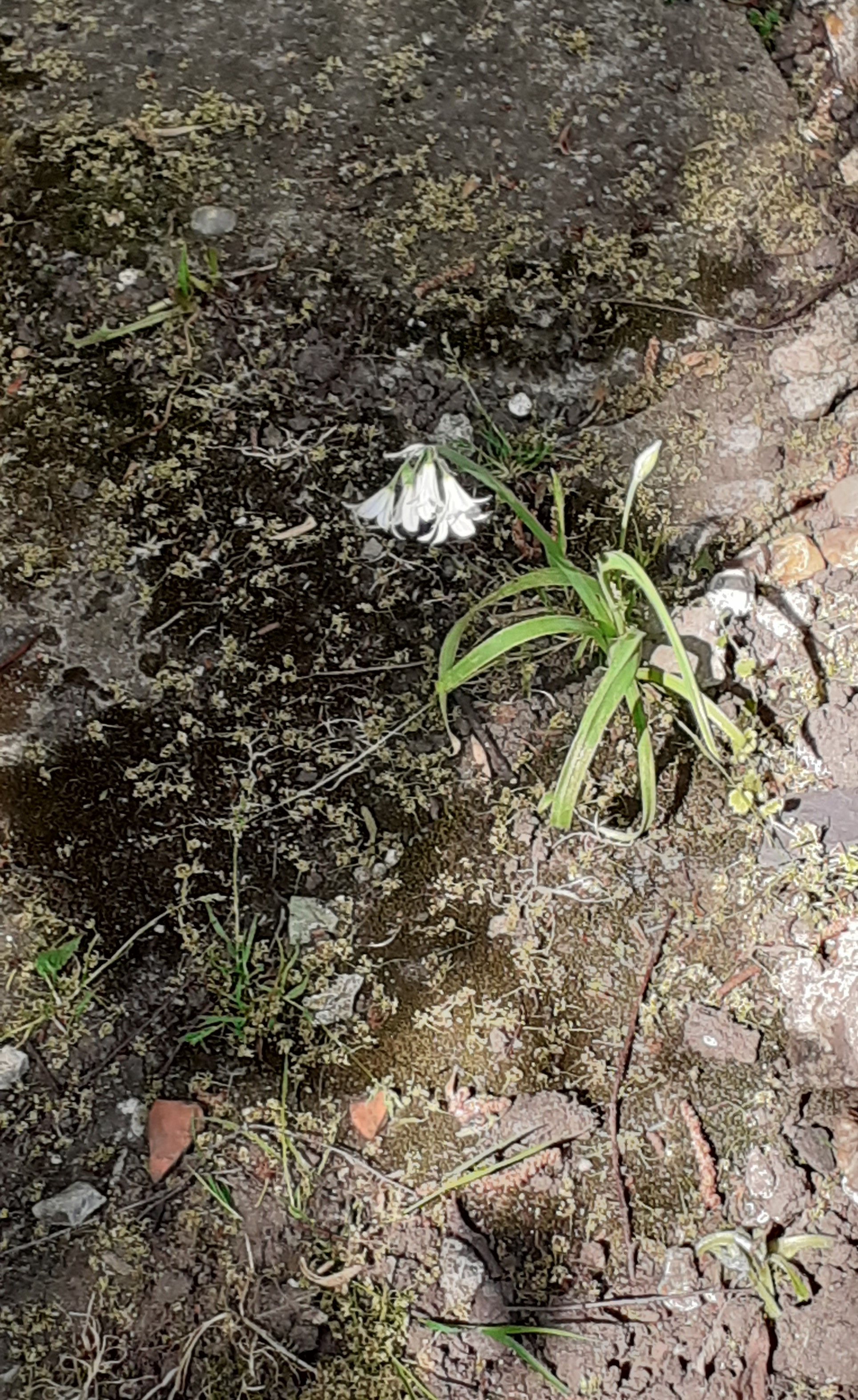
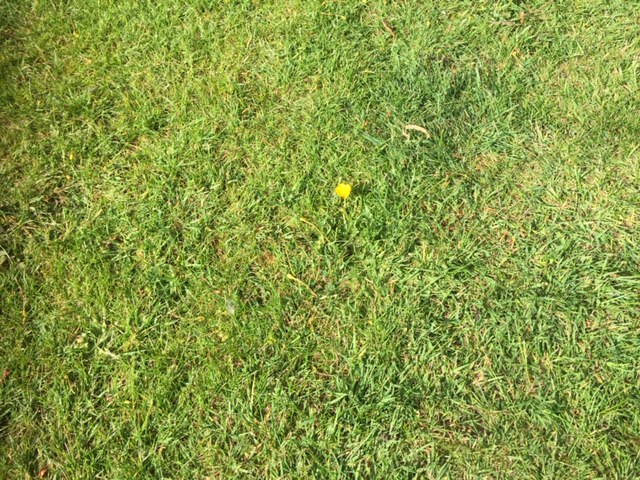
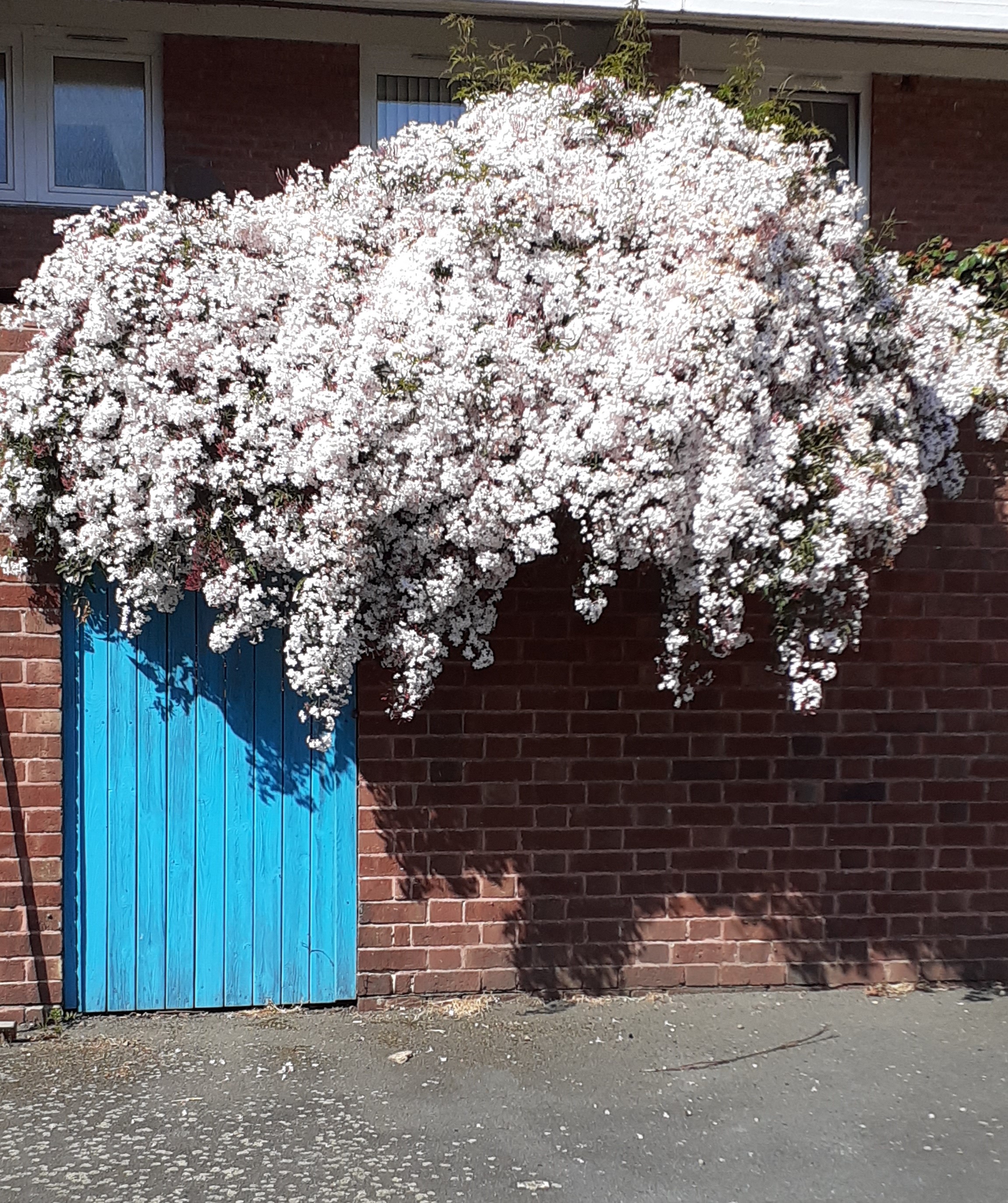
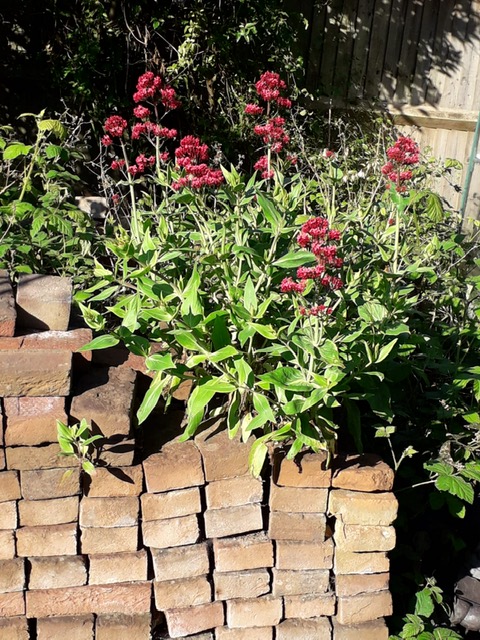
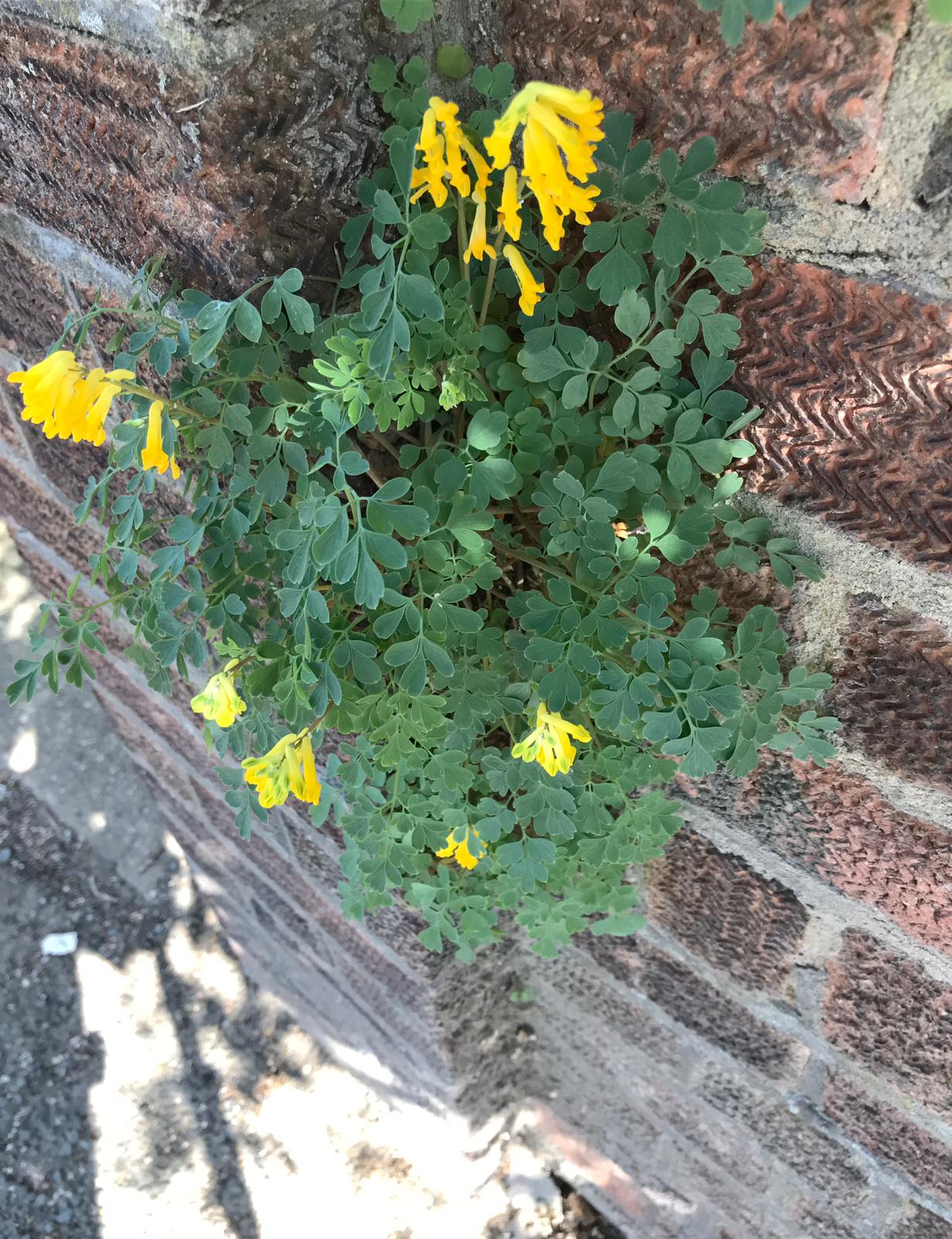
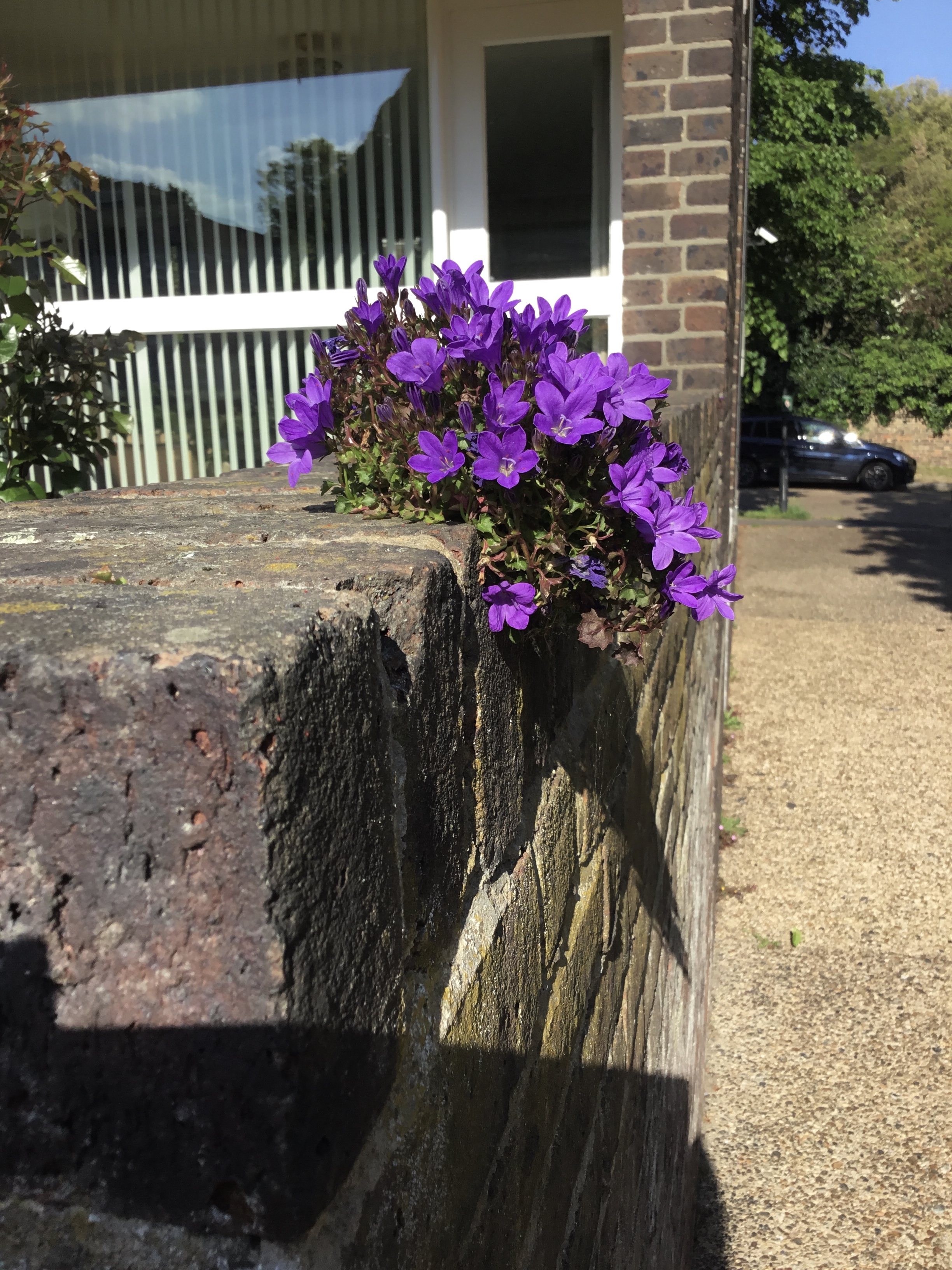
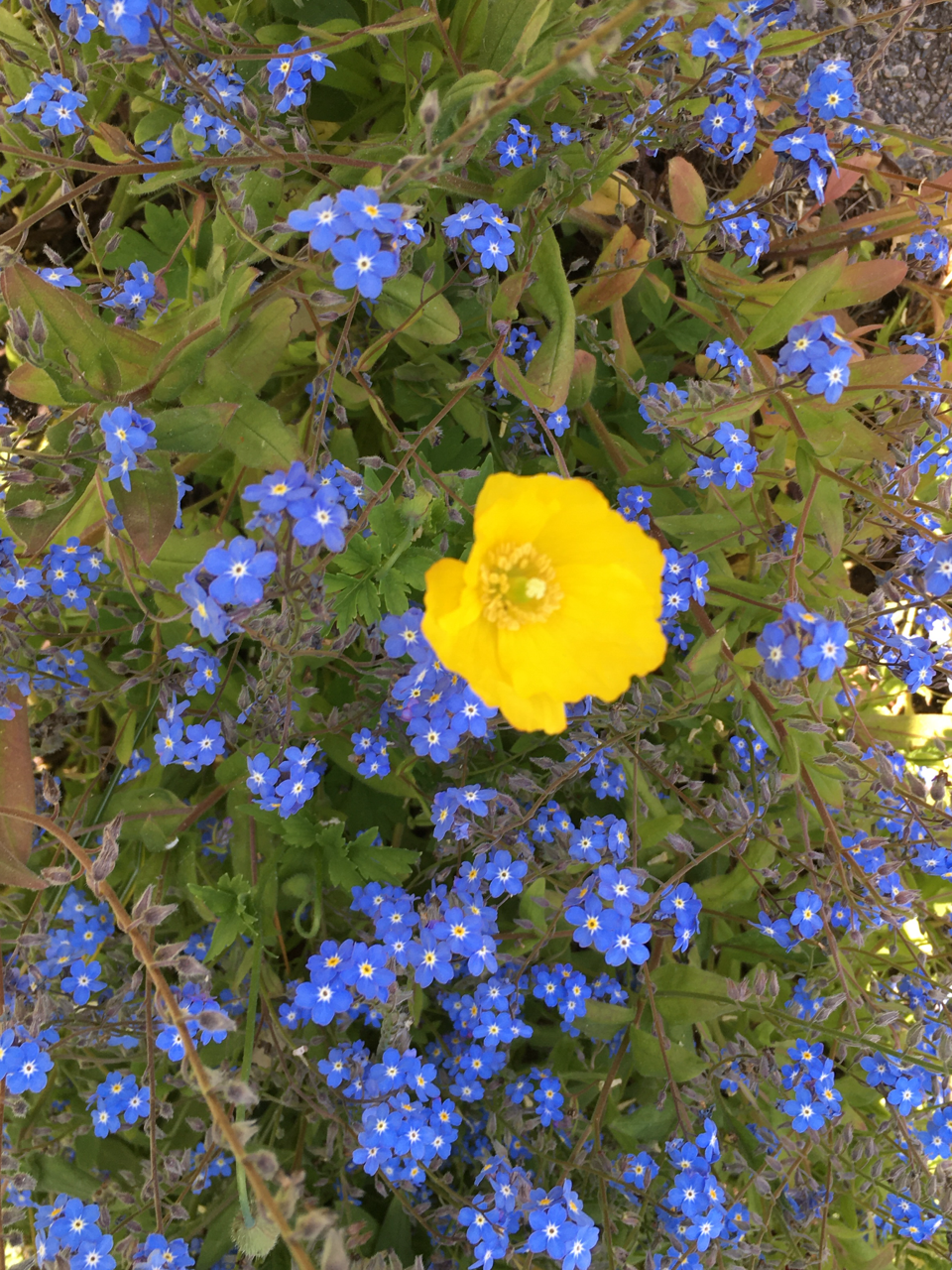
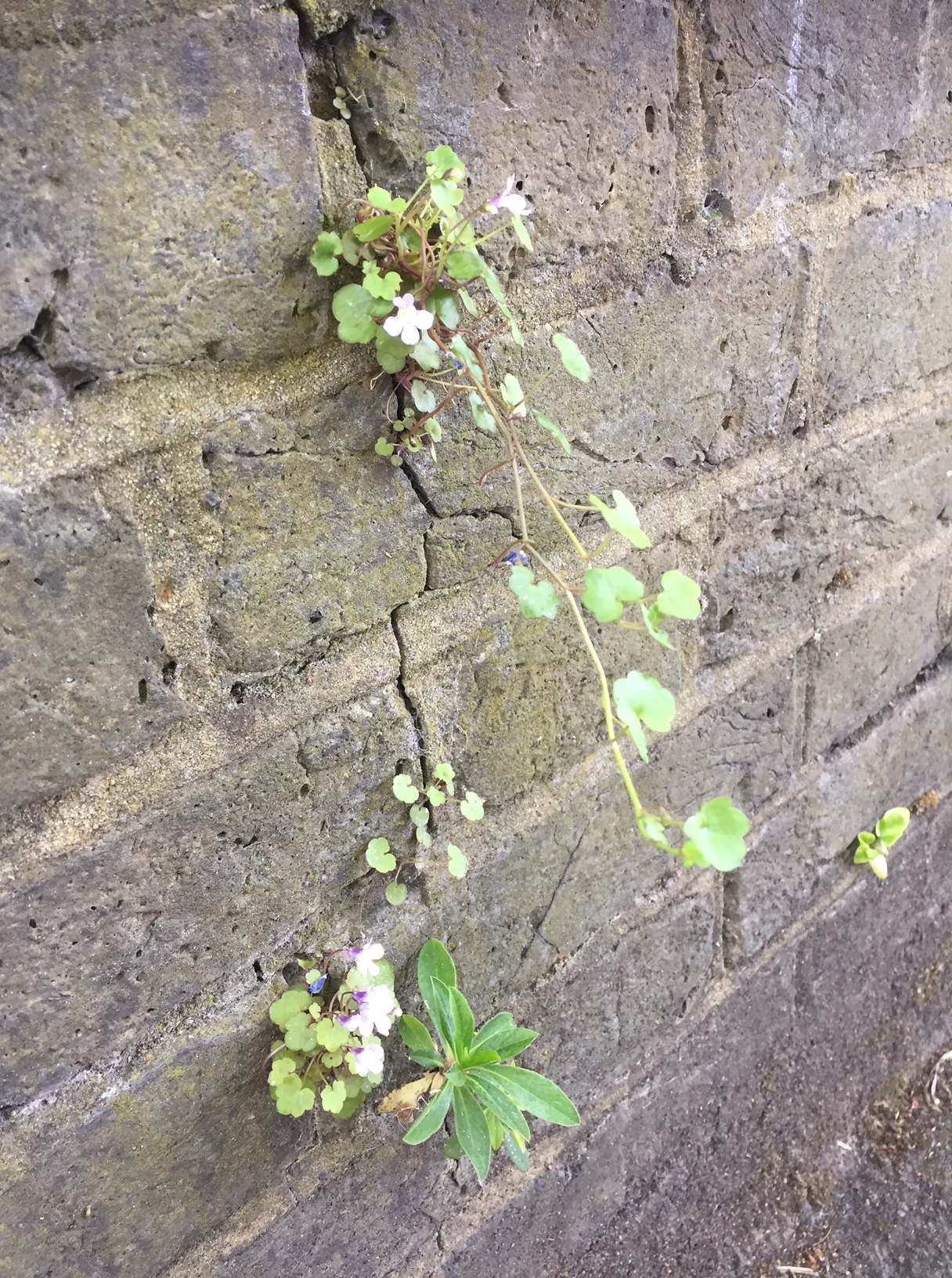
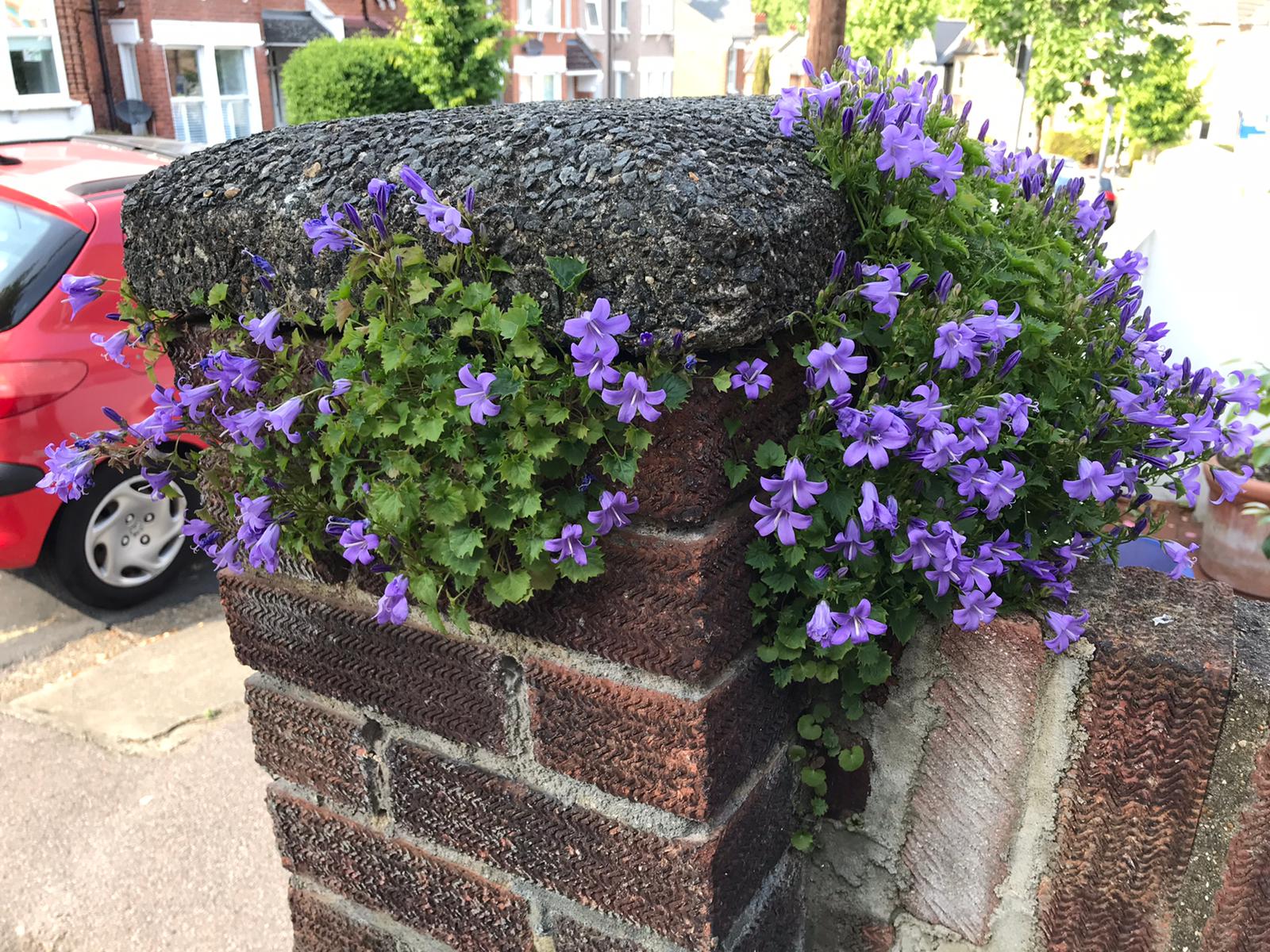
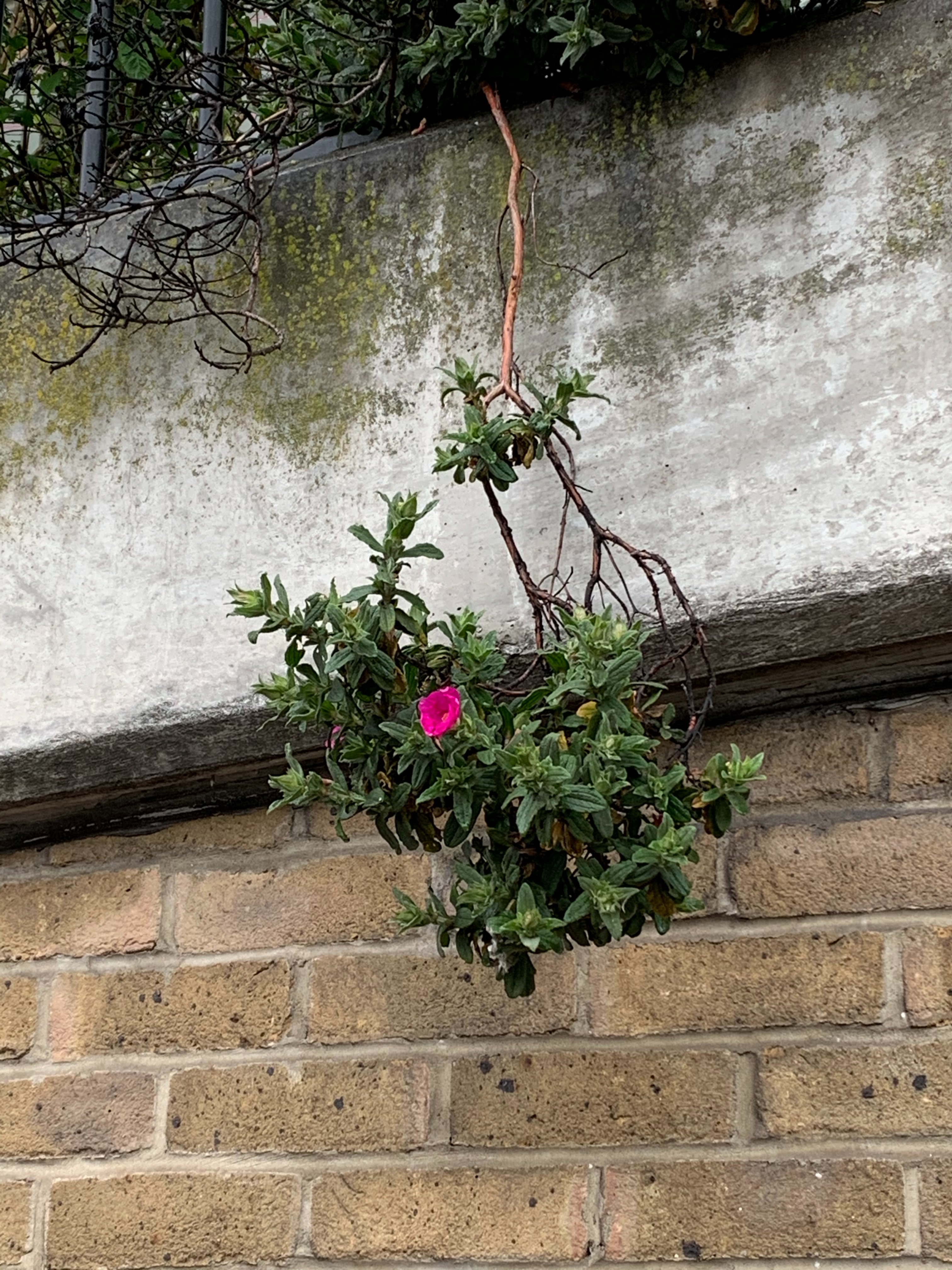
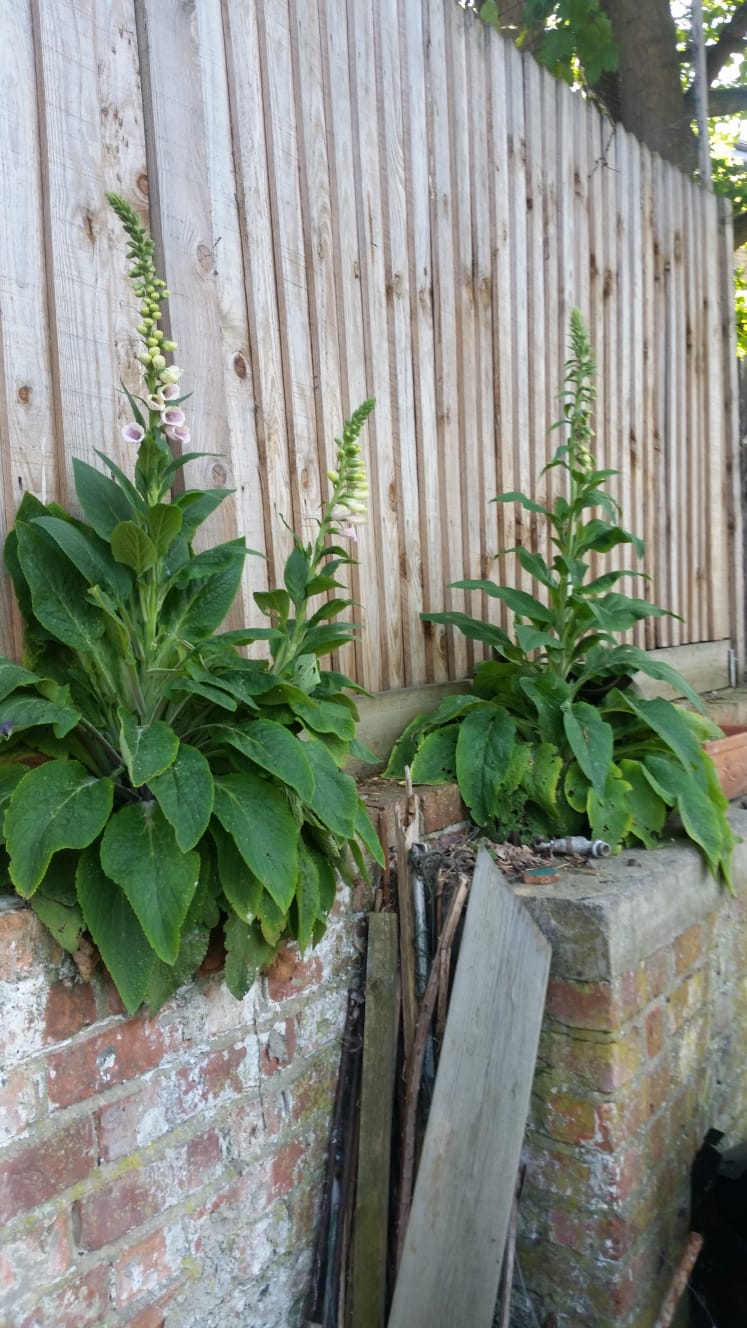
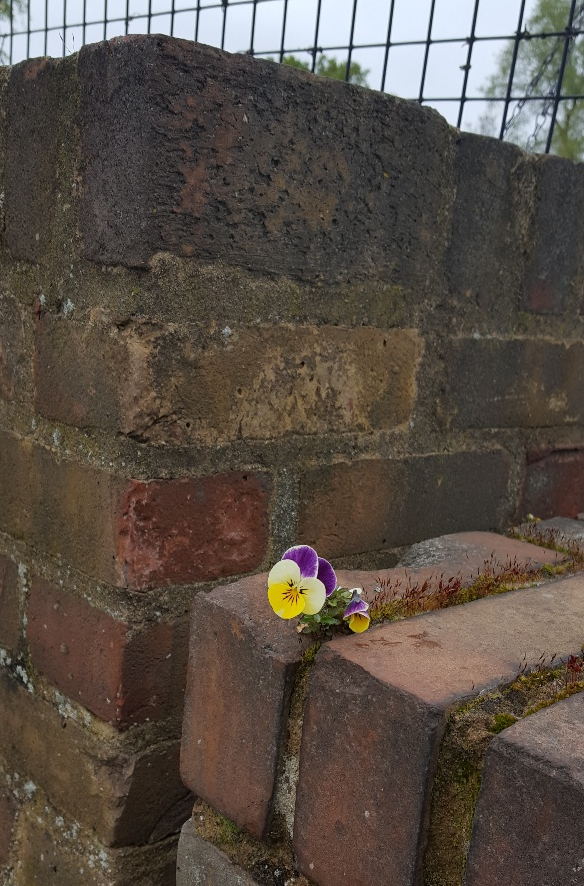
It started with Andrew’s snap of a Viola, surviving and flowering in the mortar on a school wall. Such optimism!

Malmaison, the first great rose garden
As we are coming up to “rose” season, with the early ones already coming out, I have been reading a bit about the history of the Rose Garden. As everyone is taught at school, Josephine married Napoleon and became Empress of France. But did you know that she was much more than that for gardeners – she was also the Queen of Roses. She had a dream to create the greatest rose garden ever made, to collect a specimen of every single rose species and every rose variety growing anywhere in the world at that time.
To contemplate such a task today with all the miracles of modern travel and communications would be a vast operation. To have undertaken such a scheme at the beginning of the 19th century was like reaching for the stars. No aeroplanes, no telephones, no fast ships, no Google! Just war-torn France locked in a mighty struggle with the rest of Europe.
Yet she succeeded, and on the outskirts of Paris the world’s first great rose garden was created, and was called Malmaison.
Josephine gathered around her some of the great botanists of the time, to source the plants, and engaged Pierre-Joseph Redoutė to record the roses for posterity. After divorce from Napoleon in 1810, she moved permanently to Malmaison and devoted herself to her plants.
Malmaison contained about 250 different types of roses. If you could go back in time to 1810, you might have been disappointed, as you would have seen none of the vibrant colours, the repeat flowering and compact bushes of a modern rose garden. They would have been large, spreading bushes with a single flush of flowers each year. There would have been Gallica roses, the classic red rose, also tough Rugosa roses, Blood roses from China and Virginia roses from America. The finest would have been the Damask roses, but nearly all would have been white, pink and red.
There were just one or two dull yellow or dark orange roses from Persia – and these were the ones which were eventually to produce most of our modern colourful varieties.
Malmaison gardens are no more, they were destroyed in the Prussian War in 1870. They live on in the paintings of Redoutė and in his volumes of Les Roses.
Kathy
 Charlton and Blackheath Amateur Horticultural Society