During March, when the changeable weather still surprises us, it is wonderful to see the Camellias in flower, as they provide the much-needed WOW factor during the colder days – their profusion of flowers, colours, shapes and patterns add an immediate vibrancy and character to any garden or parkland.
In my neighbour Linda B’s garden, there are three Camellias but one stands out. The flowers are smaller and single, white (blush-pink as they age), scented and beautiful. The leaves are also different: matt-green and elongated and the overall appearance of the shrub is more elegant. It has grown, albeit slowly, and is now approximately 2’ in height. A plant app identifies it as possibly Camellia sasanqua.
We hope you enjoy a spring walk around the walled gardens at Charlton House! Look out for:
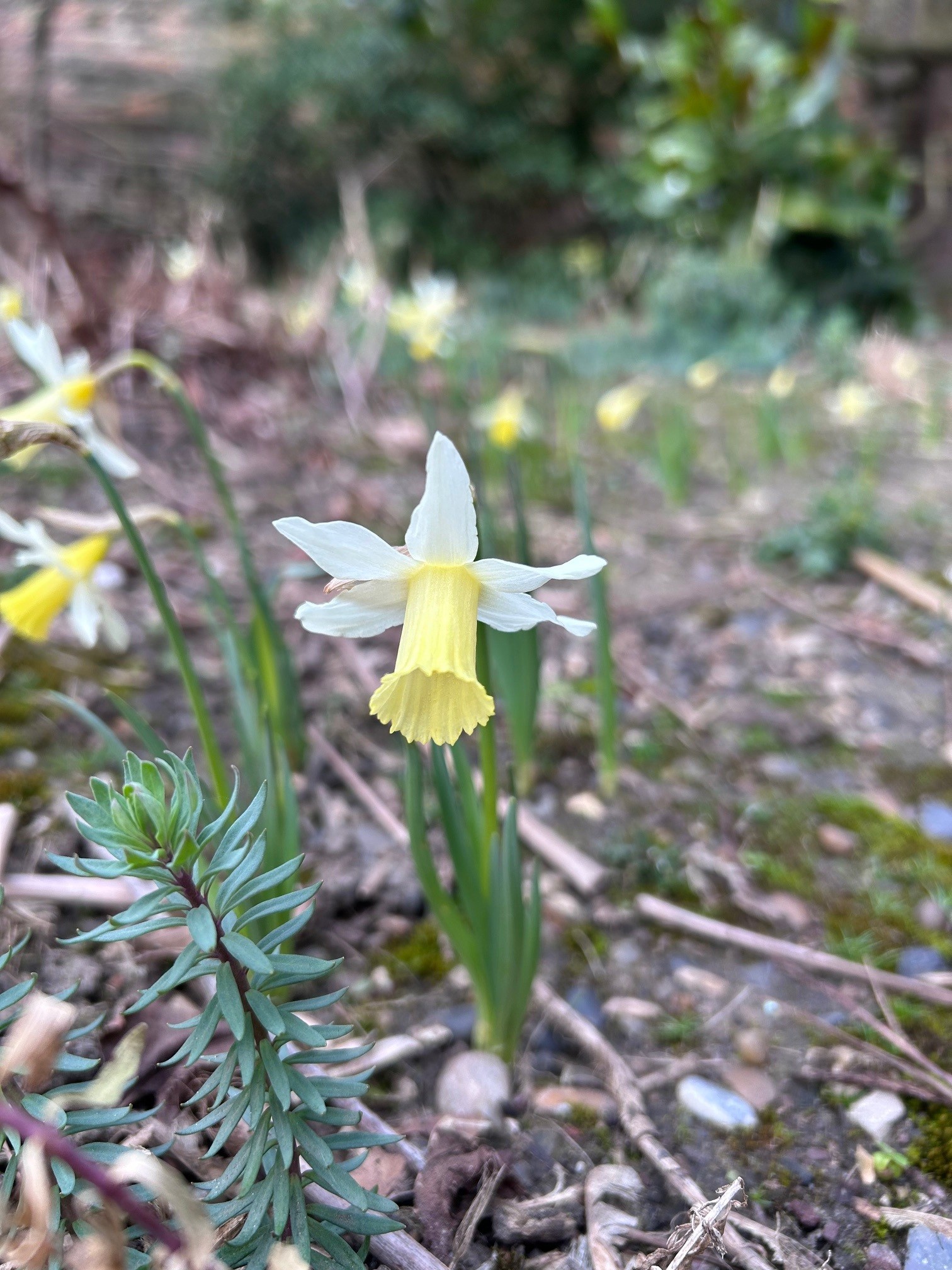
Daffodil (Narcissus ‘Elka’)
A fragrant, small and early-flowering daffodil, you can spot Narcissis ‘Elka’ in the Peace Garden. It has pale petals and a creamy yellow trumpet. The name ‘Elka’ is apparently from a combination of the names of two ‘lady daffodil growers’: Elizabeth and Kate.
Wood spurge (Euphorbia amygdaloides var. robbiae)
Wood spurge is in the Euphorbia family, so take care! If the stems are broken, they gush with a thick milky latex substance that can cause blisters on skin. They are handsome perennial plants, shade loving, with zingy lime-green flowers in late Spring and rosettes of glossy dark green leaves. Another name for this plant is ‘Mrs Robb’s Bonnet’ – we would like to see the hat that inspired that name!
Time to pot up those Dahlia tubers in 3 litre pots, making sure the tubers have an ‘eye’ which will shoot. Cover in compost, allowing the stem to rest at the surface, then label and water and keep somewhere reasonably light and frost free (greenhouse or windowsill) until they start growing.
Potting up dahlias
2. Now is the time I start sowing sweetpeas: five seeds to a 3 inch pot and keep on a light windowsill or greenhouse until they germinate. You can try sowing directly into the soil which I think works well for some.
After years of repeatedly reading about East Lambrook Manor in Margery Fish’s classic book ‘We Made a Garden’ [book review], I discovered late in 2023 that the house and garden were to be sold. While the garden is Grade 1 listed and therefore protected to some extent, it may not have to be open to the public, so I determined to visit as soon as I possibly could. The garden is not open over the winter – its season begins with the snowdrop festival in February – so I waited nervously to see if it would re-open in 2024. It did, so plans were hatched as there was now a caveat on the East Lambrook Manor website that opening arrangements could change if it is sold.
First view: House and lawn to the left, Barton ahead and Malthouse behind.
On a sunny morning in early April we set off to walk from South Petherton, where we were staying, to East Lambrook. It was a lovely walk of just under two miles, leading us into a small village with some very nice front gardens… and we turned into a driveway with the manor house on our left, the Malthouse ahead and a beautiful tree with a host of snakeshead fritillaries (Fritillaria meleagris) below. This was The Barton – the former farmyard.
I can’t remember how many years ago I picked up Margery Fish’s first book, the tale of how she and her husband Walter bought a house in Somerset just before World War Two and created a garden on its two acres of land. It’s an easy and enjoyable read, and I loved it. Her barely-veiled criticism of Walter’s martinet tendencies made me laugh, and her joy and enthusiasm for plants and gardening informed and excited me. On every re-reading (there have been many!) I learn more, and get new ideas, though as time goes on I think I like Walter less and less.
Each area of the garden gets a name: the Lido, the Ditch, the Herb Garden, etc – and each short chapter has a pithy title such as ‘Rock gardening’, ‘Gardening with a Knife’ and ‘We Made Mistakes’. Although the Fishes were of a class that would have been used to staff, the times meant that they did most of the work themselves, with just an occasional ‘garden boy’, so the descriptions are very hands-on. They did, however, still dress for dinner, and the image of Margery clambering up a rockery to water precious new plantings in the top of a wall whilst still in her satin finery is vivid in my mind.
Mrs Fish was in her forties when they bought East Lambrook Manor, and hadn’t really gardened before. She only really got into her stride after Walter died in her fifties (he was 18 years older), and wrote this, her first book, in her sixties, at which point she became known as a gardener and wrote several more books. All are lightly written and informative, but the combination of memoir, wry humour and discovery in ‘We Made a Garden’ makes it the most successful, in my opinion – a gardening classic.
As you can imagine, it has been a long-held ambition to visit East Lambrook Manor, now a Grade 1 listed garden, and I finally managed to get there in April 2024 …
Ali H
If you read a book that would be of interest to our members, please think about writing a review and sending it to garden@cabahs.com and it could become a post like this.
Professional gardening has long been a man’s world. The title of Fiona Davison’s book comes from a letter written by the retiring Director of Kew Gardens, Joseph Dalton Hooker in 1906. His unambiguous advice to Miss Symonds who fancied a job tending plants was to forget it. Yet women did enter the world of horticulture in the early decades of the twentieth century and Davison follows six of them as they make inroads into this male bastion.
We hope you enjoy a spring walk around the walled gardens at Charlton House! Look out for:
Forsythia
Forsythia is in the olive family, renowned for its vibrant yellow flowers which appear in spring, long before the leaves unfurl. The one by the Charlton House stables is quite old and we are not sure of the exact variety. We pruned it back hard a year ago and it seems to have loved it!
Cherry laurel (Prunus laurocerasus)
A ‘background’ evergreen plant most of the year, but quite striking when the white candle flowers appear in Spring. Although we call it a laurel, it actually isn’t – it’s in the cherry family! We know that an early resident of Charlton House, Elizabeth Puckering, introduced cherry laurels to the gardens. She was friendly with the diarist John Evelyn, who lived in Deptford at the time, and exchanged cuttings with him in around 1654.
Daffodil (Narcissus ‘Thalia’)
A fragrant and vigorous trumpet daffodil which is now in it’s third year in the walled gardens, so has formed some nice big clumps. It starts off creamy yellow and fades to white, and is sometimes referred to as an orchid daffodil. For fans of BBC Gardener’s World on TV, you might recognise it from Monty Don’s writing garden!
Brunnera has lovely heart-shaped, silvery-veined leaves that look as if frost has touched them. The leaves light up shady areas of the garden. It has long lasting, bright blue flowers that look very much like forget-me-nots, and which provide lots of nectar and pollen for visiting bees.
Wood spurge (Euphorbia amygdaloides var. robbiae)
Wood spurge is in the Euphorbia family, so take care! If the stems are broken, they gush with a thick milky latex substance that can cause blisters on skin. They are handsome perennial plants, shade loving, with zingy lime-green flowers in late Spring and rosettes of glossy dark green leaves. Another name for this plant is ‘Mrs Robb’s Bonnet’ – we would like to see the hat that inspired that name!
Still going strong, winter into spring!
Lenten rose (Helleborus orientalis)
The Lenten Rose is a perennial flowering plant and is part of the Buttercup family, so not a rose at all! Its common name comes from the fact it usually flowers between Ash Wednesday and Easter – the period known as Lent. Hellebores (Lenten roses) can be white,
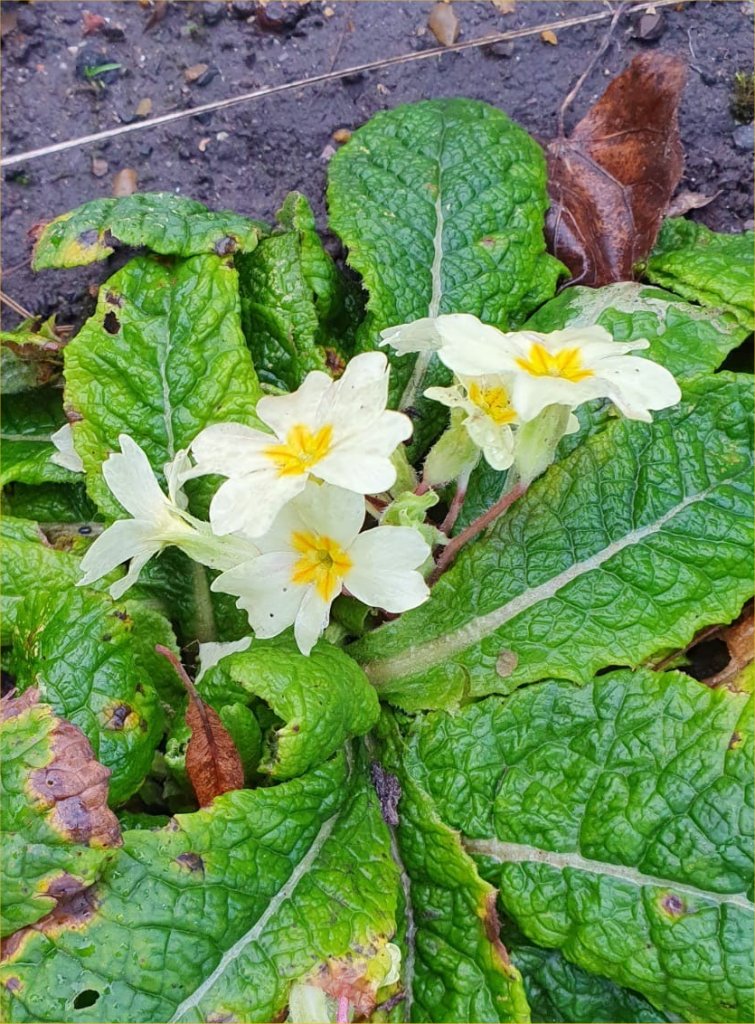
Primrose (Primula vulgaris)
We grow the English or ‘common’ primrose in the walled gardens, which is the natural pale yellow one that gives its name to the colour Primrose. It is often one of the earliest plants to flower in Spring (the Latin word ‘prima’ means first). Early butterflies like the Brimstone benefit from its nectar. Plants will hybridise (cross) very easily with the garden bedding Primulas that come in lots of different bright colours, so seedlings can come up a surprising colour!
We hope you enjoy a Winter walk around the walled gardens at Charlton House! This month, look out for:
Snowdrop (Galanthus nivalis)
The Latin name for snowdrop is Galanthus, meaning ‘milk flower’. They hang their heads to keep their pollen dry for the winter insects they are adapted to attract. When temperatures reach 10C the outer petals open up and this is the temperature at which winter pollinators like bumble bees can fly! Snowdrop sap contains natural antifreeze which allows them to recover quickly after a frosty night. People who collect snowdrops are called Galanthophiles and they pay huge prices for rare varieties.
Lenten rose (Helleborus orientalis)
The Lenten Rose is a perennial flowering plant and is part of the Buttercup family, so not a rose at all! Its common name comes from the fact it usually flowers between Ash Wednesday and Easter – the period known as Lent. Hellebores (Lenten roses) can be white, pink, purple and green and they cross with each other very easily so all sorts of colours can result. We are trying to keep to the pink ones in the Old Pond Garden and the white ones will go in the Glade.
Silk tassel bush (Garrya elliptica)
This is a vigorous bushy evergreen shrub with silvery-grey leathery leaves, originally from California USA. It is hardy but grows best in a sheltered spot so it loves the Walled Gardens. The male plant has wonderful catkins in Winter/Spring that look like tassels – look closely at the tassels, they have an amazing structure. The female plant is less commonly seen (we don’t have one here) but produces purple/brown fruits in summer.
The 2023 Autumn Show was held on Monday 18 September in the Old Library of Charlton House. We counted 74 attendees and there were nearly 100 wonderful entries across all the classes.
CABAHS Autumn Show 2023
Judges Vija, Jason and Terry shared the task between them and explained the reasons for their choices of ‘Best in Class’ winners and ‘Highly Commended’ entries, as well as their final choice for Best in Show.
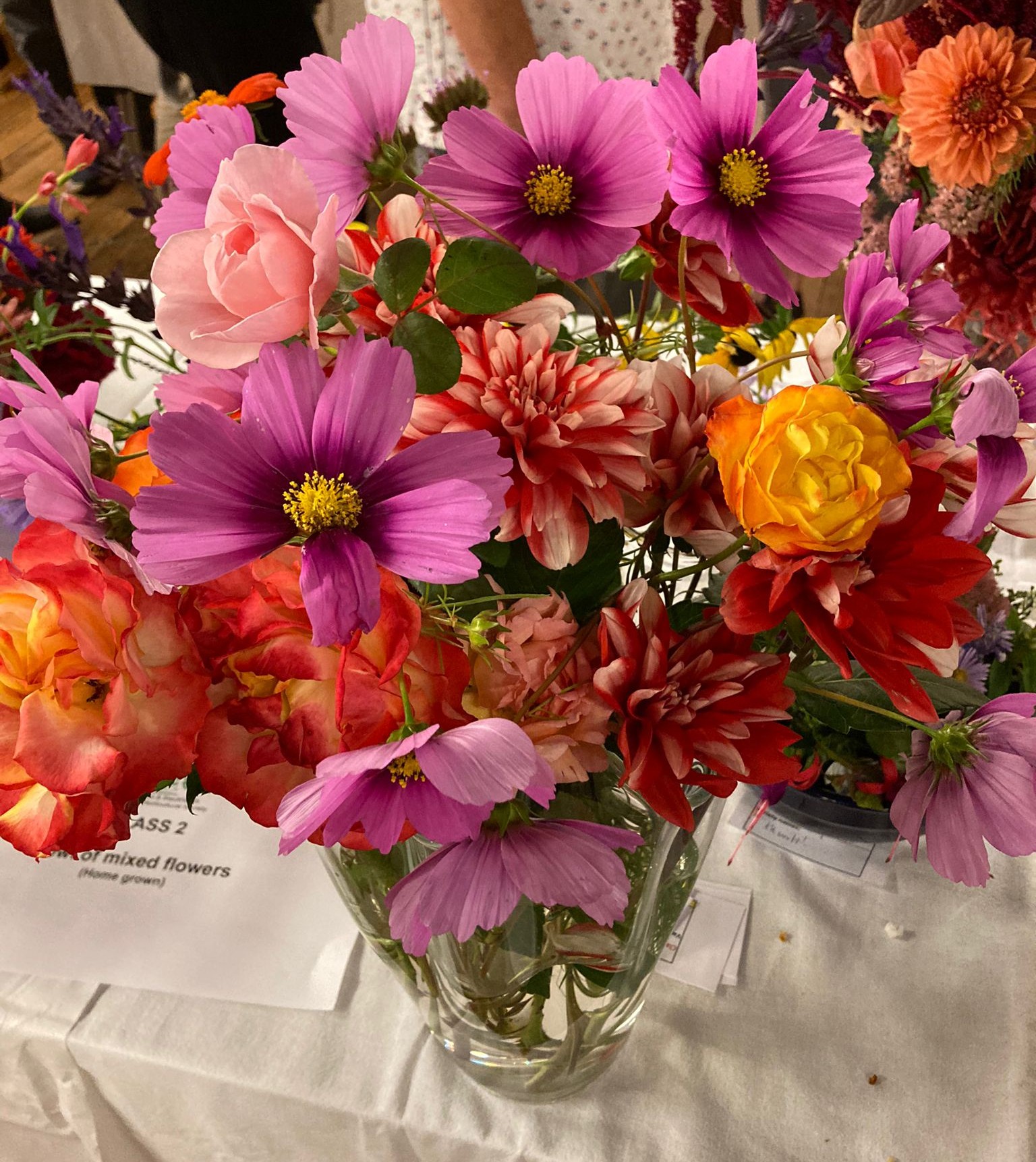
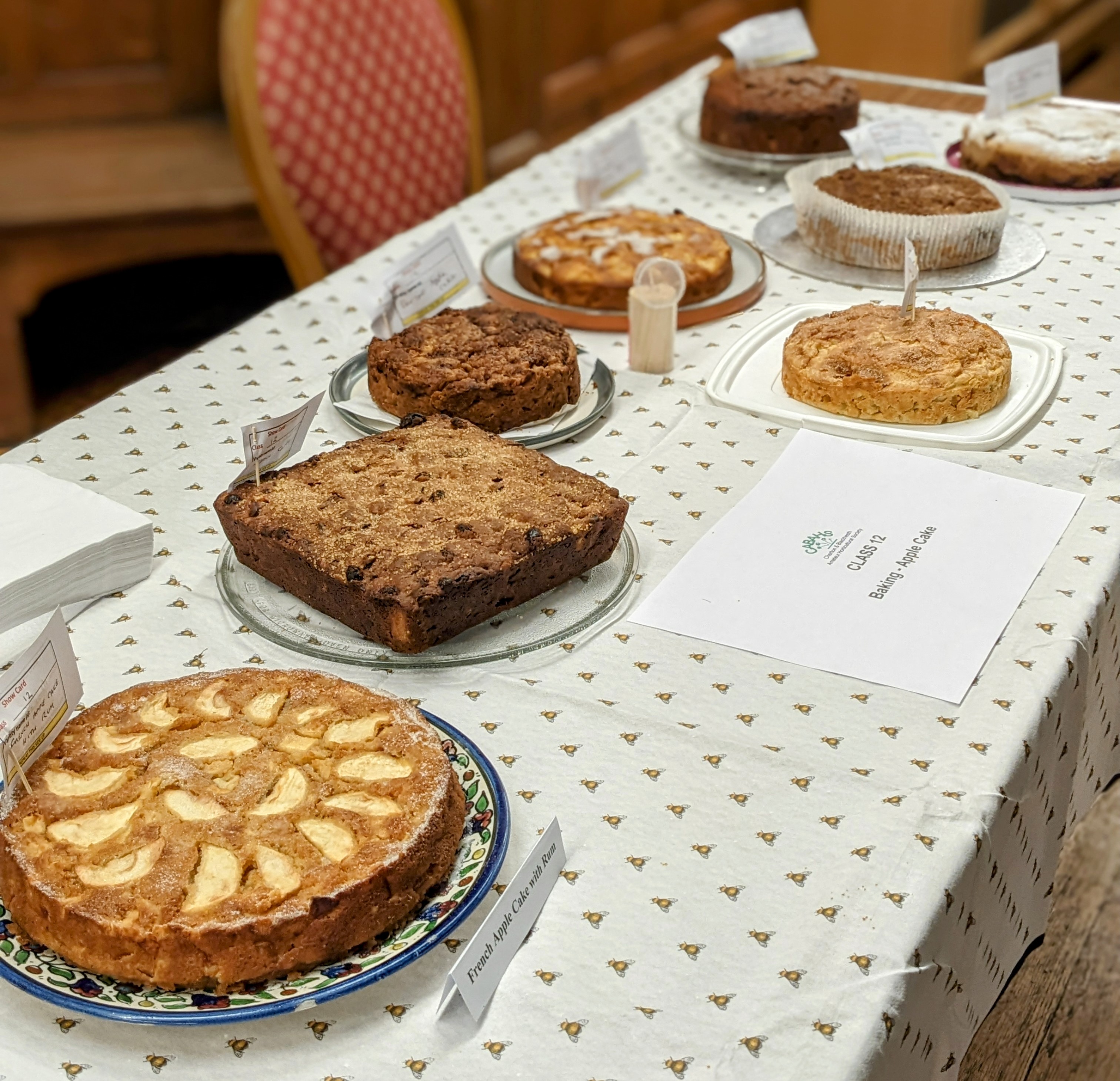
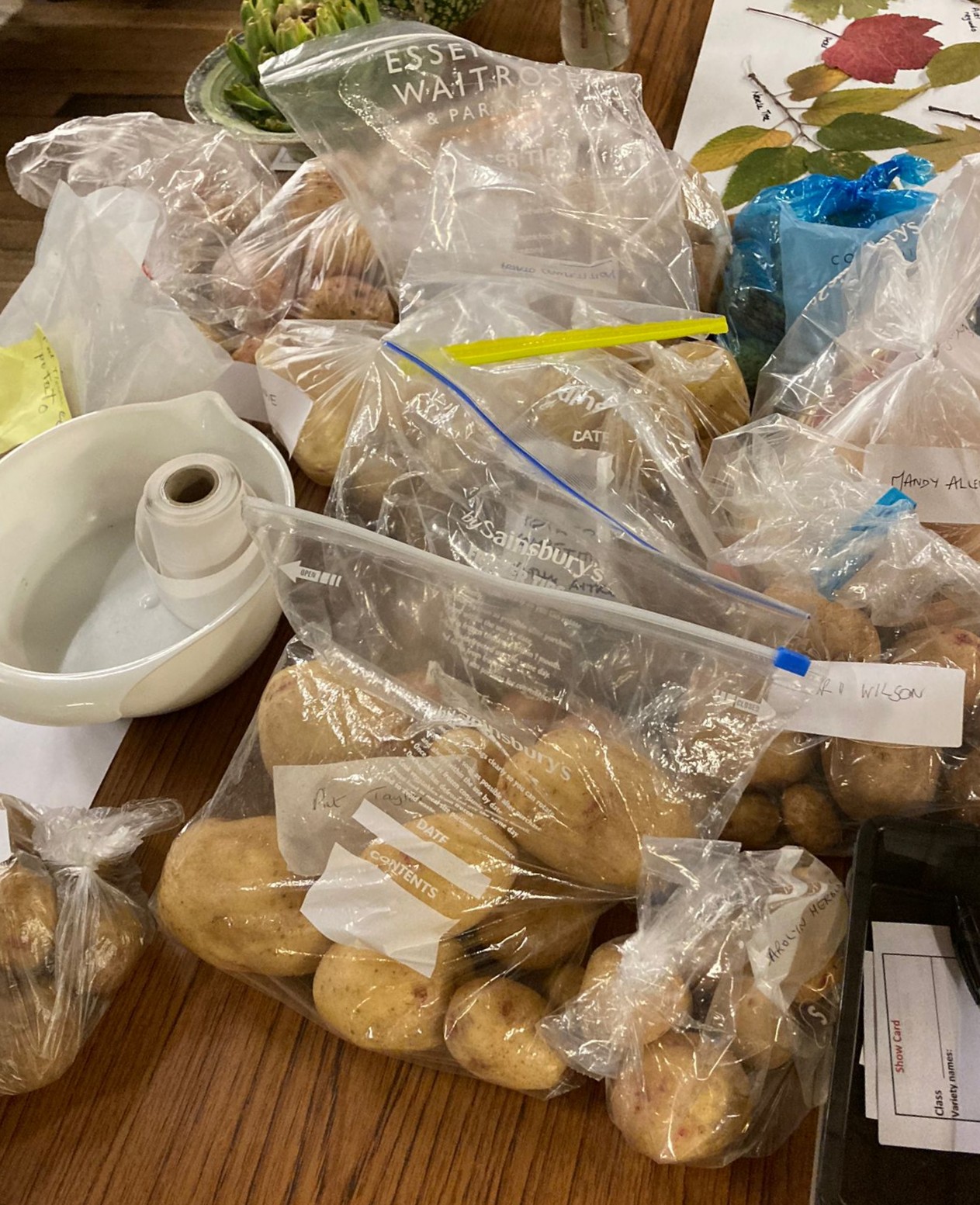
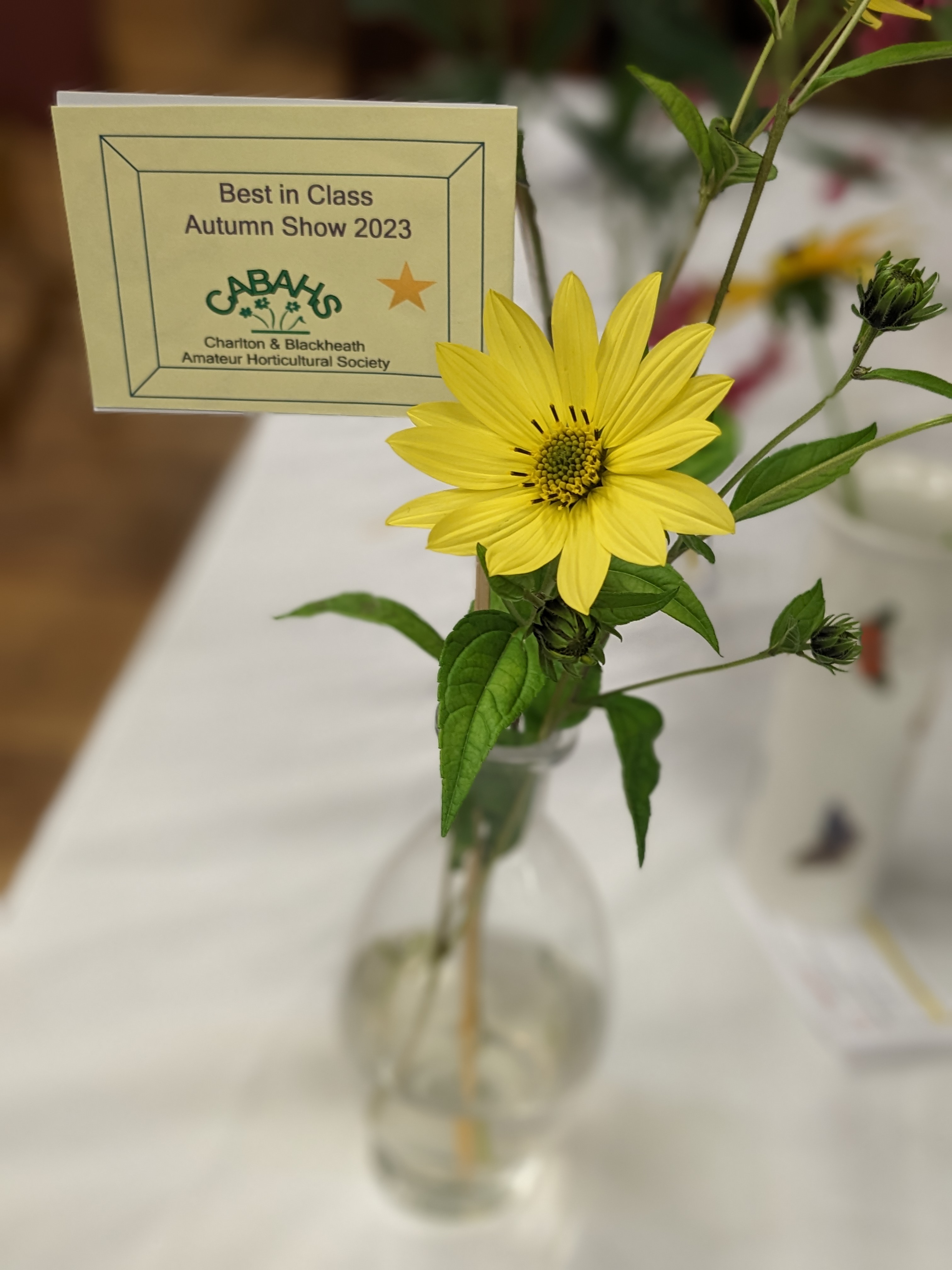
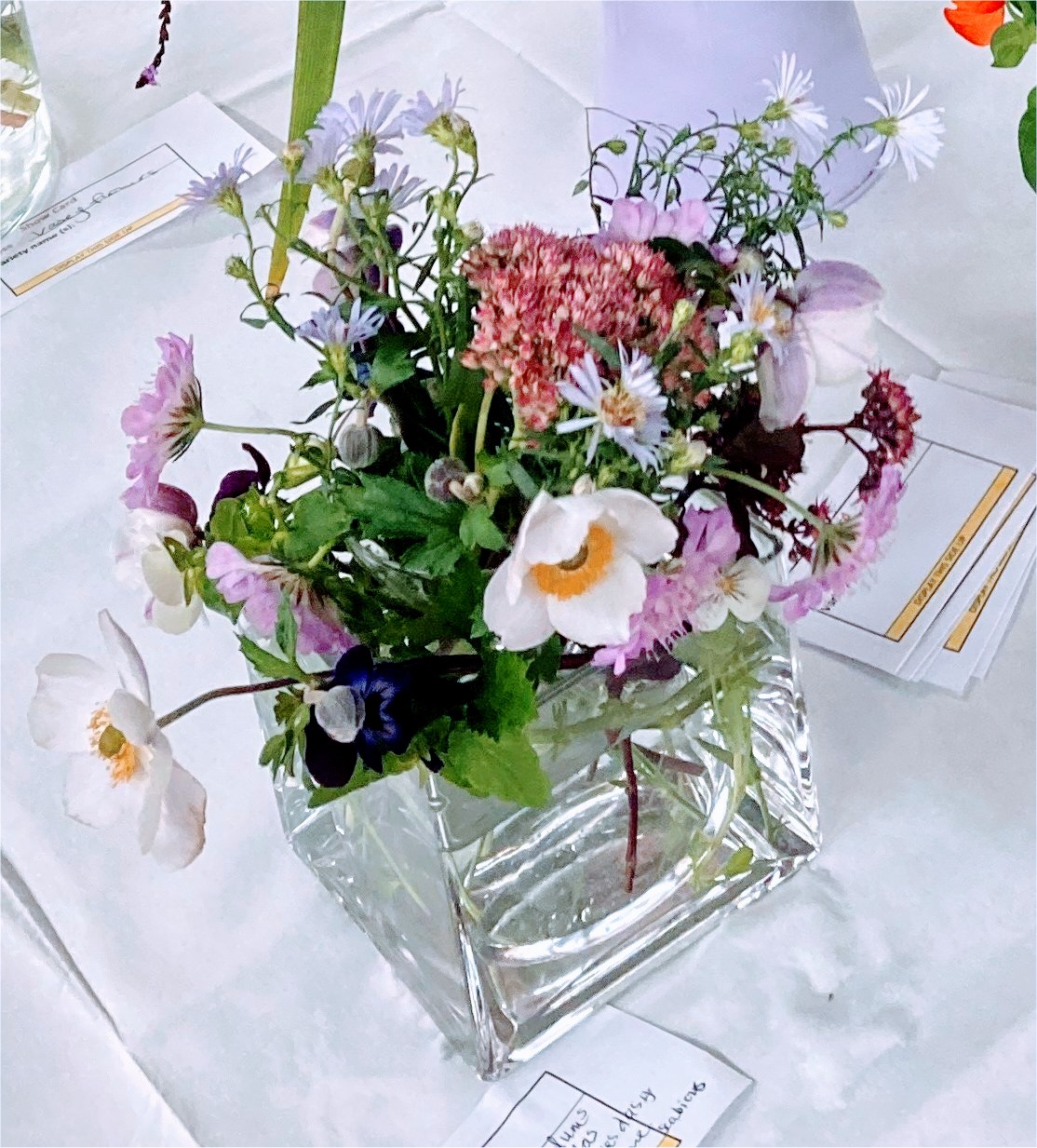
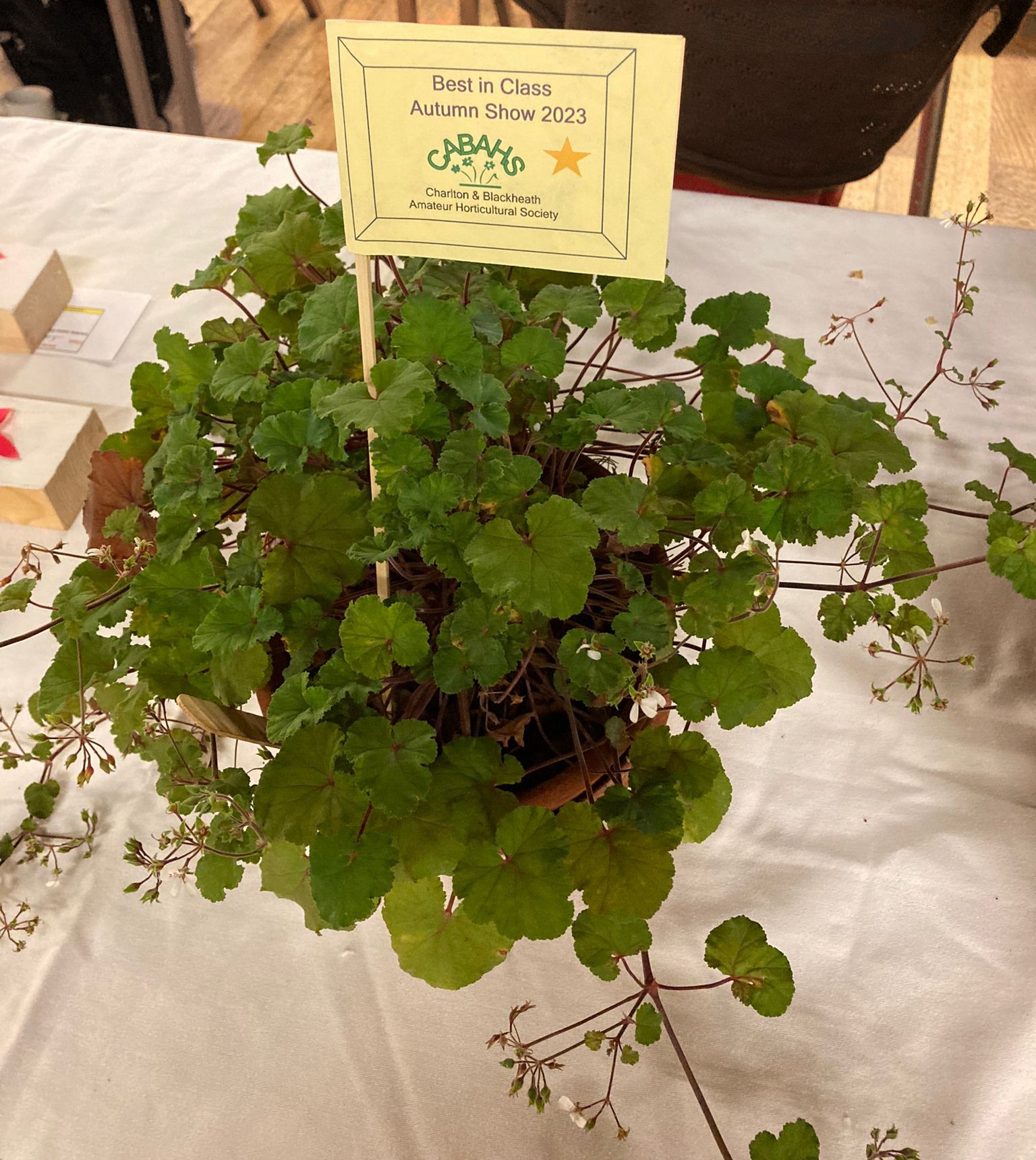
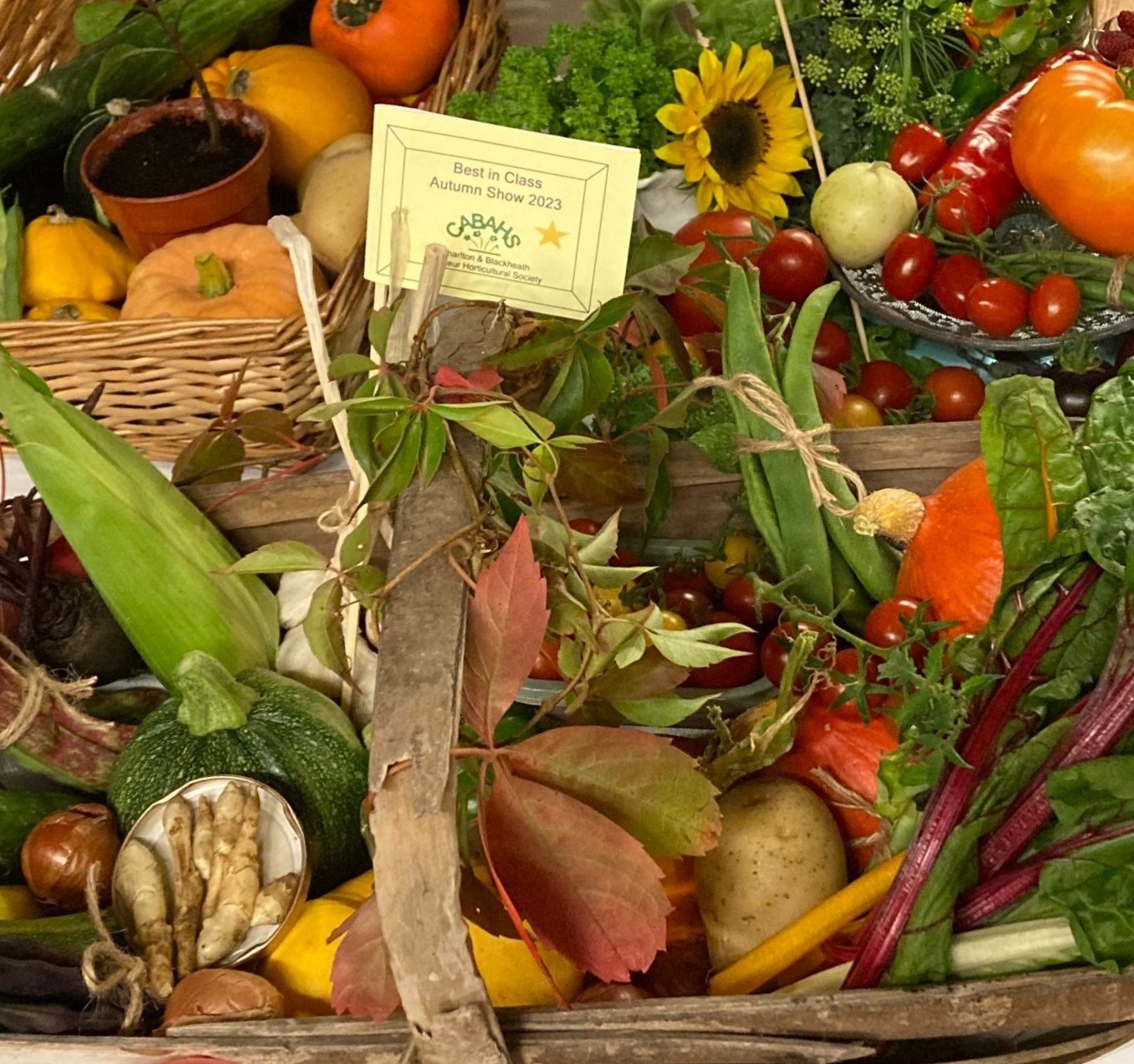
Some entries for Class 1: Vase of flowers (3 stems of 1 cultivar)An entry for Class 2: Bowl of mixed flowersWinner of Class 6: Ornamental pot plant – detailHighly commended in Class 8: Display of vegetable (mixed)Class 12: Apple Cake entriesPotato competition entries waiting to be weighedAn entry for Class 14: the wildcard (should have been for Class 15: potato competition, but it was never planted!)
Classes and winners:
Vase of flowers, 3 stems of 1 cultivar: Mandy O
Bowl of mixed flowers (emphasis on quality of flowers, not arrangement): Jean R
Vase of shrubs or foliage, 3 or more stems, mixed varieties: Terry G
Display of ornamental seed heads: Terry G
Five Fuchsia blooms, single variety or mixed (flower heads only): Ruth Y
Ornamental pot plant (incl. cacti & succulents): Anna L
Display of fruit, any mixed: Kathy A
Display of vegetables, mixed: Annie H
Tomatoes (dish of 5): Ann F
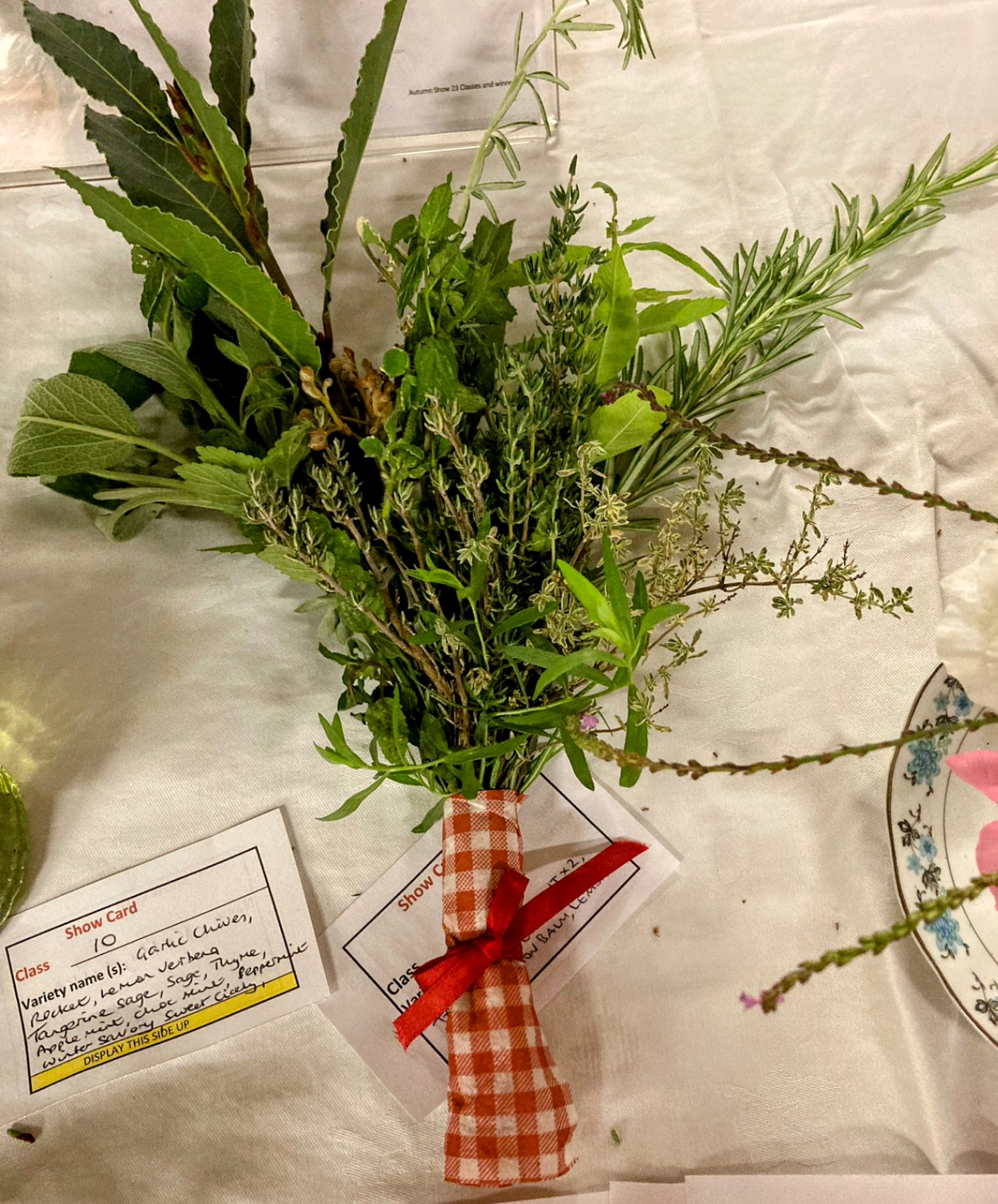
Display of herbs: Ruth Y
Preserves – jam, jelly or marmalade, chutney or relish: Fran A
Baking – Apple cake: Carole F
Floral Arrangement – display in a tea cup, all flowers to be home grown (emphasis on floral arrangement): Viv P
Wildcard: Joe F
Competition – yield from one potato supplied in April: Pat T (1392g!)
Best in Class 1: 3 stems of one cultivarBest in Class 2: Bowl of mixed flowersBest in Class 3: Vase of shrubs or foliageBest in Class 5: Fuchsia bloomsBest in Class 6: Ornamental pot plantBest in Class 7: Display of mixed fruitBest in Class 8: Display of mixed vegetablesBest in Class 9: TomatoesBest in Class 10: Display of herbsBest in Class 12: Baking – apple cakersBest in Class 13: Floral display in a teacupixed flowersBest in Class 14: The Wilcard
Trophies and awards:
Crystal Fuchsia bowl for Class 5 Five Fuchsia blooms: Ruth Y Silver Spade for Class 8 Display of Vegetables: Annie H CABAHS biro for Class 14 Wildcard: Joe F and of course Packet of crisps for Class 15 Potato competition: Pat T
Annie H – winning vegetable displayJoe F – winning wildcard entryPat T – winner of the potato competitionPat K – Best in Show!
And finally:
The Best in Show award went to Pat K’s beautiful display of herbs.
Best in Show, Autumn 2023! Pat K’s unusual display of (mainly) flowering herbs
Winners awarded and prizes given, it was time for everyone to sample the cakes!
We hope you enjoy walking around the walled gardens at Charlton House! This month, look out for:
Night moth Salvia (Salvia nachtvlinder)
With velvety plum-purple flowers, this Salvia is attractive to moths and other pollinating insects and flowers over a long period – well into late Autumn. It has deliciously blackcurrant-scented leaves and is said to protect roses against black spot when it is planted under them.
Michaelmas daisy (Aster x frikartii ‘Monch’)
A bushy perennial with clusters of yellow-centred, lavender-blue daisies that flower right through the Autumn, it is very attractive to pollinators. One of the most reliable and popular Michaelmas daisies (so called because they flower at the time of the feast of Michaelmas on 29 September), it was bred by a Swiss nurseryman called Frikart and named ‘Monch’ after a Swiss mountain.
















 Charlton and Blackheath Amateur Horticultural Society