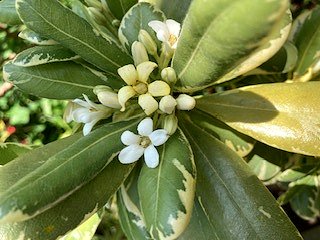
What to look out for in the Old Pond Garden: February 2024

We hope you enjoy a Winter walk around the walled gardens at Charlton House! This month, look out for:

Snowdrop (Galanthus nivalis)

Galanthus nivalis (snowdrop) in the Old Pond Garden, Charlton House, February 2024

The Latin name for snowdrop is Galanthus, meaning ‘milk flower’. They hang their heads to keep their pollen dry for the winter insects they are adapted to attract. When temperatures reach 10C the outer petals open up and this is the temperature at which winter pollinators like bumble bees can fly! Snowdrop sap contains natural antifreeze which allows them to recover quickly after a frosty night. People who collect snowdrops are called Galanthophiles and they pay huge prices for rare varieties.

Lenten rose (Helleborus orientalis)

Helleborus orientalis (hellebore / Lenten rose) in the Old Pond Garden, Charlton House, February 2024

The Lenten Rose is a perennial flowering plant and is part of the Buttercup family, so not a rose at all! Its common name comes from the fact it usually flowers between Ash Wednesday and Easter – the period known as Lent. Hellebores (Lenten roses) can be white, pink, purple and green and they cross with each other very easily so all sorts of colours can result. We are trying to keep to the pink ones in the Old Pond Garden and the white ones will go in the Glade.

Silk tassel bush (Garrya elliptica)

Garrya elliptica (silk tassel bush) in the Old Pond Garden, Charlton House, February 2024

This is a vigorous bushy evergreen shrub with silvery-grey leathery leaves, originally from California USA. It is hardy but grows best in a sheltered spot so it loves the Walled Gardens. The male plant has wonderful catkins in Winter/Spring that look like tassels – look closely at the tassels, they have an amazing structure. The female plant is less commonly seen (we don’t have one here) but produces purple/brown fruits in summer.

Continue reading What to look out for in the Old Pond Garden: February 2024

Autumn Flower, Fruit and Vegetable Display 2023

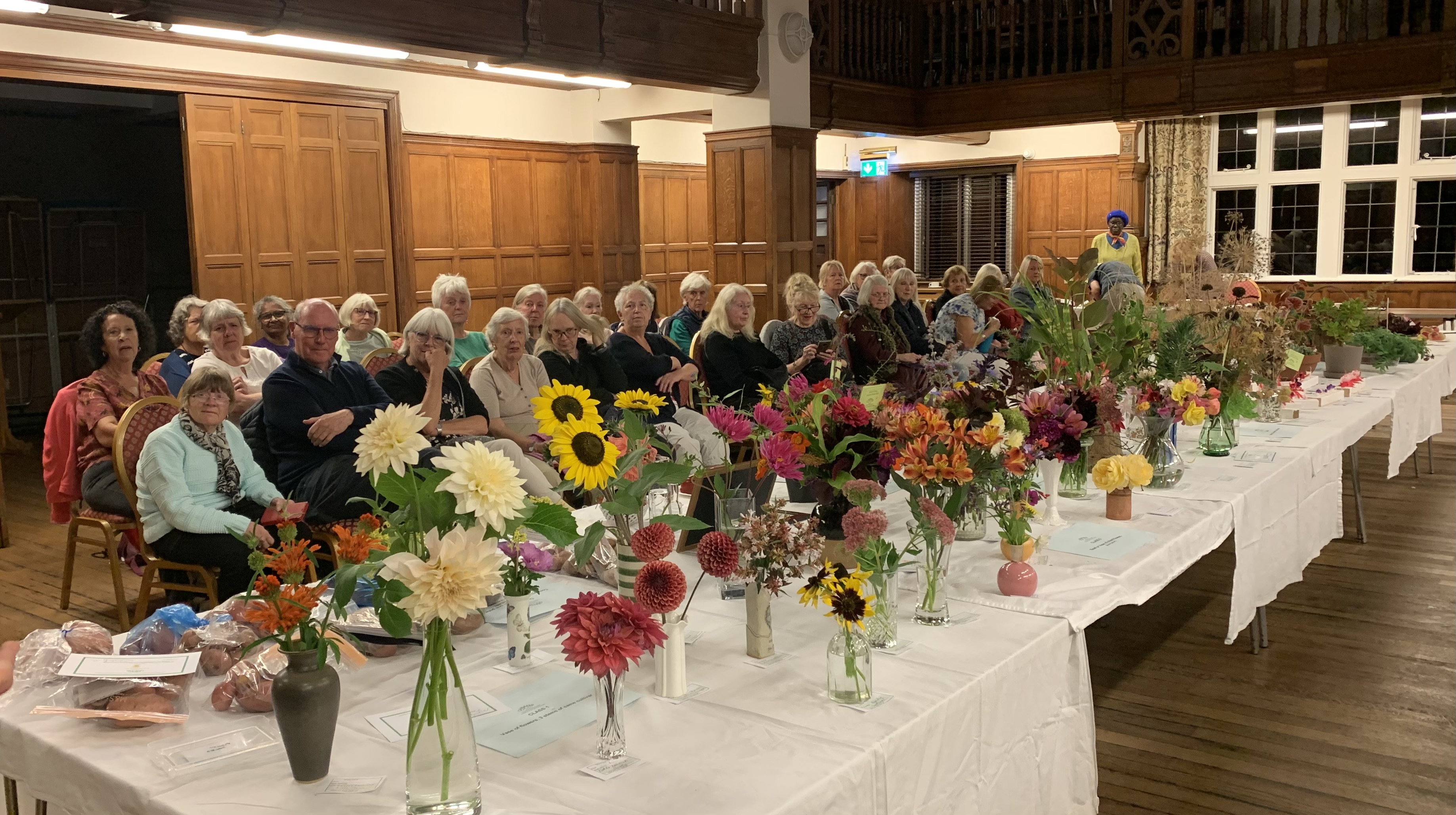
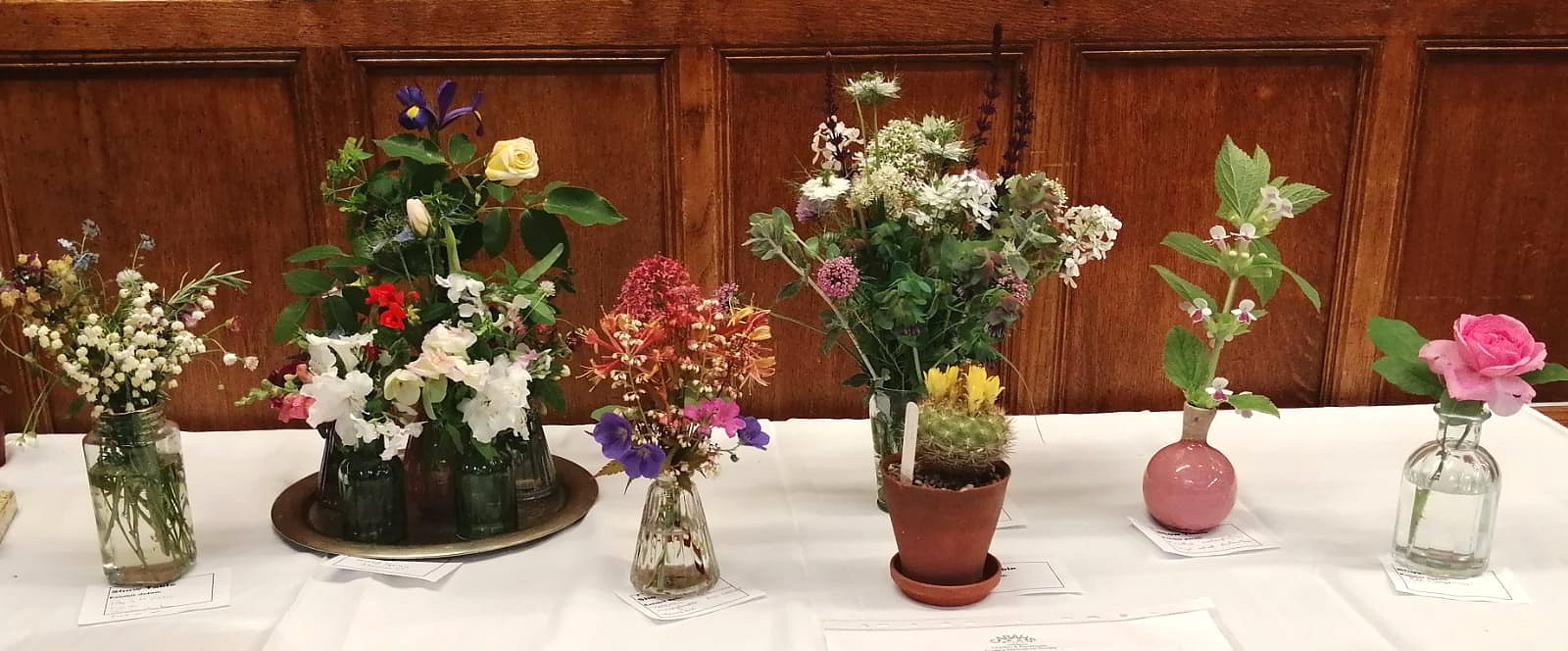
The 2023 Autumn Show was held on Monday 18 September in the Old Library of Charlton House. We counted 74 attendees and there were nearly 100 wonderful entries across all the classes.

CABAHS Autumn Show 2023

Judges Vija, Jason and Terry shared the task between them and explained the reasons for their choices of ‘Best in Class’ winners and ‘Highly Commended’ entries, as well as their final choice for Best in Show.

Classes and winners:

  1. Vase of flowers, 3 stems of 1 cultivar: Mandy O
  2. Bowl of mixed flowers (emphasis on quality of flowers, not arrangement): Jean R
  3. Vase of shrubs or foliage, 3 or more stems, mixed varieties: Terry G
  4. Display of ornamental seed heads: Terry G
  5. Five Fuchsia blooms, single variety or mixed (flower heads only): Ruth Y
  6. Ornamental pot plant (incl. cacti & succulents): Anna L
  7. Display of fruit, any mixed: Kathy A
  8. Display of vegetables, mixed: Annie H
  9. Tomatoes (dish of 5): Ann F
  10. Display of herbs: Ruth Y
  11. Preserves – jam, jelly or marmalade, chutney or relish: Fran A
  12. Baking – Apple cake: Carole F
  13. Floral Arrangement – display in a tea cup, all flowers to be home grown (emphasis on floral arrangement): Viv P
  14. Wildcard: Joe F
  15. Competition – yield from one potato supplied in April: Pat T (1392g!)

Trophies and awards:

Crystal Fuchsia bowl for Class 5 Five Fuchsia blooms: Ruth Y
Silver Spade for Class 8 Display of Vegetables: Annie H
CABAHS biro for Class 14 Wildcard: Joe F
and of course
Packet of crisps for Class 15 Potato competition: Pat T

And finally:

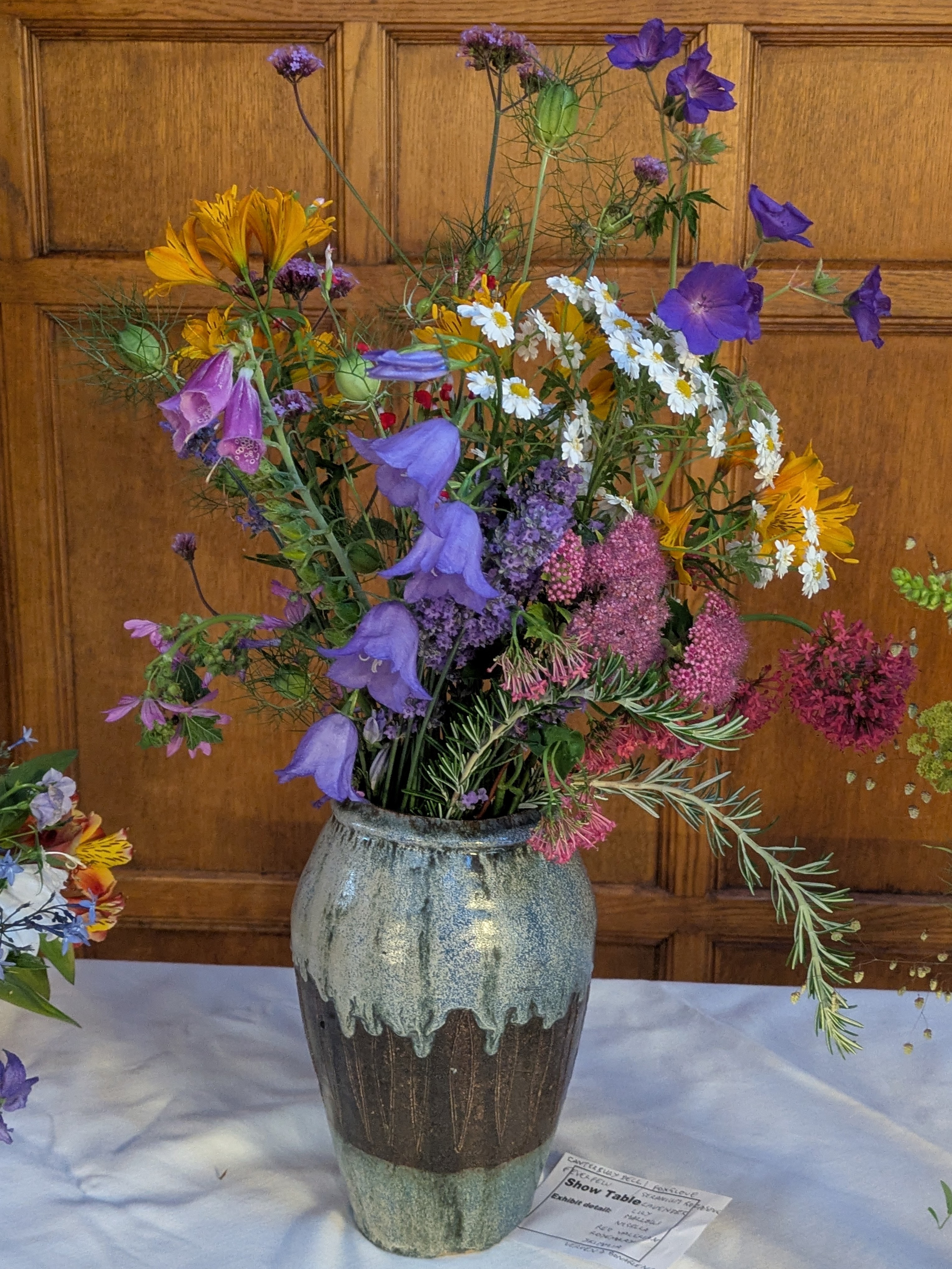
The Best in Show award went to Pat K’s beautiful display of herbs.

Best in Show, Autumn 2023! Pat K's unusual display of (mainly) flowering herbs, in Class 10.
Best in Show, Autumn 2023! Pat K’s unusual display of (mainly) flowering herbs

Winners awarded and prizes given, it was time for everyone to sample the cakes!

Ali

What to look out for in the Old Pond Garden: September 2023

We hope you enjoy walking around the walled gardens at Charlton House!
This month, look out for:

Night moth Salvia (Salvia nachtvlinder)

Salvia 'Nachtvlinder' in the Old Pond Garden, Charlton House, September 2023

With velvety plum-purple flowers, this Salvia is attractive to moths and other pollinating insects and flowers over a long period – well into late Autumn.
It has deliciously blackcurrant-scented leaves and is said to protect roses against black spot when it is planted under them.

Michaelmas daisy (Aster x frikartii ‘Monch’)

Aster x frikartii 'Monch' in the Old Pond Garden, Charlton House, September 2023

A bushy perennial with clusters of yellow-centred, lavender-blue daisies that flower right through the Autumn, it is very attractive to pollinators. One of the most reliable and popular Michaelmas daisies (so called because they flower at the time of the feast of Michaelmas on 29 September), it was bred by a Swiss nurseryman called Frikart and named ‘Monch’ after a Swiss mountain.

Continue reading What to look out for in the Old Pond Garden: September 2023

What to look out for in the Old Pond Garden: August 2023

We hope you are enjoying a walk around the walled gardens at Charlton House! This month, look out for:

Coneflower (Echinacea purpurea ‘Magnus’)

Echinacea purpurea in the Old Pond Garden, Charlton House, August 2023

Coneflowers are part of the daisy family, originally from North America. Plains dwellers used the fresh roots and root juice to treat toothache and snake bites. Today many people take Echinacea supplements to prevent colds and boost their immune systems. ‘Magnus’ has large pink flowers and orange-brown central cones – bumblebee heaven!

Globe Thistle (Echinops ritro)

Echinops ritro in the Old Pond Garden, Charlton House, August 2023

With spiky leaves and bristly metallic blue flowers, globe thistles make a great architectural choice for the back of a sunny border. The flowers are extremely attractive to bees, butterflies and other insects and it makes a good cut flower. This is a plant that we prefer to cut the seed heads off before they drop their seeds – they spread VERY easily!

Continue reading What to look out for in the Old Pond Garden: August 2023

What to look out for in the Old Pond Garden: June 2023

We hope you are enjoying a walk around the walled gardens at Charlton House! This month, look out for:

Catchfly (Silene armeria ‘Electra’)

Silene armeria 'Electra' in the Old Pond Garden, Charlton House, June 2023

Blue-grey leaves and hot pink flowers for weeks on end. An annual which self-seeds prolifically. It is called catchfly because there is a sticky area on the stems just below the flowers, which greenfly and small insects get stuck to. Feel it gently with your fingers!

Lamb’s ear (Stachys byzantina)

Lamb's ears (Stachys byzantina) in the Old Pond Garden, Charlton House, June 2023

Lamb’s-ear or woolly hedge nettle, is a species of flowering plant in the mint family, native to Armenia, Iran, and Turkey. Very drought tolerant. Loved by the wool carder bee, which combs or ‘cards’ the leaves to make a hairy nest to lay her eggs.

Continue reading What to look out for in the Old Pond Garden: June 2023

The best way to ripen green tomatoes

Green, orange and red tomatoes

This summer’s heatwave feels like a distant memory now, but it was a good one for ripening lots of tomatoes! However, if you’ve got green ones struggling in the cooler temperatures, here’s BBC Gardener’s World Magazine’s advice on the best way to ripen them: How to ripen late tomatoes.

Using the ethylene released by bananas to help ripen other fruit is a well known method, but while Which? Gardening agree with GW on most points, they differ on the banana:

You may have heard different techniques recommended for ripening green tomatoes, including putting them with a banana, but when Which? Gardening magazine tested different methods we found that putting them in a dark place indoors, such as a drawer, works best. Tomatoes left with bananas were one of the worst methods for causing the tomatoes to rot.

Which? Gardening, How to Grow Tomatoes

Do you use a banana to help ripen tomatoes? Or do you relish the prospect of green tomatoes for cookery? Let us know in the comments.

The Rothschild Nerine Collection

Nerine bowdenii

CABAHS member Melanie told us about an unusual collection:  Exbury Gardens in Hampshire, perhaps best known for the springtime magnificence of its rhododendrons, is also home to a special collection of Nerines.

If you can visit Exbury, the Nerine collection is on view from 4 – 30 October.

As it’s quite a long way to travel, you might instead like to see photographer Lisa Creagh’s website, where she has captured the extraordinary quality of this South African native ‘Jewel lily’ in some stunning images: The Rothschild Nerines. Lisa gives a super description of the collection’s history as well as describing the drama of the Nerines’ lifecycle.

Thinking outside the box

One of the things I like best about RHS Wisley is how useful it is – beautiful to walk around, pleasant to visit, but also how just being there can answer a multitude of gardening questions: ‘Will this plant survive outside?’ ‘Just how big can an Indian Bean Tree get?’ or ‘How best can I display alpine plants in my small garden?’

But one of the most useful parts of RHS Wisley helps to answer a question that has become louder and more frequent with every passing year, especially here in the South East:

‘What can I use to replace my ravaged box hedges?’

'Thinking Outside the Box' garden at RHS Wisley May 2022
Continue reading Thinking outside the box

Coach trip to RHS Wisley

On Wednesday 11 May, a coachload of CABAHS members went on a much anticipated trip to RHS Wisley. This was my first experience of a CABAHS coach trip and it was brilliantly organised by Anna (thank you Anna!).

RHS Wisley May 2022
Just before the rain started… RHS Wisley May 2022

After experiencing dry weather for weeks, the forecast was for rain mid-afternoon, so it felt important to pack as much in as possible before the rain started. Several members had signed up for a tour with a Wisley volunteer, but as the tours started, so did the rain – several hours earlier than forecast! We were, however, undeterred.

Continue reading Coach trip to RHS Wisley

May 2022: Val Bourne on ‘Butterflies in Gardens’

CABAHS welcomed Val Bourne to speak at our May meeting, sharing her photographs, experience and knowledge of butterflies in the garden. She emphasised that she is not a butterfly expert (but she knows one!), she’s an organic gardener who has spent a lot of time observing butterflies, their habits and preferences – and, sadly, their decline in recent years.

Photograph of the FSC's Butterfly ID chart

As a starting point, Val recommended a book and a tool: ‘The Philips Guide to Butterflies’ and the Field Studies Council’s butterfly identification chart. Butterfly Conservation also provide a range of identification guides online. Photographs of a wide range of species – 24 different ones have been spotted in the Spring Cottage garden – showed us the beauty of even the smallest, brownest examples!

Val explained how useful even a small meadow area is for many species, how some species rely on quite a narrow range of plants for nectar, and how the timing of a butterfly lifecycle is intrinsically linked to the lifecycle of their food plants. She stated that climate change – causing plants to flower at different times – is demonstrably messing up this synchronisation, so as gardeners it’s important to grow a wide range of butterfly-friendly plants to try to mitigate that situation.

Some examples of butterfly-friendly plants, and the butterflies that particularly need or enjoy them:

Continue reading May 2022: Val Bourne on ‘Butterflies in Gardens’