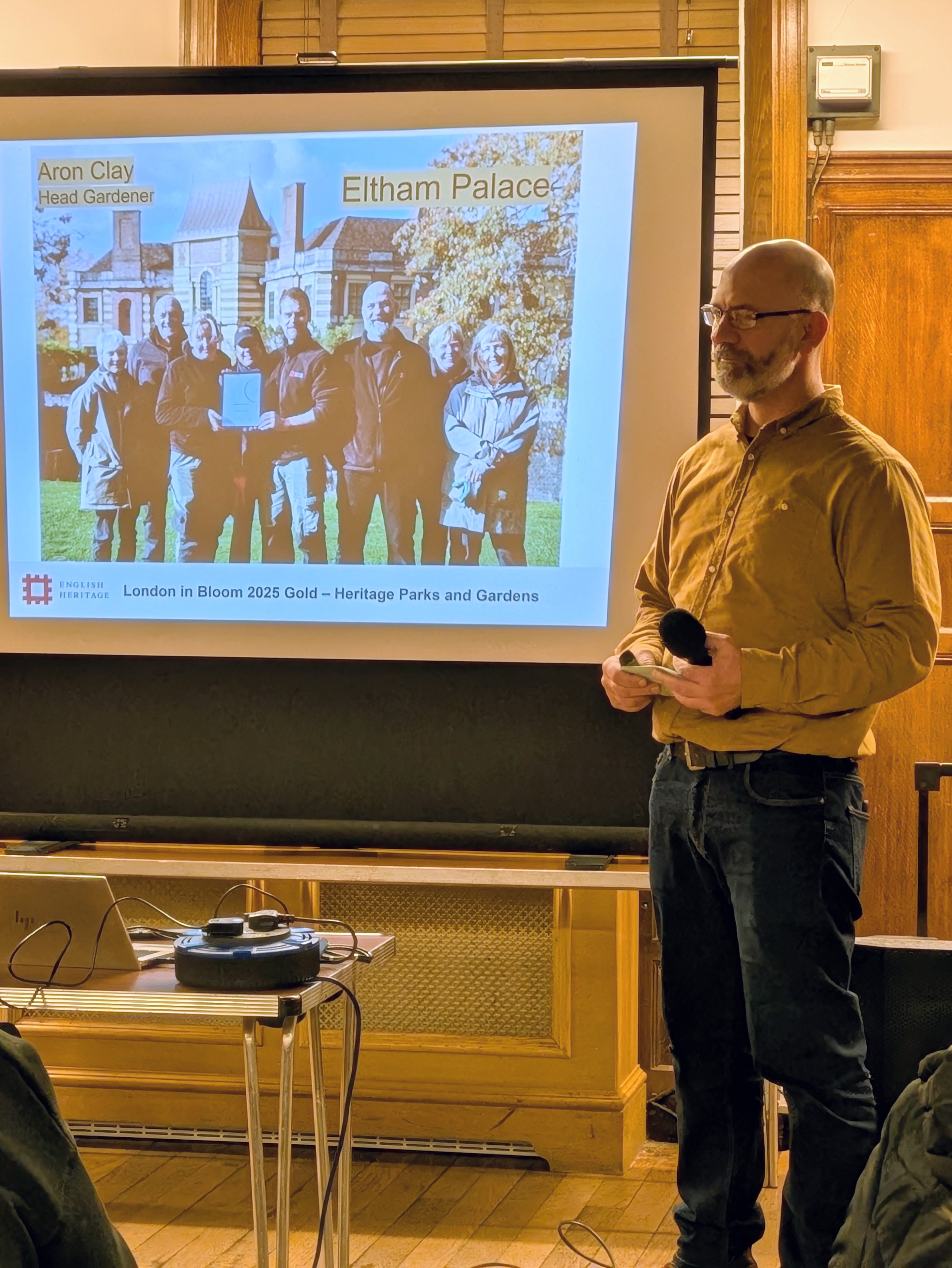
For our last meeting of 2026, Aron Clay, Head Gardener at Eltham Palace gave us a fascinating ‘behind the scenes’ look at what goes into maintaining a historic garden.
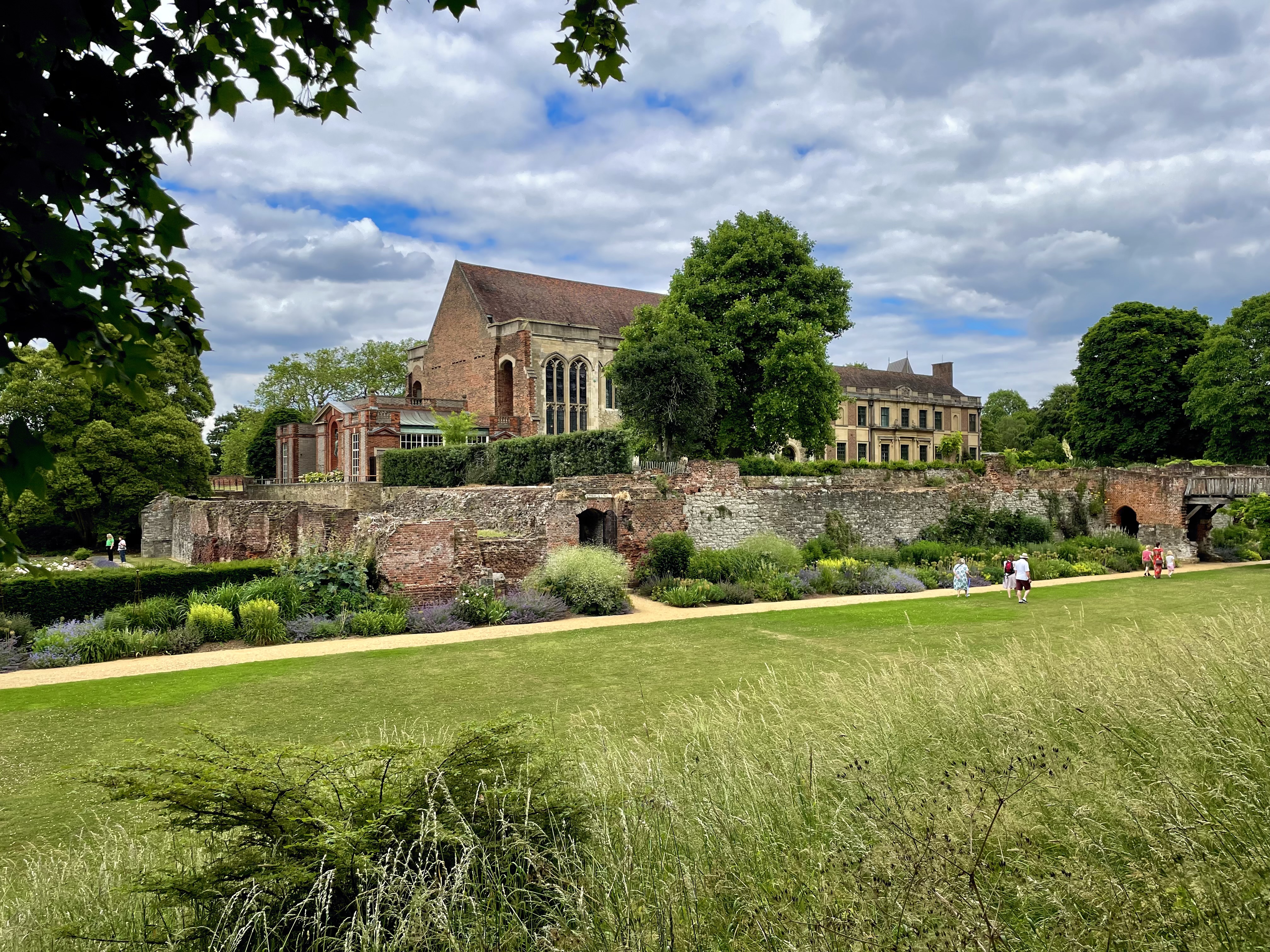
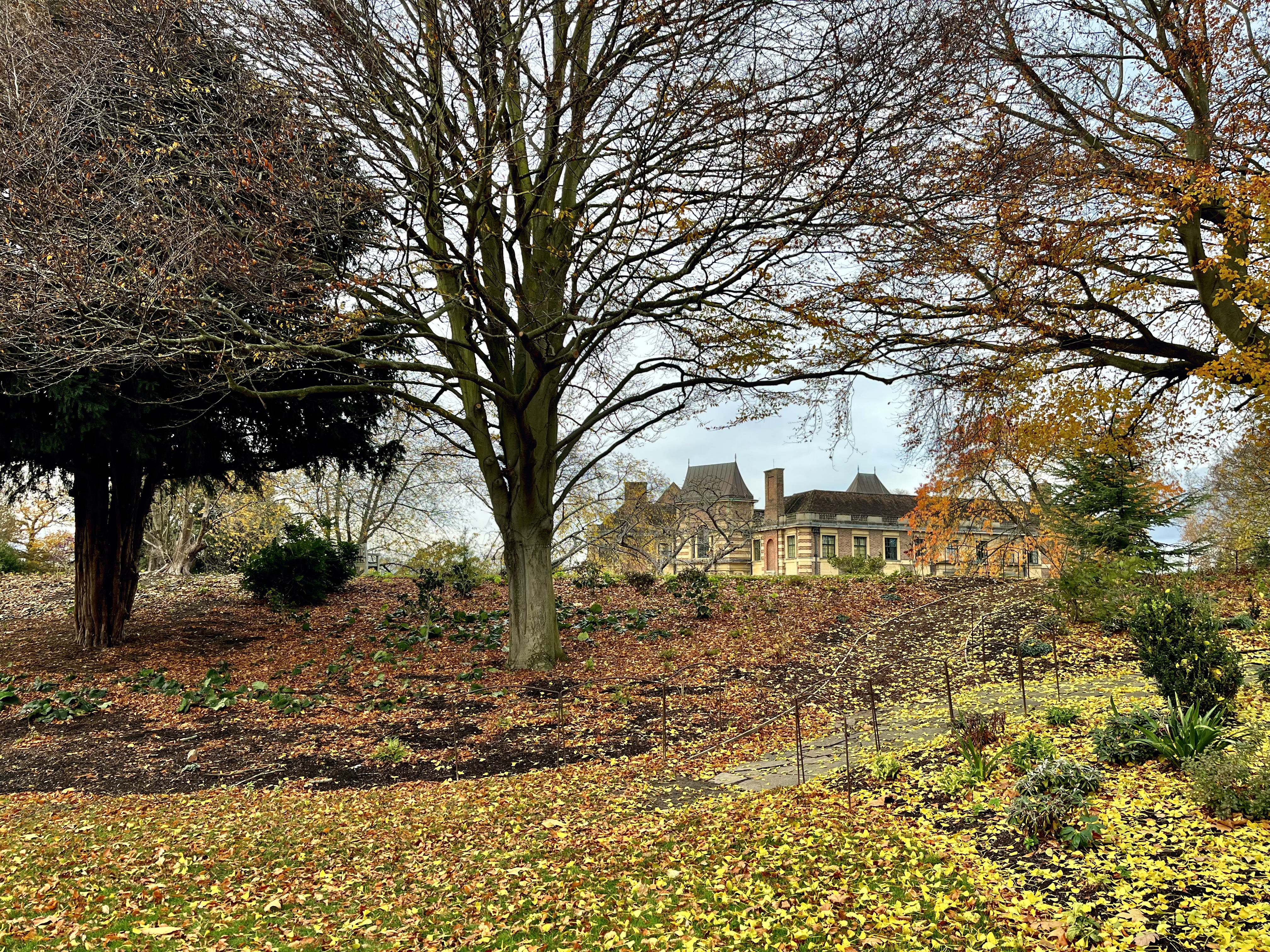
With a rich royal history dating back to medieval and Tudor times, Eltham Palace was largely transformed in the 1930s by millionaires Stephen and Virginia Courtauld when they built a lavish Art Deco home alongside the historic palace. Keen horticulturalists, the Courtaulds also created a variety of garden features including a rock garden, formal rose gardens and a series of Arts and Crafts style garden ‘rooms’.
English Heritage took over Eltham Palace in the 1980s, restoring the interiors of the 20th century house back to how they looked in the brief time of the Courtaulds’ residence, and opening to the public in 1999. The gardens have also been kept in the style created by the Courtaulds, using plants available at that time and excluding modern cultivars. Although source material about the gardens is limited, Stephen Courtauld’s original photographs and cine-film footage show how the gardens looked in the 1930s and ’40s.
Aron has four full-time gardeners and a team of part-time volunteers to maintain the nineteen acre grounds. Seven acres are in the most visited, high profile areas so demand most of their attention for garden maintenance. He is supported by a team at English Heritage to ensure any changes are in keeping with the Courtauld period. The gardens at Eltham Palace have won several awards in recent years including a Gold from London in Bloom and a Bronze Green Impact Award for sustainability.
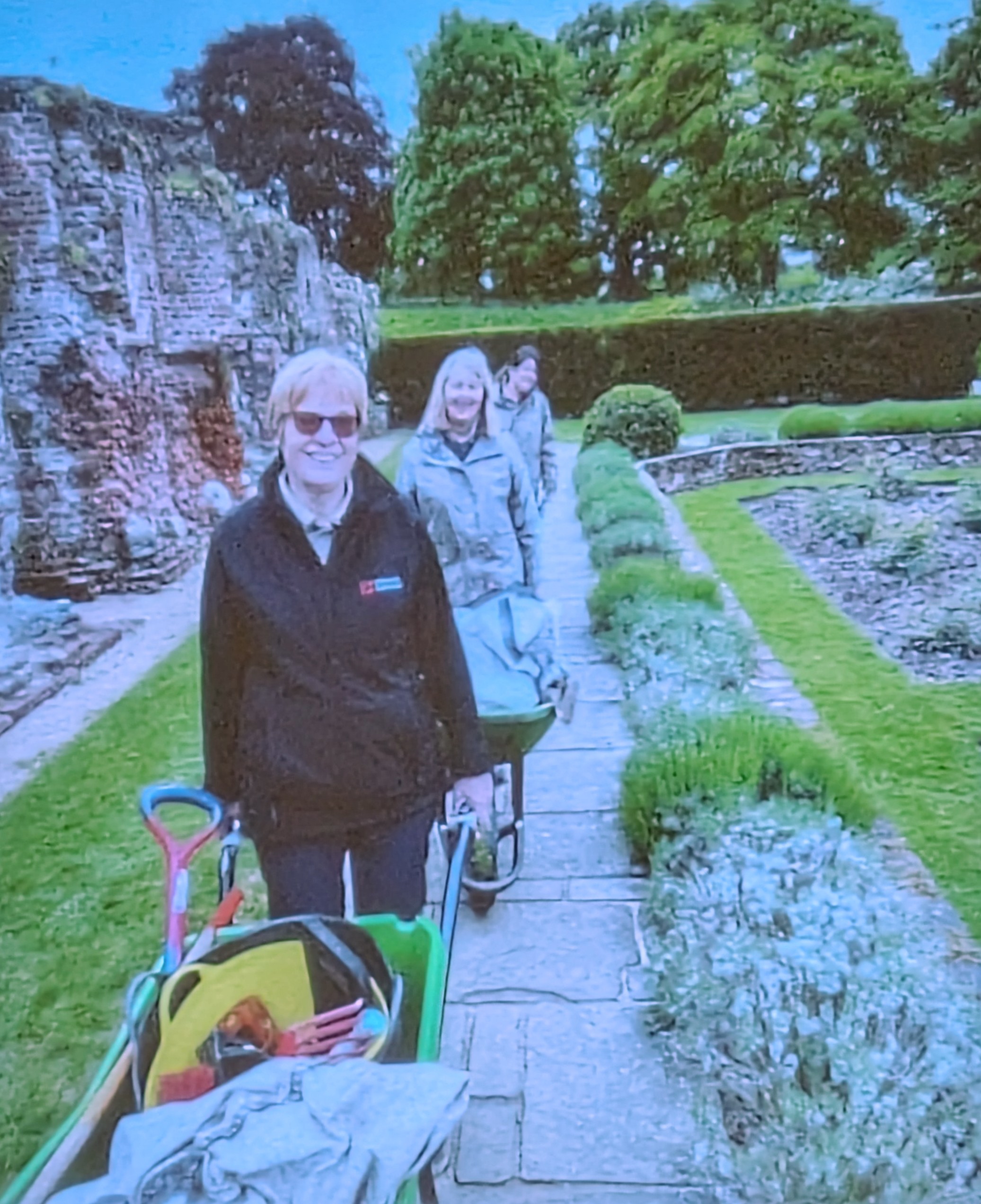
to whom Aron is indebted
Aron took us through four key projects to restore and rejuvenate various parts of the gardens:
Project 1 involved replanting the long North Bank border originally developed as a flower garden by the Courtaulds during their time at Eltham Palace. An established group of cherry trees, donated by the Japanese embassy in 2019, has been under planted with complementary Asiatic themed shrubs, sub-shrubs and perennials. This border has also become home to the national collection of Iris spuria, re-located from Belsay Hall in Northumberland, along side other Iris species such as I. sibirica, the almost black I. crysographes, and I. confusa ‘Alba’ with its bamboo-like foliage. The replanted border provides a long season of interest and reflects the fashion for Japanese and oriental plants popular in the early 20th century.
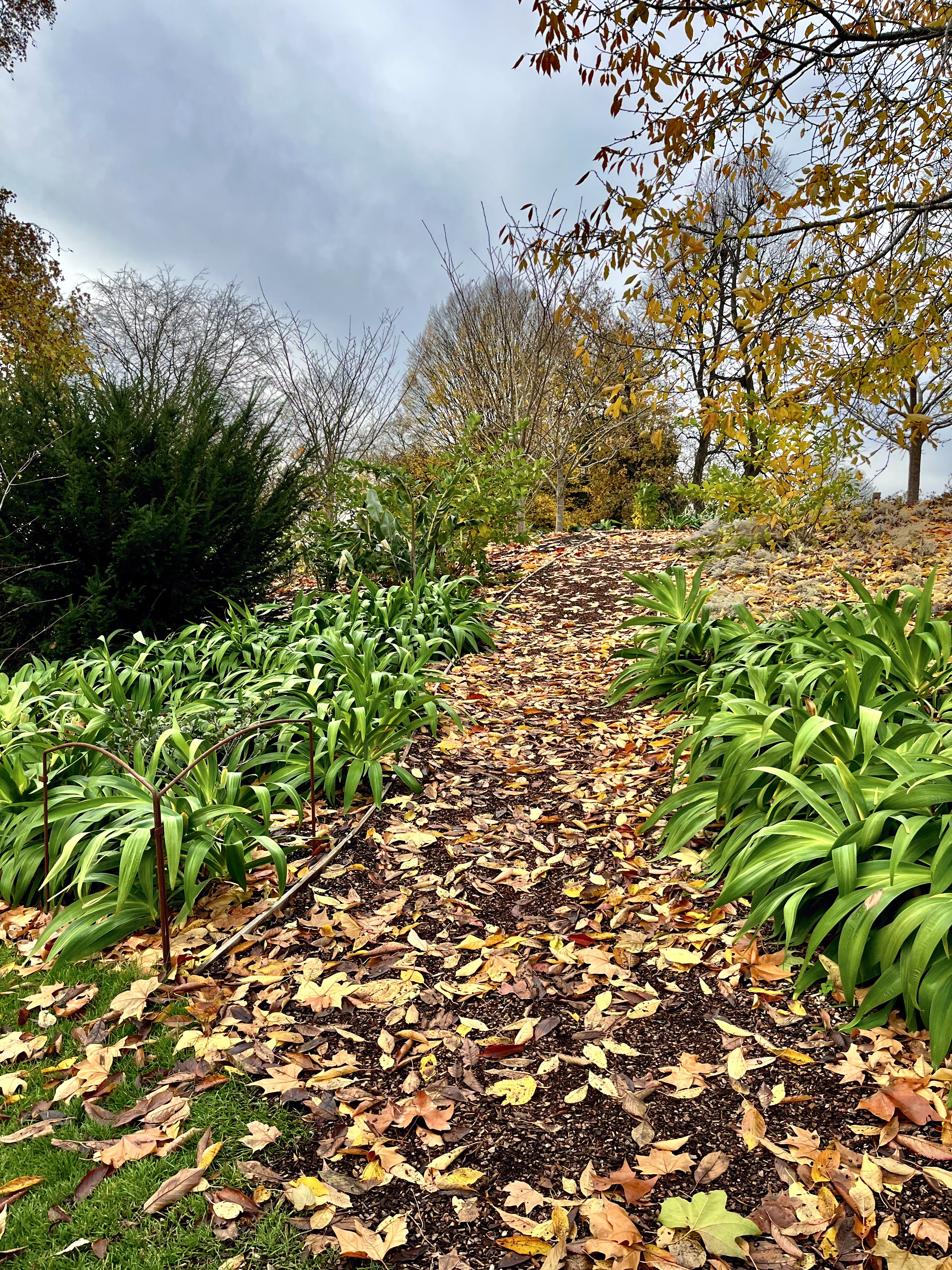
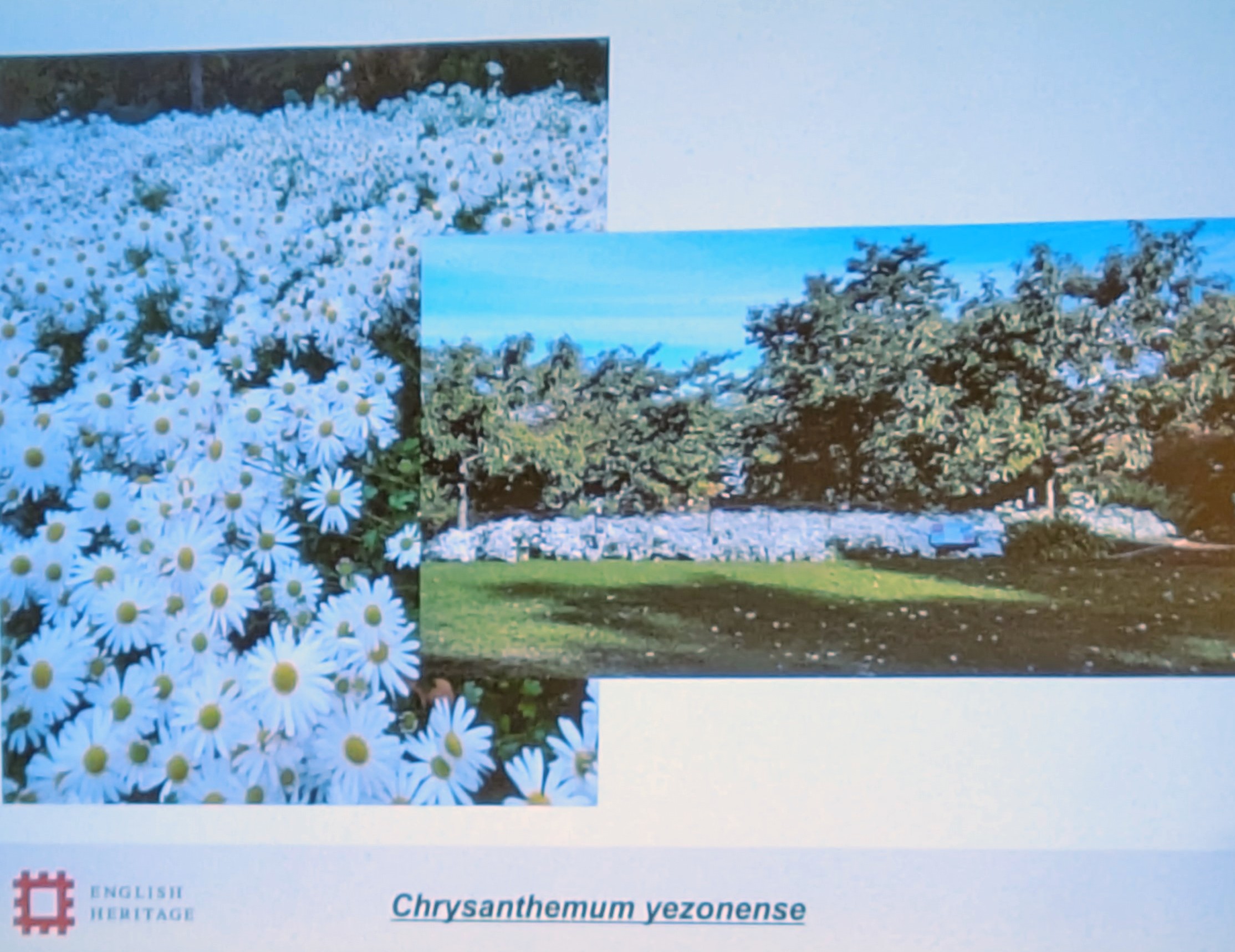
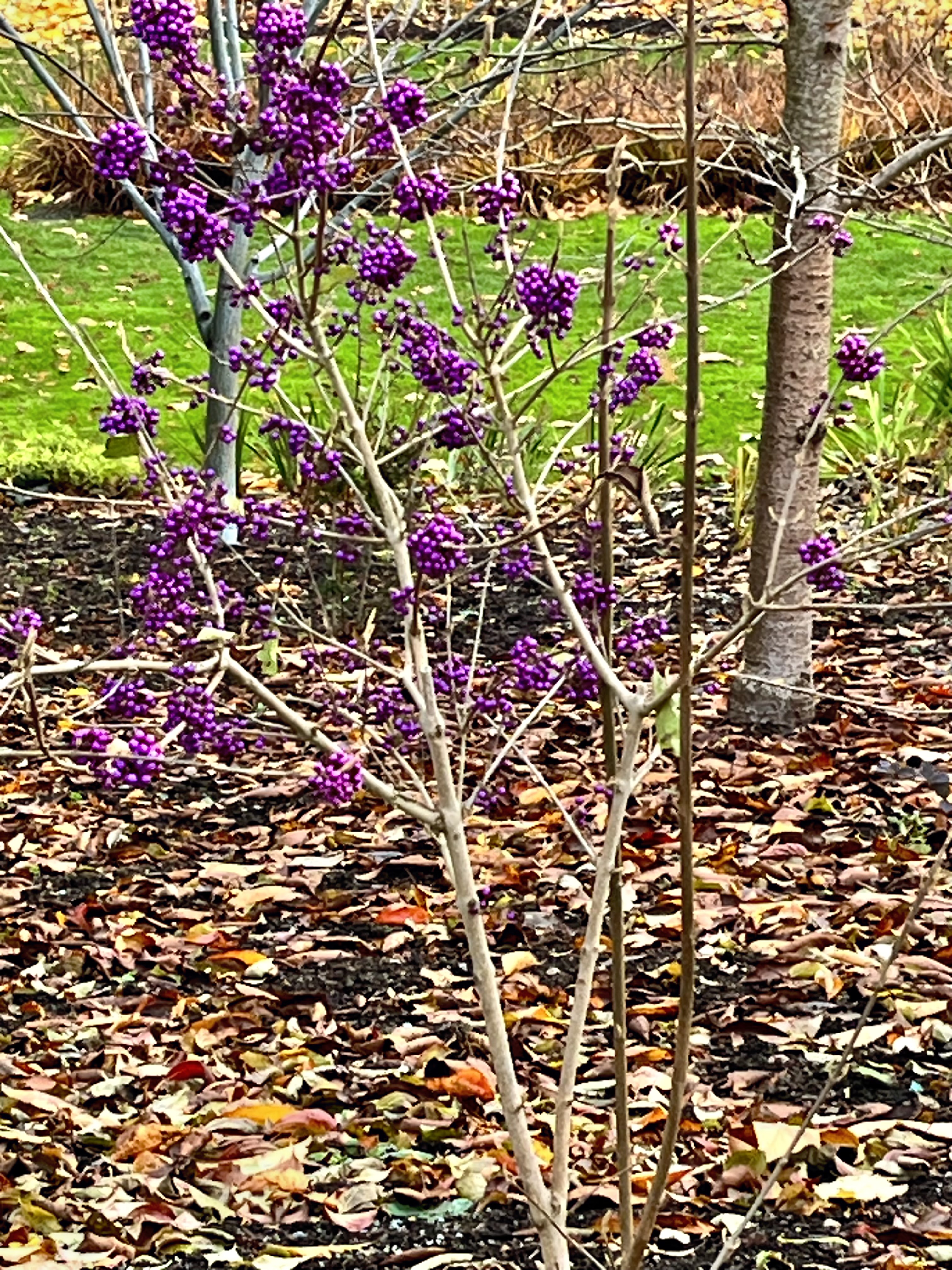
and winter interest from Callicarpa
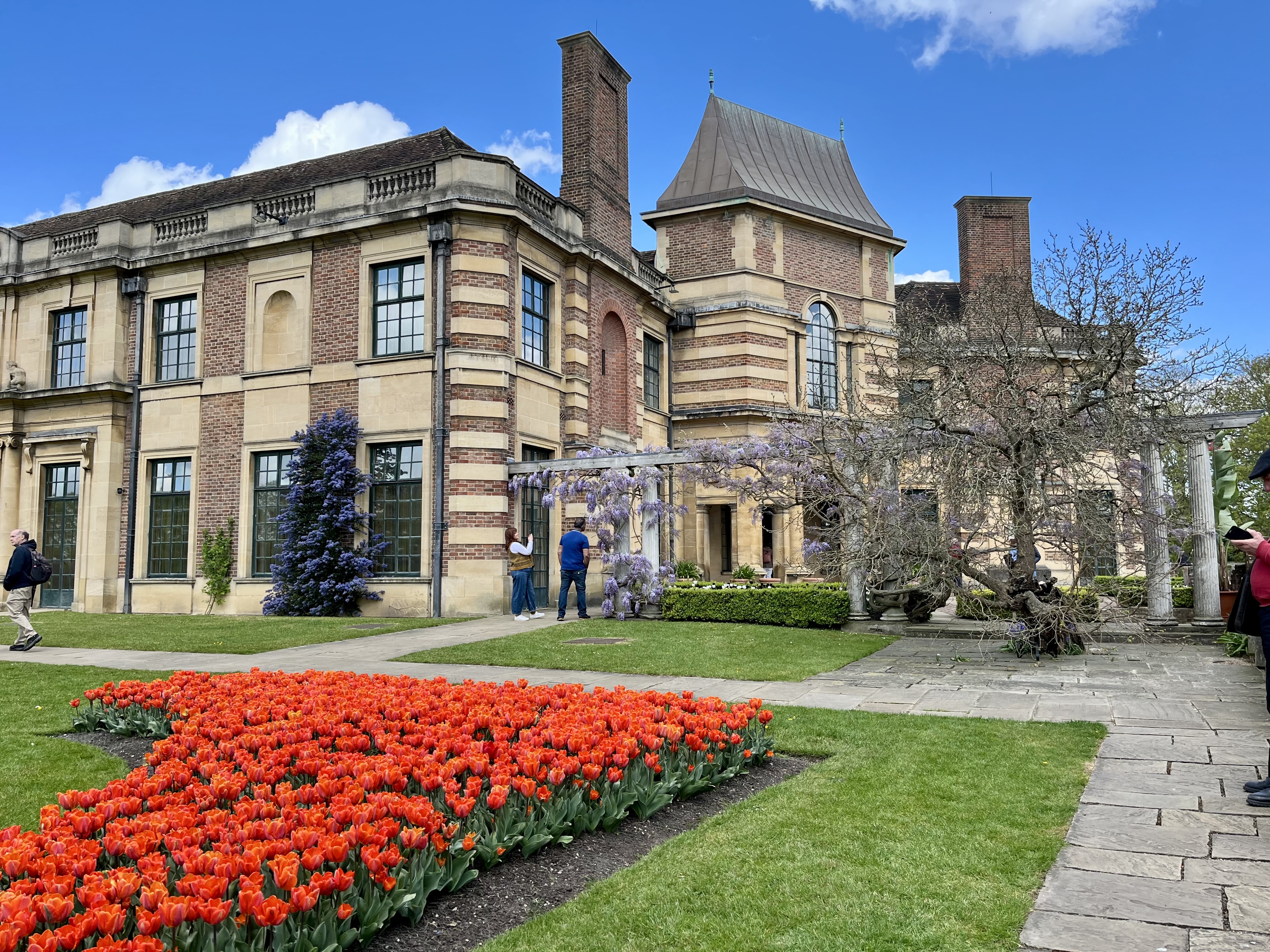
Project 2 focused on removing a large, diseased and unsafe Aesculus hippocastanum (horse chestnut tree) from a prominent and well used area at the back of the Great Hall. This undertaking was complicated by limited access across two fragile moat bridges and the site’s ancient monument designation. Felling allowed display beds, not used for some fifteen years because of the overshadowing tree, to be reinstated. Black and white photographs of the same beds featured in a 1937 edition of Country Life inspired the planting of some 3,800 tulips matched from heritage varieties available at that time. The tree will eventually be replaced with an Aesculus indica, a species more resistant to drought and pests.
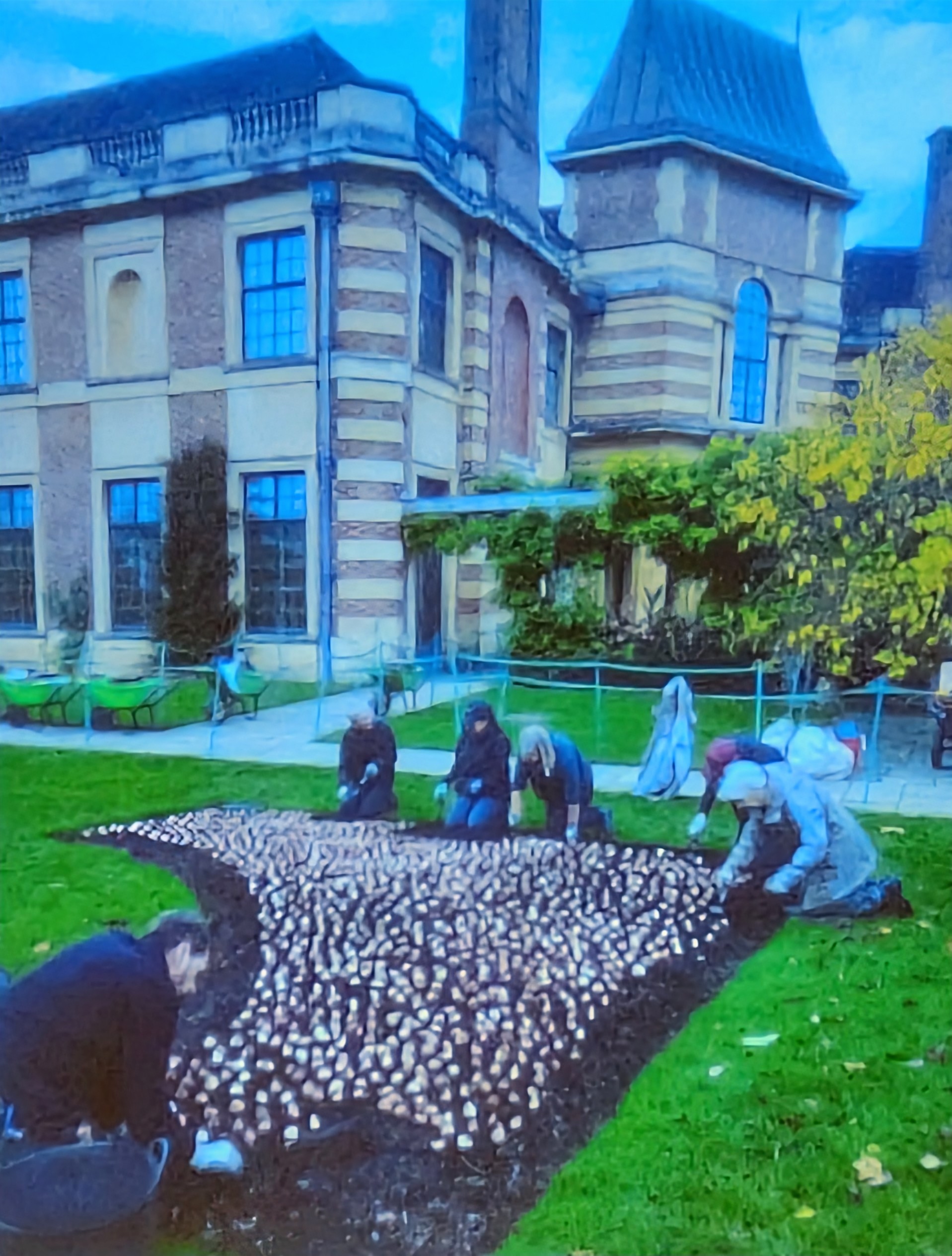
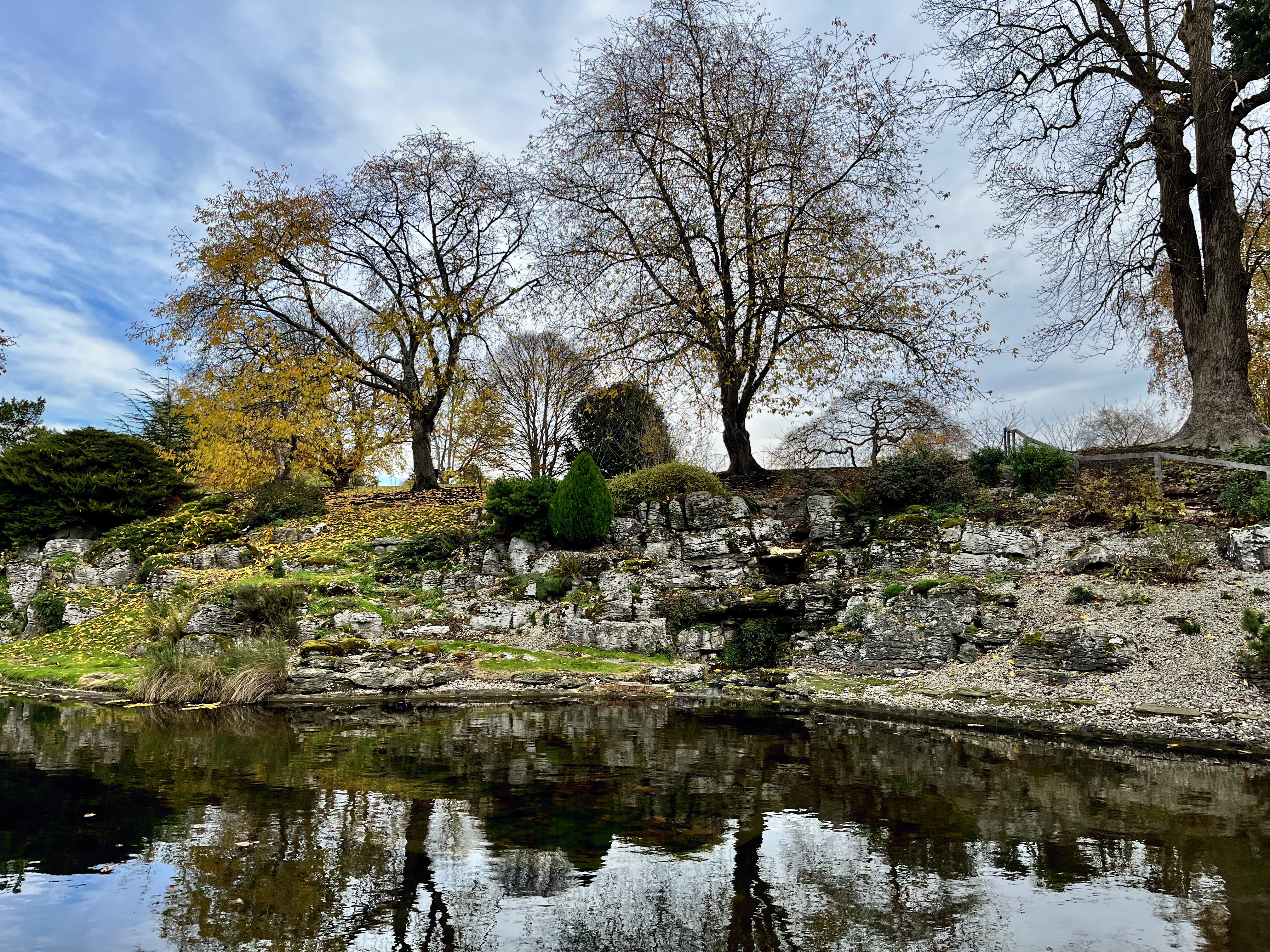
Project 3 restored the rock garden and cascade installed by the Courtaulds after they saw natural waterfalls and rock formations on holiday in Yorkshire. The cascade had not flowed for many years and the surrounding rock garden had to be shored up and strengthened before extensive repair work and waterproofing could be completed. Further electrical work is needed to fix the pump that brings water up from the moat and into the cascade. This restoration work has been supported by a grant from the Alpine Garden Society.
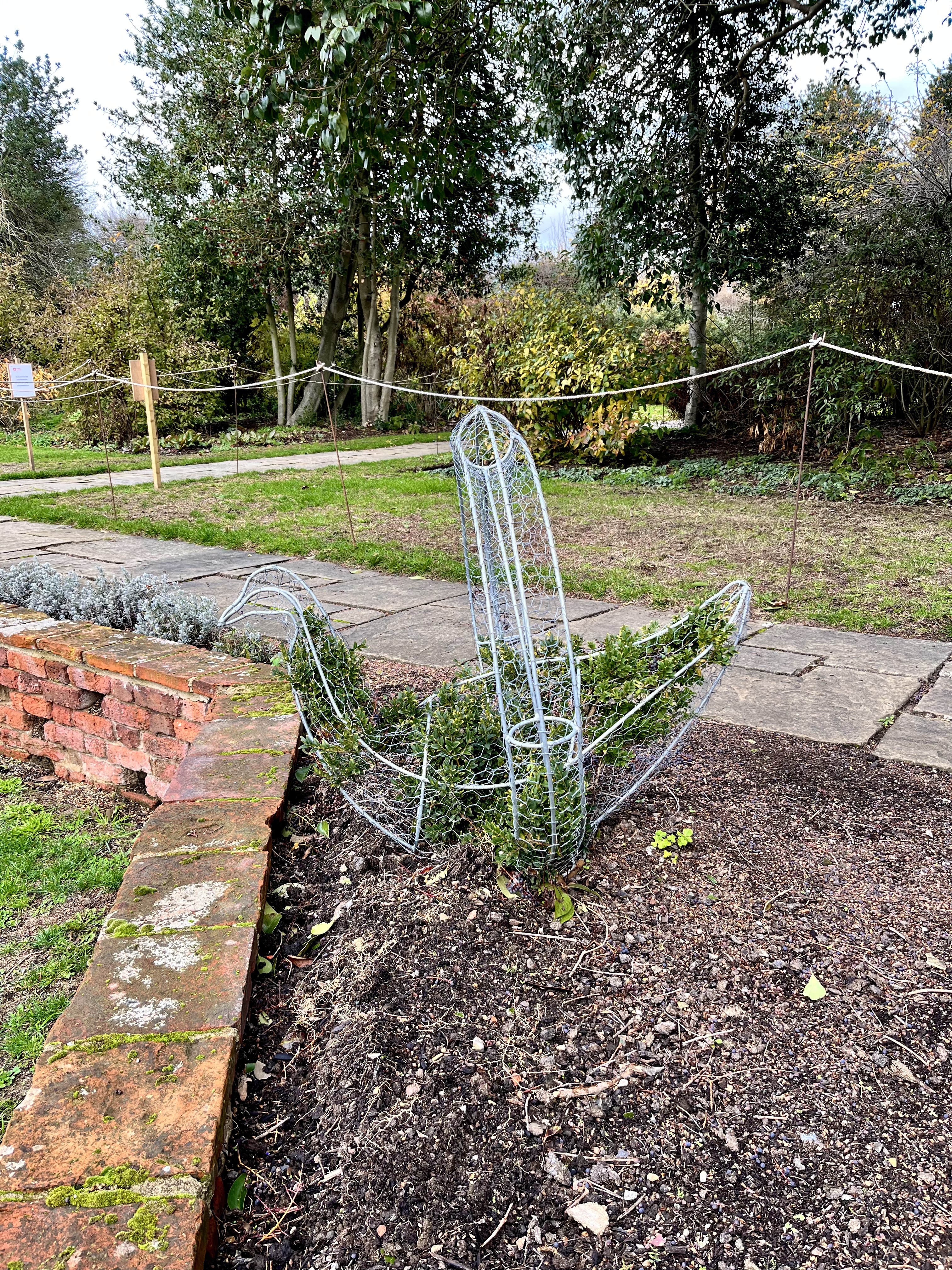
with nascent peacock topiary!
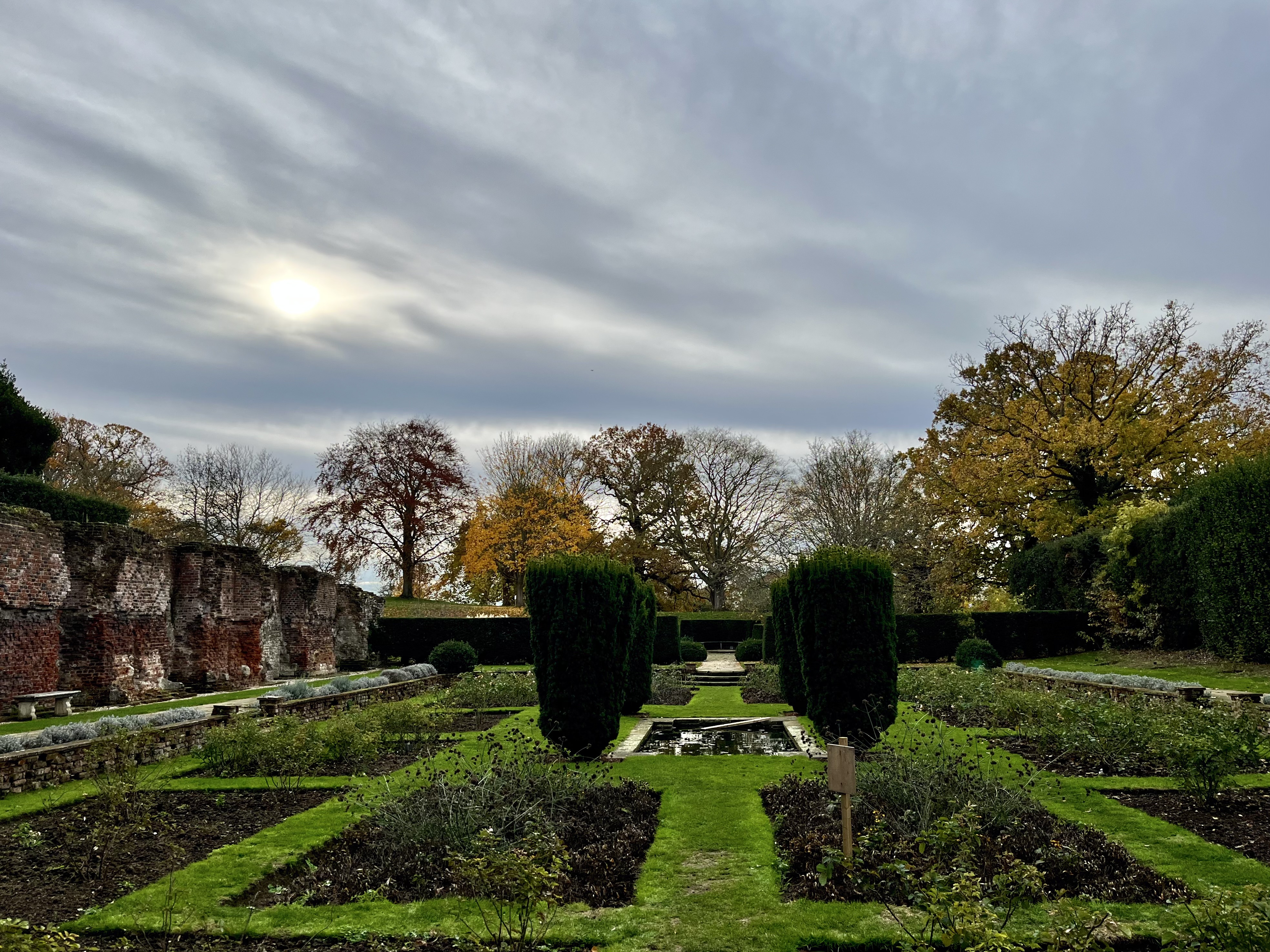
Project 4 involved replanting the Arts and Crafts-style sunken rose garden. One of a series of garden rooms, it was built in 1934 to provide a sheltered spot for Virginia’s collection of hybrid tea roses. Some roses suffered in recent hotter, drier summers so the poor performing disease prone varieties have been replaced. Old photos and supplier’s catalogues have been used to identify and recreate a topiary peacock and teddy bear that originally graced two of the sunken area’s four corners. What was on the other two corners is a mystery so there are plans to work with local schools for topiary ideas.
Aron answered lots of interesting questions and shared some exciting ideas for possible future projects including reinstating a productive garden, bringing Stephen’s orchid collection back from the Courtaulds’ Zimbabwe home, and making more use of the natural parkland areas. There is also huge potential to research and reflect more of the medieval and Tudor periods of the gardens. Aron gave us a thoroughly engaging talk and it would be great to have him back for a future meeting to hear about progress and new projects. Eltham Palace is open at weekends over winter, check the English Heritage website for details of opening times and special events.
Jayne D.
Discover more from Charlton and Blackheath Amateur Horticultural Society
Subscribe to get the latest posts sent to your email.


One thought on “November 2026 Talk: Eltham Palace gardens”