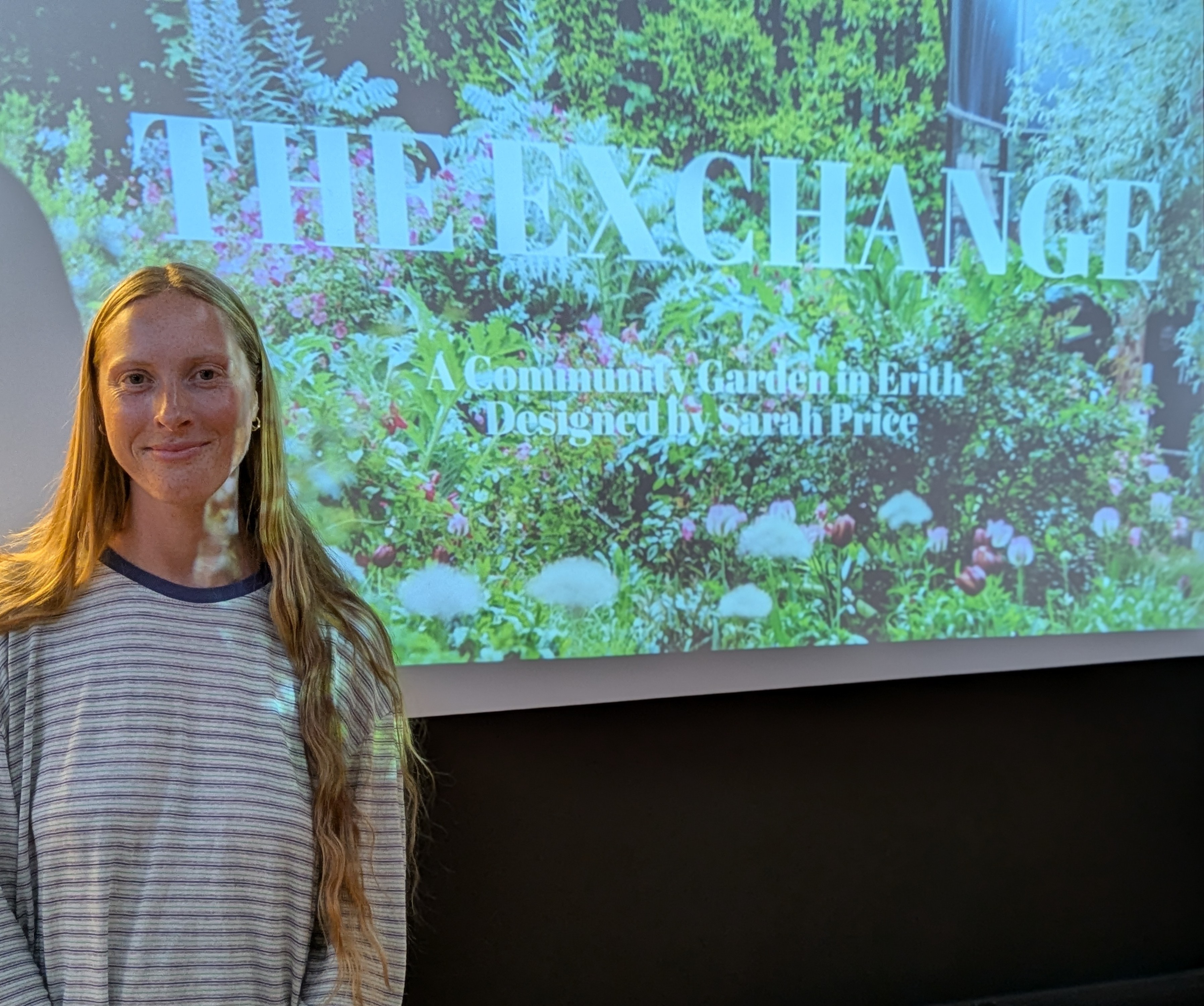
It was a pleasure to welcome Selina Ozanne to our August meeting to hear about her work as Head Gardener for The Exchange, Erith, a community led arts and craft organisation based in the town’s former Carnegie library.
The refurbished listed building is now home to craft production workshops, a cafe and shop, along with a varied programme of community events.
The Exchange gardens were designed by Chelsea Gold medal winner Sarah Price. The site has various challenges from a sloping roadside front garden exposed to sun and wind from the Thames, to a woodland-edge rear garden with a steep incline. Sarah’s design pulls together these diverse elements together using sustainable materials and matrix planting to make the garden flow coherently in a way that everyone can access.
Planting took place in the Autumn of 2021 with around 70 volunteers of all ages directed on site by Sarah. Local Works Studio reused waste and found materials for the hard landscaping including old timber, building rubble and reclaimed bricks. Areas of herringbone paving mimic the interior’s parquet flooring, using bricks made by volunteers from construction waste and locally sourced clay. The rear boundary is fenced with reclaimed corrugated iron. A key feature of the garden is the bespoke greenhouse inspired by the travelling library van commissioned in the 1930s by the Head Librarian Florence Barton-Young; the first ever purpose-built mobile library in the UK. As well as being used for propagation, the greenhouse is home to a growing Pelargonium collection.
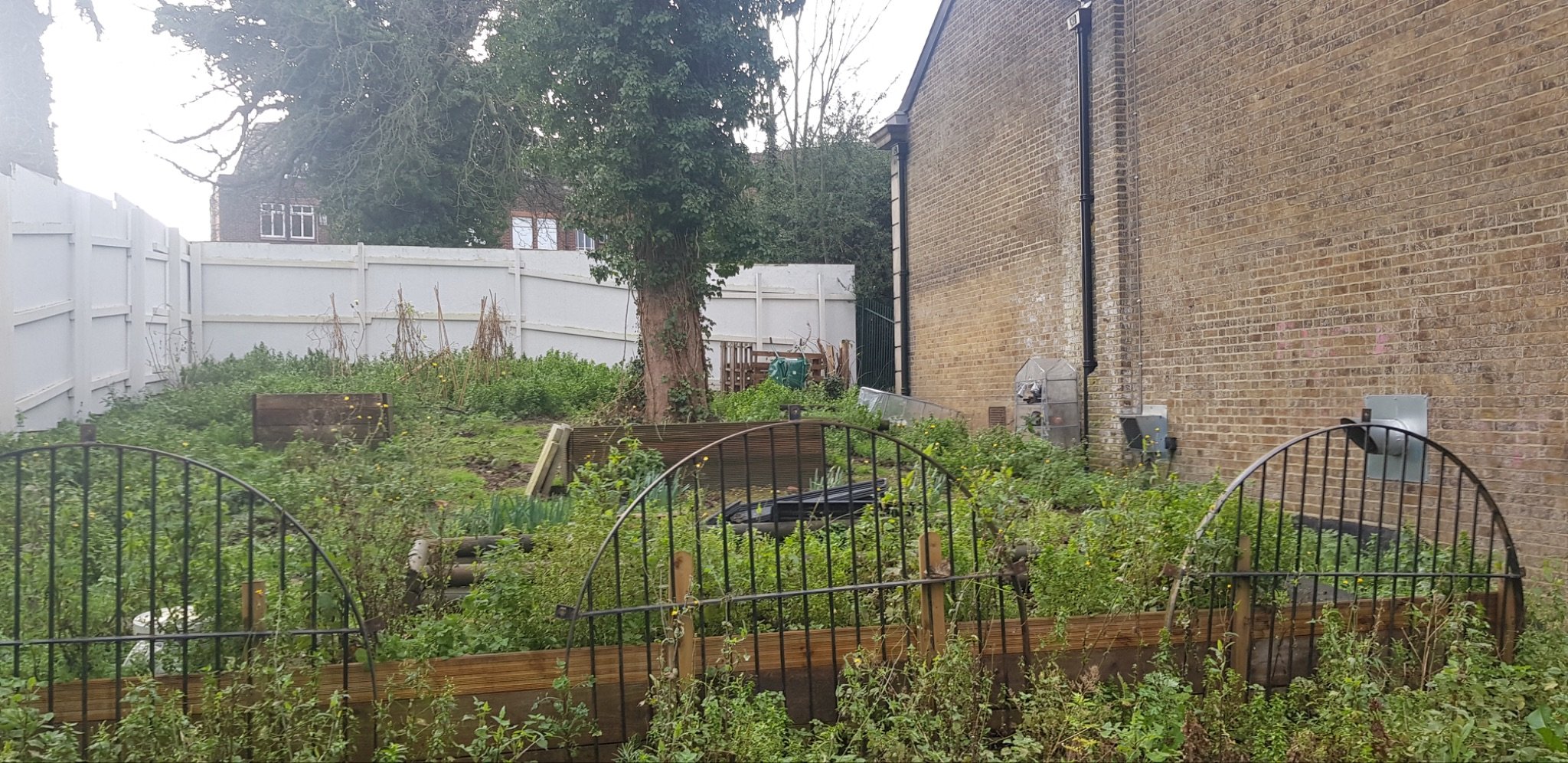
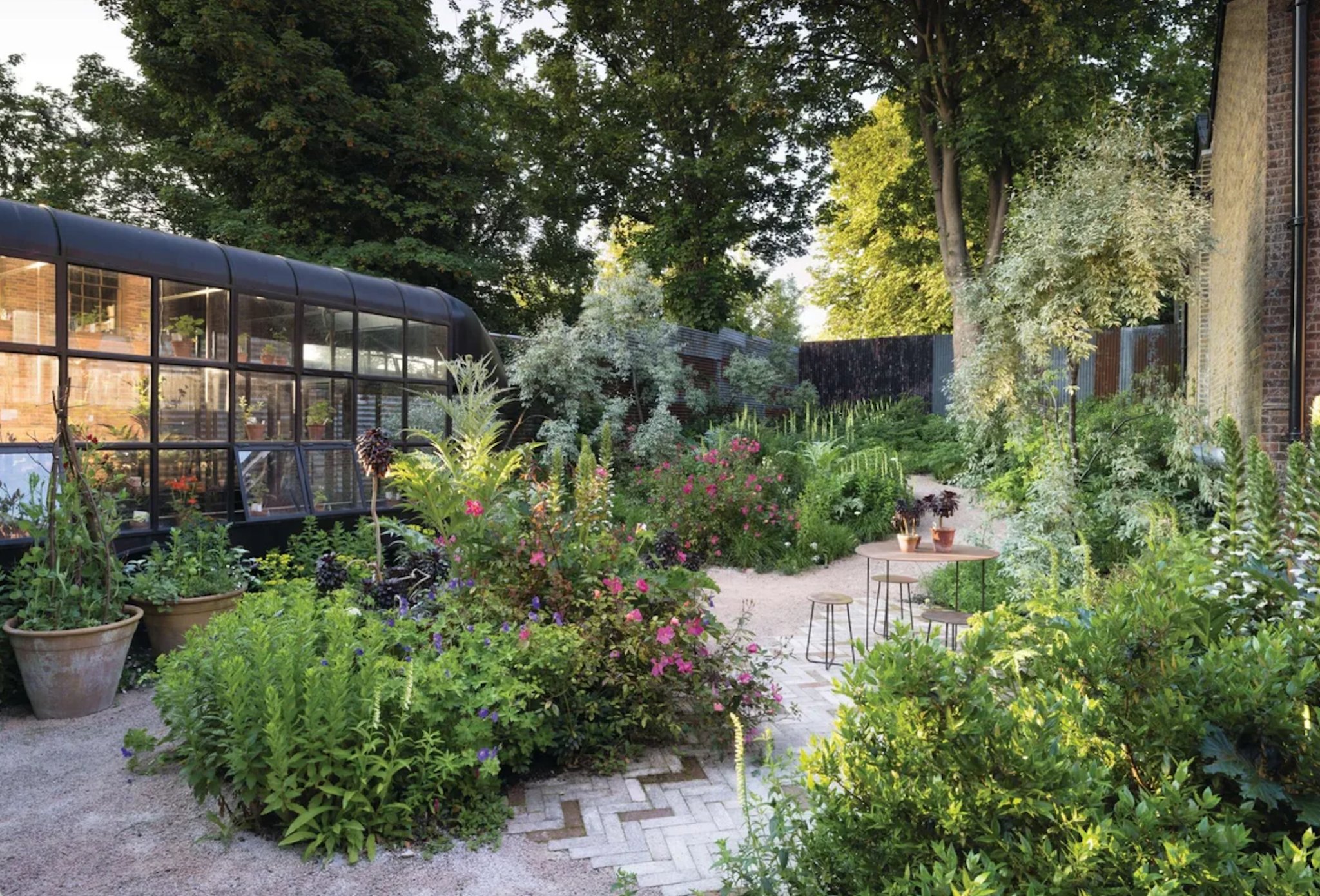
(not quite the same position, but close).
Note the parquet paving and mobile-library greenhouse.
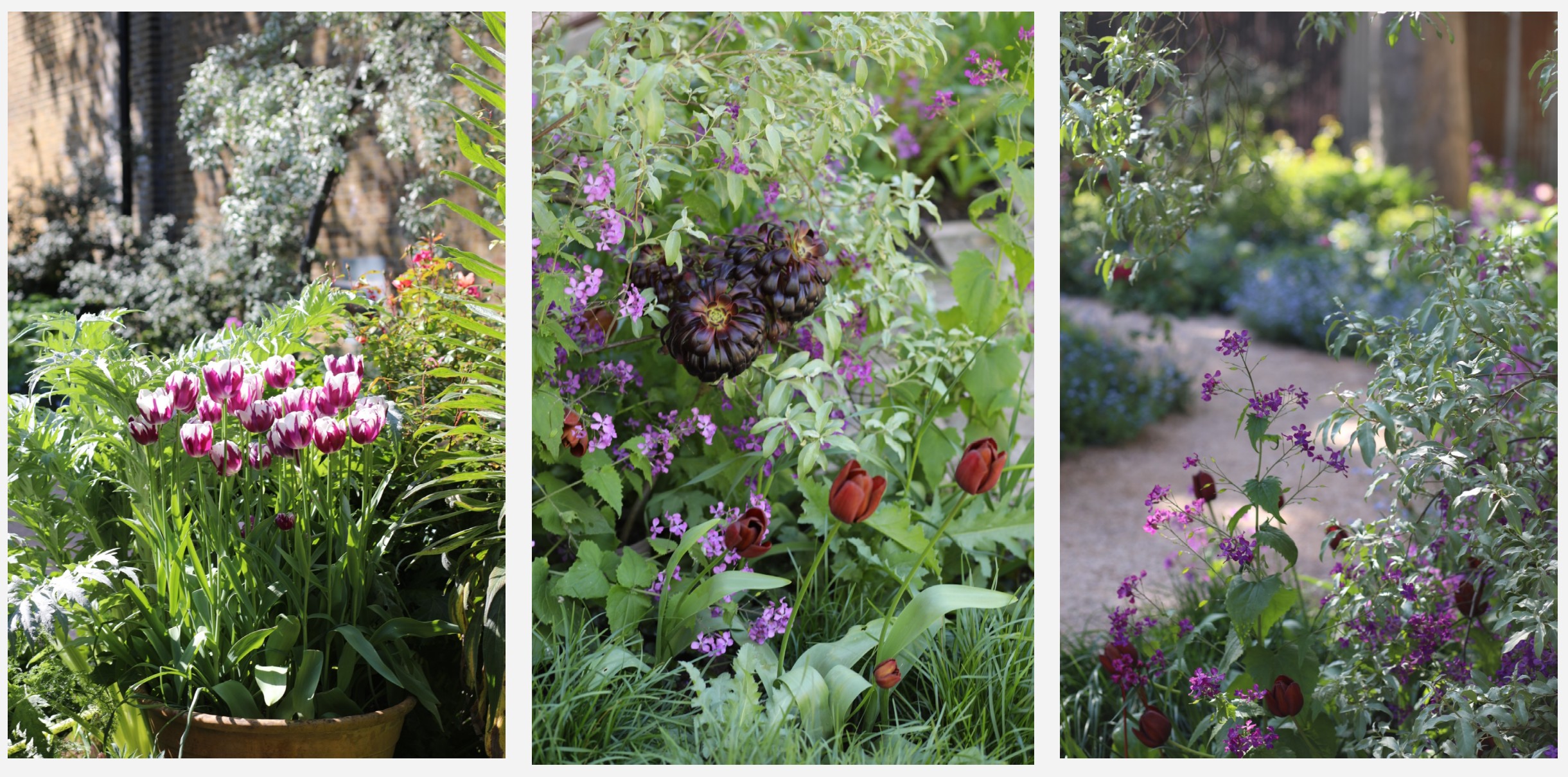
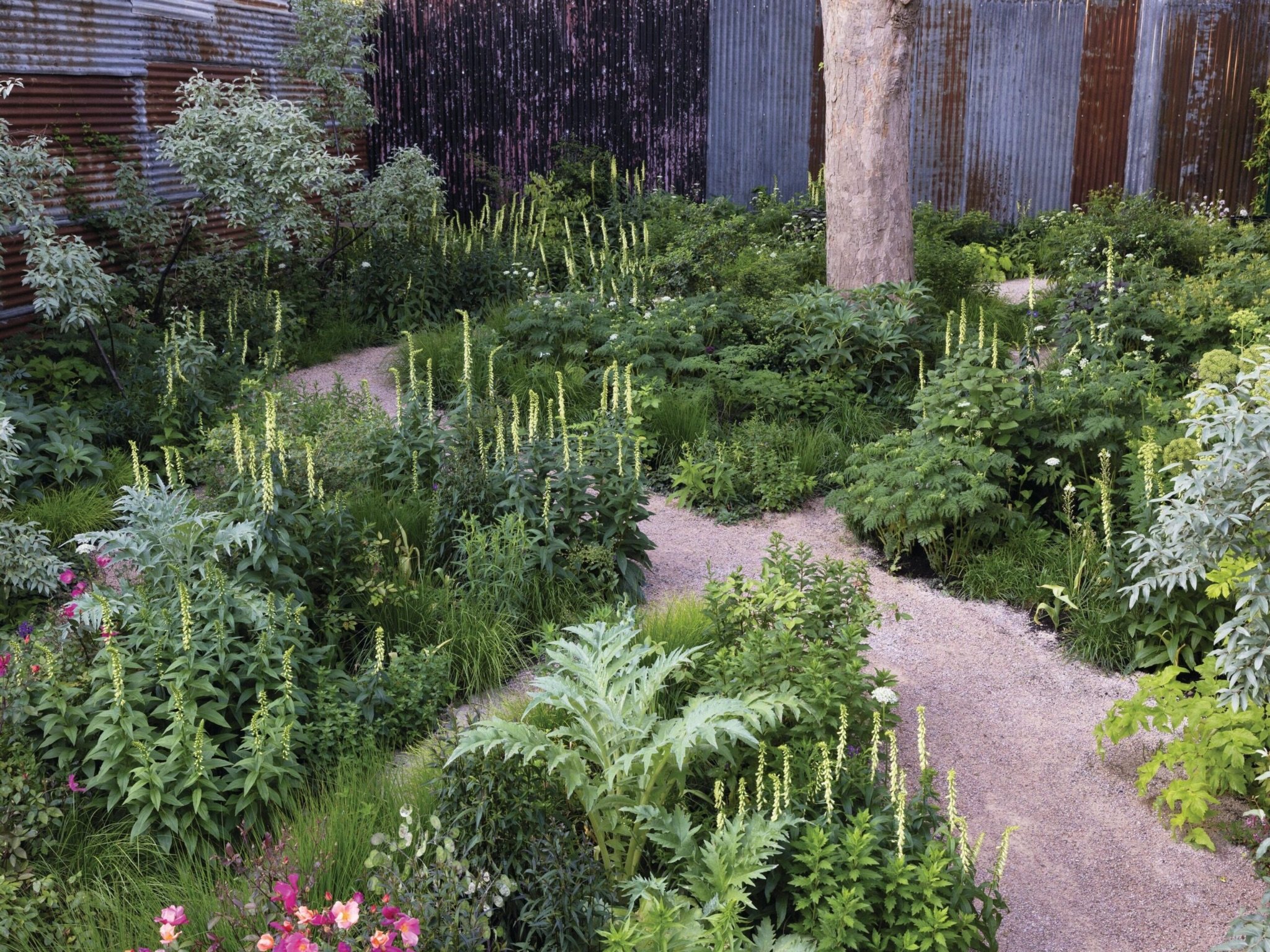
The Exchange garden wraps around the building and falls into five distinct areas, each with different levels and micro-climates. The Woodland Garden at the rear is dominated by a mature sycamore with multiple beds crossed by meandering paths. Planting is predominantly silver and green with shrubs such as Elaeagnus ‘Quicksilver’ and Osmanthus burkwoodii, species rose Rosa x odorata ‘Mutabilis’ and ground cover hellebores. In spring there is cow parsley Anthriscus ‘Ravenswing’, Ageratina altissima ‘Chocolate’, lots of Echium, dark purple tulip ‘Dom Pedro’ and Allium ‘Silver Spring’. Selina also favours species tulips such as T. ‘Danique’ or T. ‘Norah’ which return reliably, and the long flowering Nicotiana mutabilis.

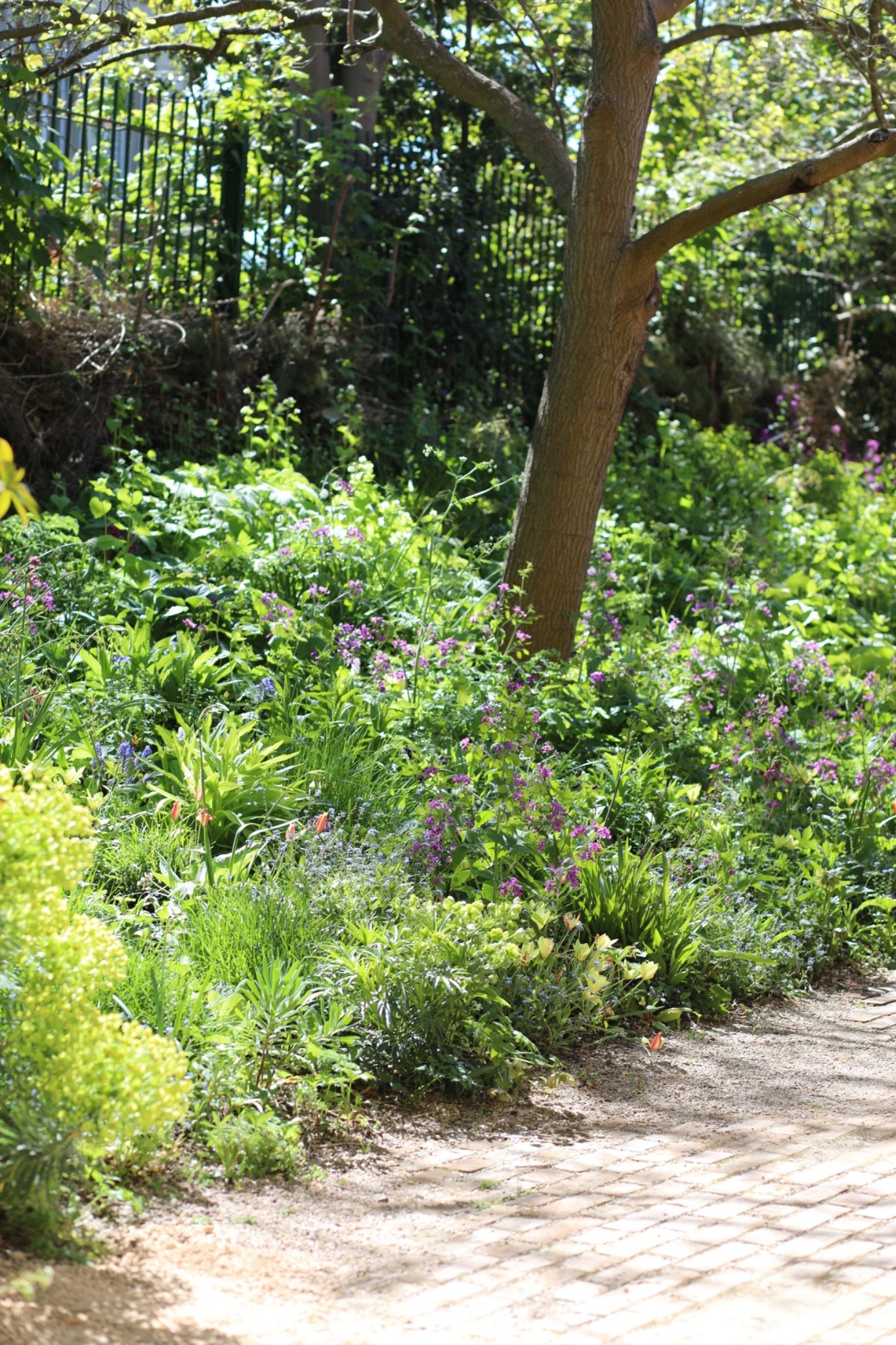
The back of the building opens on to the Mulberry Bank, a brick and gravel terrace shaded by two mulberry trees, originally part of the garden of Walnut Tree House which occupied the site before the library. The dry area beneath these trees is full of spring flowering bulbs and woodland perennials including Luzula, Euphorbia amygdalioides var. robbiae, white Brunnera, Leucojum, Bergenia, Tiarella, and Geranium phaeum ‘Raven’.
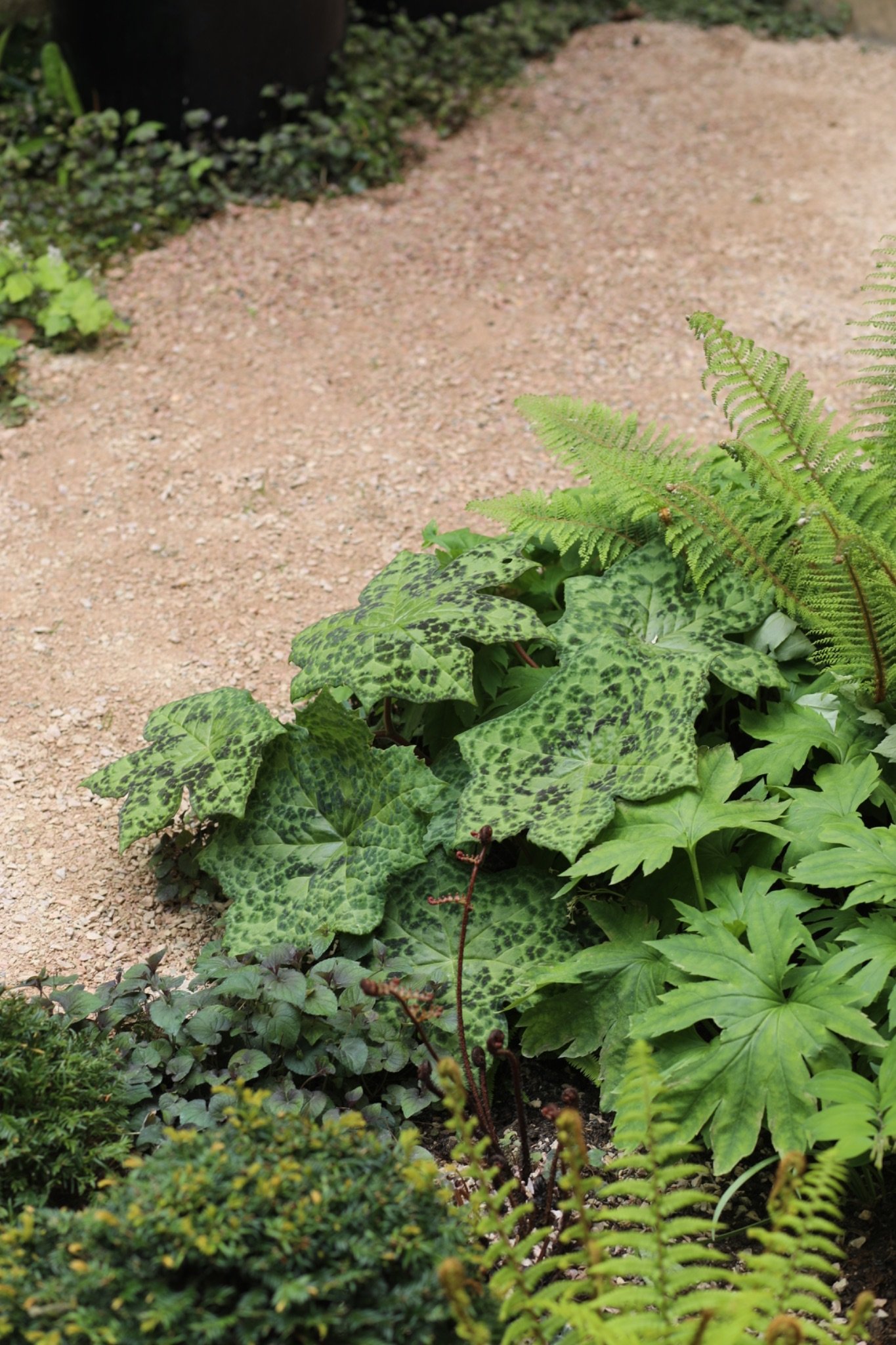
To the side of the building is the Fern Yard, excavated to give an enclosed area in deep shade. Here, the planting features several species of fern such as Dryopteris erythrosora and other shade-lovers including purple-leaved violets, and Viola odorata.
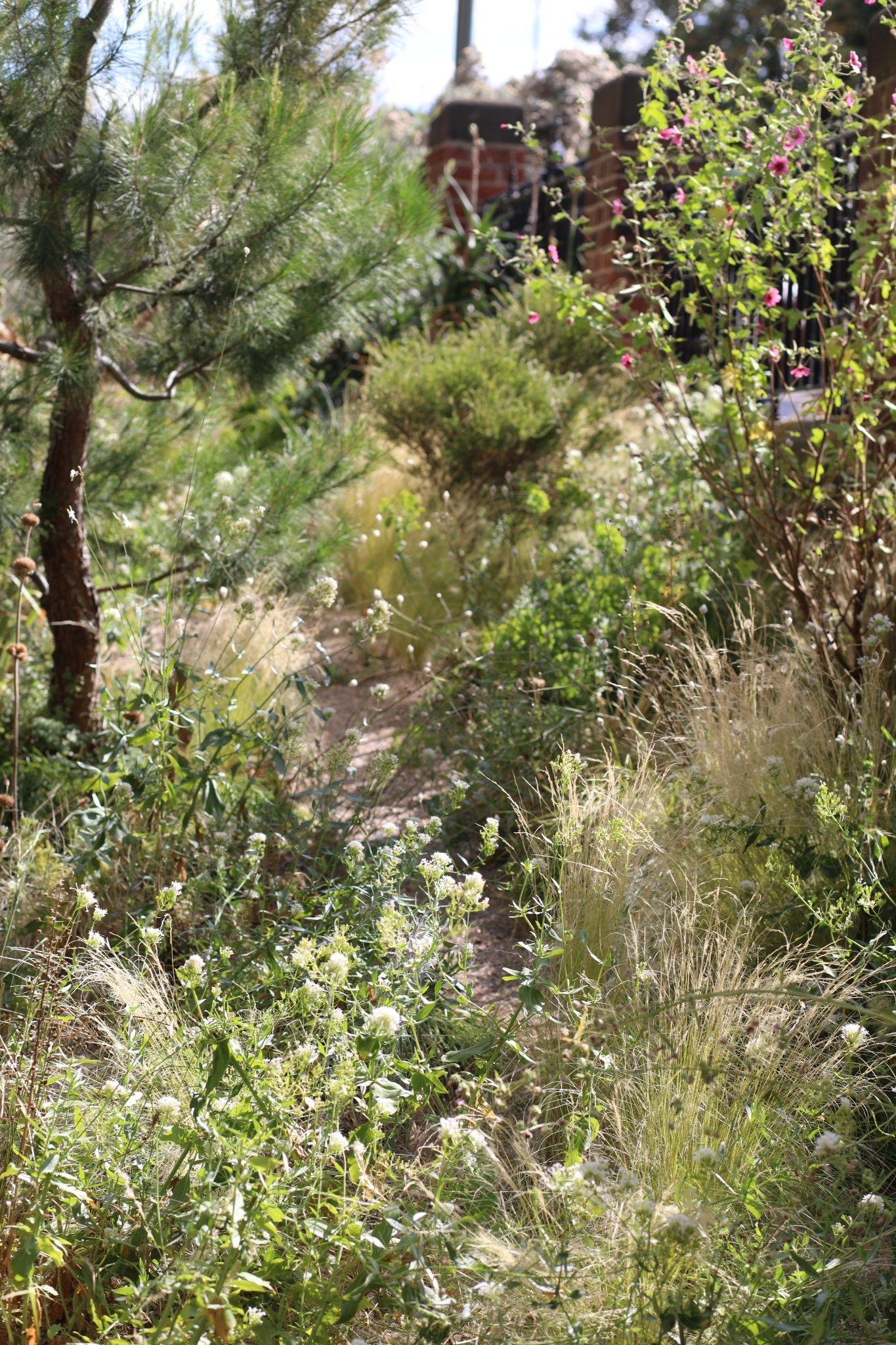
Towards the front of the building the gravelled Pine Slope features several distinctive Aleppo pine trees (Pinus halepensis). The soil here is free draining and sandy and perennials are starting to struggle under the fast growing pines. Sesleria autumnalis, white valerian, yellow Jerusalem sage and Verbascum were good in June but Selina added species Delphinium requienii, Digitalis lutea, and Verbena officinalis ‘Bampton’ to take things through to July.
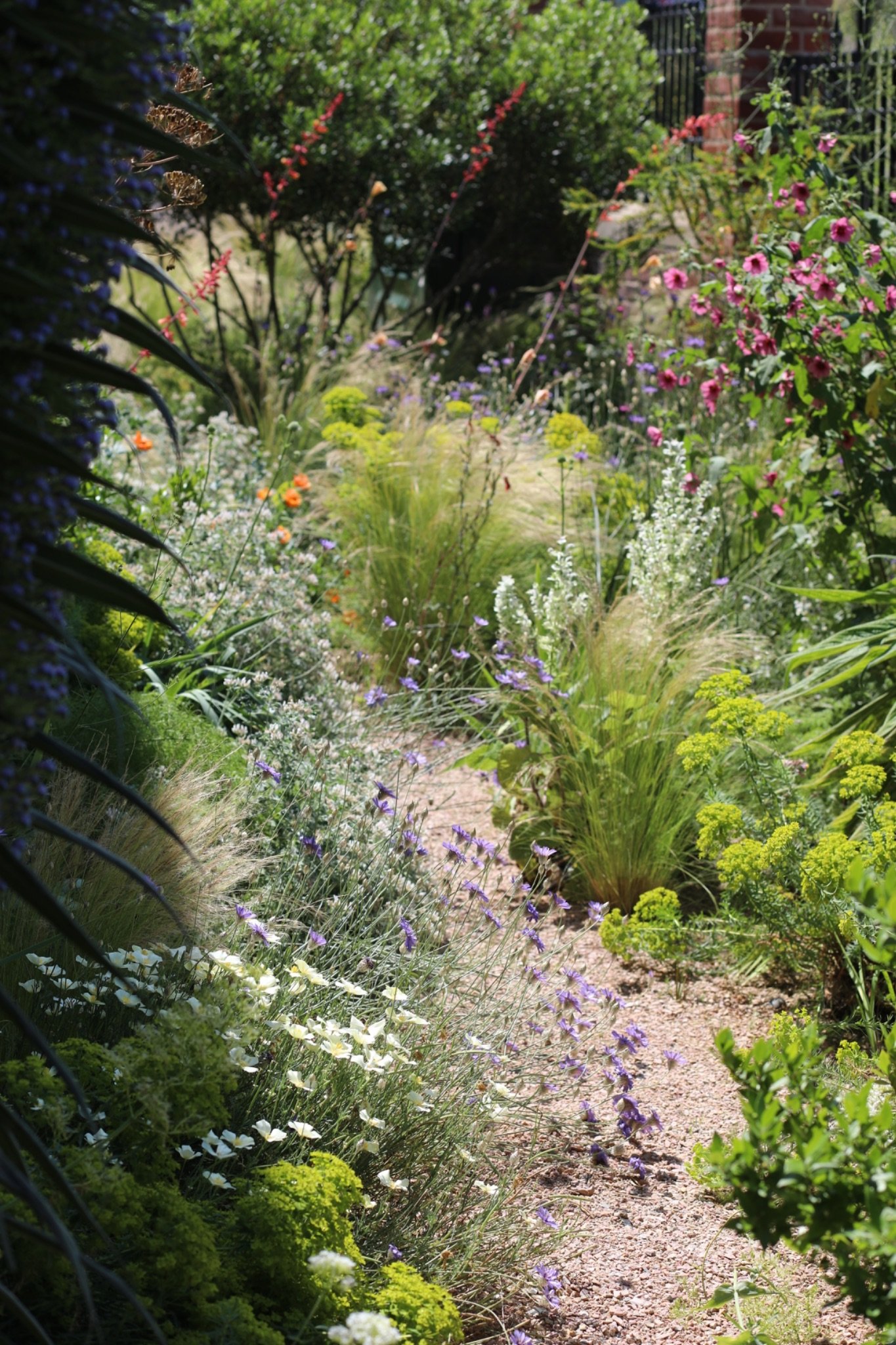
In front of the building is a Dry Garden, covered with a 30cm layer of reclaimed sand and planted with shrubs, grasses and perennials selected to withstand the dry and exposed conditions. Shrubs include Phillyrea angustifolia, Lotus hirsutus (a lovely greyish green evergreen that flowers in May), Anisodontea ‘El Rayo’, Ceanothus and Ozothamnus rosmarinifolius. There is also a Rosa x odorata ‘Bengal Crimson’. In addition, there are perennials such as Euphorbia seguieriana, Euphorbia cyparissias ‘Fens Ruby’, Stipa gigantea, Catananche caerulea, Oenothera, Benton irises and a more subtle Californian poppy named Eschscholzia californica ‘Ivory Castle’.
Selina gardens organically re-using garden waste material for mulch or dead hedging and as a rule doesn’t feed or water. However, she acknowledged that this has been a very difficult year with many plants suffering in the extreme drought and heat and she has resorted to spot watering. She kindly shared a list of plants that performed well at the Exchange this year. As Head Gardener Selina makes changes and introduces plants as the garden evolves and matures. Sarah Price remains involved in the project but fully recognises that a garden is a living changing thing.
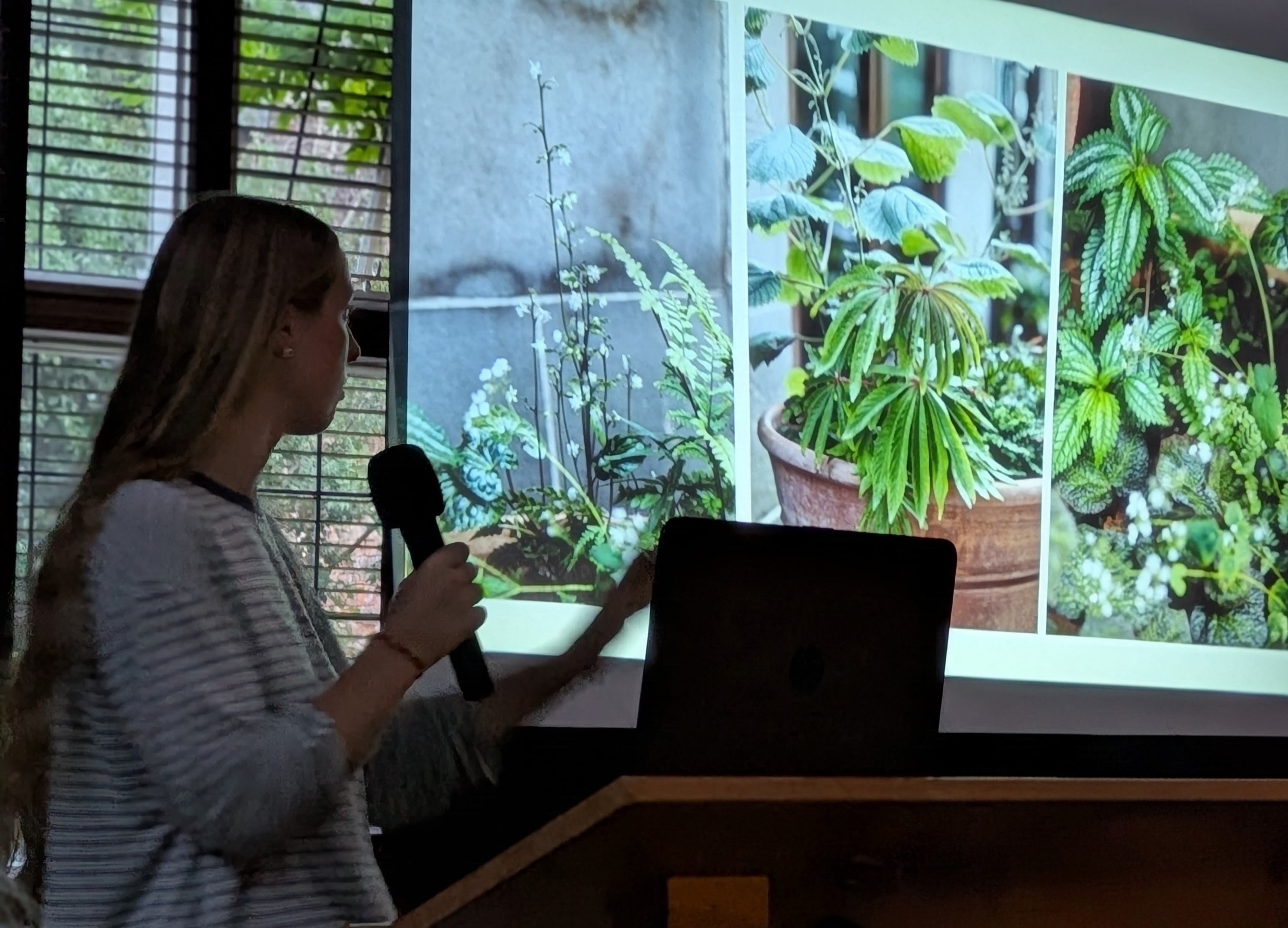
It was great to hear from Selina about her work at the Exchange, which remarkably she manages in just three days a week with a team of volunteers. Under her stewardship, the garden continues to develop as a valuable community space that is an integral part of the Exchange at Erith. Well worth a visit if you haven’t already been.
Jayne D.
Discover more from Charlton and Blackheath Amateur Horticultural Society
Subscribe to get the latest posts sent to your email.

