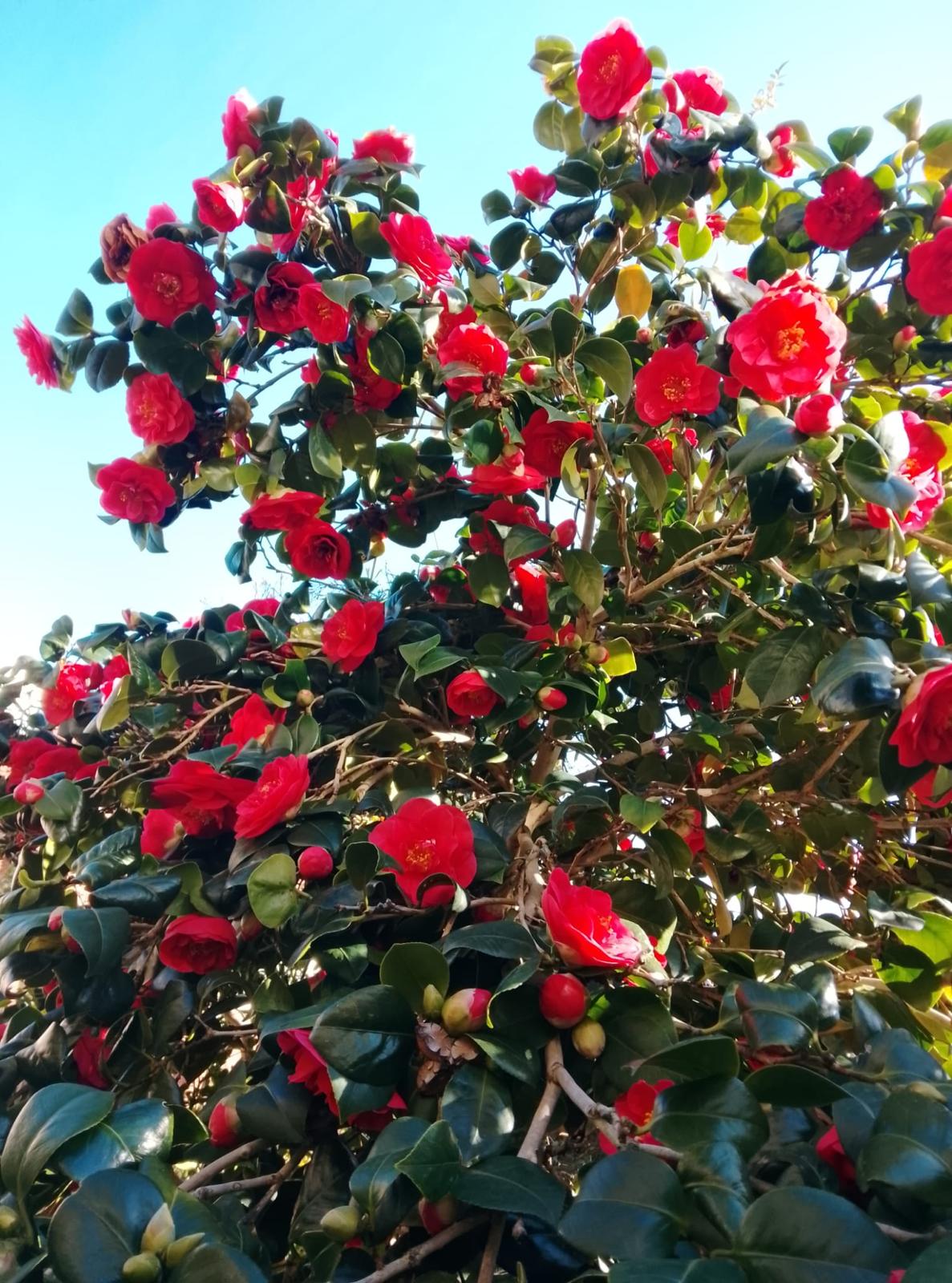
It really is a privilege to be invited into other people’s gardens, where the host is allowing us to peek into their private spaces, their secluded oasis and, we, the invitees, do feel very honoured on such an occasion. We see their tastes, their flair, their artistry of everything that make their garden special, thus revealing a little of themselves in the process.
Some are lucky enough to inherit established plants and Juli F is one of those gardeners who embraced her south-facing courtyard garden and the already mature crimson-flowered Camellia that came with it.
I don’t have a variety name for this lovely specimen, so I’m calling it ‘Juli’s Camellia’. Juli kindly opened her garden to CABAHS members in May 2024 and June 2023, and my goodness, I was impressed and so was everyone else. But it was her Camellia, tree-sized (10-12 foot approximately), with a main stem and an umbrella-shaped canopy that enchanted me. Covered in masses of beautiful, crimson (double-to semi-double) flowers shimmering in the sunlight, with a garden table and chairs beneath and a high boundary brick wall for privacy, Juli had created an intimate, secluded space, where one could relax with a cup of tea and escape the heat of the day. It was magical. And what a tree!
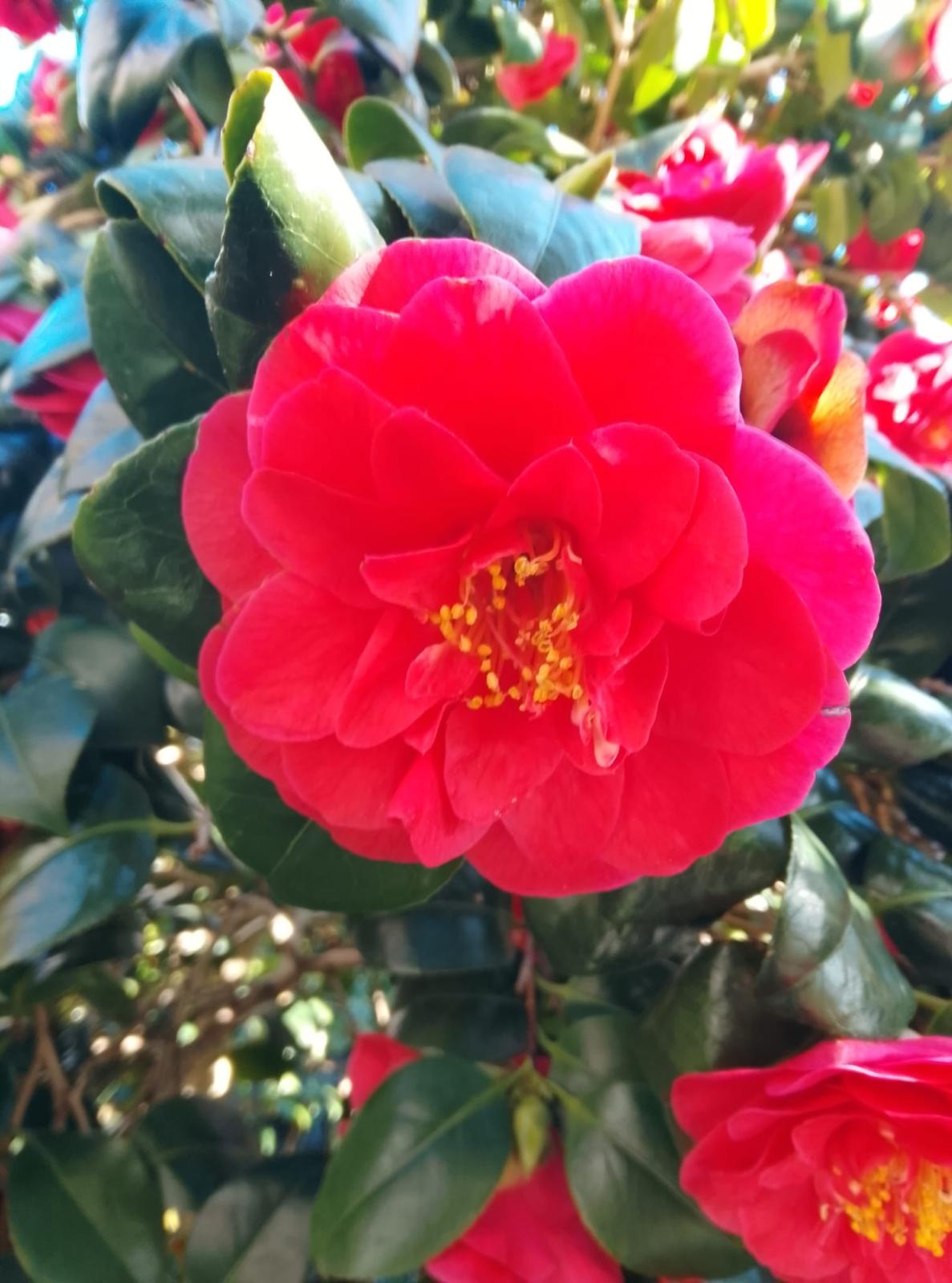
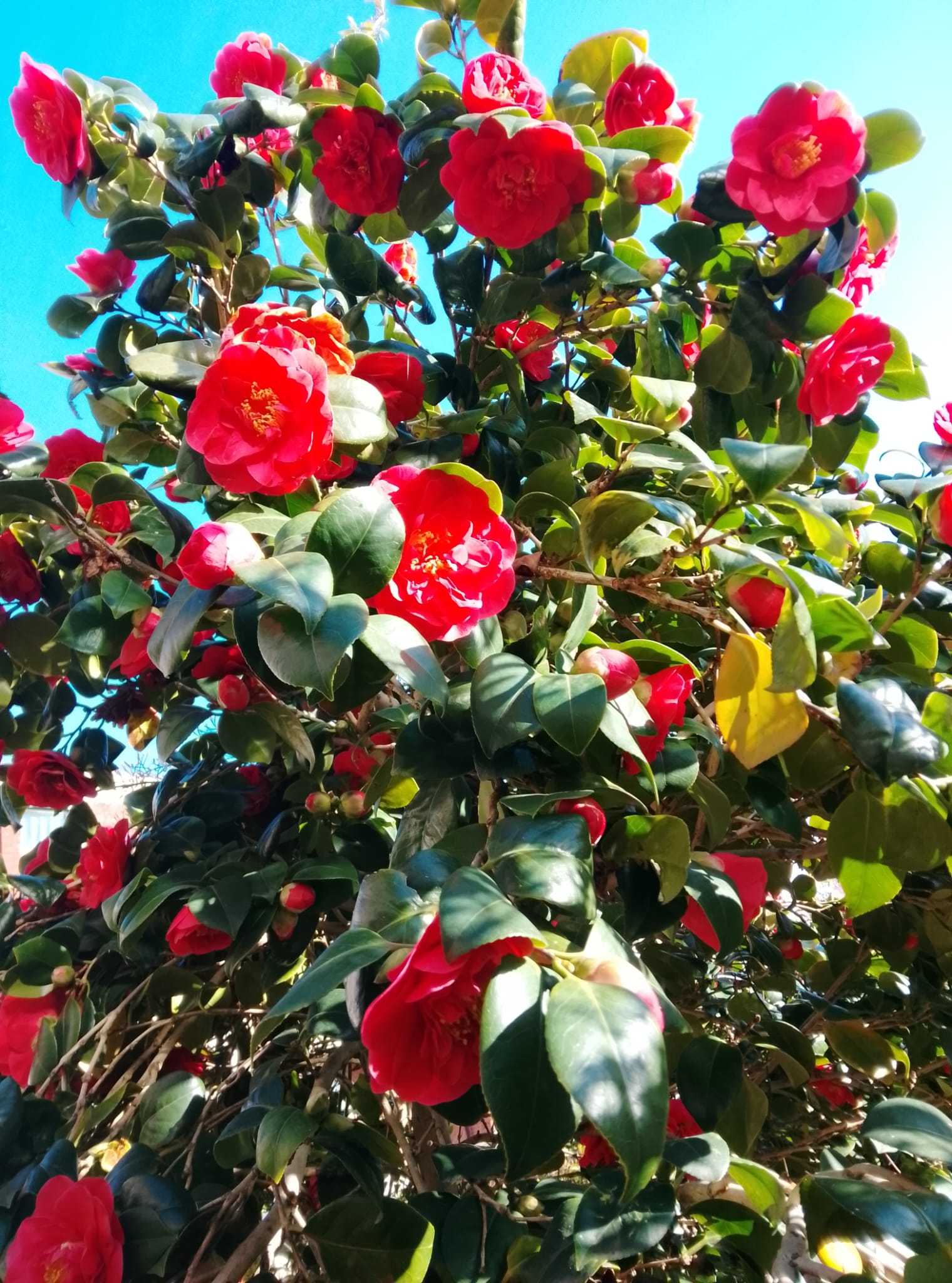
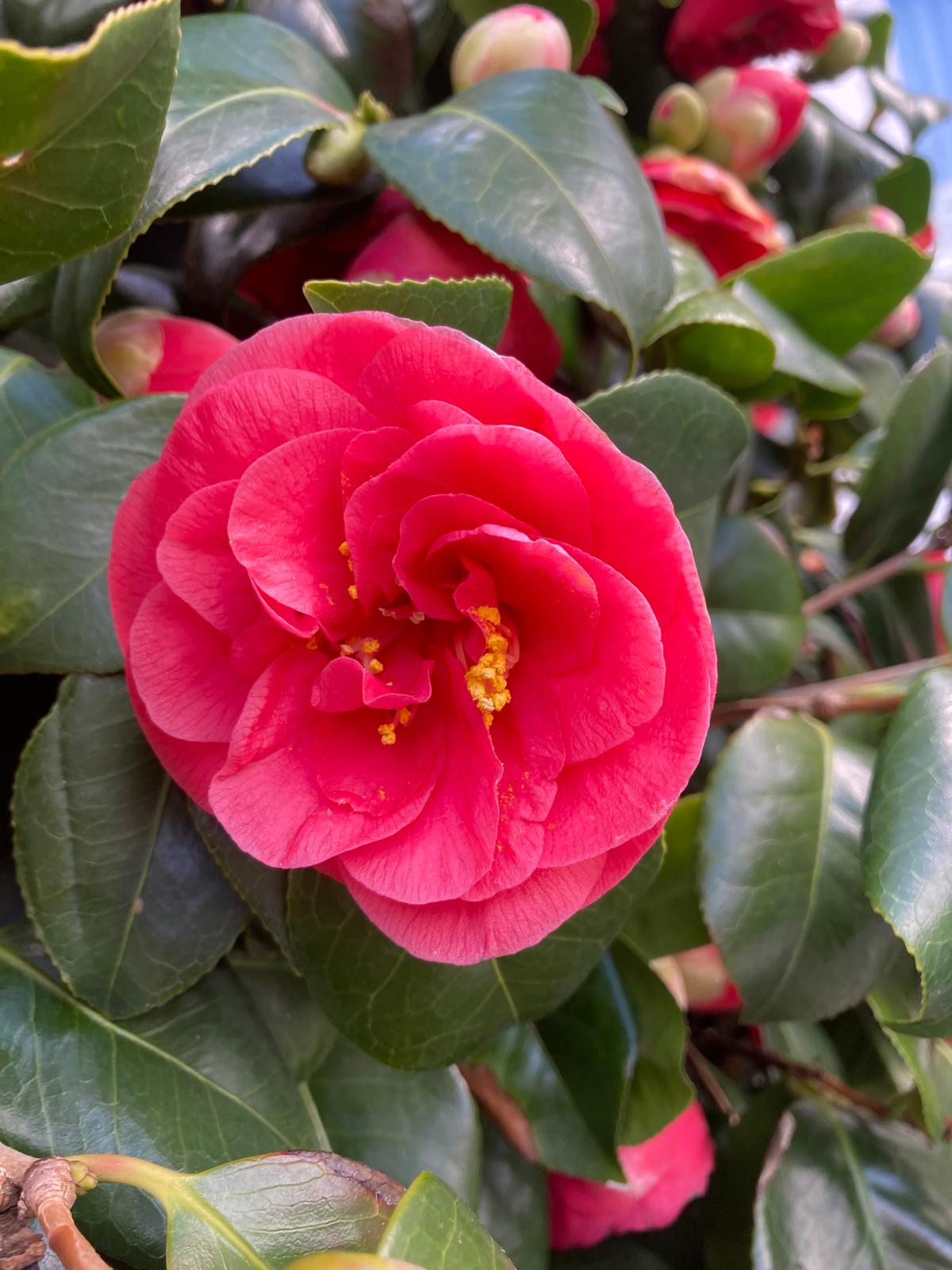
Recently I was thrilled to be invited to see Pat K’s garden, which was a sea of enchanting spring flowers, including Primula, Narcissi and tulips – all absolutely lovely. But it was Pat’s Camellia x williamsii ‘Donation’ (a variety honoured with an Award of Garden Merit in 1941 for its ‘outstanding performance, ornamental value, and reliability’), absolutely covered in flowers and buds, that contributed to the overall harmonious effect. It brought the garden together by becoming a focal point, with its large, rose-pink (semi-double) flowers dazzling the eye and also shimmering in the sunshine. Truly enchanting.
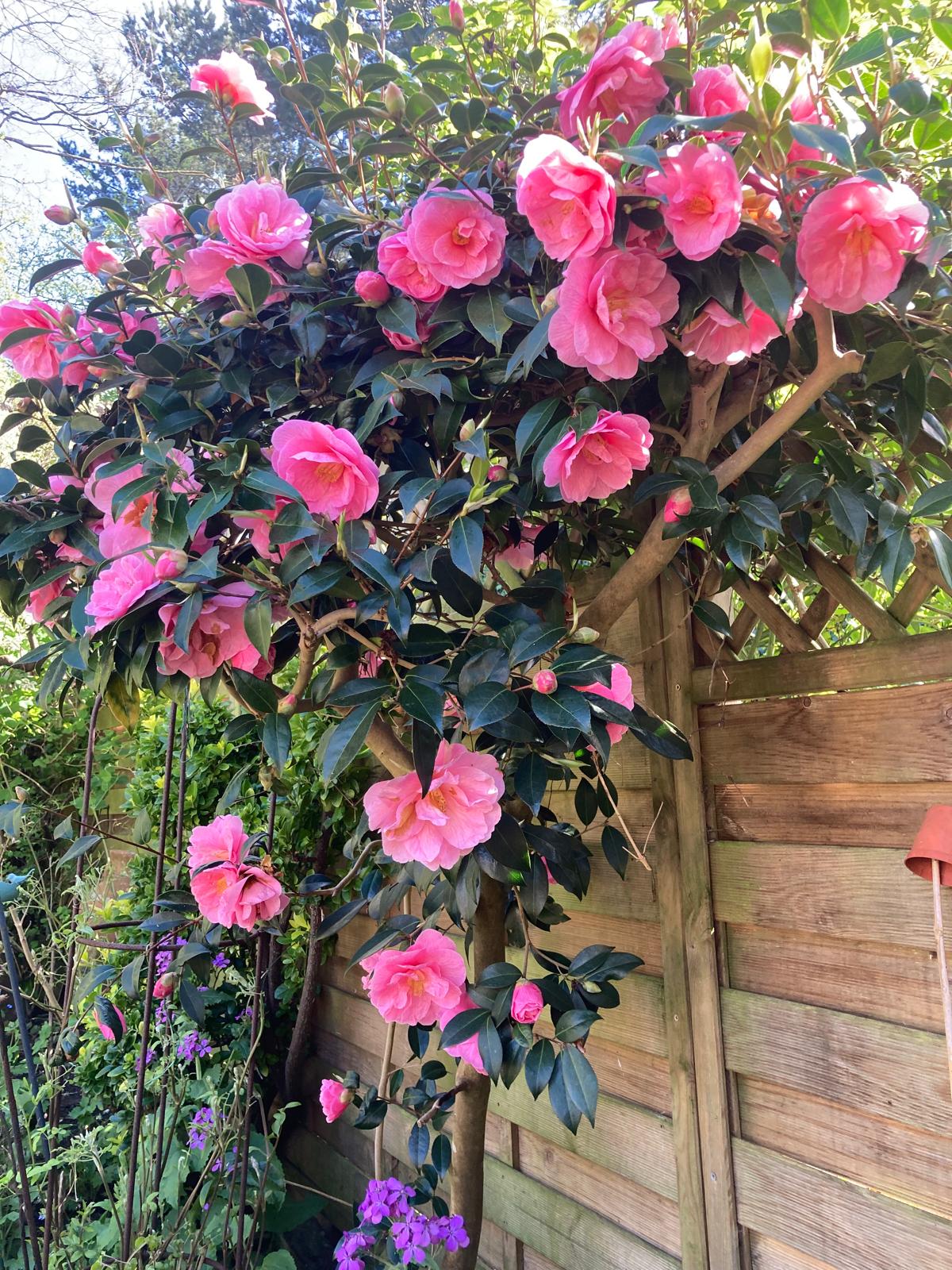
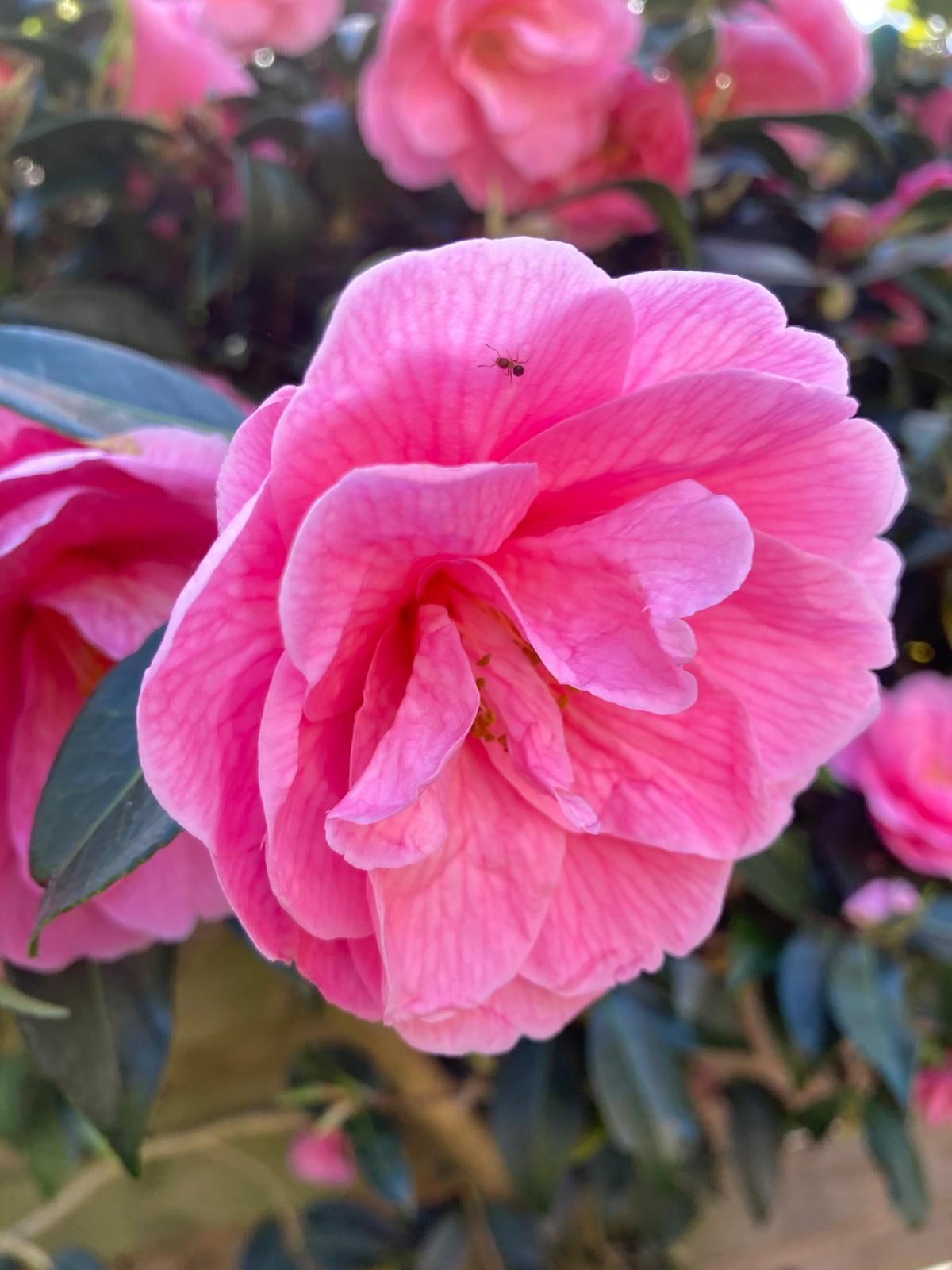
If you are lucky enough to have a section of your garden with acidic-neutral soil, (use a soil testing kit to establish whether you do or not), do consider a Camellia. They add structure, height, character and gravitas to any garden and generally flower from late February through to May (some species flowering from November). Most importantly, their flower size contributes to an harmonious appearance within the garden setting, acting as a foil to the smaller-sized flowers that have become highly fashionable these days.
For inspiration, stroll along the paths of the southern perimeter of Greenwich Park, where an array of flowering camellia shrubs and trees are can be admired and photographed within their woodland settings.
Anna L
Discover more from Charlton and Blackheath Amateur Horticultural Society
Subscribe to get the latest posts sent to your email.

