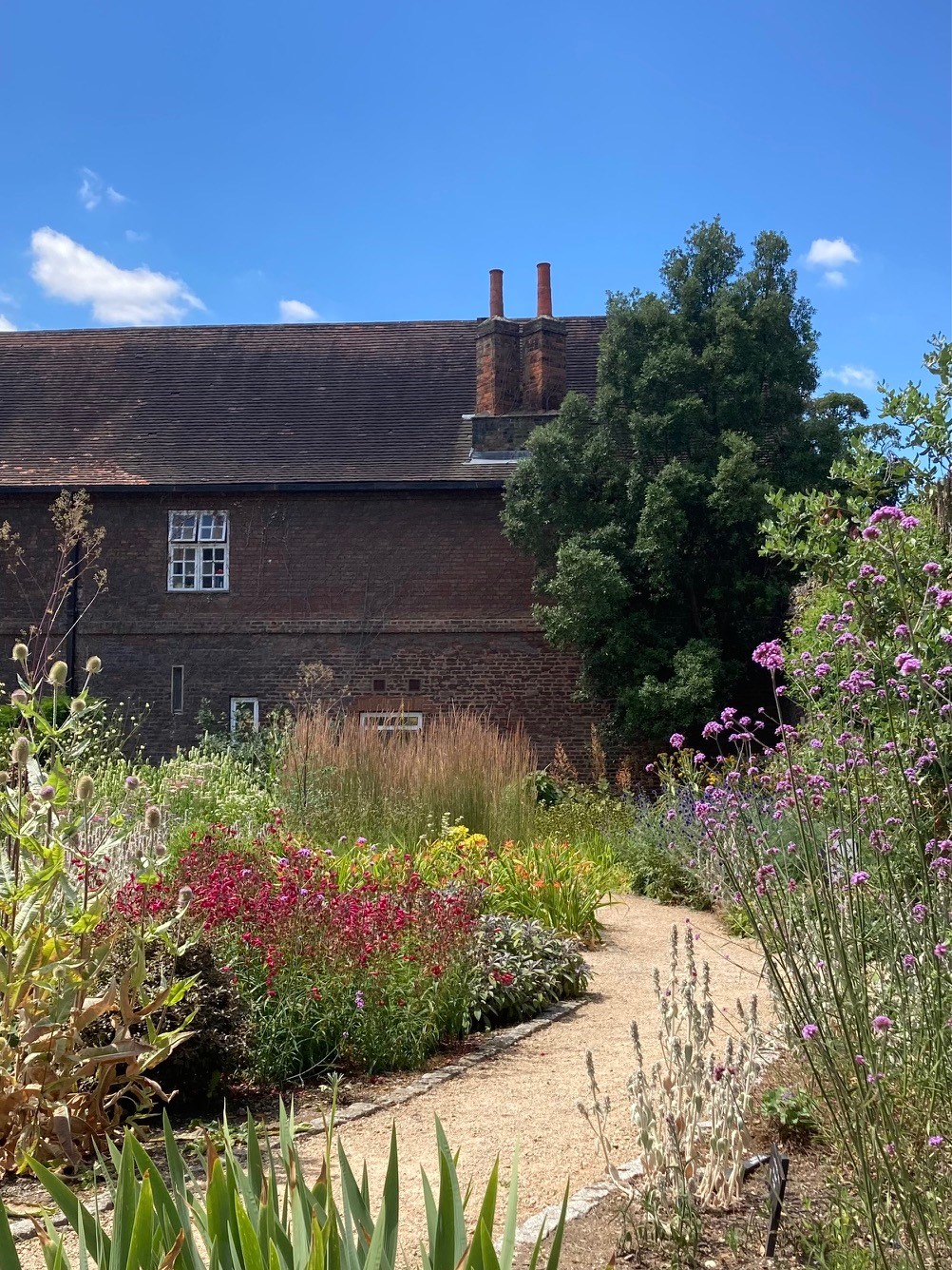
Our previous post was all about how well the garden was growing – and it really was – except it then just stopped raining, for ever! At the beginning of July, everything was looking nice and green:
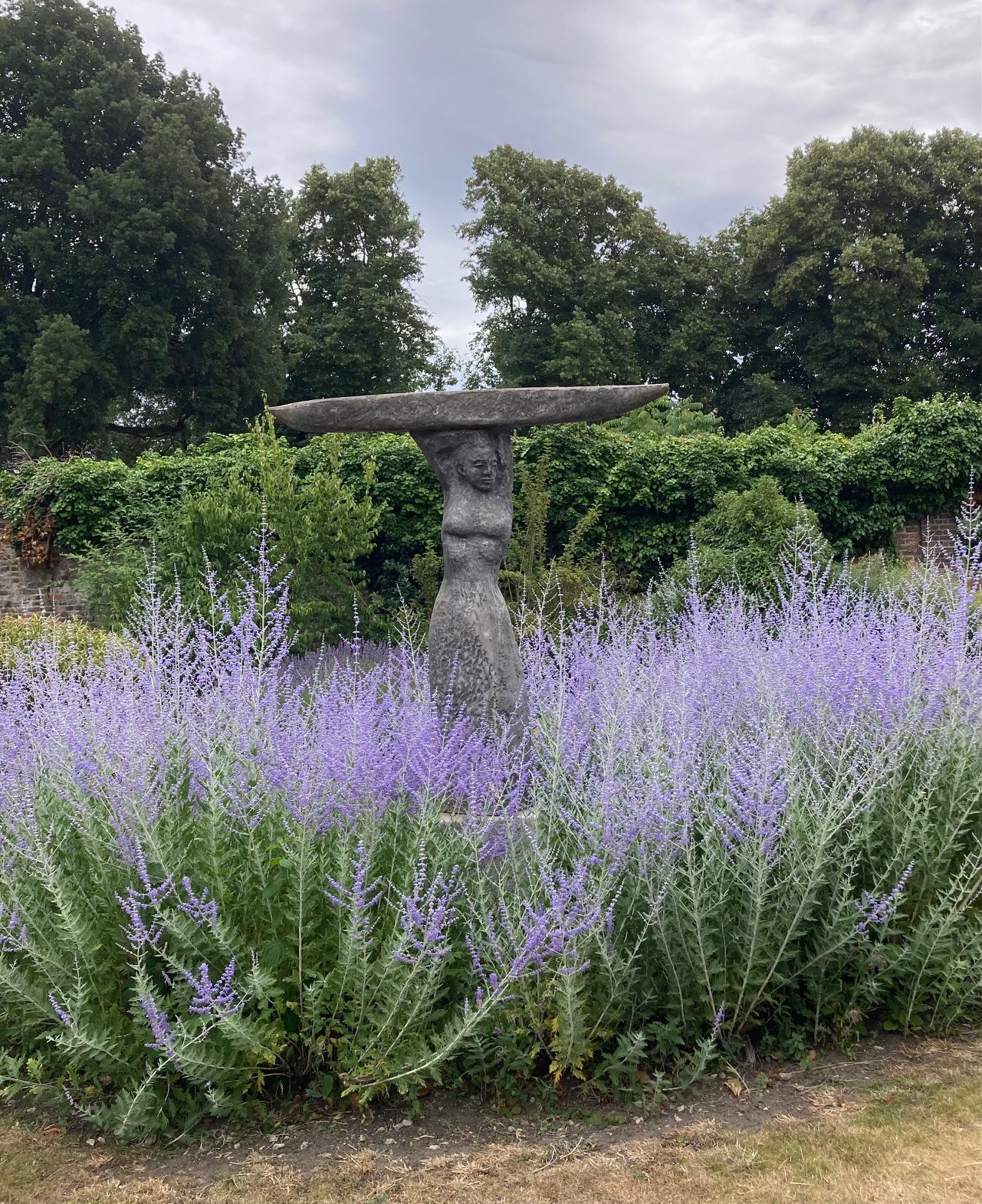
Peace GardenGACO Juneberry TreeOPG
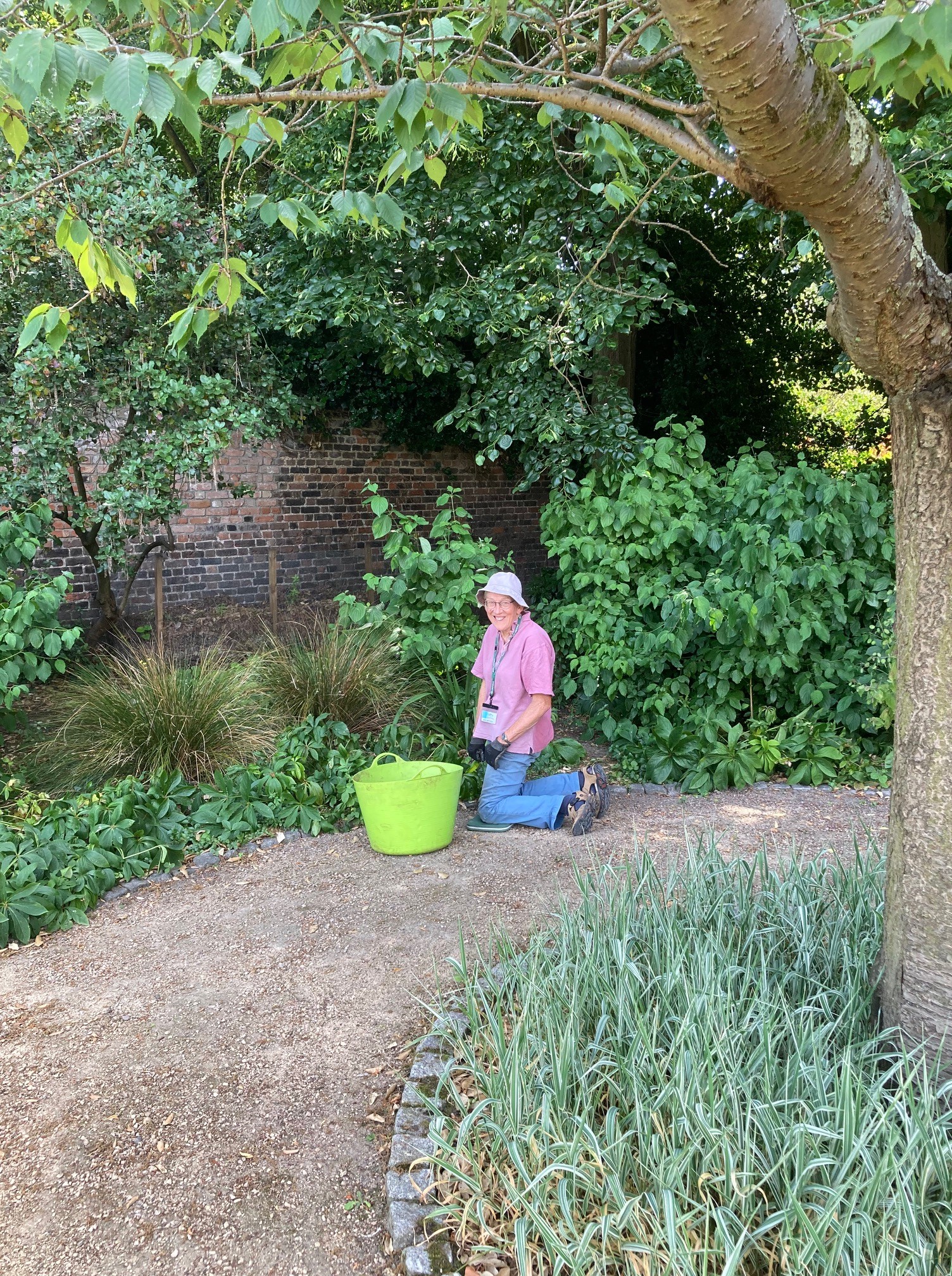
But as the Summer heatwave went on, and ever hotter, the volunteers spent more time working in the shade..
Barbara in the PoppiesJane tidying the shrubberyLinda pruning, in her Ski boot! – Dedication.Lynda tidying up the HelleboresBarbara and Sharon watering
And pretty soon all we were doing was watering. It has been heart-warming to see the volunteers arriving every Tuesday or Thursday, picking up their watering cans and setting off to save many of the plants we planted in to the Old Pond Garden just last year. We have lost remarkably few in the end, and as long as we don’t have a repeat heatwave/drought next year, most should get their roots down and become more resilient for the future. There have been a few casualties, and a few that clearly don’t like where they are. So as soon as Autumn comes, Jason will be directing some tweaks. As August came around, the garden’s colours and textures changed to become Autumnal.
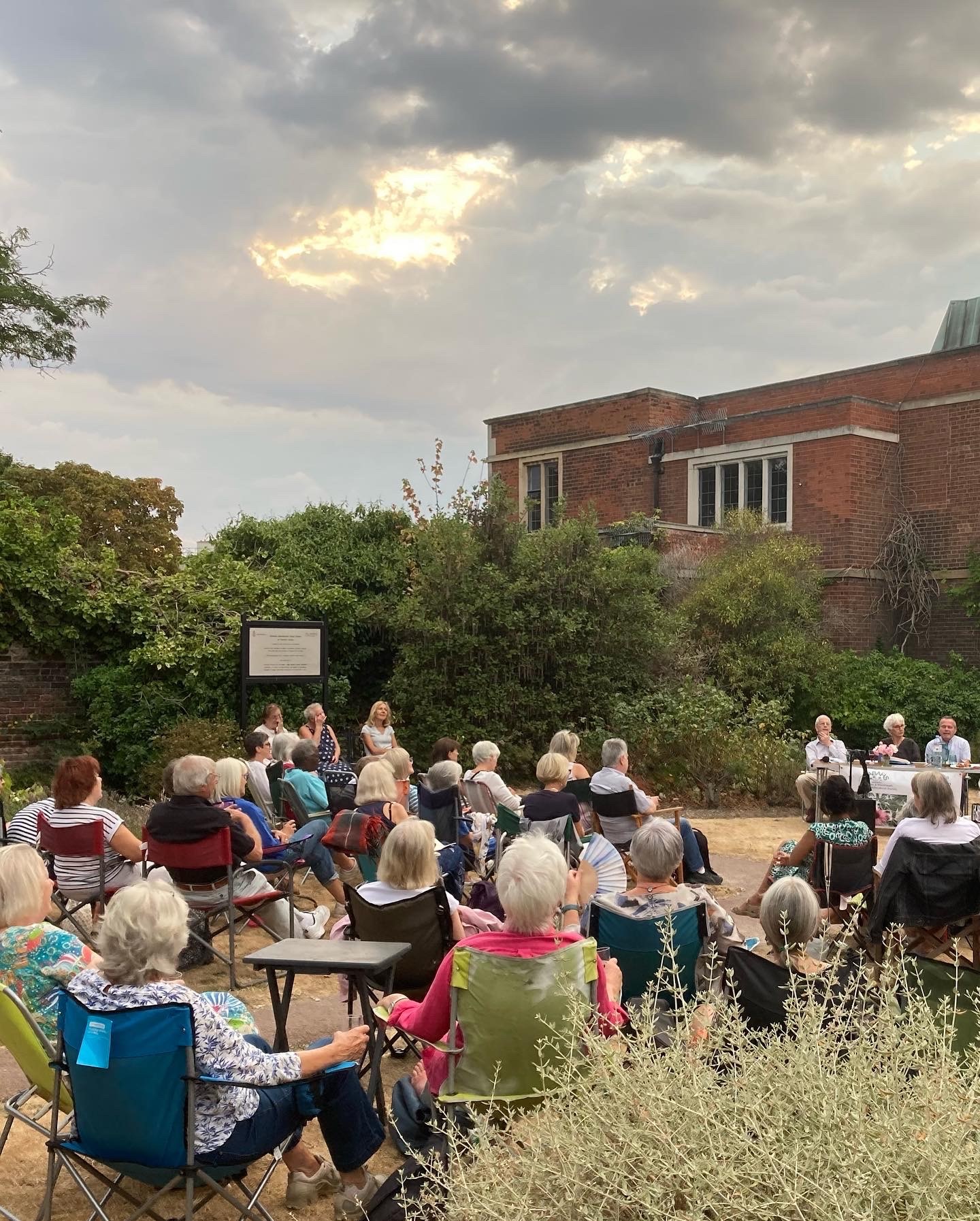
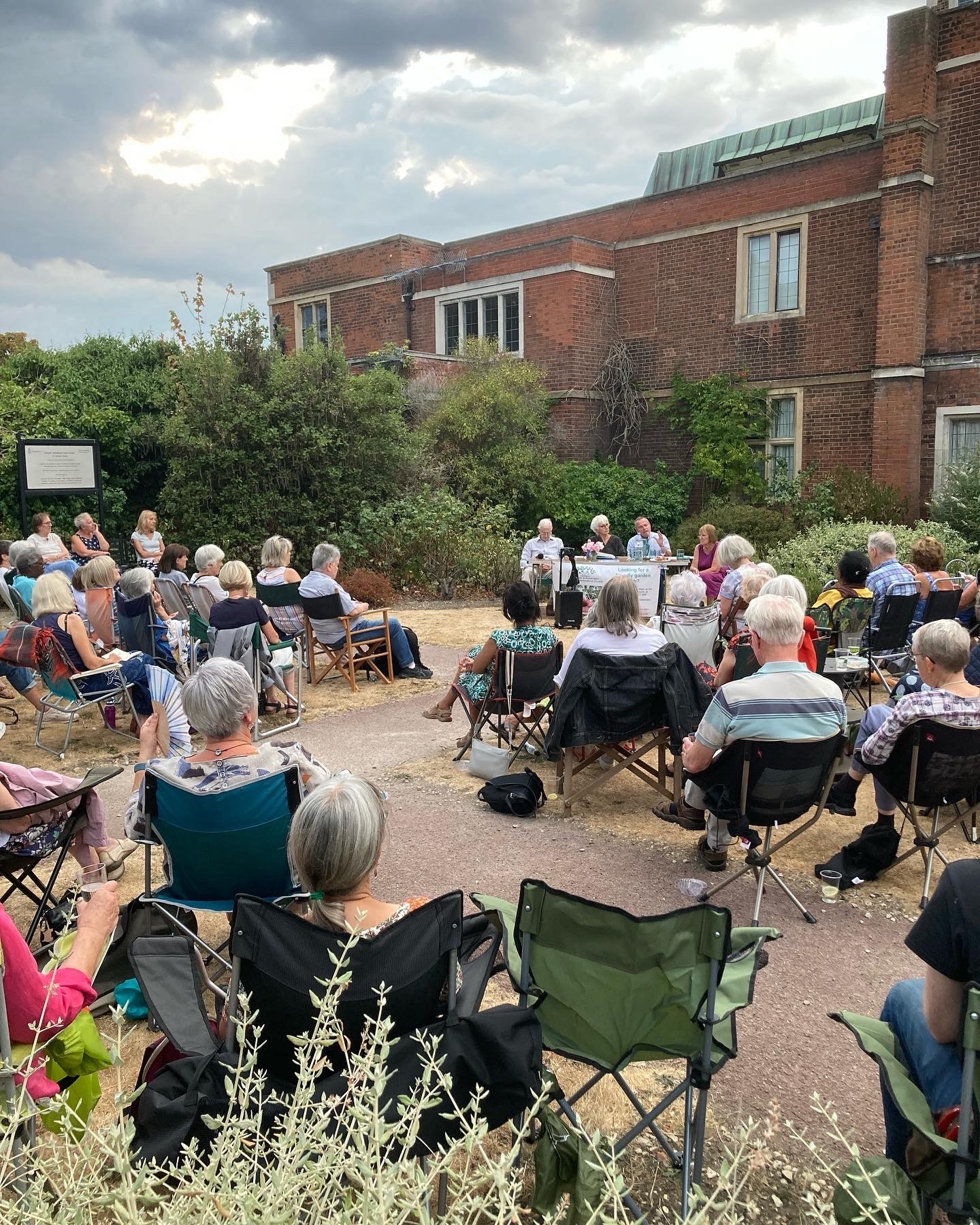
Our annual amateur Gardeners Question Time meeting was once again held in the Peace Garden at Charlton House. Some members will remember last year, when everyone was in thermals and anoraks and it was the coldest August evening for years – ah, not this year we thought, it has been so warm and dry for weeks! Well, best laid plans as they say. Everyone was settled and happily getting in to the swing of questions about the drought. And so of course, the heavens opened!
True to type, we gardeners just picked up our things and decamped to Frilly’s Tea Room for a little break. Thank you to our stalwart committee and helpers who covered things up in the garden (do you know what Doritos and Pringles look like when they are soaked? ugh!). As the thunderstorm carried on, so too did we and the questions continued in the Tea rooms.
Thank you to our panel, especially guest panellist Joe Woodcock, for cheerfully answering our questions, and to Charlton House for letting us drip all over their cafe. It was still a very enjoyable evening, but sad that not many members saw the old Pond Garden in the dusk, lit up with solar lights and looking magical.
The committee will be having a think about whether to have next years GQT meeting in the safety of the Old Library!
People today garden for a whole host of reasons – as a hobby, a delight in horticulture generally, exercise, well-being and being out of doors, to grow their own produce – but, historically at least, gardening has also been seen as a highly moral activity.
By the end of the 19th century the garden was advocated as a way of keeping the working classes away from the public house, where they could be usefully engaged in a more wholesome and productive activity. William Hogarth’s cartoons of ‘Beer Street’ and ‘Gin Lane’ are visual reminders of the conditions which were a cause of concern.
Beer Street and Gin Lane (1751)
John Claudius Loudon (1783 – 1843) championed the creation of public parks to improve both the mental and physical health of working people, so that ‘the pale mechanic and exhausted factory operative might inhale the freshening breeze and some portion of recovered health’.[1] It was Joseph Strutt who picked up on these ideas and put Loudon’s vision into practice to create the Derby Arboretum in 1840. Strutt was very clear on the rationale behind this work: to wean people away from the ‘brutalising pleasures’ they might seek elsewhere and to offer them a new form of ‘rational enjoyment’. In Edinburgh recreation in a park was thought to be a solution for drunkenness and in the Midlands it was thought to lead to a decrease in crime rates.
‘In 1919 the Conservative MP for Chelmsford was reconciled to spending money on housing by the thought that good garden plots would ensure that when the man of the house got home at night “he will find not only a healthy family, but healthy occupation outside where they can go and work together as a family”’.[2] A well maintained garden was also viewed as an indication of a well maintained (and thus moral household). As late as the 1920s and 1930s inspectors were employed to visit the gardens of council estates to ensure that they were being kept tidy.
Vija
[1] Loudon, J.C. (1822) Encyclopaedia of Gardening.
[2] Floud, R. (2019) An Economic History of the English Garden, Penguin Books, p247.
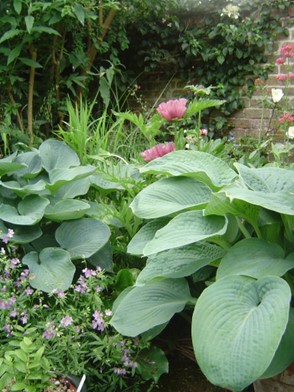
I love hostas, but they have a reputation for being difficult, not least because of their attractiveness to slugs and snails. They are commonly thought to do best in moist partial shade, but this shockingly dry year has been a surprise. As Chris Beardshaw points out, there are several that do well in dry shade, the sieboldiana types in particular. Although many of mine in direct sunshine for most of the day have scorched this year, there are also several that have done surprisingly well in quite dry and sunny conditions.
Hostas were originally named in honour of the Austrian botanist Nichloas Host, but in 1817 the name Funkia was used by a German botanist in honour of botanist Heinrich Funk. The name Funkia remained in use for some time and there are a number of horticultural texts written over this period which refer to Funkias. In 1905 Hosta was reinstated as the genus name by the International Botanical Congress.
I quite like the name Funkia. It makes me think of the plants secretly having a good time after I have gone to bed.
Our Autumn Show will be on Monday, 26 September 2022 in the Old Library at 7.30pm. Please note the change of date, due to The Queen’s funeral. Even with the recent drought problems, there are hopefully some classes that you can enter!
2021 Winner
Most plants seem to have adapted to the hot, dry conditions, although much has ripened earlier than expected. If all else fails, go for the dried seed heads class or bake a cake!
Classes are similar to previous years, but we have been made aware of some confusion between the Floral Arrangement (Class 13) and the Bowl of Flowers (Class 2). In the past, bought flowers were allowed for the Floral Arrangement, but this year we have decided that ALL flowers should be home grown. The emphasis for Class 13 is on the arrangement style of the flowers in the teacup. For Class 2, the Bowl of mixed Flowers, these should also be home grown but judging will be based on the content, the quality and type of flowers, no matter how they are arranged. Hope that helps!
Thanks to Chris and Anna for this year’s Coconut Cake recipe – as many entries as possible in this category please ( but do remember that Members are allowed to eat it after judging, so there is usually none left to take home!)
CLASSES:
1. Vase of flowers, 3 stems of 1 cultivar
2. Bowl of mixed flowers (emphasis on quality of flowers, not arrangement).
3. Vase of shrubs or foliage, 3 or more stems, mixed varieties
4. Display of ornamental seed heads
5. Five Fuchsia blooms, single variety or mixed (flower heads only)
6. Ornamental pot plant (incl. cacti & succulents)
7. Display of fruit, any mixed.
8. Display of vegetables, mixed
9. Tomatoes (dish of 5)
10. Display of herbs
11. Preserves: jam, jelly or marmalade, chutney or relish
‘Rubens Peale with a Geranium’, painted by his brother, Rembrandt Peale, 1801. National Gallery of Art, Washington, USA – Credit: Patrons’ Permanent Fund
I found this photo posted on the blog of Garden History Girl. It’s one of the blogs I have at some stage signed up to and now get regular posts. It is worth checking out (overlook the name) and this one contains some fascinating information on pelargoniums / geraniums and snippets of plant history. If you have never been clear on what are pelargoniums or geraniums, this is the one to look at! And there are some lovely pictures too!
I love Greenwich Park Flower garden and am full of admiration for how their gardeners have gradually adapted, from growing all their plants on site to whatever combination of outsourcing they use nowadays. It usually looks wonderful.
I understand it is a public garden and has to cover those who like the bedding plant tradition, those who expect a wow factor and those who want a bit of modern style.
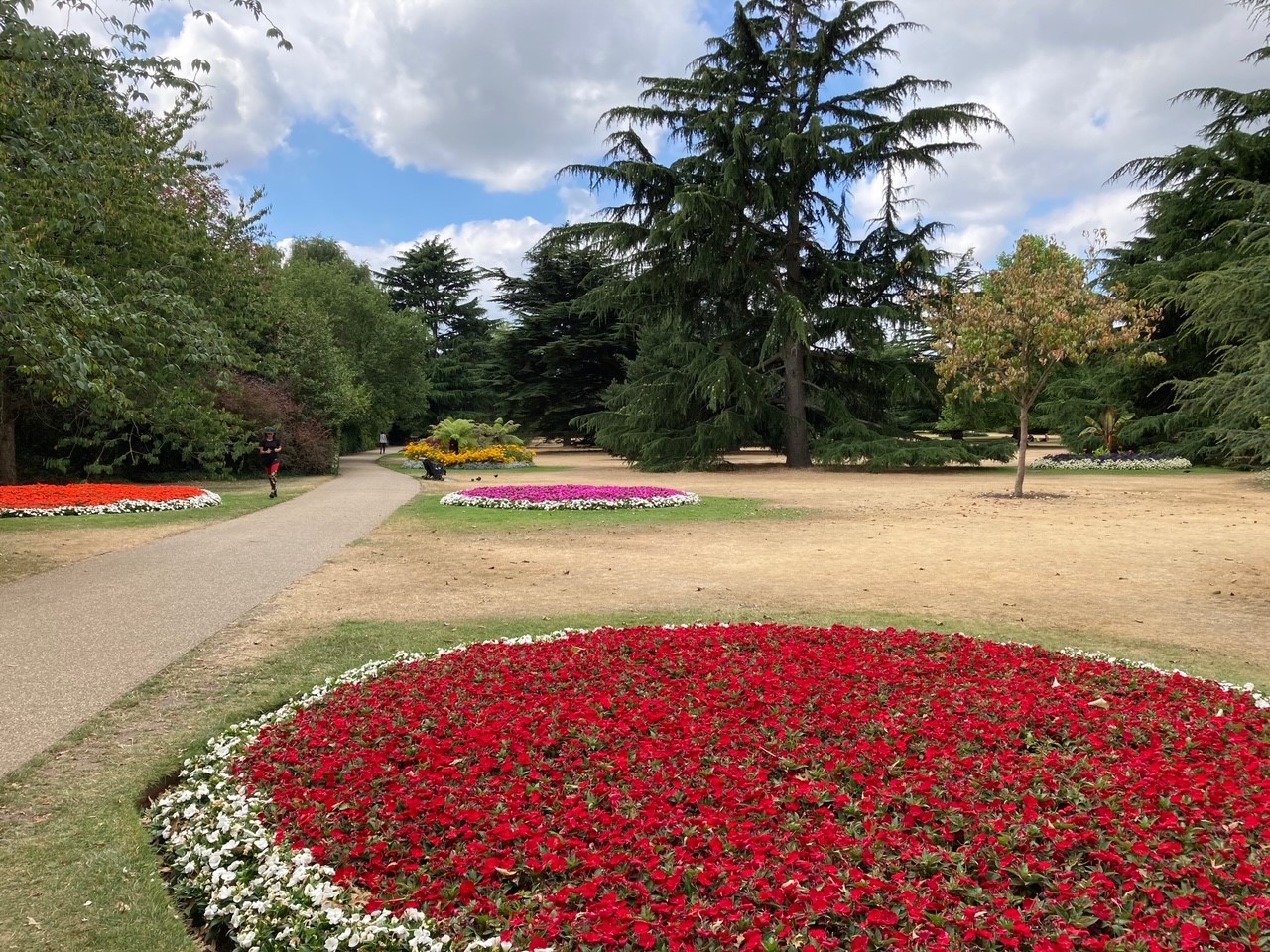
But the current drought has really highlighted the bedding plant issue!
It is eye-catching for all the wrong reasons, little oases of green with the rest of the park straw-dry.
Even traditionalists must wonder what on earth the point is of pouring water on these beds of Impatiens. There are other beds containing tree ferns and perennials and it absolutely makes sense to water expensive plants that will come back and cope in a (hopefully) more normal future year.
This is a personal viewpoint, not necessarily representative of the CABAHS membership, it would be interesting to hear members views..? Perhaps it’s a debate we can have at the Gardeners Question Time meeting on August 15th!
Bedding plants, looking a bit daftTrees stressed in Greenwich Park













 Charlton and Blackheath Amateur Horticultural Society