Last week I was in Greenwich Park, in what was the Old Rose Garden for several decades, and now transformed into a fantastic herbaceous garden, a riot of colour, shapes and forms, tall grasses swaying and intermingling flowering shrubs (find out more about this transformation). I had gone there to see one specific Salvia – and what a show they were putting on!
There was a great turn out for CABAHS’ last meeting of 2025. As usual, there were refreshments (this month featuring mini-stollen and mince pies!), also a plant sales table, a raffle, the Show Table and – the main event – an engaging talk from Dr David Marsh, garden historian and blogger.
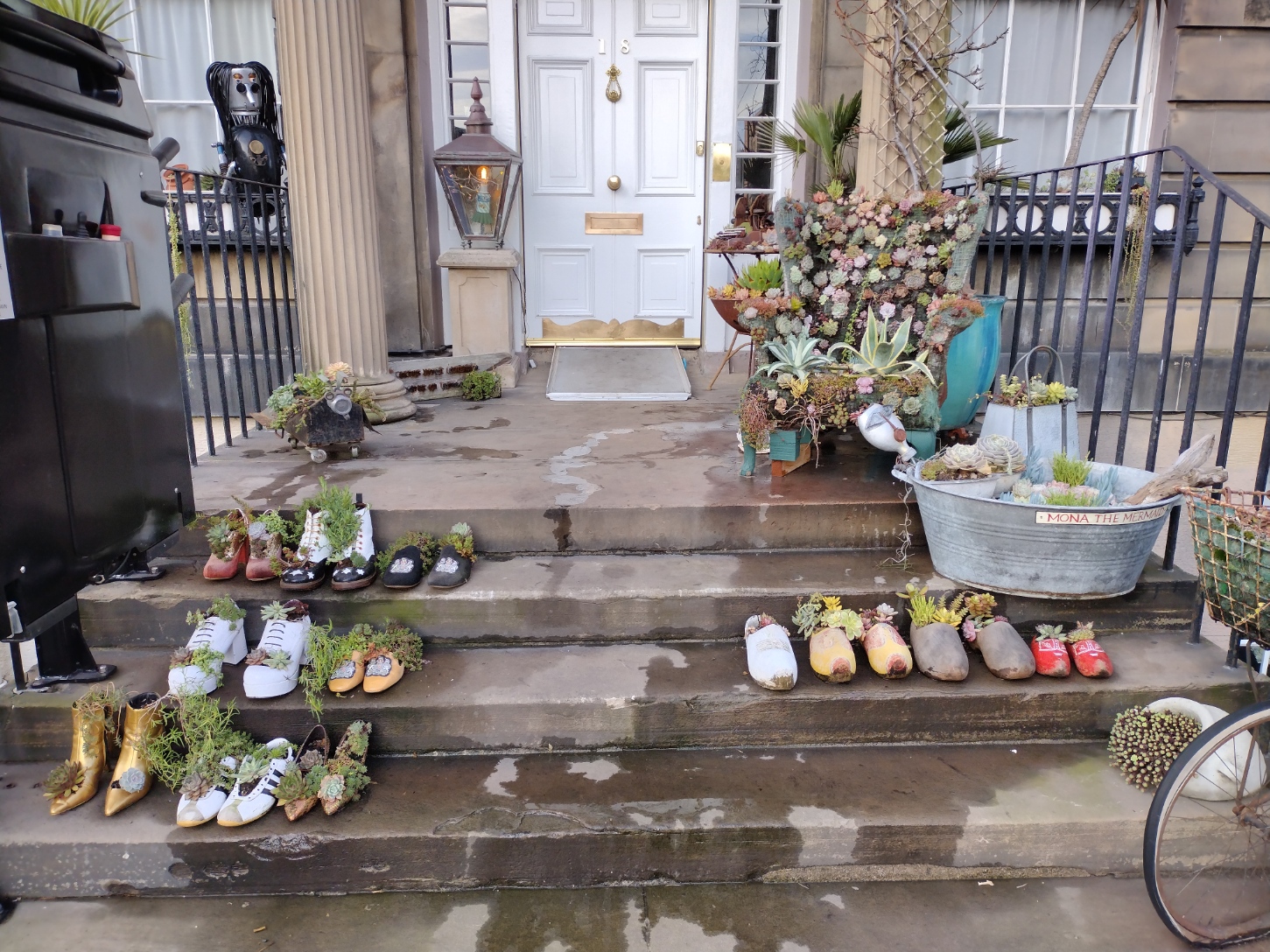
I spent a weekend this February in Edinburgh, and came across this interesting doorstep display on my travels around the city. Some new ideas for displaying your succulents …!
I also visited the Royal Botanic Garden. The morning I visited was bright, cold and calm, in stark contrast to the previous weekend when the garden had been ravaged by storm Eowyn. The sad remains of the garden’s tallest tree – a 166 year-old conifer – were clear to see.
The sun was shining and the sky a bright blue but the frost remained in the shadier parts of the beds and the Rhododendrons had bowed their leaves to protect themselves from the cold. But they were also covered in buds, waiting to burst forth in a few weeks time.
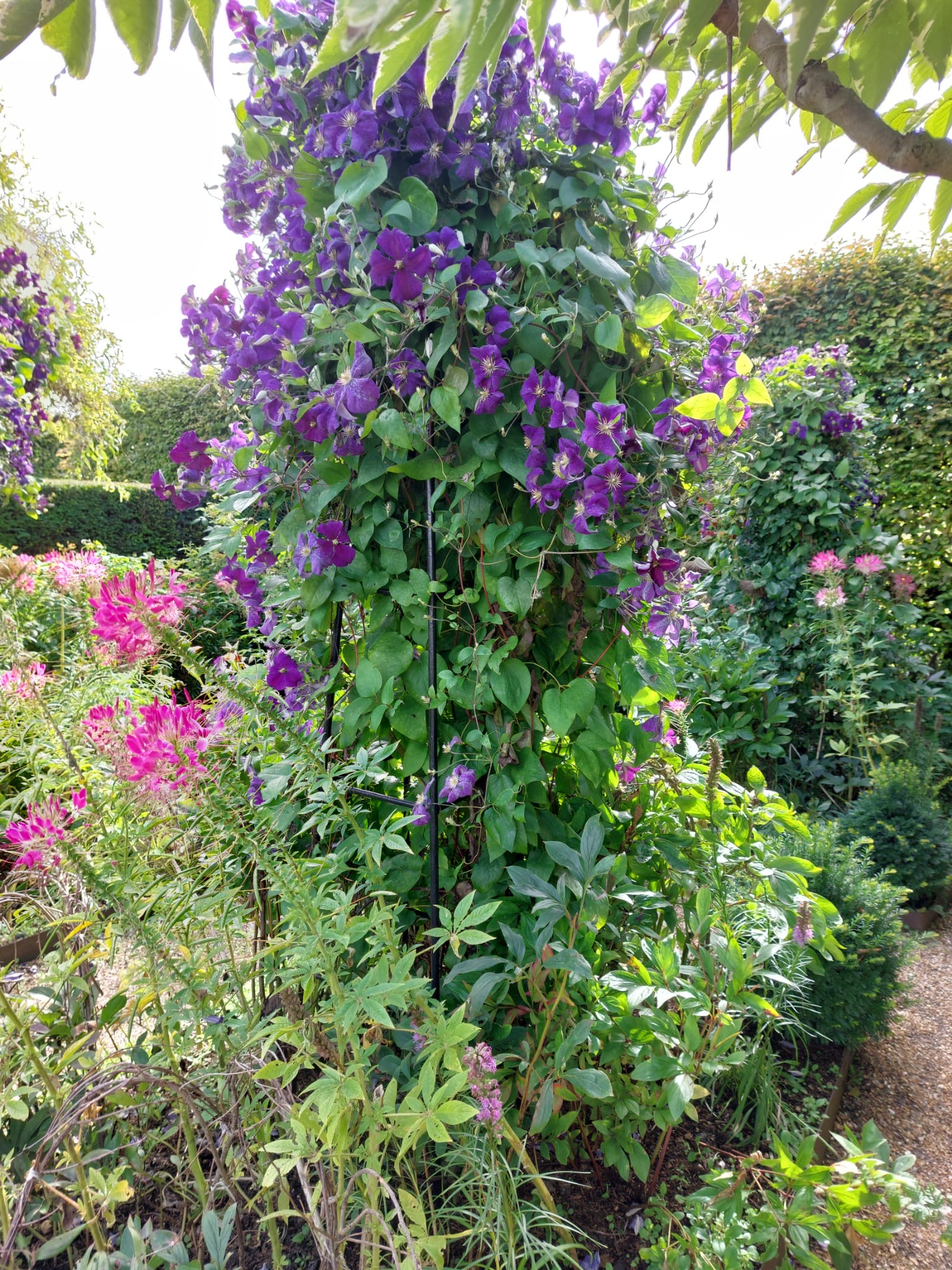
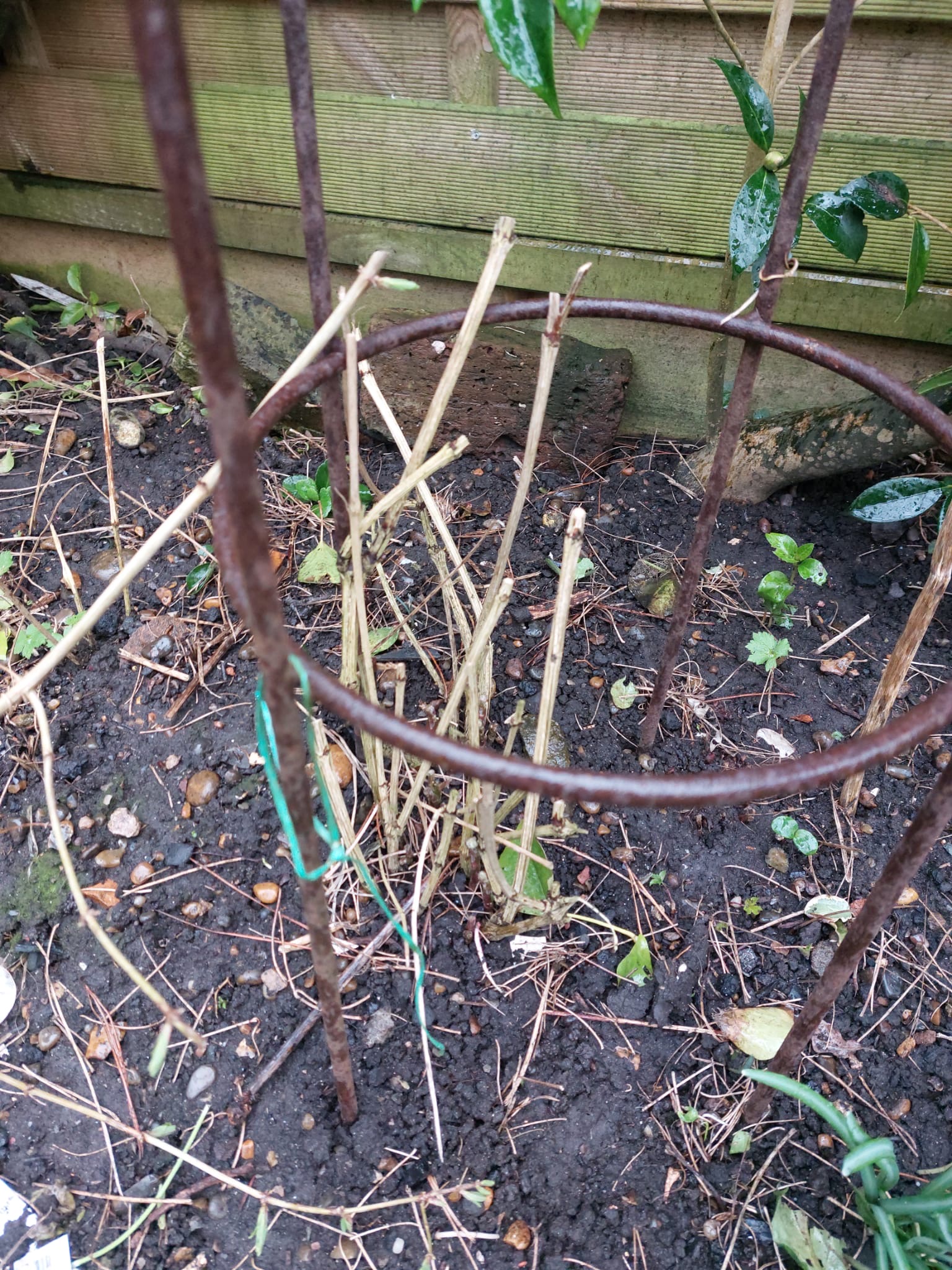
1. It’s time to cut back those late-flowering clematis…the viticella small-flowered types and the ones flowering after June. All that rain last year made mine grow rampantly so cut back hard to just above a bud, 6 to 12 inches from the ground, and give them a feed and a mulch.
Late flowering viticella ClematisClematis viticella – two varietiesClematis cut down to 12 inches
2. You can also cut back some of the slightly early-flowering types like jackmanii varieties and Comtesse de Bouchard, but it’s best to check individual varieties or you’ll lose all your flowers for this year. Other varieties such as early varieties like Montana should be trimmed back after they flower in Spring, unless overgrown – when they require drastic action and you’ll be sacrificing the flowers for a year or two. Anyway, please check.
3. If the ground is frozen or too wet then don’t be tempted to walk on it for fear of damaging the structure. Seems impossible at the moment to get much done!
If you wish to see the snowdrops now, I can highly recommend the Royal Botanic Gardens Kew. The gardens are easy to reach via the District Line to Kew Station. The woodland garden (near the Princess Diana Conservatory) has meandering paths beneath the trees, where an array of snowdrops, aconites, hellebores and mauve-coloured crocuses (the shade of colour I’ve only ever seen at Kew) are displayed to a wonderful effect. Visiting on a beautiful sunny day makes the gardens appear even more delightful.
The magnificent sandstone rock garden nearby, which mimics mountainous regions, is an important feature of the gardens, and here and there, in mostly sunny locations, could be found very choice, small clumps of snowdrops which are labelled for the visitor. I would love to have any of these growing in my garden and I thought you might too.
Galanthus ‘John Gray’: This early-flowering snowdrop is regarded as very choice indeed, which was seemingly found in the Suffolk garden of the late John Gray. I was captivated by the shades of lime-green on the inner segments.
I have been spending some time recently in Northern Ireland, and was enchanted to find the Belfast Botanic Gardens are right on my doorstep here.. just waiting to be explored.
The gardens started in 1828, when the “Belfast Botanic and Horticultural Society” was formed and a 14 acre site purchased. The Palm House was built in 1839 by ironmaster Richard Turner of Dublin, who went on to build the Palm House at Kew a few years later! If this one was a practice run, it is still really impressive.
It is not large, but cleverly designed to incorporate a Cool Wing, a central Dome which is sub-tropical, and a Tropical wing, so it can house a wide range of plants. Sadly it was closed for repairs on the day of my visit, courtesy of the recent winter storms.
There is another glasshouse on the site, the Tropical Ravine House, which is just amazing. It was built by “the Head Gardener and his staff” (Jason & the Garden volunteers – there’s an idea!) and was finished in 1889. Uniquely constructed into a hillside, so the visitor walks around a balcony and looks down into a moist glen filled with tropical planting.
It was renovated in 2019 with help from the Friends of Belfast Botanic Gardens, who clearly play a large part in supporting and maintaining these gardens. They have also created a fascinating new Global Medicine Garden just to the side of the glasshouse. https://fobbg.co.uk/
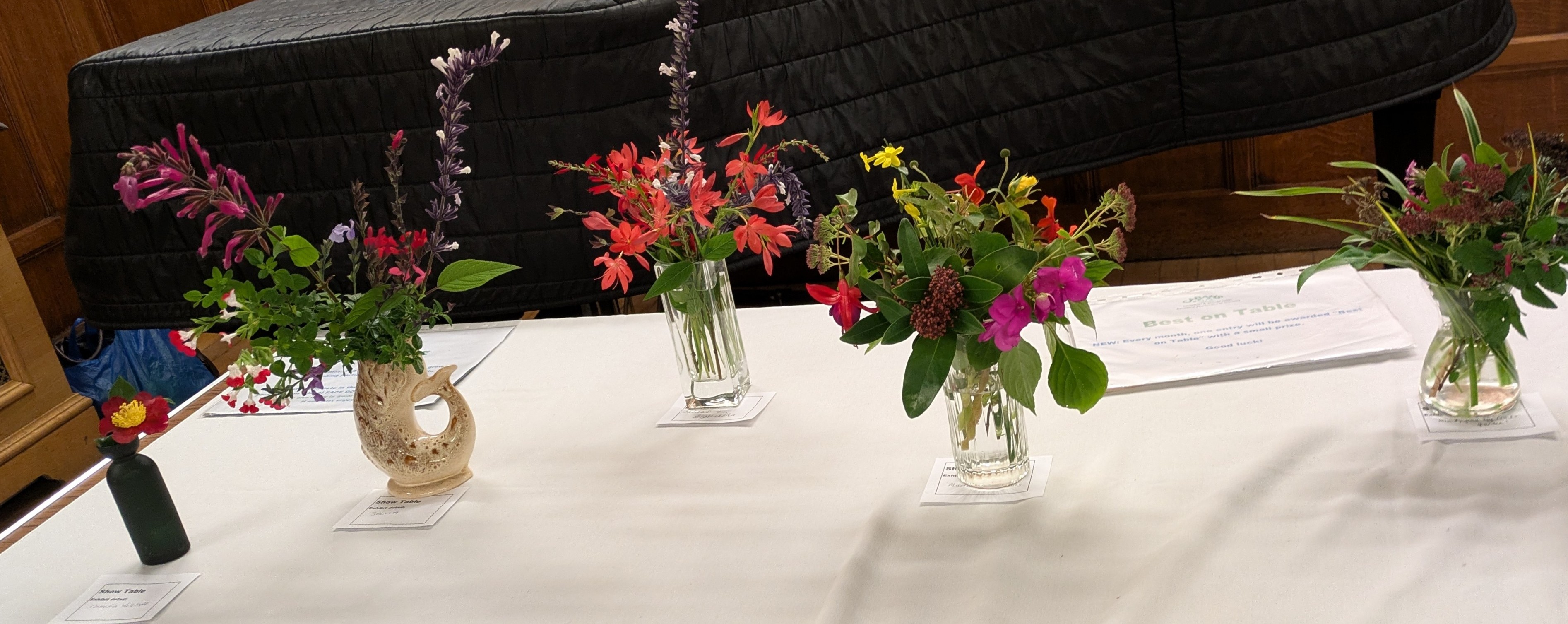
Our first meeting of 2025 was very well attended. The speaker and the topic obviously attracted a good audience. The Show Table received a good selection of displays, with Jean’s a worthy winner of Best on the Table.
Our speaker, Fergus Garrett, the highly influential plantsman and horticulturalist, has been Head Gardener at the internationally acclaimed Great Dixter Garden in Northiam, East Sussex since 1993 and is the CEO of the Great Dixter Charitable Trust. He gave an excellent, wide-ranging talk on how to keep our gardens looking vibrant and spectacular all the year round. He explained how to plant for a long flowering season with plants co-existing in one place, but performing at different times. He used photographs of the spectacular gardens at Great Dixter to illustrate his points. He said Great Dixter had the advantage of scale and greenhouses but it is possible to scale down what they do at Great Dixter and use their scheme in our own gardens with minimal labour.
He particularly used the magnificent long border at Great Dixter as an example of how to plan a long flowering season. How to use structural under-planting, interlaying and interplanting with bulbs, self-sowers, perennials, clumps of bedding plants and climbers.
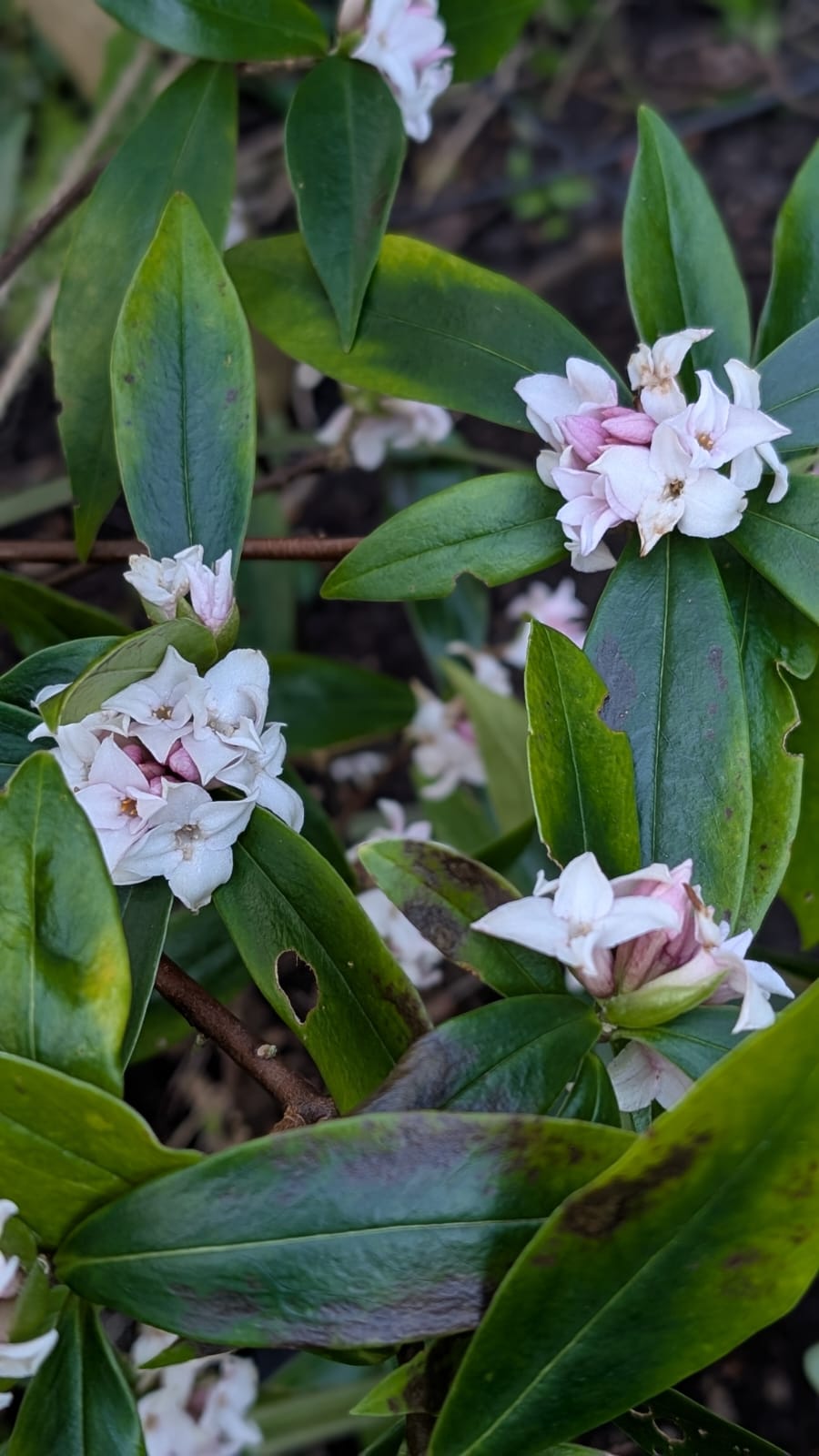
In the bleak midwinter, in amongst the primroses and snowdrops, the New Year brings excitement as the Daphne shrubs come into flower. For one member, several are looking looking extremely handsome and are, at present, the highlights in her garden.
Daphne odora ‘Perfume Princess’ behind Astellia
Daphne odora ‘Perfume Princess’: This evergreen to semi-evergreen variety was bred in New Zealand and is considered the most perfumed of all the Daphnes. Between January and March, this shrub, which is regarded as hardy (although it suffered from the recent heavy frosts) will send out pale-pink blooms amongst its upright, handsome foliage, reaching a height of 1-1.5m over the years. Our CABAHS member says it has “wonderful scent and made a showy plant in just a few years.” I note that there is also a variety Daphne ‘Perfume Princess’ White on the market that would be a bonus to any garden.
1. Prune Wisteria this month and next by taking all side shoots back to 2 or 3 buds. Very old plants may need severe pruning to show off the flowers.
Very tangled Wisteria in need of pruning!
2. Start pruning roses in earnest although some are still unbelievably flowering. Remove any foliage with blackspot and don’t compost. Old roses respond well to hard pruning so don’t be afraid, removing all dead and dying wood and cutting stems back to above a bud.
3. I had to remove dead Clematis shoots from a Daphne Jacqueline Postill and in doing so pulled off some of the flowers so take care and do it soon if you can. But leave the main prune until next month.
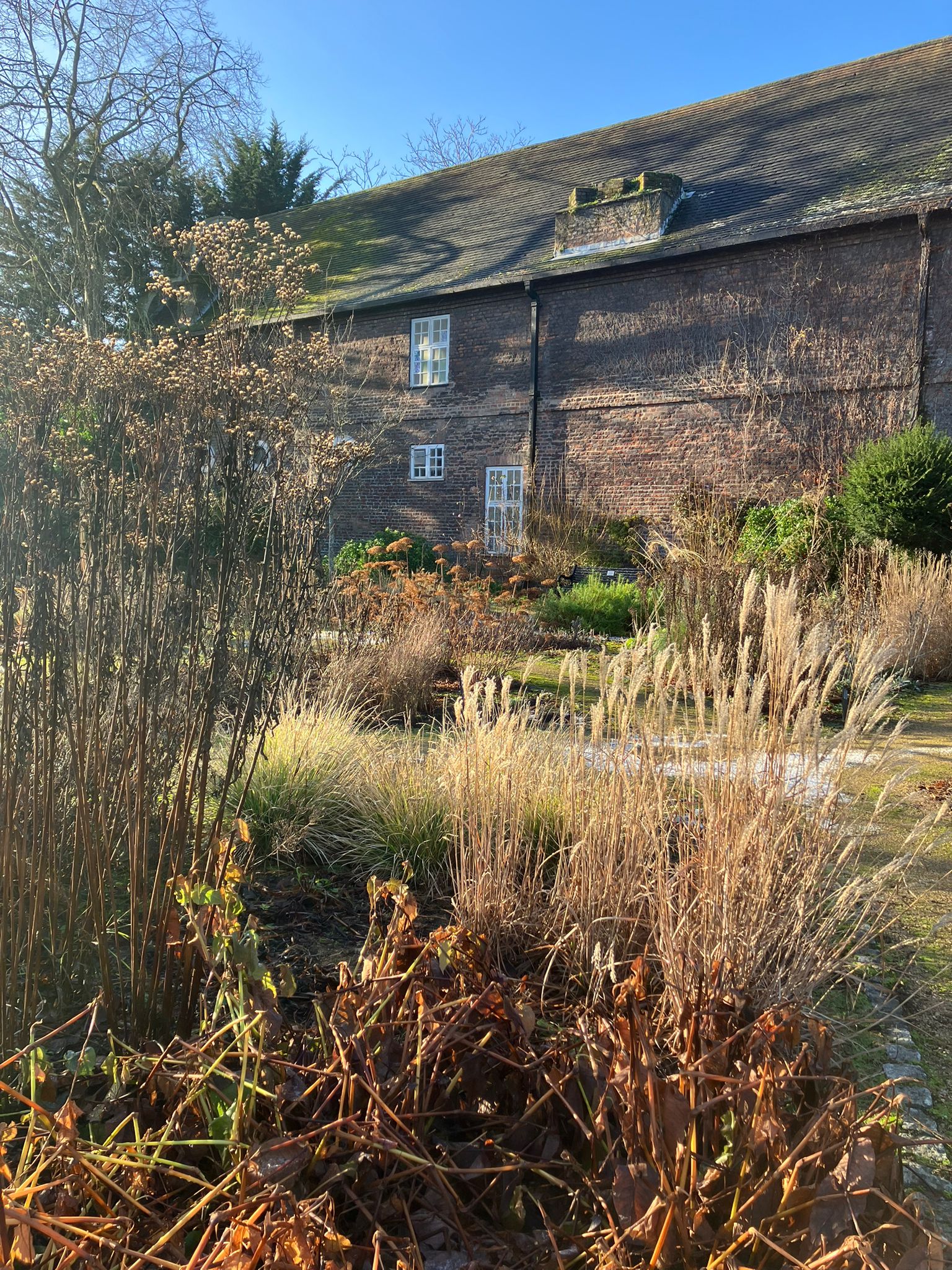
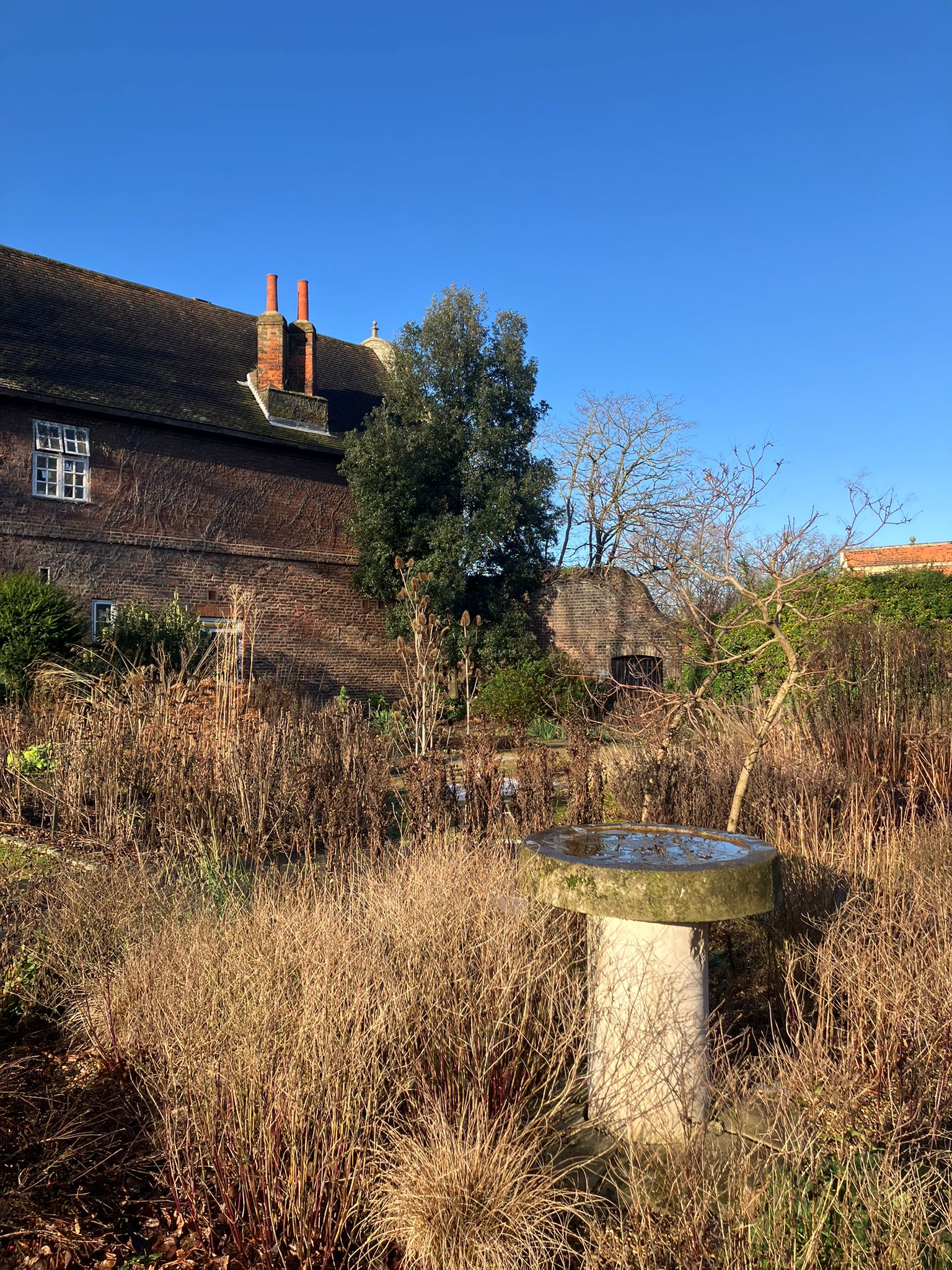
Another cold start to a new year allowed the volunteers to take a step back from gardening and undertake a second survey of plants in flower at Charlton House. This had been done at the beginning of January 2024 and it was interesting to compare during a gentle walk round on 9th January 2025. At first glance there seemed to be little flowering. Making a thorough search with fifteen of us, along with Jason, we found many that were on last year’s list as well as some unexpected interlopers.









 Charlton and Blackheath Amateur Horticultural Society