Pat’s 10 jobs for November 2025

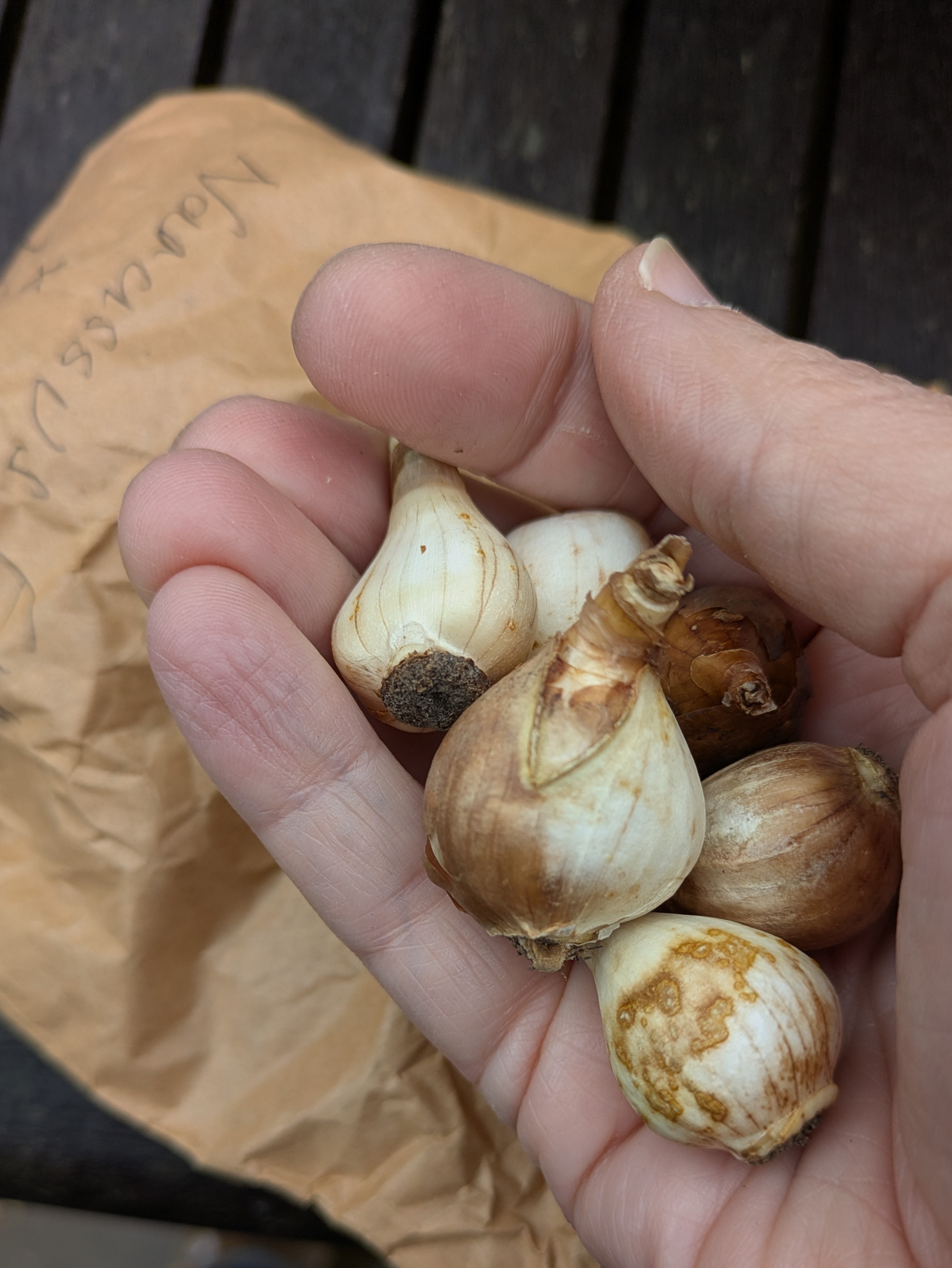
1. You can start planting tulips now, either in pots or in the ground. The deeper they are planted in the ground the more chance there is of them reappearing next year – but do protect them well from squirrels who love to eat them.

2. It’s not too late to plant Narcissus and other bulbs like Allium, but again as deep as you can if planting in the ground as squirrels do love to lunch on Allium.

Continue reading Pat’s 10 jobs for November 2025

Pat’s 10 jobs for July 2025

1. If herbs like thyme have finished flowering, trim them back to keep them compact and use the trimmings to do some cuttings.

2. Stake Dahlias before they get too tall and straggly or the stems may snap. Keep well watered in this dry weather.

3. To conserve water and before we get a hosepipe ban, just water around the roots of plants and mulch them if you can. Some are really suffering at the moment. So why not start sowing seeds of Eryngium giganteum ‘Miss Wilmott’s Ghost’ for a drought proof plant for next year? Loved by pollinators too.

Continue reading Pat’s 10 jobs for July 2025

Pat’s 10 jobs for June 2025

1. Plant out Dahlias in a sunny spot in fertile soil adding some compost to the planting hole. I have to surround mine with Strulch on my allotment to protect them from the hundreds of slugs and snails lurking all around.

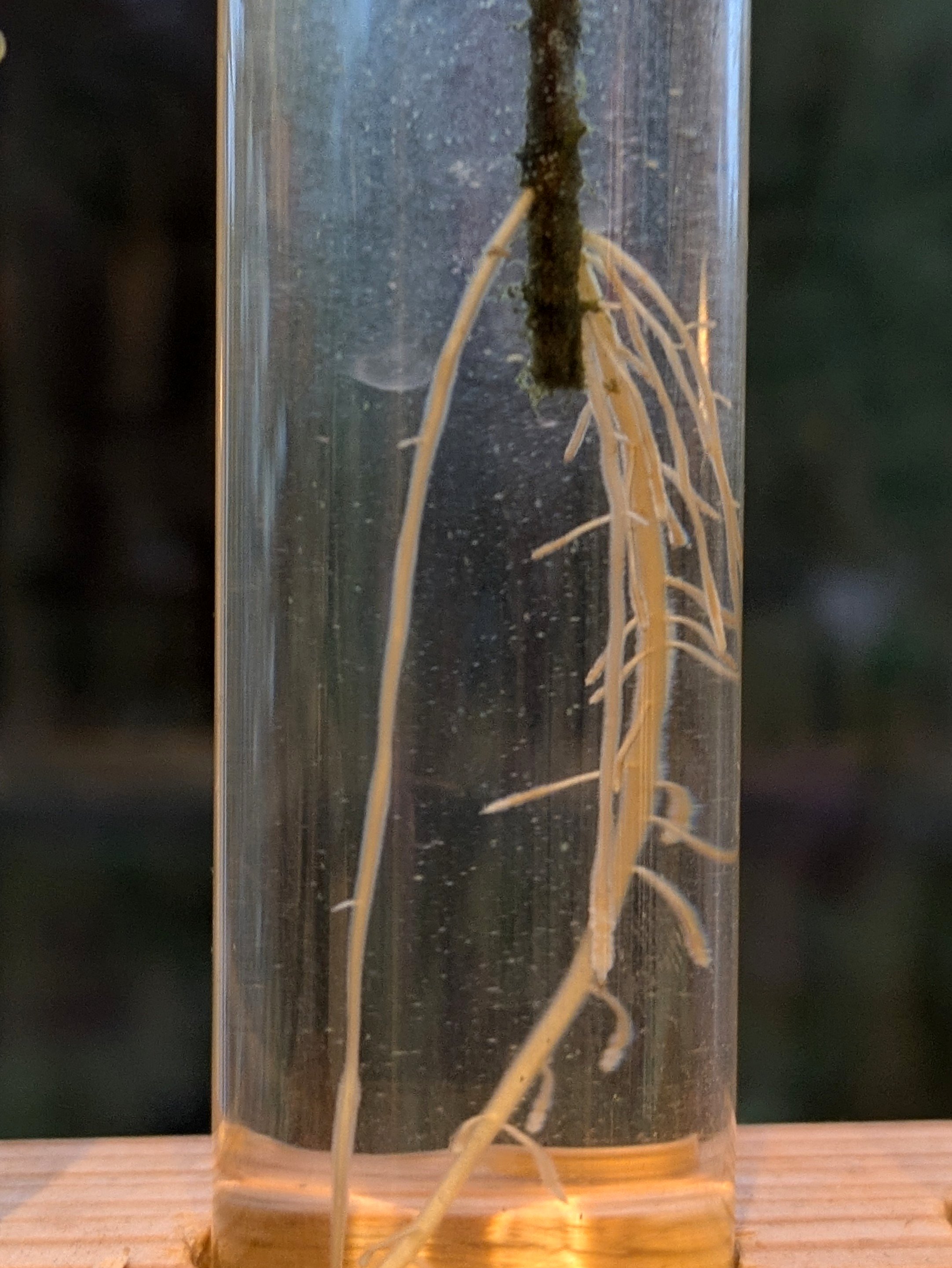
2. Take softwood cuttings now of Anthemis, Salvia, Verbena, Penstemon and Fuchsia. Cut below a leaf node and dibble around the edge of a pot. Salvias will also grow fine roots in water to give them a head start.

3. Look out for hellebore seedlings around the base of your favourite plant. The resulting plants may not resemble the parent but they could be even better.

Continue reading Pat’s 10 jobs for June 2025

January 2025 Talk: Succession Planting for a Long Season

Our first meeting of 2025 was very well attended. The speaker and the topic obviously attracted a good audience. The Show Table received a good selection of displays, with Jean’s a worthy winner of Best on the Table.

Our speaker, Fergus Garrett, the highly influential plantsman and horticulturalist, has been Head Gardener at the internationally acclaimed Great Dixter Garden in Northiam, East Sussex since 1993 and is the CEO of the Great Dixter Charitable Trust. He gave an excellent, wide-ranging talk on how to keep our gardens looking vibrant and spectacular all the year round. He explained how to plant for a long flowering season with plants co-existing in one place, but performing at different times. He used photographs of the spectacular gardens at Great Dixter to illustrate his points. He said Great Dixter had the advantage of scale and greenhouses but it is possible to scale down what they do at Great Dixter and use their scheme in our own gardens with minimal labour.

January 2025 Talk audience

He particularly used the magnificent long border at Great Dixter as an example of how to plan a long flowering season. How to use structural under-planting, interlaying and interplanting with bulbs, self-sowers, perennials, clumps of bedding plants and climbers.

Continue reading January 2025 Talk: Succession Planting for a Long Season

August 2024: Gardeners Question Time

An entertaining and informative evening was had at this year’s Gardeners Question Time. As usual, it enabled members to get advice on their gardening problems, and to air their gardening frustrations. Chaired by Sir Nicolas Bevan, the CABAHS President, the panel also comprised Tom Brown, the Greenwich Park’s Head Gardener, and Pat Kane, a long standing CABAHS member.

GQT Panel

Most of the questions were sent in by members beforehand. They covered a broad range of gardening areas and problems: growing hollyhocks; aphid control; tree size; cistus, salvia and sisyrinchium pruning; how to grow dahlias; what killed my rose; problems with apple trees and rambling roses; how to encourage children to get involved in gardening; recommending a fertiliser for yew hedges; the cause of curly cucumbers; dealing with self seeding; and problems with bamboo.

Continue reading August 2024: Gardeners Question Time

Pat’s Jobs for July

1. Top of the list for July is pruning wisteria, taking back that whippy growth to 2 to 3 buds from the main stems.

2. Sweetpeas should be flowering by now so make sure to keep cutting the blooms and give them a feed and plenty of water. They cease flowering quickly if not picked twice a week. 

Vase of sweetpeas

3. Deadhead all your perennials and annuals regularly unless you want them to set seed for next years sowing.

Continue reading Pat’s Jobs for July

More on self-seeders

As Vija’s previous blog (‘Shout out for self-seeders‘) mentions, this is the time of year when self-seeders pop up in the borders. If they are valued border plants but you just have too many, before you whip them out please think about potting some up for a future CABAHS plant sale. Although it looks like we can’t have full meetings for a while yet, we are aiming at holding a plant stall at Charlton House, probably at the end of July or early August. Just remember it’s important to identify and label any potted-up specimens very clearly, especially if it’s one that tends to be a “bit vigorous”! If you aren’t sure, do send a picture in, we have lots of expertise among our membership!

Seedlings
Clockwise from top left, Welsh poppy, Honesty, Foxgloves, Spring Pea

Other top self-seeders are Verbena bonariensis and Astrantia:

Viv

Shout out for self-seeders

I have recently watched two online Lectures from Fergus Garrett. These are replacing the events which had been planned at Great Dixter. More are planned. The second lecture was on the subject of self seeders in the garden. Of course, Great Dixter uses these extensively and it was interesting to see how self seeding is managed by the team there and how much they value the contribution the self seeders make to the herbaceous borders.

I have never planted Valerian, but it pops up in random spots and this year makes a lovely splash of colour combined with Salvia ‘Jezebel’, and a Californian poppy. Forget-me-nots I have to be careful with as they are smotherers. But primroses are a joy (apart from when they get into the lawn). Tanicetum (tansy) and the grass Milium effusum (wood millet) make a lovely splash of colour in late spring and Erigeron karavinskianus (Mexican fleabane) makes itself at home in many inhospitable corners. Although I allow a large number of Pulmonaria (Lungwort) to provide an early food source for bees, these can be a problem if I am not ruthless, so they have to be thinned out when they finish flowering.

Part of my garden includes a gravel path and a number of plants have self seeded there very generously over the years. Many of these I take out and pot on to be used in my own garden, or give away or bring to the sales table. On occasion, this has even included Phlomis and Clematis. Spotting the gems before I tread on them takes care!

In my garden, as in all gardens, there are some plants which seem not to like where they have been planted and have made their way to anothePlume poppyr spot where they feel far more comfortable. I am thinking in particular of the Plume Poppy, Macleaya microcarpa. It has completely ceased to exist in its original spot and is now doing very well a good 5 metres further along the border. In fact, it actually looks better there. Once again, I am reminded of the maxim that plants will grow well if you provide them with the conditions  which they need to succeed. Alternatively, it seems they find these for themselves.

For more Fergus Garrett lectures, see: https://www.greatdixter.co.uk/whats-on/events/online-lectures-2020/ 

Vija