If your own space is looking ‘a bit green’ at the moment, think about adding annuals to liven up your garden in 2026. Here are a few I highly recommend:
Zinnia
This year I’ve grown Zinnia elegans SPRITE MIXED at my allotment and they are looking good – tall, healthy, robust, colourful and bee-friendly. I am very pleased with them, as the flowers themselves are a mixture of vibrant and subtle shades, and, as an added bonus, no signs of stem rot (fungi/bacteria more prevalent in warm, wetter summers that attack the stems).
I sowed the seed straight into the soil in two rows. Two or three weeks later, I thinned the seedlings and replanted those thinnings into a third row. So, they are tightly packed and they don’t seem to mind that and I don’t need to stake them. Flowering from July to October, this robust variety is perfect for displaying in gaps in borders or containers. And ideal for picking, although I don’t have the heart to do that yet!
1. If herbs like thyme have finished flowering, trim them back to keep them compact and use the trimmings to do some cuttings.
2. Stake Dahlias before they get too tall and straggly or the stems may snap. Keep well watered in this dry weather.
3. To conserve water and before we get a hosepipe ban, just water around the roots of plants and mulch them if you can. Some are really suffering at the moment. So why not start sowing seeds of Eryngium giganteum ‘Miss Wilmott’s Ghost’ for a drought proof plant for next year? Loved by pollinators too.
1. It is especially important to keep Camellias and Rhododendrons damp at the roots this month as this is the time that the buds form for next Spring. Water well and mulch if you can.
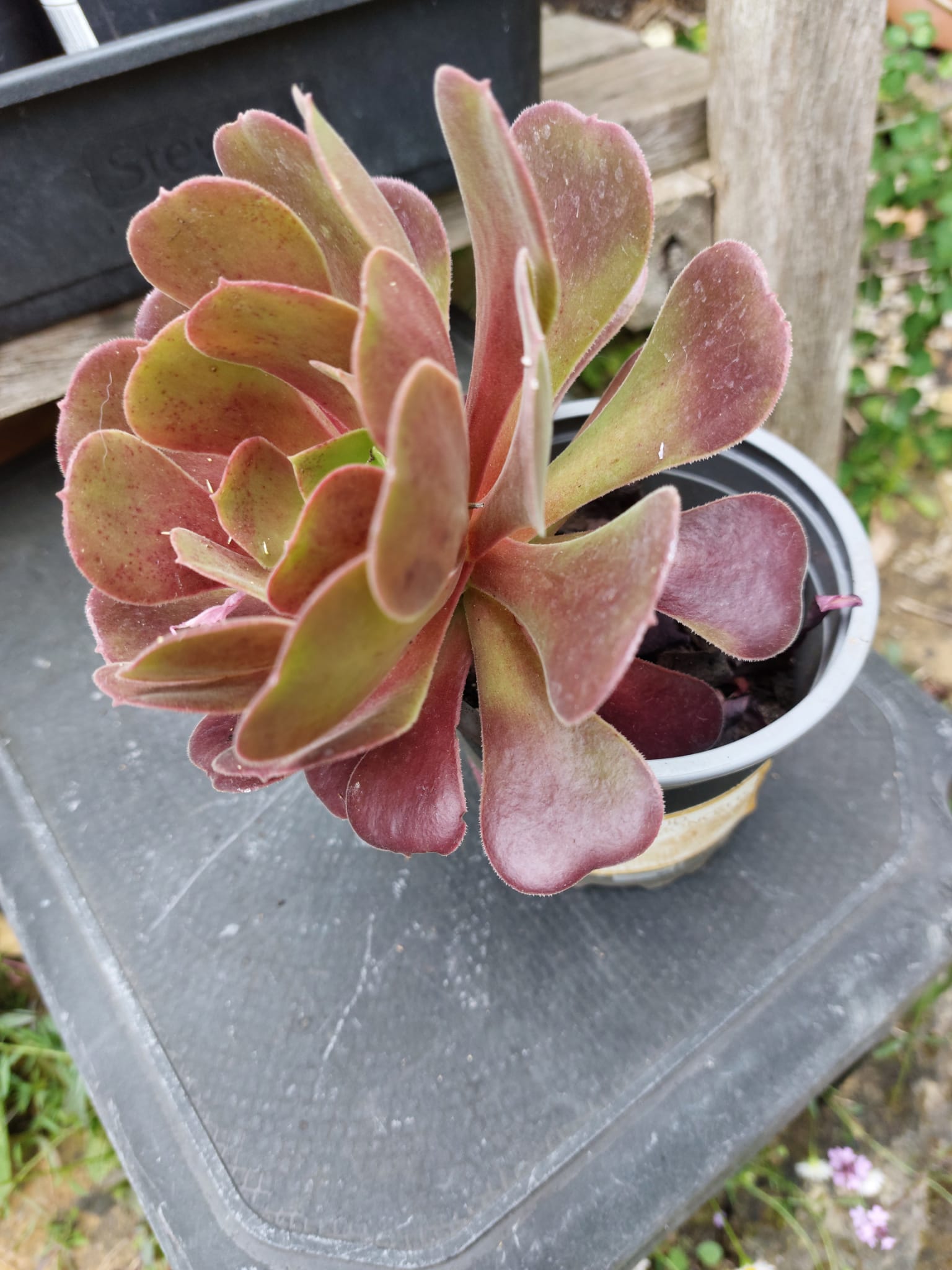
2. Take Aeonium cuttings now by severing leggy leaf stems a couple of inches below a cluster. Leave the stem end to callous over, then push into gritty compost and keep in a shady spot until roots start to form.
1. Prune hardy fuchsias now both in pots and in the ground to promote new growth and to prevent the plants from becoming too woody.
2. Plant out pot grown sweet peas now making sure to pinch out the shoots to promote bushy plants. You can also sow directly in the ground now if you didn’t sow earlier but watch out for slugs munching new seedlings.
3. Someone said the other day that they hadn’t cut back their clematis but I don’t think its too late as the growth on them is phenomenal. It just means they will flower a bit later but then that extends the season.
Pat’s unpruned clematis already at the top of the arch!Pat’s cosmos seedlings – germinated in under a weekPat’s Cosmos flowers
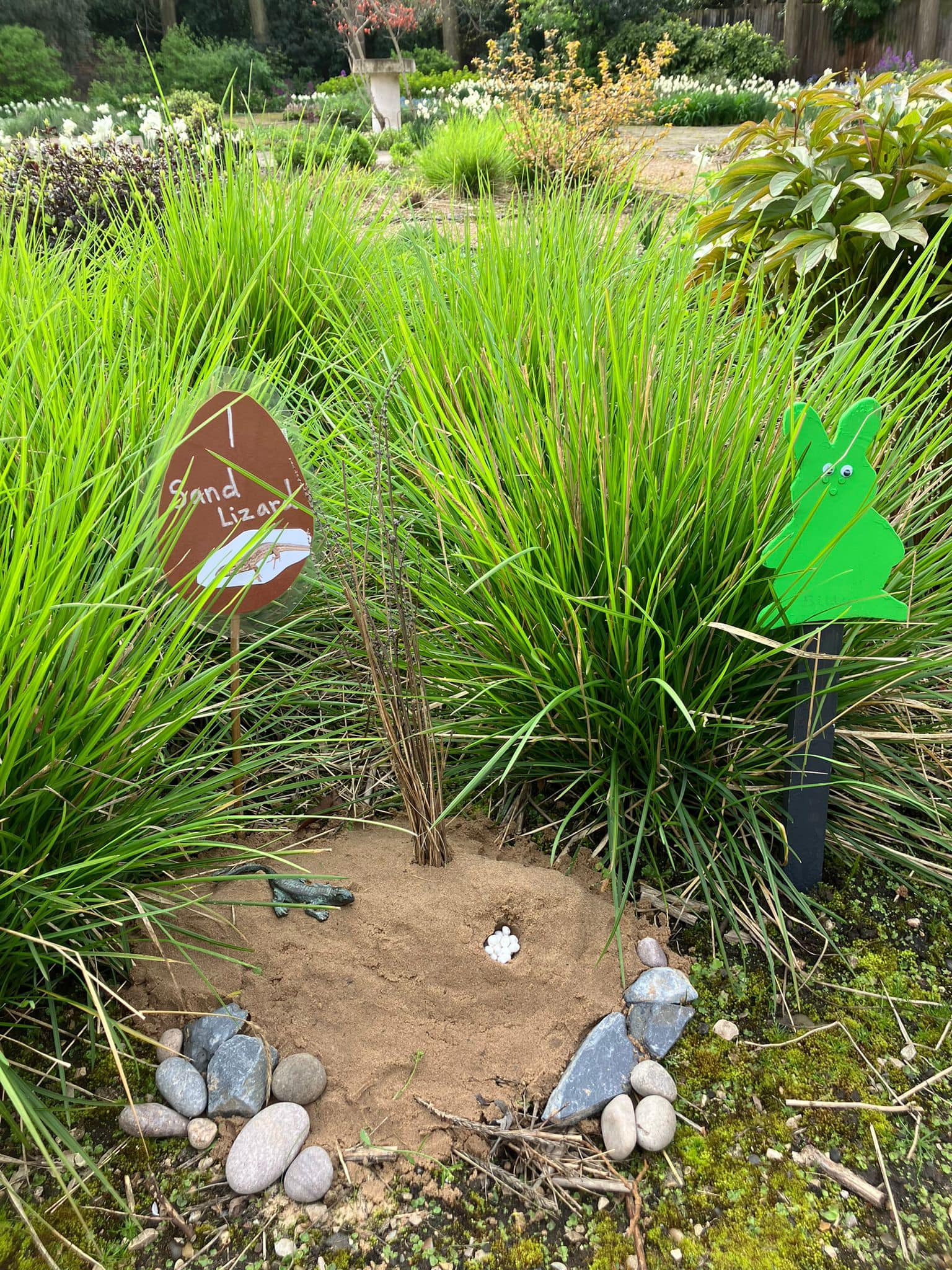
Our “Bunnies in the Beds” Easter Trail took place on Saturday (April 6th) for the fourth year running, it is becoming a fabulous fixture of the Garden Volunteers year. We start thinking up mad ideas in January during tea breaks, then gradually whittle them down to create an exciting but practical trail.
This year, the Bunnies went on an egg hunt with a difference! Having found all the eggs they then had to match them to their parent animal, in order to collect a prize. And by the end of the day, 175 children had achieved their goal. There were birds eggs to find of course, but also frogs, snakes, sand lizard, moths and even a dinosaurs egg!
Also on offer: Potting Up Table with free seeds, courtesy of RHS Britain in Bloom which is celebrating its 60th anniversary this year. We were not expecting this to be so popular and almost ran out of seeds! So many small gardeners-in-the-making came to this event, it was lovely. If you are growing your seeds on, you can keep track how others are doing on social media on @RHS GrassRoots and #RHSBloom60.
1. I sowed my sweet peas early in the month five seeds to a 3 inch pot and then placed them on a light window sill or greenhouse if you have one. They don’t need bottom heat and I don’t soak or nick the seeds but of course you can if you wish. Keep turning the pots so they don’t all lean towards the light.
Sweet Pea seedlingsDreaming of this…
2. Remove browning blooms from camellias to keep the display going especially the white ones which never seem to drop their spent blooms. I just wish I had room for more as they’re such a cheerful sight.
After over 30 years of living in our house and years of neglect, the monkey puzzle tree which was in the garden when we arrived, has decided to seed. Well, at least that’s what we think the cone shaped piece of greenery in the left hand side of the photo shows.
Monkey puzzle trees are native to Chile and Argentina. It is thought that the tree gained its name in the mid 1880s when a tree was planted in Pencarrow, Cornwall. In seeing the tree for the first time, a guest touched the spine and commented that climbing the spiny, spiralling branches would be a puzzle even for a monkey. Ouch!
There is also an old English belief that the devil lives inside monkey puzzle trees and that walking by one will bring you bad luck and might even make you grow a monkey’s tail! Rest assured I do not have a monkey’s tail or not at least the last time I looked.
Our tree may or may not be a descendant from the one planted in Cornwall but it has added to our own garden’s character and folklore.
1. Prune Group 3 clematis (late flowering viticella types) now by cutting all stems back just above a leaf node starting from the ground up. Don’t be timid as they respond well. Then feed around the plant base with an organic feed making sure to avoid emerging shoots and mulch with compost.
Clematis viticella Romantica (Group 3) in bloomClematis Comtesse de Bouchard (Group 3) in bloom
2. If you have some, mulch your beds with homemade compost or leafmould. If you don’t have enough just mulch around your favourite plants.
To be honest it has been so wet and now so cold that the ground is frozen but if conditions return to normal maybe you can try some of the following…..we live in hope!
1. Today according to the RHS is National Houseplant Appreciation Day so try giving those houseplants some attention and if they’re not looking good, treat yourself to a new one checking you have the right conditions for it.
2. Remove old hellebore leaves right back to the base to show off their flowers and to stop any leaf spot or other diseases from spreading.
3. All my violas in my front window box have died and a good gardening friend reminded me it could be vine weevil larvae chewing the roots which I haven’t had for ages so turn out the window box and check for those grubs and replace with fresh compost.
4. Start pruning roses cutting back with a slanting cut to above a bud and use the resulting prunings for cuttings 6 to 12 inches long and insert into either a pot or the ground so that 2/3 of the cutting are below the soil. They take a good while to root but its worth the free plants if they root.
5. Winter prune wisteria by cutting back shoots to 3 or 4 buds from the main stem.
6. Cut back really tatty herbaceous plants but leave anything with hollow stems or stems and foliage that may harbour overwintering insects. I started cutting back a bay tree until I saw the ladybirds amongst the stems.
7. Seed potatoes can be chitted from now on by placing them so they don’t touch in boxes, egg cartons are ideal, and placing in a light frost free place. Don’t forget to label the variety.
8. Prune established soft fruit bushes such as gooseberries, red and white currants removing any dead wood and cutting back main shoots by a quarter. If grown as a bush aim for a goblet shape with an open centre to aid air circulation.
9. Look at your seed catalogues and order anything you especially want before they run out.
10. Make sure to have some scented flowering shrubs either in the garden or in pots for pollinators to include winter honeysuckle, sarcococca, daphne and viburnham and aim to plant some by your door so you can catch the scent.
Happy gardening all!
Pat K
Ed: The RHS has a shop at Bluewater, perfect for browsing for some houseplant updates, all UK grown. (Note they don’t take National Garden Vouchers though)
Leave old stems over perennials to protect the crown and give shelterSarcococca smell divineThis Hellebore would look better without leaves!
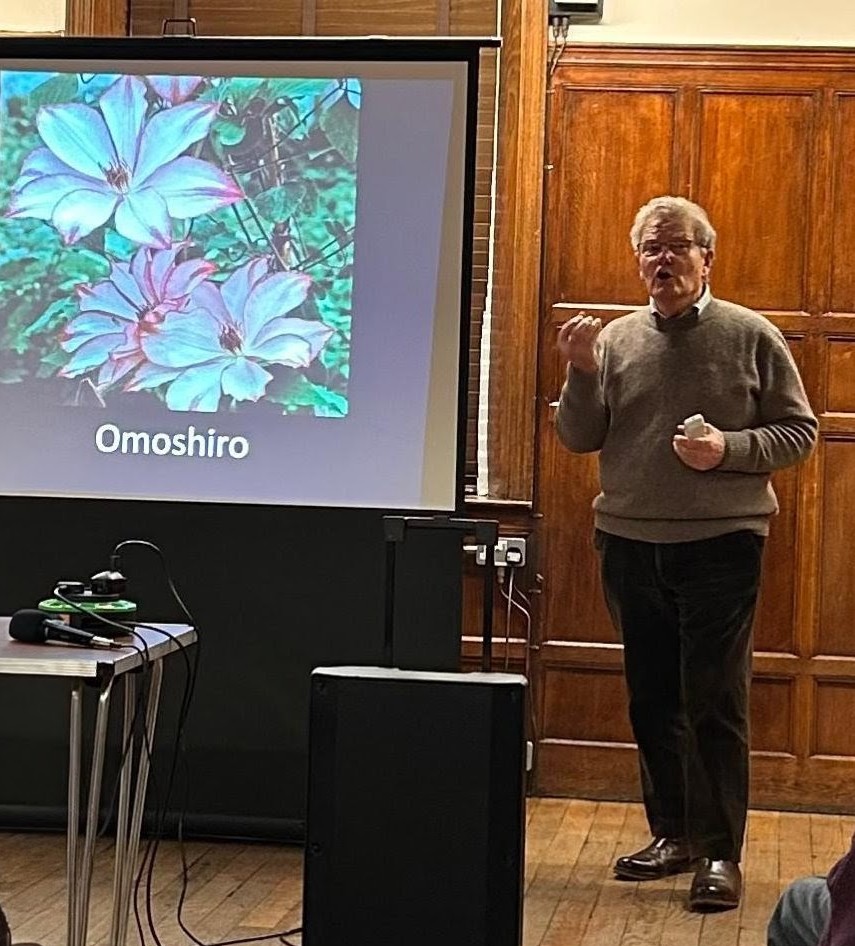
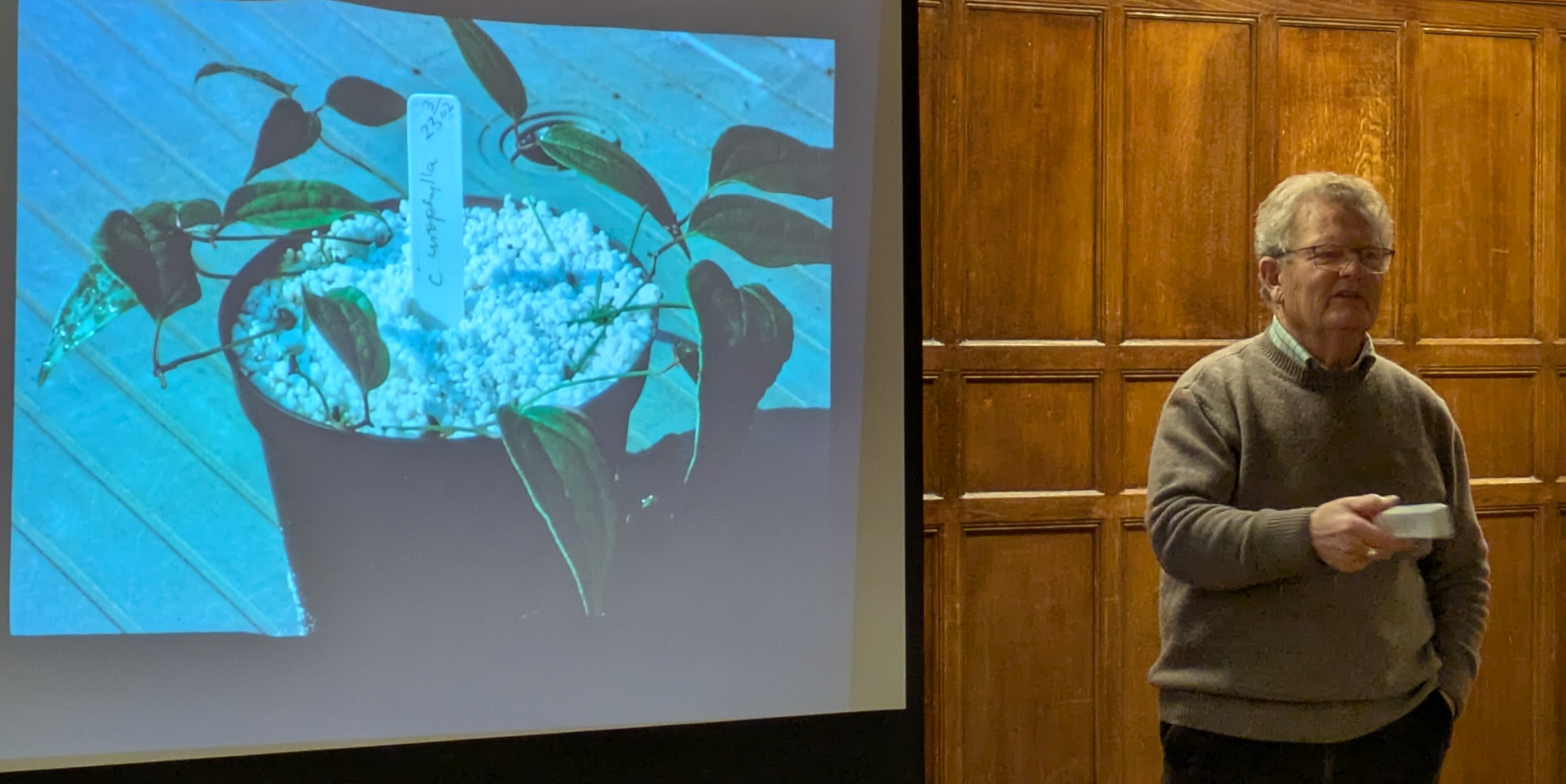
CABAHS welcomed back Tim Ingram who last gave a talk in the 1990s. Along with his wife, he is the owner of Copton Ash Gardens in Faversham. He has featured in a wide range of publications and is co-author of Success with Seeds, a Hardy Plant Society Booklet published in 1997. He is a member of the Hardy Plant Society, Alpine Garden Society and the Plant Fairs Road Show. He is a very keen grower of plants from fresh seeds, most of which he sources from his own garden. He gave a very informative visually illustrated talk on seeds with great enthusiasm which was catching.
He started the talk with a quote from George Bernard Shaw: “Think of the fierce energy concentrated in an acorn! You bury it in the ground, and it explodes into an oak! Bury a sheep, and nothing happens but decay.”
Tim described how he grew fresh seeds, and the conditions they need for successful growing, the how and when to grow different seeds. Seeds sold in Horticultural Garden Centres are grown to germinate easily at 20C. Fresh seeds may need different and specialist requirements. Seeds vary widely and some seeds are more difficult to grow. Seeds vary in size and shape. The orchid is very small whilst the coconut is very large and size impacts on how they are sown and the conditions needed for growth. Some fresh seeds have to be sown soon after they are picked, whilst others may be kept for a long time. Cowslips for example, need to be sown quite fresh in autumn and need a spot of outside winter cold to kickstart them. Early flowering plants such as bulbs and ericaceous need a cold bout to kickstart germination too.