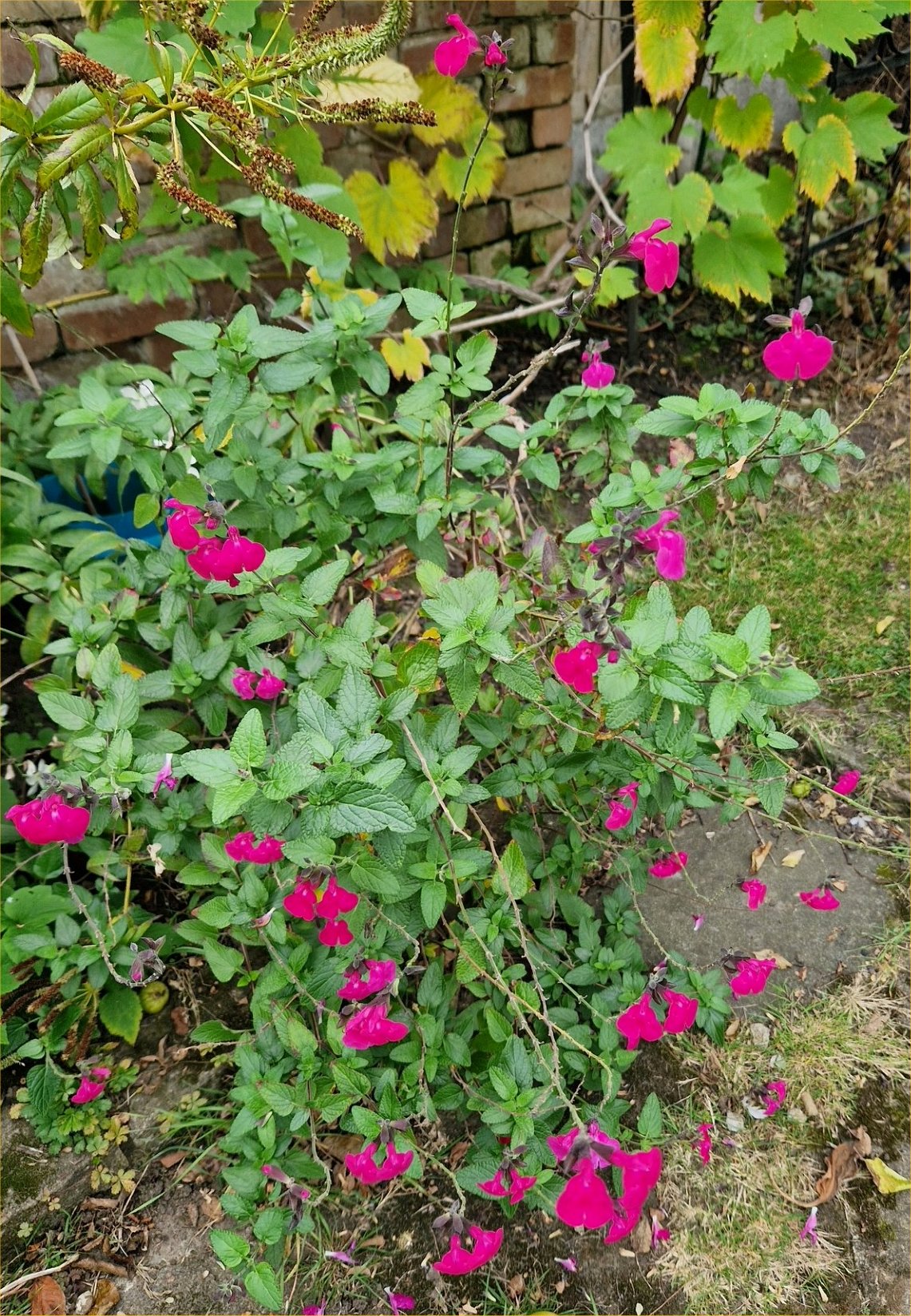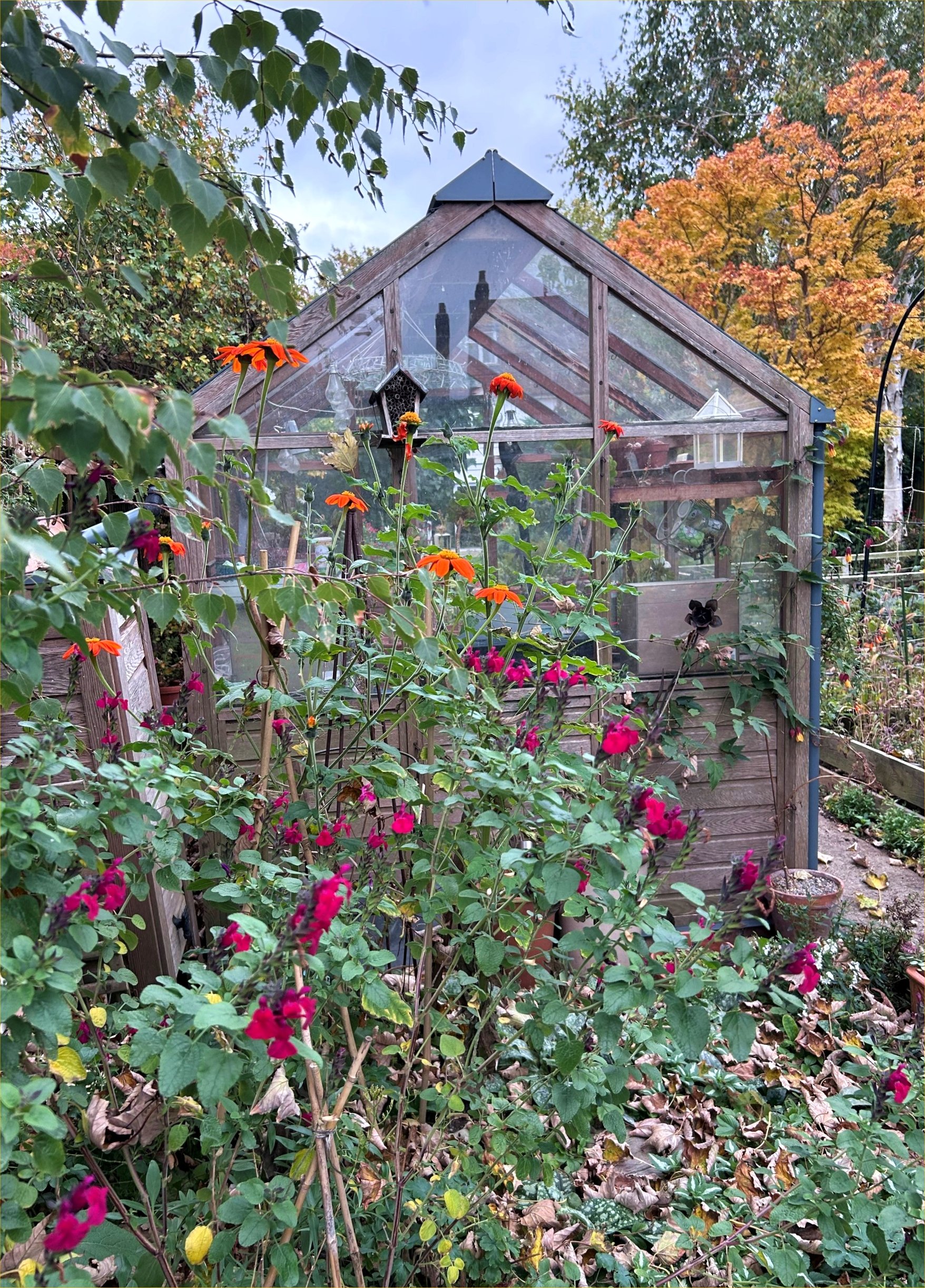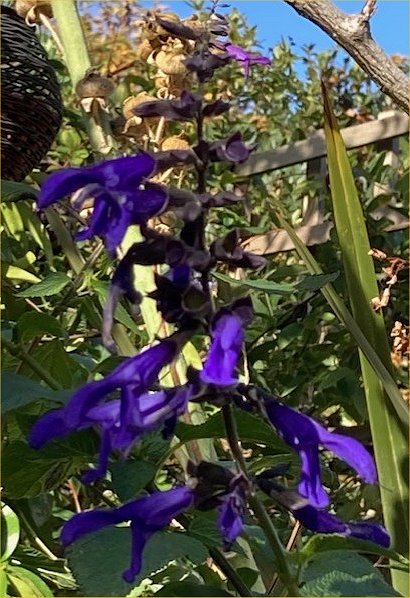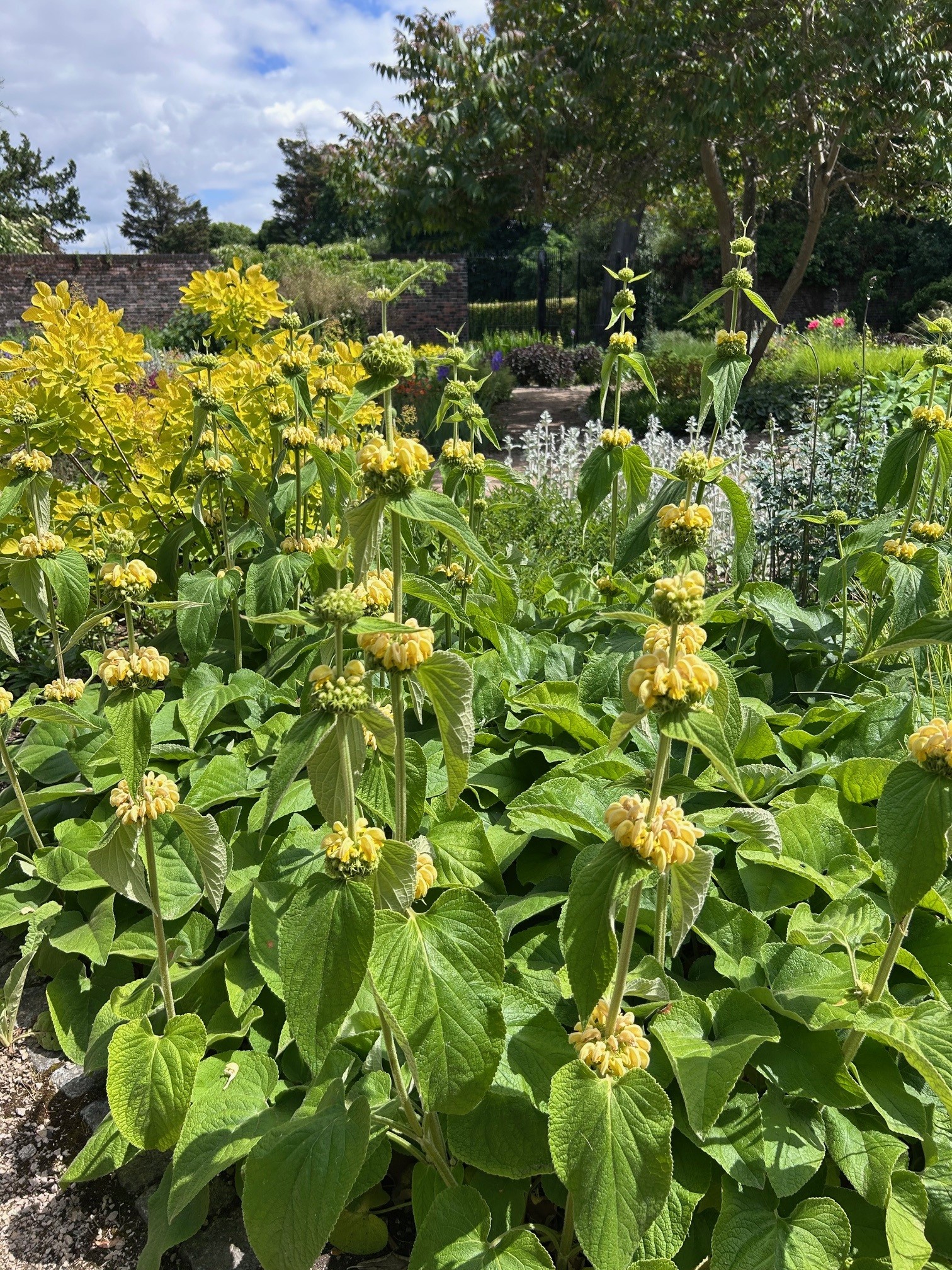
Last week I was in Greenwich Park, in what was the Old Rose Garden for several decades, and now transformed into a fantastic herbaceous garden, a riot of colour, shapes and forms, tall grasses swaying and intermingling flowering shrubs (find out more about this transformation). I had gone there to see one specific Salvia – and what a show they were putting on!
Continue reading Plant of the Month: More Salvia! (November 2025)Tag: Salvia
Autumn Colour in Members’ Gardens
This year’s ‘autumn colour’ seems to have developed quite suddenly and intensely, but may be short-lived. So we asked CABAHS members to share photographs of the colour they could find in their gardens this week. The weather has been dull and grey most of the time, yet these late flowers and glowing leaves shine out of the gloom. You can click on the images for more information and to see at full size.
Take a tour…
We tend to focus on brightly coloured leaves when we think of autumn colour, but several groups of flowers add plenty of zing to the October garden. Salvia really is ‘Plant of the Month‘!


Salvia doesn’t get all the glory though – there’s competition from another richly-coloured group, the Dahlias.
Continue reading Autumn Colour in Members’ GardensPat’s 10 jobs for October 2025
1. Salvias are flowering their hearts out now but make sure you have some cuttings on stand by to cover any winter losses. And remember that quite a few are tender and will need winter protection in the colder months.
2. Last year I dug up my Dahlia tubers and potted them up once they had died down but lost quite a few despite keeping them frost free. So this time I will try leaving some in the ground and giving them a thick mulch. Of course, the problem then is trying to protect the new growth in spring from slugs and snails, so they’ll need keeping an eye on.


Plant of the Month: Salvia (October 2025)
A few years ago, my garden would be looking quite green at this time of the year. But not this year; I am pleased to say that it’s actually very colourful, all due to my collection of salvias, which I’ve added to year-on-year. As you know, they are not 100% hardy as they originate from hotter climates, but, they do appear to survive in sheltered, London gardens if the winters are not too severe. And, as a precaution, we have learnt to take cuttings – just in case!


August Flower, Fruit & Vegetable Display 2025 – classes to enter
This year’s Autumn Show will be held a month earlier than usual, on Monday 18 August, at 7.30pm in the Old Library at Charlton House.
Please note that due to the earlier date, the Potato competition will be judged as part of the Show Table at September’s meeting.
Here’s a reminder of last year’s efforts!
The classes you can enter this year are shown below, please have a go at as many as you like!
Continue reading August Flower, Fruit & Vegetable Display 2025 – classes to enterWhat to look out for in the Old Pond Garden June 2025
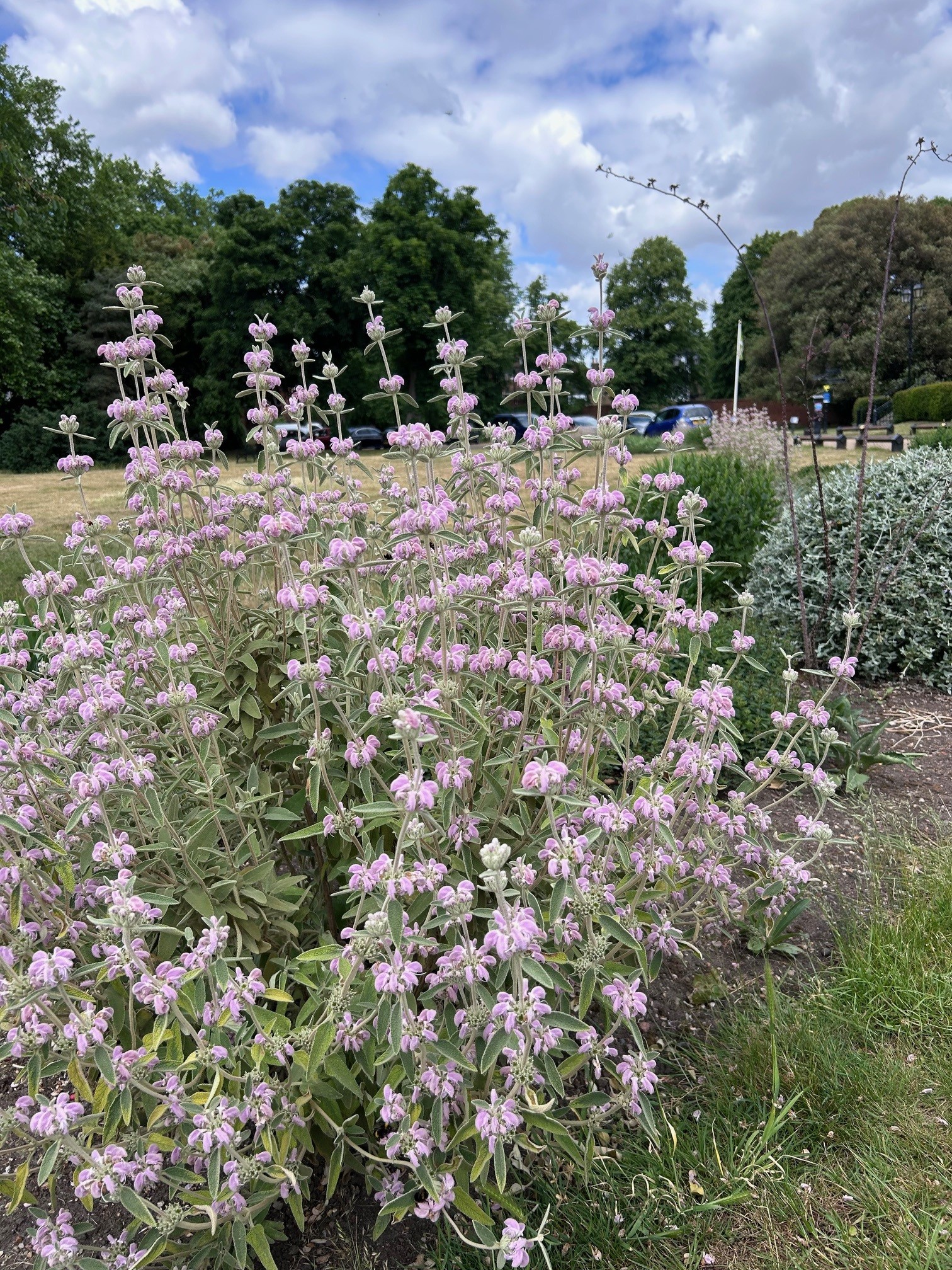
Phlomis italica – Balearic sage


This is an evergreen shrub in the mint & sage family, native to Spain, which has lovely woolly grey-green leaves (touch them!). The hooded pale lilac flowers are beloved of pollinators, especially bumble bees. The ones in the front beds at Charlton House are humming with buff tailed bumble bees.
Phlomis russeliana – Turkish sage

Another one in the mint & sage family, but this is not a shrub, it is a herbaceous perennial (so it drops it’s leaves in Autumn but comes back the next year). The name ‘Phlomis’ comes from the Greek word meaning ‘flame’. Heart shaped leaves of some species were used as lamp wicks in ancient times. The stiff upright stems carry yellow flowers, which look good as seed heads and provide shelter for insects in winter. It gently self-seeds – we have been potting them up so look out for them in a future plant sale!
Continue reading What to look out for in the Old Pond Garden June 2025Plants of the Month: Westringia fruticosa and Salvia guaranitica ‘Black and Blue’ (November 2024)
Although I have written about both these plants in the past, I have chosen them again as ‘Plants of the Month’ because the flower colouring of each is in harmony with one another and both brighten up a garden during the long winter months.
Westringia fruticosa (Coastal/Australian Rosemary): This is second plant I have grown of this variety over the years: the first, given to me as a rooted cutting, had a good branch structure and lasted several years in a pot, positioned on a south-facing table; the second was purchased this June from a specialist nursery at the Horniman Plant Fair and, once again, it has an attractive rounded shape, which means they are suitable for growing in pots whilst they are small.
Continue reading Plants of the Month: Westringia fruticosa and Salvia guaranitica ‘Black and Blue’ (November 2024)Pat’s Jobs for November 2024
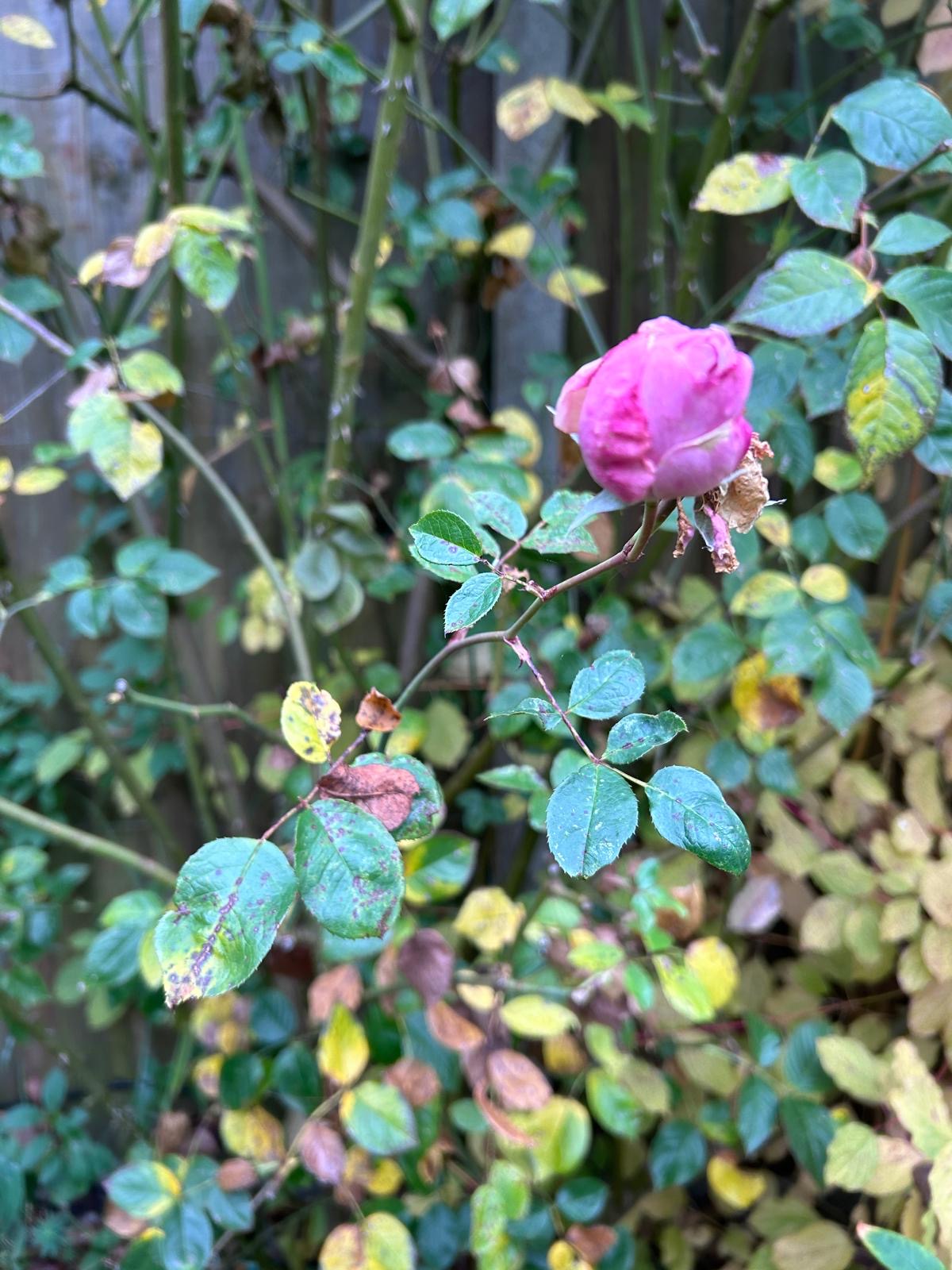
1. Check for blackspot on roses and make sure to remove the leaves by checking the bush itself and below it. But don’t add to the compost heap.
2. If you have to, this is the best time to move trees and shrubs, but have your planting hole ready, and dig up with all the root ball and replant quickly, watering well until settled.
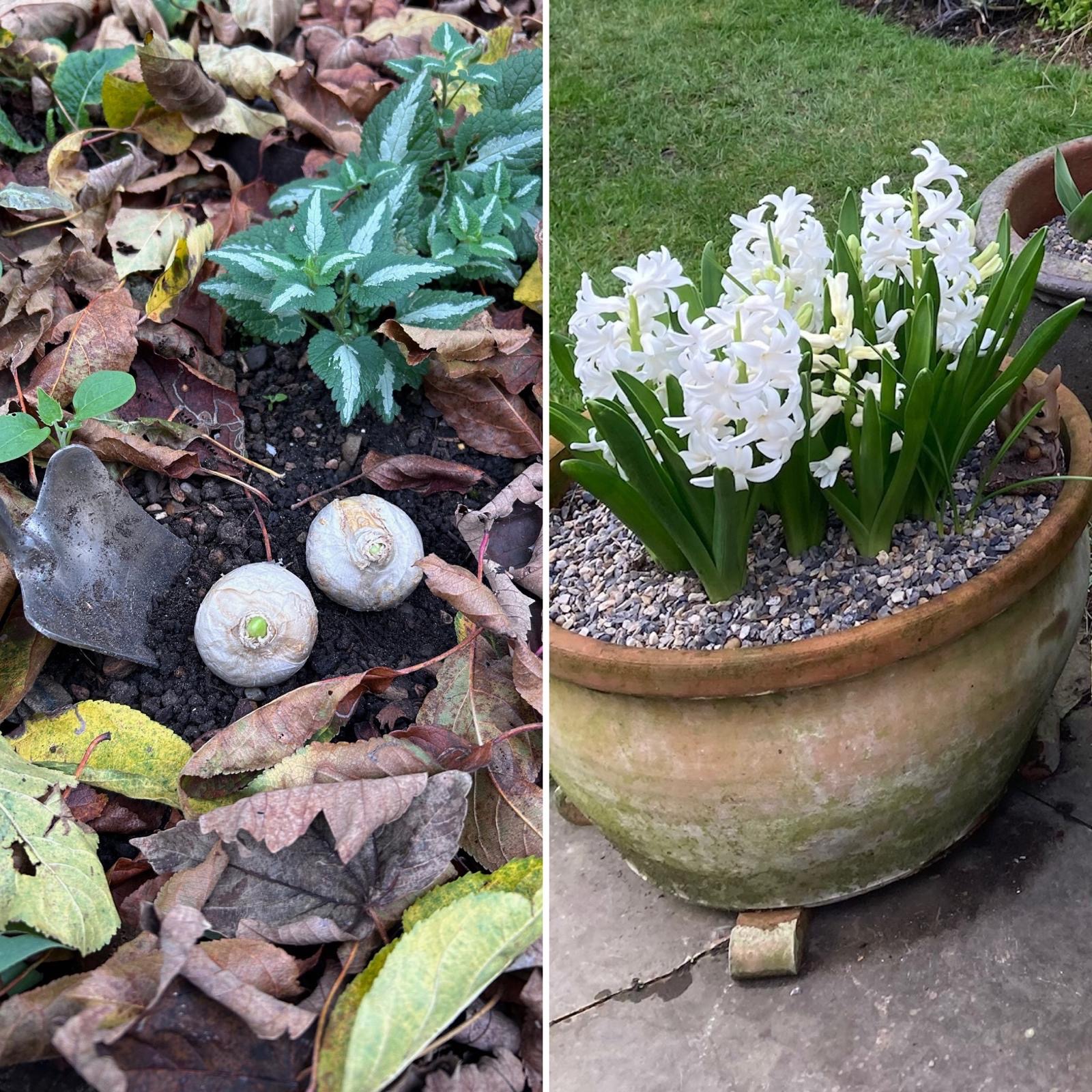
3. Plant your tulips and hyacinths now. either in the ground or in pots – but protect from squirrels.
4. If you sowed sweet peas last month. harden them off now and it’s still not too late to get some going for an early crop.
Continue reading Pat’s Jobs for November 2024Plants of the Month: Salvia (October 2024)
Salvia ‘Amistad’, in less than 20 years, has become a much-loved cultivar throughout the world. and is known as the ‘friendship sage’. It was discovered in a tray of salvias at a plant sale in Argentina in 2005 by Dr Rolando Uria, and he decided to name it ‘Amistad’, meaning ‘friendship’ in Spanish.
There is much to love about this plant, in that its 1.5m high, bushy, rounded habit is ideal for planting schemes, guaranteeing a display of purple flower spires, with highly aromatic foliage, from mid-summer until the frosts in October-November. It’s not 100% hardy, so I have lost it a couple of times over the years but it’s always worth repurchasing. The young growths are adored by slugs and snails, so during wet weather in spring it can be difficult to get going.
I have noticed, however, that in London’s parks, Salvia ‘Amistad’ really thrives and can be seen growing happily and well-established in May, beneath London Planes in much drier soils, where the mature trees are protecting the plants during the winter months. And the drier soils obviously do not attract the slugs during early spring growth.
Continue reading Plants of the Month: Salvia (October 2024)Sedum or Hylotelephium? Aster or Symphyotrichum?


But which is which?
I’m sure you know by now that herb garden favourite rosemary had its botanical name changed following DNA testing. It was reclassified to the Salvia family and its proper name is now Salvia rosmarinus (while the common name of course remains ‘rosemary’). Another common garden plant, Perovskia (aka Russian sage), has been renamed Salvia yangii. And then there are the sedums, some (but not all) of which must have needed a few more syllables to sound properly botanical!
Gardeners often wonder why this happens, and feel like botanical names are simply there to confuse us. Many gardeners choose to stick to the ‘old’ names, and occasionally (but not usually!) this is rewarded as science progresses, as is pointed out in this useful article from Gardens Illustrated.
Continue reading Sedum or Hylotelephium? Aster or Symphyotrichum?