1. Plant out Dahlias in a sunny spot in fertile soil adding some compost to the planting hole. I have to surround mine with Strulch on my allotment to protect them from the hundreds of slugs and snails lurking all around.
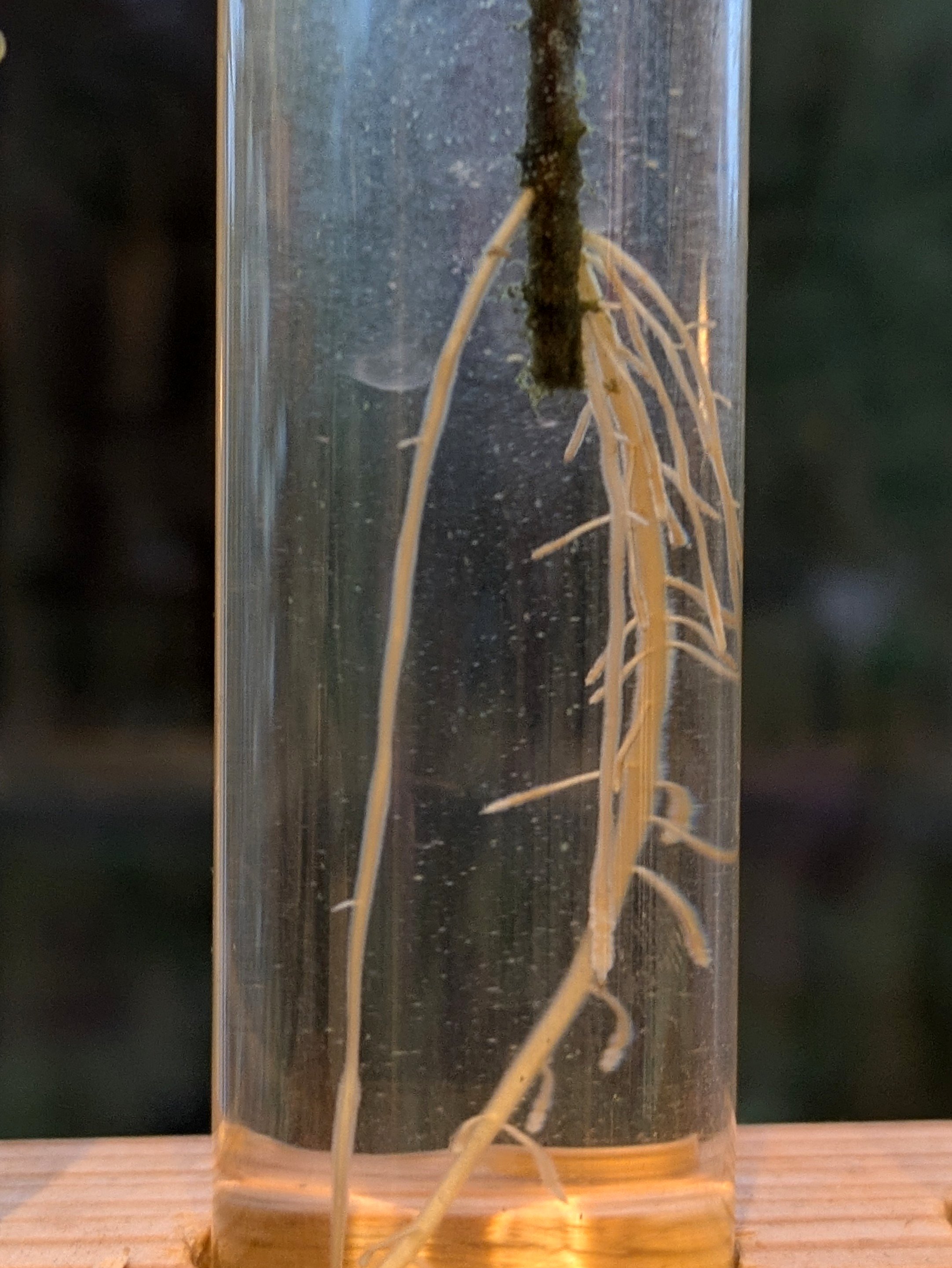
2. Take softwood cuttings now of Anthemis, Salvia, Verbena, Penstemon and Fuchsia. Cut below a leaf node and dibble around the edge of a pot. Salvias will also grow fine roots in water to give them a head start.
3. Look out for hellebore seedlings around the base of your favourite plant. The resulting plants may not resemble the parent but they could be even better.
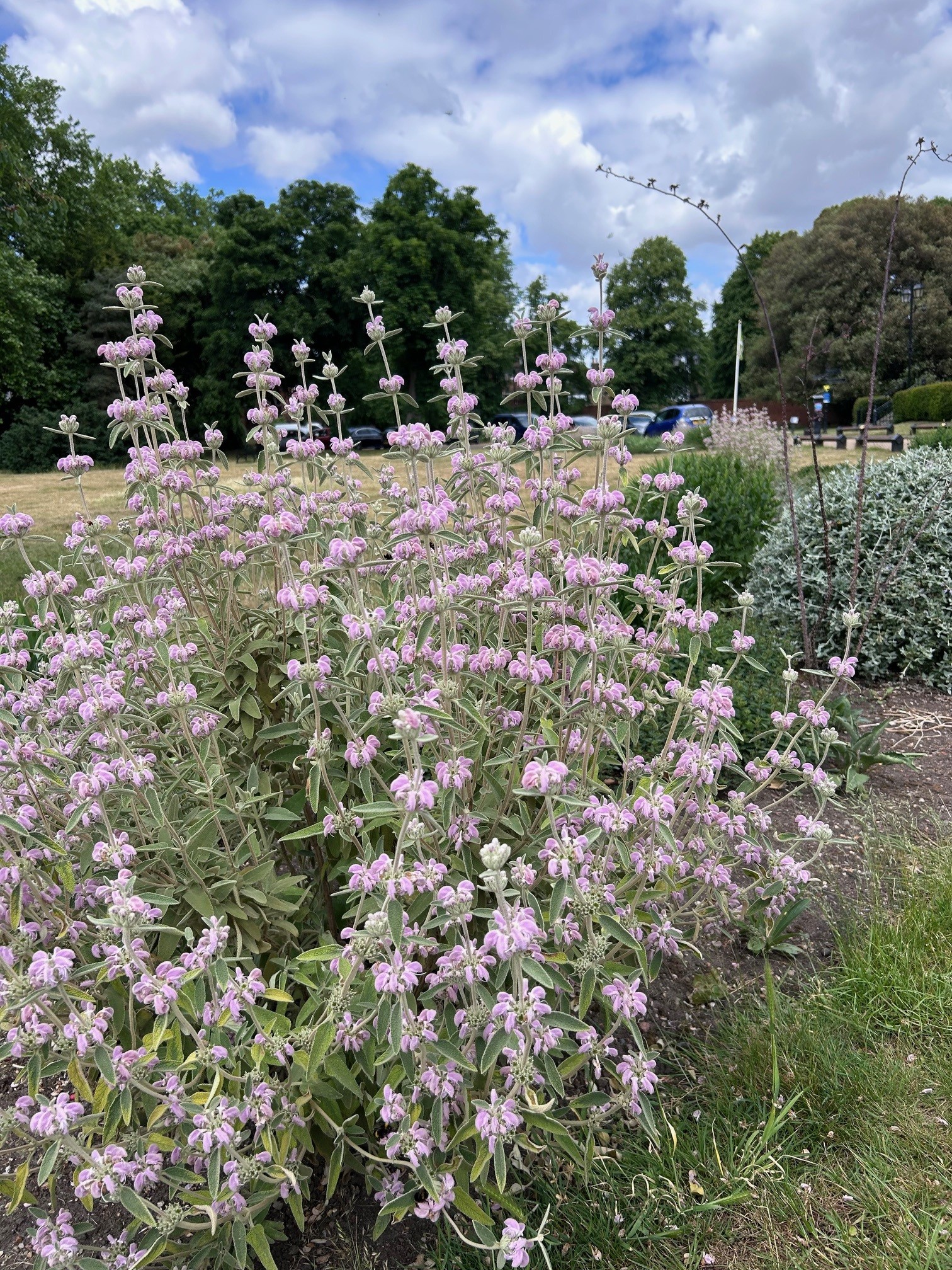
This is an evergreen shrub in the mint & sage family, native to Spain, which has lovely woolly grey-green leaves (touch them!). The hooded pale lilac flowers are beloved of pollinators, especially bumble bees. The ones in the front beds at Charlton House are humming with buff tailed bumble bees.
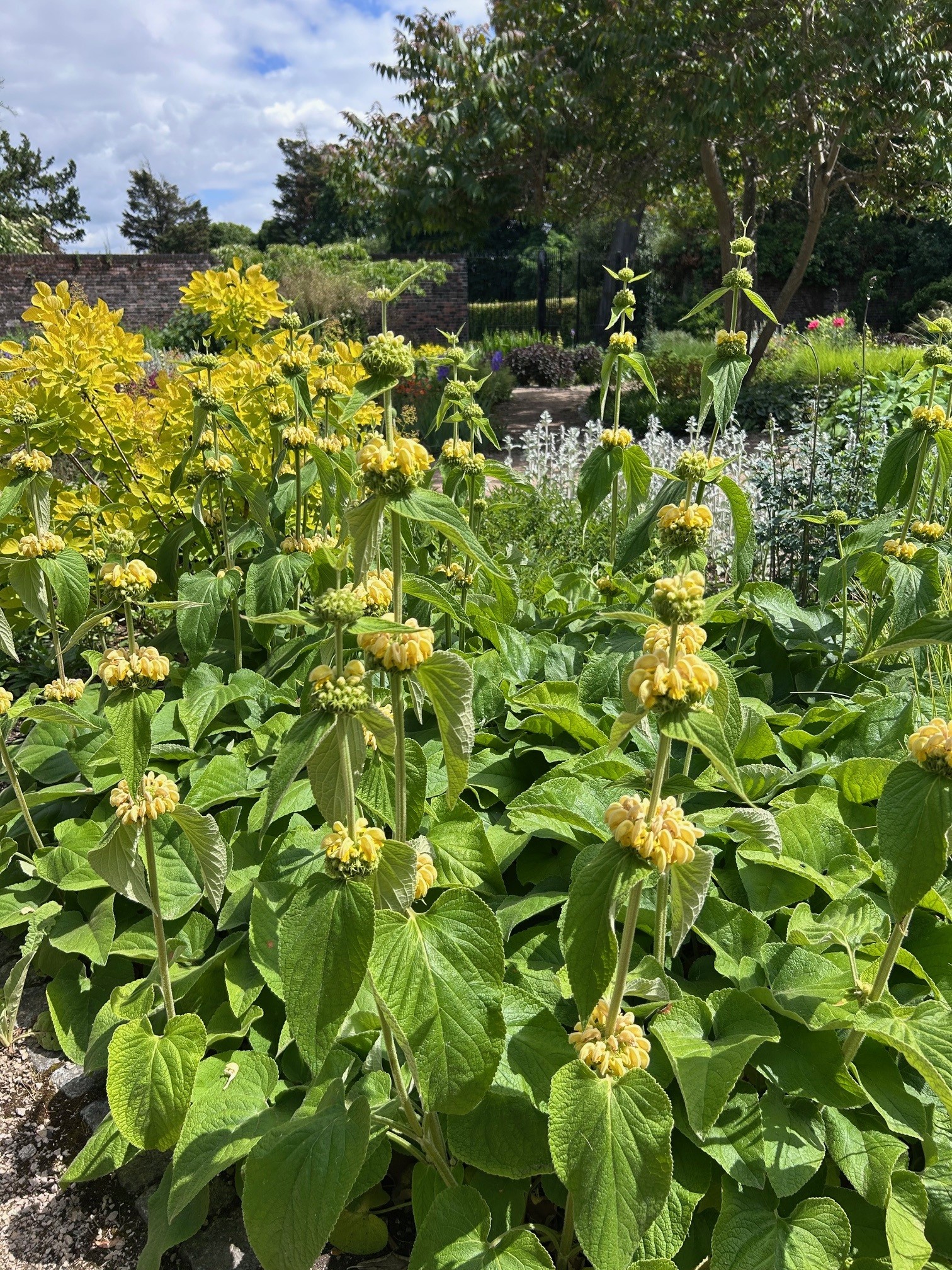
Phlomis russeliana – Turkish sage
Another one in the mint & sage family, but this is not a shrub, it is a herbaceous perennial (so it drops it’s leaves in Autumn but comes back the next year). The name ‘Phlomis’ comes from the Greek word meaning ‘flame’. Heart shaped leaves of some species were used as lamp wicks in ancient times. The stiff upright stems carry yellow flowers, which look good as seed heads and provide shelter for insects in winter. It gently self-seeds – we have been potting them up so look out for them in a future plant sale!
What a strange spring this has been as everything has grown so tall ….but then some things especially vegetables have hardly grown at all and are struggling as there has been little warmth.
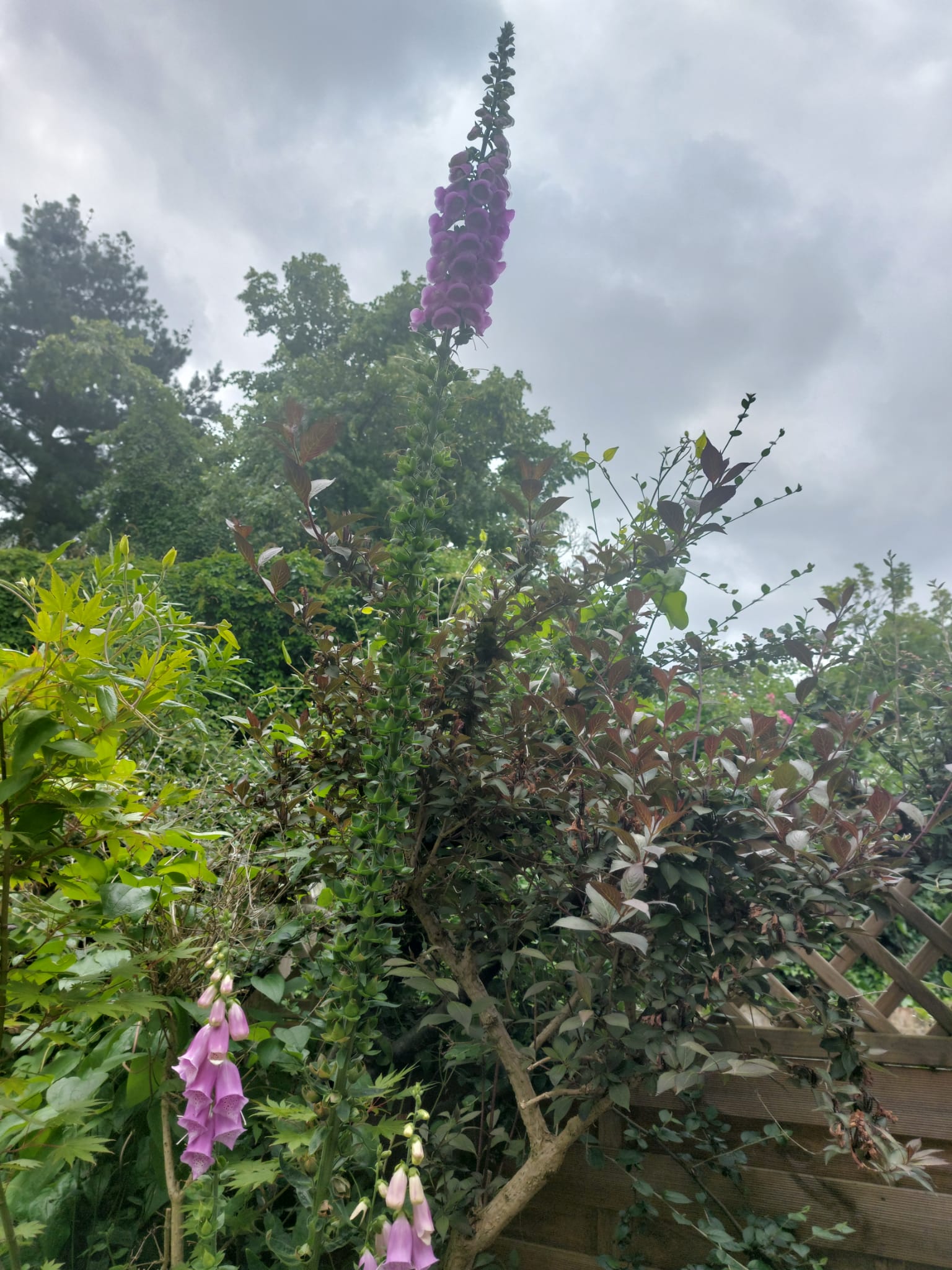
Giant Foxglove – 8 foot tallCephalaria a foot taller than usual
Anyway we soldier on….
1. Divide spring flowering bulbs as soon as foliage fades. My own stock has diminished and badly need splitting.
2. Prune ornamental cherries when flowering has finished making as few cuts as possible as they have difficulty healing.
3. Tie in shoots on sweetpeas which are finally growing and revelling in the cool conditions.
4. Cut early flowering hardy geraniums to the ground when they finish as they have a tendency to seed everywhere…unless you want them to of course.
Thank you to all our volunteers, members and local residents who donated plastic bottle bases over the past year – look what we did with them! It might not be quite Tower of London level, but our poppy cascade makes a great “Stop and Remember” point on your walk around the park this week.
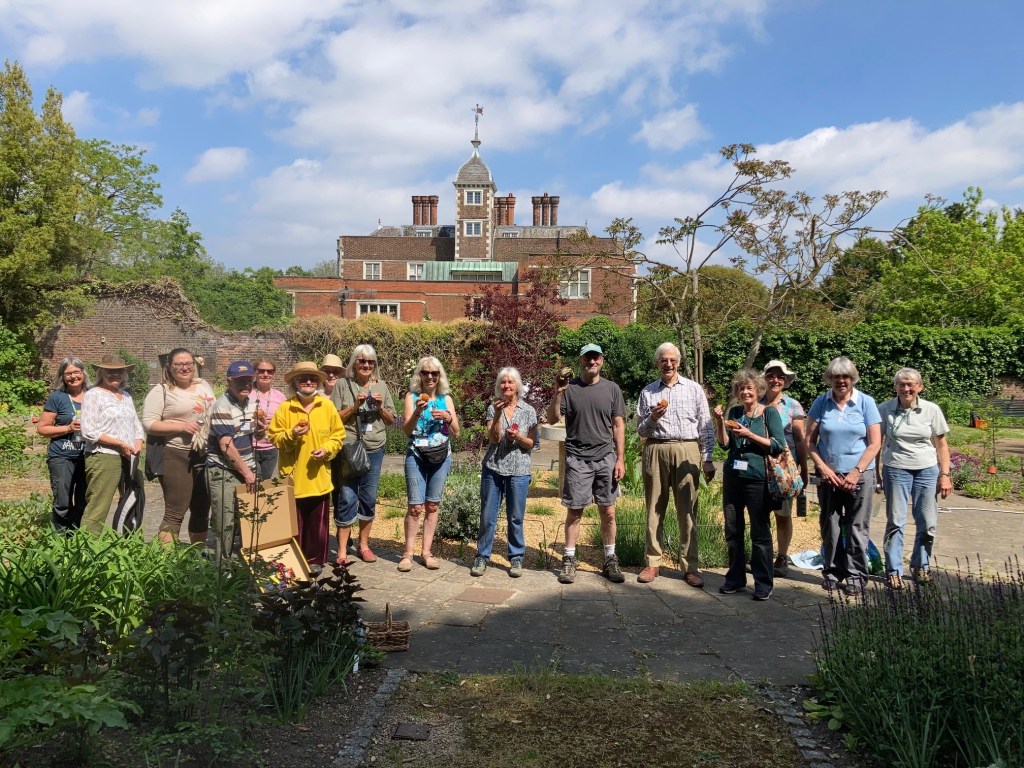
3 June National Volunteers Week. Thank you for the muffins Charlton House!
Rheum and foxgloves in the Long Border (foxgloves courtesy of Greenwich Park – thank you!):
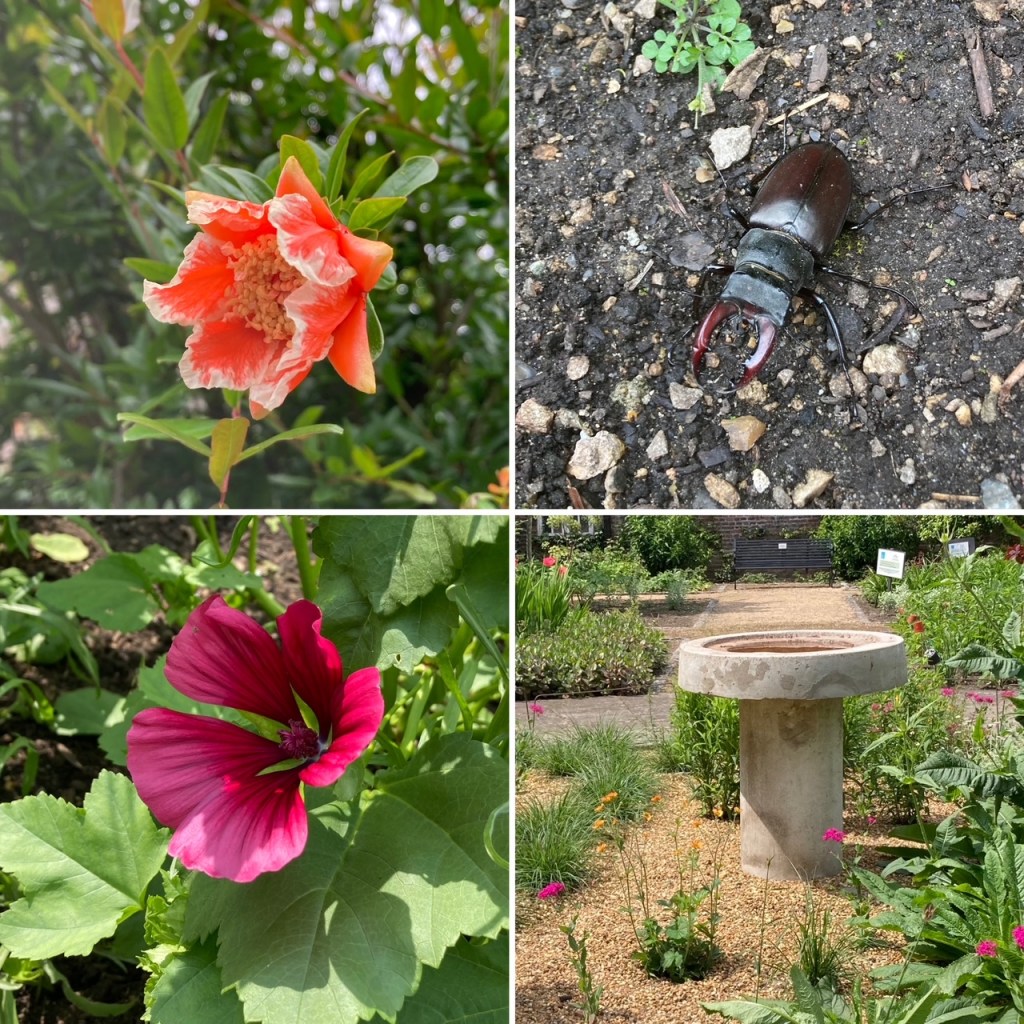
30June The pomegranate is flowering in the Peace Garden (top left) the stag beetles are hatching and marching, there is a lovely Malope trifida ‘Vulcan’ annual in the Long Borders (bottom left) and the gravel garden has a new addition of Geum ‘Totally Tangerine’ to add some more zing!
Our Papaver orientale ‘Burning Heart’ have exploded into flower this week. They are fabulous plants, look at the size of them! They came as bare roots, all the way from West Lothian. Thank you Binny Plants.
Sian’s latest Newsletter to the members of the Blackheath Flower Club:
Here we are in Lockdown once more, on remembrance day 11/11/2020. Elizabeth Crawley’s great granddaughter, Daisy, wrote this moving poem when she was 10, she is 17 now:
Earl Haig founded the Royal British Legion in 1921 adopting the poppy as its emblem. He ordered 9 million poppies from a French woman, Anna Guerin, and sold them on 11th November, 1921. That first ‘Poppy Appeal’ raised over £106, 000 to help veterans with housing and jobs. To ensure plenty of poppies for the next appeal a Poppy Factory was set up to employ disabled ex-servicemen.
Everyone has been busy decorating churches and windows with poppies etc: Richard put a collage of petals in his window, Yvonne decorated Saint Alfege’s, I put a display in Ascension Church.
Meanwhile, in Westminster Abbey, NAFAS (National Association of Flower Arrangement Societies) Ladies (lead by Kathy Stangaard, who has demonstrated regularly at Blackheath and Mottingham Clubs) put foliage round the Tomb of the Unknown Warrior. They also made a posy for Camilla to put on the Tomb. Also they were asked to place a rose🌹on 82 chairs for the only guests allowed. They heard Jools Holland and Ruby Turner practising ‘Abide with me’. The picture of decorating the Tomb was on BBC news, but no mention of NAFAS…
The British tomb of the Unknown Warrior holds an unidentified British soldier killed on a European battlefield during the First World War. He was buried in Westminster Abbey on 11th November 1920, simultaneously with a similar interment of a French unknown soldier at the Arc de Triomphe in Paris.
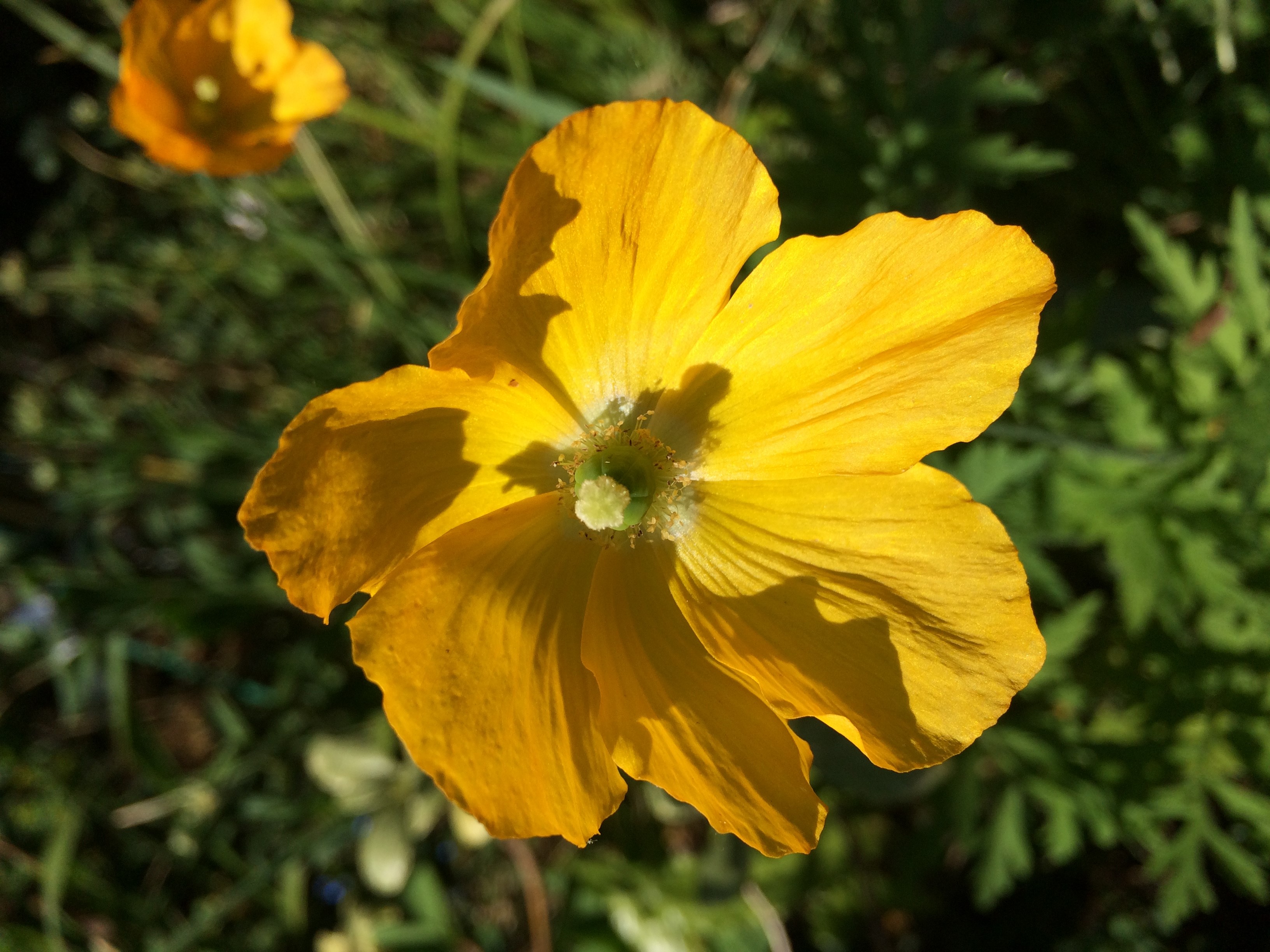
Seeding itself in the gravel and containers in my garden is the exquisitely beautiful, native, Welsh Poppy (Meconopsis cambrica).
With its delicate, buttery-yellow and orange flowers and fern-like foliage, this plant is a must for any garden.
I originally found this perennial very difficult to establish itself, taking two or three years before it finally took off. I don’t know why this is but if I had to start again in a new garden I would sow the seed in pots, topped with grit or gravel for a quicker result.
Some gardeners have masses of Welsh poppies in their borders but I have never managed to achieve that: I only have the odd plant growing at the border edges.
I have learnt that in order to prolong the flowering season throughout the summer, deadheading is imperative. I have already start to do this in April.
But, I also like to collect seed to sprinkle around and to offer to other gardeners, so I aim to sacrifice long-term flowering in order for one or two plants to develop seed heads, which are also attractive in themselves. Each seed head contains dozens and dozens of tiny black seed.
Welsh poppies are a short-lived species that will flower in sun or shade but mainly prefer part-shade and moist, fertile soil. But, generally speaking they are not too fussy.
If you are ordering your seeds now I would suggest you add Welsh poppies to your list. You will not be disappointed.








 Charlton and Blackheath Amateur Horticultural Society