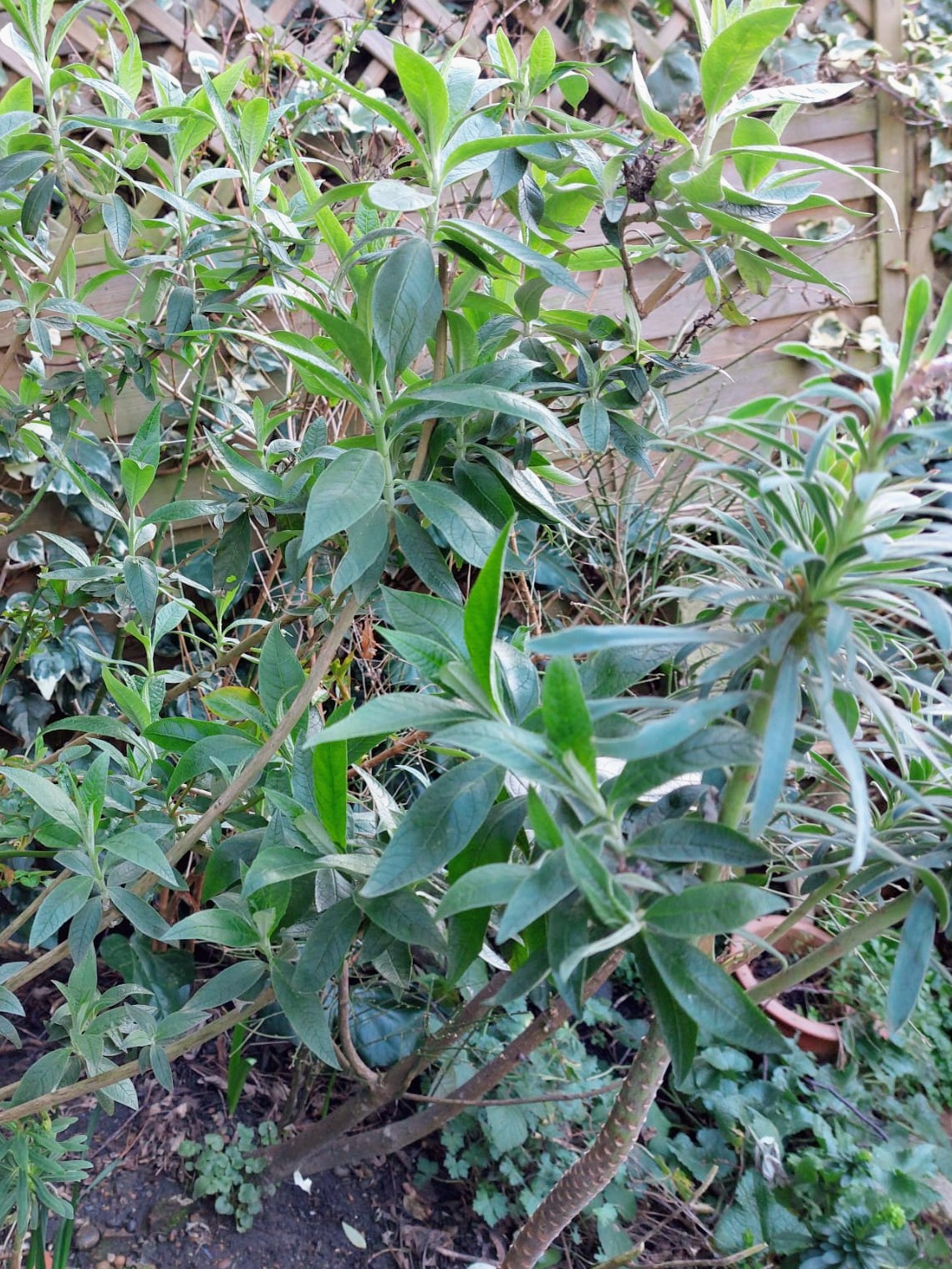
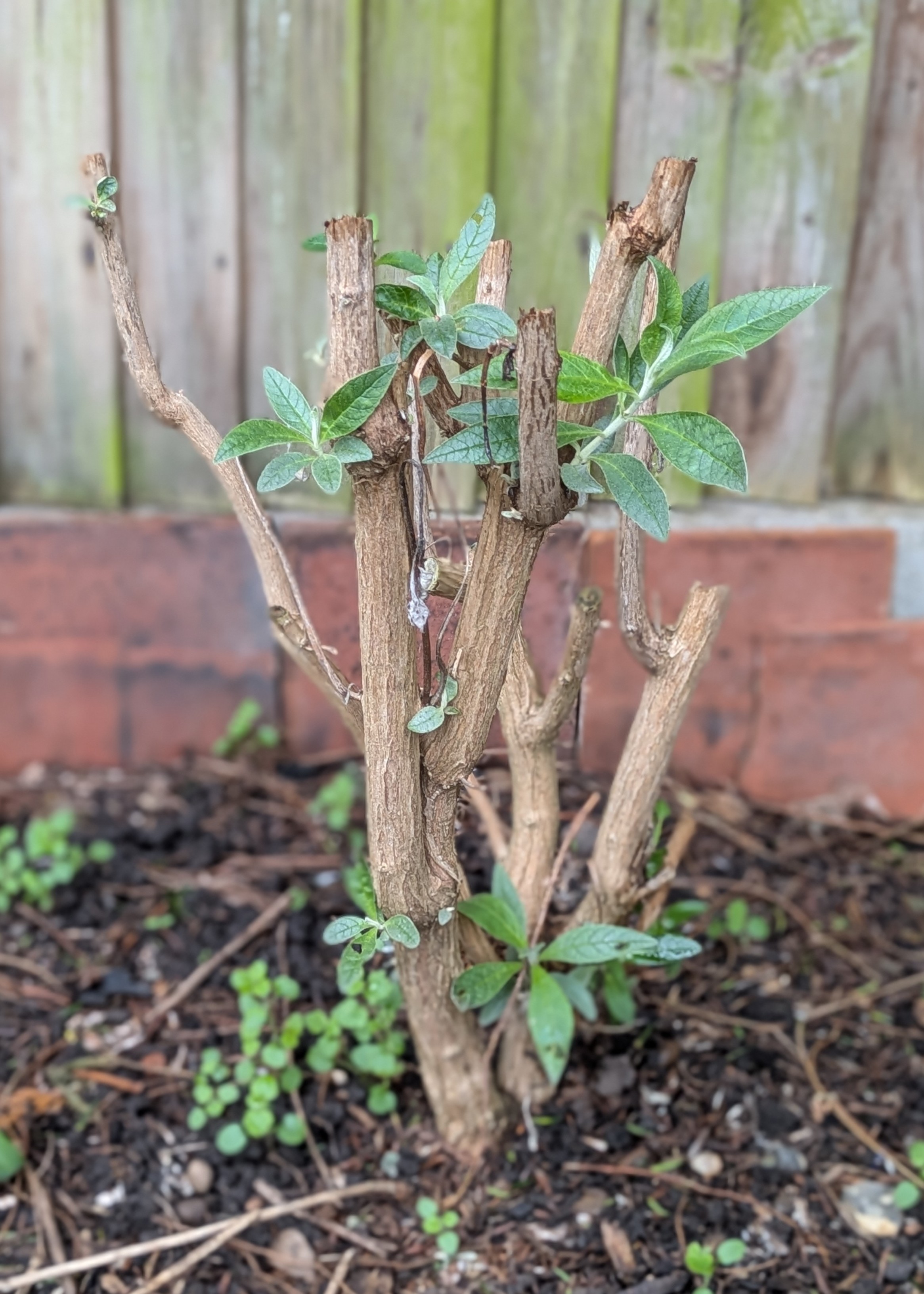
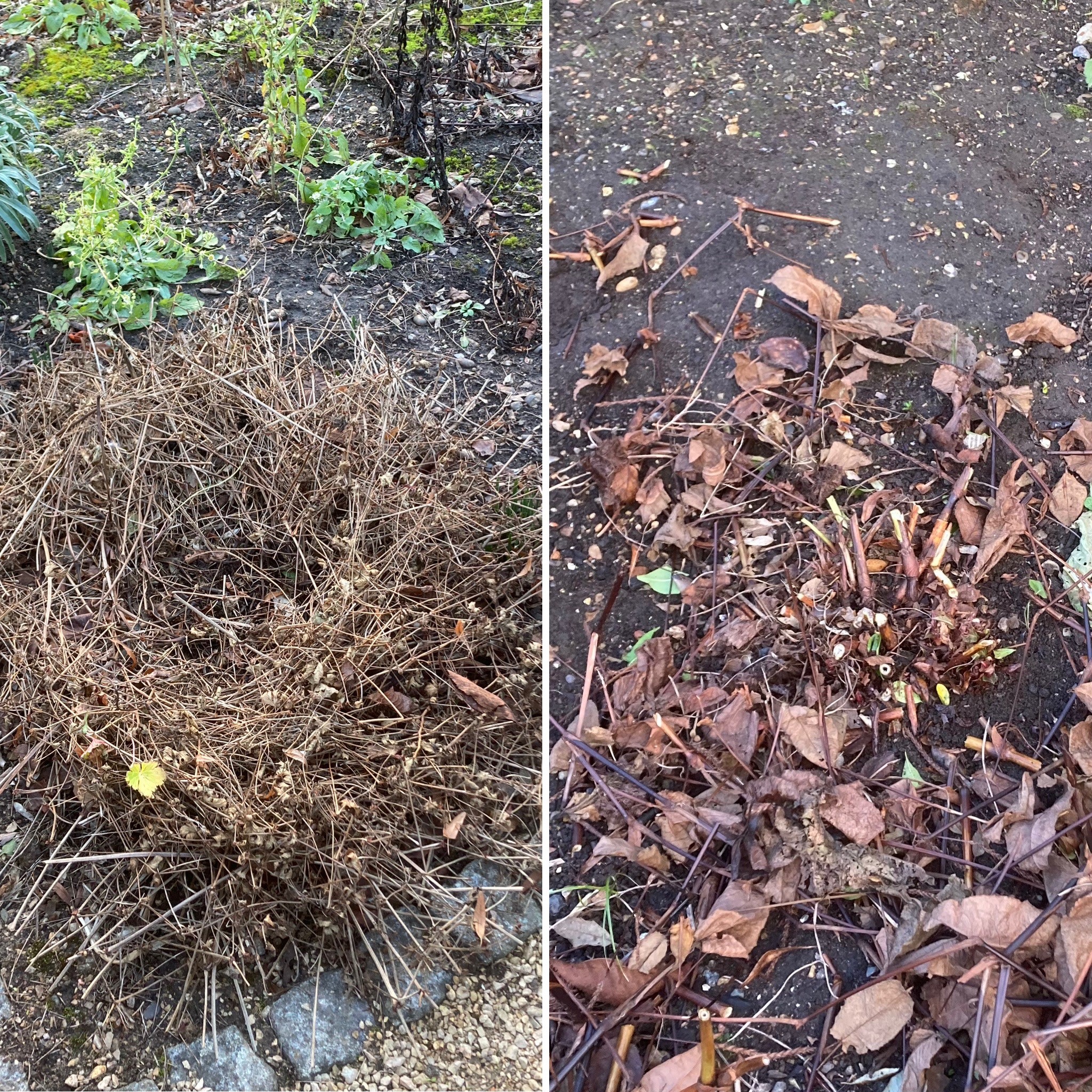
1. Time to cut back Buddleja davidii hard… don’t be timid, take it right back to 40cm to a pair of buds. If you want a taller plant make the cuts higher up the stem. It will grow back in no time. The prunings make good hardwood cuttings and root easily straight in the ground.
Buddlejas before and after a hard prune (not the same plant!)
2. You can pot up Dahlia tubers now by placing in pots or trays of peat-free compost in a frost-free place, and water once with no need to water again until shoots appear. Make sure the tubers are firm with no sign of rot.
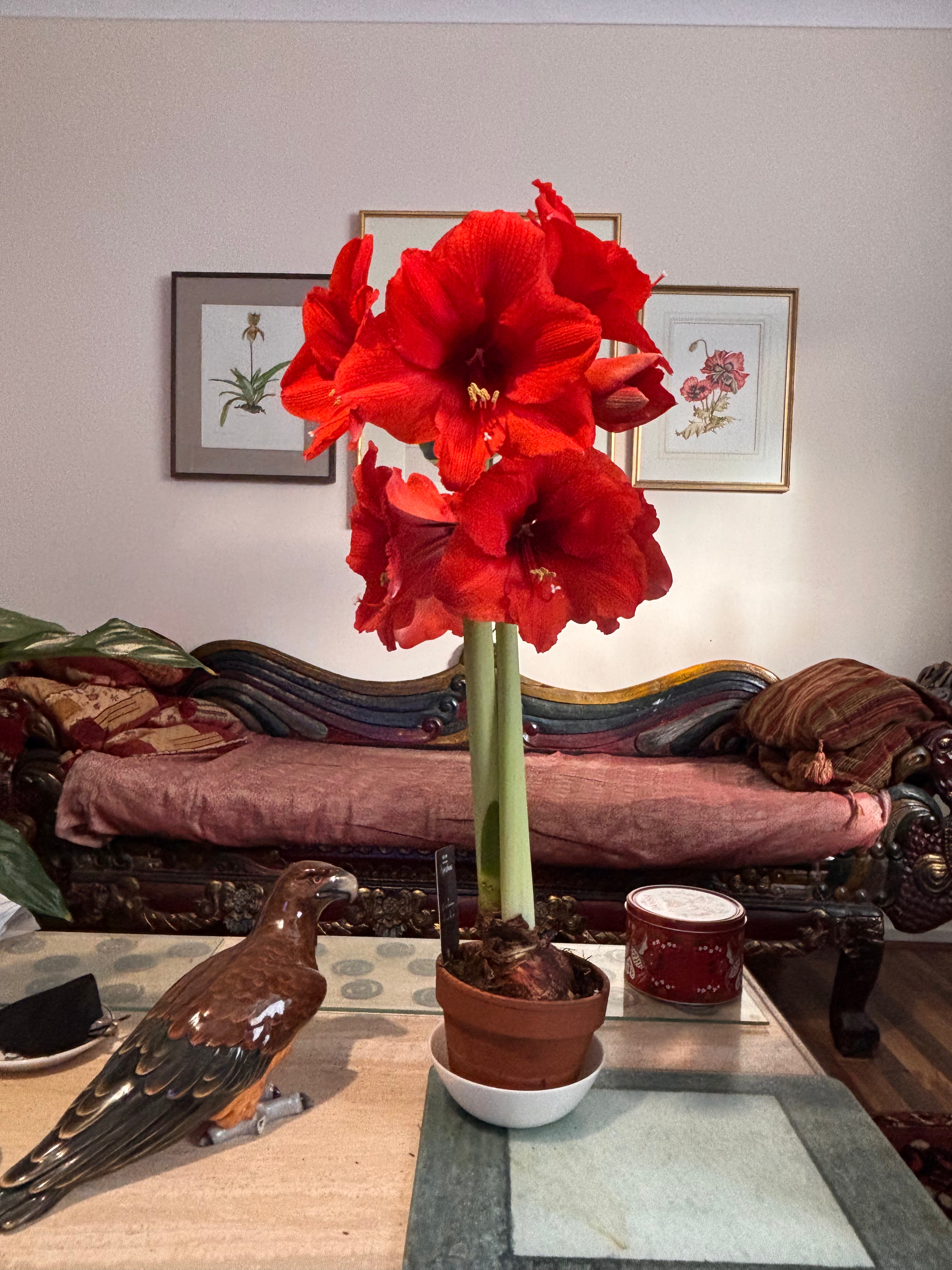
“Amaryllis (Hippeastrum) are considered naff by some – their flowers being so spectacularly over the top and being so widely available in supermarkets. But I think their spectacular-ness is attractive and grow them every year. I hope this photograph of the Amaryllis that I have grown this year will encourage those who do not already grow them to do so. Perhaps we could have an annual Amaryllis competition at CABAHS!”
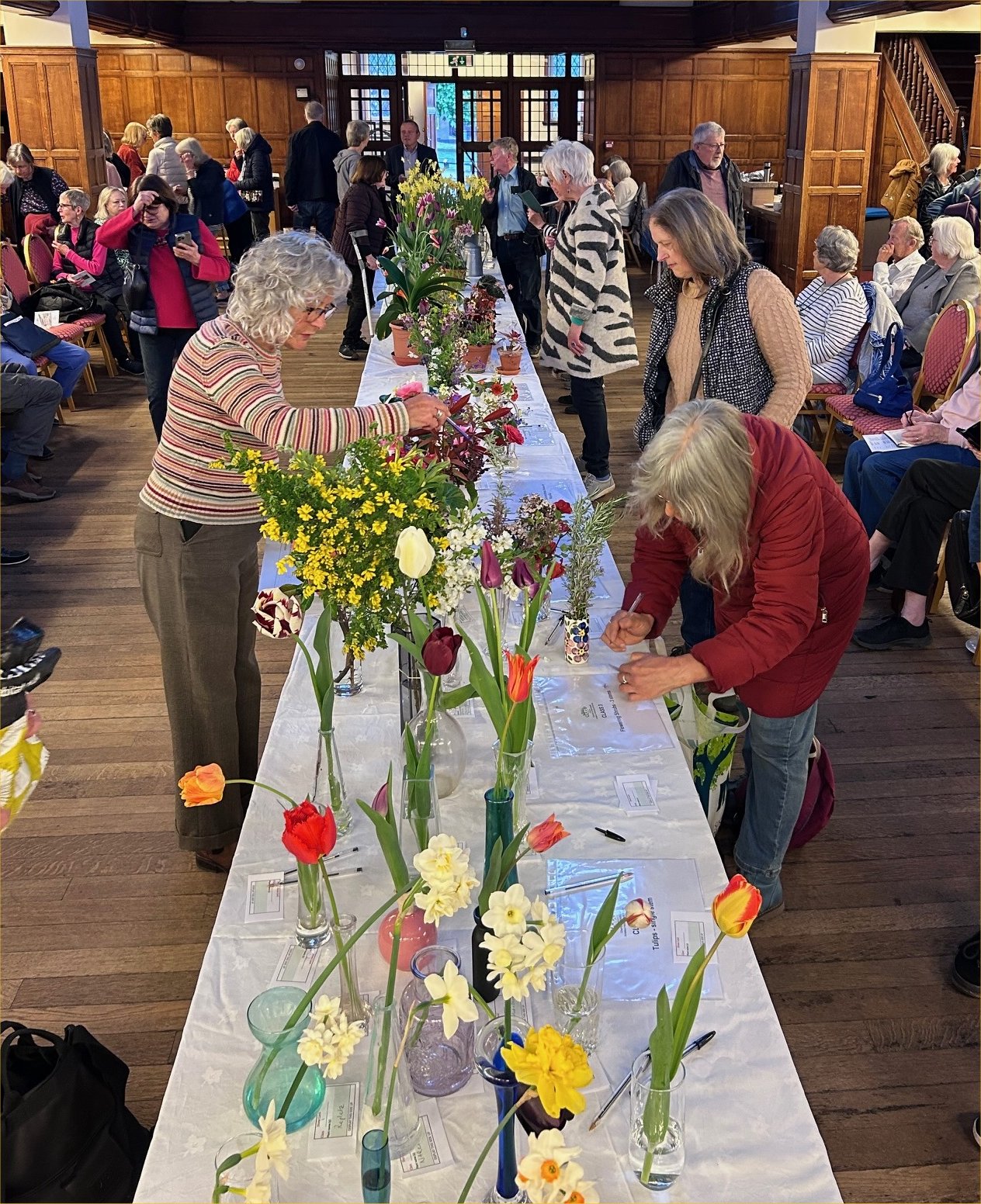
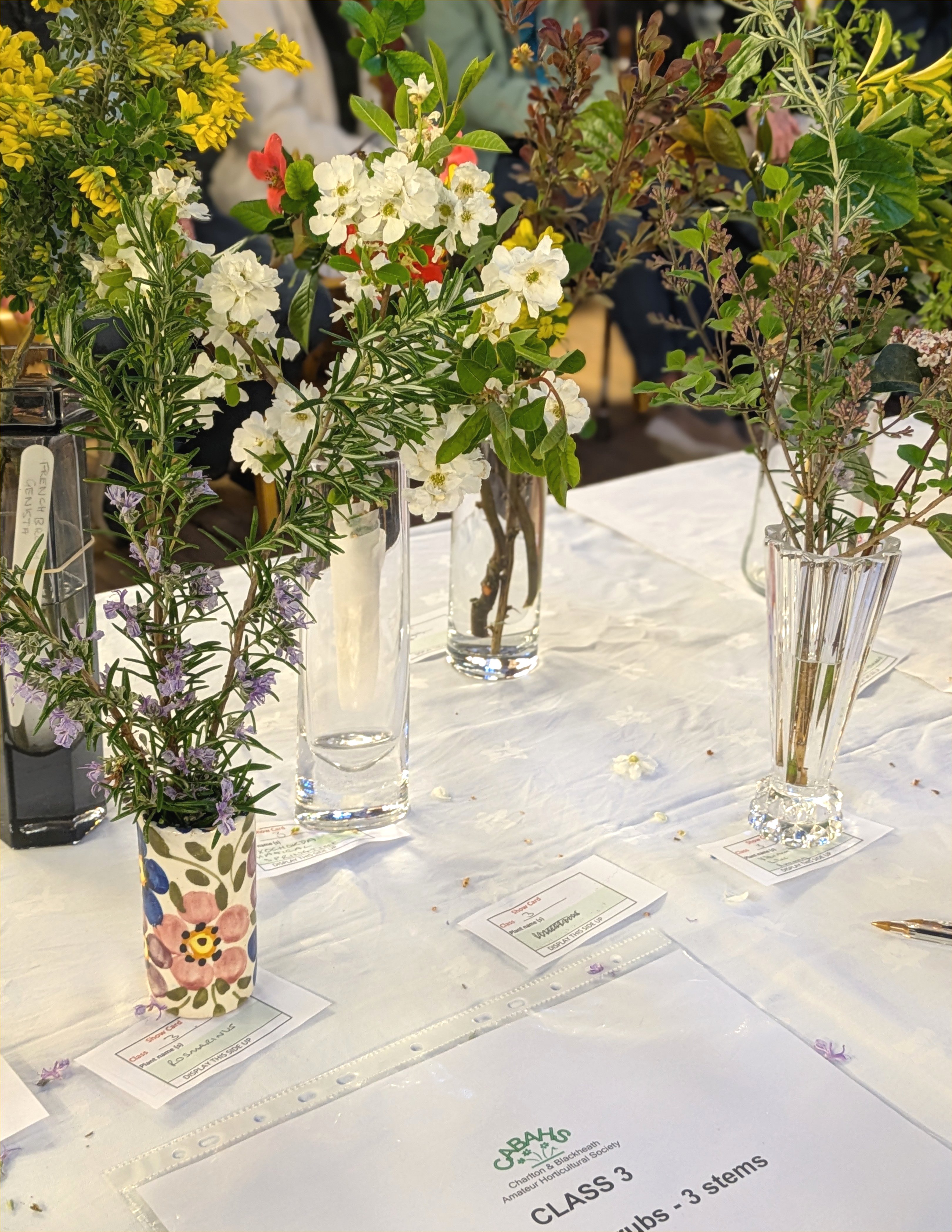
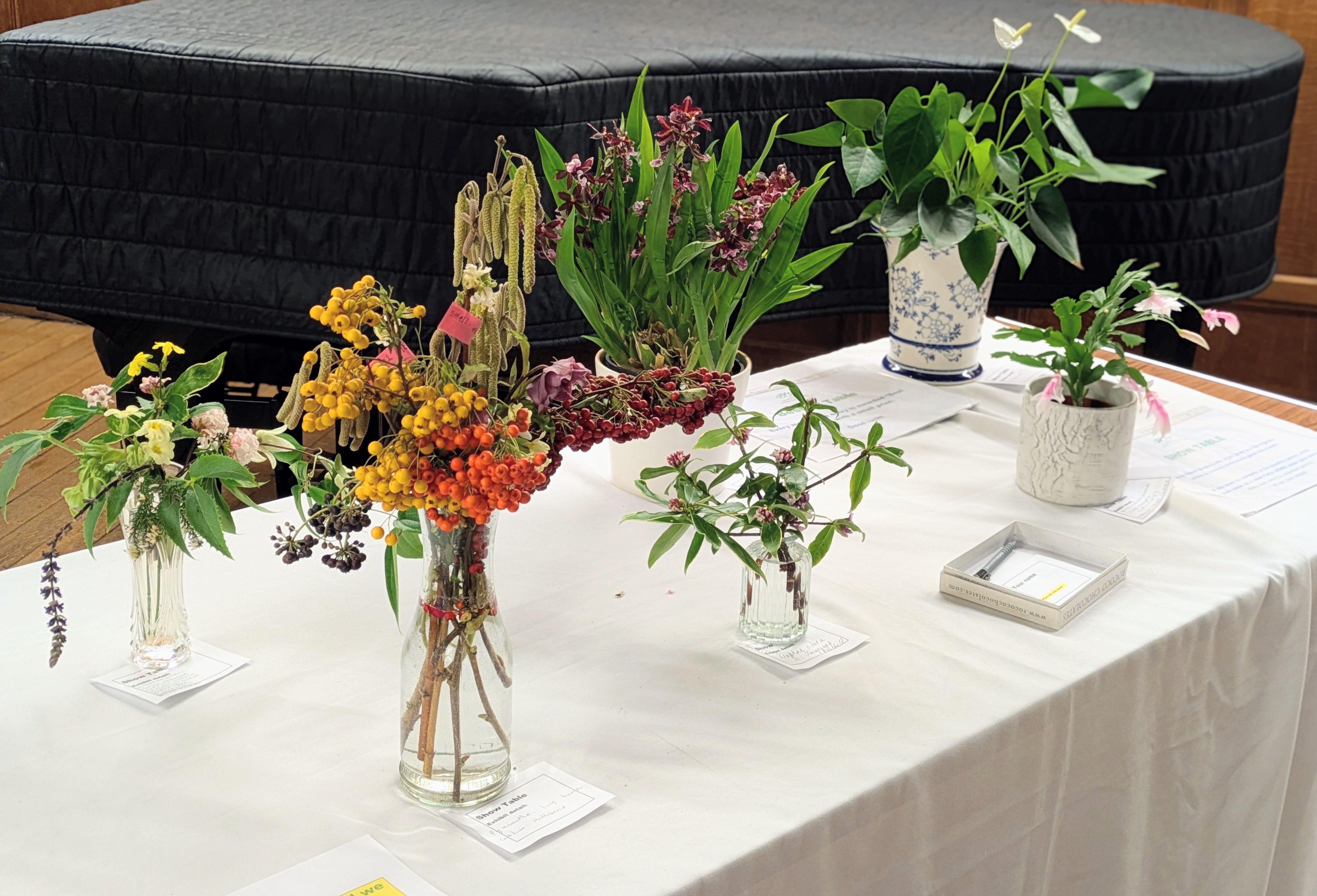
As usual, members enjoyed refreshments, took part in the raffle, shared their garden-related resolutions for 2026 and, of course, there was the regular Show Table. Six members took part with a wide variety of entries. We hope that as Spring gets going more members will be keen to show off and share their plants that are looking good each month.
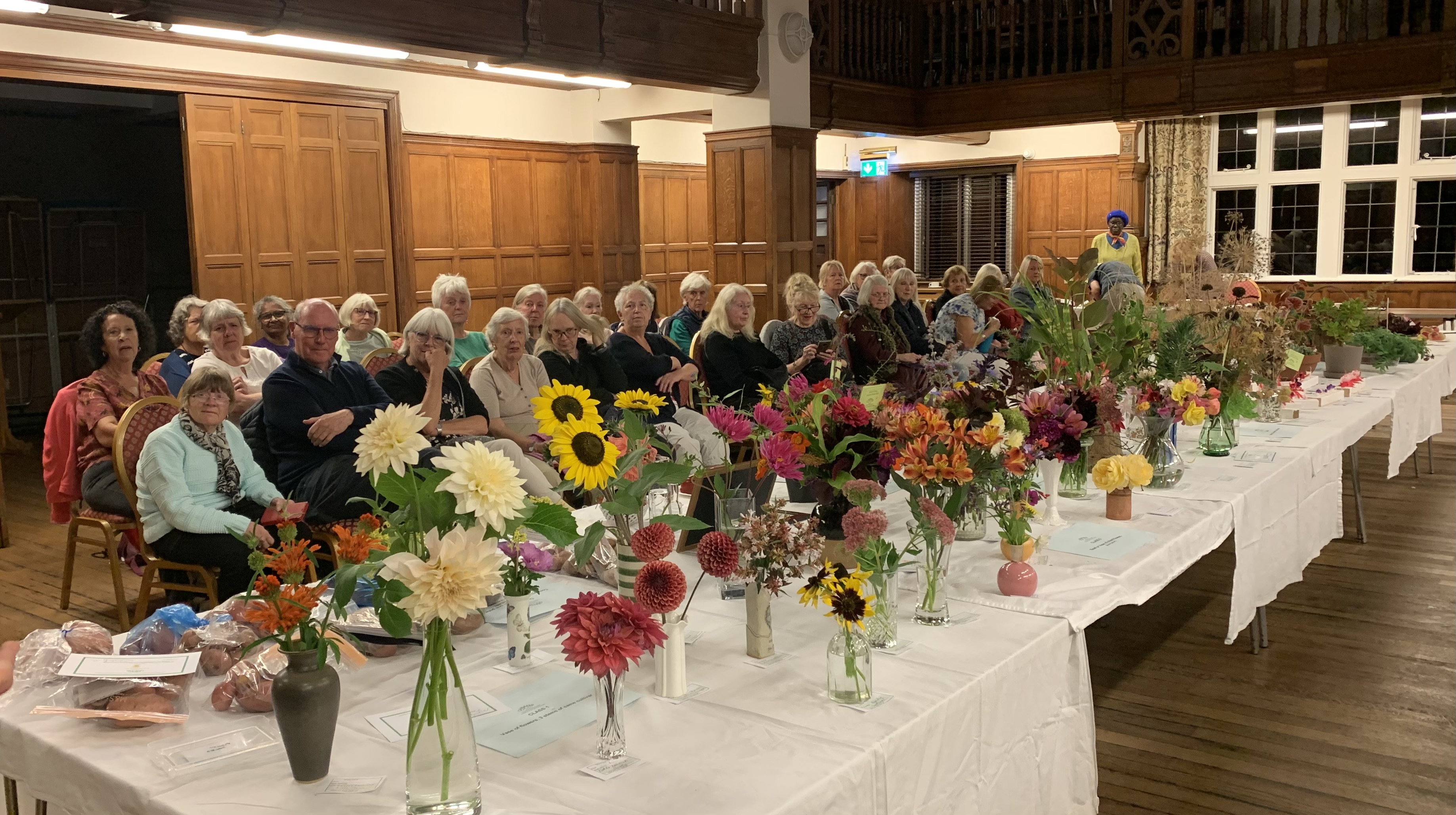
This year’s Autumn Show will be held a month earlier than usual, on Monday 18 August, at 7.30pm in the Old Library at Charlton House. Please note that due to the earlier date, the Potato competition will be judged as part of the Show Table at September’s meeting.
Here’s a reminder of last year’s efforts!
The classes you can enter this year are shown below, please have a go at as many as you like!
This is now a regular and popular event in which our panel answer questions sent through in advance from members, some with illustrations or examples sent in plastic bags. The panel this year consisted of our very own CABAHS committee member and all-round plant guru Pat K, our President Sir Nicolas Bevan and horticulturalist and teacher Joe Woodcock. Sir Nicolas invited advice and contributions from the audience too, saying that in a room full of gardeners, the panel did not “have the monopoly on wisdom”. We did our best!
Our esteemed panel: Pat, Nicolas and Joe
Last year we were all overwhelmed by slugs and snails, this year’s scourge is aphids! The first question related to a particularly damaging infestation on Buddleja, which seemed to have caused a virus. Several people, including Joe, have experienced the same this year. He was able to tell us that it is likely to be a specific species, the Melon-cotton aphid, which the RHS are monitoring (you can report cases to the RHS here).
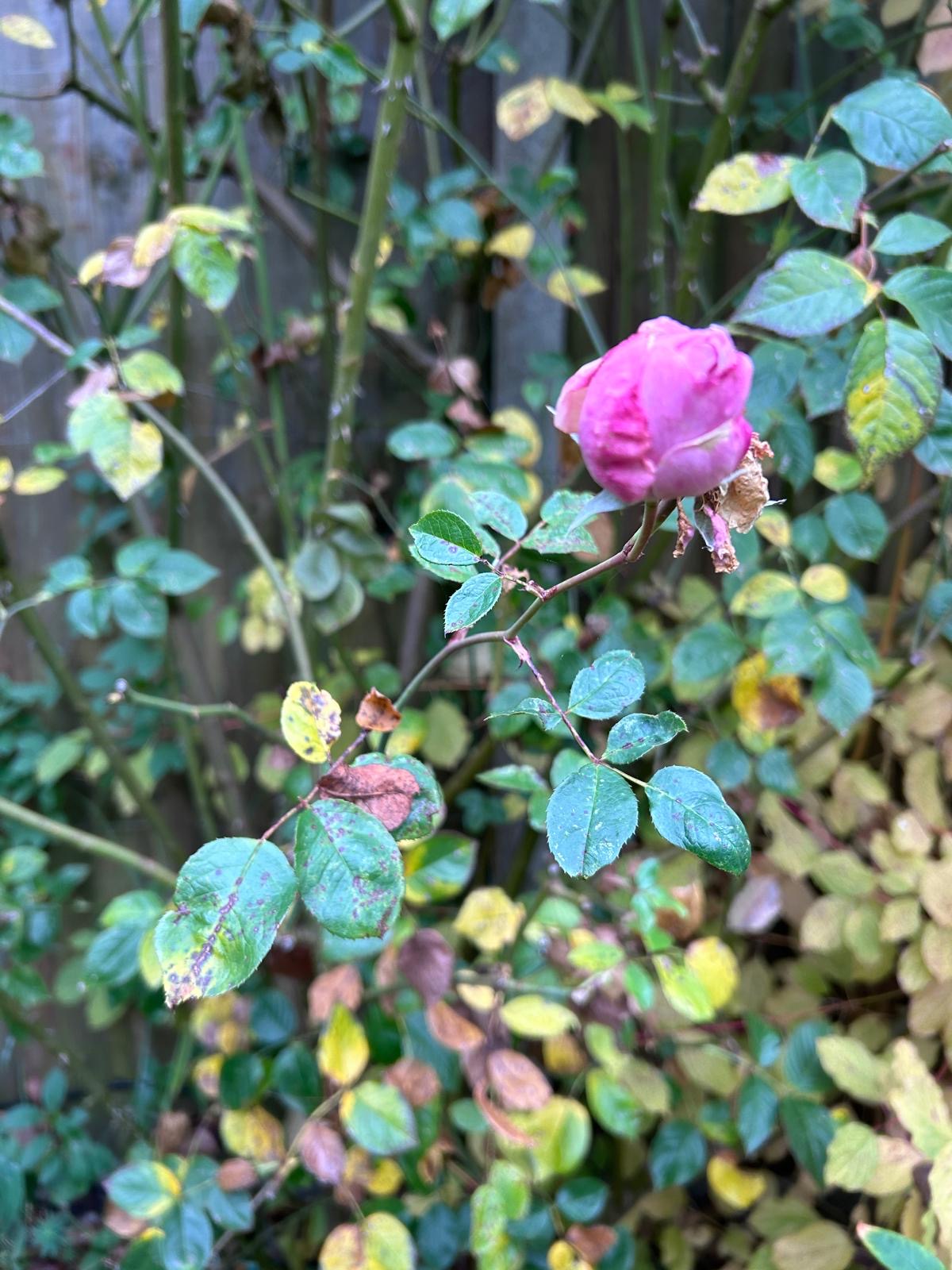
1. Check for blackspot on roses and make sure to remove the leaves by checking the bush itself and below it. But don’t add to the compost heap.
Blackspot on roses
2. If you have to, this is the best time to move trees and shrubs, but have your planting hole ready, and dig up with all the root ball and replant quickly, watering well until settled.
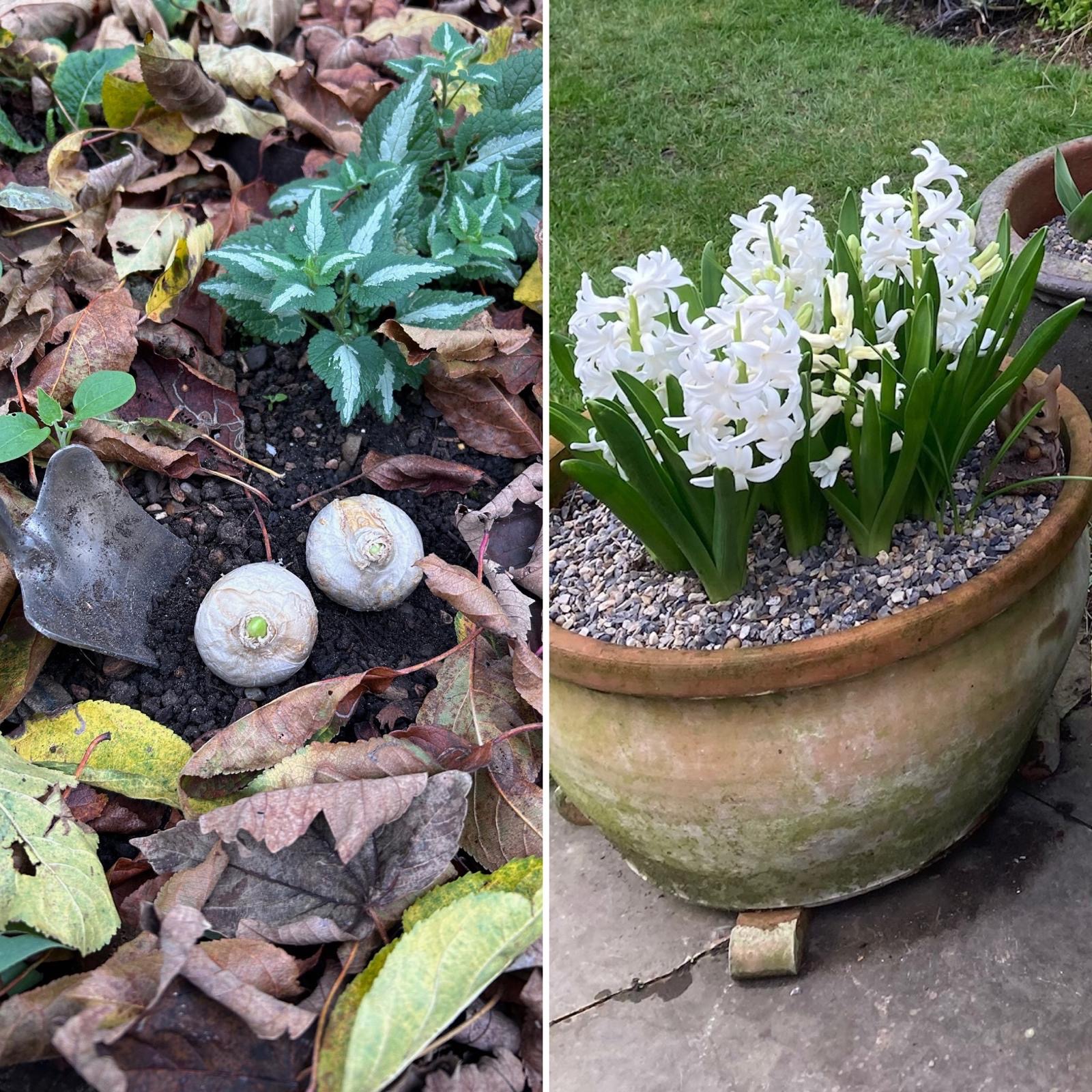
3. Plant your tulips and hyacinths now. either in the ground or in pots – but protect from squirrels.
Plant tulips and hyacinths
4. If you sowed sweet peas last month. harden them off now and it’s still not too late to get some going for an early crop.
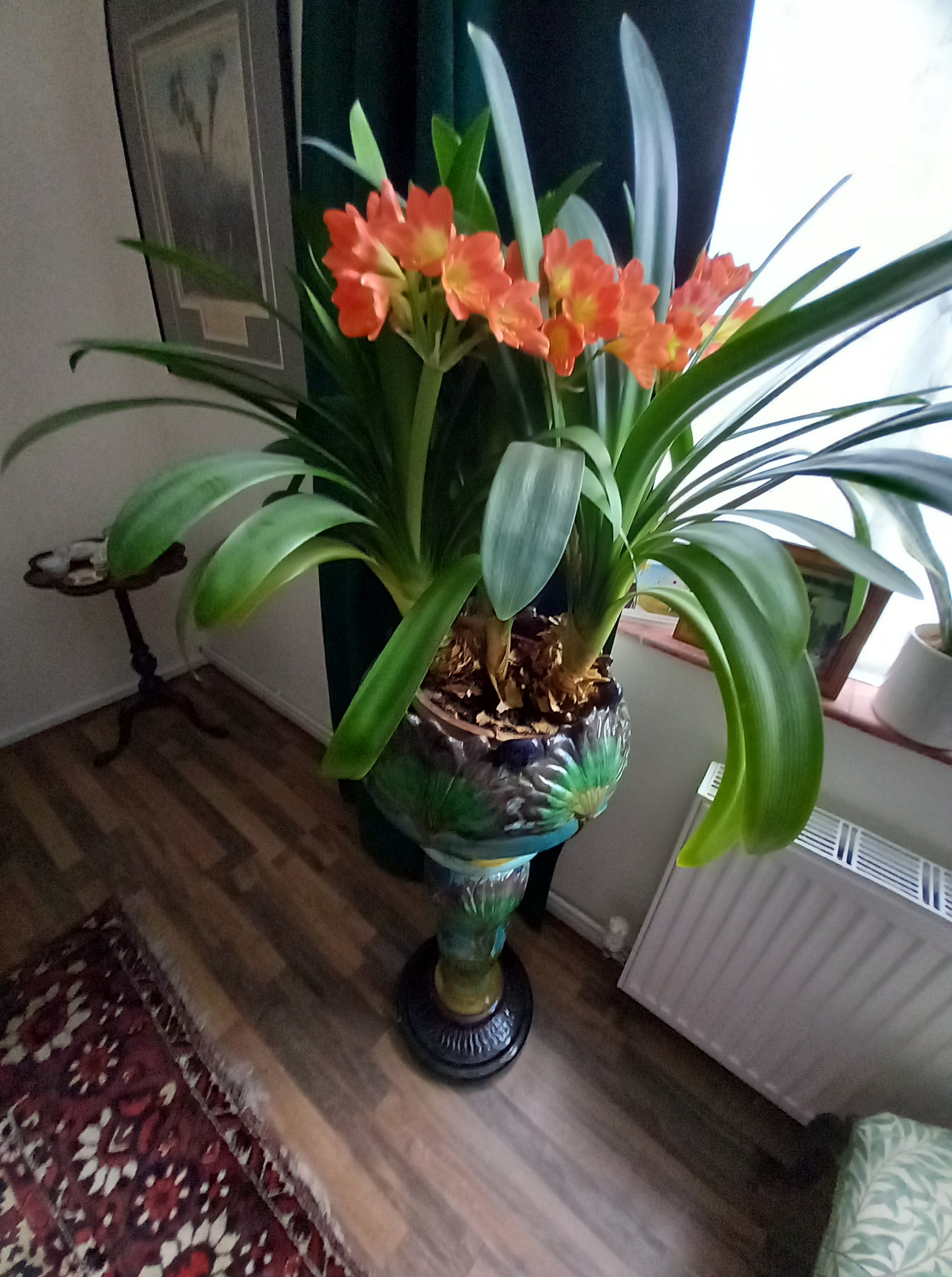
Angela B wrote: “Clivia (or Natal lily, originally from South Africa) is one of my favourite plants. It comes in a variety of colours. I have been growing Clivia miniata, the orange-flower variety, for years. Its glossy leaves and bright orange trumpets are striking and decorative. It has flowered well this year and I thought members might like to see it, and I encourage those who have not grown one to do so.
It’s easy to grow. See the RHS website for detailed care instructions. It’s a woodland plant and likes indirect sunlight and regular watering from Spring to Autumn, but minimal watering over the winter.”
We asked a few other members about this unusual and lovely plant. Chris B is also a fan of them, she says hers has beautiful flowers in May and June and she puts it outside for a holiday in the Summer (although not in full sun). She brings it back inside for winter and reduces the watering.
To be honest it has been so wet and now so cold that the ground is frozen but if conditions return to normal maybe you can try some of the following…..we live in hope!
1. Today according to the RHS is National Houseplant Appreciation Day so try giving those houseplants some attention and if they’re not looking good, treat yourself to a new one checking you have the right conditions for it.
2. Remove old hellebore leaves right back to the base to show off their flowers and to stop any leaf spot or other diseases from spreading.
3. All my violas in my front window box have died and a good gardening friend reminded me it could be vine weevil larvae chewing the roots which I haven’t had for ages so turn out the window box and check for those grubs and replace with fresh compost.
4. Start pruning roses cutting back with a slanting cut to above a bud and use the resulting prunings for cuttings 6 to 12 inches long and insert into either a pot or the ground so that 2/3 of the cutting are below the soil. They take a good while to root but its worth the free plants if they root.
5. Winter prune wisteria by cutting back shoots to 3 or 4 buds from the main stem.
6. Cut back really tatty herbaceous plants but leave anything with hollow stems or stems and foliage that may harbour overwintering insects. I started cutting back a bay tree until I saw the ladybirds amongst the stems.
7. Seed potatoes can be chitted from now on by placing them so they don’t touch in boxes, egg cartons are ideal, and placing in a light frost free place. Don’t forget to label the variety.
8. Prune established soft fruit bushes such as gooseberries, red and white currants removing any dead wood and cutting back main shoots by a quarter. If grown as a bush aim for a goblet shape with an open centre to aid air circulation.
9. Look at your seed catalogues and order anything you especially want before they run out.
10. Make sure to have some scented flowering shrubs either in the garden or in pots for pollinators to include winter honeysuckle, sarcococca, daphne and viburnham and aim to plant some by your door so you can catch the scent.
Happy gardening all!
Pat K
Ed: The RHS has a shop at Bluewater, perfect for browsing for some houseplant updates, all UK grown. (Note they don’t take National Garden Vouchers though)
Leave old stems over perennials to protect the crown and give shelterSarcococca smell divineThis Hellebore would look better without leaves!
The Barbican Conservatory is a tropical and sub-tropical botanical glass-roofed garden located on the third floor of the Barbican. It’s an ideal place to visit during the winter months (and all-year round) but on 16th March we hit the jackpot and were thrilled to see Clivia plants in full flower – perfect timing, as it is this month’s Plant of the Month!
This is the second largest conservatory in London (Kew Gardens’ Temperate House being the largest). Opened in 1984, the walkways and terraces have been designed to encourage visitors to wander the pathways and along the walkways in order to explore and experience an urban jungle and to observe the characteristic form of every plant.
Amongst the tropical planting, various exotic palms stand out and the handsome foliage of Monstera deliciosa (swiss cheese house-plant as we know it) is there to be admired. The majestically tall weeping fig tree emphasises the height of the conservatory and frames everything around it. Wide, arching stems of the handsome tree fern and the striking tree, Araucaria heterophylla (which we rested under), plus unusual climbers and shrubs including yuccas and cordylines, are amongst the 1500 plant species on show for the public to appreciate.





 Charlton and Blackheath Amateur Horticultural Society