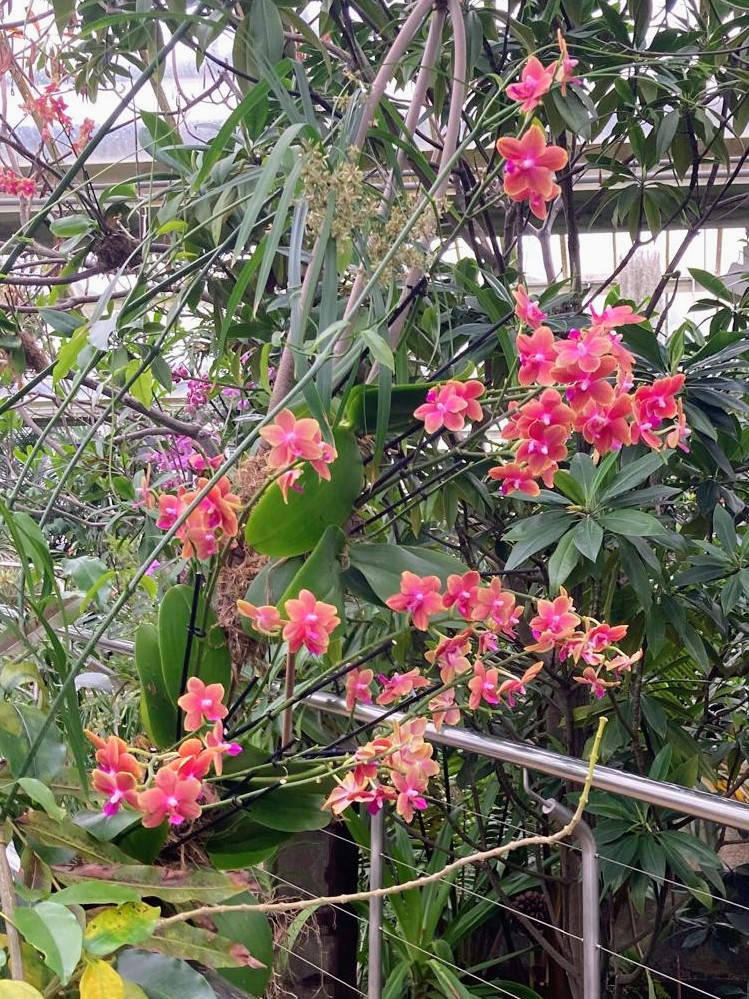
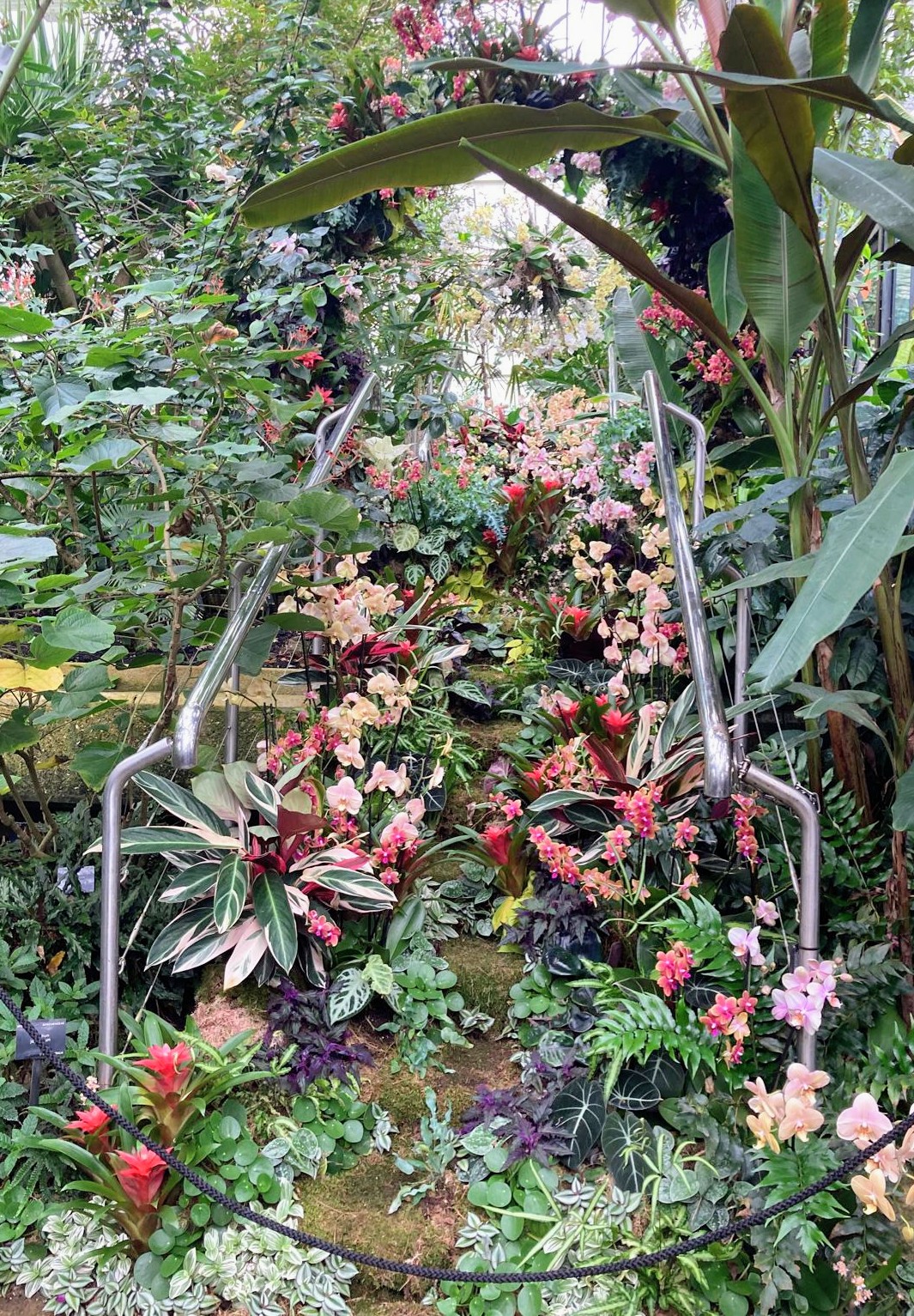
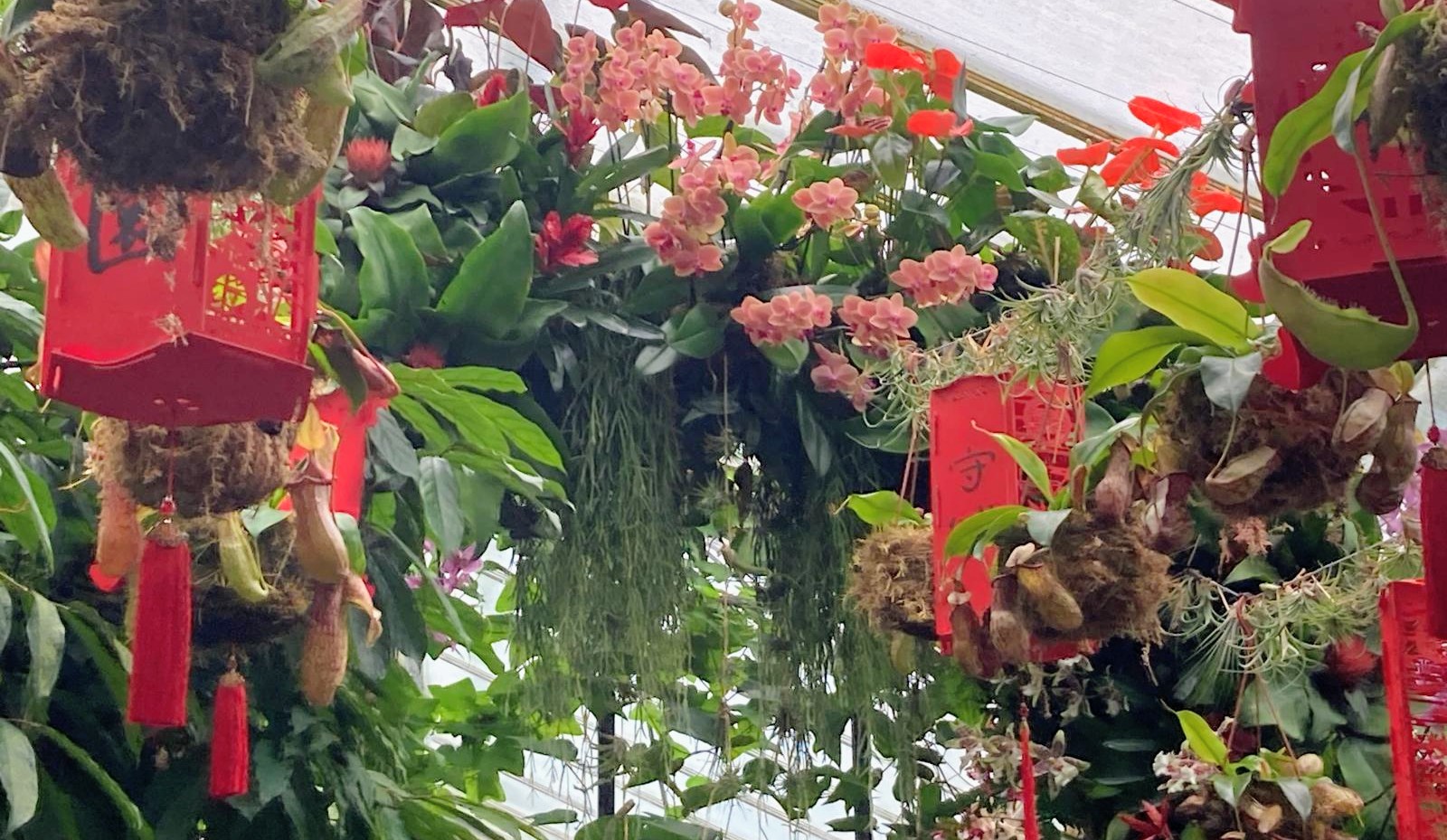
It’s celebration time for the Royal Botanic Gardens, Kew, as this is the 30th year of their much-loved Orchid exhibition, set within the rare and exotic planting in the Princess of Wales Conservatory.
The magnificent variety of Orchids on display at Kew Gardens
This year, China is the inspiration for the exhibition, in particular the Yunnan Province, where 1,000 species of Orchid are to be found.
So far February 2026 has been very wet, with heavy and prolonged downpours, which has restricted everyone’s garden visits, including mine. So I’ve had help this month from Ali H (many thanks) in seeking out winter-flowering specimens that are looking at their finest at the moment and hopefully will be of interest to you.
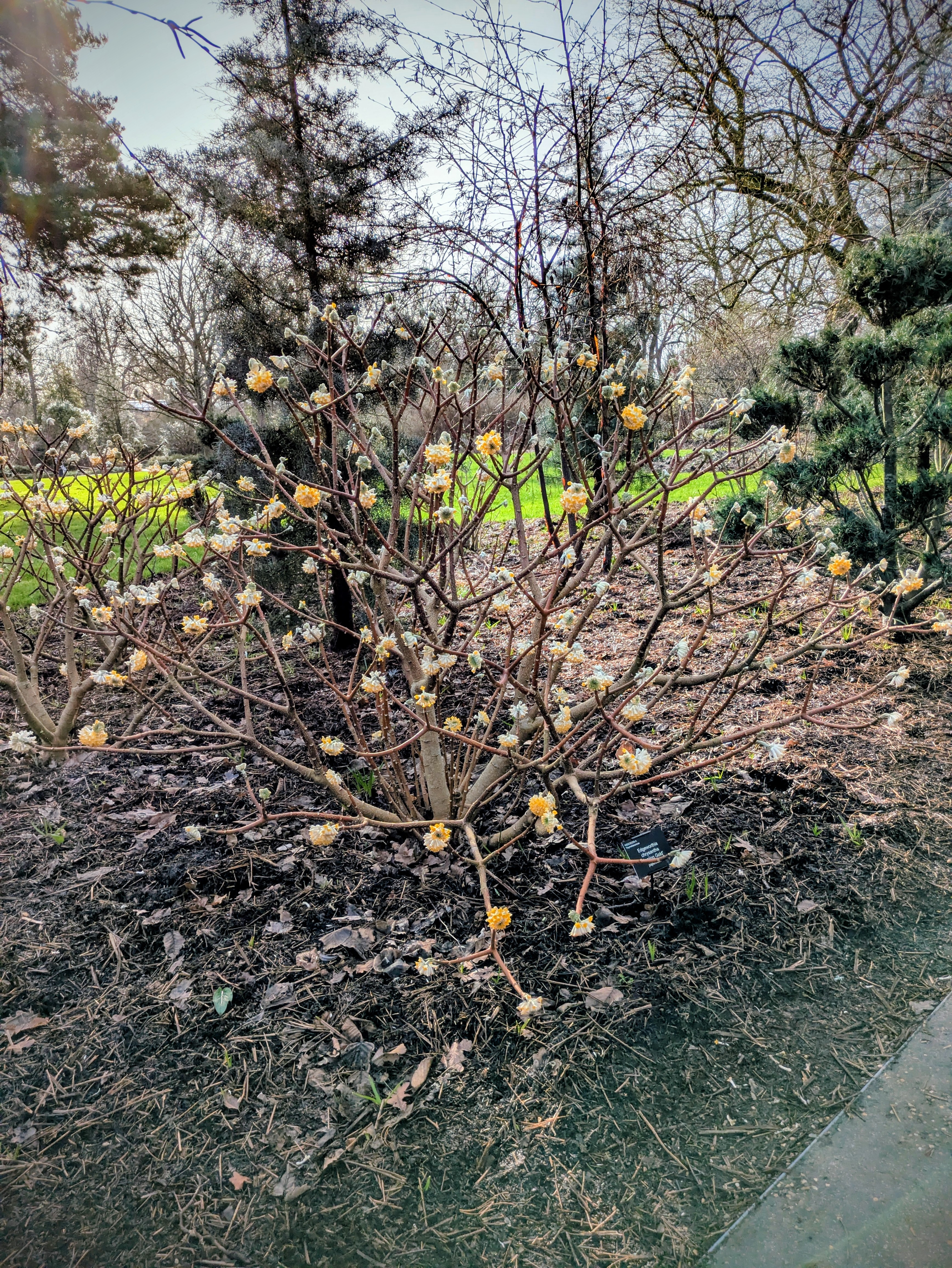
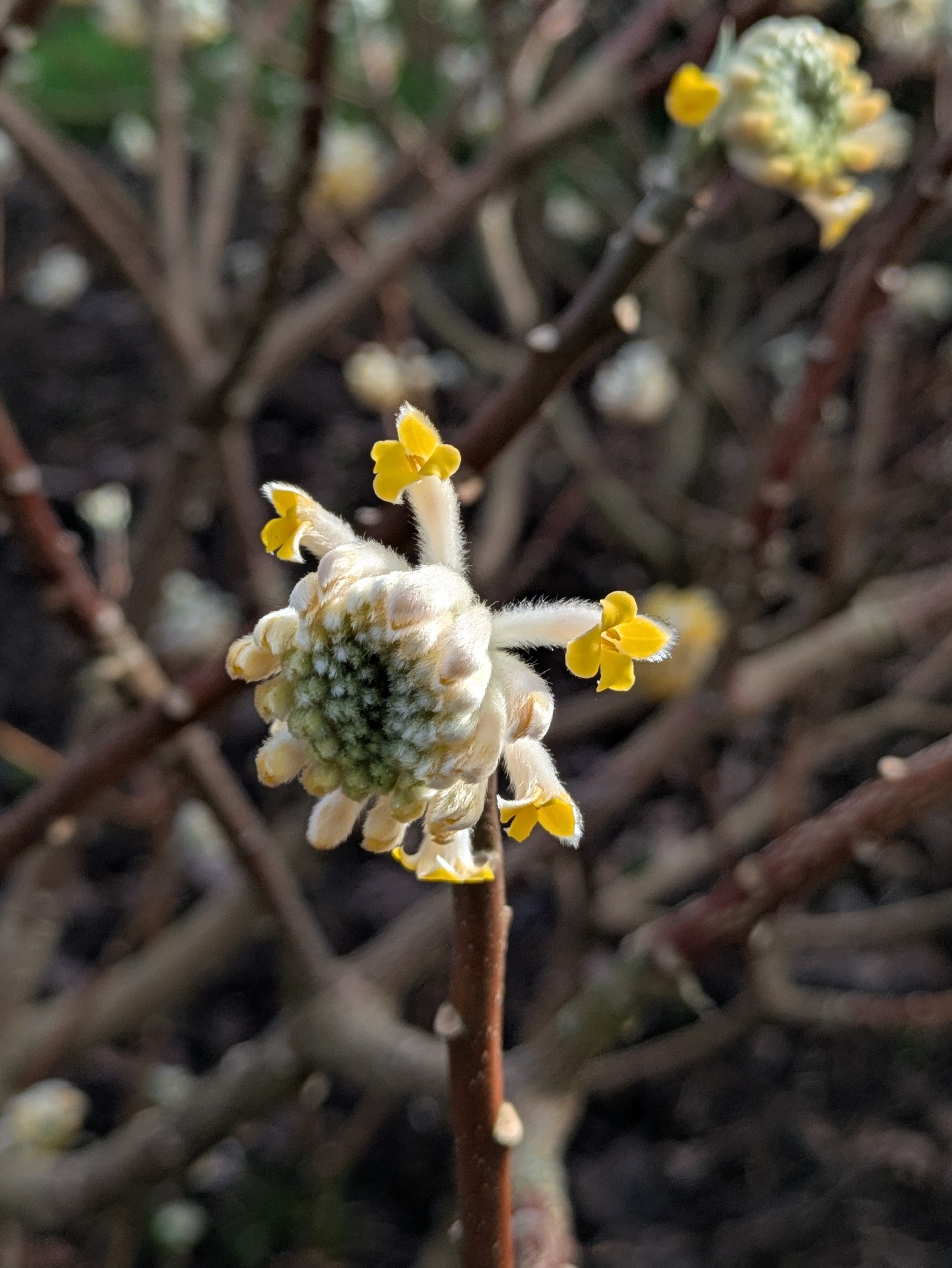
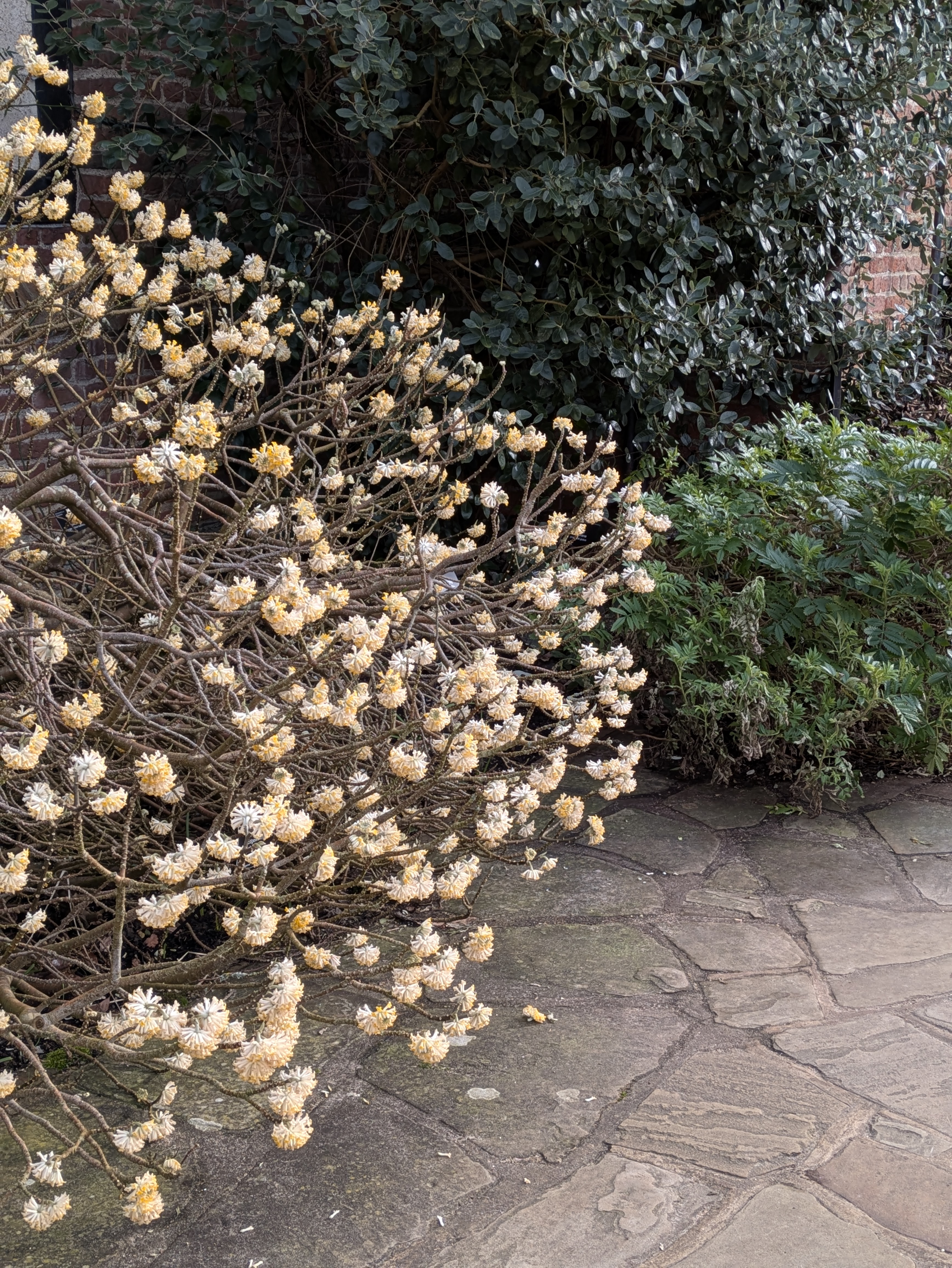
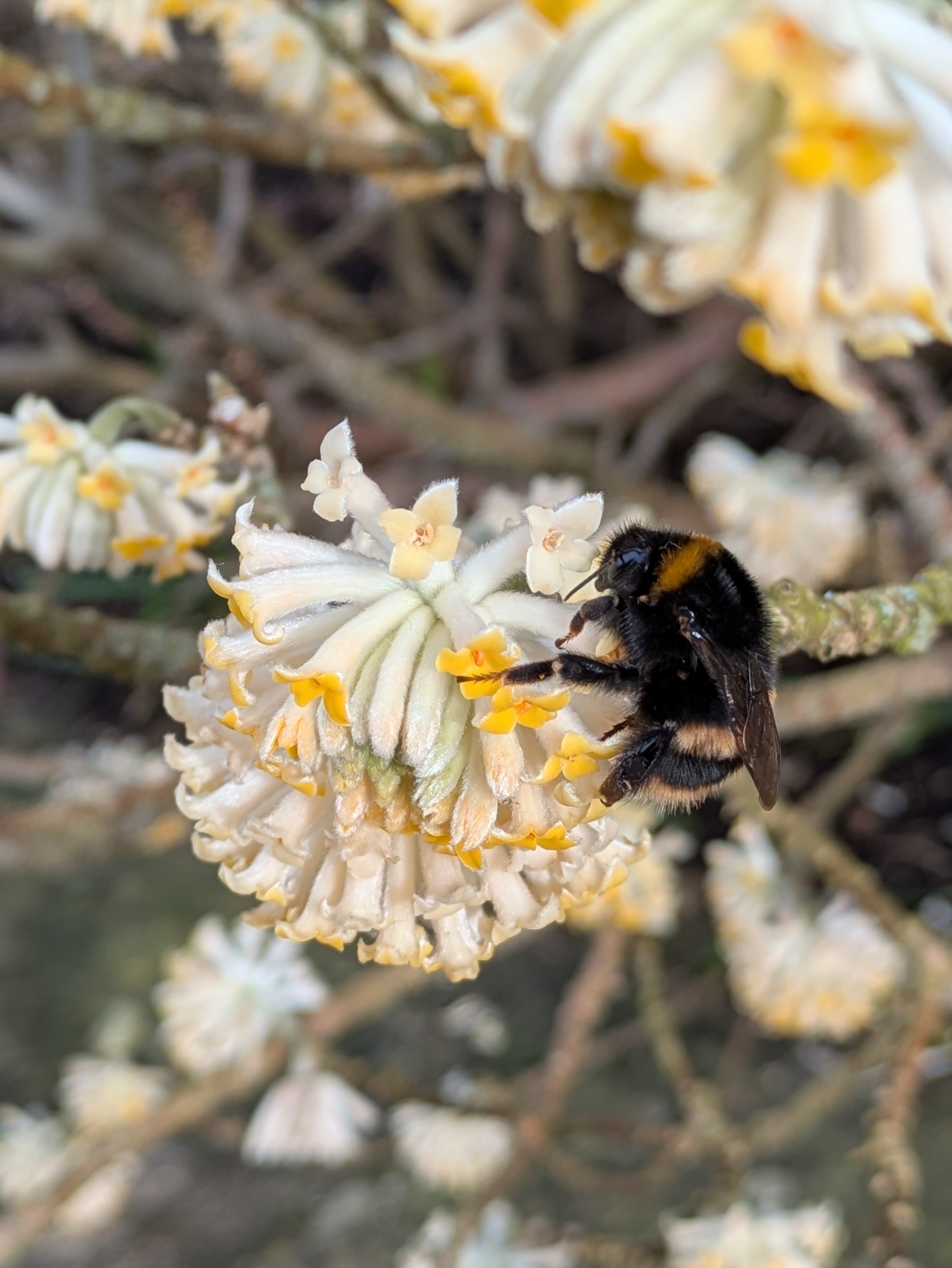
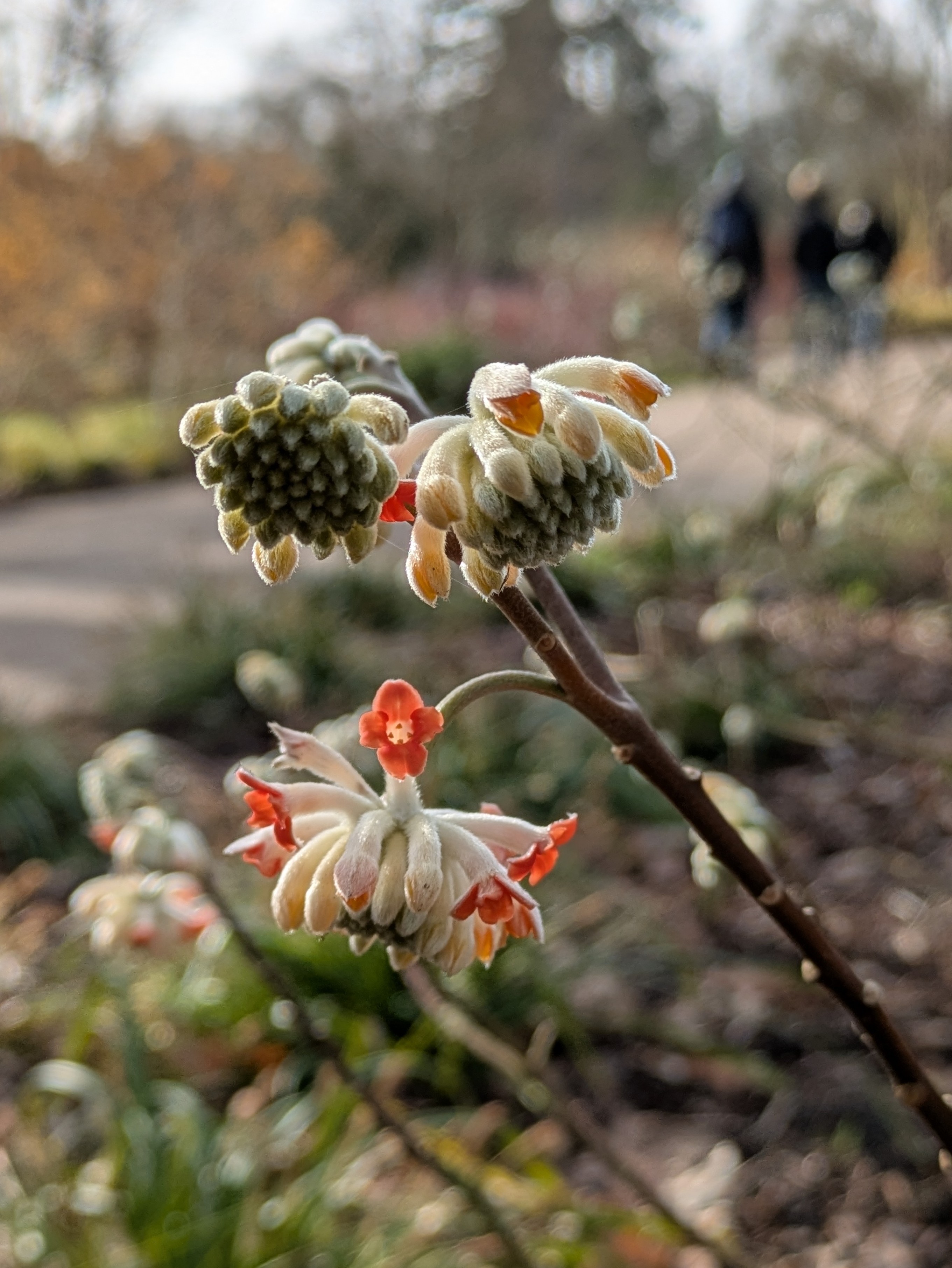
Originating from China and the Himalayan regions, Edgeworthia chrysantha is related to the Daphne family and I am not surprised as the flower clusters are extremely fragrant. They appear on the tips of bare stems in late winter, then in spring covered in foliage, consisting of attractive slender leaves, making a nice rounded shape to fit within planting schemes.
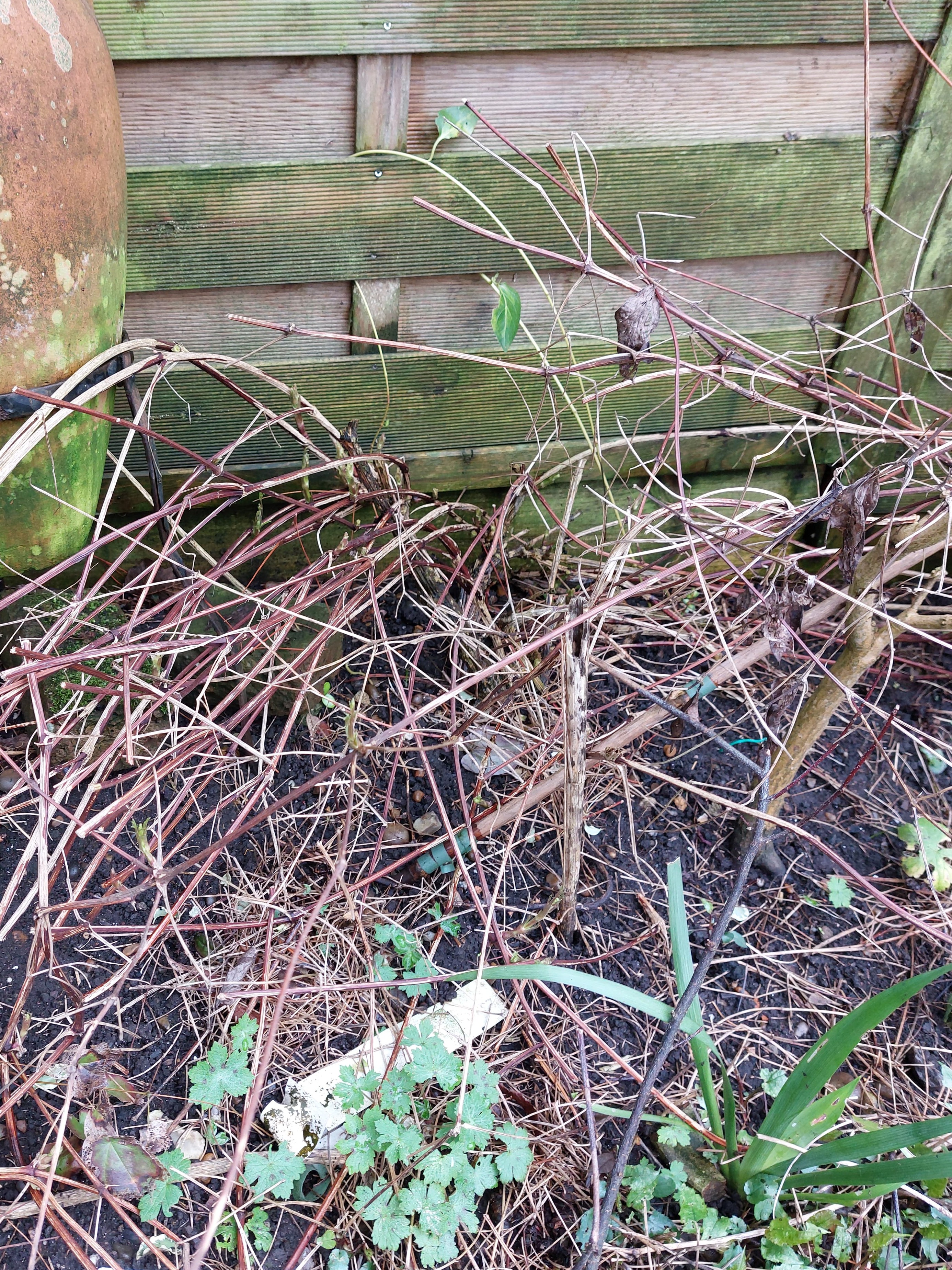
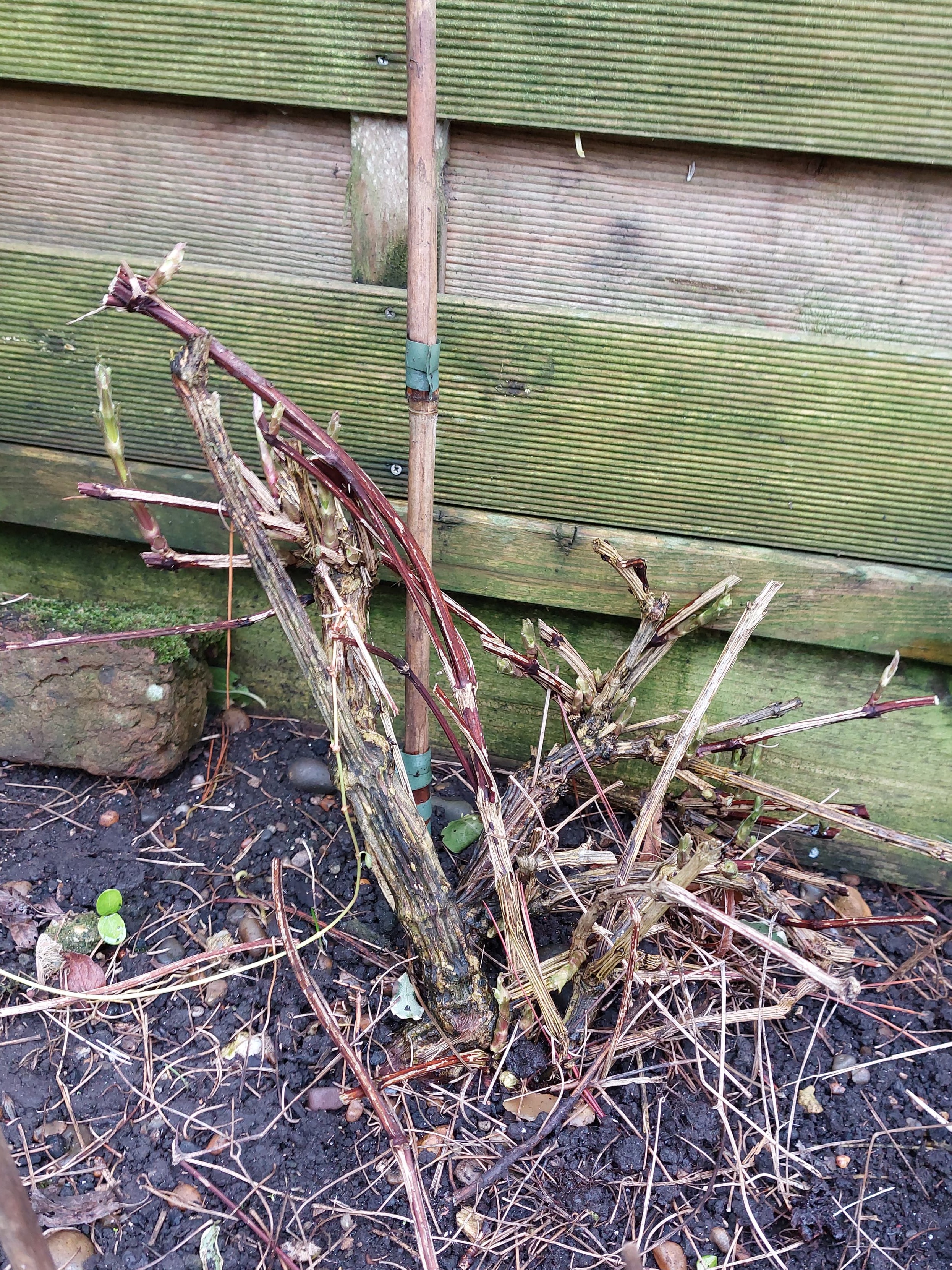
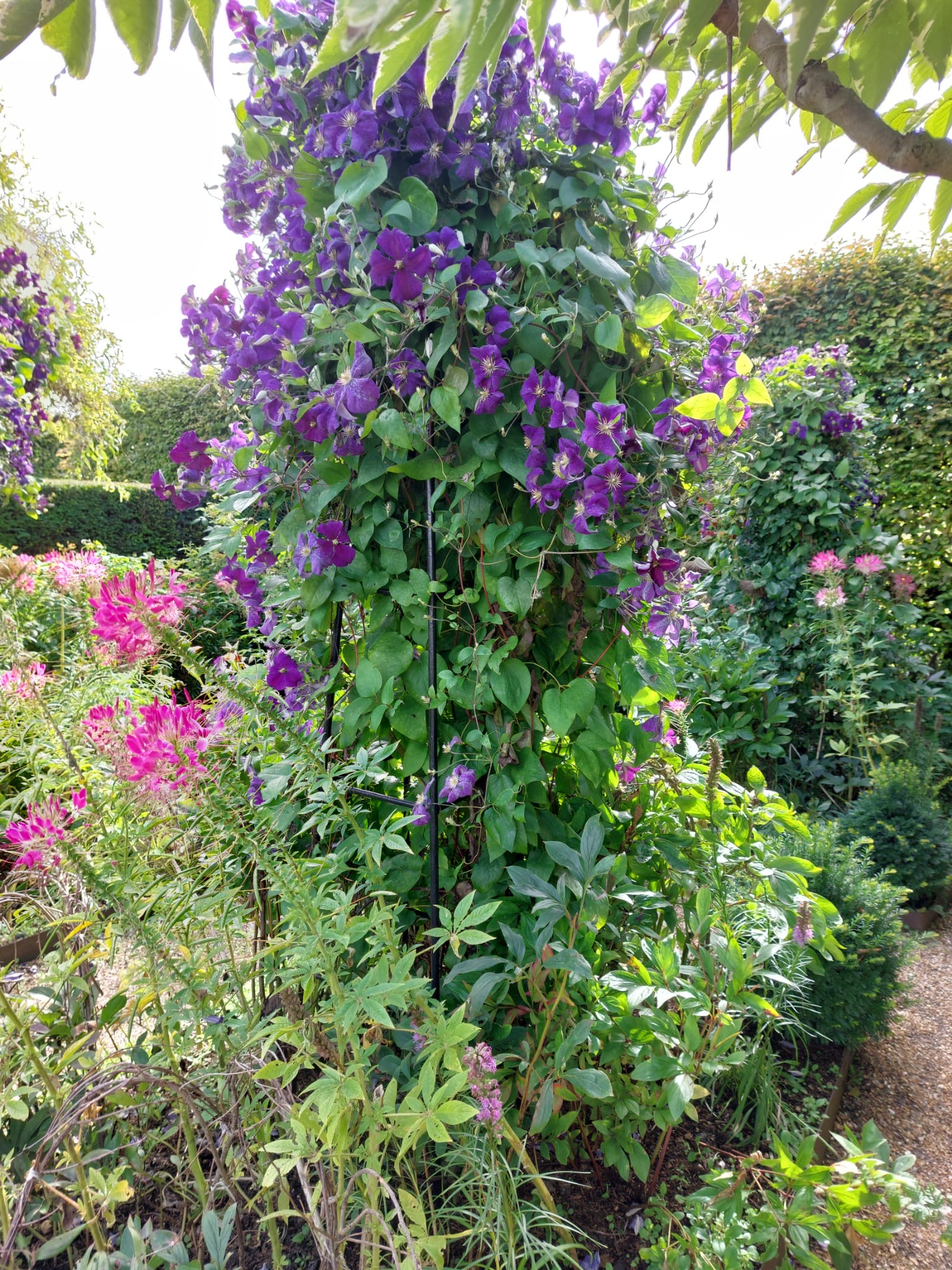
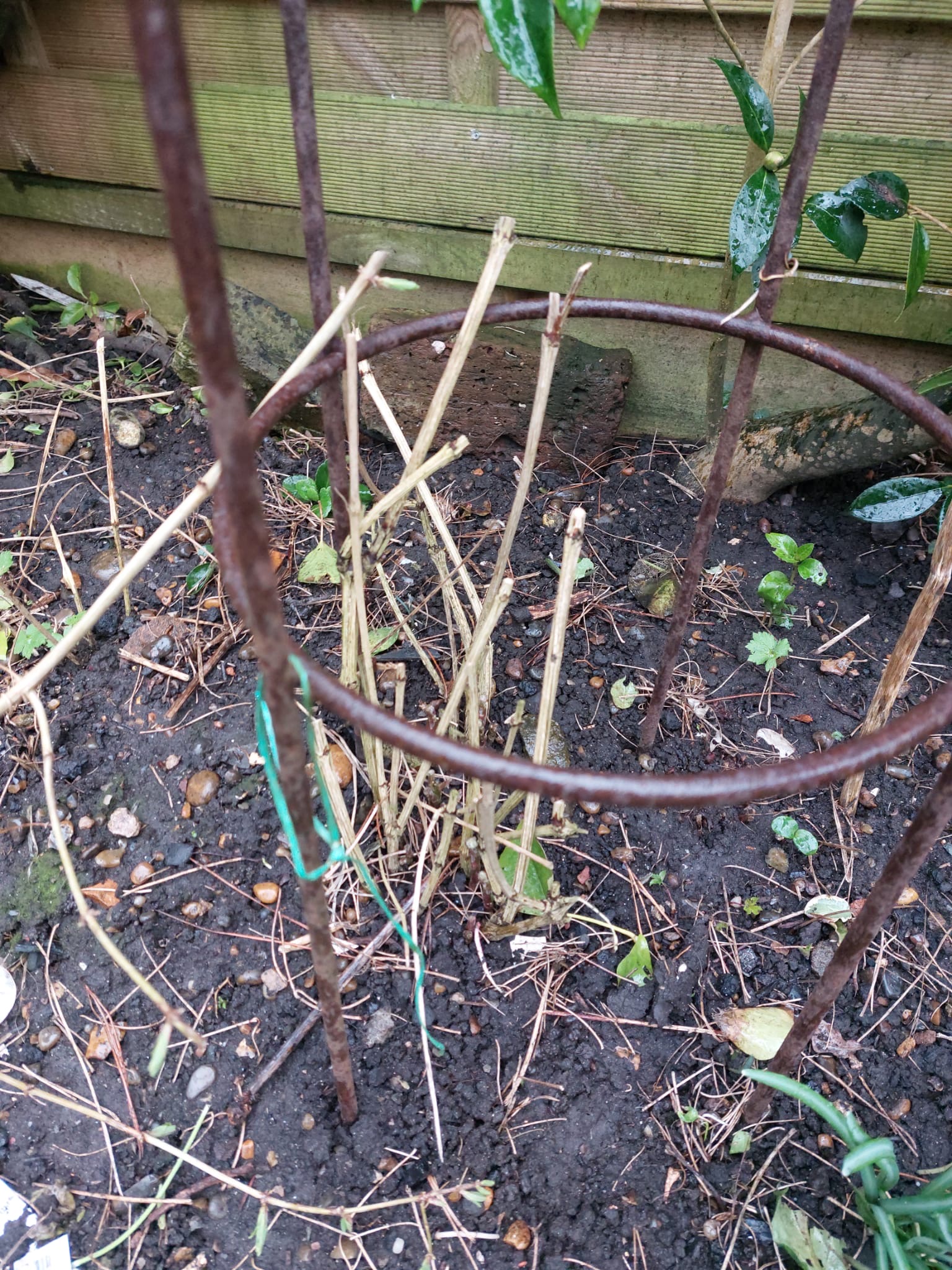
1. It’s time to prune your Group 3 Clematis (the Viticella and Jackmanii type) to tackle tangled growth at the base so they can grow away strongly. Take all growth back hard to about 6 to 12 inches above the ground, cutting above a leaf joint. Then give them a feed and a mulch. It seems drastic but they respond well and will grow quickly. If it’s a fairly new plant check around the base for slugs which can quickly eat any weak new growth.
Clematis viticella ‘Betty Corning’ before and after a hard prune
2. Cut back all spent foliage on grasses making sure not to snip emerging shoots. And look out for any seedlings to pot up for our plant sales table if you don’t want them!
Led by members of the garden team, the Behind the Scenes tours of Great Dixter provide an opportunity to explore the garden and meadows to examine the plants which are putting on a display at particular times of the year, offering an insight into the work that makes this happen. Limited to a maximum of 25 people, they allow visitors to have a good view of the plants.
A tour of the gardens in February was always going to be a little hit and miss in terms of the weather, but we were fortunate enough to arrive just as the rain stopped, so were able to enjoy the tour without getting soaked through!
As we enter through the front meadow, the area is full of Crocus tommasinianus, Crocus flavus and various forms of Crocus chrysanthus. Of course there are snowdrops everywhere. Our guides introduced us to the wide range that are cultivated here, from the common (but no less lovely) Galanthus nivalis, to G. Atkinsii and G. S. Arnott which are all doing fabulously well, as well as the less common G. Diggory and G. Washfield Colesbourne. We all peered at the diminutive G. Wendy’s Gold in a corner, sheltered by a wall and still tiny enough that if it wasn’t pointed out, you might walk past it! Some of the differences between the types are so small: those with an upturned tepal and look like little helicopters, while G. Diggory is plump and round.
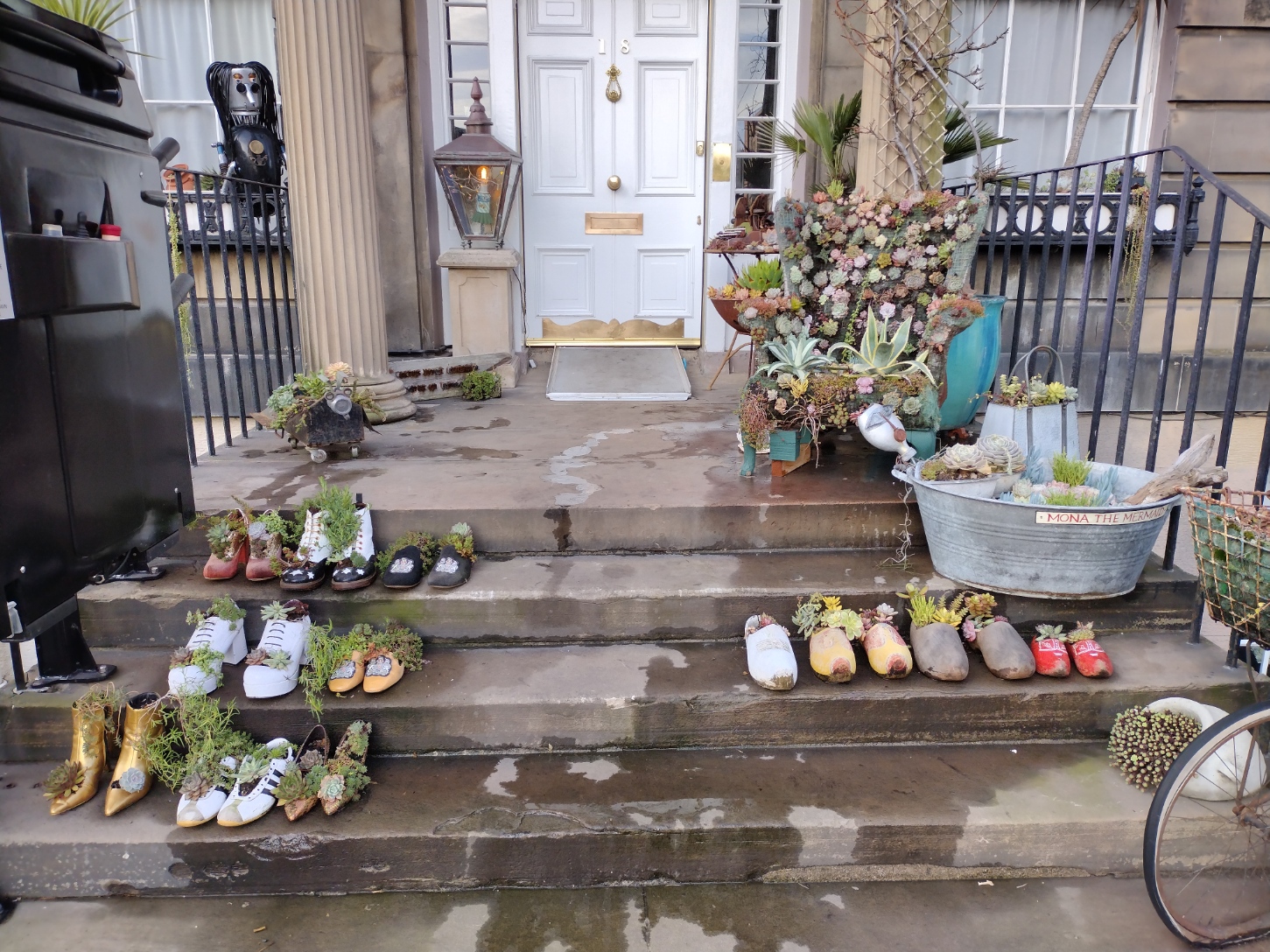
I spent a weekend this February in Edinburgh, and came across this interesting doorstep display on my travels around the city. Some new ideas for displaying your succulents …!
I also visited the Royal Botanic Garden. The morning I visited was bright, cold and calm, in stark contrast to the previous weekend when the garden had been ravaged by storm Eowyn. The sad remains of the garden’s tallest tree – a 166 year-old conifer – were clear to see.
The sun was shining and the sky a bright blue but the frost remained in the shadier parts of the beds and the Rhododendrons had bowed their leaves to protect themselves from the cold. But they were also covered in buds, waiting to burst forth in a few weeks time.
Sixty-three members attended our Annual General Meeting on Monday 17th February in the Old Library at Charlton House. There were opportunities to renew membership, check the data CABAHS holds on members for GDPR purposes and book the next CABAHS outing to RHS Wisley on 6th May, as well as the Raffle.
AGM 2024 AudienceMembership Tables
The AGM included a review of achievements over the past year and the election of the Committee and Officers of the Society for 2025.
Stella giving the Chairs Review of the Year 2024Treasurer’s Report for 2024
Three Committee Members have stepped down Stella B stepped down as Chair of CABAHS and Anna L and Lynda F stepped down as Committee Members. Each was presented with a bouquet and a book in thanks for their contribution to the work of the CABAHS Committee.
New Committee for 2025 With departures from the Committee, new Committee members are required and Vija V was elected as Chair. She responded that “It was good to see so many of our members at the AGM. I am delighted to be returning as Chair of CABAHS and look forward to working with you all again.”
1. It’s time to cut back those late-flowering clematis…the viticella small-flowered types and the ones flowering after June. All that rain last year made mine grow rampantly so cut back hard to just above a bud, 6 to 12 inches from the ground, and give them a feed and a mulch.
Late flowering viticella ClematisClematis viticella – two varietiesClematis cut down to 12 inches
2. You can also cut back some of the slightly early-flowering types like jackmanii varieties and Comtesse de Bouchard, but it’s best to check individual varieties or you’ll lose all your flowers for this year. Other varieties such as early varieties like Montana should be trimmed back after they flower in Spring, unless overgrown – when they require drastic action and you’ll be sacrificing the flowers for a year or two. Anyway, please check.
3. If the ground is frozen or too wet then don’t be tempted to walk on it for fear of damaging the structure. Seems impossible at the moment to get much done!
This year’s Orchid display, based on the beauty of Peru, is being show-cased in the Princess of Wales Conservatory. The display is absolutely stunning and should not be missed.
The glasshouse is divided in two sections: the arid, dry zone, featuring cacti and succulents; and the lush, tropical zone. Within the dry zone several large containers of orchids and hanging orchid planters are on display but it’s the tropical zone that contains the main display and you won’t be disappointed.
Inspired by the Peruvian flag and coat of arms, the display centres on a cornucopia (an ornamental goat-horn), overflowing with orchids, to signify the abundance of mineral wealth of Peru. Adjacent (keeping guard?) stands a distant relative of the alpaca.
If you wish to see the snowdrops now, I can highly recommend the Royal Botanic Gardens Kew. The gardens are easy to reach via the District Line to Kew Station. The woodland garden (near the Princess Diana Conservatory) has meandering paths beneath the trees, where an array of snowdrops, aconites, hellebores and mauve-coloured crocuses (the shade of colour I’ve only ever seen at Kew) are displayed to a wonderful effect. Visiting on a beautiful sunny day makes the gardens appear even more delightful.
The magnificent sandstone rock garden nearby, which mimics mountainous regions, is an important feature of the gardens, and here and there, in mostly sunny locations, could be found very choice, small clumps of snowdrops which are labelled for the visitor. I would love to have any of these growing in my garden and I thought you might too.
Galanthus ‘John Gray’: This early-flowering snowdrop is regarded as very choice indeed, which was seemingly found in the Suffolk garden of the late John Gray. I was captivated by the shades of lime-green on the inner segments.
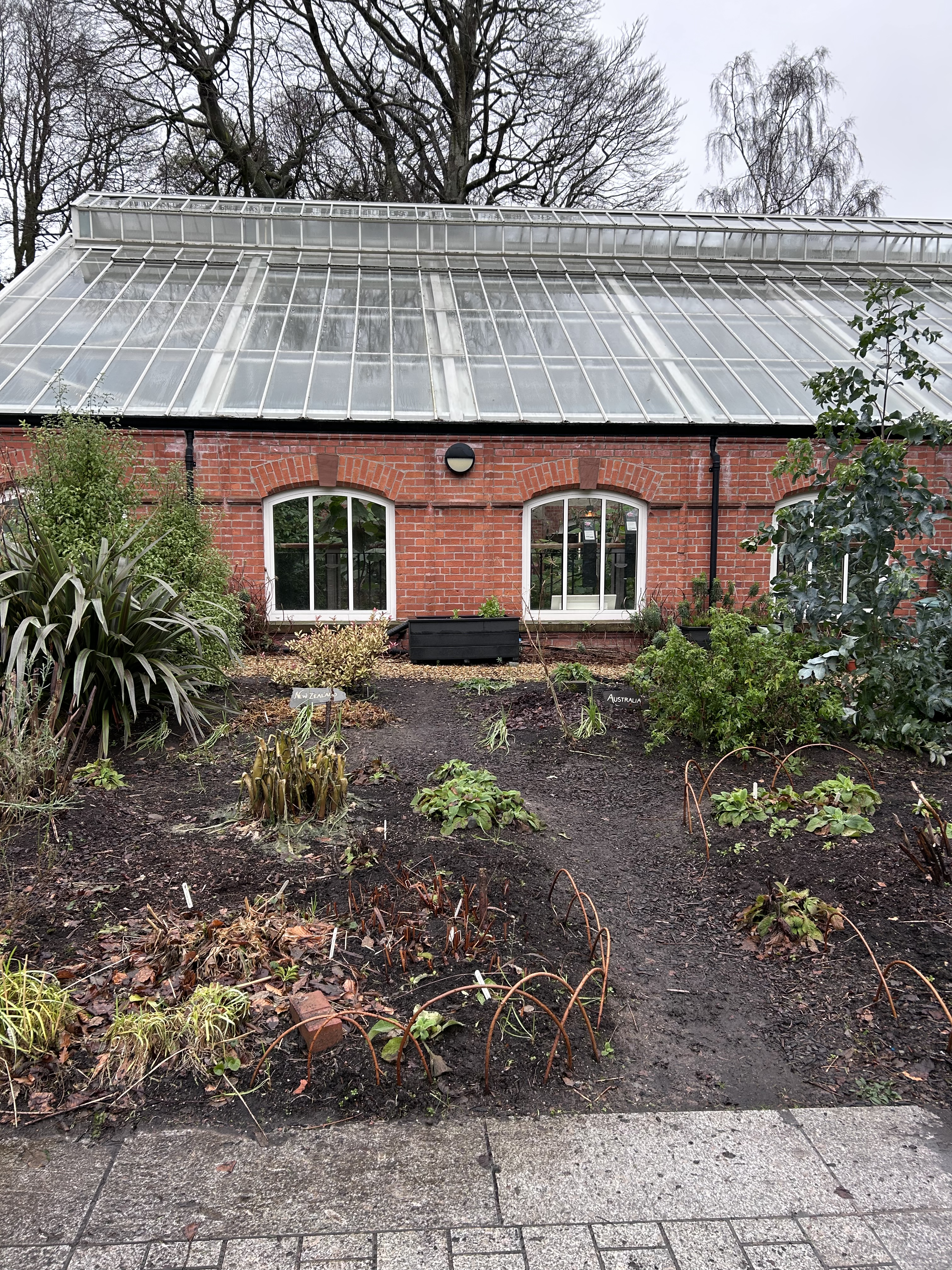
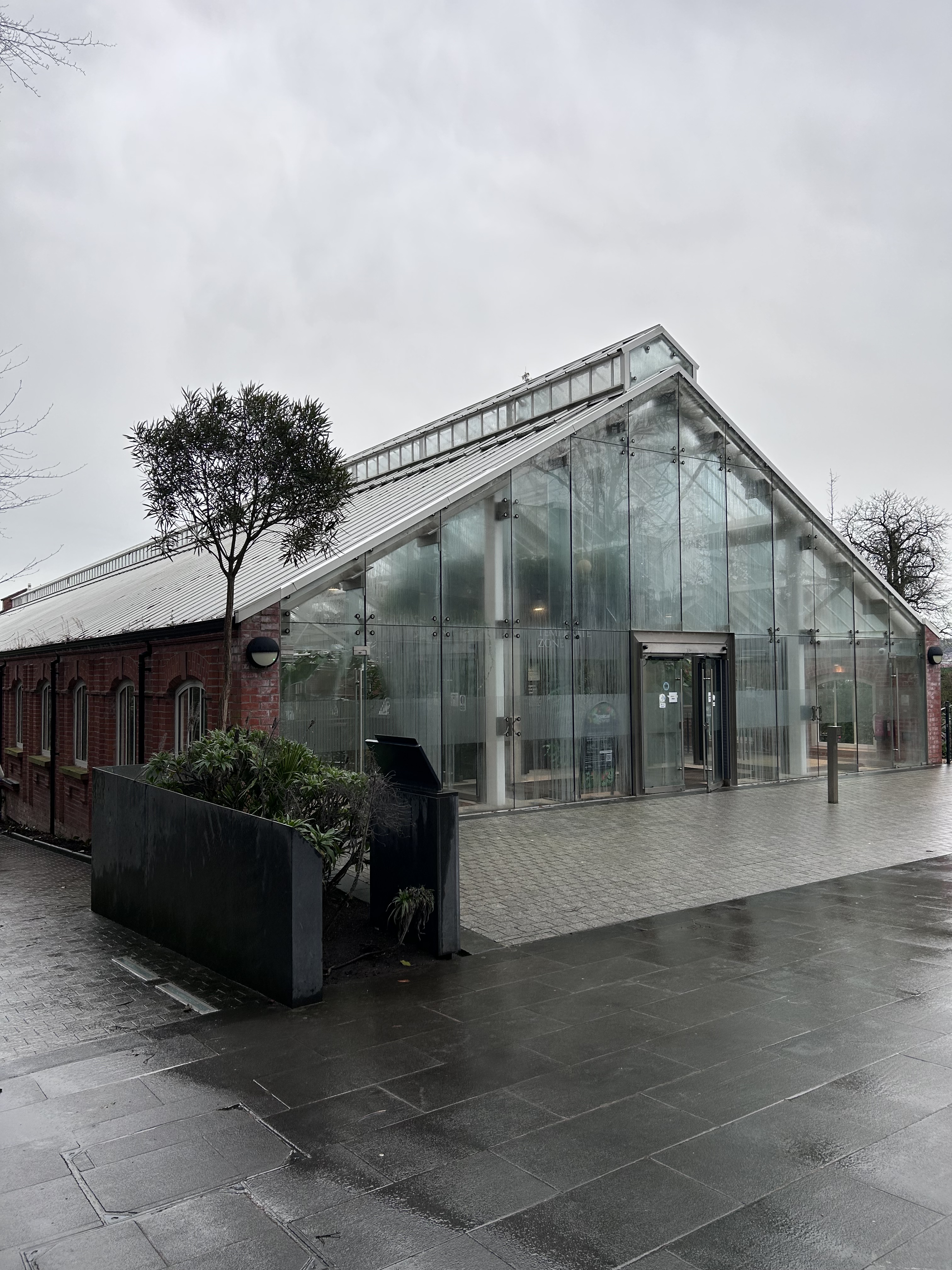
I have been spending some time recently in Northern Ireland, and was enchanted to find the Belfast Botanic Gardens are right on my doorstep here.. just waiting to be explored.
The gardens started in 1828, when the “Belfast Botanic and Horticultural Society” was formed and a 14 acre site purchased. The Palm House was built in 1839 by ironmaster Richard Turner of Dublin, who went on to build the Palm House at Kew a few years later! If this one was a practice run, it is still really impressive.
It is not large, but cleverly designed to incorporate a Cool Wing, a central Dome which is sub-tropical, and a Tropical wing, so it can house a wide range of plants. Sadly it was closed for repairs on the day of my visit, courtesy of the recent winter storms.
There is another glasshouse on the site, the Tropical Ravine House, which is just amazing. It was built by “the Head Gardener and his staff” (Jason & the Garden volunteers – there’s an idea!) and was finished in 1889. Uniquely constructed into a hillside, so the visitor walks around a balcony and looks down into a moist glen filled with tropical planting.
It was renovated in 2019 with help from the Friends of Belfast Botanic Gardens, who clearly play a large part in supporting and maintaining these gardens. They have also created a fascinating new Global Medicine Garden just to the side of the glasshouse. https://fobbg.co.uk/











 Charlton and Blackheath Amateur Horticultural Society