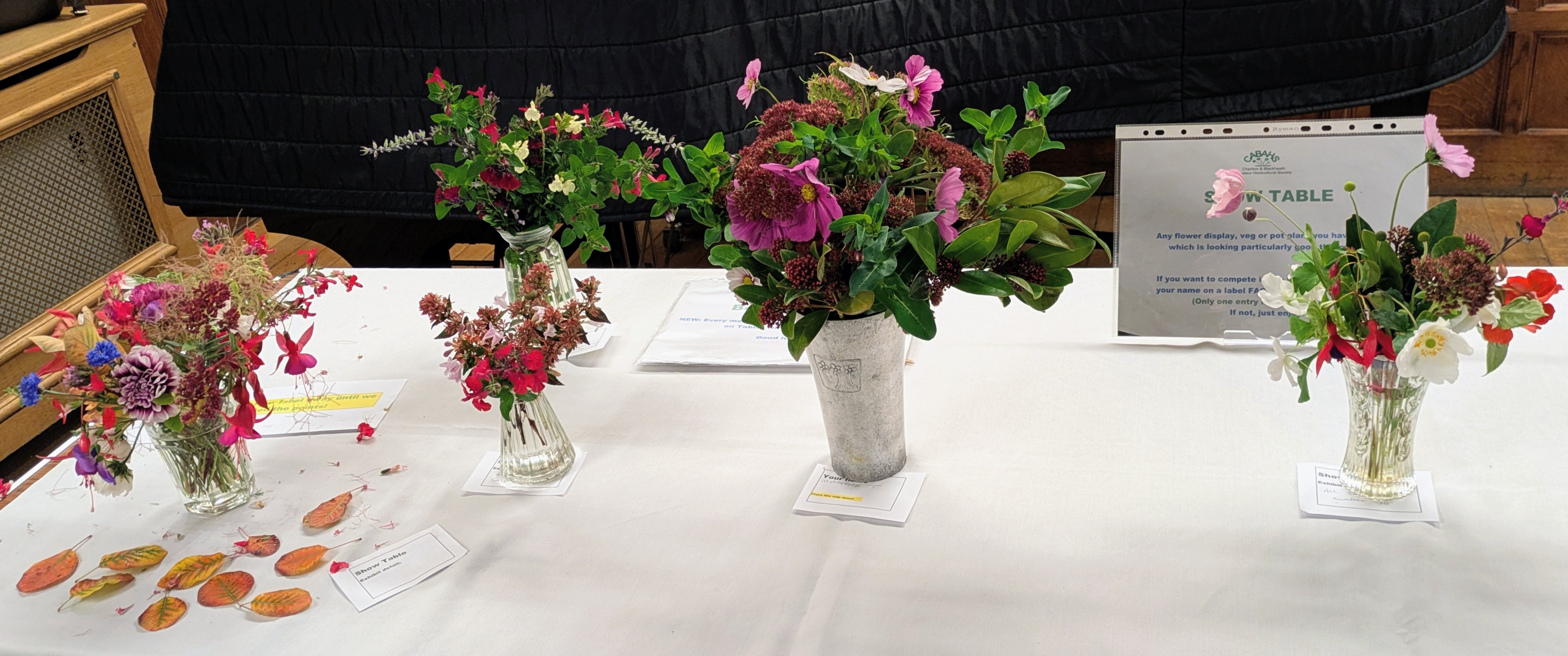
The October meeting at CABAHS featured tea. coffee and biscuits, a raffle, bulbs for sale, the Show Table and an enlightening talk from Ruth Cornett about ‘Flowers in Art’.
Continue reading October 2025 Meeting and Show TableThe October meeting at CABAHS featured tea. coffee and biscuits, a raffle, bulbs for sale, the Show Table and an enlightening talk from Ruth Cornett about ‘Flowers in Art’.
Continue reading October 2025 Meeting and Show TableFollowing on from a talk given in October 2024 by Dr Tim Ingram about his family run garden – Copton Ash – he returned for a more detailed presentation about the bulbs grown there. As he was not well that evening, his wife Gillian gallantly stepped up at the last moment to deliver the talk.

A wealth of bulbs have now been planted at Copton Ash, in beds, under trees and also allowed to naturalise in long grass. In particular a circular sunny gravelly bed was highlighted. The planting was at first inspired by the Lime Walk at Sissinghurst Castle which is very much a spring show of narcissus, tulips, primroses, anemones, scillas, violets and erythroniums. Tim has continuously added to and altered the planting in the circular bed so that there is now interest throughout the year.
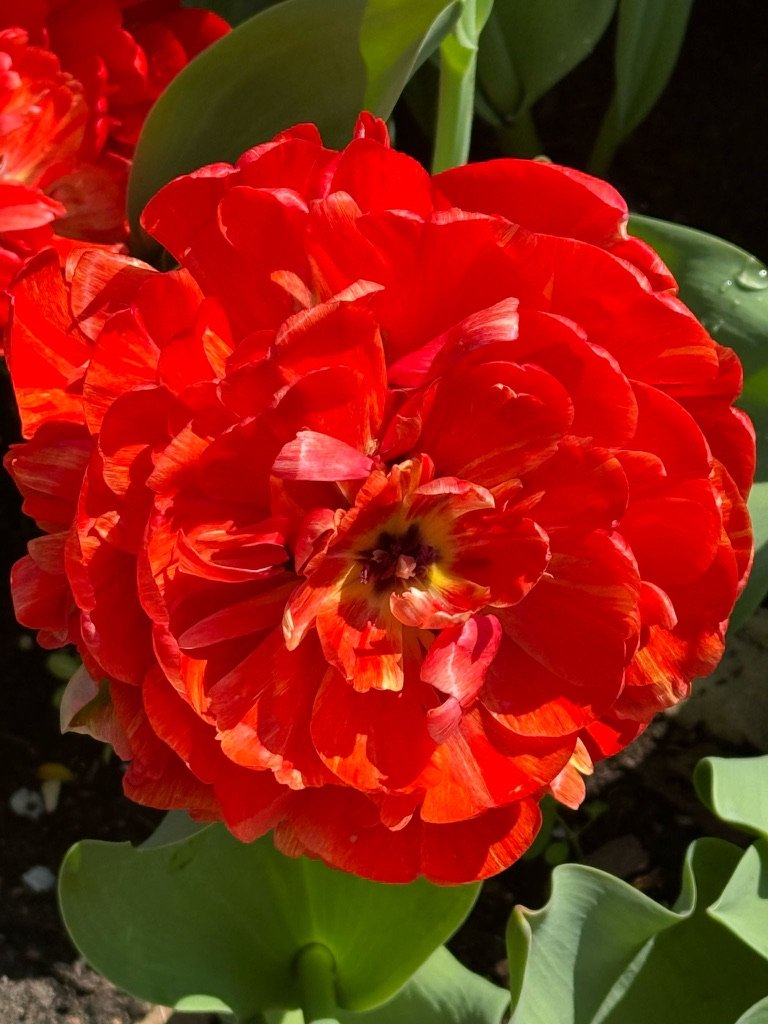
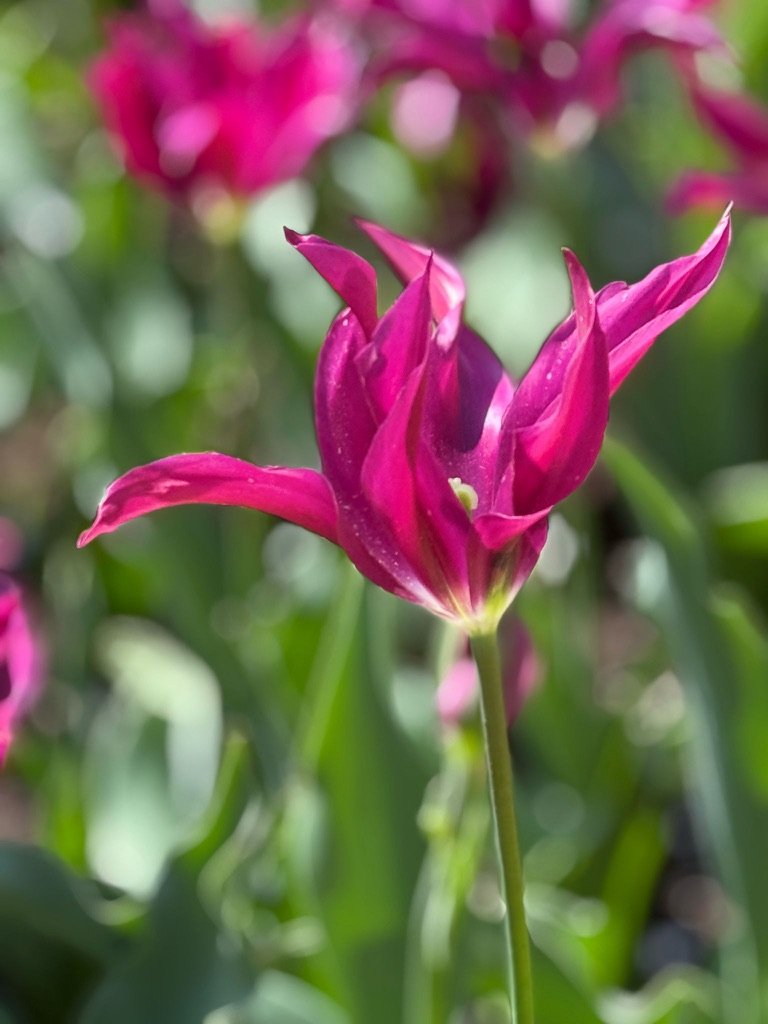
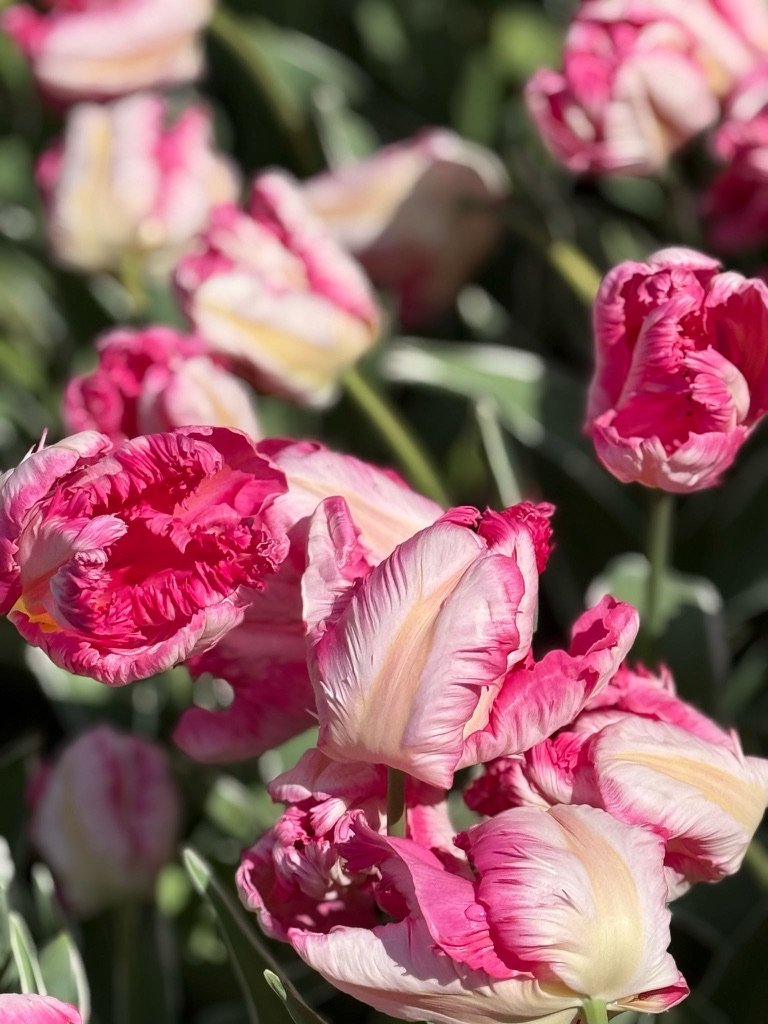
Continue reading July 2025 Talk: Adventures with BulbsI returned to Keukenhof for a brief visit again this year. Transport in the Netherlands makes this a very easy trip and it is well worth making a stopover in Haarlem, which is a lovely town. I have little to add to the descriptions of my previous visits (April 2022, April 2023) so have just included a selection of photos which lovers of colour and tulips might enjoy!







Vija V

2. Now is the time I start sowing sweetpeas: five seeds to a 3 inch pot and keep on a light windowsill or greenhouse until they germinate. You can try sowing directly into the soil which I think works well for some.
Continue reading Pat’s Jobs for March 2025Led by members of the garden team, the Behind the Scenes tours of Great Dixter provide an opportunity to explore the garden and meadows to examine the plants which are putting on a display at particular times of the year, offering an insight into the work that makes this happen. Limited to a maximum of 25 people, they allow visitors to have a good view of the plants.
A tour of the gardens in February was always going to be a little hit and miss in terms of the weather, but we were fortunate enough to arrive just as the rain stopped, so were able to enjoy the tour without getting soaked through!
As we enter through the front meadow, the area is full of Crocus tommasinianus, Crocus flavus and various forms of Crocus chrysanthus. Of course there are snowdrops everywhere. Our guides introduced us to the wide range that are cultivated here, from the common (but no less lovely) Galanthus nivalis, to G. Atkinsii and G. S. Arnott which are all doing fabulously well, as well as the less common G. Diggory and G. Washfield Colesbourne. We all peered at the diminutive G. Wendy’s Gold in a corner, sheltered by a wall and still tiny enough that if it wasn’t pointed out, you might walk past it! Some of the differences between the types are so small: those with an upturned tepal and look like little helicopters, while G. Diggory is plump and round.


Our first meeting of 2025 was very well attended. The speaker and the topic obviously attracted a good audience. The Show Table received a good selection of displays, with Jean’s a worthy winner of Best on the Table.

Our speaker, Fergus Garrett, the highly influential plantsman and horticulturalist, has been Head Gardener at the internationally acclaimed Great Dixter Garden in Northiam, East Sussex since 1993 and is the CEO of the Great Dixter Charitable Trust. He gave an excellent, wide-ranging talk on how to keep our gardens looking vibrant and spectacular all the year round. He explained how to plant for a long flowering season with plants co-existing in one place, but performing at different times. He used photographs of the spectacular gardens at Great Dixter to illustrate his points. He said Great Dixter had the advantage of scale and greenhouses but it is possible to scale down what they do at Great Dixter and use their scheme in our own gardens with minimal labour.

He particularly used the magnificent long border at Great Dixter as an example of how to plan a long flowering season. How to use structural under-planting, interlaying and interplanting with bulbs, self-sowers, perennials, clumps of bedding plants and climbers.
Continue reading January 2025 Talk: Succession Planting for a Long Season1. Watch out for Cabbage White caterpillar on your Nasturtium: at our allotments they appear to be the new delicacy which they are devastating and they look like the only butterflies that are thriving.

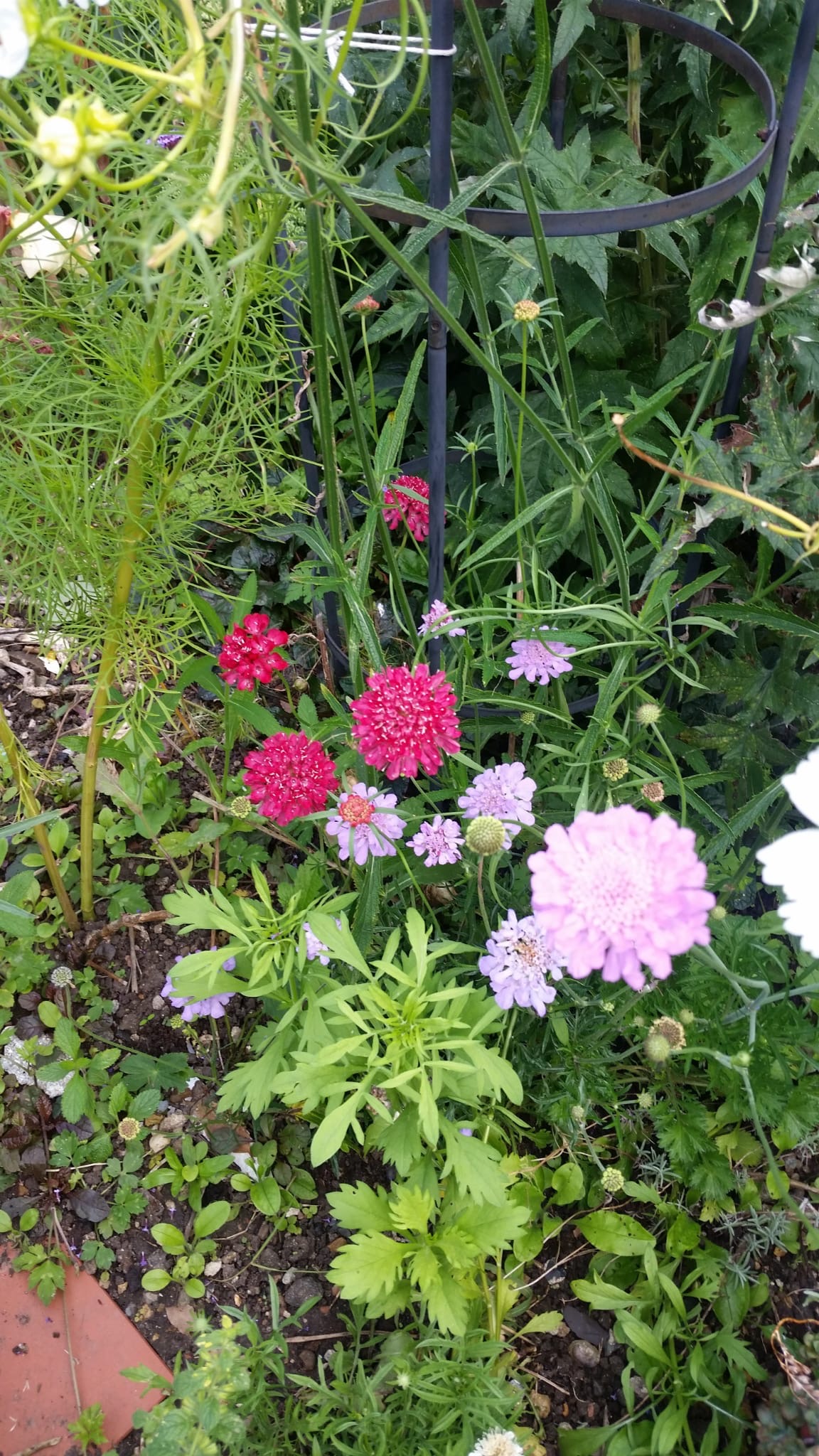
2. Make sure to plant lots of butterfly-friendly plants next year like Sweet Rocket, Scabious, Honesty and others. The butterfly count showed that butterfly numbers are very much down this year and we desperately need them. Please ask me for Honesty seeds if you want some.

1. Start ordering your bulbs now as all the bulb catalogues are arriving – though prices don’t stop going up!
2. Start planting bulbs when they arrive but save your tulips until later as they are prone to virus and rotting, and to theft by squirrels.
3. Divide large established clumps of perennials by cutting back first, then splitting either by hand or with two forks back to back. Delay if soil is heavy or too wet.


4. Replace tired summer bedding in pots and replant for winter and replenish with fresh compost.
Continue reading Pat’s Jobs for September 2024What a strange spring this has been as everything has grown so tall ….but then some things especially vegetables have hardly grown at all and are struggling as there has been little warmth.
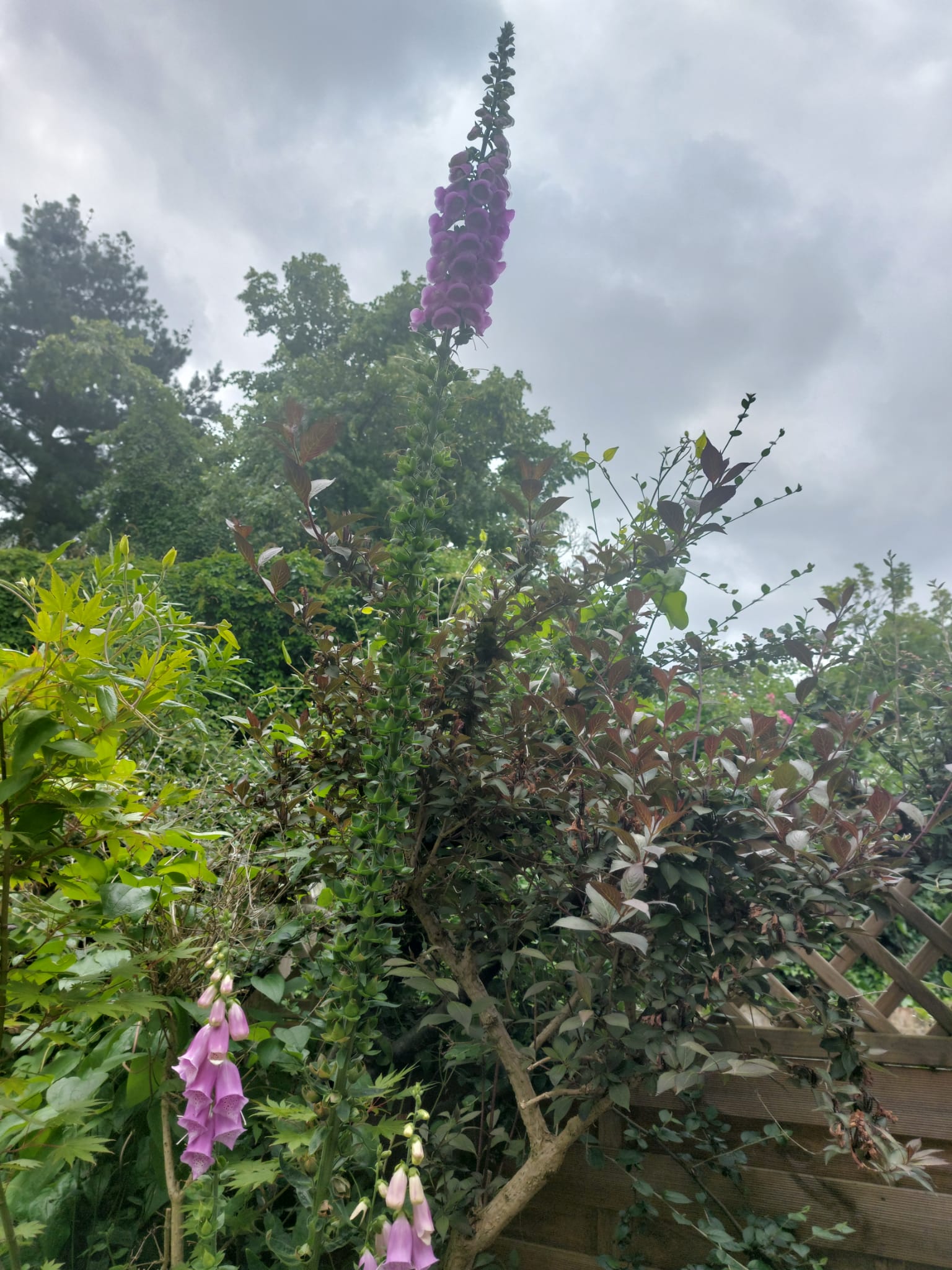

Anyway we soldier on….
1. Divide spring flowering bulbs as soon as foliage fades. My own stock has diminished and badly need splitting.
2. Prune ornamental cherries when flowering has finished making as few cuts as possible as they have difficulty healing.
3. Tie in shoots on sweetpeas which are finally growing and revelling in the cool conditions.
4. Cut early flowering hardy geraniums to the ground when they finish as they have a tendency to seed everywhere…unless you want them to of course.
Continue reading Pat’s Jobs for JuneIf RHS gold medals could be given to individual gardens, then The Woodlands Farm Cottage Garden deserves that honour. I am, at the moment of writing, sat on one of the many benches enjoying this charming garden.
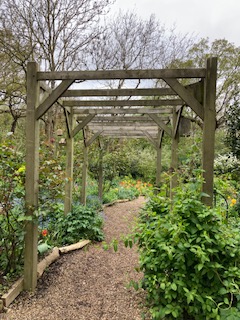
Volunteers started working to create a cottage garden back in 1998 and now, 25 years on I am gazing at their ‘gold-medal’ creation. The garden has everything one would want: wide gravel paths edged with brick or logs meandering around several large informal flowering beds; a rose and clematis-framed timber pergola walkway; glasshouse; summerhouse; raised vegetable and fruit beds; propagation area; pond; a bug hotel; and, very importantly, tables and chairs for family snack times.



A wren has announced its arrival on the beautifully pruned Exochorda and children and mothers are coming in to excitedly explore and admire the garden’s loveliness. From my bench are carefully pruned shrubs arising tall from the spring beds. This allows visitors to clearly view the purple honesty, inky-blue aquilegias, mauve vinca, forget-me-nots, narcissi, tulips, camassias, allium buds, geraniums, hellebores, wallflowers, bergenia, primulas, lamiums and more – all looking their very, early-spring best. Masses of tall cow-parsley are breaking into flower in front of the flowering choisya and viburnums, creating an harmonious effect. And I’ve spotted purple-stemmed cow parsley looking extremely healthy, as well (most envious!)

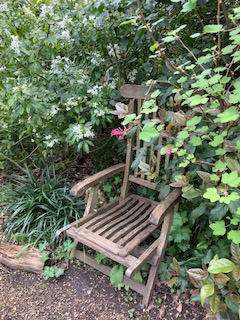


This cottage garden is sheltered and faces south. It is surrounded by mature trees and many evergreen shrubs so it has its own little micro-climate.
Before I leave, I glance once again at the charming, delicately-pink blossom on the spreading branches of the old apple tree. With a table and chairs set beneath its canopy and spring flowers in the foreground, it is a really lovely vision. And it’s a gold-medal from me! The garden is open to the general public. More information about Woodlands Farm Trust here. Do visit before the spring flowers fade.
Anna L

