This year’s Autumn Show will be held a month earlier than usual, on Monday 18 August, at 7.30pm in the Old Library at Charlton House. Please note that due to the earlier date, the Potato competition will be judged as part of the Show Table at September’s meeting.
Here’s a reminder of last year’s efforts!
The classes you can enter this year are shown below, please have a go at as many as you like!
This is now a regular and popular event in which our panel answer questions sent through in advance from members, some with illustrations or examples sent in plastic bags. The panel this year consisted of our very own CABAHS committee member and all-round plant guru Pat K, our President Sir Nicolas Bevan and horticulturalist and teacher Joe Woodcock. Sir Nicolas invited advice and contributions from the audience too, saying that in a room full of gardeners, the panel did not “have the monopoly on wisdom”. We did our best!
Our esteemed panel: Pat, Nicolas and Joe
Last year we were all overwhelmed by slugs and snails, this year’s scourge is aphids! The first question related to a particularly damaging infestation on Buddleja, which seemed to have caused a virus. Several people, including Joe, have experienced the same this year. He was able to tell us that it is likely to be a specific species, the Melon-cotton aphid, which the RHS are monitoring (you can report cases to the RHS here).
There were some exquisite entries for the Show Table this month (click on the images to see in detail), but it was the simple, single species vase of sweet peas that won the prize.
Congratulations to Pat for ‘Best on the Table’ – they are perfect!
Being the month of June, I am pleased to say that there is plenty of colour in the garden, including Rosa ‘Bobby James’ out in flower, but, the star plant for me is definitely the Canary Island foxglove, Digitalis canariensis.
This is an eye-catching shrub (albeit short-lived) with burnt-orange-apricot foxglove flowers, (flowering since May), supported by strong, upright stems and dark green, serrated-edged foliage.
1. Plant out Dahlias in a sunny spot in fertile soil adding some compost to the planting hole. I have to surround mine with Strulch on my allotment to protect them from the hundreds of slugs and snails lurking all around.
2. Take softwood cuttings now of Anthemis, Salvia, Verbena, Penstemon and Fuchsia. Cut below a leaf node and dibble around the edge of a pot. Salvias will also grow fine roots in water to give them a head start.
3. Look out for hellebore seedlings around the base of your favourite plant. The resulting plants may not resemble the parent but they could be even better.
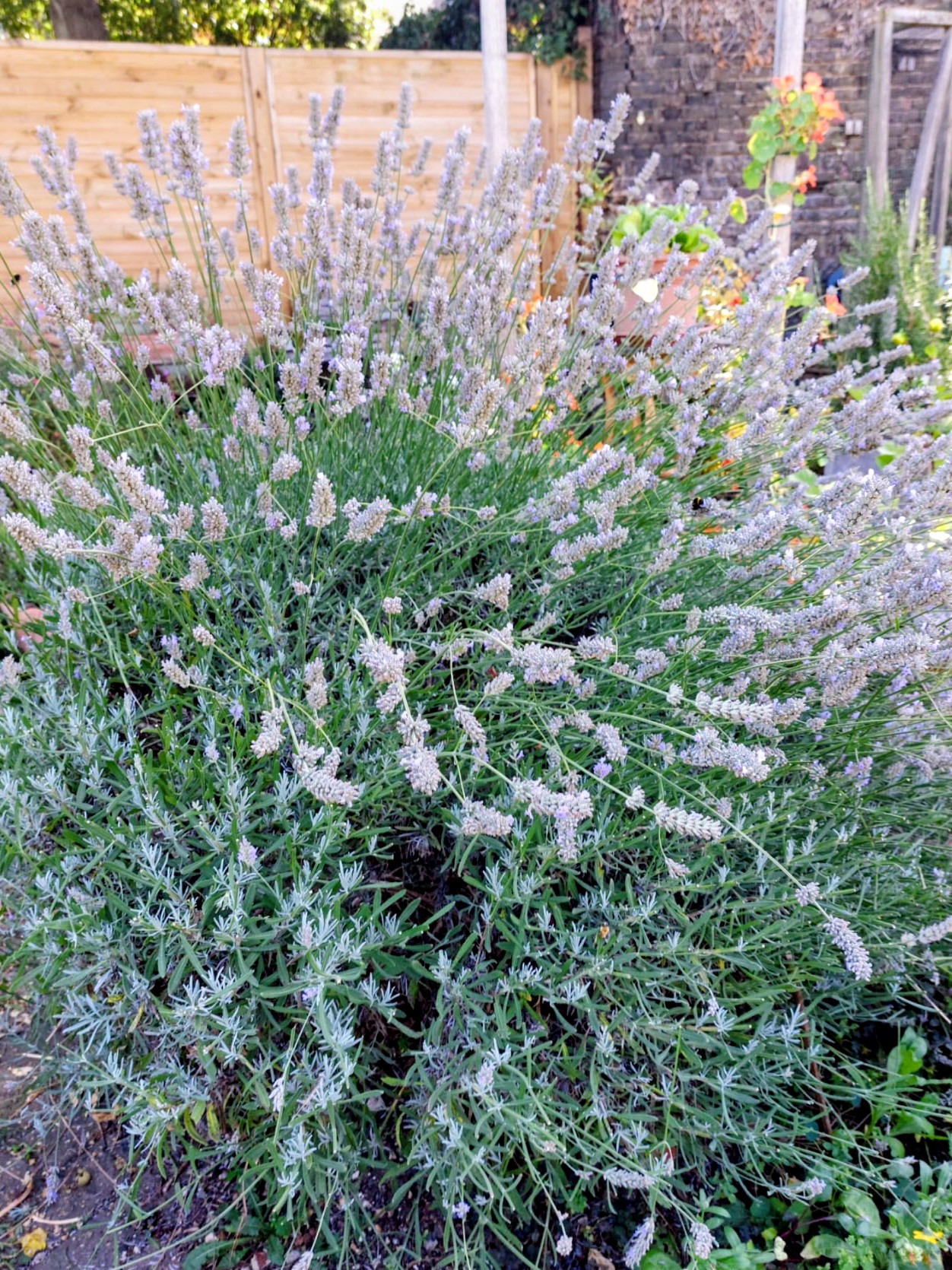
This is an evergreen shrub in the mint & sage family, native to Spain, which has lovely woolly grey-green leaves (touch them!). The hooded pale lilac flowers are beloved of pollinators, especially bumble bees. The ones in the front beds at Charlton House are humming with buff tailed bumble bees.
Phlomis russeliana – Turkish sage
Another one in the mint & sage family, but this is not a shrub, it is a herbaceous perennial (so it drops it’s leaves in Autumn but comes back the next year). The name ‘Phlomis’ comes from the Greek word meaning ‘flame’. Heart shaped leaves of some species were used as lamp wicks in ancient times. The stiff upright stems carry yellow flowers, which look good as seed heads and provide shelter for insects in winter. It gently self-seeds – we have been potting them up so look out for them in a future plant sale!
Jean and I were very sorry to miss the (highly successful) plant fair on 19 May but we did have a lovely visit to the fabulous garden at RHS Harlow Carr instead.
RHS Harlow Carr is a short drive or bus ride away from Harrogate, a very elegant spa town in North Yorkshire. The garden opened in 1950 with the intention of trialling and showcasing plants that would thrive in a northern climate as opposed to the possibly easier growing conditions of RHS Wisley.
This variegated Japanese Pittosporum — P. tobira ‘Neige du Mont Ventoux’ — is a lovely addition to any garden, and particularly courtyard gardens, where space is at a premium, as it is the perfect specimen for growing in a container.
It was at a rare plant fair in Kent many years ago when I spotted this very appealing shrub. It was “twinkling” at me so, naturally, I found I just could not resist it and brought it home! Because of its branched structure, it was placed in a terracotta container and there it has remained, contented, to this day. I hadn’t realised at the time though, that this variety is very suitable for a container, as its height and width is generally no more than one metre at maturity.
On 19 May we welcomed Dr. Francesca Murray to give a talk on ‘The Gardeners’ Royal Benevolent Institution and its horticultural heroes and heroines’.
Dr. Murray is an author, speaker and researcher on garden history and the horticultural trades, with a special interest in nineteenth century gardeners and nursery owners. Her talk focused on the range of benevolent, mutual aid and charitable societies – as well as the individual characters that founded and used them – that were set up in support of gardeners, florists and associated trades in the years before the welfare state was even considered.
There was a great turnout for the CABAHS May meeting, even after the exertions of the previous day’s Plant Sale! A small but beautiful range of items on the Show Table, from a cornucopia of Spring flowers to a single rose and a cactus. Congratulations to Kathy for winning this month’s ‘Best on the Table’ prize with a vase of Salvia, Cerinthe, Teucrium, Hesperis, Centranthus, Luzula and chives.