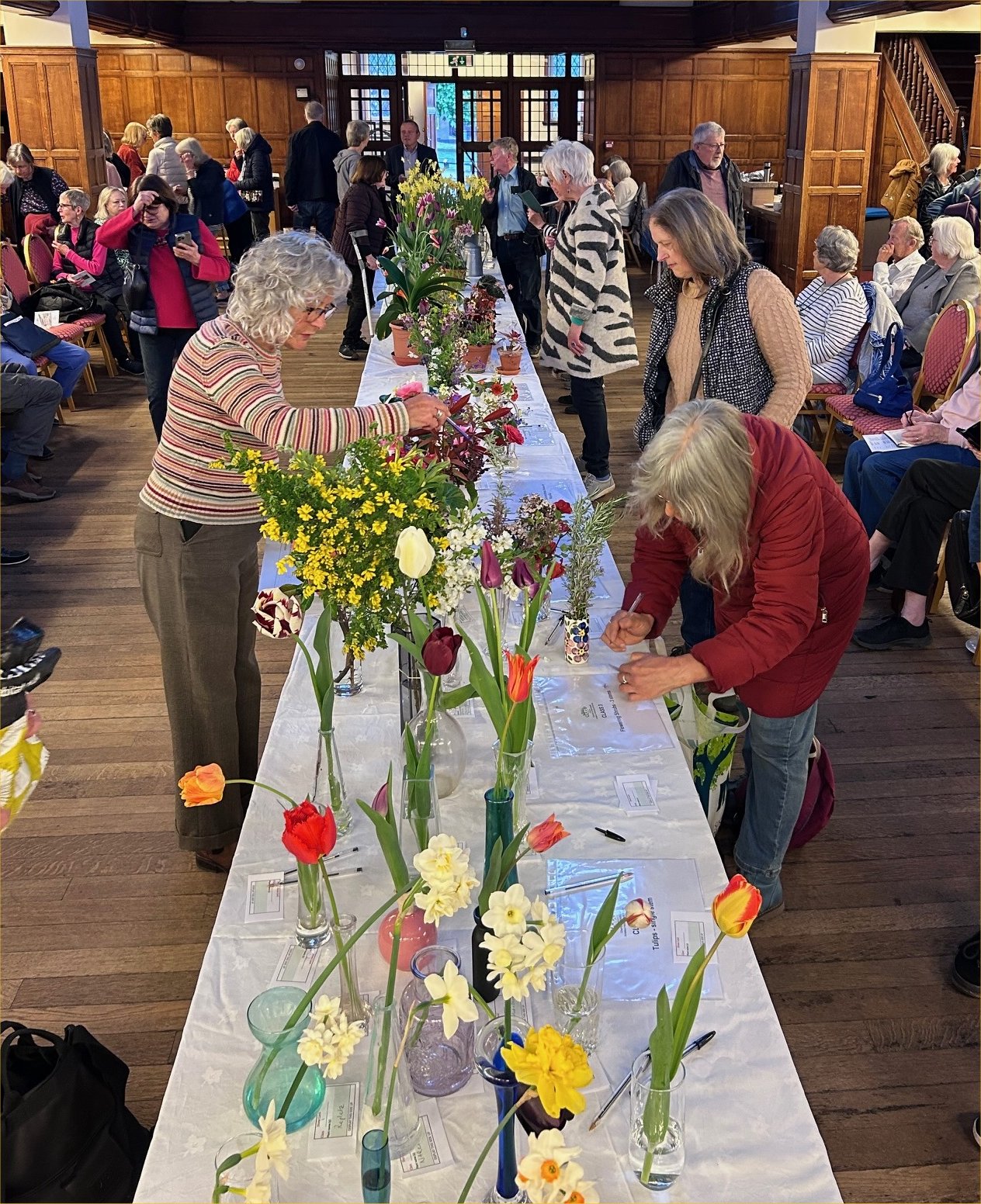
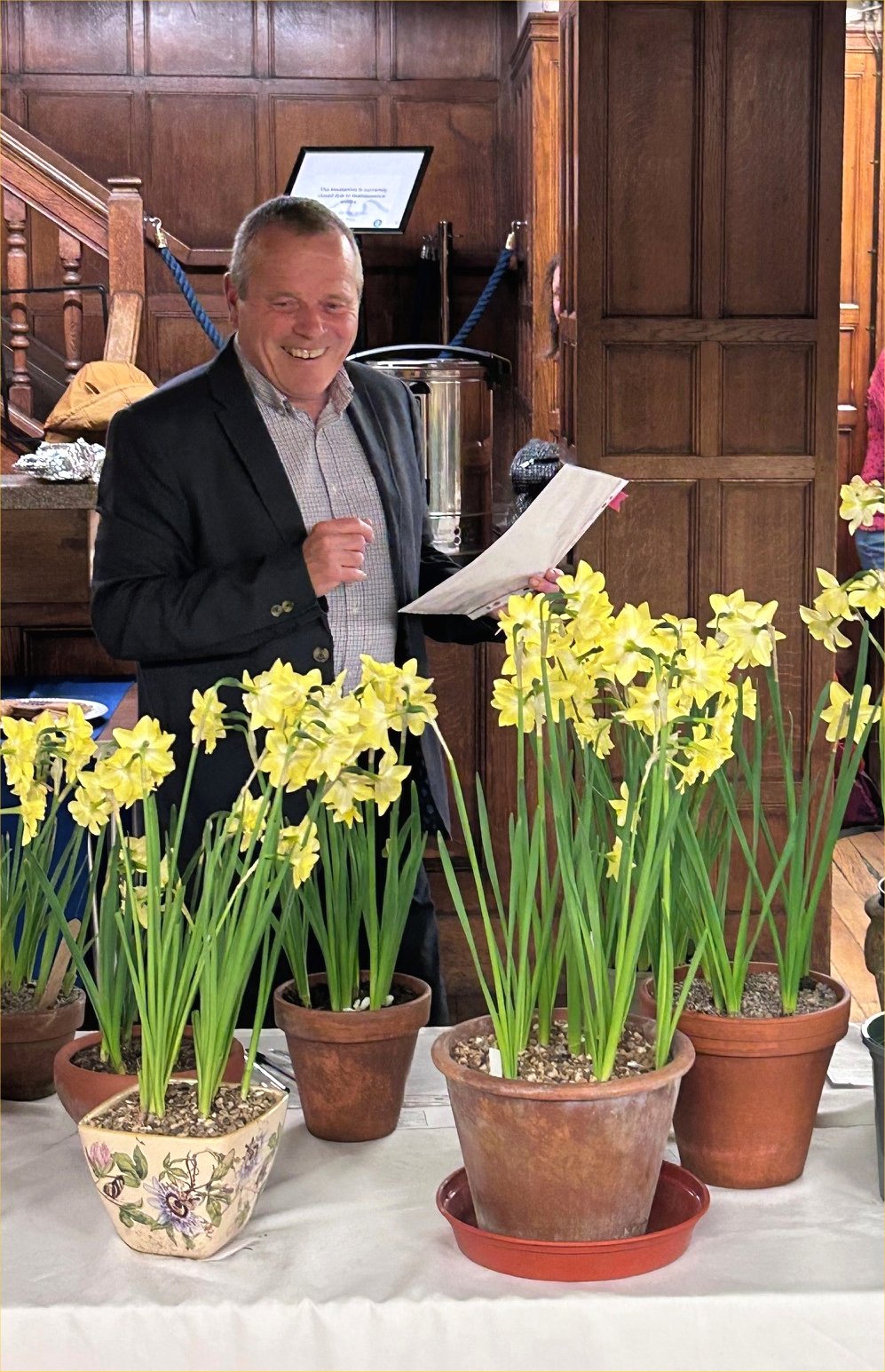
A good time was had by all at our 47th annual Spring Show on Monday 14 April. A great turn out of members and several entries for each class – including a magnificent 18 Narcissus ‘Pipit’ pots!
In total there were over 90 entries in 14 classes – well done everyone. Thanks is due to all those who organised, set up, judged, prepared the flags / certificates and did the raffle and refreshments.
We welcomed horticulturalist Joe Woodcock to judge the classes* and he was full of praise for each and every entry. Joe interspersed his judgments with interesting facts, tips and growing advice on everything from the merits of deadheading to an explanation of the source-sink theory.
1. Pinch out sweet pea plants above the third leaf to make bushier plants and then, as the shoots grow, pinch out side shoots in the same way.
2. Sow hardy annuals now like Nigella, opium poppies and poached egg plants in any bit of empty ground you may have and mark them so you don’t forget where they are. Many of these are excellent for pollinators.
3. Prune hardy Fuchsias now to stimulate growth by cutting back to just above a healthy bud which will prevent them from getting too woody.
Young sweet pea plantsNigella seedlingsPruning hardy Fuchsia
4. Check Dahlia tubers for any growth and make sure they’re getting enough light by turning them round regularly towards the light.
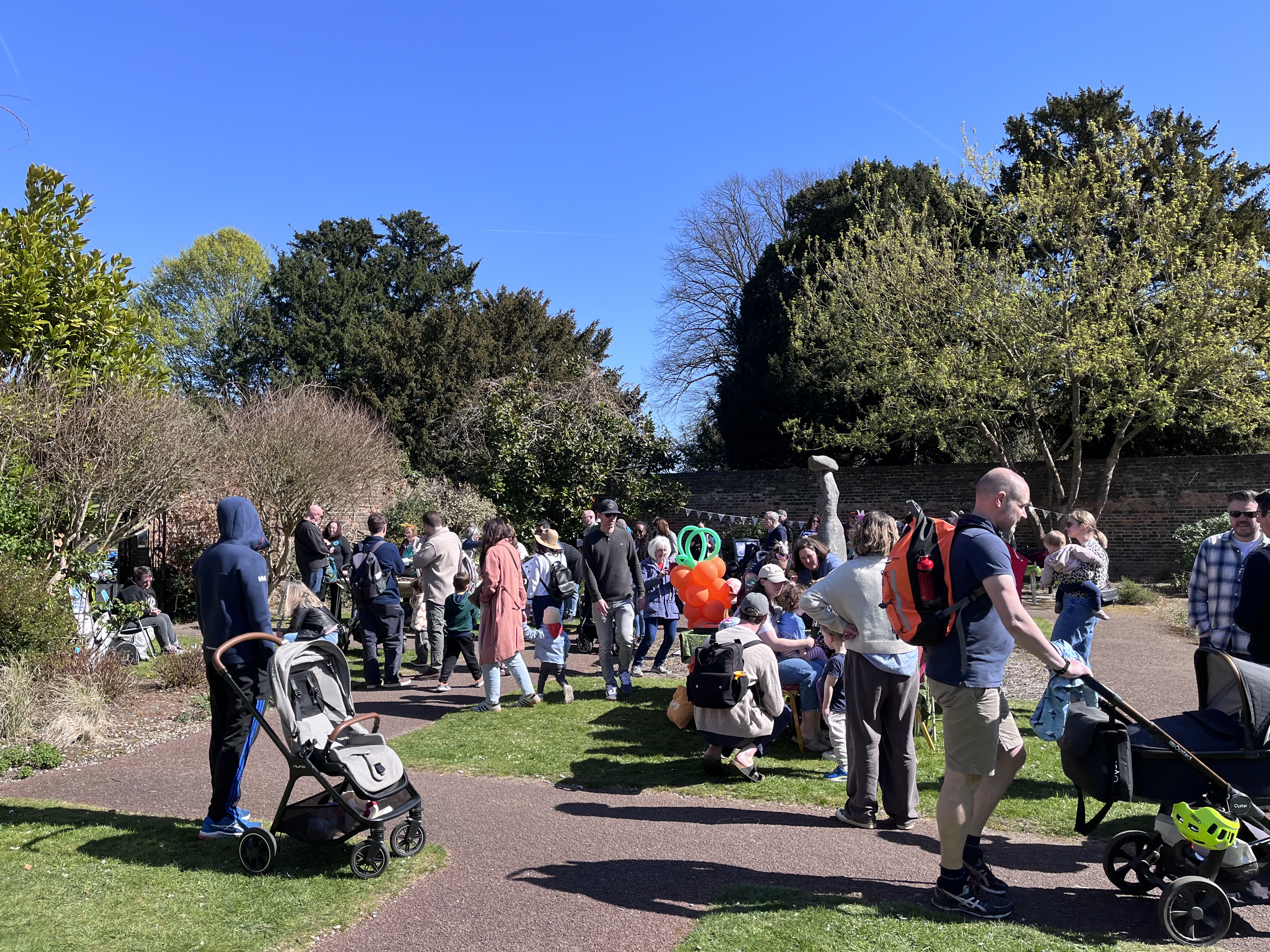
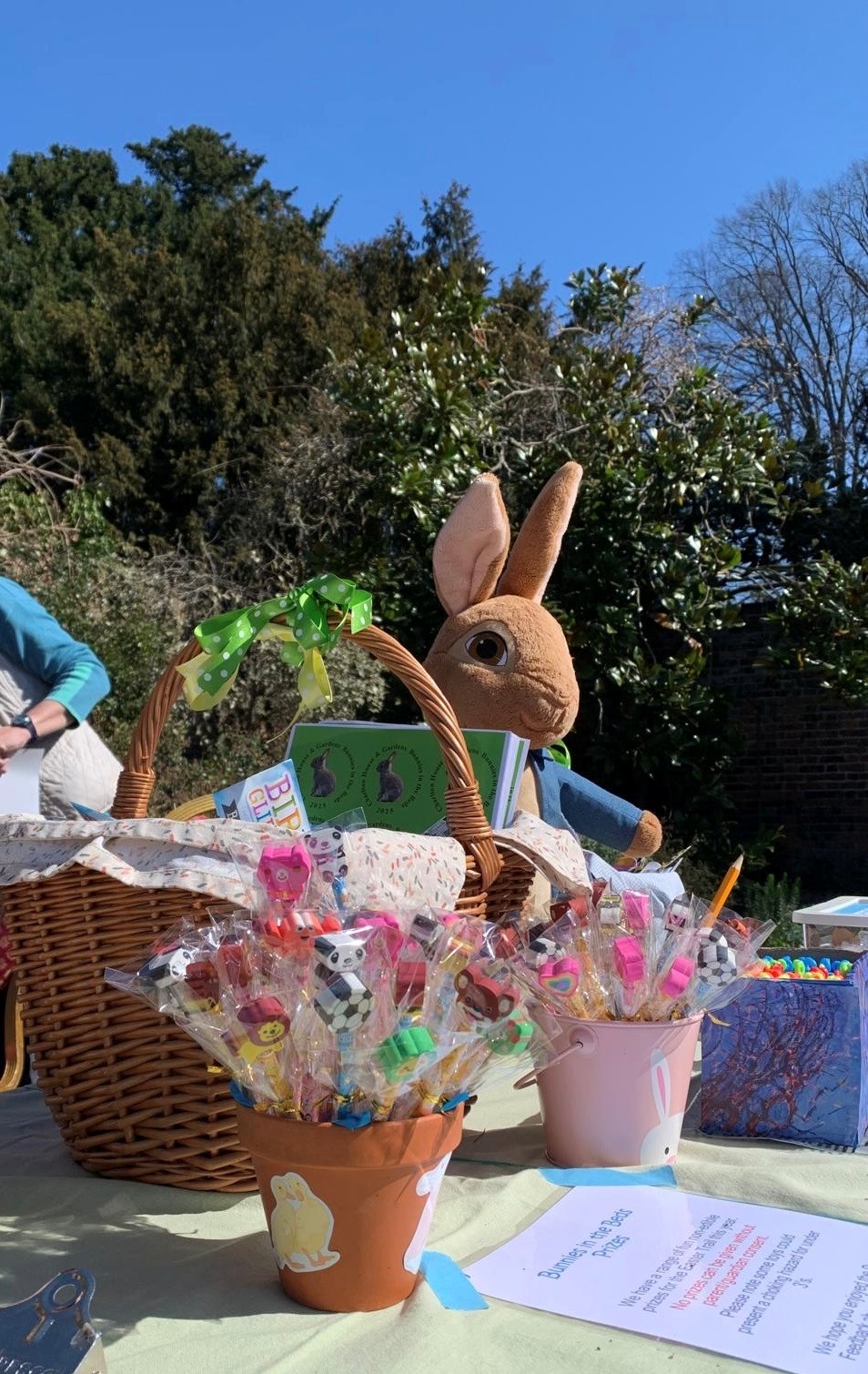
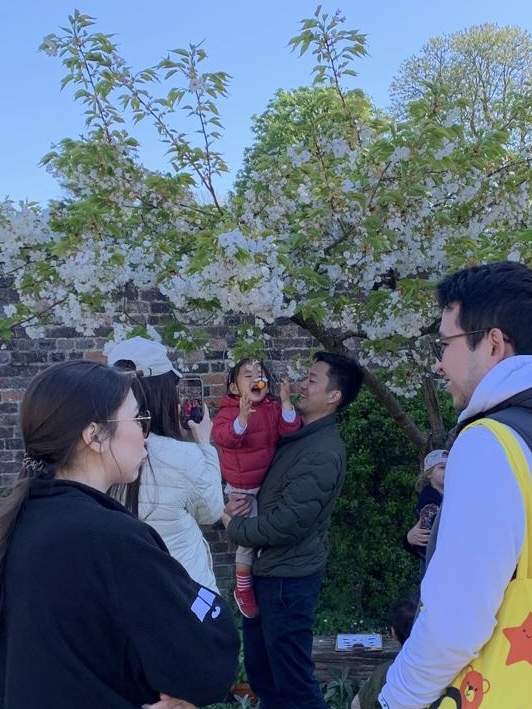
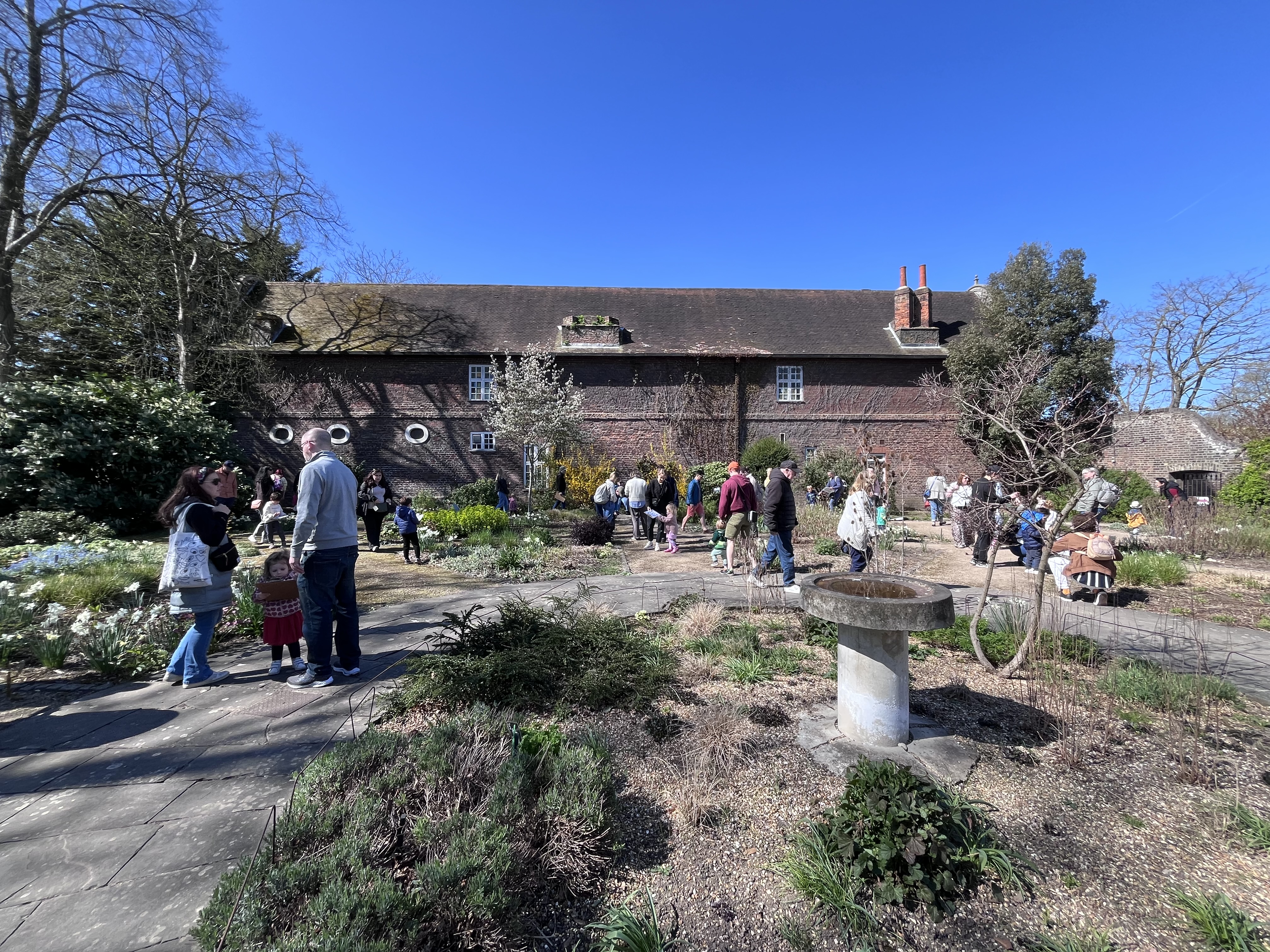
Thank you to everyone who came to the annual Easter Trail “Bunnies in the Beds” at Charlton House walled gardens on Sunday April 6th. What a fabulous day we all had! We are so grateful to all the helpers, garden volunteers, CABAHS members and RGHT staff who made the event happen.
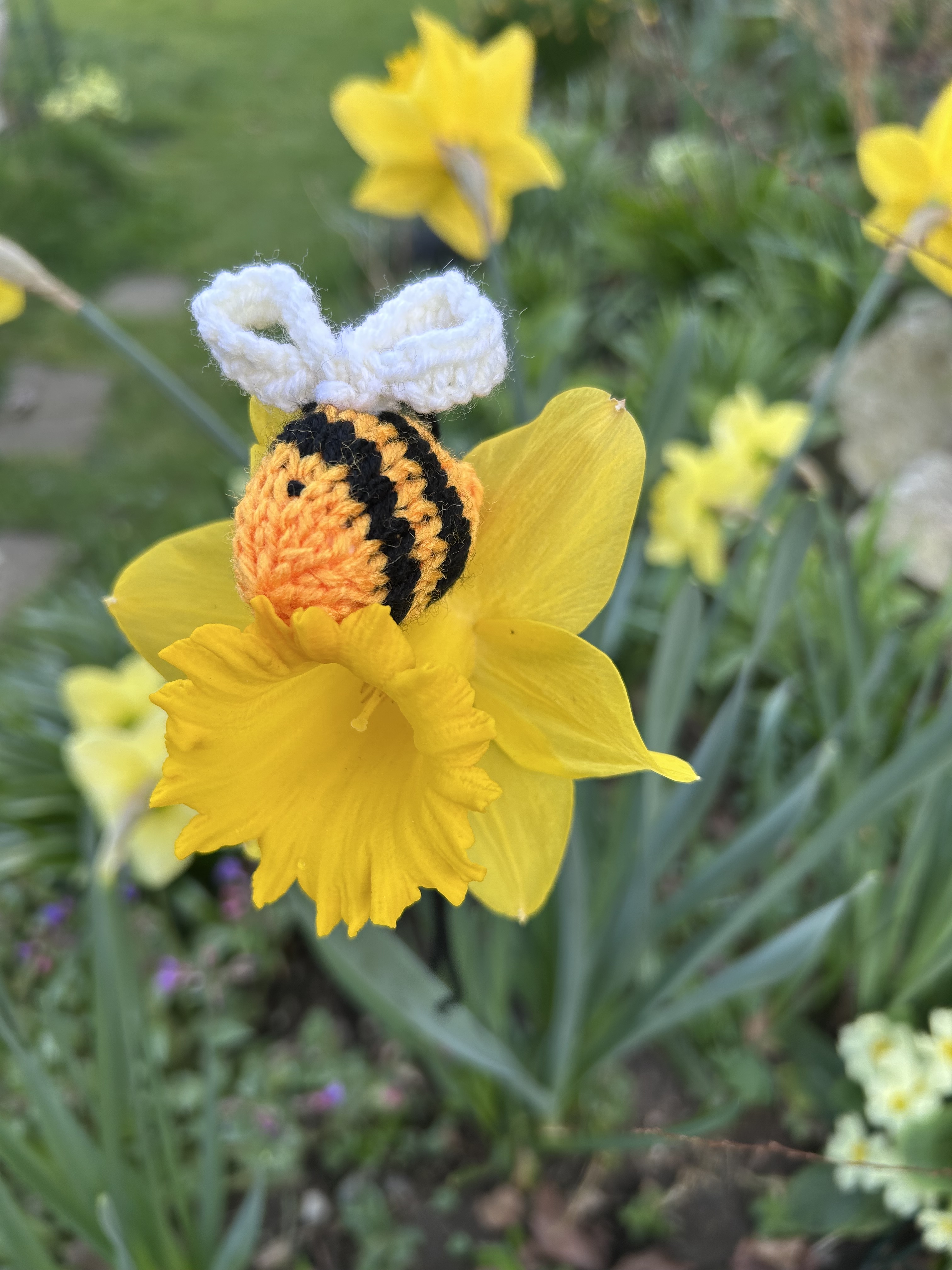
The Bunnies were hiding in their favourite plants this year, so the children learned a bit of Botany whilst spotting them! We admit to importing a few pots of flowers specially for the event ( I can’t see Jason wanting Marigolds or Periwinkle in the Old Pond Garden on a permanent basis..). After finding and naming the flowers, children had to find the Bees in the Bushes in order to pollinate the flowers – thanks to Carolyn for all those cute knitted bees!
Fiona Davidson is the head of Libraries and Exhibitions at the RHS as well as being an author. Her talk at our March meeting was based on her recent book ‘An Almost Impossible Thing – the radical lives of Britain’s pioneering women gardeners’(previously reviewed by Stella). She described the lives of female gardeners in the late nineteenth and early twentieth century, a reflection of the restricted lives led by women in general during this time. Yet despite this, some pioneers became gardeners and had successful careers in gardening.
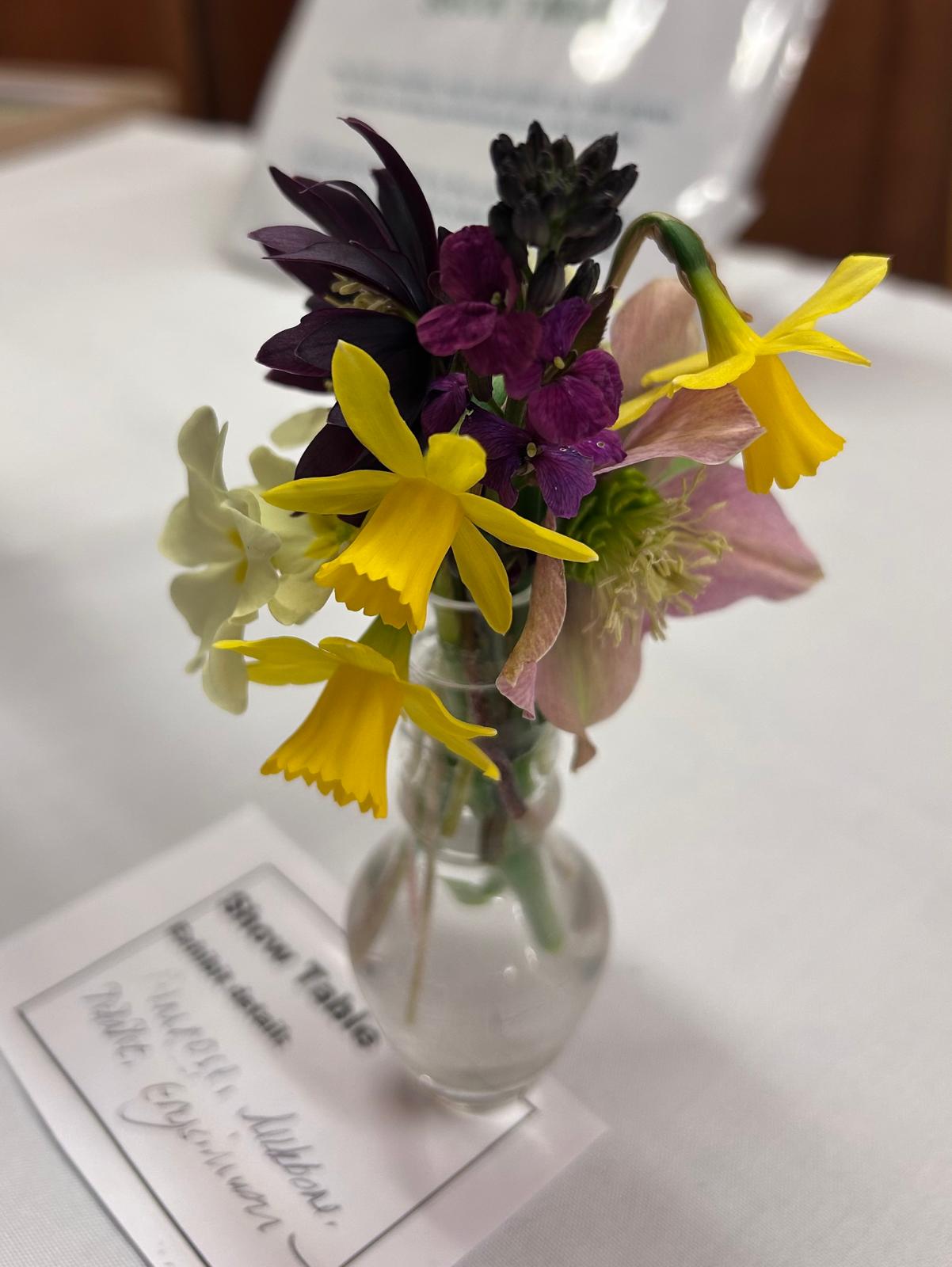
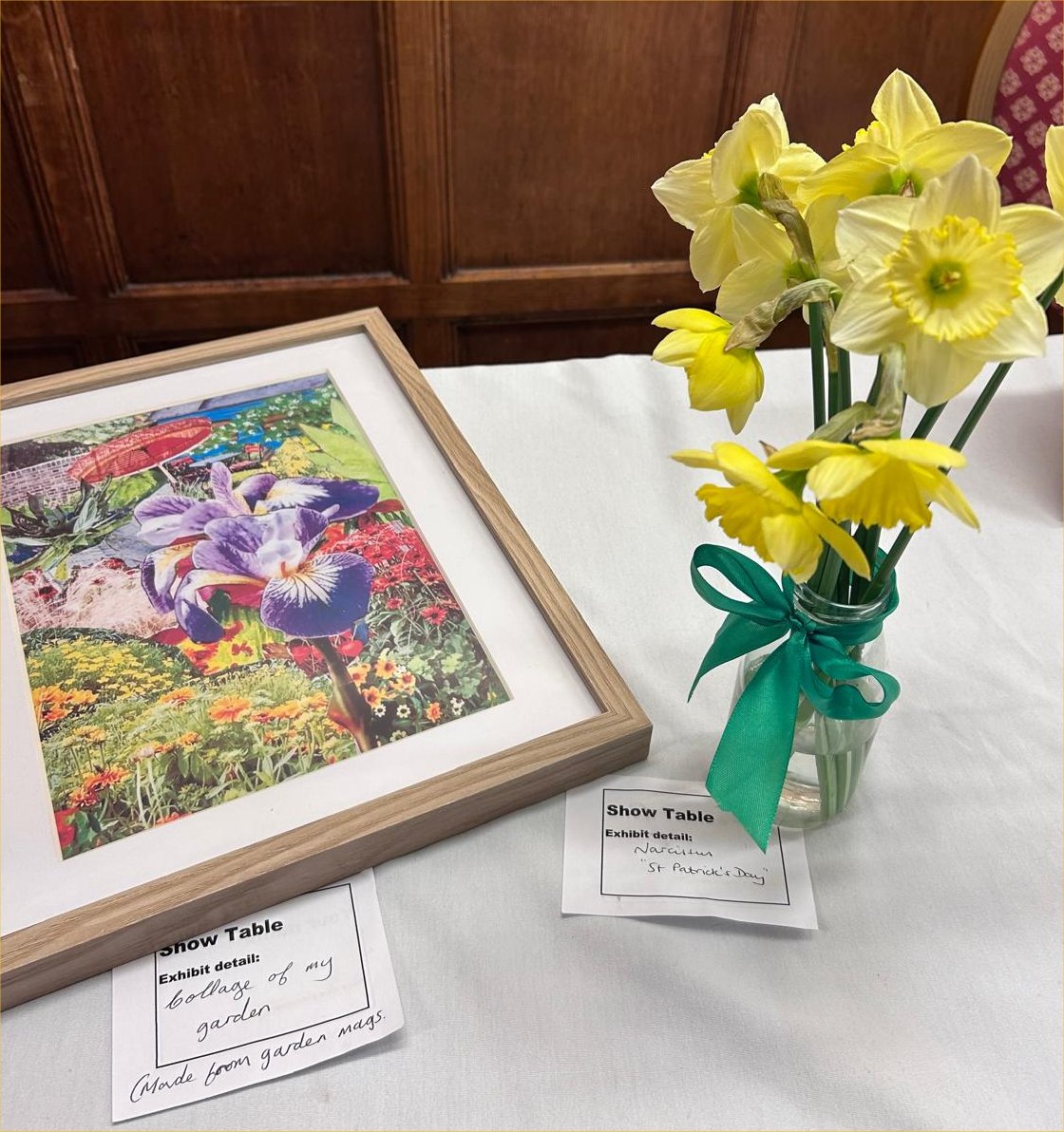
A packed library for the March meeting, and the first Show Table of the year – congratulations to Kathy for winning this month’s Best on the Table prize with her Narcissus ‘St Patrick’s Day’.
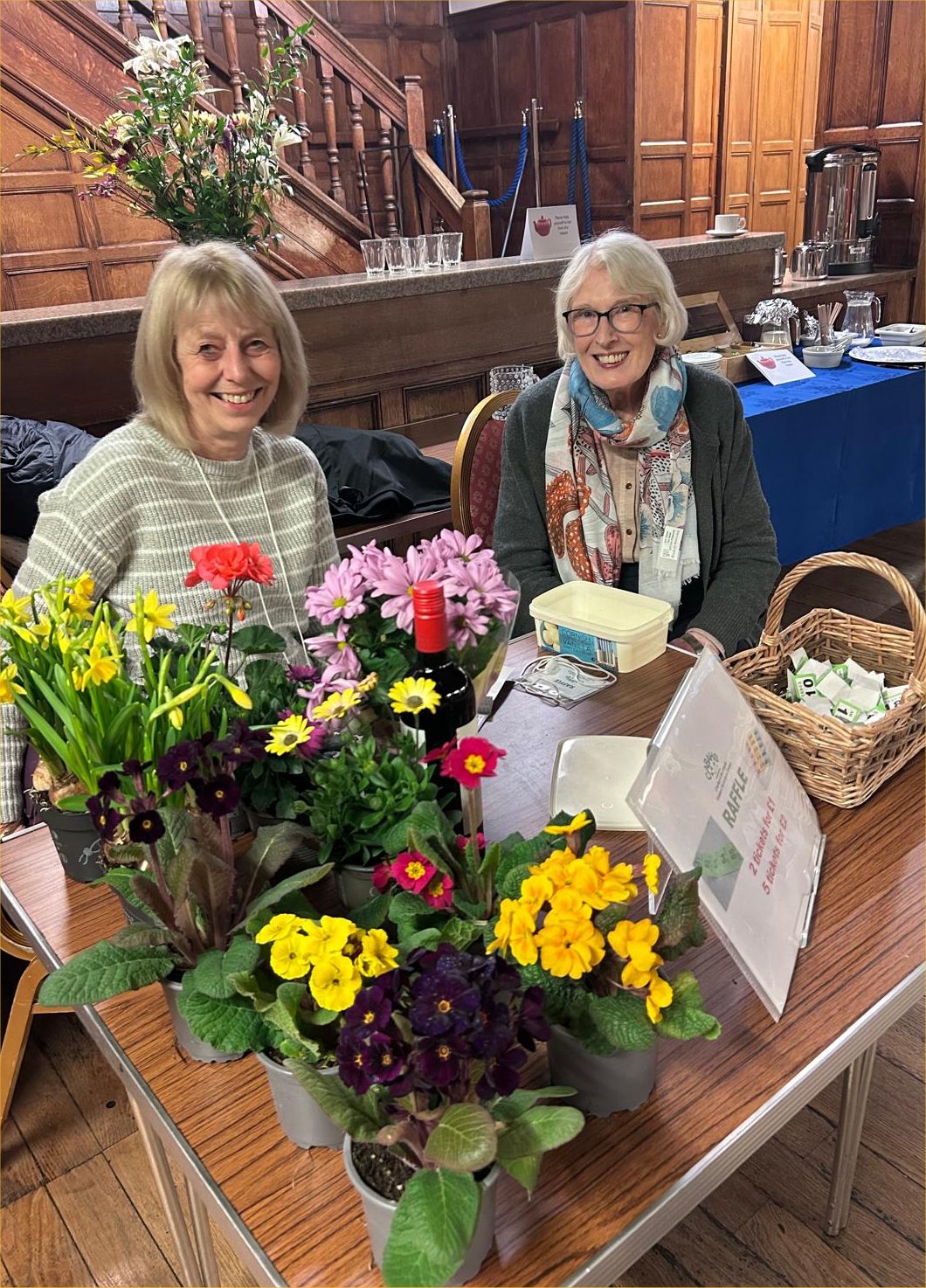
There was also a Plant Sales table and the usual raffle with lots of lovely plant prizes. The main event was a talk by Fiona Davison, author of ‘An Almost Impossible Thing: The radical lives of Britain’s pioneering women gardeners‘.
During March, when the changeable weather still surprises us, it is wonderful to see the Camellias in flower, as they provide the much-needed WOW factor during the colder days – their profusion of flowers, colours, shapes and patterns add an immediate vibrancy and character to any garden or parkland.
In my neighbour Linda B’s garden, there are three Camellias but one stands out. The flowers are smaller and single, white (blush-pink as they age), scented and beautiful. The leaves are also different: matt-green and elongated and the overall appearance of the shrub is more elegant. It has grown, albeit slowly, and is now approximately 2’ in height. A plant app identifies it as possibly Camellia sasanqua.
We hope you enjoy a spring walk around the walled gardens at Charlton House! Look out for:
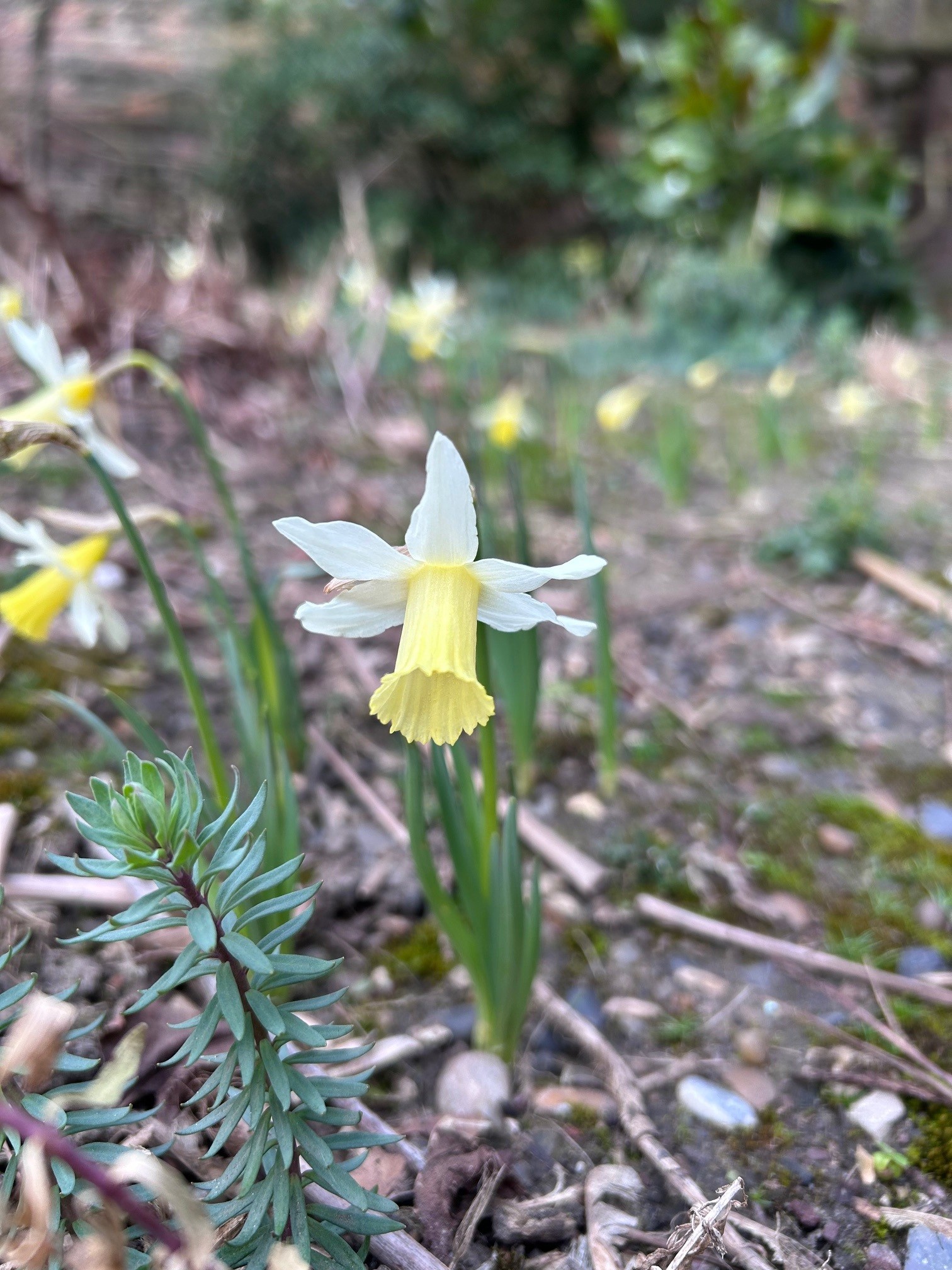
Daffodil (Narcissus ‘Elka’)
A fragrant, small and early-flowering daffodil, you can spot Narcissis ‘Elka’ in the Peace Garden. It has pale petals and a creamy yellow trumpet. The name ‘Elka’ is apparently from a combination of the names of two ‘lady daffodil growers’: Elizabeth and Kate.
Wood spurge (Euphorbia amygdaloides var. robbiae)
Wood spurge is in the Euphorbia family, so take care! If the stems are broken, they gush with a thick milky latex substance that can cause blisters on skin. They are handsome perennial plants, shade loving, with zingy lime-green flowers in late Spring and rosettes of glossy dark green leaves. Another name for this plant is ‘Mrs Robb’s Bonnet’ – we would like to see the hat that inspired that name!
Time to pot up those Dahlia tubers in 3 litre pots, making sure the tubers have an ‘eye’ which will shoot. Cover in compost, allowing the stem to rest at the surface, then label and water and keep somewhere reasonably light and frost free (greenhouse or windowsill) until they start growing.
Potting up dahlias
2. Now is the time I start sowing sweetpeas: five seeds to a 3 inch pot and keep on a light windowsill or greenhouse until they germinate. You can try sowing directly into the soil which I think works well for some.
Led by members of the garden team, the Behind the Scenes tours of Great Dixter provide an opportunity to explore the garden and meadows to examine the plants which are putting on a display at particular times of the year, offering an insight into the work that makes this happen. Limited to a maximum of 25 people, they allow visitors to have a good view of the plants.
A tour of the gardens in February was always going to be a little hit and miss in terms of the weather, but we were fortunate enough to arrive just as the rain stopped, so were able to enjoy the tour without getting soaked through!
As we enter through the front meadow, the area is full of Crocus tommasinianus, Crocus flavus and various forms of Crocus chrysanthus. Of course there are snowdrops everywhere. Our guides introduced us to the wide range that are cultivated here, from the common (but no less lovely) Galanthus nivalis, to G. Atkinsii and G. S. Arnott which are all doing fabulously well, as well as the less common G. Diggory and G. Washfield Colesbourne. We all peered at the diminutive G. Wendy’s Gold in a corner, sheltered by a wall and still tiny enough that if it wasn’t pointed out, you might walk past it! Some of the differences between the types are so small: those with an upturned tepal and look like little helicopters, while G. Diggory is plump and round.
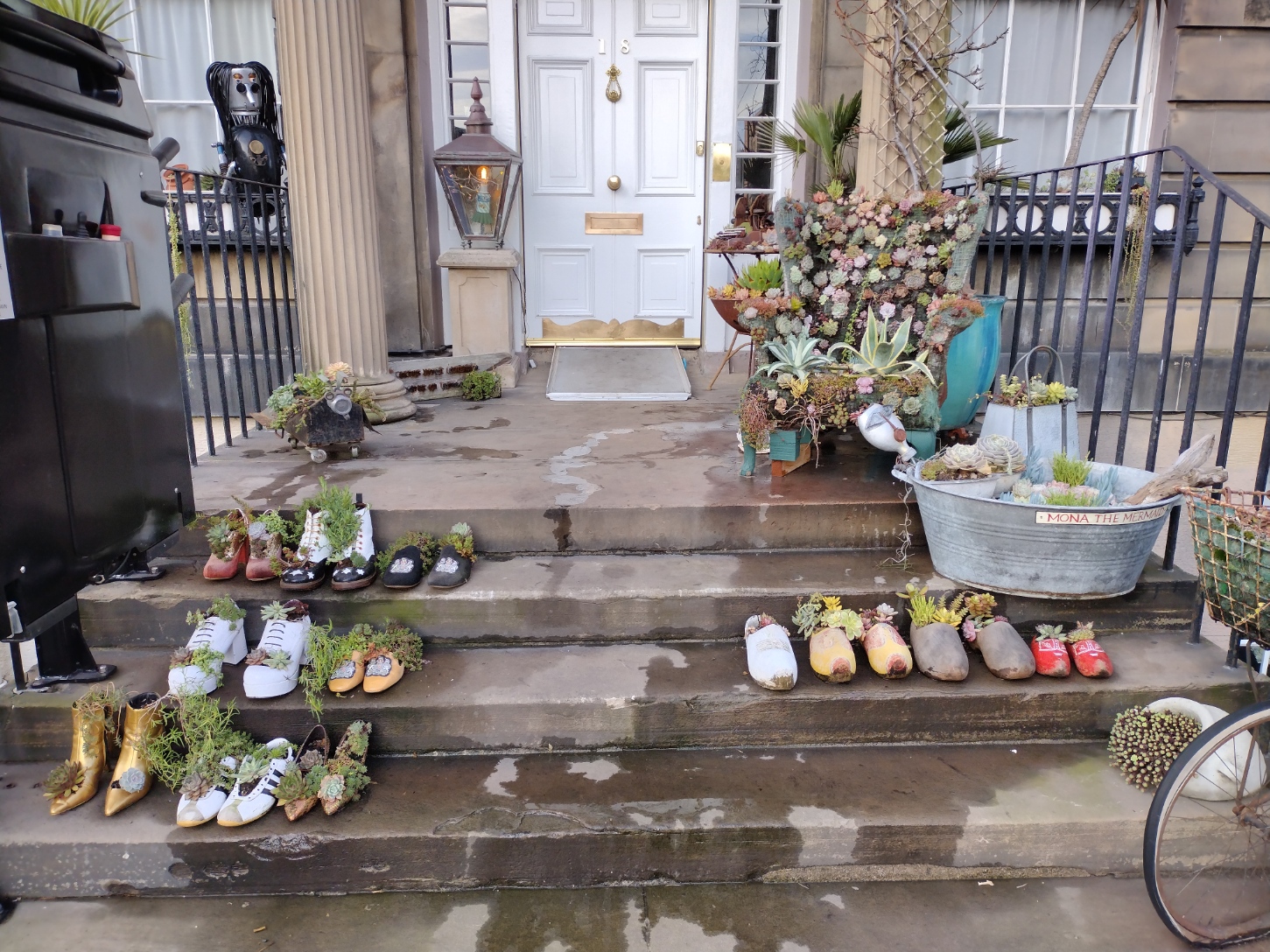
I spent a weekend this February in Edinburgh, and came across this interesting doorstep display on my travels around the city. Some new ideas for displaying your succulents …!
I also visited the Royal Botanic Garden. The morning I visited was bright, cold and calm, in stark contrast to the previous weekend when the garden had been ravaged by storm Eowyn. The sad remains of the garden’s tallest tree – a 166 year-old conifer – were clear to see.
The sun was shining and the sky a bright blue but the frost remained in the shadier parts of the beds and the Rhododendrons had bowed their leaves to protect themselves from the cold. But they were also covered in buds, waiting to burst forth in a few weeks time.











 Charlton and Blackheath Amateur Horticultural Society