Can anyone have too much honesty?

The answer is NO, of course! This is a real “good do-er” of a plant and it’s in full bloom everywhere at the moment. The Latin name is Lunaria annua, but it is called Honesty, Moonwort, or Money plant. The “Moon” tag refers to the shape of the seed pods, and also the “Money” tag, because the seed cases look like silver coins. You can eat the young leaves in salad (it tastes a bit cabbage-y) and the seeds make a mustard substitute. Even the peeled roots can be eaten, and there is research into whether a fatty acid from the seeds can be used medicinally for Multiple Sclerosis.

Kathy Honesty common

I inherited Honesty 30 years ago, and the “common” (pretty garish) purple one comes back every year from seeds. I picked up some seeds of “Corfu Blue” from Anna last year, who in turn got them from Margaret, via the Plant Sales Table – there’s a CABAHS Membership advantage for you, working at its best! Corfu Blue are a much paler colour, rather easier on the eye. You can really see the difference in this photo:

Kathy Honesty mixed

Anna has grown the most beautiful one with purple stems this year, we must try to get seeds from her..!

Anna Purple stem Honesty

I know you can get white versions too, and if you grow any others, please send in a picture, you really cannot have too much honesty!

Kathy A

The View from my Kitchen Table – Eccremocarpus scaber

On my kitchen table lies a medium-sized envelope crammed full of Eccremocarpus scaber seeds and their pods. Sitting at my kitchen table I can see clearly the lemon flowers from one variety and the pink flowers from the other variety sunning themselves happily on the roof of the pergola.

Anna Eccremocarpus yellow

I am fairly new to growing Eccremocarpus and was first given a seedling of the orange-coloured variety a few years ago and another seedling last year which I planted on my south-facing fence. The seedling did not take kindly to the clay soil and hardly flowered. Unsurprisingly, it didn’t survive the winter.

However, two years ago at a rare plant fair I bought two seedlings – a pink flowering variety and a lemon flowering variety. Not having much confidence in their survival I planted both in a slightly raised bed on the rear boundary east-facing wall, which the pergola abuts. On this wall are two mature, variegated Trachelospermum jasminoides. The raised bed is extremely narrow and has received small top-ups of compost from time to time. However, I did not rate their survival due to the competition from the neighbouring climbers and the very dry conditions. How wrong I was: the Eccremocarpus seedlings just love their location; the protection the Trachelospermum provides them; the dry soil with added compost; and the baking that the flowers receive from the sun at the top of the pergola.

Anna Eccremocarpus pink

Eccremocarpus scaber is also known as the Chilean glory-flower or the Chilean glory creeper and was first documented in 1794.  It flowers from September to May in the Southern Hemisphere. In New Zealand it is regarded as a pest. And I can see why:  the envelope of seed pods on the kitchen table and the dozens of pods still remaining on the pergola to be collected is a testament to its reputation!

But I am not going to allow these climbers to reproduce again. Although they started flowering in early March last year they stopped flowering in early June and I was mystified.   I was told to look for seed pods and there they were, their lanterns hanging beneath the mass of foliage. So this year I am going to religiously remove all developing seed pods so that these climbers can flower all summer.

Anna exxremocarpus seedsEccremocarpus is regarded as a perennial species but due to the UK climate they are generally grown as an exotic annual. The foliage is light green and it uses its tendrils to hook onto anything for support. I had difficulty in remembering and pronouncing the name, Eccremocarpus, but I got there in the end! I love the colours of these tubular flowers, that sparkle like jewels in the sun. They provide me with a lot of pleasure. If you grow the orange variety, you could marry it with Thunbergia, Ipomoea or Nasturtium, all of which have orange flowers.

I will be providing a huge number of free packets of seeds in the next few weeks for anyone who has the right conditions: a protected area in their garden that is light, sandy, well-drained but fertile; or a sunny plot on their windowsill or balcony.

Anna L

Musings in the garden

When I moved into my present house, there was already an established garden. Of course I wanted to make it my own so I started to remove the Rockery. Large white stones on a sloping bed were taken away and I prepared to level the ground. I soon realised why it had been a rockery, it was to conceal a rubbish dump of builder’s rubble and concrete slabs! I’ve replanted the area- with a new rockery!

Having put myself into self isolation for 3 weeks now, I can see a pattern evolving with the wildlife in my garden. About the same time each morning, two squirrels chase each other from one side of the garden to the other. A blackbird keeps watch from the same branch all day after collecting nesting material from the lawn. A family of foxes visits around 4pm to dig for worms. The birds singing as I garden are a constant delight and I’m starting to distinguish the robin from the chaffinch, some soothing benefits from enforced isolation!

Jenny

Passing the time

With many of us working from home, keeping a distance or self isolating, plant catalogues and planning your garden are a welcome way of passing the time.

I already have a few dahlias in my garden, but have just ordered a few more: Ambition, Blue Bayou, Leila Savannah Rose and Tartan.  You may think that is an odd mix of colours, but I already have good selection including Waltzing Mathilda,  Café au Lait, and Labyrinth, to name a few. I figured the new additions would complement the existing collection. There used to be a view that they were rather vulgar in a showy kind of way, but there is nothing quite like a dahlia for superb saturated summer colour!

Vija Dahlia Ambition
Ambition

Colour is a funny thing! As ‘fillers’ a few years ago I bought some diascia plants, which, if you were feeling generous you might describe as apricot in colour. My daughter considers them the colour of Elastoplast! I have left them outside in their pots each winter, but they come back every year, much to her disgust! They are ridiculously tough and I am not very good at getting rid of plants.

Vija Diasca Apricot
Diascia Apricot Queen


I sow a few Cosmos each year, which work equally well as cut flowers. This year I have seedlings of Purity, Candy Stripe and Antiquity coming through. There is not really a lot of room in my borders for anything less robust! A lot of summer colour has to go into the pots. Gazanias have successfully over-wintered outside for the third year in a row. My mother loved these and I continue to grow for her. I am hoping that the begonias I bought from Alec and Joe last year will return. As a contingency plan I have also ordered some Begonia ‘Glowing Embers’. All the pelargoniums have successfully over-wintered and I am currently trimming these back and making cuttings. Last year, I bought two beautiful Coleus plants, aptly named King Kong as they were absolutely huge. I was hoping I would be able to over-winter these in the greenhouse, but sadly they are looking pretty dead at the moment. Spring is definitely a time for surveying your losses and triumphs.

Vija Begonis Glowing Embers
Begonia Glowing Embers

Vija

Tulip time in Elizabeth C’s garden

Elizabeth says “Last Autumn I had a beautiful collection of Sara Raven tulip bulbs for my birthday, which were carefully arranged in colour co-ordinated flow with wallflowers interspersed. Feeling generous to myself, similar colour groupings were arranged around my garden and I eagerly awaited this Spring.

Bulbs started to appear prolifically and my excitement rose; each day my first task was to check their progress with all the promise that entailed. Until – one morning, disastrous views unfolded – all the fully developed buds had been bitten off by The Squirrel! Only immature ones remain.

Apart from purchasing a shotgun on eBay, does anyone have any helpful advice to avoid repetition?”

500x550.crop_.200563_1

Such a sad story! Please email your suggestions to cabahshortisoc@gmail.com and let us know if you have had a similar problem? I have personally had plenty of problems with squirrels and bulbs, but once the bulbs start growing, my local squirrels (thankfully) lose interest. Christine has had success with putting curry powder in the soil, and Jenny puts prickly holly twigs around her pots, but this is really for the bulb stage. Other ideas needed!

Hooked on hostas

At the last count, I had 32 hostas and most of these are in pots. Admittedly, some of these are miniatures, but nevertheless this means that in March a lot of checking and potting on needs to take place. My basic collection has increased over the years because people have given me hostas which they have bought and not had much luck with and then passed on to me. I am always grateful!

HostaSumandSubstance
Sum and Substance

I check all pots to see whether root growth is coming through the bottom of the pot; where small enough I tip the plant out and check to see whether it is root-bound or the compost is looking a bit stale.  However, Sum and Substance and Big Daddy are each about 4 feet tall and Big Daddy is in such a large pot it really needs two strong men to sort him out!  Empress Wu is catching up with these guys in terms of size. I then use John Innes number 3 to pot up again. I try and leave a fair bit of space at the top of each pot to allow for the addition of a protective mulch. I make this with a mixture of farmyard manure and home made compost, which I keep as rough as possible with eggshells – this does a good job of discouraging slugs and snails while the plants are young and gives them a good head start. The coarser leaved hostas then tend to manage quite well thereafter. This year I have added a granular feed which should last 6 months. Many years ago I read somewhere that feeding hostas produces weaker growth, more susceptible to attack and I have never fed mine apart from the spring dose of compost, manure and sometimes bonemeal.

HostaFrancesWilliams
Frances Williams

In my experience, the general gardening advice that the coarser the leaf the less likely a hosta is to be eaten by slugs and snails is true. Particularly resilient is Frances Williams and I can’t recommend this one enough. I also find Krossa Regal and Patriot very good. It’s also useful to think about where you are growing hostas. If they are crowded together in a border with lots of other plants, slugs and snails will still get to them no matter how many slug pellets you use. Snails can abseil down the leaf or stem of another plant to reach a hosta. As always in the garden, a consideration of the growing environment means there is less need to introduce artificial measures to control the pests.

HostapatriotDorset
Patriot

Vija

Plantlife road verge campaign

Plantlife say “In these challenging times, wild flowers on our verges and waysides are an uplifting sight, contributing significantly to our wellbeing. It’s been wonderful to see on social media many photos of botanical gems that people have spotted whilst out for their daily exercise; there is some solace to be found in nature.”

Have a look at their Road Verge Campaign pages.

Members’ gardens, March 2020

Maggie’s lovely spring garden. The flowering shrub is Exochorda “Magical Springtime”  and was a Mother’s Day present a few years ago, what clever children she has!

Maggie T Spring garden

Christine’s alpine trough, with Thrift in full swing. Lovely blossom on the tree.

Christine blossom

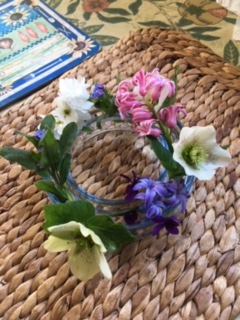
Muscari latifolium coming out, just as Hyacinth Splendid Cornelia is going over, on Kathy’s sunny bit of the patio. Rose Cottage bulbs again, they were a winner!

Kathy Muscari latifolium

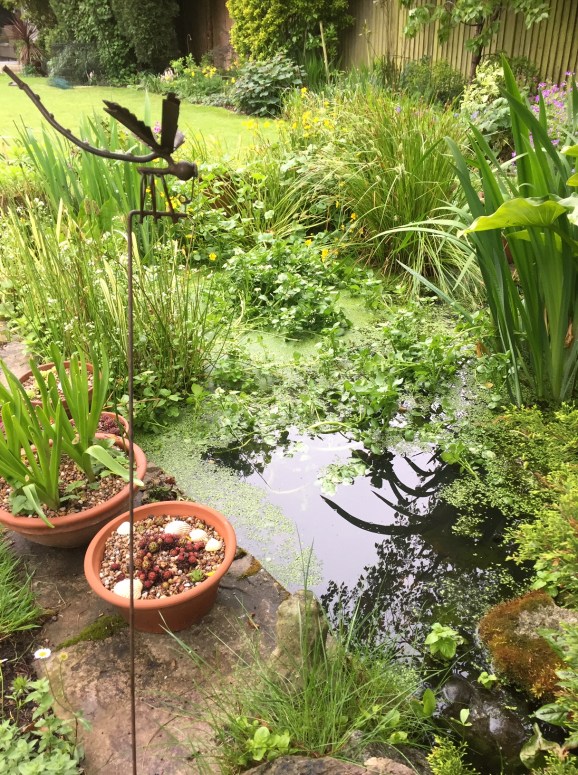
So maybe we have a local heron who is going round checking out members gardens? Chris’ visitor from yesterday has popped over to look at Kathy’s pond. Thankfully the pond is netted, otherwise his breakfast would have been toad spawn..

Kathy heron

Here are two of Chris B’s shrubs, looking very good this Spring –  Spiraea arguta Bridal Wreath and Viburnham tinus:

Chris was surprised to see this visitor – a Heron, checking out her garden!

ChrisB Heron

Angela says she is not a fan of tulips generally, but the Rose Cottage speaker we had last year convinced her to try these wild tulips, Tulipa sylvestris, and she is so pleased with them. They do look lovely in a “woodland” setting like this.

Angela Tulip sylvestris

Jenny’s Camellia is looking wonderful, she says its thanks to all the rain, and she didn’t have to do a thing!