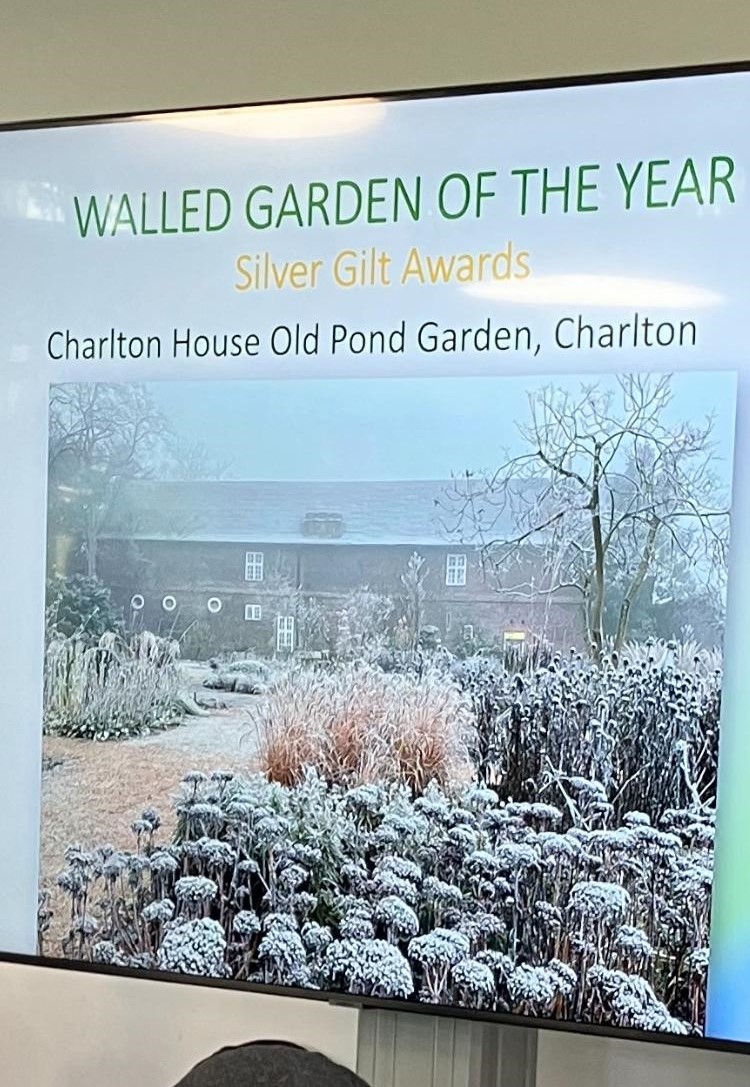
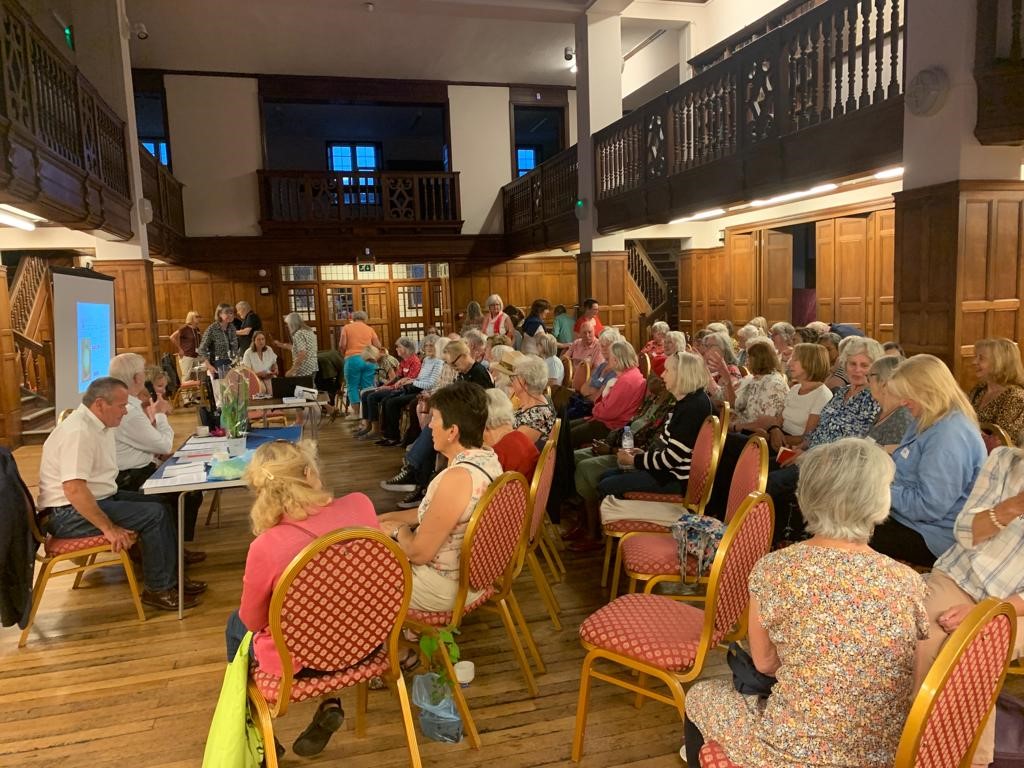
The panel this year consisted of the CABAHS President, Sir Nicolas Bevan in the chair along with the well known horticulturalist, retired Greenwich Park Manager and teacher, Joe Woodcock and our own knowledgeable CABAHS member, Pat Kane. It was a jolly affair much enjoyed by the members, held in the Old Library at Charlton House because of the possibility of rain.
Before the meeting, some members visited the Old Pond Garden to check on and discuss progress.
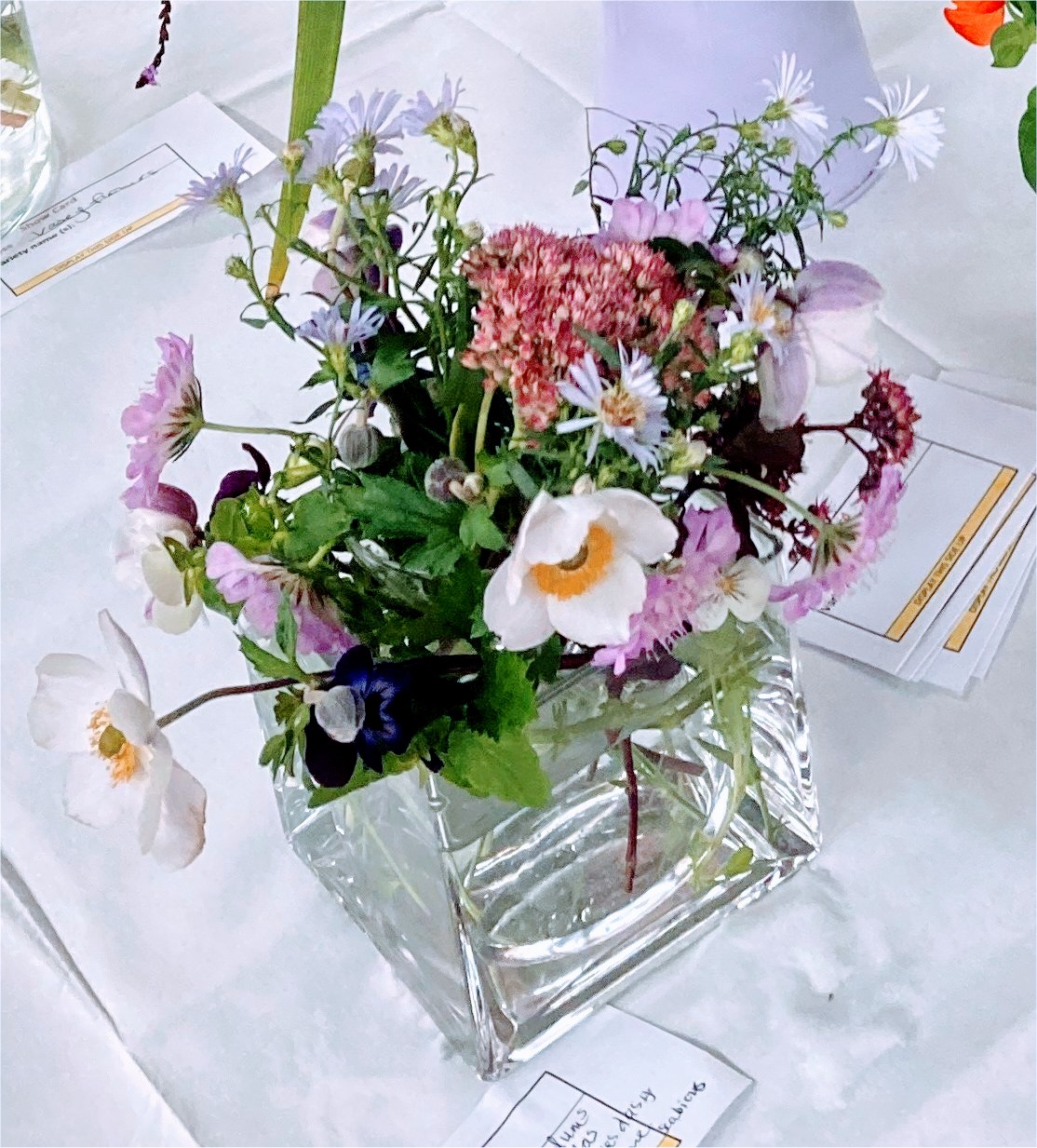
We had some superb exhibits on the Show Table at this month’s meeting, with a wide range of pot plants, flowers and fruits on display, so it deserves it’s own post! The Table was, as always, a great focal point for members to gather round and chat about the entries.
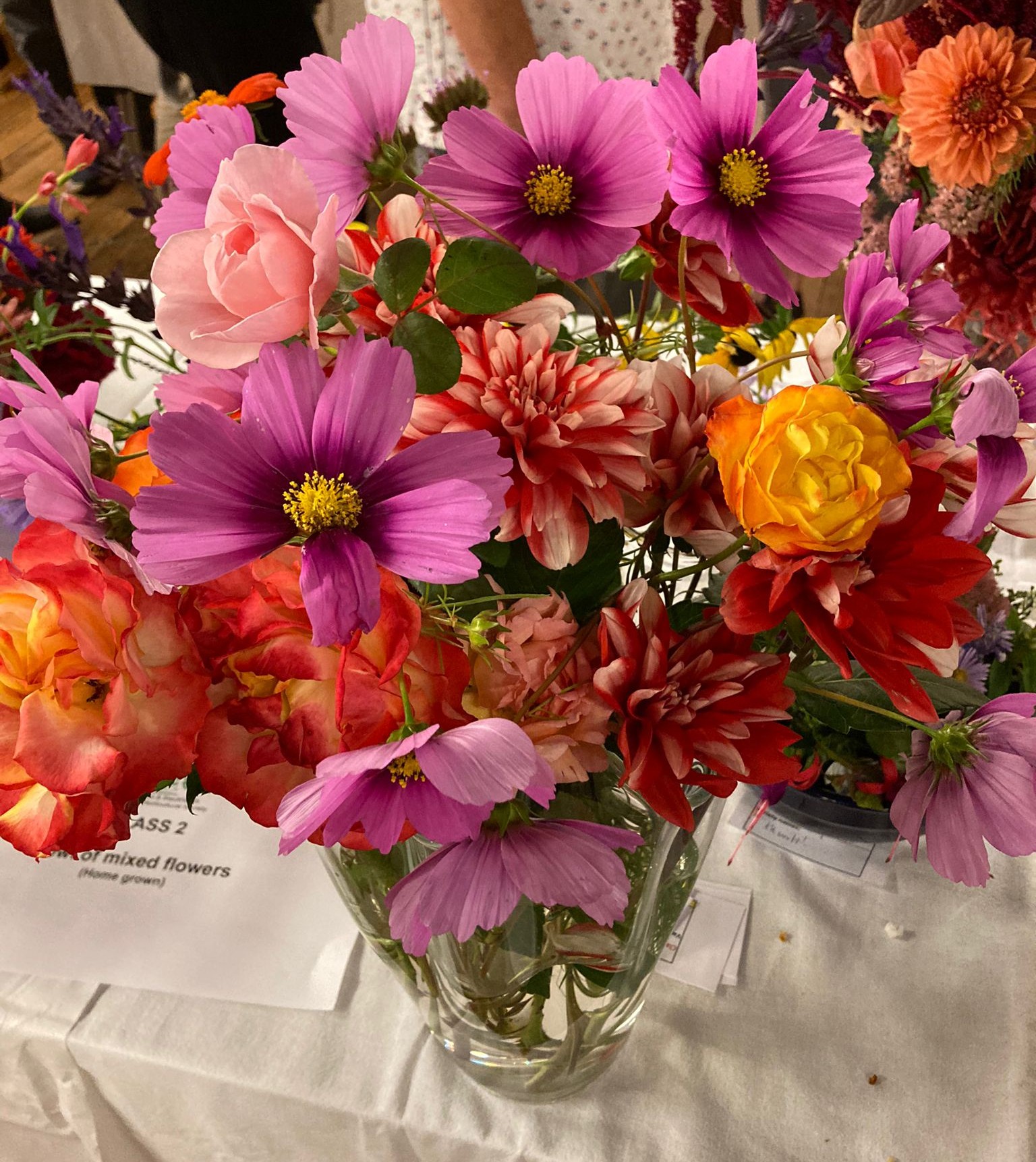
Hmm, the committee wonders if the new prize for ‘Best on Table’ is encouraging our members’ competitive sides to come out? Winner this month was Ruth C, with her beautiful vase of Dahlias ‘Creme de Cassis’. CABAHS President Nicolas presented Ruth with a pot plant plus a special CABAHS Biro. The biro is limited edition, and can only be given to a Show Table winner. In future we expect this to become as coveted an item as a Golden Gavel or Blue Peter badge…!
The CABAHS BiroDahlia Creme de Cassis (purple)
The whole Show Table:
A note about last month’s Show Table – winner was Pat K with her bowl of mixed sweet peas. Here is a selection of those entries:
Pat’s Sweet Peas
There will not be a Show Table next month as you will no doubt all be busy entering classes in the Autumn Show, but we look forward to the display in October. 🙂
Throughout the year Great Dixter hold various events for their Friends membership. So, on yet another dismal July evening this year, Pat and I drove to Sussex. The evening began with drinks and canapes and a talk from Fergus which should have been held on the front lawn but, due to the inclement weather, was inside in the Great Hall. Three boxes of plants from the nursery, designed for dry, wet and shady aspects of the garden, were raffled at £5.00 a ticket. Surprisingly, as Fergus was talking, the sun came out and what could have been a wet evening turned into a very pleasant one. Although the colour of the sky in the photo demonstrates it was still fairly cloudy!
We had arrived slightly early, so were already able to explore the garden which is always full of surprises. The phlox were particularly beautiful and Pat and I were trying to note varieties for our own gardens! Following Fergus’ talk, which was generally about the work of Great Dixter and collaborative projects that were ongoing including one with Hastings council, we divided up into groups according to our chosen tour/talk. Each one of these was conducted by one of the students at Great Dixter. Pat and I had opted for the Long Border and Jungle Garden (although we popped out of the latter and into the Nursery!). The students are articulate and engaging and certainly know their material. Having watched Fergus’ lectures on the Long Border, it was interesting to see this in practice and explained to us by Andrew Wiley, one of the Chanticleer Scholars. A particularly interesting stand of Salvia Indigo Spires was a huge clump of individual cuttings rather than one big plant. Also in use was a lovely creamy apricot Cosmos (Cosmos bipinnatus Apricotta) – a colour which we have seen a lot in other gardens this year and can be picked out in the photo (one to be ordered for sowing next year!). We always leave these gardens full of ideas and plans!
I visited Arundel Castle last week with my son and grandson who spent too long in the castle leaving little time for me to see the gardens. The castle is set in over 40 acres of verdant grounds and within that are the formal gardens in a Jacobean style comprising a domed pergola covered in hornbeam, temples, cascading fountains and obelisks. There is also a stumpery, some very colourful herbaceous borders and a wildflower gardens. I just wish I had more time.
There are two huge Victorian glasshouses, one housing a collection of pelargoniums and another for more tender vegetables in the kitchen gardens. The box parterre was in very good condition with little damage from box moth or blight and had in its midst some lovely healthy looking dahlias. Some of the huge pots housed tender perennials in quite a formal style in what must be a very sheltered spot. I understand that the garden underwent a renewal when the current head gardener arrived and surrounded the lawns with a tropical border based on work he had done in gardens in Bermuda. They also have a tulip festival in the spring which a friend of mine went to and said was spectacular. It certainly packs a punch and if you find yourself in the vicinity of Arundel it is definitely worth a visit but make sure to give yourself time to see it all.
We hope you are enjoying a walk around the walled gardens at Charlton House! This month, look out for:
Coneflower (Echinacea purpurea ‘Magnus’)
Coneflowers are part of the daisy family, originally from North America. Plains dwellers used the fresh roots and root juice to treat toothache and snake bites. Today many people take Echinacea supplements to prevent colds and boost their immune systems. ‘Magnus’ has large pink flowers and orange-brown central cones – bumblebee heaven!
Globe Thistle (Echinops ritro)
With spiky leaves and bristly metallic blue flowers, globe thistles make a great architectural choice for the back of a sunny border. The flowers are extremely attractive to bees, butterflies and other insects and it makes a good cut flower. This is a plant that we prefer to cut the seed heads off before they drop their seeds – they spread VERY easily!
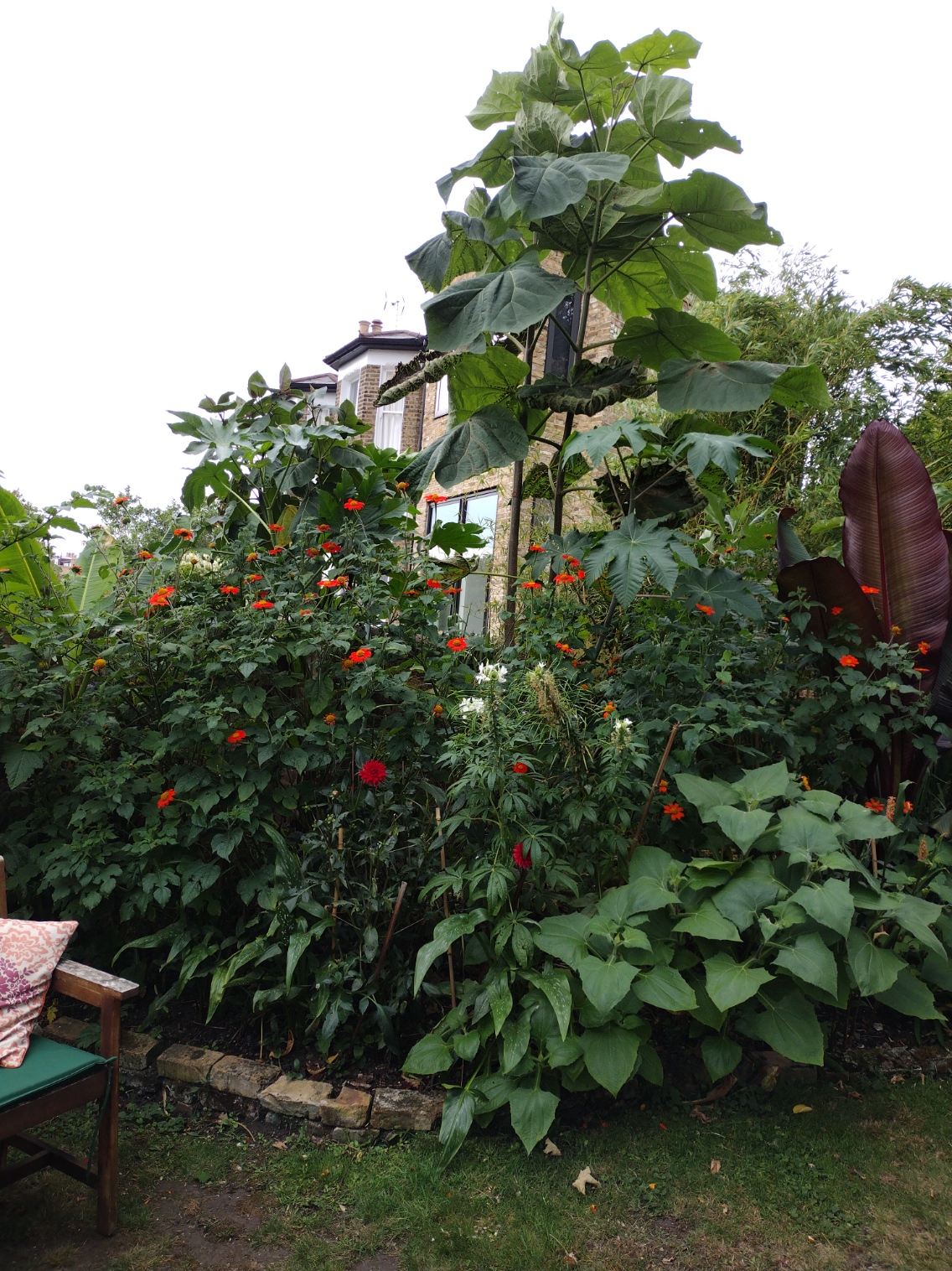
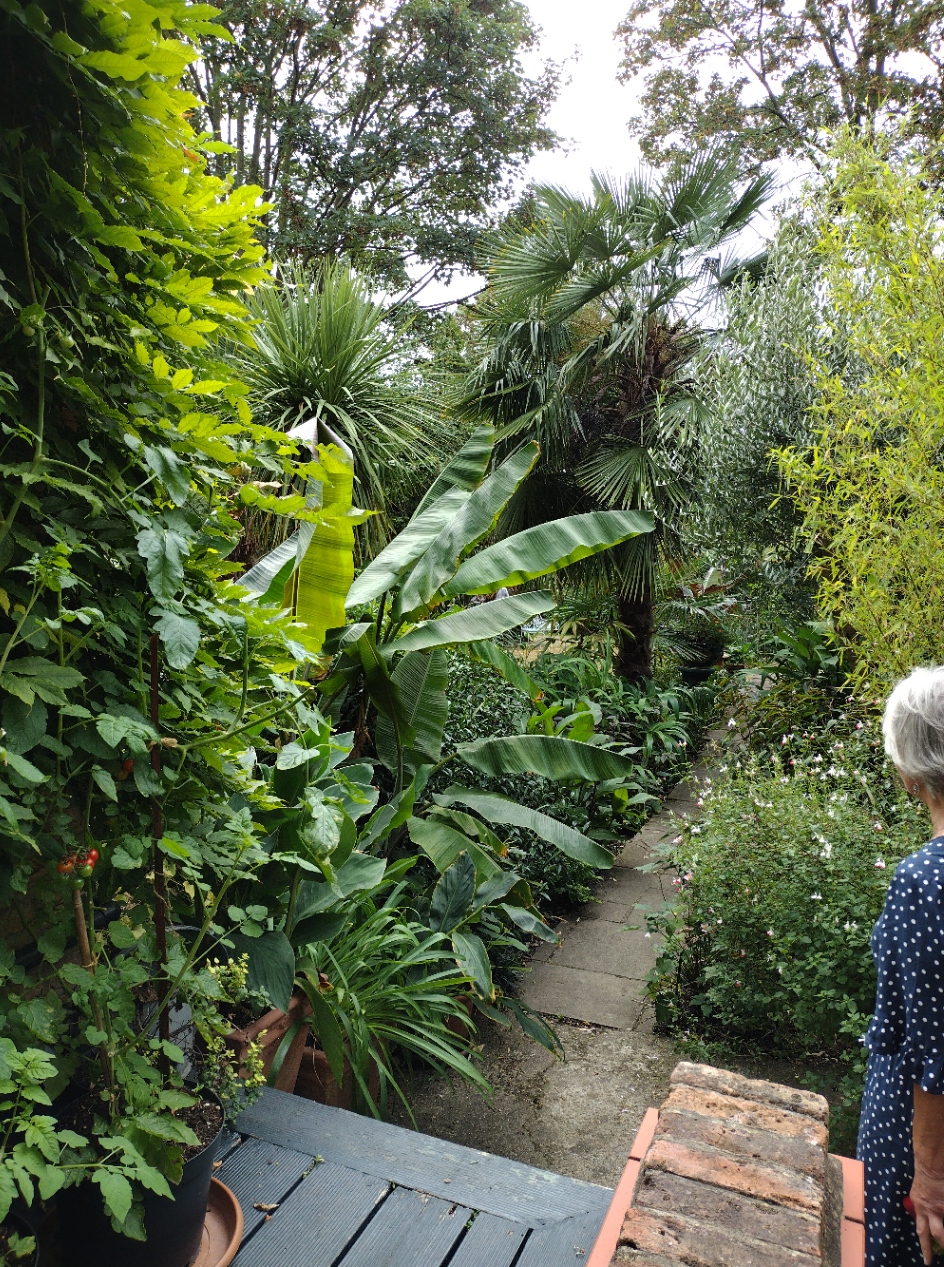
Our Speaker, Philip Oostenbrink, has been the head gardener at Walmer Castle since 2020 and taught horticulture in the Netherlands for 8 years prior to coming to England. He gave a fascinating and visually illustrated talk on the increasingly fashionable Jungle Gardening. He described how to create at home a garden or patio full of lush, green foliage plants and how to combine different leaf shapes and textures. He said he has been passionate about plants since early childhood, describing himself as a “plantaholic”. He currently holds 4 National Plant Collections. His stall at the Hampton Court Flower Show this year won a gold medal. He said he was inspired by the tropical Tresco Abbey Gardens (see our previous talk on this) and Will Giles’ Exotic Garden in Norwich.
Like most of our members, I always enjoy visiting the Open Gardens Festival in support of Greenwich & Bexley Community Hospice, and I think the range gets better each year. So many special gardens on display, but I always make a point of visiting the Prior Street Allotments because they have a very different vibe, being working gardens. I’m sure in reality the plot holders do lots of scurrying around before the Open Day, but it looks just effortless and wonderfully “been there forever”.
The site is tucked away behind Prior Street in Greenwich and is made up of just 18 plots (with a huge waiting list, before you ask!). This land was part of the Nunhead to Greenwich Park railway, which closed in 1917. The allotments were started on an informal basis in the 80’s and are now protected by the Allotment Act. They open once a year to support the Hospice, and they serve the best cakes and Pimms in Greenwich!
One very warm and sunny Sunday in June, CABAHS members were invited to come and visit our member Juli’s garden in Plumstead – which she generously opened specially for us, in aid of the Greenwich & Bexley Community Hospice. Juli’s garden is in the middle of a dense housing estate, but it is pretty easy to spot by the large banana tree sprouting over the top of her wall. Her garden beautifully demonstrates what can be done in a small space with some greenery, lots of care, and a sense of humour!
Juli in her garden
After the banana, the first things you notice are the Bee Lido and the fish pond, and I also liked the healthy looking lavender – which was a Charlton House reject that has been nursed back to full flower. Juli’s plant range includes her beloved roses, many perennials and even fruit trees. There are so many fun details, it takes much longer to properly appreciate than you would expect!
Thought for wildlife is everywhere in this garden, including Juli’s collection of friendly Bunnies – who were the stars at our Easter “Bunnies in the Beds” event.
How many of us have been on holiday, fallen in love with the flora of the region and maybe even recognised a plant as one that we know can be grown in UK, either indoors or out? The temptation is huge to bring back a few seeds, to buy some rhizomes at a market (yes, those Madeiran Agapanthus were hard to resist) or – if we’re visiting friends, to accept a cutting or two. But we now know that as well as being illegal, in doing so we risk introducing plant diseases and devastating an aspect of the horticultural world we love.
The RHS give some clear advice on bringing plants back to the UK from your holidays (ie: DON’T!), but also what to do if you decide that you are willing to take on the administrative load and expense to get hold of a particular plant.
Olive trees affected by Xylella in Gallipoli, Italy. (Image from Wikimedia Commons)