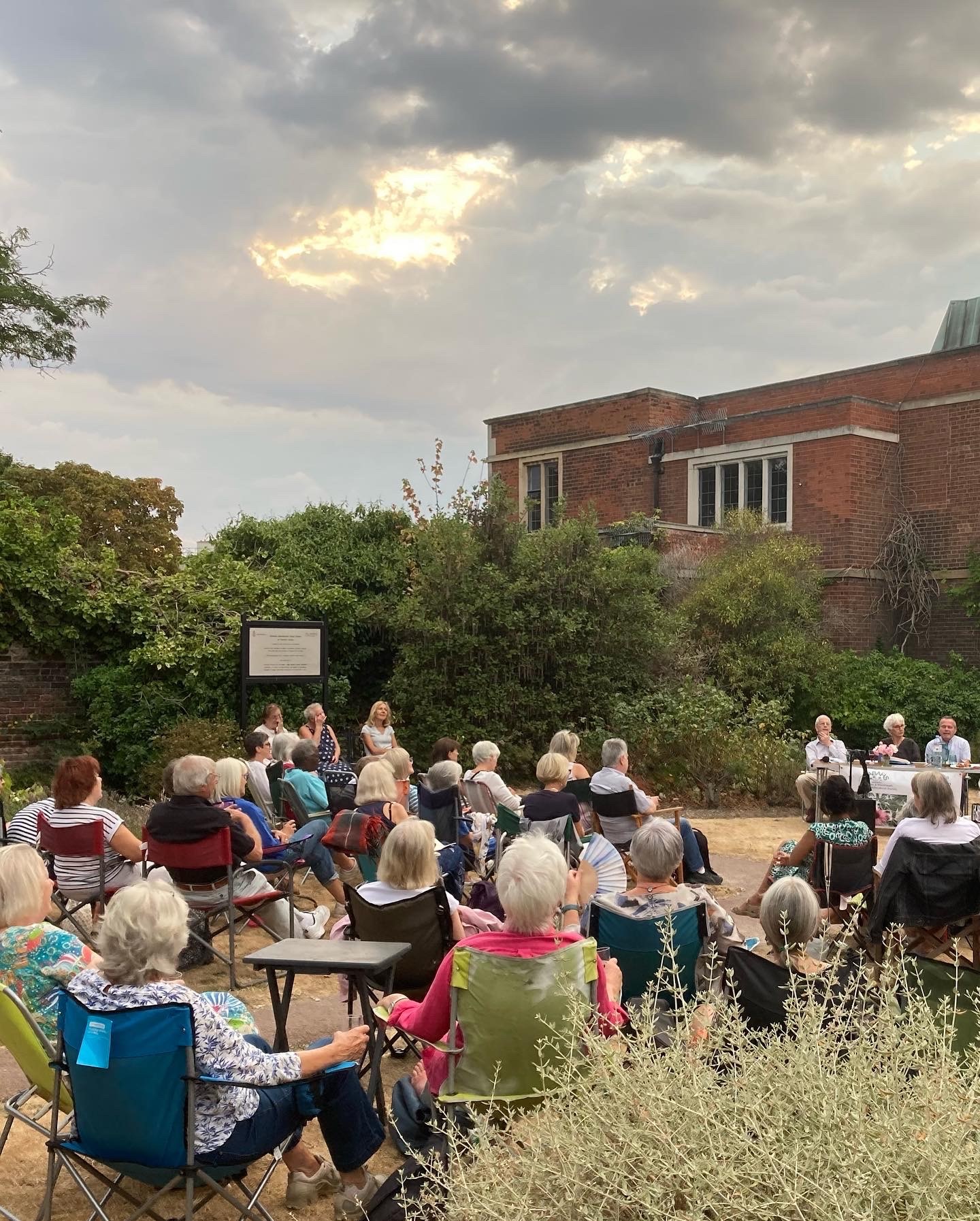
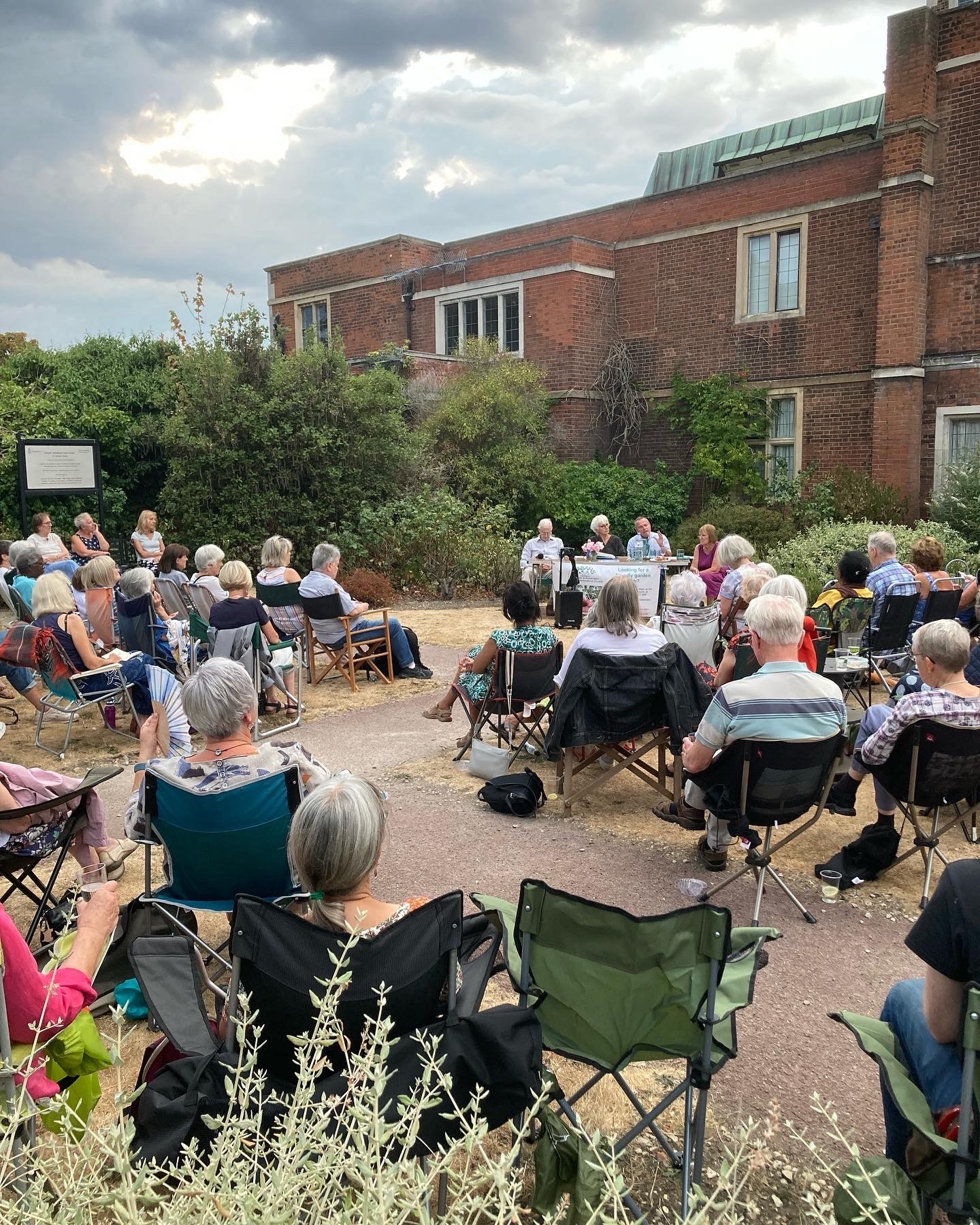
The panel this year consisted of the CABAHS President, Sir Nicolas Bevan in the chair along with the well known horticulturalist, retired Greenwich Park Manager and teacher, Joe Woodcock and our own knowledgeable CABAHS member, Pat Kane. It was a jolly affair much enjoyed by the members, held in the Old Library at Charlton House because of the possibility of rain.
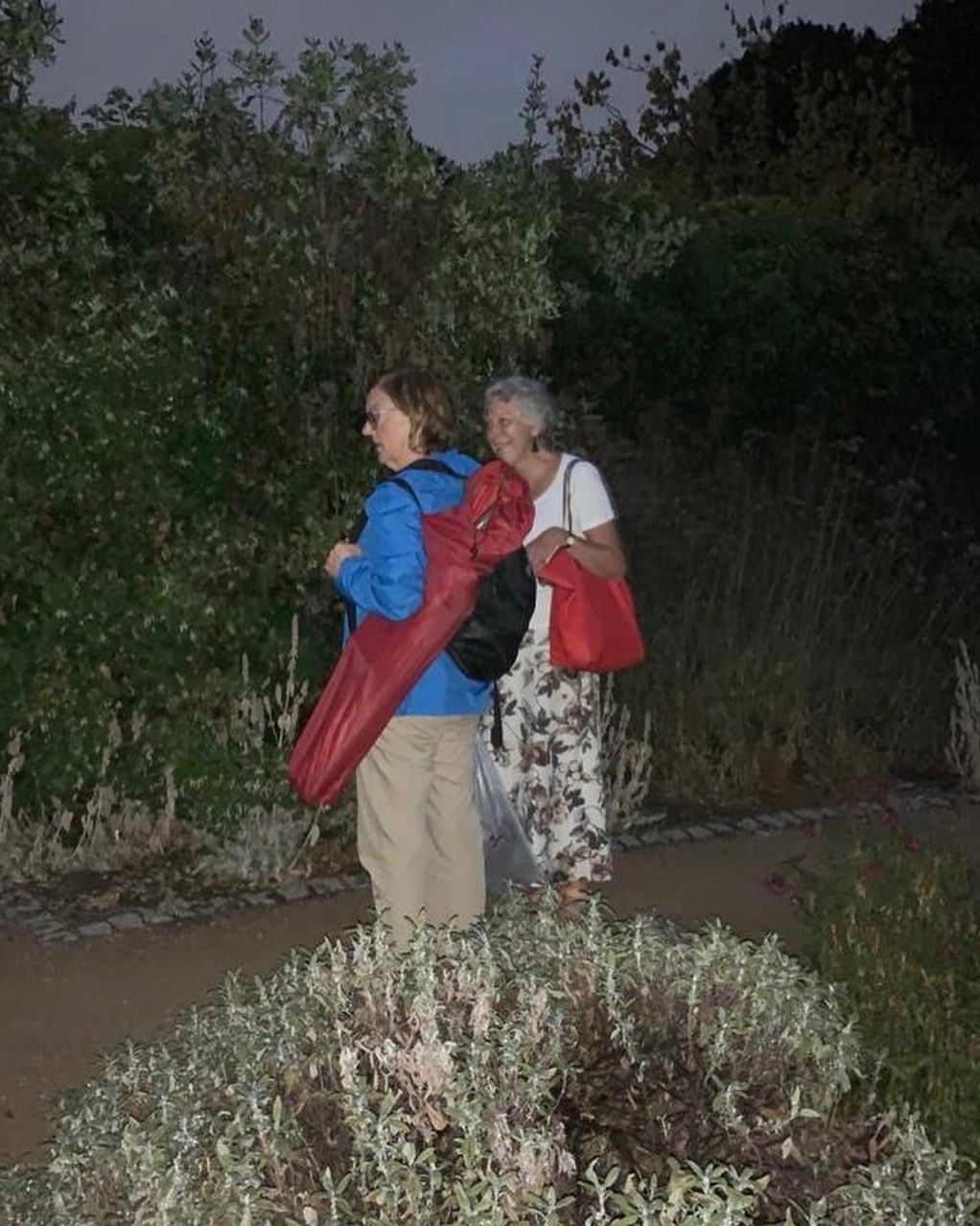
Before the meeting, some members visited the Old Pond Garden to check on and discuss progress.
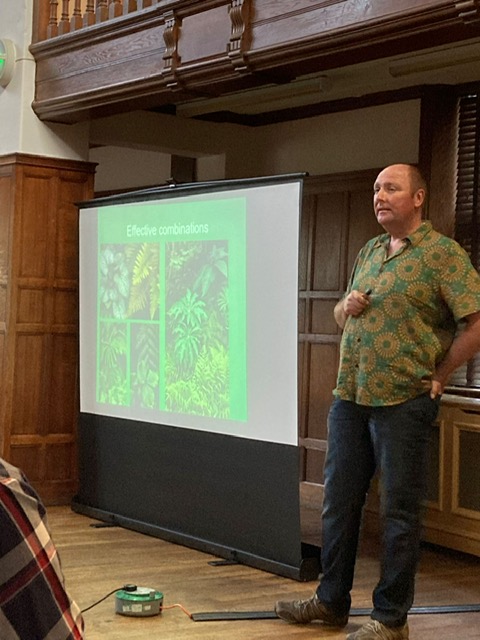
Our Speaker, Philip Oostenbrink, has been the head gardener at Walmer Castle since 2020 and taught horticulture in the Netherlands for 8 years prior to coming to England. He gave a fascinating and visually illustrated talk on the increasingly fashionable Jungle Gardening. He described how to create at home a garden or patio full of lush, green foliage plants and how to combine different leaf shapes and textures. He said he has been passionate about plants since early childhood, describing himself as a “plantaholic”. He currently holds 4 National Plant Collections. His stall at the Hampton Court Flower Show this year won a gold medal. He said he was inspired by the tropical Tresco Abbey Gardens (see our previous talk on this) and Will Giles’ Exotic Garden in Norwich.
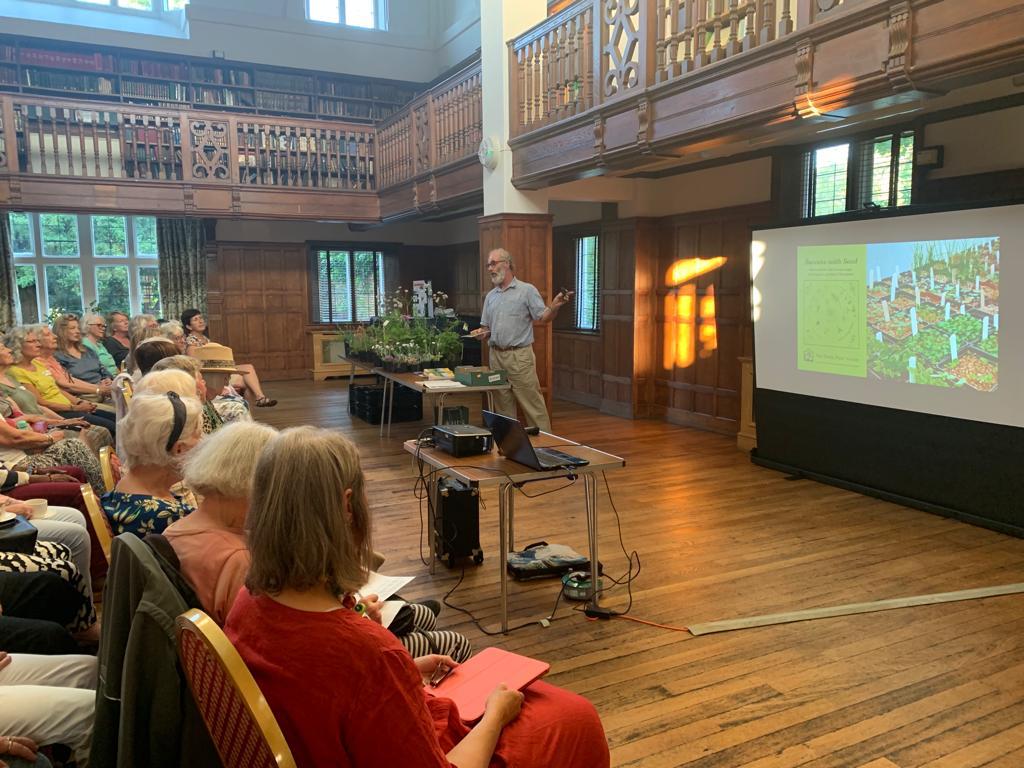
CABAHS welcomed back Tim Ingram who last gave a talk in the 1990s. Along with his wife, he is the owner of Copton Ash Gardens in Faversham. He has featured in a wide range of publications and is co-author of Success with Seeds, a Hardy Plant Society Booklet published in 1997. He is a member of the Hardy Plant Society, Alpine Garden Society and the Plant Fairs Road Show. He is a very keen grower of plants from fresh seeds, most of which he sources from his own garden. He gave a very informative visually illustrated talk on seeds with great enthusiasm which was catching.
He started the talk with a quote from George Bernard Shaw: “Think of the fierce energy concentrated in an acorn! You bury it in the ground, and it explodes into an oak! Bury a sheep, and nothing happens but decay.”
Tim described how he grew fresh seeds, and the conditions they need for successful growing, the how and when to grow different seeds. Seeds sold in Horticultural Garden Centres are grown to germinate easily at 20C. Fresh seeds may need different and specialist requirements. Seeds vary widely and some seeds are more difficult to grow. Seeds vary in size and shape. The orchid is very small whilst the coconut is very large and size impacts on how they are sown and the conditions needed for growth. Some fresh seeds have to be sown soon after they are picked, whilst others may be kept for a long time. Cowslips for example, need to be sown quite fresh in autumn and need a spot of outside winter cold to kickstart them. Early flowering plants such as bulbs and ericaceous need a cold bout to kickstart germination too.
Dr John Hughes, an RHS judge and a long term friend of CABAHS, gave an entertaining and informative talk on Tresco Abbey Gardens in the Isles of Scilly, situated just 28 miles off the coast of Cornwall. Benefiting from the Gulf Stream and Atlantic Drift, it has a mild climate and the magnificent garden is full of exotic and glorious plants from every Mediterranean garden zone, including South Africa, Australia, New Zealand and Chile. It has been called a ‘Kew without the glass’. It is also home to a range of fauna including the red squirrel.
Augustus Smith, the founder of the garden, bought the island from the Duchy of Cornwall in 1830 and it has been in his family, who have remained keen horticulturalists, ever since – though all the land, except the garden and house which he had built on it, was given back to the Duchy in 1922. The seventeen acre garden has been designed around a ruined Benedictine Abbey and within a sympathetic hard core of paths and arches, including statues supplied by the latest owner.
Ruth Cornett, the owner of the Eltham Gatehouse situated adjacent to the historic Eltham Palace and part of its history, gave an excellent and informative account of how she has renovated the Gatehouse garden which along with the house was neglected and semi-derelict when she and her husband bought it in 1998. Having previously lived in a North London flat and from a rural Irish background, she was desperate to have a house and garden and set about renovating and restoring the garden in 2015. Ruth showed us pictures of before and after.
Eltham Palace is a medieval house with a long history. At one time a Bishop’s Palace and a Tudor hunting lodge, it was bought by members of the American Courtauld family in 1933. They renovated the Palace and added an Art Deco extension, then handing it over to the Royal Army Educational Corps in 1945. Its head resided in the Gatehouse. When the army left in 1992 the Gatehouse was left empty and the garden was abandoned.
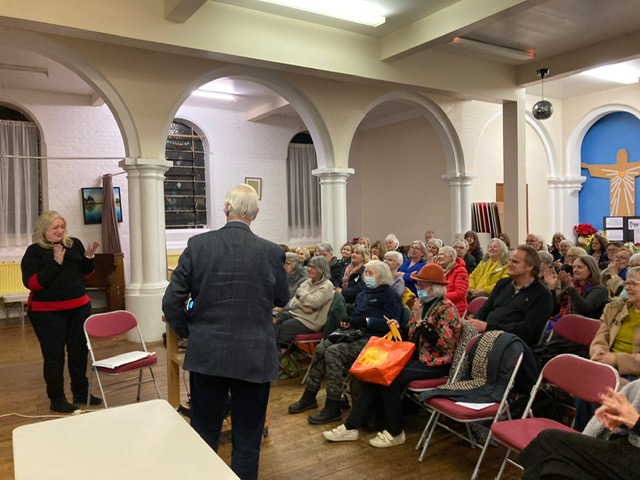
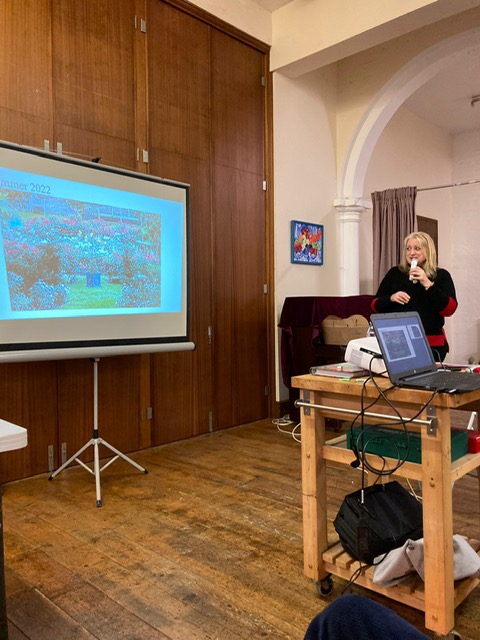
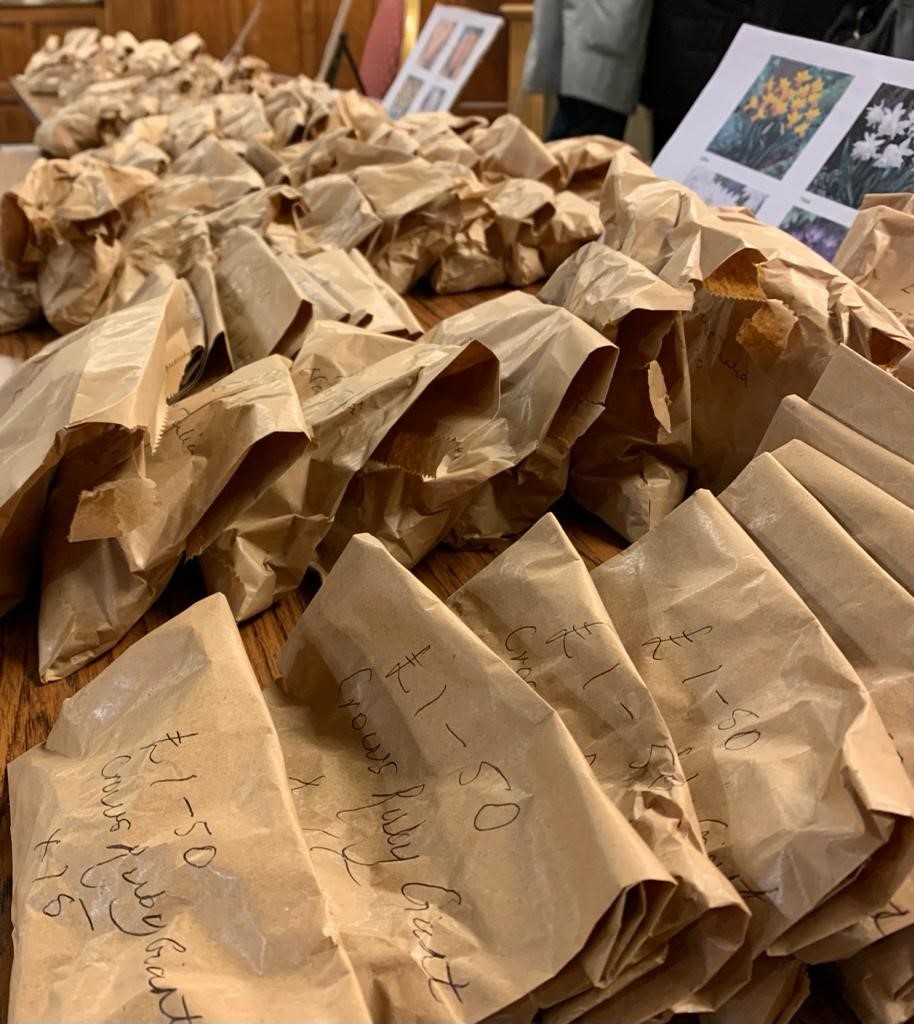
Anne Barnard from Rose Cottage Plants, a nursery that has won several RHS medals, following on from her successful talk last year on dahlias, gave an informative and useful talk on some of her favourite perennials. She also brought some bulbs for sale which were snapped up.
Although the nursery is known nowadays for specialising in dahlias, when it first started some 25 years ago, they specialised in perennials. Starting her nursery came from her involvement in the National Gardens Scheme.
Anne Barnard talking about perennialsSt Thomas ChurchTerry with lottery ticketsSettling into a new venueTerry selling lottery tickets
In her presentation, Anne referred to and described a large number and wide range of perennials and the conditions they need to grow well, as well as showing a range of perennials that partner well together. Some of the perennials she mentioned are listed here and some of them her nursery sells. They also sell bulbs.
Simon White is the President of Norwich Horticultural Society and Sales Manager for the RHS award winning Peter Beales Garden Centre in Attleborough, Norfolk, where he has worked for 41 years.
He gave an entertaining and informative talk on growing roses. He said, if provided with the right conditions, it was not true that roses were difficult to grow. Simon said Beales had the largest collection of roses in the world. They primarily sell bare root roses and many old traditional classic roses. They grow from seed some 250,000 a year in fields rented from a local farmer and he described how they grew them.
He then went on to show how we at home could grow bare root roses:
1.THEY NEED GOOD SOIL PREPARATION: Ideally bare root roses should be planted from November to March. Good quality fertiliser, including horse manure which is at least six month old, should be used. Do not use mushroom manure.
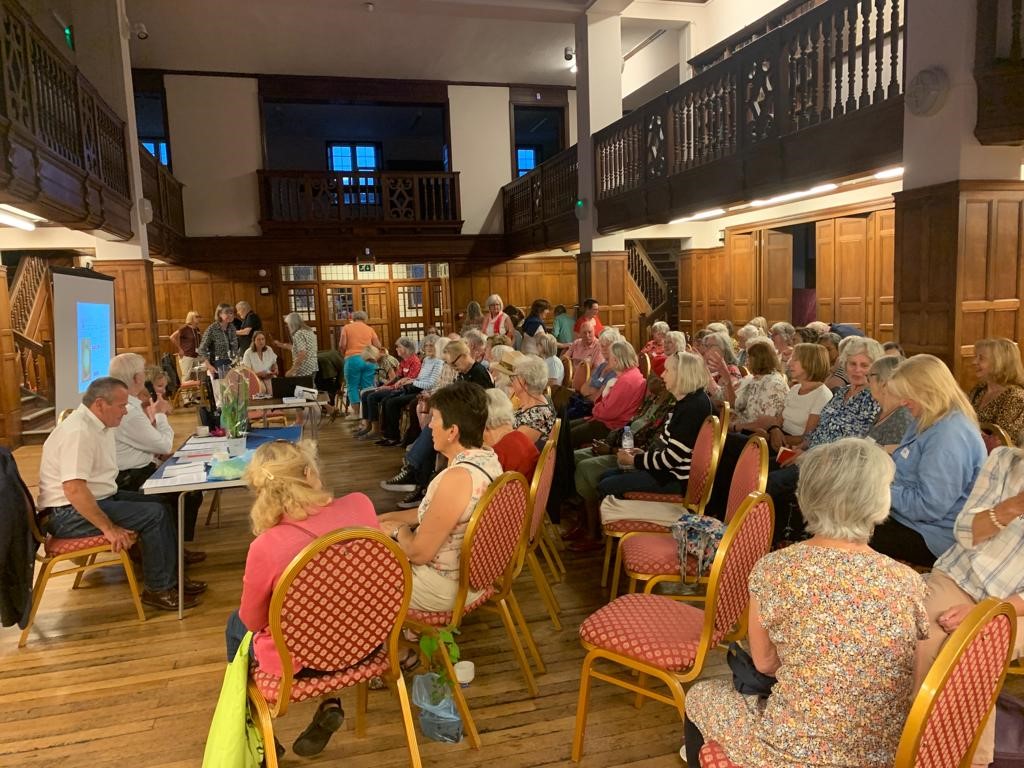
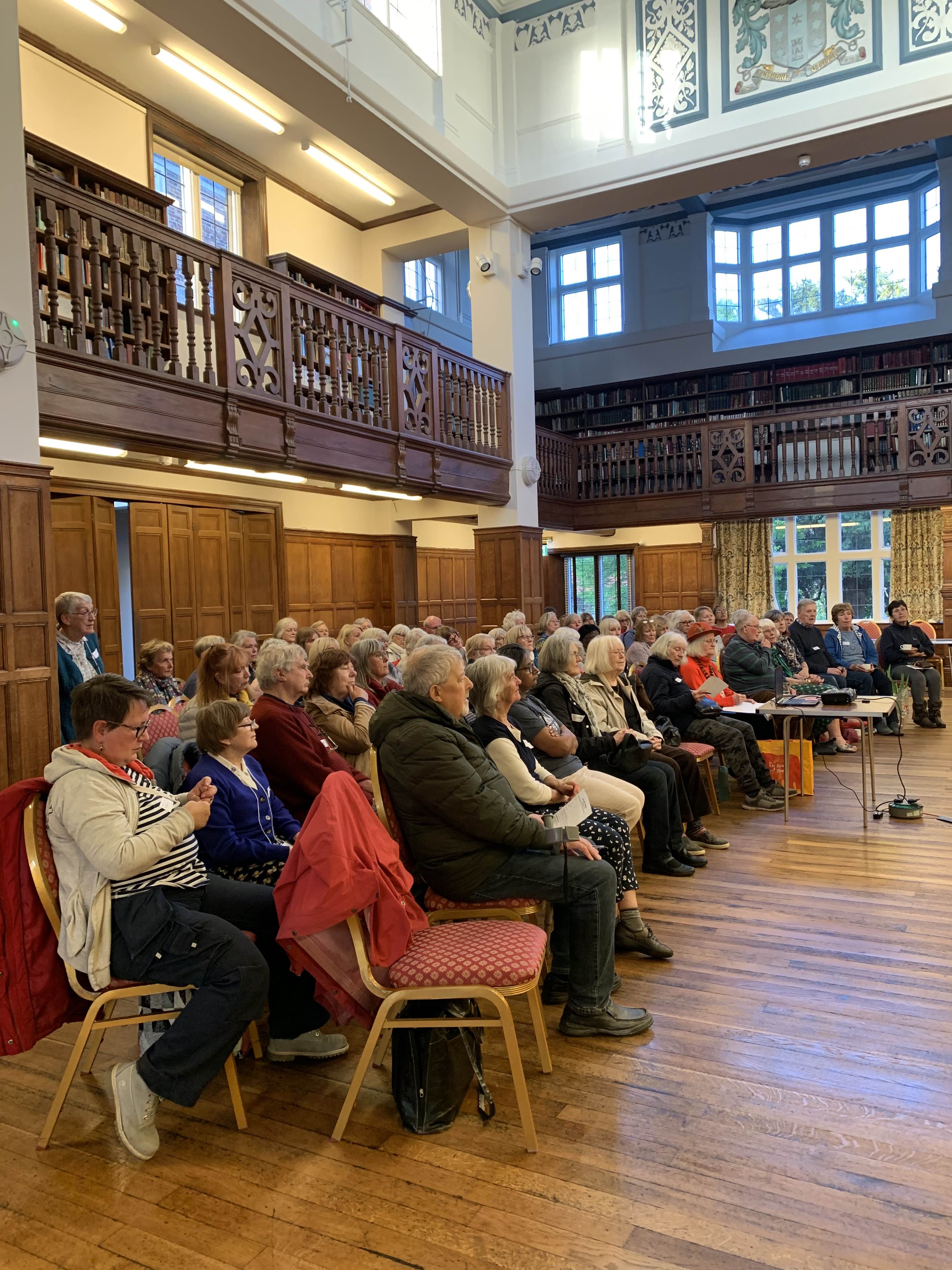
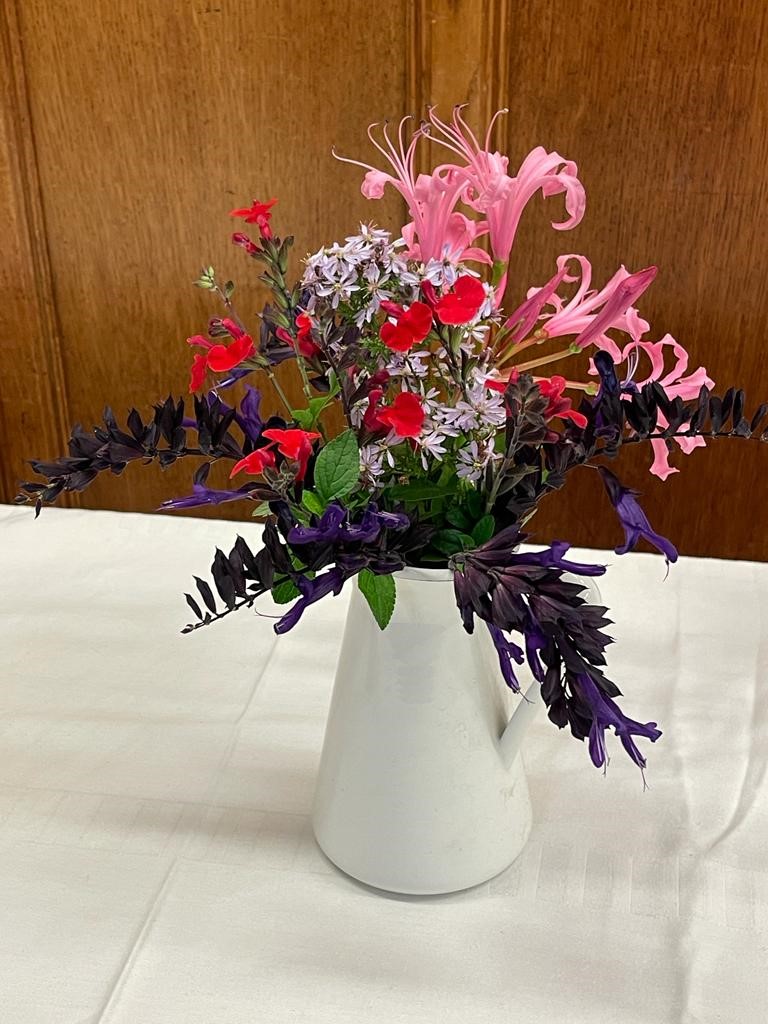
Our October members meeting was held on 17th October in the magnificent Old Library at Charlton House. A well attended meeting, we were treated to a great talk from Peter of Thorncroft Clematis, a wonderful Show Table, bulbs for sale and an amazing Autumn mandala from members gardens, which covered the entire grand piano!
It was clear that we were in for a treat of a talk. As well as a box of Thorncroft Clematis Catalogues, Peter Skeggs-Gooch laid out the nursery’s impressive collection of Flower Show medals: several Chelsea golds as well as a smattering of Silver-Gilts. Peter’s slide show took us from evergreen winter varieties such as the familiar ‘Freckles’ and the lovely, if large, armandii ‘Apple Blossom’; through Spring, with much-loved montanas now smaller and more manageable; into Summer with several scented varieties including the coconut-perfumed ‘Lambton Park’; and finally finishing with the viticellas of Autumn such as ‘Prince William’ and super easy ‘Alba Luxurians’. His nursery produces over three hundred varieties, so we were being given only a glimpse of what is on offer. For more information or to order head to their website.
As always, we didn’t get around to answering all your questions at our August GQT meeting (I’m very sure they don’t manage to on the radio programme either!). But you may remember that Annie H brought in her strange distorted tomatoes to show everyone. If it had not been for the biblical deluge, I expect we would have had a good discussion about them.
Annie H’s weird tomatoes!
Annie was undaunted by getting no answers at the meeting, and contacted the RHS directly. She says, “I was informed that the most likely cause was a too high concentration of a contaminated farmyard manure compost in the pots. The farmers spread weedkiller/ pesticide on the field, the grass grows and the cattle dump cowpats which are composted and then bagged up for sale but still contains residues of weedkiller/ pesticide.”
Thank you for this Annie, something for us all to watch out for. It would be interesting to hear from other members if they have had a similar experience.
Our annual amateur Gardeners Question Time meeting was once again held in the Peace Garden at Charlton House. Some members will remember last year, when everyone was in thermals and anoraks and it was the coldest August evening for years – ah, not this year we thought, it has been so warm and dry for weeks! Well, best laid plans as they say. Everyone was settled and happily getting in to the swing of questions about the drought. And so of course, the heavens opened!
True to type, we gardeners just picked up our things and decamped to Frilly’s Tea Room for a little break. Thank you to our stalwart committee and helpers who covered things up in the garden (do you know what Doritos and Pringles look like when they are soaked? ugh!). As the thunderstorm carried on, so too did we and the questions continued in the Tea rooms.
Thank you to our panel, especially guest panellist Joe Woodcock, for cheerfully answering our questions, and to Charlton House for letting us drip all over their cafe. It was still a very enjoyable evening, but sad that not many members saw the old Pond Garden in the dusk, lit up with solar lights and looking magical.
The committee will be having a think about whether to have next years GQT meeting in the safety of the Old Library!















 Charlton and Blackheath Amateur Horticultural Society