Plant of the Month: Pittosporum tobira ‘Neige du Mont Ventoux’ (May 2025)

Pittosporum tobira 'Neige du Mont Ventoux'

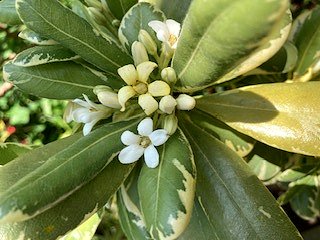
This variegated Japanese PittosporumP. tobira ‘Neige du Mont Ventoux’ — is a lovely addition to any garden, and particularly courtyard gardens, where space is at a premium, as it is the perfect specimen for growing in a container.

It was at a rare plant fair in Kent many years ago when I spotted this very appealing shrub. It was “twinkling” at me so, naturally, I found I just could not resist it and brought it home! Because of its branched structure, it was placed in a terracotta container and there it has remained, contented, to this day. I hadn’t realised at the time though, that this variety is very suitable for a container, as its height and width is generally no more than one metre at maturity.

Continue reading Plant of the Month: Pittosporum tobira ‘Neige du Mont Ventoux’ (May 2025)

Fantasy garden tables

Those of you who are regular viewers of BBC Gardeners’ World will most likely have noted Monty Don’s table of potted plants, which varies throughout the seasons and looks like something most of us can only dream of! In a recent article by Alice Vincent, she describes what she calls Monty Don’s ‘Fantasy table’. (My latest garden fantasy? An elegant table covered in flower pots)

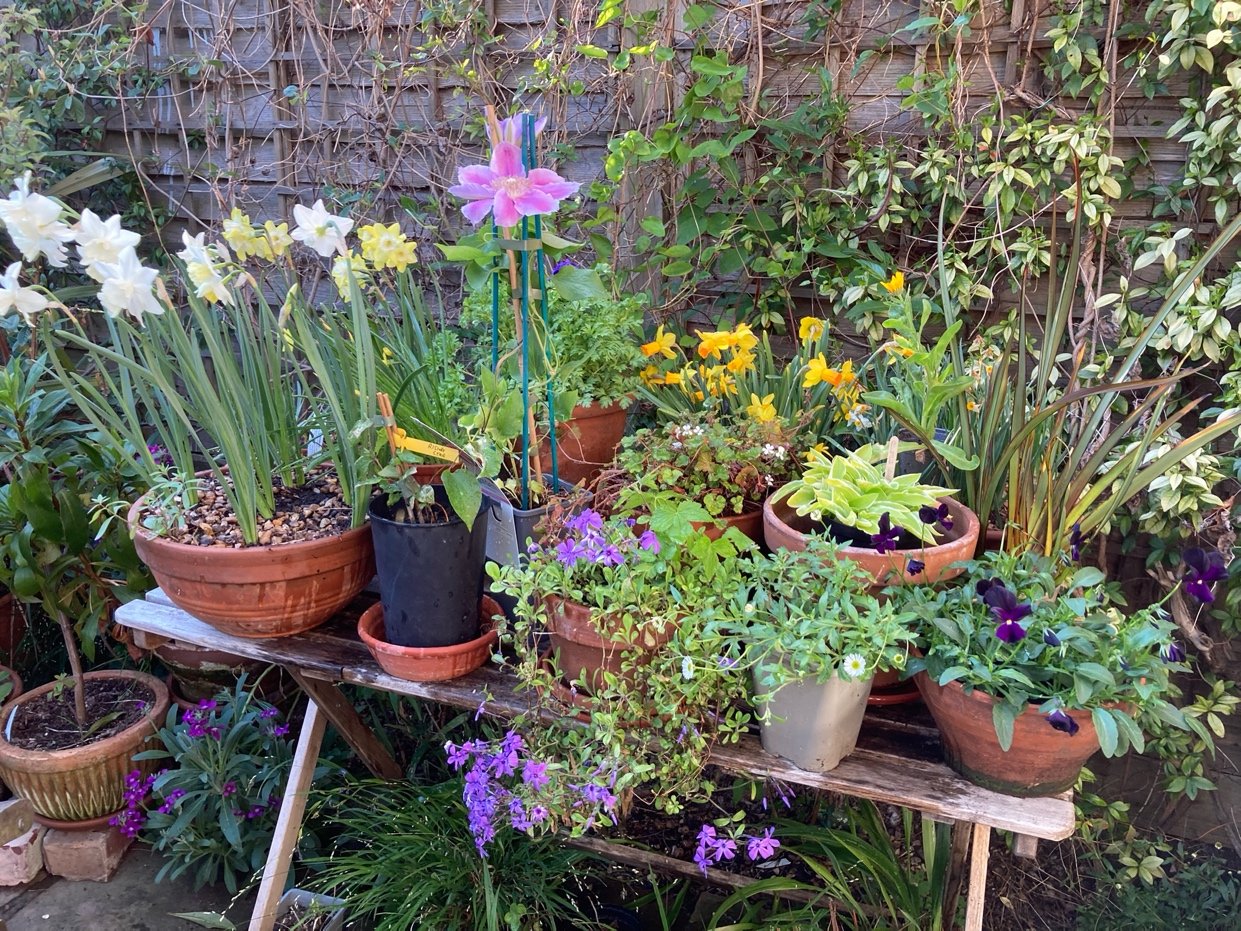
The scale of Don’s table and the amount he has displayed is something many of us may aspire to, myself included! On a recent visit to Anna L’s garden, I was impressed by how she had similarly grouped a range of plants in pots, a mix of bulbs, a small Phlox stolonifera, Violas, a Clematis waiting to be planted and a miniature Hosta. Anna very kindly listed the plants for me and you can see from this that a display does not have to be carefully curated, but a selection of whatever takes your fancy!

Anna's garden table
Anna’s plant table in late spring, featuring:
Narcissus ‘Thalia’ and N. ‘Pipit’; Clematis ‘Rising Star’ and C. ‘Bees’ Jubilee’; Pelargonium australe; Phlox stolonifera ‘Fran’s Purple’; Anemone de Caen blue-flowered; Primula ‘Stella Neon Violet’; Phormium; purple Viola; Hosta ‘Lemon Stiletto’
Continue reading Fantasy garden tables

Plant of the Month: Berberis x stenophylla (April 2025)

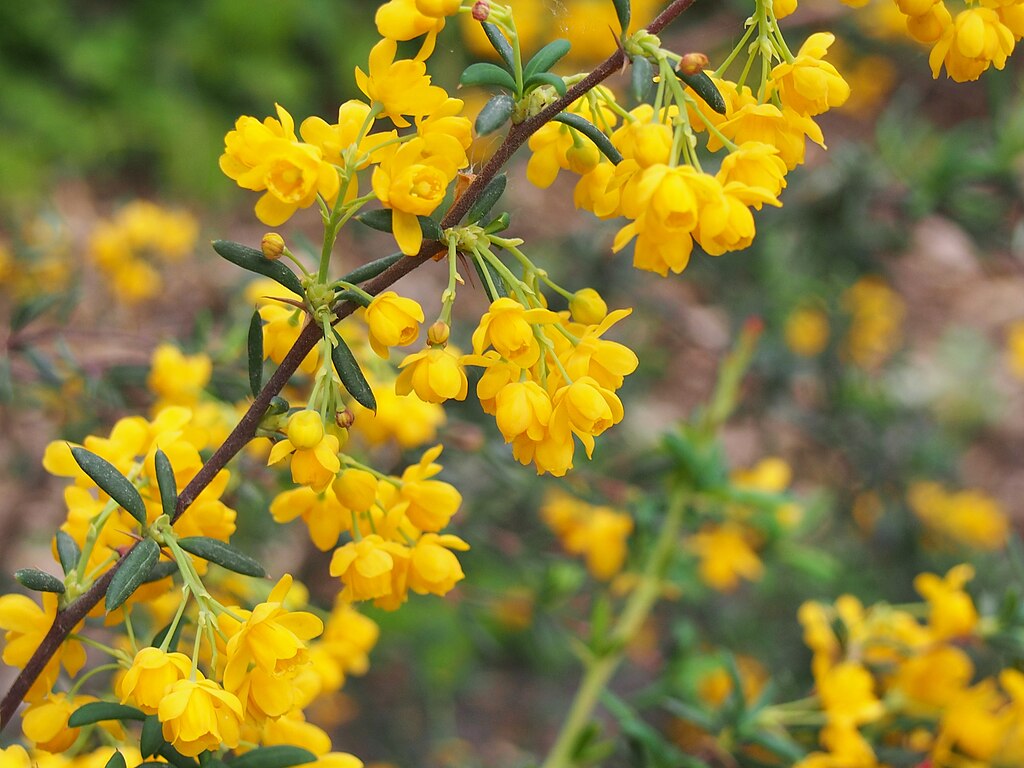
If you have a shady area in your garden that needs ‘lightening up’, then perhaps consider the rosemary barbary. This shrub is looking fantastic in Linda B’s garden at the moment and I’m hoping that it will seed on my side of the fence in the near future.

Berberis x stenophylla
Photo by Agnieszka Kwiecień via Wikimedia Commons https://creativecommons.org/licenses/by-sa/4.0
Berberis x stenophylla.
Photo by Agnieszka Kwiecień via Wikimedia Commons

Her Berberis is growing on a raised area so it gets good drainage, tolerating the shady side and facing north.  So, it’s a tough, evergreen shrub, liking good drainage and drought-tolerant.  Its tiny, narrow leaves (much like rosemary) are a leathery green, with a sharp point to the tips.

Continue reading Plant of the Month: Berberis x stenophylla (April 2025)

Plant of the Month: Camellia (March 2025)

During March, when the changeable weather still surprises us, it is wonderful to see the Camellias in flower, as they provide the much-needed WOW factor during the colder days – their profusion of flowers, colours, shapes and patterns add an immediate vibrancy and character to any garden or parkland.

Camellia sasanqua

In my neighbour Linda B’s garden, there are three Camellias but one stands out. The flowers are smaller and single, white (blush-pink as they age), scented and beautiful. The leaves are also different: matt-green and elongated and the overall appearance of the shrub is more elegant. It has grown, albeit slowly, and is now approximately 2’ in height. A plant app identifies it as possibly Camellia sasanqua.

Continue reading Plant of the Month: Camellia (March 2025)

What did the Mulberry tree see?

You may have spotted that the Charlton House Mulberry has just featured at Number 8 in the list of 20 Greatest Trees of Britain (the Telegraph) – what a well deserved honour!

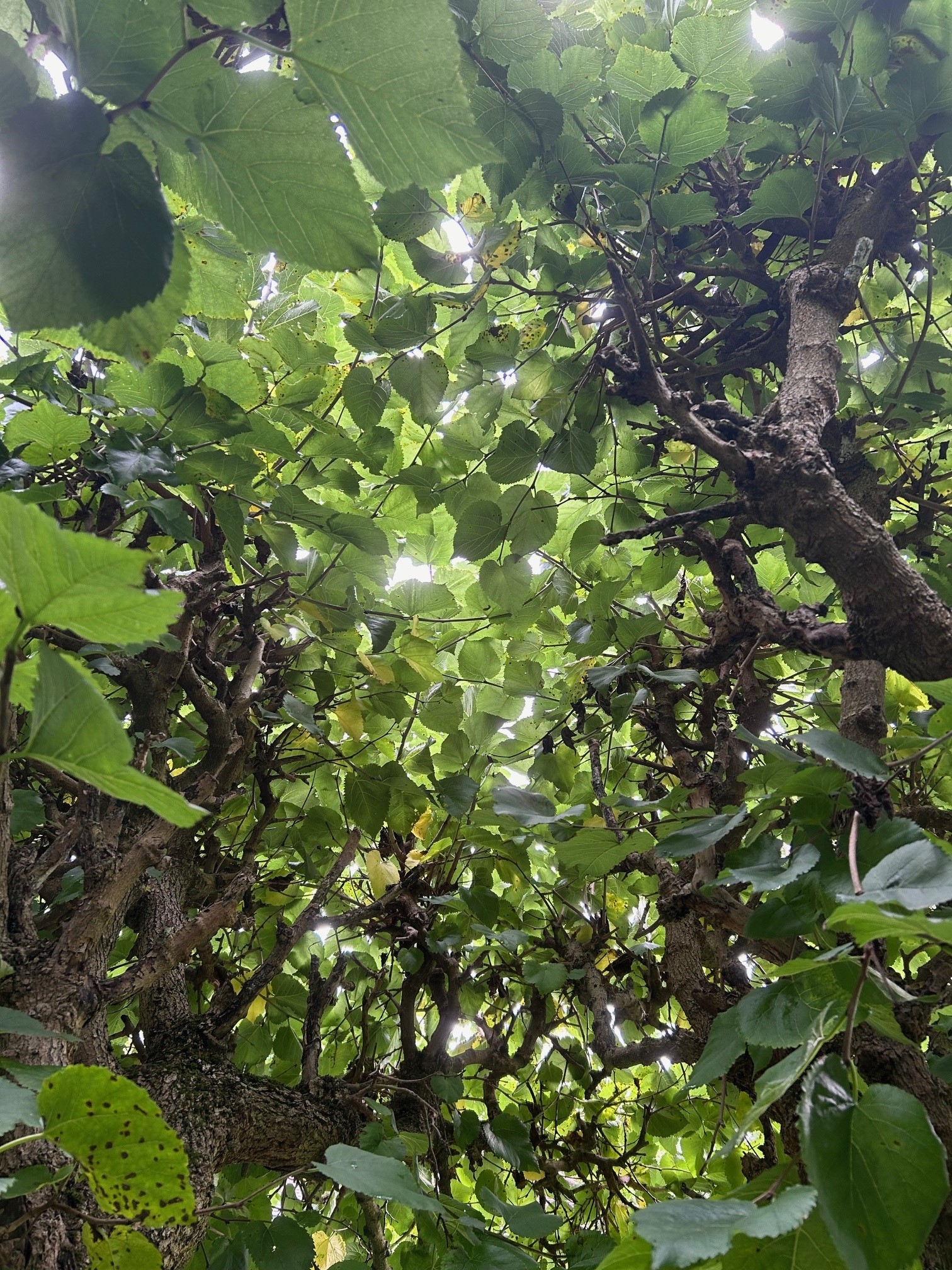
I confess to being a bit of a Mulberry tree fan, having planted one in our garden in Westcombe Park just over 35 years ago. Our tree was a favourite retreat for my kids when they were growing up since, like all Mulberries, it has a very climbable branch structure and wonderful leaf canopy. Even Jerry our Jack Russell can climb up it when he has the momentum to chase squirrels!

Last year I bought my grandson a lovely children’s book about an old tree standing through the ages (What did the Tree See, by Charlotte Guillain) and reading it led me to ponder what our venerable Mulberry Tree at Charlton House might have been witness to over its 400 plus years?

The story would start in 1607, around the time the House was being built, when King James required landowners to purchase and plant 10,000 Mulberry trees between them, to start his ill-fated silk industry. When Sir Adam Newton bought the “Manor of Charlton”, it included six orchards, 260 acres of land, 100 acres of meadow, 200 acres of pasture and 200 acres of wood – so he certainly had space to please the King by planting a whole field of Mulberries. A pity that the wrong kind of trees were planted for silkworms and the climate was too cold for them to thrive. At Charlton House we know that “a few trees” remained by 1845 but our beautiful and venerable one is all that remains today.

Mulberry in summer at Charlton House
Continue reading What did the Mulberry tree see?

Fans of Clivia miniata

Angela B wrote: “Clivia (or Natal lily, originally from South Africa) is one of my favourite plants. It comes in a variety of colours. I have been growing Clivia miniata, the orange-flower variety, for years. Its glossy leaves and bright orange trumpets are striking and decorative. It has flowered well this year and I thought members might like to see it, and I encourage those who have not grown one to do so.

Angela's Clivia miniata

It’s easy to grow. See the RHS website for detailed care instructions. It’s a woodland plant and likes indirect sunlight and regular watering from Spring to Autumn, but minimal watering over the winter.”

We asked a few other members about this unusual and lovely plant. Chris B is also a fan of them, she says hers has beautiful flowers in May and June and she puts it outside for a holiday in the Summer (although not in full sun). She brings it back inside for winter and reduces the watering.

Continue reading Fans of Clivia miniata

The View from my Window

The small patio is shielded from the sun, in a south facing garden, by an Acer palmatum ‘Katsura’.  The tree caught my eye while on a trip to Kent.  Must have one of those I thought.  The sapling was bought and is now well mature.  Some of the limbs show signs of viral attack, but it soldiers on. 

Early to leaf, in February, the leaves are green and red.  It produces sap, which attracts the aphids. With the aphids, the small birds make regular visits to eat the goodies. The birds include Blue, Great and Coal Tits, Robin and Goldfinches.  The Dunnocks also pay a visit, foraging in the growth below, together with a variety of bees including the distinctive yellow faced variety. Soon after, it will produce a vast amount of blossom, and after that very small sycamore-like seeds.  In time and onto autumn, the leaves go from yellow to orange and then fall, covering all the surrounding ground.

Continue reading The View from my Window

March flowers shared by Members

We are always keen to hear about how member’s gardens are growing or about what you can see from your window but occasionally we receive shorter messages. So here are a few we’ve had recently.

Angela thought members might like to see a photo of her Amaryllis lily. She says “Their sale in supermarkets at Christmas has rapidly become a tradition. Their very decorative, over the top  flowers people either hate or love. I love them. They are easy to grow and spectacular. I planted mine after Christmas and it has now produced amazing flowers.”

Angela's Amaryllis lily

Viv sent us a photo of the first tulips of the year in her garden with some other pots. Unsurprisingly, she is getting excited about spring…

Viv's pot of Tulip Stresa with other pots
Continue reading March flowers shared by Members

The View from my Window

A piece inspired by Kathy’s entertaining post.

I, too, have a comfy seat looking out on my garden where I spend many happy hours deciding what changes need to be made in my garden (there is always something).

I am currently enjoying watching my pots of bulbs grow and begin to flower. I posted a photo on Facebook of my Harmony irises and my friend in Norfolk (who I think was rather envious) suggested I had a microclimate in my garden. It is very sheltered and faces west so maybe I do.

Pots in Carolyn's garden

I have just decided to empty my rather unsightly compost bin and replace it with a smaller, more discreet one. I therefore have a large pile of compost which I am in the process of shovelling around the garden. I am expecting a spectacular display later in the year!

My Clematis Armandii under the tree is budding nicely. I planted it some years ago and was disappointed last year that I had so few flowers on it. That was until I looked out from the upstairs window and discovered that my neighbours were enjoying a beautiful display! It had put all its energy into growing to a lighter spot in the garden next door!

I find this time of year quite difficult garden-wise, especially when the weather is mild, as it is at the moment. I am having to restrain myself from going wild with the secateurs and cutting everything back. I shall wait another month before giving my clematis, roses and salvia a good hair cut. I think it is also time to give the Hibiscus Syriacus Woodbridge a trim as it has grown rather tall and thin.

I hope other people will write about their views, as Kathy suggested.

Carolyn H

The View from my Window

After over 30 years of living in our house and years of neglect, the monkey puzzle tree which was in the garden when we arrived, has decided to seed. Well, at least that’s what we think the cone shaped piece of greenery in the left hand side of the photo shows.

Monkey Puzzle Tree with seed on branch tip

Monkey puzzle trees are native to Chile and Argentina. It is thought that the tree gained its name in the mid 1880s when a tree was planted in Pencarrow, Cornwall. In seeing the tree for the first time, a guest touched the spine and commented that climbing the spiny, spiralling branches would be a puzzle even for a monkey. Ouch!

There is also an old English belief that the devil lives inside monkey puzzle trees and that walking by one will bring you bad luck and might even make you grow a monkey’s tail!  Rest assured I do not have a monkey’s tail or not at least the last time I looked.

Our tree may or may not be a descendant from the one planted in Cornwall but it has added to our own garden’s character and folklore.

Happy gardening

Sue B