Gardening for health

Monty Don has always been a keen exponent of the health benefits of gardening, in particular its effect on the not so quiet mind. I have recently read that some hospitals have introduced ‘secret gardens’ where patients recovering from the Coronovirus are taken for periods every day, even in drizzling rain, for the beneficial effects. And, of course, this week it is Gardens and Health Week, sponsored by the NGS with Rachel de Thame as its Ambassador. The NGS website has various links to the personal stories of people for whom gardens have played a vital role in their recovery.

V May blog 1

Also recently published is Sue Stuart-Smith’s (wife of the garden designer Tom Stuart-Smith) book, ‘The Well Gardened Mind: Rediscovering Nature in the Modern World’, in which she points out the pleasures of growing and nurturing things and argues for a ‘greening’ of all of our lives.

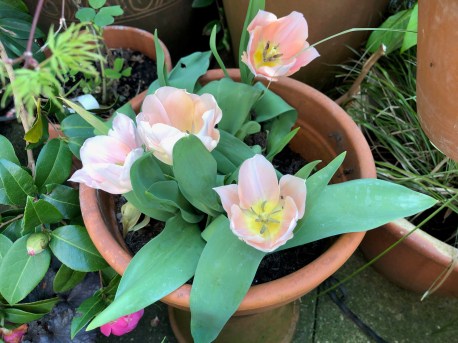
Despite exhortations to sit and enjoy our gardens, I think keen gardeners often don’t do that! But this spring there has been one thing that has brought me joy every time I look at it! In the autumn I bought a collection of ‘ tulips for a window box’. When it came to planting them, I decided the window box was too small, so I jammed  them all into a pot. The three varieties are absolute beauties and even now they are fading are still immensely lovely.

V May blog 2

I rarely sit outside,  but I am greeted by them every morning when I have breakfast.

At the end of my garden I have a Clematis ‘Freckles’ which flowered constantly through the winter. However, I only saw this when I ventured further down the garden. I have resolved to plant something which gives me such pleasure closer to the house where I can see it even in inclement weather. In these unusual and difficult times, let us take pleasure where we can.

The tulips are Double Early and Double Lates: Anthracite, Copper Image and Dream Touch.

Vija

Long live lily-of-the-valley!

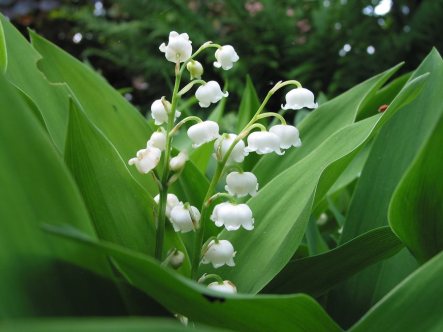
I realise that Lily of the Valley is not everyone’s cup of tea but these little flowers and I have history:  quite a bit of history in fact. Lily_of_the_Valley_2020

My photograph doesn’t show them at their best (ahem) which causes me a pang of guilt and a determination to look after them a little better.  Experienced CABAHS gardeners will perhaps find it a little eccentric of me to “look after” what many consider to be nothing more than a weed.

The new shoots you can see in this picture sit in their pot outside my door in south east London, but I have known them (or maybe their great grandparents) since 1968, when they made the journey from my grandmother’s house in Stanley Road to our house in Hollingworth Street, Oldham. I am astonished to find that Google Maps thinks that distance is 60 yards.  I would have put it at far less!

My dad was born in the house in Stanley Road in 1924.  He and my mother had moved to Hollingworth Street after they were married in 1951.  Neither house had a garden; just a small, and rather dark, backyard.  In 1968 his mother died.  The house was sold, the contents dispersed but my mother rescued the plant pot of Lily of the Valley, the single item of colour in my grandmother’s backyard, installing it as the single item of colour in our own backyard.  So it remained for many years. A bit of the rim of the pot came away in a particularly harsh winter but my dad stuck it back together and the pot lives on still.

With my mother’s encouragement I became almost as excited as she did when the first shoots of the Lily of the Valley started to appear, letting us know it was Spring.  And their perfume!  Nothing can ever match it for me. lily-of-the-valley

When I left home my mother began to accumulate more pots of plants for the backyard, so that in time it became almost impossible to see the bare flagstones in the summer.   If I concentrate now I can hear my dad grumble about these pots and see my mother wink and say, “He thinks they’re great, really!”

I’d quite forgotten about the Lily of the Valley until I moved into my own house.  In 1988 the clump was divided and I became owner of a half-share of the inheritance.  They stayed in their pot, a plastic one this time, and came with me on two house moves.  Some of their offspring have found a home in Ireland, some in Scotland.  They’re now well-travelled!

These days I think about them a lot.  I wonder how old any of the individual plants are.  I wonder too where my grandmother acquired them from in the first place.  It pleases me to think that I can trace them back for 50 years at least.

Shortly after my mother died I was in Vienna one Spring.   At every station on the underground system there were tiny, impromptu flower stalls with just one thing to sell:  small bunches of Lily of the Valley, which infused the entire station, so it seemed, with their heavenly perfume.

I discovered then that in some countries Lily of the Valley is traditionally given as a May Day gift.  Happy May Day, everyone! 

Lily of the valley pot

Melanie A

A view from my kitchen table II

Seeding itself in the gravel and containers in my garden is the exquisitely beautiful, native, Welsh Poppy (Meconopsis cambrica).
With its delicate, buttery-yellow and orange flowers and fern-like foliage, this plant is a must for any garden.
I originally found this perennial very difficult to establish itself, taking two or three years before it finally took off. I don’t know why this is but if I had to start again in a new garden I would sow the seed in pots, topped with grit or gravel for a quicker result.
Some gardeners have masses of Welsh poppies in their borders but I have never managed to achieve that: I only have the odd plant growing at the border edges.

Anna Welsh Poppy

I have learnt that in order to prolong the flowering season throughout the summer, deadheading is imperative. I have already start to do this in April.

But, I also like to collect seed to sprinkle around and to offer to other gardeners, so I aim to sacrifice long-term flowering in order for one or two plants to develop seed heads, which are also attractive in themselves. Each seed head contains dozens and dozens of tiny black seed.
Welsh poppies are a short-lived species that will flower in sun or shade but mainly prefer part-shade and moist, fertile soil. But, generally speaking they are not too fussy.

If you are ordering your seeds now I would suggest you add Welsh poppies to your list.  You will not be disappointed.

Feeling a little nostalgic…

I wonder how many people listened to the moving tribute on Radio 4 on 10 April from a woman who had just lost her sister to Covid-19? She listed a range of qualities for which Billie, her sister, would be remembered. If I were to write a tribute to my parents, gardening would be one of them. They were both growers. Brought up on the land, their year revolved around growing, cultivating and then preserving the fruit and vegetables produced. For me, gardening at certain times of year strongly evokes memories. I still have some sacks which, when they gave them to me, were full of potatoes; I have plant labels from the plants they gave me to grow on myself with the names of varieties like Moneymaker, Gardener’s Delight, Scarlet Emperor, Winter King. Their handwriting is still clearly visible. The varieties I grow myself is often informed by what they used to grow; tried and trusted varieties. Sometimes, it is the smell of fresh tomatoes on my hands, or hot sun on grass. The song of birds on my allotment and the quiet created by these strange times evokes memories of childhood with my father on his plot.

Gardens are, of course, places of remembrance and memories. In many cultures they have been created as oases of peace. A few years ago I drove around Normandy with a friend, visiting the gardens in the region. Jardin de Sericourt tells the story or war and peace and contains symbols of a once war-torn-landscape. One area (the garden is designed into ‘compartments’) has a series of topiary symbolising fallen soldiers, for example. This does not, however, create a sombre atmosphere. Rather it is a garden full of joy and hope.

jardin de sericourt 1
The Warrior Garden at Jardin de Sericourt

This page on Jardin de Sericourt’s website is well worth a look for the videos giving virtual tours. https://www.jardindesericourt.com/newpage

Vija

Allotment life, and surprising bulbs

Do you ever plant things in your garden and forget that you have done so? I have clearly planted these tulips in a pot (last year? The year before?) and they have surprised me by coming up a treat.

Vijas suprising tulips

That is probably part of the interest in planting bulbs. It is deferred gratification if ever there was an example. The anticipation of beauty to come. To some extent it is similar to sowing seeds, although here there is less of an excitement of immediate colour. Gardening is a thing of hope!

March and April are hugely busy in terms of seed sowing. At home I have a small patch given over to vegetables. It used to be bordered by trimmed box, but with the depredations of the box moth, all this has had to be removed. This year, I have decided to sow the annual SalVijas Claryvia Viridis to create the borders. It used to be grown so much, but seems to have become less popular and I haven’t seen it for years. I am hoping this will create an attractive foil for the tomatoes, salad greens, shallots and climbing beans that I plan to have here.
For my allotment I have my usual courgettes ( three varieties) tomatoes ( four varieties) runner and French beans, potatoes (earlies and maincrop)  cucumber, beetroot,  celeriac, cavalo nero and purple sprouting broccoli. I am going to add carrots, turnips and swedes. If the seed stocks in the garden centres on the weekend of 22 March are anything to go by, a large proportion of the population is anticipating a problem with food supply! I hope I have enough to feed the extended family.

My allotment soil is incredibly heavy and successive years of cultivation have done little to break it down. For those new to gardening, this could be very off-putting. Watching Monty Don or Joe Swift or Adam Frost plant vegetables in soil that is honed to a fine tilth you could blow on it and create a hole and then be confronted by the average plot, is something that might make you quail. In the week before lockdown ( are we all thinking in terms of ‘before lockdown’ and ‘after lockdown’ now?) I had two guys dig over the plot, but this still leaves large clods of soil which need to be broken up. I am now in the backbreaking process of doing this. Only then can I direct- sow into the soil, or plant things like French beans.

Vija

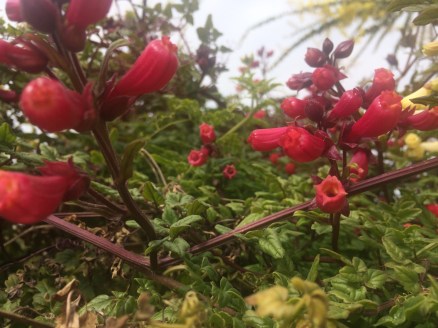
The View from my Kitchen Table – Eccremocarpus scaber

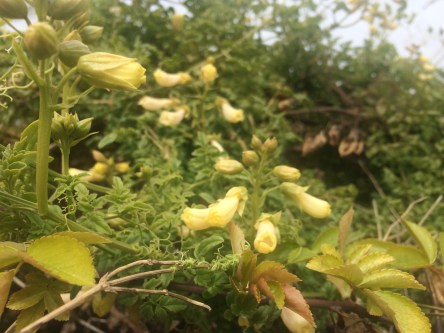
On my kitchen table lies a medium-sized envelope crammed full of Eccremocarpus scaber seeds and their pods. Sitting at my kitchen table I can see clearly the lemon flowers from one variety and the pink flowers from the other variety sunning themselves happily on the roof of the pergola.

Anna Eccremocarpus yellow

I am fairly new to growing Eccremocarpus and was first given a seedling of the orange-coloured variety a few years ago and another seedling last year which I planted on my south-facing fence. The seedling did not take kindly to the clay soil and hardly flowered. Unsurprisingly, it didn’t survive the winter.

However, two years ago at a rare plant fair I bought two seedlings – a pink flowering variety and a lemon flowering variety. Not having much confidence in their survival I planted both in a slightly raised bed on the rear boundary east-facing wall, which the pergola abuts. On this wall are two mature, variegated Trachelospermum jasminoides. The raised bed is extremely narrow and has received small top-ups of compost from time to time. However, I did not rate their survival due to the competition from the neighbouring climbers and the very dry conditions. How wrong I was: the Eccremocarpus seedlings just love their location; the protection the Trachelospermum provides them; the dry soil with added compost; and the baking that the flowers receive from the sun at the top of the pergola.

Anna Eccremocarpus pink

Eccremocarpus scaber is also known as the Chilean glory-flower or the Chilean glory creeper and was first documented in 1794.  It flowers from September to May in the Southern Hemisphere. In New Zealand it is regarded as a pest. And I can see why:  the envelope of seed pods on the kitchen table and the dozens of pods still remaining on the pergola to be collected is a testament to its reputation!

But I am not going to allow these climbers to reproduce again. Although they started flowering in early March last year they stopped flowering in early June and I was mystified.   I was told to look for seed pods and there they were, their lanterns hanging beneath the mass of foliage. So this year I am going to religiously remove all developing seed pods so that these climbers can flower all summer.

Anna exxremocarpus seedsEccremocarpus is regarded as a perennial species but due to the UK climate they are generally grown as an exotic annual. The foliage is light green and it uses its tendrils to hook onto anything for support. I had difficulty in remembering and pronouncing the name, Eccremocarpus, but I got there in the end! I love the colours of these tubular flowers, that sparkle like jewels in the sun. They provide me with a lot of pleasure. If you grow the orange variety, you could marry it with Thunbergia, Ipomoea or Nasturtium, all of which have orange flowers.
I will be providing a huge number of free packets of seeds in the next few weeks for anyone who has the right conditions: a protected area in their garden that is light, sandy, well-drained but fertile; or a sunny plot on their windowsill or balcony.

Anna L

Musings in the garden

When I moved into my present house, there was already an established garden. Of course I wanted to make it my own so I started to remove the Rockery. Large white stones on a sloping bed were taken away and I prepared to level the ground. I soon realised why it had been a rockery, it was to conceal a rubbish dump of builder’s rubble and concrete slabs! I’ve replanted the area- with a new rockery!

Having put myself into self isolation for 3 weeks now, I can see a pattern evolving with the wildlife in my garden. About the same time each morning, two squirrels chase each other from one side of the garden to the other. A blackbird keeps watch from the same branch all day after collecting nesting material from the lawn. A family of foxes visits around 4pm to dig for worms. The birds singing as I garden are a constant delight and I’m starting to distinguish the robin from the chaffinch, some soothing benefits from enforced isolation!

Jenny

Passing the time

With many of us working from home, keeping a distance or self isolating, plant catalogues and planning your garden are a welcome way of passing the time.

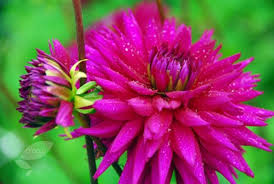
I already have a few dahlias in my garden, but have just ordered a few more: Ambition, Blue Bayou, Leila Savannah Rose and Tartan.  You may think that is an odd mix of colours, but I already have good selection including Waltzing Mathilda,  Café au Lait, and Labyrinth, to name a few. I figured the new additions would complement the existing collection. There used to be a view that they were rather vulgar in a showy kind of way, but there is nothing quite like a dahlia for superb saturated summer colour!

Vija Dahlia Ambition
Ambition

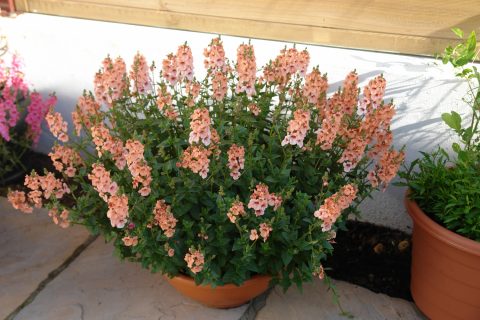
Colour is a funny thing! As ‘fillers’ a few years ago I bought some diascia plants, which, if you were feeling generous you might describe as apricot in colour. My daughter considers them the colour of Elastoplast! I have left them outside in their pots each winter, but they come back every year, much to her disgust! They are ridiculously tough and I am not very good at getting rid of plants.

Vija Diasca Apricot
Diascia Apricot Queen


I sow a few Cosmos each year, which work equally well as cut flowers. This year I have seedlings of Purity, Candy Stripe and Antiquity coming through. There is not really a lot of room in my borders for anything less robust! A lot of summer colour has to go into the pots. Gazanias have successfully over-wintered outside for the third year in a row. My mother loved these and I continue to grow for her. I am hoping that the begonias I bought from Alec and Joe last year will return. As a contingency plan I have also ordered some Begonia ‘Glowing Embers’. All the pelargoniums have successfully over-wintered and I am currently trimming these back and making cuttings. Last year, I bought two beautiful Coleus plants, aptly named King Kong as they were absolutely huge. I was hoping I would be able to over-winter these in the greenhouse, but sadly they are looking pretty dead at the moment. Spring is definitely a time for surveying your losses and triumphs.

Vija Begonis Glowing Embers
Begonia Glowing Embers

Vija

Tulip time in Elizabeth C’s garden

Elizabeth says “Last Autumn I had a beautiful collection of Sara Raven tulip bulbs for my birthday, which were carefully arranged in colour co-ordinated flow with wallflowers interspersed. Feeling generous to myself, similar colour groupings were arranged around my garden and I eagerly awaited this Spring.

Bulbs started to appear prolifically and my excitement rose; each day my first task was to check their progress with all the promise that entailed. Until – one morning, disastrous views unfolded – all the fully developed buds had been bitten off by The Squirrel! Only immature ones remain.

Apart from purchasing a shotgun on eBay, does anyone have any helpful advice to avoid repetition?”

500x550.crop_.200563_1

Such a sad story! Please email your suggestions to cabahshortisoc@gmail.com and let us know if you have had a similar problem? I have personally had plenty of problems with squirrels and bulbs, but once the bulbs start growing, my local squirrels (thankfully) lose interest. Christine has had success with putting curry powder in the soil, and Jenny puts prickly holly twigs around her pots, but this is really for the bulb stage. Other ideas needed!

Hooked on hostas

At the last count, I had 32 hostas and most of these are in pots. Admittedly, some of these are miniatures, but nevertheless this means that in March a lot of checking and potting on needs to take place. My basic collection has increased over the years because people have given me hostas which they have bought and not had much luck with and then passed on to me. I am always grateful!

HostaSumandSubstance
Sum and Substance

I check all pots to see whether root growth is coming through the bottom of the pot; where small enough I tip the plant out and check to see whether it is root-bound or the compost is looking a bit stale.  However, Sum and Substance and Big Daddy are each about 4 feet tall and Big Daddy is in such a large pot it really needs two strong men to sort him out!  Empress Wu is catching up with these guys in terms of size. I then use John Innes number 3 to pot up again. I try and leave a fair bit of space at the top of each pot to allow for the addition of a protective mulch. I make this with a mixture of farmyard manure and home made compost, which I keep as rough as possible with eggshells – this does a good job of discouraging slugs and snails while the plants are young and gives them a good head start. The coarser leaved hostas then tend to manage quite well thereafter. This year I have added a granular feed which should last 6 months. Many years ago I read somewhere that feeding hostas produces weaker growth, more susceptible to attack and I have never fed mine apart from the spring dose of compost, manure and sometimes bonemeal.

HostaFrancesWilliams
Frances Williams

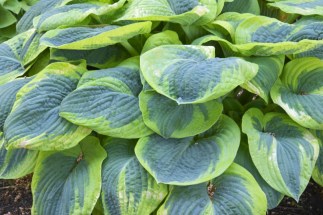
In my experience, the general gardening advice that the coarser the leaf the less likely a hosta is to be eaten by slugs and snails is true. Particularly resilient is Frances Williams and I can’t recommend this one enough. I also find Krossa Regal and Patriot very good. It’s also useful to think about where you are growing hostas. If they are crowded together in a border with lots of other plants, slugs and snails will still get to them no matter how many slug pellets you use. Snails can abseil down the leaf or stem of another plant to reach a hosta. As always in the garden, a consideration of the growing environment means there is less need to introduce artificial measures to control the pests.

HostapatriotDorset
Patriot

Vija