Plant of the Month: Clematis (September 2024)

What a struggle it has been to protect the shoots of these two clematis from sustained attacks by the usual culprits this year!  Not only did I use a garlic spray (one clove of garlic simmered in water) but I also liberally (and continually) sprinkled spent coffee grounds around the base of the plants. Although they were saved, I did lose other clematis: scented C ‘Betty Corning’, C ‘Rising Star’ and C ‘Wedding Day’ – all absolutely lovely and such a loss that I will need to repurchase them.

Clematis ‘Princess Diana’
This clematis is definitely one of my ‘top five’. The tulip-shaped flower is an unusual shade of bright pink, with beautifully striped markings both inside and outside of the petals (sepals).  This variety (texensis) was introduced by a British breeder to honour the Princess of Wales in 1984 and has deservedly been given the RHS Award of Garden Merit. 
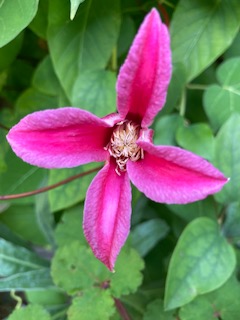
As to be expected ‘Princess Diana’ came into flower late – in July, rather than June – and has been flowering continually, with eight flowers and a few buds on the vine at present. 

Continue reading Plant of the Month: Clematis (September 2024)

Pat’s Jobs for September 2024

1. Start ordering your bulbs now as all the bulb catalogues are arriving – though prices don’t stop going up! 

2. Start planting bulbs when they arrive but save your tulips until later as they are prone to virus and rotting, and to theft by squirrels. 

3. Divide large established clumps of perennials by cutting back first, then splitting either by hand or with two forks back to back. Delay if soil is heavy or too wet.

4. Replace tired summer bedding in pots and replant for winter and replenish with fresh compost.

Continue reading Pat’s Jobs for September 2024

August 2024: Gardeners Question Time

An entertaining and informative evening was had at this year’s Gardeners Question Time. As usual, it enabled members to get advice on their gardening problems, and to air their gardening frustrations. Chaired by Sir Nicolas Bevan, the CABAHS President, the panel also comprised Tom Brown, the Greenwich Park’s Head Gardener, and Pat Kane, a long standing CABAHS member.

GQT Panel

Most of the questions were sent in by members beforehand. They covered a broad range of gardening areas and problems: growing hollyhocks; aphid control; tree size; cistus, salvia and sisyrinchium pruning; how to grow dahlias; what killed my rose; problems with apple trees and rambling roses; how to encourage children to get involved in gardening; recommending a fertiliser for yew hedges; the cause of curly cucumbers; dealing with self seeding; and problems with bamboo.

Continue reading August 2024: Gardeners Question Time

The Sunk Garden at Great Dixter House and Gardens, East Sussex

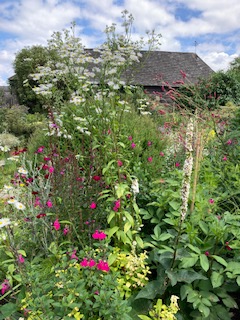
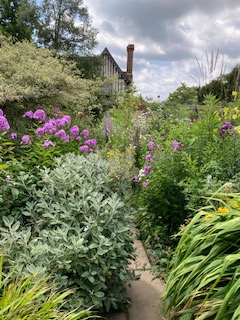
Christopher Lloyd loved colour, and as I stand on the upper pathway of the Sunk Garden, here at Great Dixter, I notice the pops of colour from the spires of pink-purple Lythrum and terracotta-orange Crocosmia all around me.

Designed by Nathaniel Lloyd, Christopher Lloyd’s father, after WW1, this south-facing and sheltered sunken garden is enclosed by two barns, a magnificent yew hedge and a wall on the southern boundary, thus creating its own micro-climate and the plants love it!

Continue reading The Sunk Garden at Great Dixter House and Gardens, East Sussex

Plant of the Month: Agapanthus (August 2024)

One of the nicest aspects about walking around the streets in our neighbourhoods is being able to view the diverse range of flowering trees, shrubs, perennials and bulbs that enhance front gardens and, in early August, it’s the showiness of Agapanthus that makes one stop in one’s tracks in admiration.

And so, it was an added pleasure to be able to admire the magnificent evergreen Agapanthus praecox “Madeira Blue” and “Madeira White” in my neighbour’s rear garden.  Linda tells me she purchased the bulbs in Madeira approximately ten years ago, where these perennials have become naturalised throughout the island.

Agapanthus 'Madeira Blue' and 'Madeira White'

The plants are extremely tall and vigorous and absolutely stunning, with additional flowering stems this year, having outgrown (and broken) previous terracotta pots.  The bulbs have been in the existing plastic pots (sitting on feet) for the past three years, having been divided up – no easy task – and planted into several more containers.  They have not been fed for a while and are not given protection in the winter (it’s a sheltered garden) with the flower heads left on until spring. 

Continue reading Plant of the Month: Agapanthus (August 2024)

Pat’s Jobs for August 2024

1. It is especially important to keep Camellias and Rhododendrons damp at the roots this month as this is the time that the buds form for next Spring. Water well and mulch if you can. 

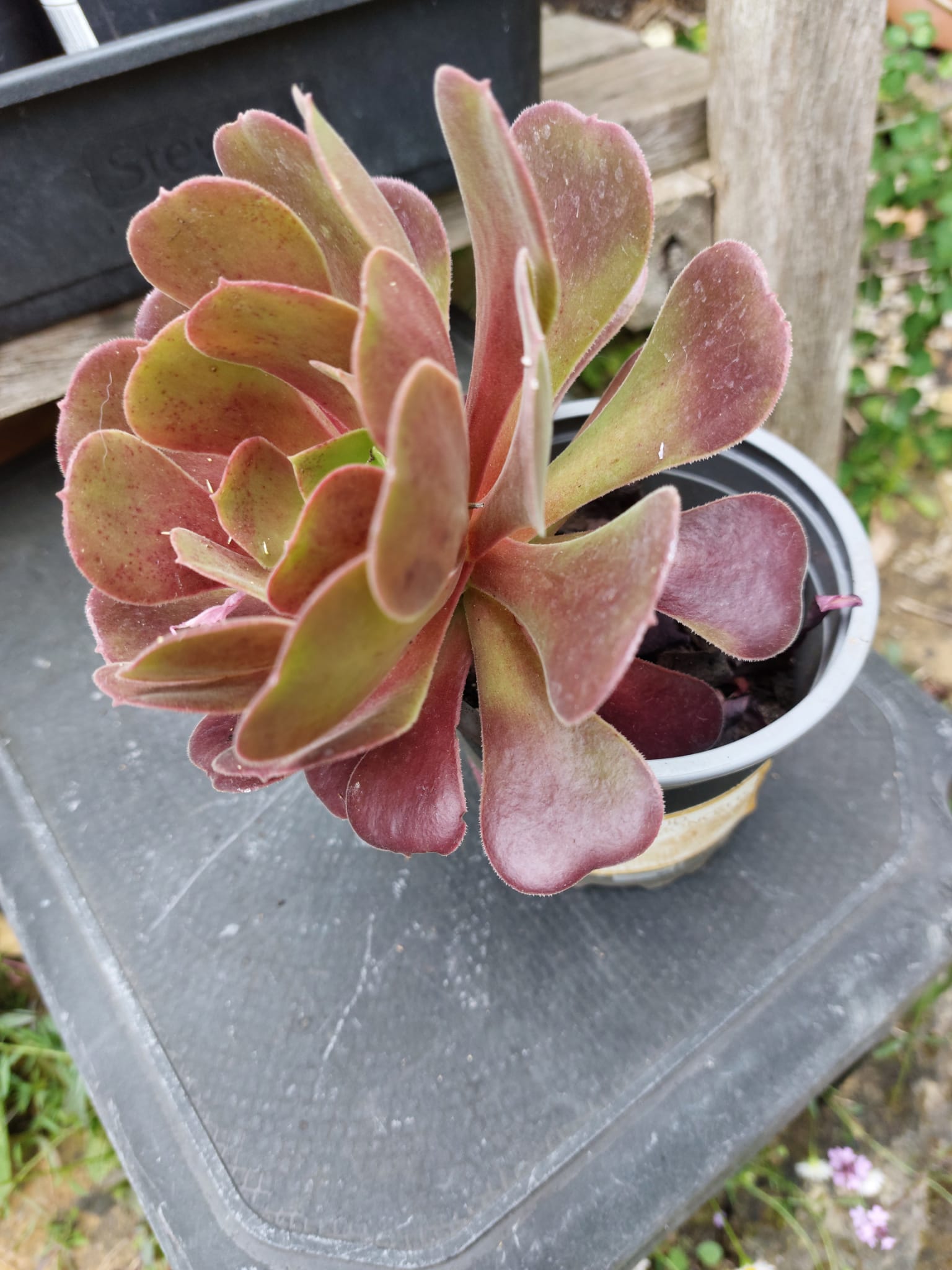
2. Take Aeonium cuttings now by severing leggy leaf stems a couple of inches below a cluster. Leave the stem end to callous over, then push into gritty compost and keep in a shady spot until roots start to form. 

Continue reading Pat’s Jobs for August 2024

Fans of Clivia miniata

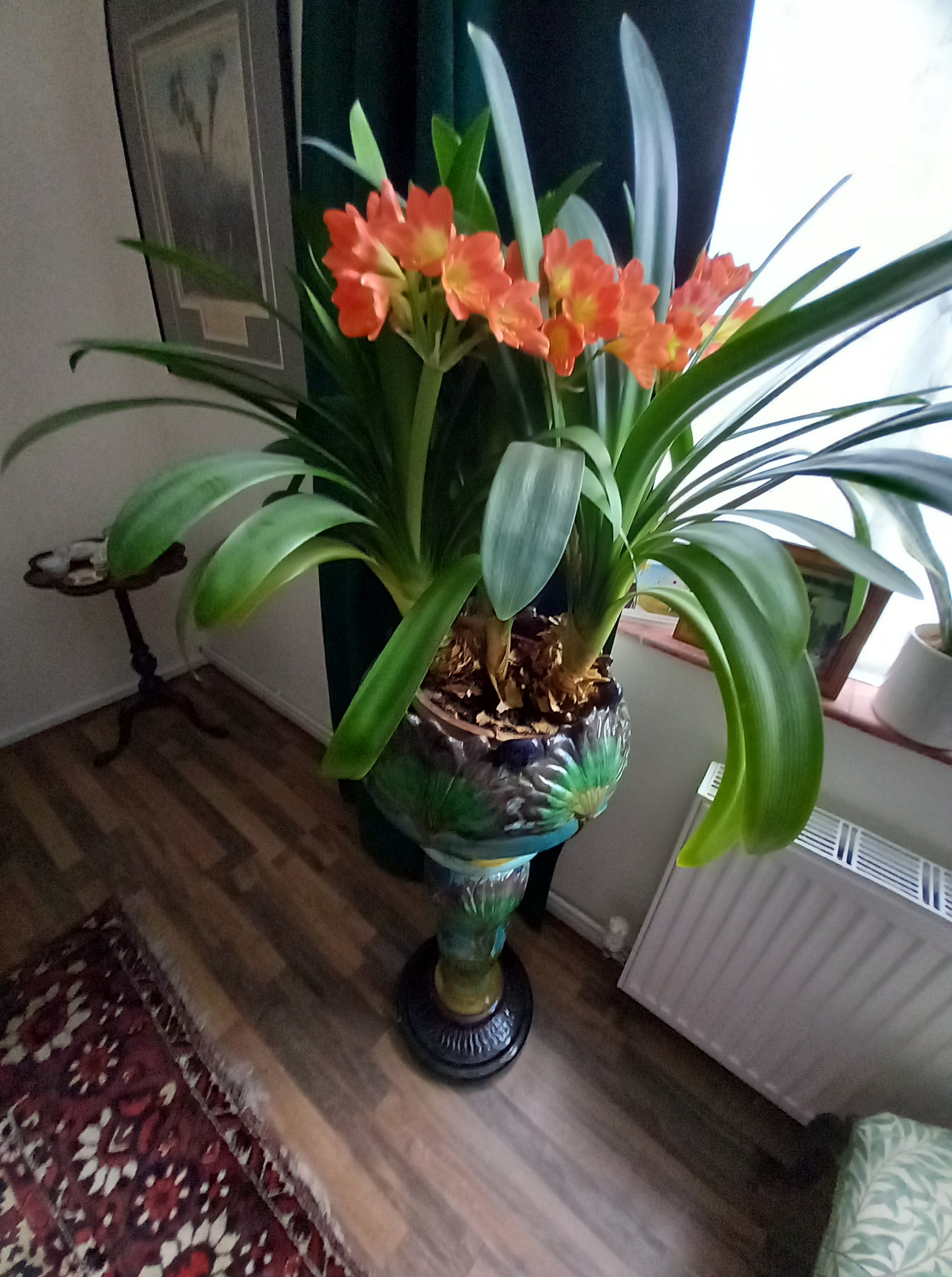
Angela B wrote: “Clivia (or Natal lily, originally from South Africa) is one of my favourite plants. It comes in a variety of colours. I have been growing Clivia miniata, the orange-flower variety, for years. Its glossy leaves and bright orange trumpets are striking and decorative. It has flowered well this year and I thought members might like to see it, and I encourage those who have not grown one to do so.

Angela's Clivia miniata

It’s easy to grow. See the RHS website for detailed care instructions. It’s a woodland plant and likes indirect sunlight and regular watering from Spring to Autumn, but minimal watering over the winter.”

We asked a few other members about this unusual and lovely plant. Chris B is also a fan of them, she says hers has beautiful flowers in May and June and she puts it outside for a holiday in the Summer (although not in full sun). She brings it back inside for winter and reduces the watering.

Continue reading Fans of Clivia miniata

July 2024 Meeting and Talk: The Savill and Valley Gardens, Windsor Great Park

John Anderson has a very distinguished horticultural career. Trained at Kew, he has been head gardener at a range of famous gardens, and his contribution to horticulture was recognised in the award of the RHS Veitch Memorial Medal. In 2016, he became Keeper of Windsor Great Park Gardens, part of the Royal Estate, and managed by the Crown Estate.

It was a particularly interesting and informative talk. The gardens are unusual, situated as they are in a Royal Estate of 8000 acres, and Windsor Castle being a world tourist attraction. Yet the gardens and their management are less well known to the public. John Anderson showed  a range of photographs of the gardens, described their history and development over the decades, and the challenges they now present.

The speaker and audience at the July 2024 meeting

The challenges include managing people whether they are tourists, cyclists or picnickers; dealing with vandalism and littering; and protecting its historic landscapes. Also the problems of climate change: evidenced in its Long Walk tree avenue, at over two miles the longest in Britain, where elm and horse chestnut were succumbing to disease, to be replaced by more resistant species such as ginkgo (Maidenhair) trees.

Continue reading July 2024 Meeting and Talk: The Savill and Valley Gardens, Windsor Great Park

White Garden, Sissinghurst Castle

In all the years I have been visiting Sissinghurst Castle, I have never seen the White Garden look so lush; it was a ‘sea of white fluffiness’ and its loveliness took one’s breath away. 

The White Garden is an enclosed garden, laid out in a formal pattern, with clipped borders of box framing brick herringbone pathways, punctuated by box cubes. These features provide structure and act as a framework and a contrast to the white flowers and grey foliage within their boundaries.

The focal point is the central gazebo, which is covered by the highly fragrant white rambler rose (Rosa mulliganii) – now finished flowering but later in the year produces rose hips. Beneath sits a maroon-coloured waist-high urn (1930s), planted with Thumbergia alata (a cream-coloured Black-eyed Susan).

Continue reading White Garden, Sissinghurst Castle

Pat’s Jobs for July

1. Top of the list for July is pruning wisteria, taking back that whippy growth to 2 to 3 buds from the main stems.

2. Sweetpeas should be flowering by now so make sure to keep cutting the blooms and give them a feed and plenty of water. They cease flowering quickly if not picked twice a week. 

Vase of sweetpeas

3. Deadhead all your perennials and annuals regularly unless you want them to set seed for next years sowing.

Continue reading Pat’s Jobs for July